Disclosure: As an Amazon Associate, reviewstook.com earns from qualifying purchases. Links to Amazon on this page are affiliate links; they cost you nothing extra. Listing details such as price and availability change often, so check the current Amazon listing before you buy.
The best 10 inch mattresses hit a sweet spot: tall enough to have real comfort layers, short enough to fit standard sheets, most bed frames and a normal bedroom without towering over the furniture. If you have been bouncing between thin economy beds and very tall luxury ones, ten inches is the middle path, and the six mattresses below show how different makers fill that height.
Our short answer: choose a foam model for a quiet, easy-to-carry bed, a hybrid if you want springs under the comfort layer, and a mattress from a well-known bed-in-a-box brand if the return terms matter more than the lowest sticker. All six ship compressed, so you can plan around the doorway rather than a delivery crew.
You will find a quick picks table, an honest write-up of each mattress, a comparison, a checklist for choosing, a short list of mistakes, care notes and answers to the questions buyers ask most often.
In this guide
Quick Picks
| Best for | Our pick | Link |
|---|---|---|
| Best overall hybrid at ten inches | Allswell 10 Inch Hybrid | Check on Amazon |
| Best for a plain, familiar bed | Olee Sleep 10 Inch Hybrid | Check on Amazon |
| Best value-for-money wording for spare rooms | Sleep Innovations Marley 10 Inch | Check on Amazon |
| Best premium name at ten inches | Casper Element | Check on Amazon |
How We Chose These 10 Inch Mattresses
We compared manufacturer listings, published specifications and the way each brand describes its layers and delivery. We have not slept on these beds, so we make no claims about how they feel after months of use. Instead we describe the construction, the height, the build type and the buyer each one makes sense for, and we send you to each listing for current sizes, firmness wording and return terms.
The 6 Best 10 Inch Mattresses
Allswell 10 Inch Hybrid Mattress
Allswell is a direct-to-consumer brand with a straightforward lineup, and the ten inch hybrid pairs layers of foam with a base of individually wrapped coils. It is built for buyers who want the lift of springs without paying for a luxury label.
Who it suits: couples who share a queen, sleepers who find all-foam beds too enclosing, and anyone furnishing a main bedroom who wants a mid-height hybrid on a standard frame.
- Foam over wrapped coils gives a springier feel than a pure foam bed.
- Ten-inch height works with standard sheets and most frames.
- Coil layer allows more airflow than solid foam.
Honest limitation: hybrids weigh more than foam beds, so carrying it upstairs takes two people. Choose it if you want a livelier feel. Skip it if you are carrying it alone.
Olee Sleep 10 Inch Hybrid Mattress
Olee Sleep is a bedding brand that sells foam and spring mattresses in a range of heights, and its ten inch hybrid pairs a foam comfort layer with a coil unit beneath. It is aimed at buyers who want a plain, familiar mattress in a mid-height profile.
Who it suits: shoppers furnishing a guest room, a dorm or a second home, and anyone who would rather read a short description than a long list of extras. The coil layer gives more bounce than a pure foam bed, which some buyers prefer for a spare room.
- Foam comfort layer over a coil unit, a design most buyers understand.
- Ten inches fits a normal frame without needing deep sheets.
- Boxed delivery makes stairs easy to manage.
Honest limitation: it is a basic bed without extras, so it will not feel as refined as a premium brand. Choose it if you want a straightforward bed. Skip it if you want a showpiece.
Sleep Innovations Marley 10 Inch Memory Foam Mattress
The Marley is a ten inch memory foam bed from Sleep Innovations, a company that has sold foam toppers, pillows and mattresses for years. It uses layers of foam under a plain cover and ships in a box.
Who it suits: families setting up a spare room, buyers who prefer a known name in foam and renters who want a mattress that is simple to set up and simple to leave behind.
- Layered foam build with a memory foam comfort layer.
- Established foam brand with a wide product range.
- Ten-inch height keeps the bed proportionate in smaller rooms.
Honest limitation: like any all-foam bed, it will hold warmth more than a coil hybrid. Choose it if you like a conventional foam feel. Skip it if you run warm.
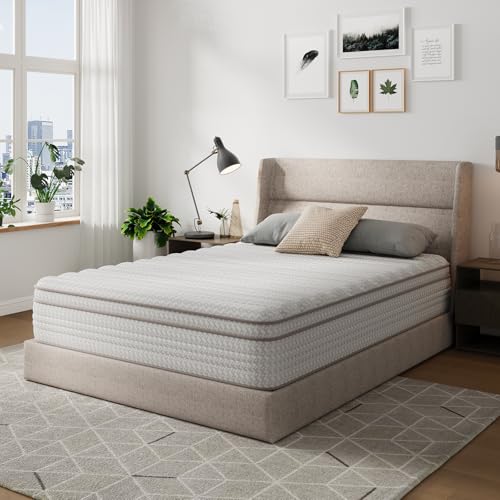
Novilla 10 Inch Hybrid Mattress
Novilla sells foam and hybrid beds that ship in a box, and the ten inch hybrid is its lower-profile coil mattress. It combines foam comfort layers with a pocketed coil base.
Who it suits: buyers who want a hybrid but have a lower frame or ceiling, and people who like the idea of coils but not the height of a twelve or fourteen inch hybrid.
- Foam plus coil layers in a ten-inch profile.
- Pocketed coils help the bed feel lively when you move.
- Compressed shipping makes setup manageable.
Honest limitation: with only ten inches to work with, the comfort layers are thinner than on a tall hybrid. Choose it if you want coils in a lower profile. Skip it if you want a deep, plush top.

Vesgantti 10 Inch Hybrid Mattress
Vesgantti produces boxed hybrids and foam beds, and its ten inch hybrid mixes foam layers with a coil unit. The design is aimed at buyers who want something moderate in height and feel.
Who it suits: shared bedrooms, guest suites and shoppers who prefer a mattress that does not stand much taller than a standard bed frame rail.
- Hybrid build with foam on top and coils below.
- Ten-inch profile fits low frames.
- Edge feel tends to be firmer than on foam-only beds.
Honest limitation: coil-based beds are heavier and less compressible than foam, so check the box dimensions. Choose it if you like coils and a modest height. Skip it if you want ultra-soft foam.

Casper Element Mattress
Casper is among the most recognizable names in boxed beds, and the Element is its simpler, ten-inch foam mattress. It uses layers of foam designed to give an even surface, in a brand package that appeals to first-time online buyers.
Who it suits: shoppers who like the idea of a well-known bed brand without moving up to the higher lines, and renters who want a clean, simple foam bed they will not mind replacing.
- Casper brand name and wide availability.
- Foam-only construction keeps the weight down.
- Ten-inch height keeps the bed low and tidy.
Honest limitation: it is the simpler Casper, so it lacks the layered extras of the higher models. Choose it if brand familiarity matters. Skip it if you want the richest set of layers.
10 Inch Mattress Comparison
| Mattress | Size | Material | Key feature | Best use | Link |
|---|---|---|---|---|---|
| Allswell 10 Inch Hybrid | Queen | Foam and coils | Wrapped coil base | Main bedroom | Check on Amazon |
| Olee Sleep 10 Inch Hybrid | Queen | Foam and coils | Plain, familiar build | Spare room | Check on Amazon |
| Sleep Innovations Marley | Queen | Memory foam | Known foam brand | Family bedroom | Check on Amazon |
| Novilla 10 Inch Hybrid | Queen | Foam and coils | Pocketed coils | Low frames | Check on Amazon |
| Vesgantti 10 Inch Hybrid | Queen | Foam and coils | Firmer edge feel | Shared bedroom | Check on Amazon |
| Casper Element | Queen | Foam | Brand-name simplicity | First online bed | Check on Amazon |
Why Ten Inches Is a Practical Height
Ten inches is enough thickness for a comfort layer and a base layer to do separate jobs, which is why so many bed-in-a-box brands build their mainstream model at this height. It is also the height where standard fitted sheets, bed skirts and most frames work without adjustment. Thinner beds tend to feel flatter because there is less room for layers, while thicker beds can need deep-pocket sheets and a taller frame.
Ten inches is also a friendly size for transport. A compressed ten-inch mattress is lighter and easier to maneuver than a fourteen-inch hybrid, which matters if you live up a flight of stairs or have a narrow hallway to navigate.
Foam, Hybrid or Innerspring at Ten Inches
In ten inches, the difference between foam and hybrid is the difference between a thick foam core and a thin coil layer under a thinner comfort layer. A foam mattress tends to be quieter, lighter and easier to ship. A hybrid is bouncier, more airy and usually holds its edge better.
Traditional innerspring mattresses also appear at this height, although many are built with simpler padding. If you prefer an old-fashioned spring feel, check the product description for the coil type and padding layers. For the beds in this guide, foam and hybrid cover the realistic range.
Ten Inches Compared With Eight and Twelve
An eight inch mattress usually has a thin comfort layer and a firm base, which can feel flat if you like cushioning. A twelve inch mattress can add a second transition layer or a thicker coil unit, which gives a more layered feel and a taller look on the frame. Ten inches sits comfortably between them: it has enough depth to separate comfort from base, without the added bulk, weight and sheet considerations of a taller bed.
That middle position is why ten inch beds work well as guest-room, family-room and secondary-bedroom mattresses. They look proportionate on most frames, travel easily and rarely cause trouble with bed skirts or headboards. If you are torn between ten and twelve inches, think about the frame you own and how much you value a tall, layered look.
Frames and Foundations for a 10 Inch Mattress
Boxed foam and hybrid mattresses are designed to sit on a flat, solid surface or on closely spaced slats. A platform frame is the simplest choice, and a foundation or a metal frame with a slatted top also works if the gaps are narrow. Wide gaps allow foam to sag between boards, which changes how the surface looks and feels.
If you still own a box spring from a previous bed, check whether it is in good shape before using it. A sagging or noisy box spring undermines a new mattress. Many buyers switch to a modern foundation or a platform frame when they buy a boxed bed, since the setup is cleaner and the finished height is lower. Read the listing for the maker’s guidance on bases.
Sheets, Toppers and Bedding Fit
One reason buyers like ten inches is that standard fitted sheets usually fit without trouble. If you add a thick topper, check the pocket depth on your sheets, because the combined height may exceed what a standard pocket handles. Deep-pocket sheets are widely available and easy to find, so this is a small matter rather than a problem.
A mattress protector is worth adding from the first night. It keeps the cover clean, helps you maintain the look of the bed and makes it easier to wash away spills. Choose a protector that is made for the thickness of your mattress, so it stays in place instead of riding up the corners.
Shipping, Unboxing and Settling In
Each mattress here arrives rolled inside a box or a bag. Carry it to the bedroom before opening, lay it on the frame, cut the outer plastic as the instructions say and then watch the bed unroll. Foam beds open within minutes, but they keep expanding over the next few hours, so give the mattress time before you judge its shape.
A short new-bed smell is common with foam and fades in a ventilated room. Open a window, keep the bedroom door ajar and let the mattress breathe before you put on a protector and sheets. If the smell does not fade or the mattress does not open properly, contact the seller, using the contact details listed on the product page.
How to Choose a 10 Inch Mattress
- Pick a build: foam for weight and quiet, hybrid for lift and airflow.
- Check the size is the one you need, and that it is offered at ten inches.
- Read the layer description, not just the firmness word.
- Look at the frame: a platform or closely spaced slats suit boxed beds.
- Check the box dimensions against your doorway and stairs.
- Read the return terms and trial window before you order.
- Think about who will use the bed: guests, kids or the main bedroom.
Common Buying Mistakes
A frequent mistake is buying a ten inch mattress and expecting luxury-bed depth. Ten inches is a balanced height, not a deep plush one, so set your expectations accordingly. Another is mixing up sizes: a queen is not the same as a full, and a twin XL is not a twin, so check the listing carefully.
Many buyers also skip the frame check. Foam and hybrid beds need a solid surface, and widely spaced slats let foam sag between boards. Finally, do not judge the bed in the first hour; boxed mattresses need time to expand, and some have a short new-bed smell that fades.
Matching a 10 Inch Mattress to the Room
A main bedroom for two adults usually calls for a queen or larger, and a hybrid like the Allswell or Vesgantti is a natural fit because the coil layer responds well when two people share the surface. A guest room or a teenager’s room often works better with a simple foam bed, since weight and noise matter less than ease of setup. A dorm or small flat benefits from the Sleep Innovations Marley or the Casper Element, both of which keep the build uncomplicated.
It also helps to think about who changes the bed. If one person will be moving, flipping and making the bed alone, a lighter foam mattress saves effort. If the bed stays put for years, the slightly heavier hybrid is no hardship. Set your priorities before you read reviews, and you will find the choice much quicker.
Setup and Care
Unbox the mattress on the frame, cut the plastic as the instructions say and let the bed expand in a ventilated room. Use a protector to guard the cover from spills, rotate head to foot on the schedule the maker suggests and spot-clean with mild soap and a damp cloth. Let the surface dry fully before you put sheets on. Avoid dragging the mattress on rough floors, since a torn cover is hard to repair.
Care beyond the first week is simple. Rotate the mattress head to foot every few months if the maker advises it, vacuum the surface gently with a soft attachment and keep liquids away from the bed. Avoid standing or jumping on the mattress, because foam layers and coil units are designed for lying down. Rotate any removable cover or protector into the wash on a regular schedule, and let the bed breathe with the sheets off for an hour on a dry day. These small habits keep a ten-inch bed looking tidy for years and make resale or donation easier later.
When it is time to move, keep the original box if you can, or buy a mattress bag. A bagged mattress is easier to carry and stays clean in a van, and it takes only a few minutes to wrap. If you plan to give the bed away, a clean cover and a protector help it find a home quickly.
Final Recommendation
For a hybrid at ten inches, the Allswell 10 Inch Hybrid is the strongest default. For a plain bed, take the Olee Sleep 10 Inch Hybrid, or the Sleep Innovations Marley for foam. For a low-profile coil bed, look at the Novilla or Vesgantti. For brand-name familiarity, the Casper Element is the one. Check each listing for the latest sizes and return terms before you click.
One last practical note: do not let a single word on a listing decide the purchase. Terms like medium, plush or balanced mean different things to different brands. The layer list, the height and the return window tell you much more, and they are the details to compare when two beds look alike on paper. Take ten minutes to read the description of each shortlisted mattress end to end, and you will avoid most of the surprises buyers report after the box arrives.
If you remain undecided after all this, the Allswell 10 Inch Hybrid and the Sleep Innovations Marley represent the two main directions in this guide: one with coils and lift, one with plain foam and quiet. Pick the direction first, then choose the brand whose listing you trust most.
Our top two picks:
Work Out Your Finished Bed Height Before You Order
Ten inches describes the mattress alone, and nobody sleeps on a mattress alone. The number that decides whether a bed feels graceful or awkward is the height of the sleeping surface once the mattress sits on its frame, and that figure surprises people more than any other in this category. Measure it on paper before the box arrives and most height problems simply never happen.
Start with the frame. A low platform might add only a few inches between floor and mattress, a standard metal frame with a foundation adds considerably more, and a storage bed or an older wooden frame with side rails can add more again. Add the mattress, then add the bedding honestly: a protector is thin, but a folded-back duvet at the foot and plump pillows at the head change where your eye judges the top to be. Now compare the total with your own body. Sit on the edge of a surface of similar height, a sofa or a sturdy chair with books stacked to the right measurement, and check two things. Your feet should rest flat without your knees pointing uphill, and standing up should feel like rising, not climbing. That thirty-second test, done with a tape measure and a stack of hardback books, predicts everyday satisfaction better than any photograph of a styled bedroom.
Why the same mattress feels tall in one home and low in another
Ceiling height, window sills and the size of the room all change the verdict. In a compact room, a finished bed that creeps too high starts to dominate the space and makes the gap under the window feel cramped, while in a tall-ceilinged room the identical setup looks settled and generous. Nightstands are the other quiet factor. Ideally the top of the mattress lands near the top of the nightstand, so a glass of water and a phone sit within an easy sideways reach rather than above or below your shoulder as you lie down. If your nightstands are low and fixed, that is an argument for a lower frame under a ten inch mattress, not for a thinner mattress. Keep the mattress you want and adjust the furniture equation underneath it.
Matching a Ten Inch Mattress to How People Actually Sleep
Catalogues sort mattresses by construction, but households sort them by the people who climb in. A ten inch bed has to serve very different sleepers across this guide’s audience, and the right pick changes with the sleeper far more than with the specification sheet.
Back and stomach sleepers
People who sleep mostly on their backs tend to notice the surface first: whether the lower back feels held on an even plane or allowed to sink into a shallow hammock. On a ten inch mattress there is less depth for that hammock to form in than on a very thick bed, which many back sleepers experience as a steadier, flatter feel. Stomach sleepers are the most height-sensitive group of all, because their position already asks the midsection not to dip. For them, the firmer-feeling options in any shortlist deserve the first look, and a pillow kept deliberately thin completes the setup. If you wake with the sense that your hips have spent the night lower than your shoulders, treat that as information about firmness, not about thickness, and use the trial period to act on it.
Side sleepers and the shoulder question
Side sleeping concentrates weight on the shoulder and hip, so the comfort layers on top do the real work while the layers beneath decide whether those joints bottom out. Ten inches is enough depth for this when the build is balanced, which is precisely the promise in this guide’s title, but side sleepers should pay special attention during the first fortnight. Pressure that fades within minutes of rolling over is normal settling. A shoulder that still aches at breakfast after two weeks is the mattress telling you its top is too unyielding for your frame, and a softer topper, discussed later in this guide, is a more sensible experiment than replacing the whole bed in a hurry.
Couples, and the middle of the bed
Two sleepers add two tests no single sleeper runs. The first is movement: whether one person’s turning travels across the surface and registers on the other side. Foam-heavy builds in this list tend to localise movement, while spring-containing hybrids tend to share a little more of it, in exchange for a livelier, easier-to-move-on feel. The second test is the middle. Spend part of a trial night lying across the centre line, because a bed that feels perfect on your own side but rolls you toward the middle, or perches you on a ridge, will irritate you for years. Ten inch mattresses on a well-supported base rarely develop a serious centre problem early, so if the middle feels wrong in week one, suspect the foundation before you suspect the mattress.
Guest rooms, teenagers and spare beds
A guest bed has to please strangers politely, which argues for the middle of every road: medium feel, straightforward build, nothing idiosyncratic. That is why ten inch mattresses dominate guest room shortlists, and why the hybrids in this guide are such natural guest picks. Teenagers, meanwhile, are harder on a bed than any adult, sitting on its edge to game, stacking it with cushions and treating it as furniture. For a teen room, edge behaviour and a base with closely spaced support matter more than subtle differences in foam. Buy the sturdier setup rather than the plusher one and it will still look respectable when the room becomes a study or a first home office.
Choosing Between the Picks in This Guide
With six ten inch mattresses on the shortlist, the useful question is rarely which is best in the abstract. It is which construction answers the problem you actually have. The comparisons below stay with what this guide has already described about each model and organise the decision by household.
Hybrid or the Marley: bounce and ease against calm and quiet
Five of the six picks pair foam with springs in some form, and the Sleep Innovations Marley stands as the all-foam representative. That single contrast explains most of the decision. The hybrids, from the Allswell and the Olee Sleep to the Novilla and the Vesgantti, give you a surface that responds when you roll, sit up or get out in a hurry, and they tend to feel a touch airier on warm nights because air moves through a spring core more freely than through solid foam. The Marley answers with stillness: movement dies where it starts, the surface feels uniform from edge to edge and there is nothing inside to make a sound in a quiet house. Restless sleepers with a still partner lean foam. People who dislike the sensation of being held in one place, or who simply prefer a bed that helps them move, lean hybrid. Neither instinct is wrong, and recognising your own is most of the purchase.
Allswell and Casper Element: the two familiar names
The Allswell and the Casper Element are the picks many readers arrive already knowing, and they are best understood as two interpretations of the same brief. Both aim at the broad middle of the market with a ten inch profile that suits standard bedding and ordinary frames. The Allswell presents as a hybrid with a firmer, more structured first impression, the sort of bed that suits a main bedroom where the mattress must also survive daily sitting, reading and dressing on its edge. The Casper Element presents as the simpler, more uniform option, the bed you order for a first flat or a guest room when you want a known quantity and an uncomplicated setup. If the bed is for you, every night, weigh the Allswell’s structure. If the bed is for everybody else, in rotation, weigh the Element’s neutrality.
Novilla, Vesgantti and Olee Sleep: the value hybrids
The remaining hybrids compete on how much hybrid character they deliver for a careful budget, and the differences show up in the details this guide has already covered: how the top feels in the first minute, how the edge behaves when you sit to tie your shoes and how the bed handles a second sleeper. Treat these three as a tasting flight rather than a ranking. If you want the liveliest surface, start with the one described as the most responsive. If you want the calmest hybrid, start with the one whose foam layers are emphasised over its springs. And whichever you choose, spend the money you saved on the foundation if yours is tired, because a new hybrid on a sagging base performs like an old mattress with a new label.
The First Two Weeks: A Sensible Settling-In Routine
A boxed ten inch mattress changes more in its first fortnight than in the following year, and so does the person sleeping on it. Bodies arrive with habits learned on the old bed, including compensations for its dips and ridges, and those habits take days to retire. Judge the mattress at the end of that adjustment, not on the first morning, when even an excellent bed can feel like a stranger.
On day one, unbox in the room where the bed will live, give the mattress the full expansion time the maker states and resist the urge to assess it with a hand press, which tells you almost nothing. Walk on it carefully in socks if the maker suggests it for stubborn corners, and fit the protector before the first night so the trial happens under real conditions. Across the first week, rotate your sleeping position deliberately if you can, and note three things each morning in a single line on your phone: how your back felt, how warm you slept and how often you remember waking. One line a day sounds trivial, yet it converts a vague fortnight of impressions into evidence you can use if you need to contact the seller while the trial is still open.
By the end of week two, run the formal checks. Lie across the middle. Sit on both edges. Roll from one side to the other and notice whether the surface helps or hinders. Check the base for any new sound, because a noise blamed on a mattress is remarkably often a loose slat or a frame joint announcing itself. If something is wrong, you now have dated notes, the packaging details and plenty of trial left, which is exactly the position a careful buyer wants to be in.
Troubleshooting a Ten Inch Mattress That Feels Wrong
It feels firmer than expected
New foam is at its most resistant in the first days, and a cold delivery in winter makes that effect stronger, because foam stiffens as its temperature falls. Give it warmth and time before concluding anything. If the firmness persists beyond the settling period, a soft topper is the proportionate fix, since it changes the surface without discarding the support underneath that you presumably chose on purpose. Check also that you have not placed the mattress on an unyielding board over a frame designed for a foundation, a combination that can make any bed feel harder than its maker intended.
It feels softer than expected
Start underneath. Wide gaps between slats let a ten inch mattress flex into the spaces and exaggerate softness, particularly under the hips. Measure the gaps, compare them with the maker’s support guidance on the listing and correct the base before blaming the foam. Then check the room: a mattress that arrived on a hot day and expanded in a warm room will feel closer to its true character after a night at your normal sleeping temperature. Only if base and temperature are both innocent should you conclude the build is too soft for you, and that is a trial-period conversation with the seller, not a problem to solve by adding firmer layers on top.
It sleeps warmer than the old bed
Foam of any depth holds more still air around the body than an old-fashioned open spring bed, so a degree of extra warmth is physics, not defect. The practical levers are above and below the mattress rather than inside it. A protector chosen for breathability rather than a plasticky waterproof feel, sheets in a natural fibre, and a duvet matched to the season rather than to habit each move the temperature more than shoppers expect. Hybrids have a head start here thanks to their spring cores. If you chose an all-foam pick and sleep hot, adjust the bedding stack through one full week of nights before judging, because bedding is the variable you will keep adjusting for the life of the bed anyway.
An edge that gives way when you sit
Some edge softness is the price of a comfortable sleeping surface, since the perimeter uses the same materials as the middle. It becomes a problem only if you slide when sitting to dress, or if the sleeper near the edge feels tipped outward at night. Test both scenarios during the trial. People who dress sitting on the bed every morning, and anyone with limited mobility who uses the edge as a staging point for standing, should weight this test heavily and favour the picks described as more structured. Occasional edge-sitters can safely ignore a gentle give that they will notice twice a month.
Handled in that order, base, temperature, bedding, then the mattress itself, most ten inch disappointments turn out to be one adjustable detail wearing a disguise. The category endures because the height is honest: tall enough to feel like a real bed, modest enough to fit ordinary rooms, frames and sheets. Choose the construction that matches your household, give it a fair fortnight and let your one-line morning notes, rather than first impressions, deliver the verdict.
Ten Inches in Rentals, Shared Houses and First Homes
A ten inch mattress earns its popularity partly because it behaves well in homes that are not forever homes. It is substantial enough to feel like a proper bed for years, yet it remains the sort of object two people can carry down a stairwell without a strategy meeting. That balance shapes a few decisions worth making at purchase time rather than at moving time.
If you rent, photograph the mattress and the base on the day the trial ends and keep the images with your tenancy paperwork. Should a dispute ever arise about the condition of a furnished room, or about marks on a wall from moving day, dated photographs settle arguments that memory cannot. Choose a protector from the first night and keep it on for the life of the bed in a rental, because a stain is the one accident that can complicate both a mattress trial and a deposit conversation. In a shared house, agree the boring things early: whose room the mattress expands in, where the packaging goes, and which recycling day takes it. A rolled mattress expanding across a hallway for a weekend is how small resentments start, and every part of that is avoidable with one message in the house chat.
For a first home bought with more enthusiasm than furniture, the ten inch bed is also the right order of purchase. It works on the floor for the first nights in a genuine emergency, on an inexpensive platform for the first year and on a better frame later, without ever needing to be replaced for height reasons. Few other large purchases forgive a staged budget that gracefully. Spend first on the mattress and the protector, next on the base, and let bedside tables and headboards arrive when the sales find you, because sleep quality follows that order of spending and not the other way round.
A Year of Care, Season by Season
Ten inch mattresses ask for little, but they ask for it regularly, and a light seasonal rhythm is easier to keep than a heroic annual overhaul. In spring, strip the bed fully, vacuum the surface with an upholstery attachment, and rotate the mattress end to end if the maker describes it as one-sided, which most modern builds are. That rotation evens out the sleeping map, since couples in particular wear two faithful troughs of habit into any bed. Check the slats or foundation while the mattress is off; a cracked slat found in spring is a noise and a dip explained before either starts.
In summer, think about air. Leave the bed unmade for an hour after rising on the hottest weeks, duvet folded back, so the night’s moisture leaves the top layers instead of being sealed in by noon. Wash the protector more often than feels strictly necessary; it is the layer doing the unglamorous work, and a clean protector also restores some of the breathability that a clogged one quietly removes. In autumn, repeat the rotation, inspect the corners where boxed mattresses sometimes expand last, and confirm the bed still sits squarely on its base after a season of use. In winter, when deliveries and rooms are cold, remember that a mattress moved between rooms or houses needs a day at room temperature before it feels like itself again, so do not judge a bed you have just relocated until it has warmed through.
Keep the paperwork in one place throughout: the order confirmation, the maker’s care and support guidance, and your dated notes from the trial fortnight. If you ever need help in year three, the person assisting you will ask for exactly those things, and having them turns a frustrating call into a short one. That small folder, plus four rotations a year and a protector that never takes a night off, is genuinely the whole maintenance programme. A ten inch mattress does not need pampering. It needs consistency, and it repays it with the one thing this category promises above all: a bed that simply feels right, in an ordinary room, on an ordinary frame, night after night.
One Last Check: The Ten-Minute Showroom You Already Own
If you are still hesitating between two picks, run one final comparison using nothing but your current bedroom. Clear the bed completely, then lie on your existing mattress in the positions you actually sleep in and pay attention to what it does well, because most people replace a bed for one failing while quietly relying on three strengths they never name. Write those strengths down. Perhaps the old bed is easy to get out of, or cool, or silent when your partner comes to bed late. Whatever they are, they are your personal specification, and any ten inch replacement has to preserve them while fixing the failing that started the search.
Then read the two finalists’ descriptions in this guide one more time with that list beside you. The right mattress is the one whose described character protects your unnamed strengths, not necessarily the one with the longest feature list. Order that one, keep the trial notes honestly, and let the fortnight do its work. Buyers who shop this way rarely return a mattress, because they knew, before the box arrived, exactly what the new bed had to prove.
One more audience deserves a mention before you order: the sleeper who works nights and sleeps through the day. For them, a ten inch mattress is judged in daylight, when a room is warmer, brighter and louder than the midnight world the rest of us test in. Foam will feel a touch softer in a sun-warmed room, and any build will be asked to isolate the household’s daytime movements rather than a partner’s turning. If that is your life, weight the calm, movement-disciplined picks in this list more heavily, pair the mattress with your blackout arrangements from the first day, and run your trial diary on your own clock, morning and evening swapped. The mattress does not care which twelve hours you call night. It only cares that you judge it during yours.
Frequently Asked Questions
Is 10 inches thick enough for a main bedroom?
Many buyers use ten inch beds as their main mattress. It has room for comfort and base layers, though it is less deep than twelve and fourteen inch models.
Will standard sheets fit a 10 inch mattress?
Yes, standard fitted sheets usually work, though check the pocket depth on your sheets if you add a topper.
Do I need a box spring?
Usually not. A platform, closely spaced slats or a flat foundation is the common choice. Check the listing.
How long does a boxed mattress take to expand?
Makers give their own timing. Unbox it soon after delivery so it can open fully.
Foam or hybrid for a 10 inch bed?
Foam is quieter and lighter. A hybrid is bouncier and more airy. Choose based on weight, noise and feel.
Can I use a 10 inch mattress on a bunk bed?
Only if the bunk maker allows that thickness, so check the bunk bed guidance before ordering.
What size do I need for a guest room?
A full or queen is common for guest rooms, depending on floor space.
How do I clean a boxed mattress?
Spot-clean with mild soap and a damp cloth, let it dry, and use a protector to keep the cover clean.