Disclosure: As an Amazon Associate, dailyhomedecorating.com earns from qualifying purchases. Links to Amazon on this page are affiliate links; they cost you nothing extra. Prices and availability change often, so check the current Amazon listing before you buy.
The best hot tubs for Florida solve a problem most hot tub guides never mention: heat is not the goal. In a state where summer evenings sit in the eighties and the sun works on your water chemistry like a full-time job, the Florida spa owner’s challenges are keeping water balanced under relentless UV, keeping soaks refreshing instead of sweltering, keeping algae out of warm water that algae loves, and keeping the whole setup alive through humidity, storms, and salt air. A tub that thrives in Ohio can become a chemistry chore in Orlando. This guide ranks the verified pool for Florida’s actual conditions.
The pool’s honest Florida answer has three layers. The inflatable spas — Intex, Coleman, and Bestway — lead, because their modest volumes turn over quickly, their covers fight UV-driven sanitizer loss, and their portability is a genuine storm-season asset: a spa you can drain and move is a spa that survives hurricane prep. The fourth pick is the pool’s cold plunge pod, included under strict cold-plunge framing: in Florida, a cold plunge is not a consolation prize but a legitimate primary ritual for much of the year. Two further picks are prose-only hard-shell formats described qualitatively for households that want a permanent installation. The climate logic here pairs with the family guidance in Best Hot Tubs For Families and the placement thinking in Best Place For Hot Tubs.
Where to Buy
Every linked pick in this guide is sold on Amazon, where you can check the current price, delivery options, and listing details before you buy. Florida buyers: confirm the included cover, the filter type your replacement supply will depend on, and delivery timing around storm season.
- INTEX 28425EH PureSpa Bubble Massage Spa Set — Check on Amazon
- Coleman SaluSpa Miami Energy-Efficient AirJet Inflatable Hot Tub — Check on Amazon
- Bestway SaluSpa Cancun Energy-Efficient Inflatable Hot Tub — Check on Amazon
- SereneLife Inflatable Insulated Cold Plunge Tub — Check on Amazon
- Hard-shell acrylic spa with full-foam insulation (prose-only pick — see review)
- Rotationally molded polyethylene spa (prose-only pick — see review)
In this guide
Quick Picks
| Pick | Badge | Why it earns its place |
|---|---|---|
| INTEX 28425EH PureSpa Bubble Massage Spa Set | Best Overall | 210 gallons, saltwater-ready system, hard water treatment, and an insulating cover for UV defense. |
| Coleman SaluSpa Miami AirJet Inflatable Hot Tub | Best for Small Florida Patios | 120 jets and efficient insulation in a lanai-friendly footprint. |
| Bestway SaluSpa Cancun Inflatable Hot Tub | Best Compact | The same formula in the wicker finish that suits screened enclosures. |
| SereneLife Inflatable Insulated Cold Plunge Tub | Best for Florida Heat | A cold plunge — not a hot tub — and in August that is precisely the point. |
| Hard-shell acrylic spa, full-foam insulation | Best Premium | Prose-only: the permanent-installation route for serious Florida soakers. |
| Rotationally molded polyethylene spa | Best for Storm-Ready Simplicity | Prose-only: one-piece toughness that shrugs off Florida’s rough edges. |
Key Takeaways
- In Florida, sanitizer burns off faster under UV — covered water and a tested routine matter more than in any northern state.
- Warm ambient air means spas hold heat easily; your skill is managing temperature down in summer, not up.
- Small inflatable volumes are a Florida advantage: faster turnover, quicker rebalancing, easier storm-season draining.
- Salt air and humidity punish cheap hardware and neglected covers; rinse, dry, and inspect as a routine.
- A cold plunge earns a genuine place in a Florida lineup — for much of the year it is the water you actually want.
- Screened lanais are Florida’s secret weapon: shade, bug control, and debris exclusion in one structure.
How These Picks Were Chosen
Florida scoring inverted the usual rubric. Insulation still mattered — it keeps heat out in July as faithfully as it keeps heat in during a January cold snap — but UV resilience, water-care simplicity, and storm practicality outranked raw heating power. The Intex led on the strength of its complete package: a real cover, a hard water treatment system for Florida’s mineral-heavy fills, and saltwater-ready design, which suits a state where many households already think in salt systems for their pools. The SaluSpa pair followed on efficiency and footprint. The SereneLife cold plunge was included only as what it is — a one-person cold plunge tub — because Florida is the one market where that framing is a headline feature rather than a caveat.
Excluded: the indoor soaking tubs that anchor other guides in this series. They are fine products, but a Florida hot tub search is an outdoor-water search, and padding this list with bathroom tubs would dodge the question; households wanting the indoor escape can find those reviews under Best Bang For Your Buck Hot Tubs. The two prose-only picks cover the hard-shell formats the pool lacks, described by construction rather than brand. A faucet trim kit in the pool data is not a tub and was excluded. No prices are printed anywhere; Florida’s tier context lives in Best Hot Tubs Under $2000 and Best Hot Tubs Under $6000.
The 6 Best Hot Tubs for Florida — Reviewed

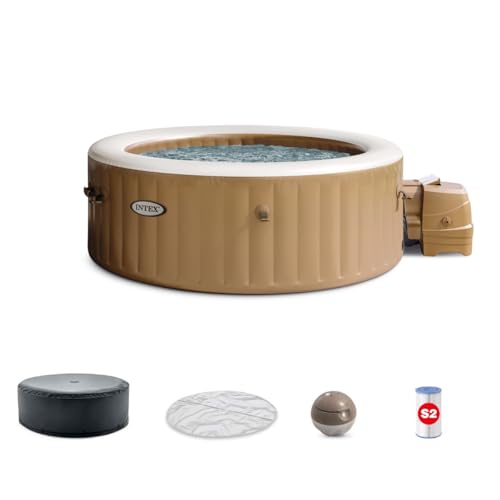
INTEX 28425EH PureSpa Bubble Massage Spa Set
Our badge: Best Overall
The INTEX 28425EH PureSpa Bubble Massage Spa Set is Florida’s best overall answer in this pool because its strengths map onto Florida’s problems one by one. Its 210-gallon volume is large enough for four soakers yet small enough to drain, refill, and rebalance in an afternoon when summer chemistry gets ahead of you. Its included energy-efficient cover is, in Florida, primarily a UV shield — and UV is the invisible tax on every Florida spa’s sanitizer. Its hard water treatment addresses the mineral content of Florida fills, and its saltwater-ready design gives households the gentler sanitation route detailed in Best Salt Water Hot Tubs For Sale.
Strengths
- Saltwater-system ready — a natural fit for Florida’s salt-pool households.
- Hard water treatment softens mineral-heavy Florida fill water.
- Included insulating cover doubles as the spa’s main UV and debris defense.
Trade-offs
- Air bubble massage only; no directional hydrotherapy jets.
- Inflatable format needs a storm plan — drain or secure before major weather.
- Fiber-Tech walls are firm but must be kept clear of lanai furniture edges and pet claws.
| Color | Tan |
| Size | 4-Person |
| Dimensions | 22.25 x 25.375 x 32.75 inches (package); spa outer 77 x 28 inches per features |
| Weight | 99.66 pounds |
Run a Florida year in this spa and the rhythm looks like this. Winter is the glory season: set the heater, soak under the early dark, and enjoy the months when a hot tub in Florida needs no apology. Spring asks for vigilance — pollen loads the filters, and the first algae-friendly warm rains test your sanitizer discipline. Summer flips the script: many owners drop the set temperature to the low end of the 68-to-104-degree range and use the spa as a warm plunge in the evening rather than a hot soak at noon, keeping the cover on through the brutal midday hours to slow both heat gain and chlorine loss. Autumn is maintenance season: inspect the cover for UV wear, deep-clean, and make the storm decision early if a system threatens — a drained, stored spa is a safe spa, and 210 gallons is a manageable drain.
Water care deserves its Florida paragraph. Sunlight destroys unstabilized chlorine quickly, so covered-when-idle is not an energy tip here; it is the chemistry strategy. Test more often in summer than winter — the state’s water-care cadence is seasonal in a way northern guides never mention. The test-strip habit is the cheapest insurance in the whole setup, and the strips’ role is covered in this series’ care coverage. Households near the coast should add a freshwater rinse of the exterior and hardware to the weekly routine; salt air corrodes patiently and rinsing interrupts it.
Best for: Florida households wanting one complete, flexible spa for the state’s real seasons / Not suited for: Buyers wanting a permanent hard-shell installation or hydrotherapy jets
Choose it if you want the full Florida playbook in one box. Skip it if your lanai plan is a permanent spa — the prose-only hard-shell picks below address that project.

Coleman SaluSpa Miami Energy-Efficient AirJet Inflatable Hot Tub
Our badge: Best for Small Florida Patios
The Coleman SaluSpa Miami Energy-Efficient AirJet Inflatable Hot Tub fits Florida’s dominant architecture: the screened lanai. At 71 inches round, it slides into the corner of a patio enclosure where a hard-shell spa would crowd out the grill, the loungers, and the door swing. Its 120 AirJets deliver a lively bubble soak, its EnergySense insulation works both directions in Florida’s climate — holding heat on a January night, resisting heat soak on an August afternoon — and its Freeze Shield, while rarely the headline in Florida, quietly covers the state’s occasional northern freezes without any owner action.
Strengths
- Compact 71-inch footprint suits lanais, townhouse patios, and rental homes.
- Insulated walls and cover rated up to 40% more energy-efficient than similar models.
- ChemConnect dispenser keeps chlorine distribution even between tests.
Trade-offs
- Two-to-four-person rating means couples comfort, groups compromise.
- Smaller volume swings chemistry faster in Florida sun — testing cadence matters.
- Inflatable format shares the storm-season drain-or-secure decision.
| Color | Black |
| Size | Energy Efficient 2.0 |
| Dimensions | 71 x 71 x 26 inches |
| Weight | 101.2 pounds |
The screened enclosure deserves recognition as Florida’s best hot tub accessory. Screening cuts the UV load on the water, keeps the leaf-and-lizard debris burden near zero, excludes the evening insects that otherwise share your soak, and softens storm-blown rain. A Miami inside a lanai lives an easier life than the same spa in an open Ohio yard, and its smaller volume becomes pure advantage: after a heavy-use weekend, a partial drain and refresh is an hour’s work, not a project. For snowbird households, the format is kinder still — a spa that can be drained, dried, and stored for the northern months beats a permanent installation baking unattended through a Florida summer.
Summer operation is the skill to learn. Set the temperature for the evening you want: many Florida owners soak in the low-to-mid nineties in July and August, which reads as warm relief rather than a hot bath, and reserve the full 104 degrees for winter. The power-saving timer aligns heating with the sunset soak instead of the whole day. And keep the cover honest — a warped, waterlogged cover in Florida is not just an energy leak; it is a UV and rain funnel. Inspect it each season, as the maintenance section below details. Families will find the supervision and routine framing in Best Hot Tubs For Families applies unchanged under the lanai.
Best for: Lanai and small-patio households, including seasonal residents / Not suited for: Groups larger than a couple plus guests, or permanent-installation seekers
Choose it if your Florida water life happens on a patio. Skip it if you need four-adult room — the Intex’s extra diameter is the honest upgrade.

Bestway SaluSpa Cancun Energy-Efficient Inflatable Hot Tub
Our badge: Best Compact
The Bestway SaluSpa Cancun Energy-Efficient Inflatable Hot Tub brings the same 120-jet, Freeze Shield, insulated-wall formula as the Miami, finished in a grey wicker pattern that suits Florida’s outdoor rooms particularly well — it reads as patio furniture rather than equipment. For condo-adjacent patios, rental properties, and design-conscious lanais, that visual discretion is a real feature: the spa blends into the space instead of announcing itself.
Strengths
- Wicker-look finish integrates with Florida patio furniture palettes.
- 120 AirJets, heating to 104 degrees, and Freeze Shield in a compact body.
- MaxHold beams and Tritech layers resist the puncture-and-flex wear of regular use.
Trade-offs
- Pool data lists placeholder dimensions; features confirm 71 x 26 inches — verify on the listing.
- Same small-volume chemistry sensitivity as the Miami in strong sun.
- Finish camouflage does not change inflatable care duties: cover, test, rinse.
| Color | Grey Wicker |
| Size | Energy Efficient 2.0 |
Choosing between the Cancun and the Miami is a legitimate coin-flip on substance, so decide on the Florida specifics: which finish suits your enclosure, which listing’s included extras are stronger on the day, and which is available before the season you want to start. The ownership experience converges — the same ChemConnect routine, the same timer-driven heating schedule, the same storm-season decision tree. That convergence is useful information for Florida buyers comparing across this whole category: at the inflatable tier, routine and placement decide satisfaction far more than badge.
One Florida-specific habit elevates either SaluSpa: the post-storm protocol. After heavy weather, before the next soak, skim and net the water even under a lanai, check the filter for the fine debris that blows through screens, test and rebalance — wind-driven rain is essentially a partial refill of untreated water — and inspect the cover’s underside for the mildew that Florida humidity cultivates. Ten minutes of protocol prevents the cloudy-water spiral that makes owners blame the spa for the weather. The outdoor placement principles behind all of this, including the oddly relevant lesson from Best Solar Bird Bath Water Pumps that small outdoor water systems live or die by their maintenance rhythm, are expanded in Best Place For Hot Tubs.
Best for: Style-conscious compact patios and screened enclosures / Not suited for: Buyers wanting maximum capacity or a set-and-forget permanent spa
Choose it if the wicker finish wins your patio’s heart. Skip it if you are still deciding between formats — the hard-shell discussion below may be your real destination.
SereneLife Inflatable Insulated Cold Plunge Tub
Our badge: Best for Florida Heat
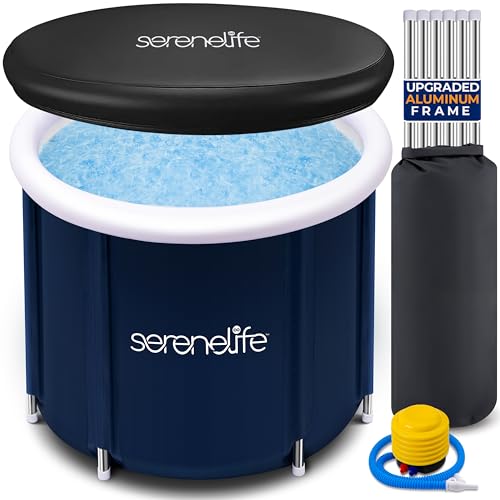
Let the framing be exact: the SereneLife Inflatable Insulated Cold Plunge Tub is a cold plunge tub, not a hot tub, and it is reviewed here on those terms only. It is a one-person, 78-gallon insulated plunge pod with a lid, a drain pipe, a foot pump, and a water cushion, designed to hold cold water cold — retaining temperature for up to two hours per the maker. In most states that earns it a niche mention. In Florida, where the hot tub question for half the year is really “how do I get into water that refreshes me,” it earns a headline pick.
Strengths
- Insulated construction and lid hold plunge temperatures against Florida heat.
- Complete package: drain pipe, foot pump, cushion, and storage bag included.
- 78-gallon single-person volume fills fast and turns over easily.
Trade-offs
- It does not heat. It will never be a hot tub, in any season, for any user.
- One person at a time — a solo ritual, not a social soak.
- Cold immersion is not for everyone; anyone with health questions should clear it with a clinician first.
| Color | Black |
| Size | 78 Gallon |
| Dimensions | 33.46 x 33.46 x 29.53 inches |
The Florida use case writes itself. A runner in Tampa finishes a July morning run in air that already feels like soup; a plunge at a bracing temperature is the recovery ritual athletes in the state swear by, framed here strictly as comfort and routine, not medicine. A homeowner without a pool gets a private cold-water option on a small patio footprint — under 34 inches square — at a fraction of a pool’s commitment. And the household that owns both this and one of the hot tubs above owns the full Florida water year: hot soaks for the winter evenings, cold plunges for the summer mornings, contrast routines for those who enjoy alternating, each tool honest about what it is.
Practical notes: the inflatable top ring doubles as neck support, the lid is the temperature strategy when the pod sits idle in the sun, and the drain pipe makes the frequent water changes of a small unheated volume painless. Keep the water clean with the same test-and-sanitize discipline as any standing water — cold does not sterilize — and shade the pod where you can; insulation slows heat gain, it does not repeal August. For the portable-format comparisons that include winter use of inflatables generally, see Best Portable Hot Tubs For Winter.
Best for: Florida athletes and heat-weary homeowners wanting a dedicated cold plunge / Not suited for: Anyone seeking warm or hot soaking — choose the picks above
Choose it if cold is the point. Skip it, without hesitation, if what you want is a hot tub — it is not one, and this guide will not pretend otherwise.
Hard-Shell Acrylic Spa with Full-Foam Insulation
Our badge: Best Premium
This pick is prose-only: the verified pool contains no hard-shell spas, so we describe the format Florida’s serious soakers eventually choose, without inventing a listing. A hard-shell acrylic spa — molded shell, real hydrotherapy jets, full-foam insulation, a locking insulated cover — is the permanent version of everything the inflatables rehearse. In Florida it answers three inflatable limits: capacity for real groups, jets with direction and pressure, and a structure that treats storm season as weather rather than as an evacuation order.
Strengths
- Hydrotherapy jets and ergonomic molded seating no inflatable can match.
- Full-foam insulation stabilizes temperature and chemistry in Florida’s heat.
- A permanent installation with a locking cover suits year-round family service.
Trade-offs
- Requires a proper pad, electrical service, and delivery planning — a project, not a purchase.
- Storm prep means securing and riding it out; it cannot be stored.
- Repairs need technicians and parts, not a patch kit.
| Type | Prose-only — hard-shell format, no pool product |
| Format | Permanent outdoor spa, molded acrylic shell |
| Best pairing | Owned homes with a long Florida horizon |
Florida shopping notes for the format: prioritize the cover’s quality and the cabinet’s UV and moisture resistance over jet counts; in this state, covers die of sun before shells die of anything. Ask how the spa handles a power outage in a heat wave — circulation stops, and warm still water in Florida turns quickly; a spa with a sane recovery and a household with a test kit handles it, while neglected water becomes a drain-and-refill. Salt-system compatibility is worth seeking for the reasons in Best Salt Water Hot Tubs For Sale, and coastal buyers should ask specifically about hardware corrosion resistance. The tier framing for such purchases lives in Best Hot Tubs Under $6000.
Best for: Homeowners committing to a permanent Florida spa with real jets / Not suited for: Renters, seasonal residents, or anyone wanting storm-season storability
Choose this format if the inflatable years have proven the habit and the house is long-term. Skip it if flexibility still matters — Florida life changes fast, and inflatables change with it.
Rotationally Molded Polyethylene Spa
Our badge: Best for Storm-Ready Simplicity
The second prose-only format is the hard-shell’s rugged sibling: a one-piece rotationally molded polyethylene spa, the kind sold as a plug-and-play, unibody tub with integrated seating and simple controls. It lacks the acrylic spa’s gloss and jet sophistication, and in Florida it compensates with a virtue the state rewards: indifference. One-piece polyethylene does not delaminate in heat, does not mind being moved by two adults when a storm re-arranges the yard plan, and forgives the bumps of a working family’s patio.
Strengths
- One-piece construction tolerates heat, moves, and casual treatment.
- Lighter than acrylic spas — repositioning for storms or shade is realistic.
- Simple systems mean fewer components for humidity and salt air to attack.
Trade-offs
- Jets and seating comfort are a tier below molded acrylic.
- Plug-and-play electrical limits heater-and-jet simultaneity on many models.
- Aesthetics are utilitarian; lanai stylists may prefer the Cancun’s trick.
| Type | Prose-only — roto-molded format, no pool product |
| Format | One-piece polyethylene spa, often plug-and-play |
| Best pairing | Rental-friendly and storm-flexible Florida yards |
For Florida’s rental and second-home market, this format threads a needle: more permanent and jet-equipped than an inflatable, less of a capital installation than an acrylic spa, and movable when tenancy or storm plans change. Its insulation is typically partial rather than full-foam, which in Florida’s mild winters is a smaller sacrifice than in the north — one more case of the state’s climate rewriting the national buying advice, exactly as it does for the two-person formats in Best Two Person Hot Tubs For Sale.
Best for: Florida households wanting hard-shell simplicity with storm flexibility / Not suited for: Buyers prioritizing jet therapy or a furniture-grade finish
Choose this format if toughness and movability outrank gloss. Skip it if the spa is a design centerpiece — acrylic or the wicker-finished inflatable wears the lanai better.
Comparison Table
| Pick | Format | Capacity / Size | Florida strength | Check price on Amazon |
|---|---|---|---|---|
| INTEX PureSpa | Inflatable spa | 4-person, 210 gallons | Saltwater-ready, hard water care, cover | Check price on Amazon |
| Coleman SaluSpa Miami | Inflatable spa | 2-4 person, 71 x 26 inches | Lanai footprint, efficient insulation | Check price on Amazon |
| Bestway SaluSpa Cancun | Inflatable spa | 2-4 person, 71 x 26 inches | Wicker finish for enclosures | Check price on Amazon |
| SereneLife Cold Plunge | Cold plunge pod | 1-person, 78 gallons | Cold water for hot months | Check price on Amazon |
| Hard-shell acrylic spa | Prose-only format | Permanent, multi-seat | Jets, capacity, permanence | Check price on Amazon |
| Roto-molded spa | Prose-only format | One-piece, movable | Storm-ready toughness | Check price on Amazon |
How to Choose the Best Hot Tubs for Florida
Put UV at the top of the chemistry plan
Florida sun consumes sanitizer faster than any other state’s conditions. Choose systems and habits that fight it: a cover that stays on when the spa is idle, stabilized sanitation where the system allows, and a testing cadence that tightens in summer. If a product or routine cannot describe its UV answer, it does not have one.
Decide your summer temperature strategy before you buy
A Florida spa earns its keep in summer as a warm plunge, not a hot bath. Confirm the tub’s range reaches genuinely low settings — the Intex’s range starts at 68 degrees — and plan shade over the spa so ambient heat does not push idle water into the algae-friendly zone. Evening soaking under a lanai is the Florida summer ritual; buy for it.
Make the storm decision part of the purchase
Inflatable, roto-molded, or acrylic — each format has a storm posture: store it, move it, or secure it. Decide yours before the season, know your drain time, and keep the storage space the plan assumes. A spa with no storm plan in Florida is a countdown, not an appliance.
Respect salt air if you are coastal
Within a few miles of the coast, hardware, covers, and electronics live in a corrosive mist. Favor simple systems, rinse exteriors weekly, and inspect cover stitching and hardware each season. Inland buyers can relax the cadence; coastal buyers cannot.
Match the format to your residency pattern
Year-round owners can justify permanent formats. Snowbirds and renters should weight drainability and storage heavily — an unattended spa in a Florida summer becomes a science project within weeks. The inflatables’ storability is, for seasonal households, their single most important specification.
How Do You Keep a Florida Hot Tub Balanced in Summer?
The summer routine is a rhythm of shade, cover, and testing. Keep the cover on through peak sun; it is your sanitizer’s bodyguard. Test before the weekend and after any heavy rain — Florida downpours are partial refills of untreated, slightly acidic water, and they will swing your balance if you let them accumulate unmeasured. Run filtration on the longer end of the maker’s guidance in the hot months; warm water rewards circulation. Rinse filters more often, because pollen and storm-blown fines load them faster than northern owners ever see. And watch the waterline: the combination of sunscreen, heat, and heavy use builds a summer scum line that a weekly wipe prevents from becoming a stain.
Problem: Sanitizer reads zero by midweek — UV burn-off plus summer bather load. Verify the cover is truly on during peak hours, check stabilizer if your system uses it, and shorten the test interval before increasing doses blindly.
Problem: Green tint after a storm week — Rain dilution plus warm water equals algae opportunity. Shock per your system’s method, run filtration continuously until clear, and clean the filter — then return to the post-storm protocol after every major rain.
Problem: The water feels too warm to enjoy in August — Lower the set point toward the range’s floor, soak after sunset, and add shade. If warm water is simply not the August answer at your house, that is the cold plunge’s entire reason for being on this list.
Problem: Mildew smell from the cover — Florida humidity colonizes the underside. Clean and fully dry the cover in shade, inspect for waterlogging, and store the spa’s idle hours with the cover’s vents managed per the maker’s guidance.
Hurricane Season: The Florida Spa Playbook
June through November, every Florida spa needs a written storm posture, decided in May. For inflatables, the safe play at a major storm warning is drain, dry, and store — the volumes here are small enough that refilling after the storm is a minor cost against a spa blown into a fence. For roto-molded tubs, drain or secure per the maker’s guidance and move to the most sheltered position available. For permanent acrylic spas, the standard play is to keep water in for weight, power down at the breaker, secure the cover with storm straps, and clear the surrounding yard of anything that could become a projectile aimed at your shell.
After the storm, the protocol reverses: inspect before energizing, net and skim debris, test and rebalance before any soak, and treat flood-contaminated water as a drain-and-refill, not a chemistry puzzle. Households that rehearse this once own it forever; households that improvise it at midnight in a watch box own the consequences. Florida spa ownership is genuinely rewarding — the winter soaking season alone justifies it — but the state charges this one administrative fee, and it is non-negotiable.
Lanais, Pools, and Salt Systems: Florida’s Water Ecosystem
Florida homes often run an ecosystem, not a single water feature: a pool, perhaps a salt system, outdoor rinsing habits, and now a spa. The ecosystem view simplifies choices. Households fluent in salt pool care will find the Intex’s saltwater-ready design the shortest learning curve, and the wider salt discussion in Best Salt Water Hot Tubs For Sale maps the conversion logic. Households with a pool already own the test-kit habit and the chemical storage discipline; the spa simply joins the rounds. Even the garden participates — the series’ one live outdoor reference, Best Solar Bird Bath Water Pumps, belongs to the same Florida truth: outdoor water in this state is a maintained system, never a set-and-forget ornament.
The lanai ties the ecosystem together physically. It shades the spa, screens the soak, shelters the cover’s off-duty hours, and keeps the debris load low enough that Florida’s chemistry burden stays manageable. If a renovation dollar must choose between a fancier spa and a better enclosure, Florida veterans choose the enclosure — the spa inside it will live longer, cost less to run, and be used on more evenings of the year.
Common Buying Mistakes
Importing northern buying advice unchanged
Maximum insulation and heater power top northern lists; in Florida they rank below UV defense, summer temperature strategy, and storm posture. A spa perfect for Maine can be a mediocre Florida purchase.
Underestimating summer chemistry
Owners who test on a northern cadence spend August chasing cloudy water. Florida summer demands tighter testing and a cover that is actually used. Buy the routine, not just the tub.
Leaving a spa baking through an unattended summer
Seasonal residents who leave water standing in an unattended spa return to a drain-and-scrub remediation. Drain and store for long absences — inflatables make this easy, which is why they lead this guide.
Ignoring the cover’s Florida lifespan
UV eats covers in Florida faster than anywhere else in the country. A cheap replacement cycle belongs in the budget from day one, and a warped cover should be replaced promptly — it is the chemistry system, not a lid.
Siting the spa in full, unshaded sun
Full sun maximizes every Florida problem at once: heat gain, UV burn-off, cover aging, and soaker discomfort. Shade — from a lanai, a sail, or a tree line — is the cheapest performance upgrade in the state.
Final Recommendation
Florida’s best overall buy in this pool is the INTEX 28425EH PureSpa Bubble Massage Spa Set: saltwater-ready, hard-water-aware, covered against the UV, and sized for painless storm-season draining. The runner-up for lanai life is the Coleman SaluSpa Miami — Check on Amazon — compact, efficient, and at home under screening. Add the SereneLife cold plunge if August defeats your warm-water intentions, and consider the hard-shell formats when the habit and the house are both permanent. The best hot tubs for Florida are the ones bought for Florida — sun, storms, salt, and all.
Florida’s Water Itself: Hardness, Salt Air, and Fill Realities
Every Florida spa begins as a fill of Florida water, and the state’s water has a personality: much of it is drawn from limestone aquifers, arriving hard with calcium and minerals that scale heaters, cloud finishes, and feed the deposits that shorten equipment life. This is why the Intex’s hard water treatment earned its emphasis at the top of this guide — in Florida, hardness management is not a regional garnish but the first chapter of water care. Households on softened house water should still test the fill rather than assume it, because outdoor hose bibs are frequently plumbed ahead of the softener, and many a Florida spa has been filled with raw aquifer while its owner believed otherwise. The fill ritual that follows from this is simple and statewide: test the source water once, note its hardness and alkalinity in the spa log, and let those numbers set the balancing routine’s starting point each refill.
Salt air deserves its second mention here because its effects compound silently. Within the coastal band, airborne salt settles on covers, hardware, and nearby metal furniture, holding moisture against surfaces and accelerating corrosion in a way inland owners never budget for. The countermeasures are unglamorous and effective: the weekly freshwater rinse of the spa’s exterior and surroundings, covers stored dry-side protected, and a seasonal hardware inspection that catches the first freckles of rust while they are still a cleaning event rather than a replacement. Florida ownership, in the end, is a negotiation with a beautiful, corrosive, sun-drenched environment — and the owners who thrive are the ones who read the state’s terms early and sign them knowingly.
Snowbirds, Rentals, and Second Homes: Florida’s Special Ownership Cases
Florida’s housing patterns create spa cases the national guides ignore. The snowbird household faces the unattended-summer problem in its purest form: a spa left filled and running through months of absence accumulates chemistry drift, storm exposure, and cover aging with no hand to correct any of it, while a spa drained and stored asks only for a recommissioning weekend on return. For inflatables, storage wins almost every time — it is the format’s structural advantage in this state. Households that must leave water running should arrange a service visit rhythm and a storm contact, because Florida’s summer will test an unattended spa on every axis this guide has named. Rental properties invert the problem: the spa is attended constantly but by strangers, which argues for the simplest systems, laminated routine cards, covers that cannot be misused, and a manager’s weekly chemistry check as a non-negotiable line in the operating budget. Second homes split the difference and reward the same answer as snowbirds — formats that store, systems that simplify, and a local service relationship for the rest. In every special case, the principle survives: match the spa’s demands to the attention actually available, and Florida will do the rest of the work beautifully.
Florida Wildlife and the Spa: Lizards, Frogs, and Other Stakeholders
No Florida guide is complete without acknowledging the state’s third party to every outdoor water feature: its wildlife. The same warmth that makes the soaking glorious makes an uncovered spa an invitation — frogs that treat warm water as a breeding pond, lizards that patrol the rim for insects, the occasional snake that follows the frogs, and insects in a diversity that northern owners meet only in documentaries. The defenses are the ones this guide has already built for other reasons, which is the pleasant news: the cover that blocks UV also blocks fauna, and a cover kept on and secured is the entire wildlife strategy for most households. The screened lanai excludes the rest, which is one more entry in its ledger as the state’s best spa accessory. Where critters do breach — a frog in the water is a Florida rite of passage — the protocol is calm: remove the visitor, skim and net, test and rebalance before soaking, and treat any carcass discovery as a shock-and-verify event rather than a soak. Owners who keep the cover discipline find the wildlife chapter of Florida spa ownership to be mostly comedy. Owners who leave covers off find it to be a recurring subscription. The state’s nature is not a defect of the purchase; it is the purchase’s setting, and the setting is managed exactly like its sun and storms — by routine, respectfully, and without surprise after the first season.
The Evening Economy: Why Florida Soaking Peaks After Sunset
Florida’s spa culture has a daily rhythm that visitors find backwards and residents find obvious: the hot tub’s prime time is not the golden afternoon but the hour after sunset, when the air finally releases its grip, the insects retreat behind the lanai’s screen, and warm water stops competing with the sun and starts complementing the evening. Owners build their rituals on that hour — the timer set to peak at dusk, the cover coming off as the light goes, the soak that ends the outdoor day the way a porch ends a house. Everything in this guide quietly serves that hour: the shade that kept the water manageable, the cover that kept the chemistry alive through the brutal middle of the day, the insulation that now holds the evening’s heat against the night’s mild fall. A Florida spa judged at noon looks like a questionable purchase; the same spa judged at eight in the evening, in January or in July, looks like the reason people move to Florida. Buy for the hour you will actually keep, and the state’s whole climate — the adversary of every earlier section — becomes, at that hour, the amenity it was advertised to be.
Frequently Asked Questions
Can you use a hot tub year-round in Florida?
Yes — Florida is one of the best year-round spa states, with winter as the prime hot-soaking season and summer handled by lowering the set temperature for evening warm plunges. The year-round skills are UV-aware water care and a storm-season plan.
How do I keep algae out of a Florida hot tub?
Never let sanitizer sit at zero: cover the spa against UV, test more often in summer, run generous filtration, and shock after storms and heavy use. Algae in Florida is a routine failure, not a product failure.
Should a Florida spa be in sun or shade?
Shade — ideally a screened lanai. Shade slows sanitizer burn-off, limits heat gain, protects the cover, and makes evening soaking pleasant. Full-sun siting maximizes every Florida maintenance burden simultaneously.
What do I do with an inflatable hot tub before a hurricane?
Drain it, dry it, and store it indoors before the storm arrives; the volumes in this guide refill quickly afterward. Permanent spas stay filled for weight, powered down, with covers strapped. Never run a spa during a storm.
Is a cold plunge worth it in Florida?
For many Florida households, yes — it is the water ritual the summer months actually call for, on a small footprint with simple upkeep. It is a complement to a hot tub, not a substitute, and this guide reviews it strictly as a cold plunge.
Does salt air really damage hot tubs?
Coastal salt mist corrodes hardware and degrades covers over time. Weekly freshwater rinsing of exteriors, simple-system choices, and seasonal inspections keep the damage cosmetic rather than structural.


