Disclosure: As an Amazon Associate, dailyhomedecorating.com earns from qualifying purchases. Links to Amazon on this page are affiliate links; they cost you nothing extra. Prices and availability change often, so check the current Amazon listing before you buy.
Shocking a hot tub sounds violent and is actually housekeeping: it is the periodic oxidation that burns off the waste your sanitizer has already killed, frees the sanitizer to work again, and resets water that has gone dull, foamy, or faintly uninviting. The best shock for hot tubs depends on the sanitizer system you run, because shock is not a product category so much as a job done by two different chemistries: chlorine-based shock, which sanitizes and oxidizes in one dose, and non-chlorine oxidizer, which only oxidizes and leaves the sanitizing to your bromine, chlorine residual, or mineral system. This guide ranks four verified products you can buy today that cover the shock job and its supporting cast, testing and maintenance systems included, and adds two prose-only shock types that complete the picture for bromine and biguanide-style routines, because a guide that sold you the wrong chemistry for your system would be worse than no guide at all.
The symptoms that send owners shopping are worth naming, because shock treats causes rather than smells. Cloudy water that filtration does not clear, a sanitizer reading that will not hold despite correct dosing, foam that survives skimming, and that flat, used smell when the cover lifts are all the signature of chloramines and bather waste overwhelming the water’s oxidation capacity. Shock is the reset button for that state, and used on rhythm rather than in panic it is also the prevention. The companion guides in this lot cover the systems shock serves: Best Bromine For Hot Tubs for bromine households, Best Non Chlorine Shock For Hot Tubs for owners who want the oxidizer-only route in depth, and Best Filtration System For Hot Tubs for the mechanical half of clear water.
Read the Quick Picks to match a product to your system, then the reviews, which are explicit about which sanitizer each product serves and which it would fight. The buying guide explains the chlorine-versus-oxidizer decision in full, and the how-to sections give the shock routine step by step, with the mistakes that turn a reset into a chemistry lesson nobody wanted.
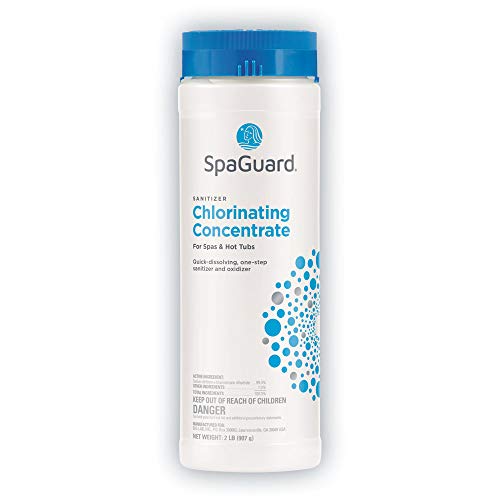
Where to Buy
All four linked picks are sold on Amazon, where you can check current price, availability, and the full label directions, which govern every dose. Start with the SpaGuard Spa Chlorinating Concentrate, the dual-purpose sanitizer and shock at this guide’s head, and confirm it through its Check on Amazon link. The other linked picks are the Leisure Time Reserve — Check on Amazon — the AquaDoc 7-in-1 Test Strips — Check on Amazon — and the FROG @Ease Mineral and SmartChlor System — Check on Amazon. The prose-only shock types are sold in every spa aisle; buy them by their chemistry name, monopersulfate for non-chlorine oxidizer, rather than by brand promises.
In this guide
Quick Picks
| Pick | Badge | Why it earns its place |
|---|---|---|
| SpaGuard Spa Chlorinating Concentrate | Best Overall | A quick-dissolving granular chlorine that works as both regular sanitizer and shock, pH neutral in use. |
| Leisure Time Reserve | Best for Bromine Systems | A bromine-bank sanitizer that pairs with an oxidizer as the non-chlorine shock system for bromine spas. |
| AquaDoc 7-in-1 Test Strips | Best Testing Partner | Two hundred strips covering chlorine, bromine, pH, alkalinity, hardness, and more, so shock is dosed on evidence. |
| FROG @Ease Mineral and SmartChlor System | Best Low-Shock Maintenance | A mineral plus SmartChlor system for specific spa brands that holds a low, consistent chlorine level and reduces rescue shocking. |
| Monopersulfate Non-Chlorine Shock (Type) | Best Oxidizer-Only | The classic non-chlorine shock: oxidizes waste without adding sanitizer, for bromine and mineral systems. |
| Bromine-System Shock Pairing (Type) | Best Bromine Routine | The scheduled oxidizer dose that reactivates a bromine bank and keeps bromine water sparkling. |
Key Takeaways
- Shock means oxidize: chlorine shock also sanitizes, non-chlorine shock only oxidizes, and your system decides which you need.
- Dose on evidence from a test, not on smell or schedule alone, and always follow the product label over any guide.
- Shock with the cover open, jets running, and the household out of the water until levels return to range.
- Bromine spas shock to reactivate the bromine bank; chlorine spas shock to destroy chloramines; the words differ because the chemistry does.
- A maintenance system that holds sanitizer steady, like the FROG pick for its named spa brands, reduces how often rescue shocking is needed.
- Never mix shock products, never add water to chemical, and store spa chemicals dry, separated, and away from children.
How These Picks Were Chosen
Linked picks come from the verified supplement pool, with features and specifications taken from the manufacturers’ listings and shown in the spec boxes. The selection deliberately covers the shock ecosystem rather than four rival oxidizers: a chlorine concentrate that sanitizes and shocks in one, a bromine-system foundation product, the test strips without which shocking is guesswork, and a mineral maintenance system whose steady low sanitizer level changes how often shock is needed at all. The prose-only types name the two oxidizer routines, monopersulfate shock and the bromine pairing, that complete the category for systems the linked products serve indirectly.
Excluded were pool-scale shock products dosed for thousands of gallons, which invite dangerous arithmetic in a few-hundred-gallon spa, and any product whose label does not address spa use. Also excluded is the idea of a universal shock: this guide’s central claim is that shock choice is system choice, and products are ranked within their systems rather than against each other across them. Safety framing follows the labels: these are reactive chemicals, and the guide’s instructions never override a product’s own directions.
Water-care claims are kept to what oxidation honestly does, clearing waste and restoring sanitizer efficiency and water clarity. No health or disinfection outcome beyond the products’ labeled purposes is promised, and bather safety rules, waiting until sanitizer returns to the labeled range before soaking, are treated as part of the product’s correct use.
The 6 Best Shock for Hot Tubs — Reviewed
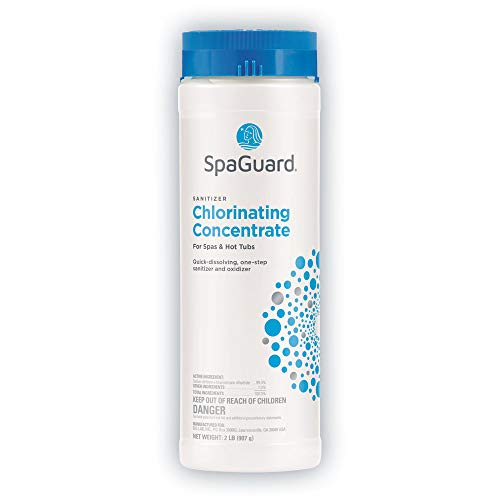
SpaGuard Spa Chlorinating Concentrate
Our badge: Best Overall
The SpaGuard Spa Chlorinating Concentrate leads this guide because it does the shock job and the sanitizer job in one quick-dissolving granular product. SpaGuard describes it as a one-step sanitizer and oxidizer for spas and hot tubs: used in regular small doses it maintains the chlorine residual, and used in a larger shock dose it super-chlorinates, destroying the chloramines and waste that dull the water. It dissolves quickly and completely when added with the pump running, and it is formulated to be pH neutral in use, so the shock does not drag the water’s balance sideways as it works. For the large population of chlorine spas, it collapses two bottles into one, which is a genuine safety and simplicity virtue in a chemical cupboard.
Strengths
- Sanitizer and shock in one granular product, reducing cupboard complexity.
- Quick-dissolving and pH neutral in use, so balance survives the reset.
- Backed by a specialist spa-care range with clear labeling.
Trade-offs
- It is chlorine: bromine and biguanide-system owners need the oxidizer route instead.
- Shock doses raise chlorine well above soaking range, so the wait to re-enter is part of the method.
- Granules must be added to water with circulation, never pre-mixed or combined with other products.
| Color | White |
|---|---|
| Size | 2 lb |
| Dimensions | 9.5 x 3 x 3 inches |
| Weight | 2 pounds |
The routine is the classic chlorine one: test, dose per the label for your gallons, run the jets with the cover open for the directed period, and test again before anyone soaks. Used weekly at maintenance rhythm and after heavy use at rescue strength, it keeps a chlorine spa in the state owners describe as easy without knowing why it is easy. Store it dry and separate from every other chemical, as its label directs, and it will be the hardest-working bottle on the spa shelf.
Best for: chlorine-system spas wanting one product for sanitizing and shocking / Not suited for: bromine or biguanide systems
Choose SpaGuard as the chlorine system’s backbone. Skip it if your spa runs on bromine, and build your routine on the picks below. Check on Amazon

Leisure Time Reserve
Our badge: Best for Bromine Systems
The Leisure Time Reserve is the foundation half of the classic non-chlorine shock story for bromine spas. Leisure Time describes it as a liquid bromine sanitizer that creates a chlorine-free sanitation system: added at fill and weekly thereafter, it establishes a bank of bromine in the water, and it is designed to be used with an oxidizer, the maker’s Renew, as the system’s shock. The shock’s role in that pairing is elegant: the oxidizer does not sanitize, it reactivates the bromide bank into active bromine, so the spa’s sanitizer is regenerated by the shock rather than replaced by it. If your spa runs bromine, this product and its oxidizer partner are the routine this guide’s bromine sections keep describing.
Strengths
- Builds the bromine bank that oxidizer shock then reactivates.
- Liquid form dissolves fast for immediate effect at fill and weekly.
- Part of a complete, labeled chlorine-free system rather than an improvisation.
Trade-offs
- It is one half of a two-part system; the oxidizer partner is a separate purchase and habit.
- Bromine systems need bromine-appropriate testing, which the AquaDoc pick below covers.
- Not a stand-alone shock for chlorine spas, where the SpaGuard route is direct.
| Size | 1-Pack |
|---|---|
| Dimensions | 3.12 x 3.12 x 9.38 inches |
| Weight | 2.5 pounds |
Owners who choose bromine usually do so for its steadiness at hot-tub temperatures and its gentler feel, and the Reserve system is how that choice is operated: bank maintained weekly, oxidizer shock after use patterns the maker specifies, and testing that reads bromine rather than guessing from a chlorine chart. Set the pair up together from the first fill and the spa’s water care becomes a two-bottle rhythm that experienced bromine owners describe as the easiest in the category.
Best for: bromine-system spas wanting the labeled two-part routine / Not suited for: chlorine spas or owners wanting a single bottle
Choose Reserve as the bromine foundation. Skip it if your system is chlorine from the start. Check on Amazon

AquaDoc 7-in-1 Test Strips
Our badge: Best Testing Partner
The AquaDoc 7-in-1 Test Strips are in a shock guide because shock without testing is folklore. This pack of two hundred strips tests seven parameters that govern spa water: total chlorine, free chlorine, bromine, pH, total alkalinity, total hardness, and cyanuric acid, with a simple dip, a short wait, and a color-chart read, and the strips can also work with the maker’s digital reader for owners who want the guesswork removed. Two hundred strips is not a trivial detail: it is the difference between testing before and after every shock, as method requires, and rationing strips until testing becomes a monthly rumor.
Strengths
- Covers both chlorine and bromine systems plus the balance parameters shock decisions need.
- Generous count supports the test-dose-test rhythm without rationing.
- Fast, simple method that a whole household can be taught.
Trade-offs
- Strip reading is comparative; precision seekers will graduate to liquid kits or the digital reader.
- Strips age and must be stored dry and used before their date.
- Testing tells you the water’s state, not the dose; the shock label still governs the arithmetic.
| Size | Digital Water Test Kit |
|---|
The habit this pick enables is the whole ballgame: test before you shock so the dose fits the water, shock per the label, then test again before soaking so the re-entry decision is a reading rather than a hope. Owners who keep strips at the spa, in a dry container, with a pencil log, stop having mysterious water, because the mystery was always untested water wearing a disguise.
Best for: every spa owner, as the shock routine’s evidence base / Not suited for: owners wanting laboratory precision from a strip
Choose AquaDoc to make shocking a measurement. Skip it only if you already own and use a liquid test kit faithfully. Check on Amazon
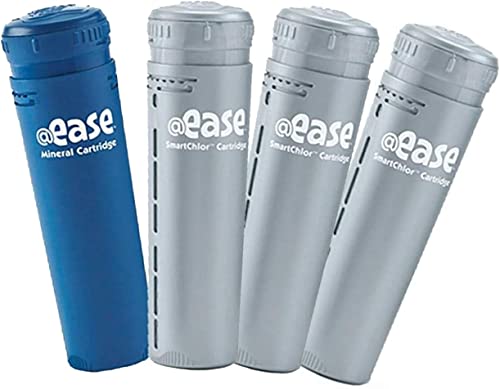
FROG @Ease Mineral and SmartChlor System
Our badge: Best Low-Shock Maintenance
The FROG @Ease Mineral and SmartChlor System earns its place in a shock guide by changing how much shocking a spa needs. Built for specific spa families, the listing names Artesian, Marquis, Caldera, and Hot Spring models among its fits, and sized for spas up to six hundred gallons, the system pairs a mineral cartridge that lasts months with SmartChlor cartridges that last weeks each, holding a consistent low free-chlorine level and, in the maker’s description, using substantially less chlorine than conventional dosing. Minerals condition the water and help keep pH steadier while the low, steady sanitizer level does its work, so the waste load that shock exists to burn off accumulates more slowly and the water’s clarity holds between interventions.
Strengths
- Steady low sanitizer level reduces rescue shocking and water drama.
- Mineral conditioning supports softer-feeling, steadier water.
- Cartridge rhythm replaces daily measuring for compatible spas.
Trade-offs
- Compatibility is specific to named spa families and models; it is not a universal system.
- Cartridges are a recurring proprietary purchase.
- It maintains rather than rescues: a neglected spa still needs a conventional shock and rebalance first.
| Size | up to 600 Gallons |
|---|---|
| Dimensions | 10 x 10 x 10 inches |
Compatibility is the entire first question: confirm your spa is on the system’s fit list before anything else, because the cartridges are engineered for those spas’ in-line holders. Owners of compatible spas who adopt it typically keep a conventional shock on the shelf for after-party resets and seasonal deep cleans, and find they reach for it rarely, which is exactly the relationship this badge celebrates. For everyone else, the lesson transfers without the product: steady sanitizer, however achieved, is the cheapest shock strategy there is.
Best for: owners of the named compatible spa brands wanting low-maintenance water / Not suited for: incompatible spas or neglected-water rescue
Choose FROG @Ease if your spa is on its list. Skip it, without regret, if it is not. Check on Amazon
Monopersulfate Non-Chlorine Shock (Type)
Our badge: Best Oxidizer-Only
Monopersulfate shock, universally sold as non-chlorine shock and described here as a type, is the oxidizer half of spa chemistry in its purest form. It burns off chloramines, bather waste, and the organic load that clouds water and consumes sanitizer, while adding no sanitizer of its own. That single fact defines its kingdoms: it is the correct shock for bromine systems, where it reactivates the bank, for mineral systems, where it clears the way for a low sanitizer level, and for chlorine spas whose owners want to oxidize between soaks without pushing chlorine above soaking range, since a spa can typically be used again soon after a non-chlorine shock once the label’s short wait has passed and levels test right.
Strengths
- Oxidizes waste without raising sanitizer, suiting bromine and mineral systems.
- Allows a faster return to soaking than a chlorine shock, per label directions.
- The universal partner product for two-part systems like the Reserve routine.
Trade-offs
- It does not sanitize; a spa with no sanitizer residual is not made safe by oxidizing it.
- It can nudge pH and total dissolved solids over time, so balance testing remains part of the rhythm.
- Brand names hide the chemistry; buyers must read for monopersulfate on the label.
Buy it by its chemistry name, dose it by its label for your gallons, and pair it with honest testing, because its great misuse is as a substitute for sanitizer rather than as sanitizer’s partner. In the bromine routine it is the weekly heartbeat; in a chlorine spa it is the midweek refresher; in both it is the product that makes water sparkle without drama.
Best for: bromine and mineral systems, and chlorine spas between soaks / Not suited for: any spa as its only water treatment
Choose monopersulfate as the oxidizer of record. Skip it as a standalone treatment, always.
Bromine-System Shock Pairing (Type)
Our badge: Best Bromine Routine
The bromine-system shock pairing, described as a type, is the scheduled oxidizer dose that a bromine spa’s whole chemistry is organized around. Bromine’s sanitizer lives in the water as a bank of bromide ions; the oxidizer shock converts that bank into active bromine, which sanitizes and is then partly returned to the bank, in a cycle that makes bromine uniquely economical at hot-tub temperatures. The pairing as a routine, bank maintained with a product like the Reserve pick, oxidizer dosed after use and weekly, testing read on the bromine scale, is less a product than a discipline, and it earns its badge because bromine owners who run it stop having water problems that bromine owners who improvise it keep having.
Strengths
- Regenerates the sanitizer rather than replacing it, for economical chemistry.
- Steady, gentle water character that bromine households choose on purpose.
- A clear, teachable rhythm of bank, oxidize, test.
Trade-offs
- Two-part discipline; skipping the bank starves the shock of anything to activate.
- Bromine testing and dosing differ from chlorine habits and must be learned as their own system.
- Not transferable to biguanide systems, which need their own oxidizer pairing.
Owners converting from chlorine should treat the pairing as a new language rather than a translation: drain, refill, establish the bank, and run the bromine rhythm from a clean start, using the dedicated guide Best Bromine For Hot Tubs for the full conversion and care picture. The reward is the steadiest water in the category, maintained by the shock routine this section exists to honor.
Best for: committed bromine households / Not suited for: owners wanting one-bottle simplicity
Choose the pairing as a system, not a product. Skip it if your temperament is strictly single-bottle, and run chlorine honestly instead.
Comparison Table
| Pick | System | Role | Form | Check price on Amazon |
|---|---|---|---|---|
| SpaGuard Chlorinating Concentrate | Chlorine | Sanitizer + shock | Granular | Check price on Amazon |
| Leisure Time Reserve | Bromine | Bank builder, pairs with oxidizer | Liquid | Check price on Amazon |
| AquaDoc 7-in-1 Test Strips | All | Testing | Strips, 200 count | Check price on Amazon |
| FROG @Ease System | Named spa brands | Low-level maintenance | Cartridges | Check price on Amazon |
| Monopersulfate Shock (Type) | Bromine / mineral / chlorine assist | Oxidizer only | Granular | Check price on Amazon |
| Bromine Shock Pairing (Type) | Bromine | Scheduled routine | System | Check price on Amazon |
How to Choose the Best Shock for Hot Tubs
Name Your Sanitizer System First
Chlorine, bromine, mineral-assisted, or biguanide: the answer decides the shock shelf before any brand is discussed. Chlorine systems shock with chlorine or monopersulfate. Bromine systems shock with monopersulfate to reactivate the bank. Mineral systems oxidize gently and often. Biguanide systems use only their own compatible oxidizer, and neither chlorine nor bromine products may enter them. A shock bought without this answer is a coin toss with reactive chemicals, which is the worst kind.
Separate the Sanitizer Question From the Oxidizer Question
Cloudy water with a healthy sanitizer reading needs oxidation. Clear water with a sanitizer reading that will not hold needs sanitizer, balance correction, or a drain, not necessarily shock. The two questions have different products and different arithmetic, and the test strip, used before shopping, is what tells you which question your water is asking.
Check Dose Scale Against Your Gallons
Buy spa-scale products labeled for a few hundred gallons. Pool shock dosed by the pound invites conversion errors in a spa, and granular spa products like the SpaGuard pick are measured in spoonfuls for a reason. Your label, your gallons, your dose: that triangle, respected, is the entire safety system of spa chemistry.
Value the Maintenance System Honestly
If shocking feels like a weekly emergency, the problem is the maintenance underneath it. A steady sanitizer routine, or a cartridge system like the FROG pick for its compatible spas, converts shock from rescue to rhythm. Price the system against your rescue habits, not against the shock bottle alone.
How to Shock a Hot Tub, Step by Step
Test the water first and note sanitizer, pH, and alkalinity, because shock works inside balance and fails outside it. Correct alkalinity and pH if they are out of range, or at least know that the shock’s effect will be blunted until they are. With the pump running and the cover open, add the label’s dose for your gallons, sprinkling granular product across the surface rather than dumping it in one spot, and run the jets for the directed circulation period so the oxidation reaches every corner and the gases it releases can leave. Keep everyone out of the water. Retest before soaking: chlorine-shocked water returns to use when free chlorine falls back into the label’s soaking range, and non-chlorine-shocked water after the label’s shorter wait with sanitizer confirmed present. Log the dose and the readings, because next month’s water will ask what this month’s water answered.
Rhythm beats rescue. A weekly oxidizer or shock at maintenance dose, plus a dose after heavy use, parties, or any absence during which the spa sat unattended, keeps the waste load below the threshold where water turns. Owners who shock on rhythm use less chemical across a season than owners who shock in panic, because panic doses are larger, repeated, and usually accompanied by a drain and refill that rhythm would have made unnecessary.
Problem: The water smells strongly of chlorine — Counterintuitively, that smell is usually chloramines, spent chlorine bound to waste, and the cure is more oxidation, a proper shock, not less chlorine; test first, then shock per the label and ventilate with the cover open.
Problem: Foam returns within days of shocking — Foam is fed by lotions, detergents from swimwear, and waste load; shock on rhythm, rinse suits in plain water, clean or replace the filter, and skim, rather than escalating doses.
Problem: Sanitizer reading vanishes within a day of shocking — Something is consuming it: heavy waste load, a failing cover letting debris in, or water old enough that a drain and refill is the honest reset; test, shock once more, and if it vanishes again, drain.
Problem: Cloudy water survives two shocks — Stop adding chemistry and check the mechanical side: filter condition, circulation hours, and water age, using the filtration guide’s checks, because oxidation cannot compensate for water that is not being filtered or is simply old.
The Weekly Water-Care Rhythm Shock Belongs To
Shock does not live alone, and this section places it in the week it belongs to. Test two or three times a week in a used spa, a strip’s ten seconds against the AquaDoc pick’s chart. Balance alkalinity first when it drifts, then pH, because sanitizer efficiency rides on both. Shock weekly and after heavy use, per your system’s chemistry. Rinse the filter monthly and deep-clean it on the filtration guide’s rhythm, because a loaded filter returns waste to water that shock then has to burn. Top up sanitizer or check cartridges on their own schedules, and inspect the cover, whose underside is part of the water’s environment. Five small habits, none longer than minutes, and the spa’s water stops being a topic of household conversation, which is the true product every bottle in this guide is selling.
Chemical Safety Around Shock Products
Spa chemicals are useful precisely because they are reactive, and respect is the operating system. Never mix products, in the water beyond their labeled compatibility or ever in a container. Add chemical to water, never water to chemical. Keep products in their original labeled containers, dry, upright, and separated, chlorine away from acids and oxidizers stored as their labels direct. Wear the label’s specified protection, keep children and pets away from storage and from freshly dosed water, and if a product is spilled or mixed accidentally, follow its label and safety data rather than improvising. These are not decorations on this guide; they are the difference between a spa chemical cupboard and an incident, and every manufacturer’s directions, which always outrank this article, say the same.
Common Buying Mistakes
Buying Shock for the Wrong System
The classic and the most consequential. Chlorine shock in a biguanide spa, or sanitizer-free oxidizer in a spa with no residual, both fail expensively. Name your system first; the shelf sorts itself afterward.
Shocking by Smell Instead of by Test
Smell misleads in both directions, as the chloramine paradox shows. A strip costs seconds and turns panic into arithmetic; test, dose, retest is the whole method.
Soaking Too Soon After a Chlorine Shock
The wait is part of the dose. Re-enter only when the reading returns to the label’s soaking range, however inviting the water looks, because clear water can still carry a shock-level sanitizer.
Treating Shock as a Substitute for Draining
Water accumulates dissolved solids that no oxidation removes. A spa shocked faithfully for many months still needs its periodic drain and refill; chemistry manages water, it does not renew it.
Storing Chemicals Together in a Damp Bucket
Moisture and mixing are the two storage sins, and both are prevented by original containers, dry shelves, and separation. The cupboard’s order is a safety system, not tidiness.
Shock and the Filter: The Partnership Nobody Prices
Every shock dose creates a job for the filter, because oxidation breaks the waste load into material the water must then surrender, and a spa whose filter is loaded or overdue will shock beautifully and stay cloudy, teaching its owner the wrong lesson about the chemistry. The partnership runs on a simple protocol: rinse the filter before a planned rescue shock rather than after, so the media meets the oxidized load with its capacity empty; run longer filtration in the day after a shock, since the water is carrying the evidence; and deep-clean the filter in the week after any heavy rescue, because what it caught is the shock’s harvest. Owners who keep the two systems’ calendars in the same log find their water drama declines out of proportion to the effort, because most cloudy-water stories are partnership failures wearing a single system’s name. The filtration guide in this lot gives the mechanical half its full treatment; this section exists so the shock half remembers to invite it.
Seasonal Shocking: Spring Opening, Summer Load, Winter Rhythm
The shock calendar breathes with the year. Spring, for spas that sat or slept, is rescue season: a thorough balance, a full shock, a filter deep-clean, and a low threshold for the drain-and-refill verdict if the water’s history is doubtful. Summer is load season, more bathers, more lotion and sunscreen, more warm evenings that end in the water, and the rhythm tightens accordingly, oxidizer after the big weekends rather than on the week’s fixed day alone. Autumn is the honest audit, the season to test the routine against the log and replace what is tired, strips near their date, a filter at its limit, before winter makes every errand harder. Winter itself, for the spas that run, is rhythm season: fewer bathers, colder air punishing any lapse that leaves the cover open, and the quiet satisfaction of a spa whose weekly shock is a five-minute ceremony in the snow. Owners who let the calendar flex the routine, rather than running one metronome all year, spend less chemistry in total and meet fewer surprises, because the water’s demands were never metronomic either.
Shock in the Inflatable Spa: Small Water, Same Chemistry
Owners of the inflatable spas elsewhere in this lot sometimes assume their water plays by gentler rules, and the chemistry disagrees politely: a few hundred gallons is a few hundred gallons whether the walls are acrylic or vinyl, and waste, chloramines, and sanitizer demand behave identically. What changes is the margin. Small volumes swing faster, so a shock dose measured carelessly overshoots further, and the label’s dose for the spa’s actual gallons, often a fraction of the hard-shell measure, must be respected with a measuring spoon rather than a splash. Small volumes also forgive faster: a water mistake that would haunt a large spa for a week can be solved in an inflatable by the drain-and-refill that costs it an afternoon and a modest water bill, a remedy this guide mentions because inflatable owners underuse it, nursing tired water through heroic chemistry when fresh water is the honest shock. The vinyl itself asks one courtesy: granular products should be pre-dissolved or broadcast carefully per their labels so undissolved granules do not rest on the floor and mark it, a small technique that becomes habit in a week. Run the same test-shock-test discipline as any spa, at inflatable scale, and the little spa’s water will behave with a dignity its price never promised.
When Shock Is Not the Answer: The Drain Decision
Every shock guide should end its teaching with the cases where shocking is the wrong tool, because the drain is the reset that chemistry imitates but never equals. Water has a working life: dissolved solids accumulate from every dose, every bather, and every top-up, until sanitizer efficiency dulls, foam and cloudiness become the water’s resting state, and each shock buys less clarity for more chemical. The signs are consistent across systems: water that will not hold a sparkle for more than a day despite correct balance and filtration, a sanitizer demand that climbs without a load to explain it, a flat or stale character that survives shocking. At that point the arithmetic is unambiguous, since a refill costs water, heat, and an hour, while continued shocking costs more chemistry for less result every week. The drain is also the answer after specific insults, a contamination event, a chemistry accident, a long unattended absence with failed equipment, where the honest reset outranks any rescue narrative. Owners who schedule drains by the calendar and the water’s behavior, rather than treating them as admissions of defeat, find their shocking works better all year, because shock was designed to maintain living water, not to resurrect retired water, and the distinction is the last lesson this guide has to teach.
Shock and Skin, Eyes, and Lungs: The Bather’s Side of the Chemistry
A guide to shocking owes its readers a plain account of what the bather’s body experiences when the routine is done well and when it is done badly, stated in comfort terms and without medical theater. Done well, the bather notices nothing at all: the water smells of nothing, the eyes open underwater without complaint, and the skin leaves the spa feeling like skin, which is the entire point of the exercise and the sign the chemistry has disappeared into its work. Done badly, the complaints have signatures this guide has already taught: the sharp smell and stinging eyes of chloramines in under-oxidized water, which more oxidation cures; the dry, tight skin of water whose balance has drifted, which the alkalinity and pH readings correct; and the genuine irritation of water soaked in too soon after a chlorine shock, which the retest exists to prevent. The pattern to notice is that nearly every bather complaint is a maintenance report in disguise, and the household that responds to complaints with a test strip rather than with a new product will solve them in the order they were caused. Sensitive bathers deserve the additional honesty of the non-chlorine guide’s discussion, since system choice changes water character in ways some bodies genuinely prefer, but no system excuses the testing, because comfort, like clarity, is a measurement before it is a feeling.
The lungs deserve their own sentence, since the person dosing breathes the closest air: add chemicals in the open, with the cover off and the breeze, where the day offers one, carrying the first concentrated breath of the dose away from the doser, and never lean over a freshly dosed spa to admire the work. The habit costs nothing and belongs in the same muscle memory as the gloves and the label reading, the small liturgy that keeps the chemical cupboard a tool rather than a hazard.
Teaching a Second Pair of Hands: Shock as a Household Skill
A shock routine known by one person is a routine with a single point of failure, and households that soak year-round should treat the skill as shared infrastructure, taught once and written down. The teaching version fits on the card that lives with the chemicals: test first and write the numbers, dose by the label for our gallons, and the card should carry that figure pre-computed so no one does arithmetic at midnight; jets on, cover open, bathers out; retest before anyone soaks, and the soaking range written on the card in the household’s own hand. Walk the second pair of hands through one full cycle supervised, including the storage rules and the never-mix rule stated as the house’s law rather than as chemistry trivia, and the spa gains a deputy who can hold the water through holidays, illnesses, and the primary keeper’s business trips. Rentals and second homes formalize the same card for their cleaners and caretakers, as the absentee sections described, and for the same reason: water does not care whose hands keep it, only that the hands know the sequence. The five minutes of teaching is the cheapest resilience in this entire lot of guides, and the first time the household needs it, it will feel less like foresight than like luck, which is what foresight always feels like from inside.
Final Recommendation
For the chlorine majority, the top pick is the SpaGuard Spa Chlorinating Concentrate, one granular product that sanitizes daily and shocks on demand at pH-neutral ease. For bromine households the recommendation is the system: the Leisure Time Reserve as its foundation, reached through its Check on Amazon link, with monopersulfate as its shock partner, tested faithfully with the AquaDoc strips. Owners of the FROG system’s named spa brands can step down to its low-shock maintenance and keep a conventional bottle for rare resets. Choose by system, dose by label, test before and after, and shocking becomes what it should be: a quiet weekly rhythm that keeps the water as welcoming as the heat.
Frequently Asked Questions
What is the difference between shock and sanitizer?
Sanitizer kills microorganisms continuously at a maintained residual. Shock is a periodic oxidation dose that destroys the waste, chloramines, and organic load that accumulate and consume the sanitizer. Chlorine products can do both jobs at different doses, as the SpaGuard pick does; non-chlorine shock does only the oxidation job and must partner with a sanitizer system.
How often should I shock my hot tub?
Weekly at maintenance rhythm for most used spas, and additionally after heavy use, parties, or periods when the spa sat unattended. Test before and after; a spa used daily by a family may want the oxidizer twice weekly, while a lightly used spa may hold its rhythm at weekly. The label’s directions for your product and gallons govern the dose each time.
Can I use the hot tub right after shocking?
After a chlorine shock, wait until a test shows free chlorine back within the label’s soaking range. After a non-chlorine oxidizer shock, the wait is typically much shorter, as its label specifies, provided sanitizer residual is present. In both cases the test, not the clock alone, gives the answer.
Why does my hot tub smell like chlorine right after I add chlorine?
That strong smell is usually chloramines, chlorine that has already combined with waste and become an irritant rather than a sanitizer. The remedy is a proper shock dose that oxidizes the chloramines away, with the cover open and jets running, followed by a retest. Persistent recurrence points to waste load, balance, or water age, addressed in this guide’s troubleshooting.
Can I use pool shock in my hot tub?
This guide advises against it. Pool products are dosed for thousands of gallons and may include additives or concentrations unsuited to a small, hot, acrylic spa. Spa-labeled products like the picks here are measured for spa volumes and temperatures, and their labels speak directly to your water.
Do mineral systems still need shock?
Yes. Minerals assist sanitation and condition water, but waste still accumulates and periodic oxidation remains part of the routine, usually a gentle oxidizer on rhythm. The FROG pick reduces how much intervention its compatible spas need; it does not abolish the shock shelf, and a conventional bottle should stay within reach for resets.


