Disclosure: As an Amazon Associate, dailyhomedecorating.com earns from qualifying purchases. Links to Amazon on this page are affiliate links; they cost you nothing extra. Prices and availability change often, so check the current Amazon listing before you buy.
If dust mites share your bed, the best blankets for dust mite allergies stop being about coziness alone. Dust mites thrive in warm, humid bedding and feed on shed skin, so the blankets that serve allergy households best are the ones that tolerate frequent hot washing, dry completely and quickly, and present smooth, simple surfaces with the fewest places for dust and debris to settle. The best blankets for dust mite allergies are therefore a system as much as a product: washable synthetics and smooth cotton blends in this verified pool, washed on a regular rhythm, fully dried, and rotated so the bed is always freshly laundered. The best blankets for dust mite allergies come with honest framing — this guide covers bedding hygiene and comfort only, makes no medical claims, and leaves diagnosis and treatment to your clinician — but within that frame, the difference between a blanket that survives weekly hot washes beautifully and one that harbors dust in deep pile is the difference between a managed bedroom and a miserable one.
Coordinate the blanket with the rest of the sleep surface: smooth sheets, washable pillow protection, and a decluttered bed. Sibling guides deepen the picture — Best Blankets For Allergies for the general allergy framework and Best Blankets For Allergy Sufferers for the sensitive-sleeper system. Bedroom surfaces beyond the bed can be kept simple with Black Friday Throw Pillow And Blanket Deals and Best Throw Pillows For Bedrooms Under $40.
Where to Buy
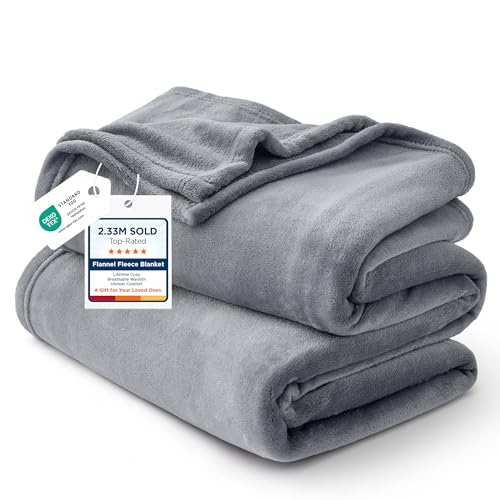
Every pick in this guide is sold on Amazon, where you can check the current size, color, and availability before you buy. Start with the lead pick, the Bedsure Fleece Blanket Queen Blankets for Bed, and use its Check on Amazon listing to confirm the size for your bed — and consider buying it in duplicate for rotation. The remaining picks are the Bedsure Cooling Cotton Waffle Blanket for Hot Sleepers — Check on Amazon; the REST Evercool Cooling Comforter Blanket for Hot Sleepers — Check on Amazon; the Elegear Cooling Blanket for Hot Sleepers — Check on Amazon; the Exclusivo Mezcla Soft Large Fleece Throw Blanket for Couch — Check on Amazon; and the Bedsure GentleSoft Sherpa Fleece Throw Blanket for Couch — Check on Amazon. Check price on Amazon for each, and budget for pairs — rotation is the strategy.
In this guide
Quick Picks
| Pick | Badge | Why it earns its place |
|---|---|---|
| Bedsure Fleece Blanket Queen Blankets for Bed | Best Overall | Smooth, thin, endlessly washable, and fast to dry completely. |
| Bedsure Cooling Cotton Waffle Blanket for Hot Sleepers | Best Natural Blend | Washable cotton blend with an open, quick-drying structure. |
| REST Evercool Cooling Comforter Blanket for Hot Sleepers | Best Smooth Surface | Slick face that sheds dust and hair, in a washable full-bed layer. |
| Elegear Cooling Blanket for Hot Sleepers | Best for Hot Sleepers | Cool, smooth, washable comfort for warm, reactive sleepers. |
| Exclusivo Mezcla Soft Large Fleece Throw Blanket for Couch | Best Budget | Thin throw that launders in minutes for chairs and layering. |
| Bedsure GentleSoft Sherpa Fleece Throw Blanket for Couch | Best with Caution | Cozy, but its pile traps debris; use smooth-side and wash often, or keep off the bed. |
Key Takeaways
- Washability is the specification: choose blankets that tolerate frequent hot washing and dry completely.
- Smooth, thin, simple constructions harbor less dust than deep pile, quilting, and heavy fill.
- Buy in duplicate and rotate weekly at minimum; a clean blanket must always be ready.
- Dry fully every time — a damp blanket returned to the bed defeats the entire system.
- Keep the whole sleep surface in the routine: sheets, pillow protection, and a decluttered bed.
- This is hygiene and comfort guidance only; allergy management itself belongs to your clinician.
How These Picks Were Chosen
Candidates were judged on wash tolerance, dry time and completeness, surface smoothness, construction simplicity, and suitability for duplicate rotation. Deep-pile and faux-fur options were excluded from the bed list entirely, and the one sherpa throw is included only with an explicit caution badge as a chair-side option for households that wash relentlessly — its pile is the opposite of this guide’s philosophy and is labeled as such. Heated and weighted products play no role here. No medical claims are made; specifications are pool-verified only, with no prices or fixed ratings.
The 6 Best Best Blankets for Dust Mite Allergies — Reviewed

Bedsure Fleece Blanket Queen Blankets for Bed
Our badge: Best Overall
The Bedsure Fleece Blanket Queen Blankets for Bed is the dust-mite household’s ideal blanket shape: a single thin layer of smooth microfiber fleece with no fill, no quilting channels, and no pile valleys — nothing for dust to settle into that a wash cycle cannot reach. It tolerates frequent washing without complaint, dries faster and more completely than any thick blanket, and covers a queen bed fully at a weight that makes weekly laundry a non-event.
Strengths
- Smooth, fill-free construction with nowhere for dust to hide.
- Survives the weekly hot-wash rhythm indefinitely.
- Dries completely and quickly, every time.
Trade-offs
- Thin warmth; cold sleepers layer two or add a second washed layer.
- Static can attract surface dust between washes in dry air.
- Utilitarian appearance.
| Color | 01 – Grey |
| Size | Queen (90″x90″) |
| Dimensions | 94.48818888 x 86.61417314 x 0.0399999999592 inches |
| Weight | 3.19 Pounds |
Run it as the system demands: two in rotation, washed weekly in hot water as the fabric allows, dried to the bone, and stored in a clean closed space rather than draped over a dusty chair. Its thinness, a flaw in a luxury guide, is its genius here — there is simply less blanket for anything to live in. Choose it as the standard. Skip it only if your climate demands a natural fiber against the skin.
Best for: The weekly-wash rotation and managed bedrooms / Not suited for: Plush luxury seekers
Choose it for washable simplicity; skip it for loft. Check on Amazon

Bedsure Cooling Cotton Waffle Blanket for Hot Sleepers
Our badge: Best Natural Blend
The Bedsure Cooling Cotton Waffle Blanket for Hot Sleepers is the natural-fiber entry that still respects the system: a cotton and bamboo-rayon waffle that washes well, breathes openly, and dries faster than dense cotton weaves thanks to its airy structure. Its texture is open rather than piled — dust has far less purchase than in sherpa or faux fur — and its gentle hand suits skin that prefers plant fibers.
Strengths
- Washable natural blend with breathable, open structure.
- Gentle surface for reactive skin.
- Full-bed coverage that layers in all seasons.
Trade-offs
- Waffle cells hold more than flat fleece; keep the wash rhythm strict.
- Slower to dry than thin synthetics; verify full dryness.
- Light warmth in cold rooms.
| Color | 01 – Ivory |
| Size | Queen (90″ X 90″) |
| Dimensions | 16.535433054 x 12.598425184 x 22.834645646 inches |
| Weight | 3.8 Pounds |
Alternate it with the fleece by season — waffle through the warm months, fleece when cold — keeping both in the same weekly wash discipline so the rotation never lapses at the changeover. Choose it for natural softness inside a hygiene system. Skip it if you cannot guarantee complete drying.
Best for: Natural-fiber lovers in managed bedrooms / Not suited for: Slow, damp laundry situations
Choose it for breathable natural comfort; skip it where drying is unreliable. Check on Amazon

REST Evercool Cooling Comforter Blanket for Hot Sleepers
Our badge: Best Smooth Surface
The REST Evercool Cooling Comforter Blanket for Hot Sleepers brings the smoothest face in the set to the allergy bed: a silky, cool-to-touch surface that the pool describes as shedding pet hair rather than trapping it — the same slickness that gives dust and debris little to cling to between washes. It is washable, durable, and full-bed sized, for sleepers who want a comforter’s presence without a comforter’s dust-holding loft.
Strengths
- Slick surface sheds debris instead of storing it.
- Complete-feeling coverage without heavy fill.
- Washable durability for a strict rotation.
Trade-offs
- Cooling feel is wrong for cold sleepers.
- Smooth slide needs anchoring on the bed.
- Thicker than the fleece; allow full dry time.
| Color | Cool Gray |
| Size | Full / Queen (90″x90″) |
| Dimensions | 90 x 90 x 0.01 inches |
| Weight | 5.5 pounds |
Shake it out outdoors at every wash — the surface releases what it holds with unusual ease — and let it be the warm-season or warm-sleeper standard in the rotation. Choose it for smooth, cool, low-cling coverage. Skip it if you sleep cold.
Best for: Hot sleepers wanting a low-debris bed / Not suited for: Cold sleepers
Choose it for slick, cool cleanliness; skip it for warmth. Check on Amazon

Elegear Cooling Blanket for Hot Sleepers
Our badge: Best for Hot Sleepers
The Elegear Cooling Blanket for Hot Sleepers pairs a smooth, cool-to-touch face with a cotton reverse — two low-pile, washable surfaces in one light blanket. For allergy households in warm climates it offers the rare combination of cooling comfort and hygiene-system compatibility: nothing plush, nothing filled, everything launderable.
Strengths
- Two smooth, low-pile faces; no dust valleys.
- Cooling comfort for warm, reactive sleepers.
- Light and quick to wash and dry.
Trade-offs
- Cooling face chills cold sleepers.
- Not a winter blanket.
- Slickness migrates without anchoring.
| Color | Light Grey |
| Size | Full/Queen – 79″ x 86″ |
| Dimensions | 86.614173228 x 78.74015748 x 0.0399999999592 inches |
| Weight | 3.26 pounds |
Keep it as the summer counterpart to the fleece in a two-blanket annual system, washed on the same weekly rhythm so the habit never depends on the season. Choose it for cool, smooth hygiene. Skip it for cold-room warmth.
Best for: Warm climates and hot sleepers / Not suited for: Winter warmth
Choose it for cool washability; skip it for cold nights. Check on Amazon

Exclusivo Mezcla Soft Large Fleece Throw Blanket for Couch
Our badge: Best Budget
The Exclusivo Mezcla Soft Large Fleece Throw Blanket for Couch extends the hygiene system beyond the bed: a thin, flat fleece throw for the reading chair and couch that launders in the same load as the bed blanket, dries almost immediately, and gives dust nowhere to settle. Allergy management fails when only the bed is managed and the evening chair is a dust archive; this little throw closes that gap.
Strengths
- Thin and flat: washes and dries fastest in the set.
- Extends the clean-textile system to chairs and couches.
- Long enough for full seated coverage.
Trade-offs
- Throw scale only.
- Light warmth.
- Single color option.
| Color | Forest Green |
| Size | Throw XL (50″ x 70″) |
| Dimensions | 70 x 50 x 0.04 inches |
| Weight | 1.55 pounds |
Wash it with the bedding weekly — it adds minutes, not effort — and keep a second for the household’s other chair. Consistency across every soft surface the sleeper touches is what turns a washed blanket into a managed environment. Choose it for the chairs. Skip it as a bed solution.
Best for: Chairs, couches, and travel within the system / Not suited for: Primary bed coverage
Choose it to complete the system; skip it for the bed itself. Check on Amazon

Bedsure GentleSoft Sherpa Fleece Throw Blanket for Couch
Our badge: Best with Caution
The Bedsure GentleSoft Sherpa Fleece Throw Blanket for Couch is included honestly and cautiously: its sherpa pile is exactly the kind of deep texture that traps dust and debris, which is why this guide assigns it — if it is used at all in a dust-mite household — to brief, supervised chair comfort with the smooth fleece face outward, washed after use, and never to the bed. Many households will rightly skip it; its listing exists so the reasoning is explicit rather than assumed.
Strengths
- Smooth fleece face offers a lower-trap side.
- Genuine warmth for cold evenings in the chair.
- Washable when the household commits to washing it every time.
Trade-offs
- Sherpa pile traps debris by design; the opposite of this guide’s philosophy.
- Dries slower than flat fleece; full dryness is non-negotiable.
- Wrong for beds in dust-mite households, full stop.
| Color | 01 – Grey |
| Size | Throw (50″ X 60″) |
| Dimensions | 59.05511805 x 51.18110231 x 0.0399999999592 inches |
| Weight | 2.03 pounds |
If your household’s discipline is ironclad and the chair throw is washed after every use, it can serve. If there is any doubt about the routine holding, let the flat fleeces do everything and keep the sherpa for a different home. Choose it only with a wash-after-use commitment. Skip it for the bed, always.
Best for: Brief chair use with relentless washing / Not suited for: Beds in dust-mite households
Choose it cautiously for chairs; skip it for sleep. Check on Amazon
How the Six Picks Behave Inside a Weekly Wash System
The lead Bedsure fleece is this guide’s system blanket because the dust-mite strategy is, at bottom, a laundry strategy, and smooth fleece is the textile that survives the strategy longest. Washed weekly — hot, as this guide’s routine directs, where the care label allows — it emerges month after month with its surface intact, its edges sound, and its weight unchanged, which cannot be said of most filled or piled bedding put through the same rhythm. Its smooth face matters between washes as well: dust and the mites that feed on it find less harbor in a tight, flat surface than in pile or fill, and a daily shake outdoors actually removes something from a smooth blanket, where shaking a deep comforter mostly rearranges its contents. This is the blanket to own in a true pair, identical, so the rotation never waits on a dryer — the pair is not a luxury in an allergy household; it is what makes the weekly rhythm survivable on a wet weekend.
The Bedsure waffle is the natural-fiber member of the system, and its weekly story is about tolerance: cotton and bamboo rayon take the hottest, most frequent washing in this roster without complaint, which is why households whose clinicians have emphasized wash temperature often land here. The waffle texture is the honest compromise — its grid gives the blanket its breathable comfort, and it also gives dust slightly more topography to settle in than the flat fleece — answered by the same weekly wash, which the waffle is built to endure. It dries more slowly than the fleece, so the waffle household needs its rotation planned a half-day ahead. In summer it can be the system’s only blanket, which simplifies the laundry to a single repeating load — a real quality-of-life point in a household where bedding already consumes more attention than it does anywhere else.
The REST Evercool earns its place on surface science: a smooth, tight, synthetic face is about as inhospitable a landscape for dust accumulation as bedding offers, and its resistance to snagging and pilling means that surface stays smooth across the wash count that would roughen other fabrics into better dust traps. It is also the roster’s answer for the allergy sufferer who is also a hot sleeper — a common overlap, since a congested sleeper breathes worse warm — giving one blanket that serves both systems instead of a compromise that serves neither. Its care rhythm is gentler than the fleeces’, so it works best as the top layer over a washable sheet, with the sheet taking the weekly hot wash and the REST washed on its own gentler schedule. Layering the wash burden onto the cheapest textile in the stack is a system design this guide recommends everywhere it applies.
The Elegear plays a similar role with a different hand: one technical cool-touch face, one cotton face, and a smooth overall character that sheds dust rather than holding it. In the allergy system its best use is the warm-season top blanket, where its cooling genuinely helps the sleeper and its surface stays easy to keep clean — with the same division of labor as the REST, a washable sheet beneath it carrying the strictest rhythm. Households should be honest about its care label before assigning it a heavier role: a blanket that asks for gentle washing cannot be the foundation of a hot-wash system, and pretending otherwise ends with either a degraded blanket or a quietly abandoned routine. Used as designed, it is a pleasure; used against its label, it is a disappointment on a schedule.
The Exclusivo Mezcla is the system’s utility player: the guest bed, the child’s room, the travel layer, the spare that makes the rotation work when the main pair is both in the pipeline. Its smooth fleece construction passes the same tests as the lead pick — wash tolerance, flat surface, quick drying — at a weight and price that make multiples painless, and in an allergy household, multiples are a medical-adjacent virtue: every bed and chair the sufferer uses needs its own washable layer, not just the main bed. It is also the blanket to send with a child to a sleepover or a relative’s house, where the bedding cannot be controlled — a personal, freshly washed layer between the sleeper and an unknown bed is the single most effective travel measure this guide can offer.
The Bedsure sherpa closes the roster as the controlled exception, included so its rule can be stated in the open: pile is the wrong surface for the allergy bed, full stop, and this blanket does not belong in the sufferer’s nightly system. Its legitimate place is outside the bedroom — a living-room throw for the household’s non-sufferers, washed on its own rhythm, never migrating to the bed. Households with one sufferer and several non-sufferers will recognize the pattern from the rest of this guide: the system protects the sufferer’s sleep surfaces absolutely, and relaxes, deliberately and by location, everywhere else. A sherpa that lives on the sofa and stays there is a comfort; the same sherpa drifting onto the allergy bed undoes a week of laundry in a night.
Building the Routine So a Real Household Can Keep It
The difference between an allergy routine that lasts and one that collapses by the second month is friction, and friction is a design problem. Anchor the bedding wash to an existing weekly event — the day the towels already go in, the morning a particular person is always home — rather than to a new appointment the calendar must defend. Keep the stripped bed’s replacement set folded in the bedroom, not in a distant closet, so remaking is a two-minute act rather than a chore with travel in it. Choose the wash day for the household’s actual dryer capacity, and in homes without a dryer, for the week’s most reliable drying weather. Write the rhythm down where the laundry happens, including the monthly items — the chair throw, the guest layer, the child’s bed toys — because monthly tasks are the ones memory drops. A routine designed this way degrades gracefully: a bad week slips to ten days instead of never, and the system survives the households it was built for, which is the only test that matters.
Comparison Table
| Pick | Size | Weight | Color | Check price on Amazon |
|---|---|---|---|---|
| Bedsure Fleece Blanket Queen Blankets for Bed | Queen (90″x90″) | 3.19 Pounds | 01 – Grey | Check price on Amazon |
| Bedsure Cooling Cotton Waffle Blanket for Hot Sleepers | Queen (90″ X 90″) | 3.8 Pounds | 01 – Ivory | Check price on Amazon |
| REST Evercool Cooling Comforter Blanket for Hot Sleepers | Full / Queen (90″x90″) | 5.5 pounds | Cool Gray | Check price on Amazon |
| Elegear Cooling Blanket for Hot Sleepers | Full/Queen – 79″ x 86″ | 3.26 pounds | Light Grey | Check price on Amazon |
| Exclusivo Mezcla Soft Large Fleece Throw Blanket for Couch | Throw XL (50″ x 70″) | 1.55 pounds | Forest Green | Check price on Amazon |
| Bedsure GentleSoft Sherpa Fleece Throw Blanket for Couch | Throw (50″ X 60″) | 2.03 pounds | 01 – Grey | Check price on Amazon |
How to Choose Blankets for a Dust-Mite Household
Wash tolerance first, always
Ask of every candidate: can it be hot-washed weekly for a year and still be a blanket? Thin synthetics answer yes without blinking; delicate, filled, and piled constructions answer with shrinkage, matting, and regret. The care label is the product specification that matters most here.
Surface and structure: smooth and simple
Flat weaves, smooth faces, and fill-free builds give dust the fewest refuges and the wash the easiest access. Treat pile, deep quilting, and heavy loft as liabilities regardless of their comfort marketing.
Drying is half the system
A washed blanket returned damp to the bed feeds the very humidity mites love. Choose constructions that dry completely in your real laundry setup, and verify dryness by hand before the blanket goes back on the bed.
Rotation makes it sustainable
Duplicates of the main blanket, washed on a fixed weekly rhythm, turn an exhausting standard into a background habit. If the system depends on heroic effort, it will lapse; design for the household you actually have.
How Do You Run the Weekly Bedding Routine?
Pick one fixed laundry day and strip the bed completely: blanket, sheets, and pillow protection into a hot wash as fabrics allow, while the duplicate set goes on the bed so it is never left unmade and tempting to skip. Dry everything fully — dryer or thorough airing — and store the clean spare set in a closed, clean space rather than on open shelves that collect the week’s dust. Vacuum the mattress surface during the changeover if your clinician has suggested it as part of your home routine, and keep the bed itself decluttered: every extra cushion and plush resident is another dust address outside the wash system.
Around the bed, humidity discipline supports everything: mites favor humid rooms, so ventilation and reasonable indoor humidity make the bedroom less hospitable between washes. None of this treats an allergy — that is your clinician’s territory — but as household hygiene, a managed sleep surface is the foundation every other measure stands on, and it costs nothing but rhythm.
Problem: The blanket comes out of the dryer still damp in the middle — It is too thick for one cycle or overloaded. Run a second cycle, split loads, or switch the rotation to the thinner fleece, which dries completely without negotiation.
Problem: Weekly washing is destroying our blankets — The construction is wrong for the system. Thin flat fleece is built for exactly this rhythm; retire the delicate pieces to guest duty and standardize on the washable ones.
Problem: The spare set keeps getting used as everyday extras — Store spares sealed and labeled in the linen closet, not on the bed. Rotation stock is inventory, not decoration.
Problem: Symptoms persist despite the routine — Bedding hygiene is one part of a bigger picture. Take it back to your clinician, who can assess the whole environment and your care plan; do not simply wash more and hope.
The Whole Sleep Surface, Not Just the Blanket
Mites live wherever warmth, humidity, and shed skin gather: pillows, mattress surfaces, plush toys, upholstered headboards, and the decade-old comforter no one washes. The blanket routine works when it is the visible tip of a whole-surface habit — washable layers everywhere, encasements where clinicians recommend them, minimal unwashable residents on the bed, and hard, cleanable surfaces favored in the bedroom’s design. The texture-first guidance in Best Blankets For Eczema overlaps usefully for households managing skin and airways together.
Travel and Guests Without Losing the System
Travel breaks routines; pack the thin throw so hotel beds get your own freshly washed top layer, and wash it on return before it rejoins the rotation. For guests with allergies, offer the duplicate set freshly laundered and mention the system with pride rather than apology — managed bedding is good hosting. For your own guest room, keep a dedicated washable set so visitors never sleep in the household’s dust archive. The system travels and hosts gracefully when its pieces are thin, duplicated, and unprecious — one more reason this guide’s fleece-first philosophy earns its keep.
The Bedroom Audit: Finding Every Dust Harbor in One Pass
The blanket system works inside a room, and a one-time audit finds the room’s other harbors so the laundry effort is not undermined nightly. Walk the room as a mite would: the mattress and pillows first — the deep, warm, seldom-washed reservoirs that encasements exist to seal, and which matter more than any blanket choice in this guide. Then the soft furnishings in descending order of wash-neglect: the upholstered headboard that has never been cleaned, the decorative cushions that live on the bed by day, the heavy curtains, the carpet and the rug under the bed, the soft toys on a child’s bed, and the spare blanket folded on the chair that has not been washed since it was bought. Each item gets one of three verdicts — wash it on a rhythm, encase or seal it, or remove it from the sleep room — and the audit is complete when nothing within reach of the bed is both soft and unwashed. The refresh rhythm for the room’s washable layers can borrow the seasonal discipline from guides like Best Light Blankets For Summer, where frequent washing is already the norm.
Humidity is the audit’s invisible item. Dust mites thrive in humid bedding and struggle in dry rooms, so the room’s moisture — from ensuite showers, drying laundry indoors, or a humid climate — is part of the system, managed with ventilation, closed bathroom doors during showers, and, where a household’s clinician conversation supports it, active dehumidification of the sleep room. None of this replaces medical care, and this guide’s position remains that bedding and room measures are the environment half of a plan whose other half belongs to the sufferer’s clinician. But environment is the half the household controls completely, and doing it thoroughly is what turns a weekly wash from a gesture into a system.
Children’s Rooms, Shared Beds, and Other Complications
A child’s allergy bedroom adds soft toys and strong opinions to the system. The workable compromise is a toy rotation: a small number of washable favorites in the bed, washed on the bedding rhythm, with the wider collection living outside the bed and the most beloved, least washable toy granted a freezer holiday — cold is a recognized household measure against mites in items that cannot be hot-washed — on the advice the family has received. Shared beds add a negotiation: the system applies to the whole bed, not the sufferer’s half, because dust does not respect the center line, and a partner’s unwashed heavy comforter on the other half is the sufferer’s problem by morning. The kind solution is the one this guide’s roster enables — light, washable layers for both sleepers, matched in warmth so nobody feels exiled by the system. Guest rooms in an allergy household should be run on the same textiles, freshly washed before a sufferer visits, with the washable cushions and layers under Best Throw Pillows For Modern Homes Under $15 extending the same discipline to the rest of the room.
How to Know the System Is Working
Judge the system by the sufferer’s own report across a month — mornings, congestion, sleep quality as they experience them — recorded plainly, the way this guide’s other trials are recorded. Improvement that tracks the routine is evidence the environment was a real factor; no improvement is equally valuable evidence, because it tells the household to stop escalating the laundry and take the information to the clinician, whose half of the plan may need the attention. What the household should not do is grade the system nightly, or keep intensifying it indefinitely in search of a perfect morning. Bedding systems have a ceiling, and reaching it is a result. The goal was never a sterile room; it is a room that asks the least of a sleeper whose nights are already harder than most, maintained at a rhythm a real household can sustain for years.
Hotels, Relatives, and Sleeping Away From the System
Travel is where allergy systems go to be humbled, and the realistic goal is mitigation, not replication. The highest-value travel kit is small: the sufferer’s own freshly washed light blanket or top sheet as a barrier layer over unknown bedding, their own pillowcase — or a travel encasement where their clinician has recommended one — and the confidence to ask hosts and hotels for freshly laundered, fragrance-free bedding without apology. A night or two away will rarely match home, and it does not need to; the system is a home rhythm, and its benefit resumes the night the sleeper returns. What travel should not do is persuade the household that the home system is pointless because a hotel night was bad — that logic mistakes the exception for the rule, in a condition where the rule is where the sleeper spends ninety percent of their nights.
Common Buying Mistakes
Buying a thick, filled comforter as the main blanket
Loft is a dust reservoir that washes badly and dries worse. Thin layers in rotation beat one majestic, unmanageable blanket.
Choosing pile for the bed
Sherpa and faux fur trap debris by design. Keep them off the allergy bed entirely, whatever the coziness pitch.
Washing without drying fully
A damp blanket undoes the wash. Verify complete dryness before the bed is remade, every single time.
Managing the bed but not the chair
Evenings count. Extend the washable-throw system to every soft surface the sleeper actually uses.
Expecting bedding to replace medical care
Hygiene supports comfort; it does not diagnose or treat. Persistent symptoms belong in a clinical conversation, with your routine as useful background information.
Buying “anti-allergy” treated blankets as a substitute for washing
Chemical treatments and marketing claims fade with every wash — in a system whose entire premise is washing. A treated blanket that cannot tolerate the rhythm is a contradiction; an ordinary, wash-tolerant blanket inside a real routine outperforms it within a month. Spend on rotation pairs and encasements before spending on treatments, and let any claim that a product makes laundry unnecessary disqualify the product.
Washing the blanket but not drying it before bedtime
A blanket returned to the bed even slightly damp recreates, in miniature, the humid harbor the whole system exists to eliminate — and smells like it by morning. The rotation pair exists precisely to remove the deadline pressure that causes this. If both blankets are ever caught in the pipeline, a fully dried spare sheet as a one-night layer beats a damp blanket every time.
Letting a non-suffering partner’s bedding set the room’s standard
Shared rooms drift toward the preferences of the person with fewer constraints — the heavy comforter, the decorative pile, the monthly wash — and the sufferer’s system quietly dissolves. Agree explicitly that the sleep room runs on the sufferer’s specification, and compensate the partner with the best version of that specification: matched warmth, good textures, and a bed that still looks and feels like a pleasure to sleep in. The roster above was chosen so that agreement costs the partner almost nothing.
Final Recommendation
Standardize on the Bedsure Fleece Blanket Queen Blankets for Bed in duplicate for its smooth, fill-free, endlessly washable build, with the cotton waffle as its natural-fiber rotation partner — Check on Amazon to compare its current options. Wash weekly, dry completely, keep pile off the bed, and let your clinician lead everything beyond bedding hygiene. A managed bed will not solve everything — but it will be clean, calm, and ready every night.
Frequently Asked Questions
Do I need special detergent for an allergy household?
Ordinary detergent, thoroughly rinsed, does the work — the washing itself, at the temperature and frequency this guide describes, is the active measure. Households where the sufferer also reacts to fragrances or residues should choose a fragrance-free detergent and consider an extra rinse, which is a skin-comfort decision rather than a mite decision. Avoid fabric softeners and scented additives on the sleep textiles; they coat the smooth surfaces this system depends on and add nothing the routine needs.
Can I manage with one blanket if I wash it in the morning?
Only if your drying is fast and certain — a line in a dry climate, or a dryer with time to spare. In practice, the single-blanket household misses washes whenever the day runs long or the weather turns, and the rhythm, not any single wash, is what the system is selling. The second blanket is the cheapest reliability in this entire guide; buy the pair and let the routine survive ordinary life.
What blanket material is best for dust mite allergies?
Thin, smooth, fill-free synthetics like microfiber fleece lead because they tolerate frequent hot washing and dry completely; washable cotton blends are the natural-fiber alternative. Deep pile and heavy fill are the constructions to avoid on the bed.
How often should blankets be washed?
Weekly is the rhythm this guide builds around, in hot water as the fabric allows, with complete drying. Your clinician may advise specifics for your situation; the duplicate-rotation system makes any weekly schedule sustainable.
Does washing actually remove dust mites?
Regular hot washing and thorough drying are the standard household hygiene measures for bedding, which is why this guide treats wash tolerance as the primary buying criterion. For assessment and treatment of the allergy itself, see your clinician.
What should I do with a new blanket before first use?
Wash it first, on the very hottest setting its care label allows, and dry it completely. A new blanket arrives carrying manufacturing and warehouse dust that has absolutely no place in an allergy household bedroom, and the first wash doubles as a test of the blanket’s wash tolerance — better learned before the blanket joins the weekly rotation than discovered a full month into it.
Are cooling blankets suitable for allergy households?
The smooth ones in this set are: slick, low-pile faces give debris little purchase and both cooling picks here wash and dry well. Judge any cooling blanket by the same wash-and-dry standard.
Does vacuuming the mattress replace washing the blanket?
No — they do different jobs. Vacuuming lifts surface dust from a surface that cannot be washed; washing resets a textile completely, including what vacuuming cannot reach. The system uses each where it belongs: encase what can be sealed, vacuum what can only be surfaced, and wash — weekly, thoroughly, dried completely — everything that can go in the machine, which is why this guide’s roster is built from blankets that can.
Should I avoid wool and down?
Heavy, rarely washed textiles of any fiber work against a hygiene system, and down’s filled construction is the opposite of this guide’s model. If you love wool, keep it as an aired top layer outside the sleep surface rather than the washed blanket itself.
Are encasements or the blanket more important?
Encasements, and it is not close: the mattress and pillows are the deep reservoirs, sealed once and working every night without laundry. The blanket system is the second layer of the plan — the washable surface above the sealed foundation. A household buying in order should fund the encasements first, the rotation pair of washable blankets second, and everything else afterward, and should be suspicious of any advice that reverses that order to sell a blanket.
How soon should we notice a difference?
Give the full system — encasements, weekly rhythm, room audit — a fair month before judging it, since bedding reservoirs decline over repeated washes rather than in a single cycle. Judge by the sufferer’s mornings across that month, and take either verdict to the clinician: improvement confirms the plan, and no improvement is information the medical half of the plan needs.
What else in the bedroom matters?
Pillows and their protection, mattress care, humidity, and the population of unwashable soft objects on the bed. Manage the whole sleep surface, and discuss the full picture with your clinician.


