Disclosure: As an Amazon Associate, dailyhomedecorating.com earns from qualifying purchases. Links to Amazon on this page are affiliate links; they cost you nothing extra. Prices and availability change often, so check the current Amazon listing before you buy.
Living with diabetes changes how a person thinks about the small physical details of a day, and bedding is one of them. The best blankets for diabetics are chosen here on comfort principles that many people with diabetes share: gentle, even warmth without hot spots, light layers that are easy to adjust through the night, smooth surfaces kind to skin, and easy washing for a fresh bed. The best blankets for diabetics come with no medical claims in this guide — blankets do not manage blood sugar or treat any condition — and with one important caution stated plainly: because diabetes can affect circulation and heat sensation, especially in the feet, heated bedding and high heat settings are a question for your clinician, not for a product page. This guide therefore leads with excellent non-heated layers, includes one heated option only with explicit caution framing for readers whose clinicians have approved warmth therapy at home, and defers to professional guidance throughout.
If your clinician has discussed warmth, circulation, or skin care specifics with you, their guidance outranks everything here. Related comfort reading in this lot includes Best Blankets For Cold Sleepers for layering strategy and Best Weighted Blankets For Elderly for gentle-weight questions. Bedroom finishing touches live in Black Friday Throw Pillow And Blanket Deals and Best Throw Pillows For Bedrooms Under $30.
Where to Buy
Every pick in this guide is sold on Amazon, where you can check the current size, color, and availability before you buy. Start with the lead pick, the Bedsure Fleece Blanket Queen Blankets for Bed, and use its Check on Amazon listing to confirm the size for your bed. The remaining picks are the Bedsure Cooling Cotton Waffle Blanket for Hot Sleepers — Check on Amazon; the Pendleton National Park Blanket — Check on Amazon; the Bedsure GentleSoft Sherpa Fleece Throw Blanket for Couch — Check on Amazon; the Sunbeam Electric Blanket Heated Throw — Check on Amazon; and the REST Evercool Cooling Comforter Blanket for Hot Sleepers — Check on Amazon. Check price on Amazon for each — and for the heated pick, check with your clinician first.
In this guide
Quick Picks
| Pick | Badge | Why it earns its place |
|---|---|---|
| Bedsure Fleece Blanket Queen Blankets for Bed | Best Overall | Even, gentle, adjustable warmth with zero hot spots and easy care. |
| Bedsure Cooling Cotton Waffle Blanket for Hot Sleepers | Best Breathable Layer | Natural airflow for warm sleepers and warm climates. |
| Pendleton National Park Blanket | Best Premium | Wool’s steady, breathable warmth for cold houses. |
| Bedsure GentleSoft Sherpa Fleece Throw Blanket for Couch | Best for Evening Rest | Cozy throw for legs and laps during evening hours. |
| Sunbeam Electric Blanket Heated Throw | Best Heated — With Caution | Included only for clinician-approved use, at low settings, never for sleeping. |
| REST Evercool Cooling Comforter Blanket for Hot Sleepers | Best for Warm Nights | Cool, smooth layer when warmth is the problem, not the goal. |
Key Takeaways
- Even, passive warmth from layered blankets is the safe comfort strategy; hot spots help no one.
- Heated bedding is a clinician question when circulation or heat sensation is reduced — ask before buying.
- Light, adjustable layers beat one heavy blanket for all-night comfort.
- Smooth, washable surfaces keep skin’s environment clean and calm.
- Keep feet’s bedding loose and comfortable rather than tightly tucked.
- Any skin, circulation, or temperature concern belongs to your care team, not a blanket guide.
How These Picks Were Chosen
Candidates were judged on warmth evenness, adjustability, surface smoothness, washability, and weight in hand. One heated throw is included — clearly badged with caution — because some readers arrive with clinician-approved warmth routines and deserve an honest look at the pool’s option alongside its conditions: lowest settings, supervised awake use, never while sleeping, never where sensation is reduced, and clinician approval first. Weighted blankets were excluded, since pressure and circulation questions are individual and clinical. No medical claims appear anywhere; specifications are pool-verified only, with no prices or fixed ratings.
The 6 Best Best Blankets for Diabetics — Reviewed

Bedsure Fleece Blanket Queen Blankets for Bed
Our badge: Best Overall
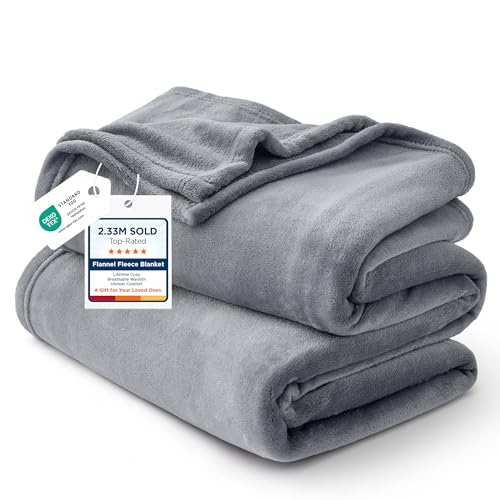
The Bedsure Fleece Blanket Queen Blankets for Bed leads because passive, even warmth is the right default: microfiber fleece that warms the whole bed uniformly, with no elements, no settings, and no hot spots, in a light layer the sleeper can adjust or shed without waking fully. It washes easily for a fresh sleep surface, covers a queen completely, and asks nothing of its owner but sleep.
Strengths
- Uniform warmth with zero heat concentration.
- Light enough to adjust half-asleep.
- Machine care for reliably fresh bedding.
Trade-offs
- Static in dry winter rooms.
- May need a partner layer in very cold houses.
- Queen only in this configuration.
| Color | 01 – Grey |
| Size | Queen (90″x90″) |
| Dimensions | 94.48818888 x 86.61417314 x 0.0399999999592 inches |
| Weight | 3.19 Pounds |
Make the bed with the foot end loose rather than tightly tucked, so feet rest without compression, and layer the waffle beneath in summer or a throw above in winter. That simple arrangement — even warmth, easy adjustment, nothing tight, nothing electric — is the comfort philosophy of this whole guide in one bed. Choose it as the foundation. Skip it only if your home needs wool-grade warmth.
Best for: Everyday even warmth and easy care / Not suited for: Very cold rooms alone
Choose it for safe, simple warmth; skip it for deep-cold duty solo. Check on Amazon

Bedsure Cooling Cotton Waffle Blanket for Hot Sleepers
Our badge: Best Breathable Layer
The Bedsure Cooling Cotton Waffle Blanket for Hot Sleepers serves the warm half of the year and the warm half of sleepers: a cotton and bamboo-rayon waffle whose gentle texture and open breathability keep air moving, moisture managed, and skin’s environment calm. Its natural-blend softness suits anyone whose skin prefers plant fibers to synthetics.
Strengths
- Breathability that prevents clammy, overheated nights.
- Gentle natural-blend surface.
- Full-bed layer that pairs under fleece in winter.
Trade-offs
- Light insulation for cold sleepers.
- Ivory shows wear without regular washing.
- Waffle texture is mild but present.
| Color | 01 – Ivory |
| Size | Queen (90″ X 90″) |
| Dimensions | 16.535433054 x 12.598425184 x 22.834645646 inches |
| Weight | 3.8 Pounds |
Keep it as the skin-side layer year-round and let fleece or wool come and go above it with the seasons; a stable, gentle layer against the body with adjustable warmth on top is a system many comfort-focused sleepers swear by. Choose it for breathable gentleness. Skip it as a sole winter blanket.
Best for: Warm sleepers and skin-side layering / Not suited for: Standalone winter warmth
Choose it for calm airflow; skip it for deep cold. Check on Amazon

Pendleton National Park Blanket
Our badge: Best Premium
The Pendleton National Park Blanket provides the steadiest passive warmth in the set: wool that insulates evenly, breathes with the sleeper, and resists odor between its infrequent gentle washes. For cold houses and cold sleepers who want warmth without any electrical element, it is the traditional, trustworthy answer.
Strengths
- Even, breathable, element-free warmth.
- Odor resistance stretches wash intervals kindly.
- Decades of service from one purchase.
Trade-offs
- Wool texture wants a smooth layer between it and sensitive skin.
- Gentle care routine.
- Heaviest pick; arrange it rather than hauling it nightly.
| Color | Grand Canyon Navy |
| Size | Queen (90″ x 90″) |
| Dimensions | 18 x 15 x 6.5 inches |
| Weight | 6.2 pounds |
Lay it over the waffle or fleece so its texture never meets skin directly, and let its weight be placed by whoever makes the bed in the morning. In a cold house it removes the temptation of electric heat entirely — which, for many readers of this guide, is exactly the point. Choose it for premium passive warmth. Skip it for delicate-skin direct contact.
Best for: Cold homes wanting element-free warmth / Not suited for: Bare-skin layering
Choose it for steady wool warmth; skip it against sensitive skin. Check on Amazon

Bedsure GentleSoft Sherpa Fleece Throw Blanket for Couch
Our badge: Best for Evening Rest
The Bedsure GentleSoft Sherpa Fleece Throw Blanket for Couch covers the evening hours: a two-sided throw for legs and laps in the reading chair, warm without any element, light to arrange, and smooth on its fleece face for skin that prefers less texture. Evening comfort matters — it is when feet are up, the day is done, and a little warmth goes a long way.
Strengths
- Two faces for texture choice.
- Passive warmth with no settings to manage.
- Easy washing for a fresh chair throw.
Trade-offs
- Throw size only.
- Sherpa side is the warmer, more textured option — choose faces by feel.
- Not a bed blanket.
| Color | 01 – Grey |
| Size | Throw (50″ X 60″) |
| Dimensions | 59.05511805 x 51.18110231 x 0.0399999999592 inches |
| Weight | 2.03 pounds |
Keep it draped loosely over legs rather than wrapped tightly, in the spirit of this guide’s loose-and-gentle philosophy, and let it live on the main chair so it is always where the evening happens. Choose it for couch hours. Skip it for bed coverage.
Best for: Evening chairs and gentle lap warmth / Not suited for: Bed use
Choose it for evenings; skip it for the bed. Check on Amazon

Sunbeam Electric Blanket Heated Throw
Our badge: Best Heated — With Caution
The Sunbeam Electric Blanket Heated Throw appears in this guide under strict conditions, stated before its virtues: reduced heat sensation can make heated products risky, so this pick is only for readers whose clinician has explicitly approved heated throws for them, used awake and supervised, at the lowest comfortable setting, for limited periods, and never during sleep or on areas with reduced sensation. Its virtues within those bounds are real: three heat settings, a three-hour auto-off, an extra-long cord, and a soft Mushroom-colored throw format that pre-warms a chair nicely.
Strengths
- Adjustable low settings for clinician-approved warmth routines.
- Three-hour auto-off as a genuine safety feature.
- Throw format suits supervised chair use.
Trade-offs
- Not for sleeping, ever, in this guide’s framing.
- Not for anyone whose clinician has not approved heated products.
- Requires the discipline of unplugging and storing properly.
| Color | Mushroom |
| Size | Full |
| Weight | 4.63 pounds |
If there is any doubt — any at all — choose the passive layers above and ask at your next appointment. A blanket guide would rather lose a sale than blur this line: heat you cannot fully feel is heat you cannot fully judge, and your clinician knows your circulation and sensation in ways no listing can. Choose it only inside clinician guidance. Skip it — without hesitation — outside it.
Best for: Clinician-approved, supervised, awake warmth / Not suited for: Sleep, reduced sensation, or unapproved use
Choose it only with your clinician’s yes; skip it otherwise. Check on Amazon

REST Evercool Cooling Comforter Blanket for Hot Sleepers
Our badge: Best for Warm Nights
The REST Evercool Cooling Comforter Blanket for Hot Sleepers completes the set for warm sleepers and warm climates: a silky, cool-to-touch, breathable layer that gives full-bed coverage without stored heat. Not every reader of this guide is cold; for those whose nights fail on warmth’s excess, this is the comfort answer with no elements and no risk beyond a kicked-off blanket.
Strengths
- Sustained cooling feel with real coverage.
- Smooth surface that glides rather than clings.
- Washable and durable for nightly use.
Trade-offs
- No insulation for cold rooms.
- Cool touch can chill a colder partner.
- Slick drape needs anchoring.
| Color | Cool Gray |
| Size | Full / Queen (90″x90″) |
| Dimensions | 90 x 90 x 0.01 inches |
| Weight | 5.5 pounds |
Pair it with breathable sheets and the waffle as seasons turn, and the warm sleeper’s bed becomes as considered as the cold sleeper’s. Choose it when heat is the complaint. Skip it when warmth is the goal.
Best for: Warm sleepers and hot climates / Not suited for: Warmth seekers
Choose it for cool comfort; skip it for cold nights. Check on Amazon
How the Six Picks Behave in a Comfort-First Bed, Night After Night
The lead Bedsure fleece earns its place through the most repeated act in this guide’s whole philosophy: adjustment. A smooth, light, full-bed fleece layer can be added, folded back, or kicked loose in seconds, by a sleeper half-awake, without sitting up or fighting weight — and for a sleeper whose comfort strategy is “layer passively, adjust nightly,” that ease is the product. Across weeks, its other virtue is surface consistency: no seams or texture changes to discover unpleasantly in the night, and a wash-and-dry cycle fast enough that the bed’s freshness never depends on laundry heroics. It is deliberately not the warmest blanket here, because warmth in this guide is built by the stack, and the fleece is the stack’s most obedient member.
The Bedsure waffle is the natural-fiber alternative, and its nightly story is texture and temperature honesty. The cotton-bamboo grid holds a film of air, feels dry against skin, and gives feet and legs a surface with some gentle presence rather than a slick slide — a quality many sleepers in this guide’s audience specifically prefer, since a bed they can feel is a bed they can arrange confidently in the dark. It washes hot and often, which supports the fresh-surface discipline this guide recommends, and its weight sits between the fleece and the wool: substantial enough to stay where it is laid, light enough to move without thought. In summer it can be the bed’s only blanket; in winter it is the layer closest to the sleeper, under the heavier warmth.
The Pendleton is the stack’s anchor of passive warmth, and its nightly behavior is the oldest in bedding: wool spread over the lighter layers holds the bed’s warmth evenly, breathes so the sleeper does not wake clammy, and stays where it is placed because its own weight settles it. For the comfort-first bed, wool’s role is to make the room’s temperature do less work — a bed that is warm from passive layers is a bed that needs no heated product to rescue it, which is the safest architecture this guide knows how to recommend. Its care is the lightest-touch in the roster: airing does most of the work, washing is occasional and gentle, and a wool blanket in a dry, aired bedroom stays fresh with very little intervention. Place it as the top layer, keep the foot of the bed arranged loosely as this guide directs, and let it serve for years.
The Bedsure sherpa is the evening and chair member of the system, and judging it as a bed blanket misses its job. In the hours before bed — reading, television, the wind-down — a sherpa throw over the lap and legs delivers the deepest passive warmth in the roster, letting the household keep the room cooler while the sleeper stays comfortable. That pre-warming matters to the night: a person who gets into bed already warm, in a bed built of light layers, settles faster than one who climbs in chilled and waits for bedding to catch up. The sherpa’s discipline is that it stays in the chair. It is not the layer to sleep under in this guide’s system — too warm, too enclosing, and pile is not the smooth surface the bed stack is built from — and assigning it to evenings only keeps both the chair and the bed working as designed.
The Sunbeam heated throw appears in this guide under conditions, and they are repeated here because they are the review: a heated product belongs in this audience’s home only where the person’s clinician has been asked and is comfortable, where the user can feel heat clearly and move away from it freely, and where it is used exactly as its maker directs, for defined periods, never as unattended all-night bedding and never on anyone who cannot sense or respond to its warmth. Inside those conditions, a heated throw’s legitimate job is narrow and real — warming a chair, or a bed before the sleeper gets in, with the throw then removed or switched off. Outside those conditions, this guide’s answer does not soften with repetition: choose the passive stack, which delivers warmth without asking anything of the user’s sensation at all. When in doubt, the doubt itself is the answer — ask the clinician, and until then, layer fleece and wool.
The REST Evercool closes the system at the warm end of the year, because a comfort-first bed must solve summer as honestly as winter. Its smooth, cool, draping surface gives hot nights a layer that feels like bedding without behaving like insulation, and its continuous drape avoids the kicked-off, bunched-up failure mode of light blankets on warm nights. For sleepers whose feet and legs run warm, or whose rooms cannot be cooled, it keeps the bed’s architecture — sheet, layer, arranged foot — intact through the season when most people abandon structure and sleep badly for it. Rotate it in when the wool rotates out, and the bed’s system survives the calendar without a redesign.
The Partner’s Half of the Bed
Most comfort-first beds are shared, and the system fails if it only works for one sleeper. The architecture in this guide is unusually partner-friendly, because layers can be split: the shared base sheet and light layer run across the whole bed, while the heavier warmth — the wool, the extra fleece — can be laid on the side of the sleeper who needs it, folded back on the side of the one who does not. The foot arrangement deserves the same diplomacy: one partner’s loose foot zone can be built into their half without untucking the other’s. Talk about the bed as a designed object once, agree on each half’s stack, and the nightly negotiations disappear. A partner who sleeps hot beside a partner building passive warmth is a solvable geometry problem, and solving it on paper, in daylight, is kinder than solving it nightly at 2 a.m. with the blankets themselves.
What “Comfort-First” Means When You Are Shopping, Concretely
Translated into a shopping list, the philosophy of this guide is a sequence of questions asked in order. Can the sleeper move this layer, alone, half-asleep, without effort? Does its surface stay smooth and fresh under a realistic laundry rhythm? Does it build warmth passively, in combination, rather than demanding heat or weight of its own? Can the foot of the bed stay loose with this layer in the stack? And is there any question about it — heat, weight, sensation, skin — that belongs to the clinician before it belongs in the bed? A blanket that passes the first four and raises none of the fifth is a comfort-first blanket, whatever its label says. A blanket that fails the first question fails outright, however premium its materials, because a layer the sleeper cannot adjust is a layer the sleeper is subject to — and subject is the one thing this audience’s bedding should never make them.
Comparison Table
| Pick | Size | Weight | Color | Check price on Amazon |
|---|---|---|---|---|
| Bedsure Fleece Blanket Queen Blankets for Bed | Queen (90″x90″) | 3.19 Pounds | 01 – Grey | Check price on Amazon |
| Bedsure Cooling Cotton Waffle Blanket for Hot Sleepers | Queen (90″ X 90″) | 3.8 Pounds | 01 – Ivory | Check price on Amazon |
| Pendleton National Park Blanket | Queen (90″ x 90″) | 6.2 pounds | Grand Canyon Navy | Check price on Amazon |
| Bedsure GentleSoft Sherpa Fleece Throw Blanket for Couch | Throw (50″ X 60″) | 2.03 pounds | 01 – Grey | Check price on Amazon |
| Sunbeam Electric Blanket Heated Throw | Full | 4.63 pounds | Mushroom | Check price on Amazon |
| REST Evercool Cooling Comforter Blanket for Hot Sleepers | Full / Queen (90″x90″) | 5.5 pounds | Cool Gray | Check price on Amazon |
How to Build a Comfort-First Bed
Layer passive warmth, adjust nightly
A breathable base layer, a fleece middle, and wool or a throw for cold snaps gives even warmth with infinite adjustment and no electricity. Add and shed from the top so the skin-side layer stays stable and familiar.
Keep the foot of the bed loose
Avoid tight hospital corners over feet; drape blankets so feet rest naturally without compression or pressure. Many sleepers find a loosely draped extra throw across the foot of the bed the most comfortable arrangement of all.
Choose smooth, fresh surfaces
Wash bedding on a regular rhythm, favor smooth faces against skin, and retire anything that has gone rough or pilled against delicate areas. A clean, calm sleep surface is a comfort habit, not a luxury.
Route every specific question to your clinician
Warmth therapy, circulation aids, pressure products, skin care specifics — these are medical territories where your team knows you. Bring this guide’s questions to them; bring their answers back to your shopping.
How Should You Talk to Your Clinician About Bedding and Warmth?
Make it a real agenda item rather than an afterthought: mention cold or hot nights, ask specifically whether heated products are appropriate for you, ask about warmth strategies for feet and legs, and mention any skin concerns that bedding touches. Clinicians answer these questions routinely and would far rather guide a purchase than hear about a problem later. Write the answers down and shop by them — the layered, passive system in this guide adapts to almost any guidance a clinician gives, which is precisely why it leads with layers instead of devices.
If you care for a family member with diabetes, the same conversation applies, with the caregiver in the room: ask what warmth is safe, what to avoid, and what changes should prompt a call. Bedding becomes part of the care plan, chosen deliberately rather than by habit.
Problem: Feet feel cold all night despite blankets — Resist the urge to add heat sources on your own. Loose layers, a draped foot throw, and warm socks if your clinician approves them are the guide’s comfort answers; persistent cold feet deserve a mention at your next appointment.
Problem: I wake up overheated at 3 a.m. — Your stack is too committed. Sleep under fewer layers with the extras folded at the foot for retrieval, or switch the top layer to the breathable waffle or cooling blanket.
Problem: My partner needs far more warmth than I do — Zone the bed with personal top layers per side under one shared base. Comfort compromises that leave one person miserable are not compromises.
Problem: A heated throw was gifted to me — Thank the giver, then check with your clinician before first use. If it is not approved for you, the passive picks in this guide make an easy, honest exchange.
Evening Comfort Beyond the Bed
The hours before sleep set up the night: feet up with a loose throw, a warm (not hot) room, and a wind-down that ends with the bed already arranged — layers set, foot end loose, extras folded within reach. Homes that prepare the bed during the evening tidy-up remove every midnight negotiation. For readers whose restlessness is part of the picture, the comfort-only framing in Best Weighted Blankets For Insomnia may interest — with the same rule that individual questions go to clinicians.
What This Guide Deliberately Does Not Recommend
No weighted blankets, because pressure questions are individual. No heated mattress pads or high-heat routines, because supervised throws are the ceiling of what a guide should even discuss here — and only with approval. No tight tucking, no compression bedding, no product credited with improving circulation, blood sugar, or any medical outcome. What remains is not a small thing: it is a warm, gentle, adjustable, fresh bed, chosen with care and cleared with the people who know your health. That is the honest best a blanket can offer.
The Foot of the Bed, Taken Seriously
No part of this guide’s system repays attention like the last eighteen inches of the bed. The standing arrangement — covers loose at the foot, nothing tucked tight across the feet, no heavy layer’s weight resting on the toes — is simple to build and easy to destroy by habit, because most adults were taught to make a bed by tucking everything in. Remake the habit deliberately: when the bed is made, the top layers are folded or left free at the foot so a sleeper’s feet can move, point, and settle without pushing against resistance all night. Some sleepers prefer a blanket “tent” at the foot — the covers lifted over a pillow or the raised foot of an adjustable bed — and any arrangement that keeps pressure and constriction off the feet while keeping the sleeper warm is in the spirit of this guide. The details of an individual’s situation belong to their clinician conversation; the general principle, loose and warm and freely movable, is one every household can build tonight with the blankets it already owns.
Socks deserve a sentence of their own, because they are the most common improvised answer to cold feet at night. Loose, non-binding sleep socks are a different object from the day’s fitted socks, and the distinction matters: anything that leaves a tight mark is not a sleep garment for this audience. Whether socks belong in a particular sleeper’s bed is, again, a question for their own clinician — but the blanket system’s job is to make the bed warm enough that the improvisation is a choice rather than a necessity, which the passive stack in this guide is designed to do.
Travel, Hospital Stays, and Sleeping Away From the System
A comfort-first bed is a home system, and travel tests it. The portable core is small: one light fleece layer of your own, so the strange bed’s stack can be adjusted to your architecture; the knowledge of how you like the foot arranged, which you can rebuild anywhere in a minute; and the discipline of asking, in hotels and guest rooms, for an extra blanket rather than enduring the one provided. For hospital stays, ask the facility what is permitted and what they provide, and bring the home layer only if welcomed — the same courtesy this guide recommends for the comfort stations in Best Blankets For Cancer Patients. Sleeping away from home will rarely match the home system, and it does not need to: two or three nights of approximate comfort, inside the same loose, layered, passive principles, is a success — and a useful reminder, on returning, of how much of good sleep is architecture rather than any single product. Households furnishing a guest room for a visitor with similar needs can stage the layers and cushions gathered under Best Throw Pillows For Apartments Under $500 so the visitor can adjust without asking.
Reviewing the Bed When Anything Changes
The comfort-first bed is not a purchase; it is a standing arrangement that should be reviewed whenever the sleeper’s situation changes — new medication, a change in mobility, a move, a new diagnosis, or simply the turning of the seasons. The review is short: walk the stack layer by layer, confirm each piece still earns its place, re-check the foot arrangement, refresh anything whose surface has worn rough, and note any new question for the next clinician visit. Changes in what a sleeper can feel, move, or manage are exactly the changes that should reach that conversation, and the bed review is often where a household first notices them. Treat the review as care, not fussiness: ten minutes, twice a year, keeps the system matched to the person it was built for.
Skin, Surfaces, and the Weekly Inspection Habit
This guide’s preference for smooth, fresh surfaces has a practical routine attached: bedding that touches skin should be smooth to a palm drawn across it, washed on a rhythm that keeps it genuinely fresh, and replaced when wear makes it rough — because a surface the sleeper can feel clearly is a surface they can also report clearly, and self-knowledge is the safety system underneath every other recommendation here. Build the inspection into an existing moment: when the bed is stripped for its weekly wash, a glance over the sheets and the layer that sits against the skin, a feel for roughness, a check that nothing in the stack has developed a seam or edge that was not there before. The sleeper’s own skin deserves the same unhurried attention as part of ordinary self-care, and anything noticed — a sore that is slow, a patch that changes, a new area of reduced feeling — goes to the clinician promptly. Bedding cannot do that job, and this guide does not ask it to; it asks only that the bed be built so nothing in it hides, presses, or rubs unnoticed. A bed built on those lines is doing the most that bedding can honestly do.
Common Buying Mistakes
Buying heated bedding without asking
The single most important rule of this guide. Circulation and sensation questions make heat a clinical decision, not a shopping one.
Choosing one heavy blanket for all nights
Needs swing nightly. Layers adjust; monoliths just make you choose between too much and too little.
Tucking feet in tightly
Loose draping is more comfortable and is the arrangement this guide recommends throughout. Let feet rest free.
Ignoring skin’s vote on textures
If a surface irritates, believe it immediately and switch to the smoothest layer you own. Comfort data from your own skin outranks any review.
Letting bedding questions stay unasked
Your care team would rather advise on blankets than treat avoidable problems. Ask at the next visit and shop by the answer.
Buying “diabetic” branded bedding at a premium
Products marketed specifically at this audience often charge for the label while delivering an ordinary fleece with a softer description. Judge every candidate by this guide’s plain tests — passive warmth, smooth surface, easy adjustment, loose fit at the foot, honest washability — and let a regular blanket that passes them beat a branded one that merely names them. The premium belongs in the clinician relationship, not in the bedding aisle.
Solving cold feet with tighter bedding
The instinct to tuck a cold sleeper in snugly works against the very comfort it aims at in this audience. Cold feet at night are answered by a warmer room, a warmer stack above the legs, pre-warmed bedding, and loose arrangement at the foot — in that order — and persistent, striking cold in the feet is a symptom to raise with a clinician, not a bedding problem to be tightened away.
Letting the bed go unreviewed for years
Bedding outlives the situation it was bought for, quietly: the stack that suited a sleeper five years ago may press, rub, or overheat the sleeper they are now. The twice-yearly review this guide recommends exists because bodies change faster than blankets wear out. A household that reviews on schedule catches the mismatch while it is still a shopping problem, not a comfort or safety one.
Final Recommendation
Build the bed on the Bedsure Fleece Blanket Queen Blankets for Bed for even, element-free warmth, layered over the breathable waffle — Check on Amazon to compare its current options. Keep the foot end loose, adjust layers nightly, and take every heat, pressure, and circulation question to your clinician. Comfort and caution are not opposites; in this guide, they are the same purchase.
Frequently Asked Questions
How warm should the bedroom be?
Warm enough that the passive stack can do its job without heroics — for most households, the comfortable cool range recommended for sleep generally, adjusted to the sleeper’s own report. The point of this guide’s architecture is that the bed, not the thermostat, carries most of the warmth, which lets the room stay in the range that sleeps best. If a sleeper is cold in a correctly built bed in a reasonably kept room, that fact is worth mentioning to their clinician rather than simply heating the house further.
Should I pre-warm the bed?
Pre-warming is one of the kindest and safest comforts available when done passively or carefully: a hot water bottle with a cover, used as its maker directs and removed or allowed to cool before sleep, or simply the household’s warm evening routine that keeps the sleeper warm before bed. Heated electric products for pre-warming sit under the same clinician-first conditions as every heated product in this guide. The goal is a bed that is welcoming at first contact, so the sleeper settles instead of spending the first hour warming their own bedding.
What is the best first purchase if the bed needs a rebuild?
The light fleece base layer and the clinician conversation, in whichever order you can manage them this week. The fleece makes every subsequent layer behave better, costs the least in the roster, and is reversible if the stack evolves; the conversation governs every heated, weighted, and specific question the shopping cannot answer.
Can people with diabetes use heated blankets?
Only with explicit clinician approval, because reduced circulation and heat sensation can make heated products risky. This guide includes one heated throw solely for approved, supervised, awake use at low settings — and recommends asking first, without exception.
Should the bed look different from a normal bed?
No. A correctly built comfort-first bed looks like an ordinary, well-made bed — the differences are in arrangement and layering, not in medical-looking equipment. That ordinariness is a genuine virtue worth protecting.
What blanket warmth strategy is safest?
Passive, layered warmth: breathable base, fleece middle, extra throw for cold snaps, all adjustable and element-free. It delivers even warmth with no hot spots and no settings to get wrong.
Are weighted blankets appropriate?
That is an individual, clinical question this guide does not answer with products. Ask your care team; the layered options here serve comfort without pressure questions attached.
How should the foot of the bed be arranged?
Loosely. Drape blankets over feet rather than tucking tightly, so feet rest without compression, and add a folded throw across the foot for adjustable extra warmth.
How often should the bed stack be washed?
The skin-contact layer on the household’s normal weekly rhythm at minimum, and the whole stack whenever its freshness is in doubt — the light, fast-drying layers in this roster were chosen so that rhythm is sustainable. Freshness is not cosmetic in this guide’s system; a clean, smooth surface is one the sleeper can feel and judge accurately, and that feedback is part of how the bed stays safe.
Which fabrics are kindest to skin?
Smooth, washable ones: plain fleece and gentle cotton blends lead this set. Keep them freshly washed, retire rough or pilled pieces, and route persistent skin concerns to your clinician.
Are weighted blankets ever a good idea here?
Only through the clinician conversation, and for many people in this audience the answer will be no — sustained weight on the legs and feet is exactly what this guide’s loose, passive architecture is designed to avoid. If pressure-style comfort appeals, test the idea in a chair, for a short period, fully awake, and take even that experiment to the clinician first. The bed itself should stay light, layered, and freely escapable.
What blanket is best for a recliner or evening chair?
A warm throw that covers the lap and legs without being tucked around the feet — the sherpa in this roster is the evening specialist — used in a chair where the sleeper can stand and step clear of it easily. Keep the throw off the floor when not in use, since a pooled blanket at a chair’s base is a trip hazard in exactly the hours and lighting where falls happen.
What should I ask my clinician about bedding?
Whether heated products are appropriate for you, what warmth strategies suit your circulation, any skin-care specifics for bedding contact, and what changes should prompt a call. Bring the answers home and shop by them.


