Disclosure: As an Amazon Associate, dailyhomedecorating.com earns from qualifying purchases. Links to Amazon on this page are affiliate links; they cost you nothing extra. Prices and availability change often, so check the current Amazon listing before you buy.
The best blankets for hot flashes answer a nightly negotiation that starts with a hot flash at three in the morning: you need to feel covered enough to fall asleep, cool enough to stay asleep, and able to shed or recover the blanket in seconds when a wave of heat arrives — without waking a partner, fighting tangled bedding, or lying in a damp, clammy layer afterward. The best blankets for hot flashes are engineered around that cycle. They feel cool on contact, move heat and moisture away instead of storing them, dry quickly between episodes, and are light and fluid enough to kick off and pull back half-asleep. This guide ranks six options from the verified pool purely on cooling comfort and sleep practicality. It makes no medical claims about menopause or any condition; hot flashes have many causes and patterns, and anything beyond bedding comfort belongs in a conversation with your clinician.
Two purpose-built cooling blankets lead, followed by breathable cotton in waffle and knit forms and light fleece options for the in-between seasons when nights start cool and flashes arrive later. If your heat is all-night rather than episodic, Best Light Blankets For Summer extends the same logic, while Best Blankets For Eczema covers the smooth-surface needs many heat-sensitive sleepers share. Bedroom finishing ideas live in Black Friday Throw Pillow And Blanket Deals and Best Throw Pillows For Modern Homes Under $40.
Where to Buy
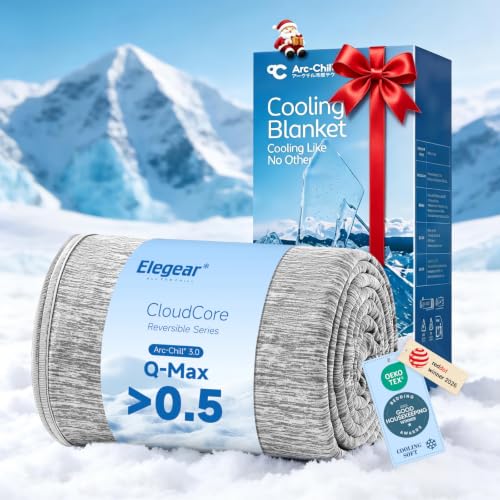
Every pick in this guide is sold on Amazon, where you can check the current size, color, and availability before you buy. Start with the lead pick, the Elegear Double-Sided Cooling Blanket for Hot Sleepers, and use its Check on Amazon listing to confirm sizes. The remaining picks are the REST Evercool Cooling Comforter Blanket for Hot Sleepers — Check on Amazon; the Bedsure Cooling Cotton Waffle Blanket for Hot Sleepers — Check on Amazon; the Bearaby Cotton Hand-Knit Weighted Blankets for Adults — Check on Amazon; the Exclusivo Mezcla Soft Large Fleece Throw Blanket for Couch — Check on Amazon; and the Tache Cotton Patchwork Quilt Blanket — Check on Amazon. Check price on Amazon for each in your exact size.
In this guide
Quick Picks
| Pick | Badge | Why it earns its place |
|---|---|---|
| Elegear Double-Sided Cooling Blanket for Hot Sleepers | Best Overall | Cool-on-contact face with a cotton reverse, light enough to shed and recover instantly. |
| REST Evercool Cooling Comforter Blanket for Hot Sleepers | Best for All-Night Cool | Silky full-bed cooling with enough body to feel like a real comforter. |
| Bedsure Cooling Cotton Waffle Blanket for Hot Sleepers | Best for Cotton Lovers | Breathable, moisture-wicking waffle that never feels clammy after an episode. |
| Bearaby Cotton Hand-Knit Weighted Blankets for Adults | Best Premium | Open cotton knit airflow for sleepers who still love a settled, weighted feel. |
| Exclusivo Mezcla Soft Large Fleece Throw Blanket for Couch | Best Budget | Light personal throw to add or shed on your side without disturbing a partner. |
| Tache Cotton Patchwork Quilt Blanket | Best for Cottage Style | Thin, breathable cotton quilt for cool starts and easy midnight adjustment. |
Key Takeaways
- Cool-on-contact fabrics buy you the first minutes of relief; breathability handles the rest of the night.
- Light, fluid blankets you can shed and recover half-asleep beat heavy bedding you must fight.
- Moisture handling matters as much as temperature: choose fabrics that dry fast and never feel clammy.
- Personal layers protect a partner’s sleep; zone your side instead of cooling the whole bed.
- Keep a cotton option for nights that start cool, and layer rather than swapping the whole bed.
- Bedding supports comfort only; discuss persistent or disruptive symptoms with your clinician.
How These Picks Were Chosen
Cooling merit was judged on contact feel, sustained breathability, moisture behavior, weight and fluidity for fast adjustment, and washability for frequent freshness. Purpose-built cooling fabrics led, natural breathable cottons followed, and only the lightest fleece earned a place as a personal, sheddable layer. Heated blankets, dense sherpa, faux fur, and wool were excluded as structurally opposed to this keyword. The weighted inclusion is the open-knit cotton exception, clearly framed for those who want airflow with a settled feel. Specifications are pool-verified only; no prices, ratings, or medical promises appear anywhere in this guide.
The 6 Best Best Blankets for Hot Flashes — Reviewed

Elegear Double-Sided Cooling Blanket for Hot Sleepers
Our badge: Best Overall
The Elegear Double-Sided Cooling Blanket for Hot Sleepers is built for the flash cycle. Its Arc-Chill cooling face feels cold the moment it touches skin — its maker describes heat being drawn away for an immediate drop in skin-surface warmth — while the reverse is natural Egyptian cotton for the cooler hours before and after episodes. Light, fluid, and full-queen in footprint, it can be thrown off, draped over legs only, or pulled back without a wrestling match.
Strengths
- Immediate cool contact when a flash begins.
- Cotton reverse for comfortable, natural-feeling recovery sleep.
- Light and fluid for half-asleep adjustment.
Trade-offs
- Cooling face can feel too cold at first touch in cool rooms.
- Minimal insulation on genuinely cold nights.
- Smooth fabric slides without a tuck or top layer.
| Color | Light Grey |
| Size | Full/Queen (79″ x 86″) |
| Dimensions | 86.61417314 x 78.7401574 x 0.0399999999592 inches |
| Weight | 3.25843223236 pounds |
The two-sided design maps onto real nights elegantly: start on cotton while the room is cool, flip to the cooling face when heat builds, and let the light fabric dry quickly if you perspire, so the blanket never becomes the damp problem other bedding turns into. Its maker positions it explicitly for night warmth episodes and menopause-age sleepers, and its easy washing supports the frequent freshness this life stage appreciates. Choose Elegear for episodic heat with fast relief. Skip it as a winter blanket.
Best for: Episodic nighttime heat and fast adjustment / Not suited for: Cold sleepers or winter insulation
Choose it for cool contact on demand; skip it for cozy warmth. Check on Amazon

REST Evercool Cooling Comforter Blanket for Hot Sleepers
Our badge: Best for All-Night Cool
The REST Evercool Cooling Comforter Blanket for Hot Sleepers is the fuller-bodied cooling option: a silky, cool-to-touch comforter blanket with real drape and coverage for sleepers who run hot all night rather than in waves, or who dislike the thin feel of cooling throws. Its maker likewise positions it for hot sleepers and menopause comfort, and its smooth surface resists hair and snags through frequent washing.
Strengths
- Comforter-like coverage with sustained cool feel.
- Silky glide that never drags or clings when damp.
- Durable, washable, and dryer friendly for strict routines.
Trade-offs
- More body than the lightest flash-focused option.
- Smooth slide needs anchoring on slick sheets.
- Cooling character is wrong for cold partners sharing it.
| Color | Cool Gray |
| Size | Full / Queen (90″x90″) |
| Dimensions | 90 x 90 x 0.01 inches |
| Weight | 5.5 pounds |
Where Elegear is the sprinter, REST is the distance runner: it keeps a whole bed’s surface cool and dry-feeling across the night, so later flashes start from a cooler baseline. Couples should treat it as the hot sleeper’s territory or pair it with a warm throw on the other side, the zoning strategy detailed below. Choose REST for all-night cooling with real coverage. Skip it if you want the lightest possible layer.
Best for: All-night heat and full coverage / Not suited for: Cold partners sharing one blanket
Choose it for sustained cool; skip it for featherweight minimalism. Check on Amazon

Bedsure Cooling Cotton Waffle Blanket for Hot Sleepers
Our badge: Best for Cotton Lovers
The Bedsure Cooling Cotton Waffle Blanket for Hot Sleepers cools the natural way: a cotton and bamboo-derived rayon waffle that breathes continuously and wicks moisture so post-flash skin meets a dry, airy layer instead of a clammy one. It lacks the instant cold shock of cooling fabrics, and many sleepers prefer exactly that gentleness.
Strengths
- Continuous breathability with excellent moisture behavior.
- Natural fibers with a familiar, trustworthy feel.
- Full queen coverage that layers in cooler seasons.
Trade-offs
- No cool-on-contact effect for acute moments.
- Texture is more tactile than smooth cooling fabrics.
- Light color demands regular washing.
| Color | 01 – Ivory |
| Size | Queen (90″ X 90″) |
| Dimensions | 16.535433054 x 12.598425184 x 22.834645646 inches |
| Weight | 3.8 Pounds |
The waffle’s pockets are its quiet technology: air circulates, moisture escapes, and the blanket feels present without pressing heat against you. It is also the easiest of the three leaders to live with year-round, serving as the summer standard and the skin-side layer under warmer blankets in winter. Choose it for natural, steady cooling. Skip it when you want instant cold contact.
Best for: Natural, gentle, all-season cooling / Not suited for: Instant relief seekers
Choose it for breathable cotton calm; skip it for cold shock. Check on Amazon
Bearaby Cotton Hand-Knit Weighted Blankets for Adults
Our badge: Best Premium
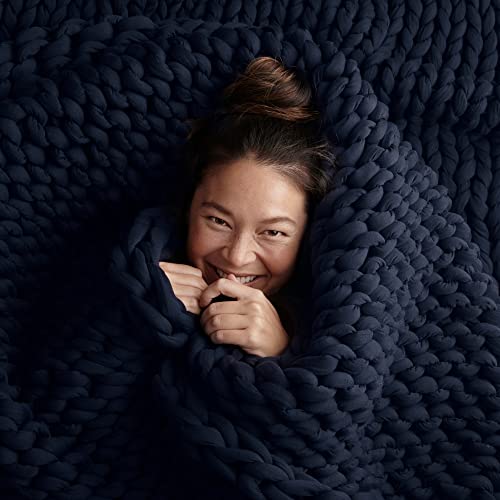
The Bearaby Cotton Hand-Knit Weighted Blankets for Adults is the exception that proves the cooling rule: a weighted blanket whose open hand-knit cotton loops let air pass freely, so sleepers who love a settled, tucked feeling do not have to choose between that feeling and airflow. It is included as a comfort preference only, with no health claims, for adults who can move it freely.
Strengths
- Airflow through open knit, unlike sealed weighted designs.
- Settled drape that stays placed during restless nights.
- Natural cotton against skin, no synthetic sheen.
Trade-offs
- Fifteen pounds is the opposite of sheddable during a flash.
- Personal size; your partner needs their own solution.
- Heavy to wash and reposition nightly.
| Color | Midnight Blue |
| Size | 15 lbs (40”x72”) |
| Dimensions | 71.99999992656 x 39.9999999592 x 0.01181102361 inches |
| Weight | 15 pounds |
Use it strategically: across legs or torso during the wind-down hour, then moved aside for sleep if flashes intensify overnight, or kept by sleepers whose episodes are mild and whose love of weight is strong. Be honest about which sleeper you are; the cooling leaders above serve acute nights better. Choose Bearaby for breathable settled comfort. Skip it for severe, frequent nighttime episodes.
Best for: Mild episodes and weight-loving sleepers / Not suited for: Acute flash management
Choose it for airy weight; skip it for fast shedding. Check on Amazon

Exclusivo Mezcla Soft Large Fleece Throw Blanket for Couch
Our badge: Best Budget
The Exclusivo Mezcla Soft Large Fleece Throw Blanket for Couch may look like the odd one out in a cooling guide, but it solves the partner and shoulder problems elegantly: a light, personal fleece layer for the hours before flashes begin, for cool shoulders above a cooling blanket, or for the partner who is cold while you are not. Its job is zoning, not cooling.
Strengths
- Personal size keeps adjustments on your side only.
- Light warmth for pre-flash and early-night hours.
- Washes and dries fast for nightly readiness.
Trade-offs
- Fleece traps heat during an actual flash; shed it first.
- Throw width only.
- Single color in this listing.
| Color | Forest Green |
| Size | Throw XL (50″ x 70″) |
| Dimensions | 70 x 50 x 0.04 inches |
| Weight | 1.55 pounds |
Keep it folded at your pillow or side of the bed, deploy it when the room feels cool at bedtime, and let it be the first thing jettisoned when heat arrives. That choreography — personal throw, cooling base — lets two different bodies share one bed without either dictating the thermostat. Choose it as the zoning accessory. Skip it as a cooling blanket itself.
Best for: Partner zoning and cool shoulders / Not suited for: Cooling during flashes
Choose it to balance the bed; skip it to fight heat directly. Check on Amazon

Tache Cotton Patchwork Quilt Blanket
Our badge: Best for Cottage Style
The Tache Cotton Patchwork Quilt Blanket closes with breathable cotton in its thinnest form: a lightly filled patchwork quilt that covers without insulating, folds back in one motion, and suits bedrooms where the night starts genuinely cool and flashes visit later. Its flat drape never bunches into hot spots.
Strengths
- Thin cotton layer with minimal heat storage.
- Flat, even drape that adjusts in one movement.
- Breathable natural fibers with handmade charm.
Trade-offs
- No cooling technology for acute moments.
- Light warmth only, even at bedtime in cold rooms.
- Throw size rather than full-bed coverage.
| Color | Burgundy |
| Size | 50×60 |
| Dimensions | 59.9999999388 x 49.999999949 x 0.01181102361 inches |
Use it over a cooling blanket in transitional seasons, or alone in cottages and guest rooms where nights are mild. Its cotton washes gently and dries without fuss. Choose it for thin, pretty, breathable coverage. Skip it when episodes are intense and frequent.
Best for: Mild nights and layered transitions / Not suited for: Intense episodic heat
Choose it for light cotton charm; skip it for serious cooling. Check on Amazon
The comparison divides into active coolers, breathable naturals, and light neutrals, and the right column for you depends on your flash pattern. Sudden, intense flashes favor the cool-to-touch picks you can throw off and pull back; a generally warm night favors breathable cotton that never feels clammy; the lightest fleece suits the post-flash chill on an otherwise cool sleeper. Many readers will sensibly choose two — one for the flash, one for the chill — and that pairing, not any single blanket, is the real recommendation hidden inside this table.
Daytime echoes of the night system are worth building deliberately. A light cooling throw on the sofa turns evening television from a second daily battle with temperature into rest, and a breathable layer kept at a desk or reading chair covers the flashes that arrive outside the bedroom entirely. Clothing and bedding obey the same logic: layers you can shed in one motion, fabrics that do not hold dampness against skin, and spares within reach beat any single heroic garment or blanket. Women who build this consistency across the day often find the nights feel less like an ambush, not because the flashes change, but because the environment stops amplifying them. Keep the pieces coordinated — the same light layers, washed the same way, in the same few places — and the whole system runs on habit rather than on decisions made while overheated.
Exercise, bathing, and the hour before bed set the night’s opening conditions, so treat them as part of blanket strategy. A hot bath immediately before bed raises the temperature you carry under the covers; a comfortably warm one, finished earlier, lets you arrive at the pillow neutral. Heavy evening exercise has the same timing effect for many people. None of this is medical advice — it is the same practical thermoregulation any athlete uses — and where symptoms intersect with health conditions or medications, your clinician’s guidance governs. The modest claim stands: arrive at bed neither heated nor chilled, under a layer you can discard one-handed, beside a dry spare, and most flashes shrink to their shortest possible version of themselves.
Comparison Table
| Pick | Size | Weight | Color | Check price on Amazon |
|---|---|---|---|---|
| Elegear Double-Sided Cooling Blanket for Hot Sleepers | Full/Queen (79″ x 86″) | 3.25843223236 pounds | Light Grey | Check price on Amazon |
| REST Evercool Cooling Comforter Blanket for Hot Sleepers | Full / Queen (90″x90″) | 5.5 pounds | Cool Gray | Check price on Amazon |
| Bedsure Cooling Cotton Waffle Blanket for Hot Sleepers | Queen (90″ X 90″) | 3.8 Pounds | 01 – Ivory | Check price on Amazon |
| Bearaby Cotton Hand-Knit Weighted Blankets for Adults | 15 lbs (40”x72”) | 15 pounds | Midnight Blue | Check price on Amazon |
| Exclusivo Mezcla Soft Large Fleece Throw Blanket for Couch | Throw XL (50″ x 70″) | 1.55 pounds | Forest Green | Check price on Amazon |
| Tache Cotton Patchwork Quilt Blanket | 50×60 | — | Burgundy | Check price on Amazon |
How to Choose a Blanket for Flash-Prone Nights
Match the blanket to your heat pattern
Sudden waves favor cool-on-contact, light, sheddable blankets. All-night heat favors sustained cooling comforters. Nights that start cold favor layering: cotton or a personal throw first, cooling beneath. Name your pattern honestly across a week of nights before buying, because the wrong pattern match feels like the product failed when the diagnosis did.
Prioritize moisture behavior
Perspiration is part of the cycle, and fabrics differ enormously afterward. Wicking cotton and smooth cooling fabrics dry fast and feel fresh; dense fleece and heavy quilts stay damp and clammy. If you wake damp, upgrade moisture handling before upgrading anything else.
Zone the bed for two bodies
Your partner did not sign up for your thermostat. Personal throws, split layers, and cooling on your side only preserve both sleeps. A king bed can even run two different twin-size systems under one decorative top layer.
Make freshness effortless
Frequent washing is part of this life stage, so choose blankets that wash and dry in one ordinary cycle and own a duplicate of the winner. A cooling blanket in the laundry is no help at three in the morning.
Plan for the flash, the chill after, and the damp between
A hot flash night has three acts, and a blanket chosen for only the first will fail the other two. During the flash itself you need instant relief: a layer you can throw off with one movement, light enough not to tangle, with a cool-feeling surface for when you pull it back. Afterward comes the less-discussed chill, when sweat-dampened skin meets night air and you need coverage again quickly — this is why the answer is rarely no blanket at all, but a light, breathable one within arm’s reach. Between acts, moisture handling decides comfort: fabrics that move dampness away from skin and dry fast leave you comfortable, while absorbent-but-slow layers stay clammy against you. Judge every candidate in this guide against all three acts. A blanket that wins the flash and loses the chill will still wake you, just twenty minutes later and for the opposite reason.
Give yourself a one-handed exit and re-entry
At three in the morning, half asleep and suddenly hot, you will not perform a bedding routine — you will flail once and hope. Design for that moment. The top layer should be light enough to push to the foot of the bed with your feet, free of heavy hems or weighted sections that resist, and positioned so it does not drag your partner’s covers with it. Keep a small, dry spare layer or a folded corner of sheet available for the post-flash chill so you are not choosing between a damp blanket and nothing. If you use a fan, aim it so it reaches you during the flash without blasting your partner all night. These are humble, mechanical details, and they matter more to real sleep than any fabric technology, because they determine whether a flash costs you two minutes or forty.
How Should You Set Up the Bed for Cooler Sleep?
Build from a breathable sheet, add your cooling blanket as the main layer, and keep a light personal throw folded at your side for cool starts. Keep the bedroom as cool as your household allows, run air movement if you like it, and place a glass of water and a small towel within reach so an episode does not require a full expedition. Wear breathable sleepwear in the same fabric family as your blanket logic, and avoid heavy decorative layers on your half of the bed. After an episode, flip or shake the cooling blanket to expose a fresh cool surface, give yourself a minute before re-covering, and let the fabric’s drying do its work.
Track patterns for a few weeks if you are bringing information to a clinician: timing, room temperature, bedding, and what helped. Bedding experiments are more useful when they are recorded rather than remembered, and your notes will make any professional conversation sharper.
Problem: Blanket feels cold at bedtime, then I overheat — Layer a light personal throw over the cooling blanket for the first hour and shed it when warmth builds; the cooling layer underneath is then already in place.
Problem: I wake damp and clammy — Your fabric is storing moisture. Switch the contact layer to wicking cotton waffle or smooth cooling fabric, reduce layers above it, and ensure the blanket dries fully between nights.
Problem: My partner is freezing under my cooling blanket — Zone the bed with separate layers per side and a shared decorative top if looks matter. One blanket cannot serve two thermostats during a flash cycle.
Problem: Cooling effect seems to fade overnight — Contact-cooling is strongest at first touch; flip the blanket, expose a fresh area, or shake it out to reset the surface, and rely on breathability for the hours between episodes.
The Partner’s Guide to Sharing a Flash-Prone Bed
Partners sleep better when the system is explicit: the hot sleeper controls their side’s layers, adjustments are quiet and practiced, and a spare light throw lives on the cool partner’s side for the moments the shared top layer migrates. Separate personal blankets under one styled bedspread are the classic peace treaty, and king beds make it easy. What does not work is nightly improvisation and resentment; what works is a setup decided in daylight and left alone at night. Households navigating other asymmetric needs will recognize the pattern from Best Blankets For Diabetics, where one sleeper’s requirements shape half the bed without apology.
Cooling Comfort Beyond the Bedroom
Flashes do not respect room boundaries, so keep a light cooling or cotton throw where you rest during the day — the sofa, a reading chair, a home office — washed and ready like its bedroom counterpart. Cars and travel benefit from your own light layer whose history you know, and guest stays become easier when your sleep system travels in miniature. The principle is portable even when the blanket is not: light, breathable, moisture-friendly layers you can add and shed without ceremony.
Travel is the stress test for a flash-prone sleeper, because hotel beds arrive pre-loaded with a heavy duvet and no alternatives. Pack your own light layer — one of the packable fleece or cotton picks here travels well — and rebuild the hotel bed on arrival: duvet off or folded to your partner’s side, your light blanket as your only cover, a spare pillowcase if hotel fabrics bother you. Ask for a fan or a room away from heat sources without embarrassment; sleep is the point of the room. At home, keep a small bedside kit ready on bad nights — water, a spare dry top layer within reach, the fan remote — so a flash is handled by reflex rather than by a fully waking expedition. Preparation does not prevent flashes, and this guide does not pretend bedding manages a medical symptom; it simply shortens each episode’s disturbance, which across a month of nights is the difference between coping and exhaustion.
Talk with your partner about the system once, in daylight, kindly. Night negotiations conducted in whispers at three in the morning resolve nothing, while a five-minute conversation — your side lighter, the spare layer’s location, the fan’s aim, what to do about the damp sheet problem, which is usually to keep a thin spare layer between you and it — turns a shared frustration into a shared routine. Many couples find the zoned bed in this guide quietly improves both sleeps: the flash-prone partner stops overheating, and the other stops being woken by full-bed uncovering and re-covering. If night symptoms are severe, new, or accompanied by anything worrying, raise them with a clinician; bedding is comfort engineering, and its honest limit is making each night easier to get through, not explaining or treating why the nights are hard.
Work schedules complicate everything in this category and deserve explicit planning. Night-shift workers sleep through the warmest hours in rooms that resist cooling, and for them the cooling blanket is not a preference but the difference between daytime sleep and daytime lying awake; blackout plus a genuinely cool layer plus a fan is the honest kit. Partners on opposite shifts should treat the bed as two shifts too — the flash-prone sleeper’s zoned, light side made ready by whoever leaves it, without resentment, as a standing act of care. Households that name these arrangements out loud stop relitigating them at the exact hours when everyone is tiredest and hottest, which is when small thermal grievances become large ones.
Keep perspective on product claims you will meet while shopping beyond this guide. Fabrics can feel cool on contact, move moisture, and breathe — real, useful properties, all present in the picks above — but no blanket regulates hormones, ends a life stage, or replaces a conversation with a clinician about symptoms that are disrupting your life. Shop for the mechanical virtues, verify them across a fortnight of your own nights, and let medicine be medicine. Within that honest frame, the right blanket remains genuinely powerful: it shortens wakefulness, protects a partner’s sleep, and returns a measure of control to nights that can feel governed by ambush. That is worth buying carefully, and it is all this guide has ever promised.
Clothing choices echo the blanket logic so closely that they belong in the same plan. Sleepwear in breathable, moisture-moving fabrics, cut loose enough to shed heat, extends the cooling blanket’s work; heavy, absorbent sleepwear undoes it by holding dampness against you through the post-flash chill. Keep a dry spare top at the bedside on difficult stretches — changing a damp top in the dark takes twenty seconds and returns more sleep than any amount of lying still hoping to dry. Households often discover that fixing sleepwear alone moves the night noticeably, which is worth knowing before concluding that a blanket has failed: judge the blanket only once the whole sleep outfit obeys the same light, dry, layered rules.
Anniversaries of a different kind matter too: the system that served the first year of flashes may need revisiting as patterns change in frequency or intensity, as seasons of life and medication shift, and as partners’ own sleep changes with age. Re-run the simple audit annually — layer weight, zoning, spares, fan, room — and adjust without treating change as failure. The goal was never a frozen, perfect setup; it is a bed that keeps adapting, cheaply and calmly, to the sleeper you currently are.
Keep one small courtesy in reserve for the hardest stretches: lower every other bar. When nights are broken for weeks, the perfectly made bed matters less than the reliably cool one, the laundry can run a day late without consequence, and the system’s only non-negotiable is the light layer, the spare, and the fan, ready without thought. Systems that can run at half capacity without collapsing are the ones still running in month six. Design yours with that mercy built in, and extend the same mercy to yourself; you are managing a genuinely disruptive symptom with household tools, and doing it, on the evidence of the bed you have built, rather well.
The measure of success, stated one final way, is a morning question: did the night cost you minutes, or did it cost you the night? Everything in this guide — the cool surfaces, the zoning, the dry spare, the one-handed exit — exists to move flashes into the first column. When most nights land there, the blanket has done its whole job, and the remaining hard nights are a reason to talk with a clinician, not to blame the bedding.
Keep a small basket or drawer for the night kit so it never migrates: the spare dry layer, a spare top, the fan remote, a hair tie, whatever your own pattern has taught you to reach for. Kits that live in one place get used; kits assembled nightly from three rooms get abandoned by the second week, and the night returns to improvisation. Refill and wash the kit’s textiles with the bedding rhythm so readiness is maintained by the system rather than by memory. It is a five-minute act of self-care performed in advance, in daylight — which is where, this guide has argued throughout, every good night is actually made.
Let partners and family see the system working before they are asked to respect it at three in the morning. A zoned bed demonstrated once in daylight — this side light, this spare folded here, the fan aimed so — reads as care rather than as a list of prohibitions, and households adopt what they understand. The same daylight conversation is the moment to agree the exceptions: illness, guests, the coldest week of the year, when the zoning relaxes and nobody litigates it later. Systems with agreed exceptions survive; systems presented as law get quietly repealed by the people they were meant to help, usually at the exact hour they were designed for.
Set the bed before dinner, while you are cool and unhurried: light layer zoned, spare folded within reach, fan aimed, water poured. The night will do what it does; the bed, prepared in daylight by a calm person who knows your pattern intimately — yourself — will be ready for all of it, and readiness, repeated nightly, is its own form of rest.
Begin with tonight’s bed, exactly as it is, plus the one light layer moved to your side. Small, immediate, and repeatable beats perfect, someday, and theoretical — every single night of the entire year.
Common Buying Mistakes
Buying the warmest soft blanket in the store
Plush and pile are engineered to store heat — the opposite of your need. Let cooling and breathability lead, however inviting the sherpa looks.
Choosing weight for a settled feeling without an exit plan
Heavy blankets are hard to shed mid-flash. If you love weight, choose breathable knit and rehearse moving it aside, or keep it for wind-down only.
Cooling the whole bed for one sleeper
Partners pay for your relief with their sleep. Zone layers per side from the start.
Ignoring the damp aftermath
A blanket that cools but stays clammy trades one wakefulness for another. Moisture handling is a first-order feature here.
Expecting bedding to manage a medical symptom
Blankets improve comfort around episodes; they do not diagnose or treat their causes. Persistent, disruptive symptoms deserve clinical attention.
Night Sweats, Guests, and Other Real-Life Complications
Staying away from home tests everything this guide recommends, because other people’s beds are built for other people’s thermostats. Beyond the travel layer already discussed, two habits help: arrive with your system stated plainly to hosts you know well — most would rather hand you the thin blanket and keep their duvet than have you sleepless and polite — and in hotels, rebuild the bed before you are tired, while decisions are easy. At home, the guest room deserves a flash-aware option too, since guests in the relevant years of life are common and rarely announce their needs; a light, breathable spare blanket folded visibly in the guest room is quiet, dignified hospitality. The same applies to the sofa for the nights when a bad stretch sends you there: keep a cooling throw where you would actually land, rather than conducting a linen-closet search at three in the morning. Readers comparing approaches for partners at different life stages may also find Best Weighted Blankets For Elderly useful for the other side of the bed, since zoned systems often pair a cooling layer for one sleeper with a more settled, substantial layer for the other.
Finally, keep a proportionate sense of what progress looks like. A good blanket system for hot flashes does not produce unbroken nights; it produces shorter interruptions, drier re-entries, a partner who sleeps through more of it, and mornings that feel survivable. Track that honestly for a fortnight before judging — memory exaggerates bad nights and erases improved ones — and adjust one element at a time: layer weight, room temperature, fan position, the spare dry layer’s place. If nights remain severely disrupted, that pattern itself is worth raising with a clinician, who has options bedding does not. Within its honest limits, though, the right blanket is not a small thing. It is the difference between a flash as an event that ends your night and a flash as a weather pattern you have learned, practically and calmly, to sleep through.
Final Recommendation
Start with the Elegear Double-Sided Cooling Blanket for Hot Sleepers for its instant cool contact and cotton recovery side, and consider the fuller-bodied runner-up if your heat lasts all night — Check on Amazon for the REST Evercool’s current options. Zone your partner’s side warmly, keep a duplicate washed and ready, and let fast, light adjustment become your night’s quiet skill.
Frequently Asked Questions
What should I do about the damp sheet after a flash?
Keep a thin, dry spare layer — a light fleece or an extra top sheet — folded on your side of the bed, and slip it between you and the damp area rather than changing the whole bed at three in the morning. Moisture-moving blanket fabrics reduce how damp things get in the first place, and a small fan aimed across the bed dries the surface surprisingly fast once you are up for water. Full sheet changes are for the morning; the night’s job is a dry-enough surface and a fast return to sleep.
Is it better to sleep with no blanket at all?
For most flash-prone sleepers, no — the post-flash chill arrives within minutes and wakes you again, and many people simply sleep poorly feeling uncovered. A very light, breathable, easily discarded layer gives you the exit during the flash and the cover after it. The exception is a genuinely hot room, where the fix is cooling the room itself. Experiment across a few nights with the light layer at the foot of the bed; your own pattern, honestly observed, beats any general rule.
Do cooling blankets really feel cold?
Cool-on-contact fabrics feel distinctly cold at first touch because they draw heat from the skin’s surface quickly. The sensation softens as temperatures equalize, which is why flipping or shaking the blanket restores it, and why breathability matters for the rest of the night.
What is better for hot flashes, cooling fabric or cotton?
Cooling fabric wins acute moments; cotton waffle wins steady breathability and moisture handling without a cold shock. Many sleepers layer or rotate both, and your own pattern across a week is the best guide.
What bedding helps most on the worst nights?
On the worst nights the system matters more than any single product: your light layer already zoned to your side, the dry spare within reach, the fan aimed, water at the bedside, and the heavy shared duvet already exiled to your partner’s side before sleep. Prepare that arrangement on good evenings until it is automatic, because nobody designs a good system at three in the morning. If worst nights are frequent rather than occasional, note their pattern and raise it with a clinician — frequency is information, and it deserves more than bedding.
How can I stop waking my partner?
Use light, quiet, personal layers on your side, practice shedding and recovering them without sitting up fully, and agree the setup in daylight. Zoned bedding turns a shared problem into a solved layout.
Should I avoid weighted blankets?
Most weighted blankets trap heat and resist quick removal, so they suit this keyword poorly. The open cotton knit included here is the breathable exception, best for mild patterns or wind-down use rather than acute nights.
How often should I wash a cooling blanket?
Frequently enough that it always feels fresh — weekly is a practical rhythm for nightly use, more often in hot weather. Own a duplicate so washing never leaves you uncovered, and dry fully between uses.
What else helps besides the blanket?
A cool room, moving air, breathable sleepwear and sheets, water within reach, and a consistent wind-down routine all support the same goal. For the symptoms themselves and any treatment questions, your clinician is the right resource.


