Disclosure: As an Amazon Associate, dailyhomedecorating.com earns from qualifying purchases. Links to Amazon on this page are affiliate links; they cost you nothing extra. Prices and availability change often, so check the current Amazon listing before you buy.
The best blankets for sleeping are not the warmest, coolest, or softest blankets in isolation — they are the ones that disappear. A great sleep blanket holds a steady temperature while you drift off, stays put when you turn, breathes when the room warms at dawn, and washes without losing the feel you bought it for. This guide compares six verified sleep-first options: a cooling comforter for hot sleepers, a breathable waffle for the classic bed, a balanced fleece bed blanket for most households, two weighted options for pressure lovers, and a light cooling blanket for warm rooms. If temperature is your main sleep disruptor, start with Best Blankets For Hot Sleepers; if you sleep cold, winter layering in Best Blankets For Winter will matter more.
Most blanket complaints are really sleep complaints in disguise: waking too hot, waking with the blanket on the floor, waking because a partner stole the coverage. Each pick below is judged on sleep outcomes — falling asleep, staying asleep, and waking comfortable — rather than on couch coziness alone. Throws have their place in a home, but this shortlist favors bed-sized, sleep-tested designs, with one personal weighted option for the pressure sleeper whose needs are specific and real.
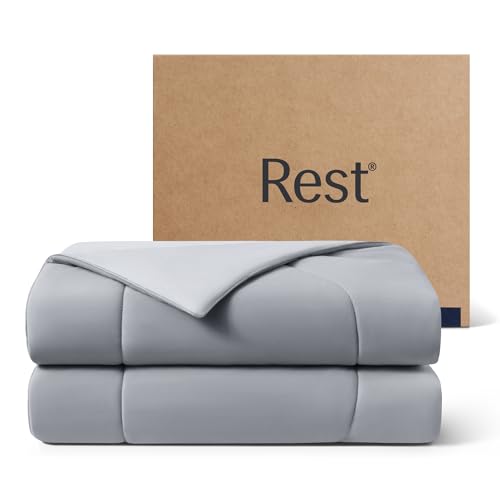
Where to Buy
All picks are sold on Amazon; verify current price and size availability on the listing. Our lead pick is the REST Evercool Cooling Comforter Blanket for Hot Sleepers — Check on Amazon. The others are the Bedsure Cooling Cotton Waffle Blanket — Check on Amazon; the Bedsure Fleece Bed Blanket — Check on Amazon; the YnM Weighted Blanket — Check on Amazon; the Gravity Weighted Blanket — Check on Amazon; and the Elegear Cooling Blanket — Check on Amazon. For a full bedroom reset, browse Best Throw Pillows Under $100 alongside your blanket choice.
In this guide
Quick Picks
| Pick | Badge | Why it earns its place |
|---|---|---|
| REST Evercool Cooling Comforter Blanket for Hot Sleepers | Best Overall | Single draping layer that stays put and sleeps cool for the widest range of sleepers. |
| Bedsure Cooling Cotton Waffle Blanket for Hot Sleepers | Best Budget | Breathable cotton-bamboo waffle — the classic, forgiving sleep blanket. |
| Bedsure Fleece Bed Blankets Queen Size Grey – Soft Cozy Warm Winter Blanket Christmas Than | Best for Cool Sleepers | Light fleece queen coverage for sleepers who run neutral to cool. |
| YnM Weighted Blanket | Best for Restless Sleepers | Even glass-bead pressure in small compartments for a tucked-in, settled feel. |
| Gravity Weighted Blankets for Adults | Best Premium Weighted | Cotton-feel weighted blanket with plush duvet cover and gridded bead distribution. |
| Elegear Double-Sided Cooling Blanket for Hot Sleepers | Best Compact | Light reversible cooling blanket for warm rooms, travel, and naps. |
Key Takeaways
- For most sleepers, one draping breathable layer beats a stack of blankets that separate overnight.
- Weighted blankets help pressure lovers feel settled; choose weight by body-weight guidance and never use them for young children.
- Hot sleepers should rank cooling and waffle picks first; cool sleepers should rank fleece first.
- Bed-sized coverage (queen around 90 inches wide) prevents the exposure wake-ups that feel like temperature problems.
- Washability protects sleep quality — clean bedding breathes and feels better.
How These Picks Were Chosen
Sleep fitness meant four tests: temperature steadiness across a full night, staying power during turning, next-to-skin comfort for eight hours, and care practicality for weekly-to-monthly washing. We included cooling, breathable, balanced fleece, and weighted constructions because sleepers differ more than blankets do. Heated blankets were left to the winter guide — active heat is a winter tool, not a year-round sleep default — and small decorative throws were excluded except for the light cooling blanket that genuinely serves warm-room sleep and travel. Specs are pool-verified only. Weighted picks carry comfort framing only; this guide makes no medical claims about sleep disorders, and anyone with a diagnosed sleep condition should follow their clinician’s guidance rather than a bedding guide. See Best Weighted Blankets For Anxiety for the comfort-focused weighted discussion with the same caution.
The 6 Best Best Blankets for Sleeping — Reviewed

REST Evercool Cooling Comforter Blanket for Hot Sleepers
Our badge: Best Overall
The REST Evercool Cooling Comforter Blanket for Hot Sleepers leads a sleep guide for a simple reason: it removes failure modes. One reversible cool-to-touch comforter, generously sized at 90 by 90 inches for Full/Queen, drapes instead of tenting, stays where you leave it, and — per the maker — washes and dries without special handling. Sleepers who currently fight a sheet-plus-blanket tangle will feel the difference in the first week.
Strengths
- Draping single layer reduces tangling and blanket-on-the-floor mornings.
- Cool-to-touch, breathable knit suits the majority who sleep warm at least part of the year.
- Maker notes snag, pilling, and pet-hair resistance — beds stay smoother longer.
Trade-offs
- Cold sleepers in winter will still need an added fleece or wool layer.
- Silky texture differs from crisp cotton; texture traditionalists should try the waffle pick.
- Premium tier — check the current listing before committing.
| Color | Cool Gray |
| Size | Full / Queen (90″x90″) |
| Weight | 5.5 pounds |
Sleep is a temperature curve: warm at lights-out, coolest before dawn, warming again as you surface. The Evercool’s light fill and breathable shell flatten that curve better than either a thin sheet (too little at dawn) or a standard comforter (too much at midnight). Couples benefit from the drape — each side settles semi-independently instead of one turn stripping the whole bed. If you add one upgrade to a mediocre sleep setup this year, a single well-chosen top layer outperforms most pillow experiments. Choose Evercool for the simplest good night’s sleep here. Skip it if you sleep genuinely cold year-round.
What new owners notice after the first week is how little there is to manage. There is no nightly reconstruction of a layer stack, no sheet twisted into a rope by morning, no debate about whether the duvet goes back on after washing day. The bed is made in under a minute and sleeps the same on night thirty as on night one, and that consistency is itself a sleep aid: your body learns one thermal environment and stops budgeting attention for it. Parents will also appreciate that a single comforter is the easiest bed in the house to remake after a middle-of-the-night accident or illness — one piece into the wash, one spare layer onto the bed, everyone back to sleep. Keep a lightweight backup blanket in the closet for exactly those nights and the Evercool-centered system has no weak point.
Best for: most sleepers wanting one steady, low-maintenance top layer / Not suited for: very cold sleepers in unheated winter bedrooms
Choose Evercool for set-and-forget sleep comfort. Skip it if you need heavy winter insulation. Check on Amazon

Bedsure Cooling Cotton Waffle Blanket for Hot Sleepers
Our badge: Best Budget
The Bedsure Cooling Cotton Waffle Blanket for Hot Sleepers is the sleep blanket traditionalists trust: cotton and bamboo-derived rayon in a waffle weave that breathes, absorbs, and layers under or over anything. It never feels cold, never feels slick, and never surprises you at 3 a.m. — the highest praise a sleep blanket can earn. At queen size it covers properly; at its tier it is the value anchor of this guide (verify current pricing on Amazon).
Strengths
- Steady breathability suits back, side, and stomach sleepers equally.
- Natural-fiber hand feel pairs with any sheet set without texture clashes.
- Year-round layer: alone in summer, under a duvet in winter.
Trade-offs
- No pressure and no active cooling — restless or very hot sleepers may need more.
- Waffle texture can catch on rough skin or pet claws; wash gently.
- Light color shows wear sooner in high-use family beds.
| Color | 01 – Ivory |
| Size | Queen (90″ X 90″) |
| Weight | 3.8 Pounds |
The waffle blanket’s sleep virtue is forgiveness. Forget to adjust the thermostat, add a partner, add a dog — the waffle still behaves within a degree or two of perfect, because airflow self-regulates in a way insulation cannot. Bedsure’s durability framing (neat stitching, fade and shrink resistance) matters for a blanket that will be washed constantly. Guest rooms, kids transitioning to big beds, and anyone rebuilding bedding on a budget should start here and specialize later. Compare its cotton behavior in depth in Best Cotton Blankets For Summer. Choose waffle for dependable, familiar sleep. Skip it if you specifically crave weight or chill.
The waffle blanket is also the best teacher in this guide. Because it has no technology and no strong specialty, it reveals your true sleep temperature within a week: if you sleep perfectly under waffle cotton in a normal room, you never needed a specialty blanket at all; if you wake hot, you are a genuine candidate for cooling fabrics; if you wake cold, fleece or layering is your honest direction. Many households buy it as a diagnostic before committing to a premium specialty pick, then keep it permanently as the rotation and guest blanket. It also tolerates the widest range of washing habits in the guide — frequent, warm, imperfect family laundry — which is why it so often becomes the blanket children take to college and the one that outlasts trendier purchases. Forgiveness, in bedding, is a feature.
Best for: classic sleepers and layered beds in any season / Not suited for: sleepers seeking weighted pressure
Choose the waffle blanket for the steadiest budget sleep. Skip it if you want a specialty feel. Check on Amazon

Bedsure Fleece Bed Blankets Queen Size Grey – Soft Cozy Warm Winter Blanket Christmas Than
Our badge: Best for Cool Sleepers
The Bedsure Fleece Bed Blankets Queen Size Grey – Soft Cozy Warm Winter Blanket Christmas Than serves the sleeper the cooling industry forgets: the person who is cold at bedtime, cold at dawn, and happiest under a soft, full-coverage blanket in every month. This flannel fleece queen (90 by 90 inches, 3.19 pounds) is light for fleece yet genuinely cozy, soft enough against skin, and large enough to tuck or drape as your sleep style demands.
Strengths
- Full queen coverage with a soft, immediately warm hand feel.
- Lightweight for its warmth — settled without heaviness.
- Family-versatile: beds, kids’ rooms, pet corners, and sofa duty.
Trade-offs
- Hot sleepers will overheat; this pick assumes you run cool.
- Fleece breathes less than waffle cotton in humid rooms.
- Single solid color keeps styling simple rather than decorative.
| Color | Grey |
| Size | Queen (90″ X 90″) |
| Weight | 3.19 pounds |
Cool sleepers sleep best with consistency, and fleece delivers it: the same soft warmth in January and in an air-conditioned July. Bedsure describes upgraded microfiber softness and reinforced seams, and the blanket’s real-world reputation in this pool is as the household workhorse — the one that ends up on whichever bed is coldest. Layer it over the waffle blanket for the coldest weeks and peel back to waffle alone in spring; the two-blanket system covers the year for neutral-to-cool sleepers. If your partner runs hot, give them the cooling side of the bed (Evercool or Elegear) and keep fleece on yours — separate layers, shared bed, no compromise. Choose fleece if cold wakes you more than heat does. Skip it if you kick covers off by midnight.
Cool sleepers have one more consideration the rest of this guide can ignore: cold feet and cold shoulders are different problems. A full-coverage fleece solves shoulders; feet often need the blanket tucked at the foot of the bed or a folded throw across the bottom third, because even the best blanket cannot warm extremities it barely contacts once you curl up. Build that fold into your bed-making for a week and many cool sleepers discover their blanket was never underpowered — it was just deployed flat. The Bedsure’s generous queen dimensions give you the material to work with, and its light weight means the folded foot section adds warmth without the ankle pressure some people dislike from heavy quilts. Small deployment changes like this are free, reversible, and worth exhausting before any further purchase.
Best for: cool and neutral sleepers wanting soft full coverage / Not suited for: hot sleepers
Choose the fleece bed blanket for reliable cozy sleep. Skip it if you sleep hot. Check on Amazon
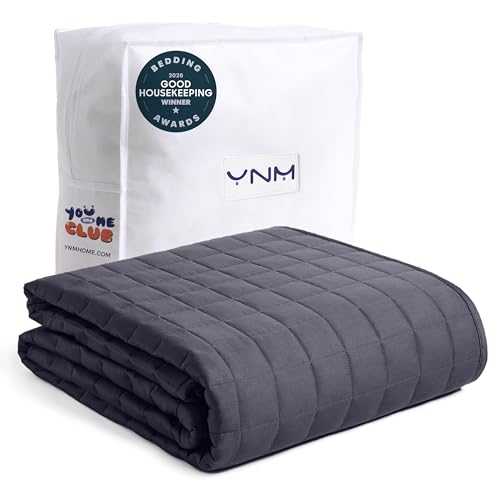
YnM Weighted Blanket
Our badge: Best for Restless Sleepers
The YnM Weighted Blanket brings even, gentle pressure to the sleep guide: 15 pounds distributed through very small two-inch compartments with glass beads, a seven-layer build, and less fiberfill than classic padded weighted blankets. Many restless sleepers — people who toss, kick light blankets off, and wake unrefreshed — find that a weighted layer’s steady contact helps them feel settled and keep covers in place through the night. That is a comfort preference, honestly stated, not a medical promise.
Strengths
- Fine compartment design prevents bead pooling and uneven pressure.
- Reduced fill keeps it cooler than traditional weighted blankets.
- Loops secure an optional cover so the cover washes instead of the heavy blanket.
Trade-offs
- Personal size (60 by 80 inches) for one sleeper, not a shared bed blanket.
- Warmth is real — hot sleepers should use it in cool rooms or choose open-knit designs.
- Not for young children or anyone who cannot remove it independently.
| Color | Exclusive Microfiber Dark Grey |
| Size | 60 in x 80 in 15 lb |
| Weight | 15 pounds |
Use the maker’s sizing rule — roughly ten percent of body weight plus a pound for one adult — and treat the first nights as calibration: some sleepers adapt instantly, others need a week of legs-only use before full coverage feels right. Pair the YnM with breathable sheets and no additional duvet; weighted sleep works best as a minimal system. Our dedicated guide Best Weight For Weighted Blankets covers the weight math and sharing sizes in full. Choose YnM if light blankets leave you restless. Skip it if you dislike any sense of confinement in bed.
Set expectations for the YnM honestly. It will not feel like your old blanket plus a benefit; it feels like a different category of sleep — quieter, more contained, with fewer position changes because each position feels finished. Some sleepers love that containment from the first night; others need the adaptation week, starting with the blanket over their legs during reading and only pulling it up fully once the weight feels familiar. What it should never feel is like work: if you are aware of effort when turning, or you wake with the sense of having slept in armor, the weight class is wrong for you regardless of what a chart suggests. Drop down rather than pushing through. Also plan the logistics — a 15-pound blanket needs a washing machine that can handle it or a cover-based care routine, and it needs a permanent home on the bed rather than nightly transport from a closet.
Best for: restless adult sleepers who like steady pressure / Not suited for: children, shared coverage, or very hot bedrooms
Choose YnM for settled, tucked-in sleep. Skip it if pressure bothers you. Check on Amazon

Gravity Weighted Blankets for Adults
Our badge: Best Premium Weighted
The Gravity Weighted Blankets for Adults is the premium weighted expression in this pool: a 15-pound twin/single blanket (48 by 72 inches) with fine-grade glass beads in gridded stitching, a premium micro-plush duvet cover, and a cotton-comfort positioning that feels more like finished bedding than therapy equipment. Gravity frames the blanket around rest and recovery and deep touch pressure for a calmer wind-down — again, comfort language this guide endorses without medical claims.
Strengths
- Plush removable cover elevates feel and simplifies washing.
- Gridded stitching keeps beads uniform in any sleep position.
- Multiple weights exist in the line (15, 20, 35 pounds per the maker) for household matching — verify your size on the listing.
Trade-offs
- Twin/single footprint is personal only; couples need separate blankets.
- Plush cover sleeps warmer than open-knit cotton weighted options.
- Premium tier in the weighted category.
| Color | Grey |
| Size | 15 lbs 48″x72″ Twin/Throw |
| Weight | 15 pounds |
Gravity suits the sleeper who wants weighted comfort to look and feel like a luxury bed, not a compromise. The cover’s softness matters at 3 a.m. when the blanket is against your face and arms, and the even bead grid matters at 6 a.m. when you realize you barely moved. Use it as your sole top layer in a cool room, wash the cover with sheets, and keep the inner piece for occasional gentle care per the maker. Hot sleepers who love this concept but overheat should compare the breathable knit alternative in Best Weighted Blankets For Hot Sleepers before deciding. Choose Gravity for premium weighted polish. Skip it if ventilation outranks plushness for you.
The cover deserves a closer look, because on the Gravity it is not an accessory — it is half the product. A micro-plush cover changes the weighted experience from clinical to cozy, protects the inner bead piece from the wear and washing that shorten weighted blankets’ lives, and lets you change the bed’s look and warmth by swapping covers seasonally: plush for winter, a lighter cotton cover (where available) for summer. When you wash it, zip or secure it fully and wash it like the bedding it is; the inner piece should need attention only occasionally. Couples in which both partners want weight should buy two personal blankets rather than one oversized shared piece — weighted blankets distribute properly over one body’s contours, and two singles preserve the independent movement that makes shared sleep work.
Best for: pressure lovers wanting a finished, plush weighted bed / Not suited for: hot sleepers needing maximum airflow
Choose Gravity for the most polished weighted sleep. Skip it if you run very hot. Check on Amazon

Elegear Double-Sided Cooling Blanket for Hot Sleepers
Our badge: Best Compact
The Elegear Double-Sided Cooling Blanket for Hot Sleepers closes the sleep guide as the warm-room specialist: Arc-Chill cooling fabric on one side (maker-stated Q-Max above 0.5), natural cotton on the other, in a light Full/Queen build that also travels to guest rooms, dorms, and summer houses without a second thought. For sleepers whose rooms never truly cool — top-floor bedrooms, humid climates, heat-retaining mattresses — it is often the difference between sleeping and enduring.
Strengths
- Immediate cool contact helps hot sleepers fall asleep faster.
- Reversible cotton side prevents the blanket from feeling cold in shoulder seasons.
- Packs and washes easily for travel sleep consistency.
Trade-offs
- Too light for cool sleepers or winter use without layers.
- Cooling effect softens over thick pajamas.
- Slick side may shift on smooth sheets for very active sleepers.
| Color | Light Grey |
| Size | Full/Queen (79″ x 86″) |
| Weight | 3.26 pounds |
Bring the Elegear into a sleep system deliberately: breathable sheets below, nothing above, room as cool as you can make it. Travelers swear by familiar bedding for sleep quality in strange rooms, and this blanket’s packability makes that strategy realistic. At home it also serves as the nap blanket that does not require remaking the bed. Choose Elegear if heat is the thing standing between you and sleep. Skip it if your bedroom is comfortably cool already — the waffle or Evercool will feel more substantial.
One underrated Elegear use is the daytime sleep shift. Nurses, warehouse staff, and new parents sleeping in bright, warm daytime rooms face the worst thermal conditions of any sleepers in this guide, and a cooling blanket is one of the few tools that helps without medication or blackout-level room renovation: curtains for light, earplugs or a fan for noise, and a blanket that starts cool against skin for temperature. At night in a normal bedroom the same blanket simply becomes the lightest competent cover you own — the one grabbed for naps, for the couch after dinner, for the guest who insists the house is warm. Versatility is why it closes this guide despite being the most specialized pick: specialized for heat, useful everywhere heat appears.
Best for: hot rooms and travel sleep / Not suited for: cool sleepers seeking cozy weight
Choose Elegear for cool sleep anywhere. Skip it if you sleep cold. Check on Amazon
Comparison Table
| Pick | Size | Weight | Sleep strength | Check price on Amazon |
|---|---|---|---|---|
| REST Evercool Comforter | Full/Queen 90″x90″ | 5.5 pounds | Draping single layer | Check price on Amazon |
| Bedsure Waffle Blanket | Queen 90″ X 90″ | 3.8 Pounds | Breathable classic | Check price on Amazon |
| Bedsure Fleece Bed Blanket | Queen 90″ X 90″ | 3.19 pounds | Soft cool-sleeper coverage | Check price on Amazon |
| YnM Weighted Blanket | 60 in x 80 in 15 lb | 15 pounds | Even bead pressure | Check price on Amazon |
| Gravity Weighted Blanket | 15 lbs 48″x72″ | 15 pounds | Plush weighted finish | Check price on Amazon |
| Elegear Cooling Blanket | Full/Queen 79″ x 86″ | 3.26 pounds | Contact cooling | Check price on Amazon |
How to Choose the Best Blankets for Sleeping
Start with your wake-ups, not your preferences
List why you actually wake: heat, cold, tangling, a partner, restlessness. Each cause maps to a pick here — cooling, fleece, draping single layer, separate layers, weighted. Buying for the wake-up you have beats buying for the texture you like in a store, because sleep is an eight-hour test, not a ten-second touch.
Respect the temperature curve
You fall asleep warm, cool toward dawn, and warm again before waking. Blankets that breathe or drape adapt across that curve; heavy insulators overshoot at midnight and undershoot after you kick them off. When in doubt, choose the more breathable option and add a folded throw at the foot for dawn.
Get coverage and staying power right
Queen sleepers should demand roughly 90-inch widths. Side sleepers who hug a blanket edge need drape; back sleepers who lie still can use lighter throws. If blankets end up on the floor, the problem is usually size, slickness, or excess layers — fix the system before blaming the blanket. Sizing guidance in Best Bed Blankets For Summer applies in every season.
Decide on weight honestly
Weighted sleep is a strong preference, not a universal upgrade. Borrow or trial the concept if you can, follow body-weight guidance, start with legs-only nights, and never share a personal weighted blanket across two bodies or place one on a child. Pressure lovers will know within a week; everyone else sleeps better unweighted.
Account for the mattress you already own
Blanket advice floats above a mattress that may be helping or sabotaging it. Dense foam beds sleep warm from below and pair best with the breathable and cooling picks here; innerspring and hybrid beds run more neutral and let fleece and waffle perform as labeled. A thick mattress topper rewrites the equation again — a plush topper under a cooling blanket is fine, but a heat-holding topper plus a warm blanket creates the classic midnight overheat that gets blamed on whichever product was bought last. When you change blankets, give the combination a full week before judging: mattress, protector, sheets, blanket, and room form one thermal system, and systems need a few nights to reveal their real behavior.
Keep a sleep-blanket log for one week
If you have bought and returned blankets before, the missing tool is data. For seven nights, note three things in the morning: how long falling asleep felt, how many times you remember waking, and whether temperature, tangling, or something else caused each wake-up. Patterns emerge fast — many people discover their problem is dawn cold rather than midnight heat, or a partner’s movement rather than their own temperature — and each pattern points to a different pick in this guide. Bring that honesty to the purchase and the blanket you choose will be solving your actual sleep problem instead of the one the product photos assumed.
Plan for laundry day and sick days
A sleep system with no backup fails exactly when sleep matters most: the night the blanket is in the wash, or the week someone is ill and bedding cycles daily. Own one honest backup — the waffle blanket is this guide’s natural choice — and the primary blanket’s laundry schedule stops being a negotiation. The same logic applies to weighted blankets, whose covers should be bought in pairs if the blanket is used nightly. Backup planning sounds unglamorous next to cooling technology, but uninterrupted sleep across a whole year depends on it more than on any single fabric.
How to Build a Sleep Routine Around Your Blanket
Keep the bedroom cool, dark, and consistent; pre-adjust the bed an hour before sleep (warm the layers in winter, air them in summer); keep the same top layer for at least two weeks before judging it, since sleep adapts slowly; and wash the skin-contact layer weekly so texture and breathability stay constant. Avoid changing blanket, pillow, and mattress in the same week — you will never learn which change helped. A small notebook by the bed for one week of wake-up causes teaches more than any review, including this one.
Problem: Blanket ends up on the floor. — Size up, tuck the foot, reduce layers to one draping piece, or add weighted steadiness if you are a restless sleeper.
Problem: Perfect at bedtime, wrong by dawn. — Your layer does not adapt. Switch to breathable waffle or draping cooling knit, and keep a light throw for the coldest hour.
Problem: Partner wakes you by moving the covers. — Move to two personal blankets over a shared sheet. Separate layers end transmission of every turn.
Problem: Weighted blanket feels great for an hour, then heavy. — Drop a weight class per the maker’s guidance or use it for wind-down only, swapping to a light layer for sleep.
Problem: You sleep fine on vacation but badly at home. — Compare the beds honestly. Hotels often use a single draping duvet, a cooler room, and no personal clutter layers. Recreate the simplicity — one top layer, cooler room, nothing extra — before buying anything new.
Judge any new blanket on nights three through ten, not night one. The first night with new bedding is distorted by novelty in both directions — everything feels wonderfully different, or strangely wrong — while your body’s real adaptation shows up across the following week. If a blanket wins nights three through ten, it is a keeper. If it only won night one, it was a purchase experience, not a sleep improvement.
Sleep Positions and Blanket Choice
Side sleepers wrap and tuck, so they need width and drape and do well with comforter-format or fleece blankets that stay hugged in place. Back sleepers lie still under flatter layers — waffle and cooling blankets excel, and weighted blankets distribute most evenly in this position. Stomach sleepers overheat easily and resent bulk over the torso; the lightest breathable layer wins. Combination sleepers — most adults — should buy for forgiveness: breathable, mid-weight, generously sized, with no strong specialty bias. Position honesty prevents the common error of buying a partner’s perfect blanket for your own very different sleep.
Pillow interaction is the sleeper’s detail nobody lists. Side sleepers who pull the blanket up around the shoulders need a blanket edge that stays soft and flat against the neck and jaw — thick bound edges and heavy seams become a nightly irritation in that position, while the waffle and Evercool edges disappear. Back sleepers who keep their arms above the blanket need width at the chest so the blanket does not slide when arms move. These are five-second checks on a listing photo and a drape test at home, but they decide whether a blanket feels designed for your position or merely sized for your bed.
Position changes deserve one practical addition: what to do when two positions share one bed. A side sleeper who wraps the blanket and a back sleeper who lies flat will fight any single shared layer, because the wrap steals width from the flat side. The fix is width first — the 90-inch class — and, if that fails, the two-blanket arrangement already recommended for temperature differences. Recognize, too, that sleep position often shifts with age, injury, or pregnancy, and a forgiving mid-weight blanket adapts through those changes while a strongly specialized one may not. When life is in flux, buy the waffle or the Evercool and specialize later, when your sleep has settled into its new pattern.
The Guest Bed and the Travel Bed: Sleeping Well Away From Home
Guests sleep best under adjustable layers, not your personal specialty blanket: a waffle base, a fleece option folded nearby, and clear permission to use either. Travelers sleep best with familiarity — a packable cooling or light blanket that smells and feels like home outperforms hotel bedding roulette. Both cases argue for owning one versatile light blanket beyond your primary pick. It is also the kindest use of a blanket you have rotated out of your own bed: still good, still washable, now serving the spare room. Coordinate the guest bed simply with Best Throw Pillows For Bedrooms Under $30 and stop overthinking it.
Guest-bed thinking also exposes a mistake people make in their own beds: assuming one blanket must serve every night of the year. Guests get layers because we accept their needs vary; your own needs vary just as much across seasons, health, and stress. The mature version of a sleep setup is a small wardrobe — a primary blanket, a lighter one, a warmer one — rotated deliberately rather than a single heroic purchase defended through every month. The picks in this guide were chosen to combine that way: waffle under fleece, Evercool alone, Elegear for the hot spell, weighted over a sheet for the restless month. Buy the first piece for your most common night, the second for your most difficult night, and stop there; a third piece is rarely the missing answer.
Common Buying Mistakes
Buying for the couch test
A blanket that feels amazing for a 20-minute movie cuddle may sleep terribly for eight hours. Judge sleep blankets by overnight criteria: breathability, staying power, and dawn comfort.
Stacking more blankets instead of choosing better
Three mediocre layers tangle, separate, and overheat in patches. One right layer — draping, breathable, correctly sized — sleeps better than any stack.
Ignoring your partner’s sleep entirely
Shared beds need shared systems. If temperatures differ, plan separate top layers from the start instead of negotiating nightly over one blanket.
Expecting a blanket to fix a sleep disorder
Blankets improve comfort; they do not diagnose or treat medical sleep conditions. Persistent insomnia, breathing disruptions, or severe restlessness deserve professional evaluation, with bedding as a supporting comfort choice only.
Changing everything at once
New blanket, new pillows, new sheets, new mattress topper — installed the same weekend, judged as a blur. If sleep improves you cannot repeat the success; if it worsens you cannot find the culprit. Change one sleep variable at a time, live with it a week, and keep notes. Bedding is a system of small effects, and the sleepers who sleep best are usually the ones who tuned theirs patiently rather than the ones who bought the most.
Final Recommendation
For the broadest range of sleepers, choose the REST Evercool Cooling Comforter Blanket for Hot Sleepers as your primary sleep blanket and keep the Bedsure waffle as the rotating second — Check on Amazon. Pressure lovers should substitute the YnM or Gravity for the Evercool and keep everything else in the bed minimal. Build the rest of your sleep around consistency, and revisit Best Blankets For Summer when the seasons turn.
A final word on sequencing if you are rebuilding a bed from a poor starting point: fix coverage first (right size), then temperature (right construction for how you sleep), then feel (the texture you enjoy against skin). Shoppers reverse that order constantly — they buy the softest blanket in the store, discover it sleeps hot or slides off, and conclude they chose the wrong brand when they actually answered the questions in the wrong order. Work the sequence and nearly any pick in this guide will serve you; ignore it and even the best blanket here can disappoint.
Frequently Asked Questions
What blanket material is best for sleeping?
Breathable cotton and cotton blends suit the most sleepers; cooling knits suit hot sleepers; fleece suits cool sleepers; weighted constructions suit pressure lovers. Material rankings only matter relative to your temperature and movement — see Best Material For Blankets for the fiber-by-fiber view.
Are weighted blankets good for sleep?
Many adults find the steady pressure comfortable and settling as part of a wind-down and sleep routine. They are a preference, not a treatment. Follow weight guidance, use them only for people who can remove them independently, and stop if you feel restricted or overheat.
How heavy should a regular sleep blanket be?
Most non-weighted sleep blankets in this guide fall between about 3 and 6 pounds in queen sizes — enough to feel present, light enough to breathe and move. Heaviness beyond that should be intentional (weighted or winter) rather than accidental.
Should I sleep with one blanket or several?
One well-chosen top layer over sheets suits most sleepers in most seasons. Add a second layer for cold snaps or a cold partner rather than living year-round in a stack that tangles.
How often should sleep blankets be washed?
The layer touching skin: every one to two weeks. Outer or weighted covers: with sheets. Heavy insulators: seasonally or as directed. Clean bedding is a sleep-quality input, not just hygiene.
What if I sleep hot but my partner sleeps cold?
Use separate top layers on a shared bed — cooling or waffle for the hot sleeper, fleece for the cold sleeper. It looks slightly informal and sleeps dramatically better than any compromise blanket.
Do I need a flat sheet under my sleep blanket?
It is a preference with practical edges. A sheet adds a washable skin-contact layer, so the blanket itself needs less frequent washing, and it gives fine-grained temperature control — sheet alone for the first hour, blanket added later. Against that, sheets tangle for active sleepers, which is why single-layer comforters like the Evercool exist. If you currently use a sheet and sleep well, keep the habit; if you wake tangled, try two weeks without one before buying anything.
What blanket should I choose for a teenager’s room?
Teenagers sleep long, run warm, and treat bedding roughly, so choose durability and washability over delicacy: the waffle blanket or the fleece bed blanket in a full or queen size they will not outgrow this year. Skip weighted blankets unless the teenager is fully grown, wants the pressure, and can manage the blanket independently — and even then, size and weight it to the individual, not to the bed. A blanket a teenager will actually wash is worth more than a superior one they will not.
Is a more expensive blanket always better for sleep?
No. Sleep performance comes from the match between construction and sleeper, not from tier. The budget waffle blanket outsleeps premium options for classic sleepers every night of the year, while the premium weighted and cooling picks earn their cost only for the sleepers whose problem they specifically solve. Spend where your wake-up log points; save everywhere else. A blanket that solves your actual problem at a modest tier is a better purchase than a luxurious blanket solving someone else’s.
Can children use the blankets in this guide?
The standard bed blankets — waffle, fleece, and the Evercool in an appropriate size — suit older children in normal bedding arrangements. Weighted blankets are different: they are for adults and older young people who can move and remove them freely, sized and weighted for the individual, and never for infants, toddlers, or any child who cannot lift the blanket off independently. Heated blankets are not part of this guide’s sleep recommendations for children at all. When in doubt, choose the simple breathable blanket and revisit specialty options when the sleeper is grown.
When should a sleep blanket be replaced?
When it stops doing its job: fleece that has pilled into roughness, waffle that has shrunk out of coverage, cooling fabric that no longer feels cool even freshly washed, or a weighted blanket with leaking or clumping fill. There is no fixed calendar — a well-kept cotton blanket can serve for years — but a blanket you have started dreading is already costing you sleep, and replacement is cheaper than another month of bad nights.


