Disclosure: As an Amazon Associate, dailyhomedecorating.com earns from qualifying purchases. Links to Amazon on this page are affiliate links; they cost you nothing extra. Prices and availability change often, so check the current Amazon listing before you buy.
The best mattresses for bad lower backs are chosen by a very specific morning: the one where the first steps to the bathroom are taken carefully, where tying shoes is a negotiation, and where the back loosens its grip somewhere around the second cup of coffee. That pattern — worst at waking, easing with movement — is the signature of a back that spent the night in a position it disliked, and the mattress is the largest single author of that position. The lower back’s mechanics in bed are simple to state and hard to satisfy: the pelvis, the body’s heaviest section, must be held at the height where the lumbar curve keeps its natural shape; sink too far and the curve flattens and strains, bridge too hard and the curve is unsupported and the muscles hold it all night instead.
This guide shops that single span of spine with corresponding focus — while keeping the honesty this program insists on: a mattress is comfort infrastructure, not treatment. It can stop spending your nights in a strained position; it cannot repair a disc, a joint, or a diagnosis, and lower back pain that radiates into a leg, follows an injury, or steadily worsens belongs in a clinician’s office, not in a product comparison. For the large group whose lower backs are stiff in the morning and serviceable by lunch, though, the bed is a real and fixable variable. Readers with a wider complaint pattern should compare Best Mattresses For Back Issues for the long-term management view, and Best Mattresses For Lumbar Support — this guide’s closest sibling — for the support-mechanics method in full; the difference is that this article never leaves the lower back’s morning report.
Where to Buy
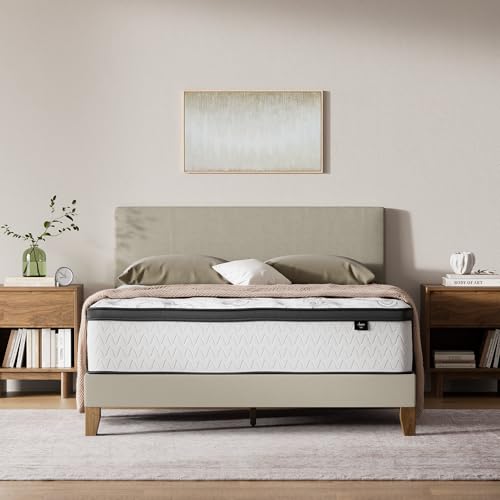
Every pick in this guide is sold on Amazon, where you can check the current price, size availability, trial terms, and delivery options on the listing itself. Start with our top pick, the Signature Design by Ashley Chime 12 Inch Hybrid Full Size Mattress in a Box | Medium Firm — Check on Amazon. The other five picks are the Nectar 12” Memory Foam Mattress — Check on Amazon; the Casper Sleep Original — Check on Amazon; the Serta Perfect Sleeper Ultimate — Check on Amazon; the Sealy Dreamlife 12” Hybrid — Check on Amazon; and the Sweetnight CoolNest — Check on Amazon. Prices move with size and promotions, so treat the listing, not any roundup, as the final word.
In this guide
Quick Picks
| Pick | Badge | Why it earns its place |
|---|---|---|
| Signature Design by Ashley Chime 12 Inch Hybrid Full Size Mattress in a Box | Medium Firm | Best Overall | A dedicated gel lumbar layer over pocketed coils — support addressed to the exact span this keyword names. |
| Nectar 12” Memory Foam Mattress | Best Foam Support | Firm-leaning contour fills the lumbar curve while the support layer refuses the pelvis sink. |
| Casper Sleep Original 11″ Memory Foam Queen Mattress – Medium Firm Feel | Breathable Mem | Best Zoned Foam | Firmer foam under the hips, waist, and lower back — the lower back’s span, engineered as a zone. |
| Serta Perfect Sleeper Ultimate 14.5″ Queen Mattress – Medium Pillow Top | CertiPUR-US cert | Best Zoned Coils | A coil system zoned for the lower back and hips under a surface that stays kind. |
| Sealy Dreamlife 12” Hybrid Mattress-in-a-Box | Best Durable Support | Encased coils hold the pelvis proportionally — this morning’s support, still there in five years. |
| Sweetnight CoolNest Queen Mattress | Best for Side Sleepers | A 5-zone design holds the waist’s line while the hip sinks — the side sleeper’s lower-back geometry. |
Key Takeaways
- The lower back’s whole story is pelvic height: hold the pelvis where the lumbar curve keeps its shape, and most mornings improve.
- Dedicated lumbar layers, zoned firmness, contour over firm support, and proportional coils are the four mechanisms — this guide has a verified example of each.
- Medium-firm is the reliable center for lower backs; soft hammocks the pelvis, hard bridges the curve.
- Judge by the first ten minutes of the morning, logged across three weeks — that is the dataset this purchase lives or dies on.
- Radiating, worsening, or injury-born lower back pain is a clinician’s case. Mattresses manage comfort, not conditions.
How These Picks Were Chosen
Every pick had to demonstrate, in its verified listing, a mechanism aimed at the lower back’s span or at the pelvis that governs it. The Ashley Chime’s dedicated gel lumbar layer is the most literal. The Casper’s Zoned Support and the Serta’s zoned coils engineer firmness at the same address from foam and steel respectively. The Nectar represents contour-plus-firm-base — the curve filled personally, the pelvis held impersonally. The Sealy’s encased coils assign support by load, which puts the deepest response exactly under the heaviest section. The Sweetnight’s five zones solve the side sleeper’s version, where the lower back’s enemy is the waist’s sag.
What was filtered out: plush mattresses that let the pelvis sink deepest — the hammock is the lower back’s nemesis in any material; uniform hard slabs that bridge the curve; and thin builds without the material to hold a pelvis nightly for years. Language stays at comfort level throughout: maker relief language is reported as design intent, never as medical promise. Specifications come only from verified pool entries, and no static prices are printed anywhere in this guide.
The 6 Best Mattresses for Bad Lower Backs — Reviewed

Signature Design by Ashley Chime 12 Inch Hybrid Full Size Mattress in a Box | Medium Firm
Our badge: Best Overall
The Signature Design by Ashley Chime 12 Inch Hybrid leads because it is the pool’s only mattress with a layer whose stated assignment is the lower back itself: high-density gel memory foam targeting the lumbar region, over 9-inch 13-gauge pocketed coils with two reinforced perimeter rows. Its maker describes that layer as delivering enhanced restorative support for the lower back — we report the design in comfort terms — and the architecture beneath it is exactly what a lumbar layer needs: steel that holds the pelvis at a constant height so the layer’s work is not undone by a sinking foundation.
Strengths
- A dedicated lumbar layer concentrates support at the precise span this keyword names
- Sturdy pocketed coils hold pelvic height without foam’s seasonal fade
- Adjustable-base compatible — slight knee elevation is a classic lower-back resting position
Trade-offs
- Medium-firm, support-first feel is not a plush experience
- Verified size is full; queen and king shoppers confirm their size on the listing
- Side sleepers with sharp hip pressure should audition the Sweetnight or Casper first
| Color | White |
| Size | Full |
| Dimensions | 74.4 x 53.3 x 12 inches |
| Weight | 62 pounds |
The Chime’s lumbar layer is also placed where foam ages fastest — the pelvis zone — and densified for it, which makes the feature a durability argument as much as a comfort one. Back sleepers feel a support that stays present under the lower back through the whole night instead of politely receding by 4 a.m.; stomach sleepers get hips held level, preventing the arched extension that lower backs file as next-morning stiffness. The reinforced edges serve the first act of the morning: sitting up and standing from a supported perimeter rather than a collapsing one.
CertiPUR-US certified with a 10-year warranty in its listing, arriving as a bed in a box that fits most frames, the Chime is the most direct translation of this keyword into a product that our pool contains. If your lower back writes your mornings, start the audition here.
Best for: Back and stomach sleepers whose complaint is specifically the lower back / Not suited for: Plush-seeking side sleepers
Choose it for the lumbar layer. Skip it for softness. Check on Amazon

Nectar 12” Memory Foam Mattress
Our badge: Best Foam Support
The Nectar 12” Memory Foam Mattress supports the lower back by foam’s classic method, executed firmly: contouring memory foam molds into the lumbar curve — filling the gap that a flat surface leaves for muscles to hold — while a dynamic support foam layer holds the pelvis up so the filled curve keeps its shape. Its maker describes the contouring layer as relieving pressure and reducing stress on high-tension areas like the hips and back, with the support layer promoting spinal alignment; the combination, firm with a touch of comfort, is the foam argument for this keyword at its most complete.
Strengths
- Personal contour: the foam fills your curve, not an average sleeper’s
- Firm support layer prevents the pelvic sink that flattens the curve by morning
- The listing’s long trial suits a verdict measured in weeks of mornings
Trade-offs
- Slow foam response makes turning over a deliberate act
- Light side sleepers may not engage the contour fully
- At 78 pounds in queen, setup is a two-person job
| Color | White |
| Size | Queen |
| Dimensions | 80 x 60 x 12 inches |
| Weight | 78 pounds |
The hand test explains the Nectar’s appeal in ten seconds: lie on your back on a firm floor and slide a hand under your lower back — the gap you feel is the space your muscles furnish nightly on an unsupportive bed. Memory foam furnishes it instead, with contact that follows the curve’s exact depth at your weight. That is why back sleepers with pronounced curves often report the most dramatic morning difference from contouring foam: their gap was the largest, so filling it changes the most.
The support layer is the discipline that keeps the gift honest — contour without pelvic support is just a shaped hammock. Paired with a flat frame and the trial’s patience, the Nectar is the foam route to a quieter lower back, and the natural counterpoint to the Chime’s steel route in this guide’s final recommendation.
Best for: Back sleepers with a pronounced lumbar curve / Not suited for: Restless movers and very light side sleepers
Choose it for personal contour with firm discipline. Skip it for instant response. Check on Amazon

Casper Sleep Original 11″ Memory Foam Queen Mattress – Medium Firm Feel | Breathable Mem
Our badge: Best Zoned Foam
The Casper Sleep Original assigns the lower back its own zone: Zoned Support places firmer foam under the hips, waist, and lower back, with a more giving feel elsewhere, in a breathable medium-firm build. The design reads like a diagram of this keyword — the span between ribcage and pelvis gets structure, the shoulders and legs get kindness — and because the zones run across the bed, both back sleepers (pelvis held, curve supported) and side sleepers (waist held, spine straight) draw on the same map.
Strengths
- Zoned firmness at the lower back’s exact span, in an isolating all-foam bed
- Breathable open-cell foam avoids the warm stagnation of traditional memory foam
- Motion isolation keeps a partner’s movements out of a sensitive back’s night
Trade-offs
- The zone map is fixed; off-center sleepers get a diluted design
- Foam zoning fades gradually over years, unlike coil zoning
- Medium-firm may read firm to light side sleepers early on
| Color | Light Gray |
| Size | Queen |
| Dimensions | 80 x 60 x 11 inches |
For the side sleeper, the Casper’s lower-back story is really a waist story: lying on your side, the spine’s span between the ribcage’s support and the pelvis’s support wants to sag toward the mattress, and the lower back experiences that sag as strain. A firmer zone at exactly that span holds the line. It is the same engineering the lumbar guide praises, experienced from the side — and it is why the Casper keeps appearing wherever this program discusses backs: the map is the message.
CertiPUR-US foams, a 100-night trial, and a 10-year limited warranty in its listing frame a fair test. If your lower back complains in more than one position, the Casper’s map is the foam pick most likely to answer in all of them.
Best for: Side and back sleepers whose lower backs want zoned holding / Not suited for: Sleepers who rest far from the bed’s central zones
Choose it for the map. Skip it for steel permanence. Check on Amazon

Serta Perfect Sleeper Ultimate 14.5″ Queen Mattress – Medium Pillow Top | CertiPUR-US cert
Our badge: Best Zoned Coils
The Serta Perfect Sleeper Ultimate zones its support in steel: a high-density coil system with support zones for the lower back and hips, beneath a medium pillow top of PillowSoft Aire foam and Cool Twist gel memory foam. It is the plushest route to lower-back support in this guide — the surface forgives, the map underneath insists — and its BestEdge foam encasement firms the perimeter for the morning’s sit-and-stand, the lower back’s most loaded minute of the day.
Strengths
- Zoned coils target lower back and hips with support that does not fade like foam
- Pillow-top surface keeps zoned support from feeling like discipline
- Deep edge encasement supports the sit-to-stand transition lower backs dread
Trade-offs
- At 14.5 inches it is tall; bed-height arithmetic is required
- Pillow tops soften gradually over the years
- At over 82 pounds, installation and rotation are two-person jobs
| Color | Dark Blue |
| Size | Queen |
| Dimensions | 79.5 x 60 x 14.5 inches |
| Weight | 82.26 pounds |
Coil zoning’s permanence is the Serta’s deepest argument for this audience: the center-third support that holds your pelvis tonight is steel, and it will hold the same pelvis the same way years from now, while foam zones slowly renegotiate. The pillow top then performs the diplomacy — a lower back that arrives at bed sore from the day meets a cushioned surface, not a lecture — and the rippled Aire foam keeps that plushness breathing.
Its listing’s compatibility breadth (traditional frames, box springs, platforms, slats, bunky boards, adjustable frames) makes it the easiest install on existing furniture, provided the base is flat and sound. For the traditional-bed loyalist whose lower back has outlasted two mattresses already, the Serta is the familiar form with the support map finally drawn in.
Best for: Traditional-bed sleepers who want permanent zoned support with a plush greeting / Not suited for: Low-profile setups and solo movers
Choose it for steel zoning with manners. Skip it for a slim, light bed. Check on Amazon

Sealy Dreamlife 12” Hybrid Mattress-in-a-Box
Our badge: Best Durable Support
The Sealy Dreamlife 12” Hybrid supports the lower back the way physics would: 7 inches of individually encased coils compress in proportion to load, so the pelvis — the heaviest load in the neighborhood — automatically receives the deepest support response, while the waist’s lighter span is met by coils that stay taller and fill the curve. Gel memory foam and a 2.25-inch transition layer deliver that support through a cushioned surface, so the lower back is held without being announced to.
Strengths
- Proportional support assigns the strongest response to the pelvis by mechanics, not marketing
- Steel consistency: the support map does not soften across years
- Transition layer keeps the platform feeling like a mattress, not machinery
Trade-offs
- The heaviest pick here at just over 80 pounds in queen
- Contour is shallower than the deep foam picks
- Coils need a flat, rigid base to stay level and quiet
| Color | Dreamlife |
| Size | Queen |
| Dimensions | 80 x 60 x 12 inches |
| Weight | 80.604164 pounds |
The Dreamlife is the pick for the lower back that has kept receipts: the sleeper who can name the month their last mattress’s support faded, because their mornings announced it. Encased coils remove that calendar from the relationship. They also localize support per sleeper, so a partner’s weight and movements do not tilt your pelvis’s platform — a couples’ virtue with a lower-back accent, since a tilted pelvis is a strained curve by breakfast.
CertiPUR-US foams and Surface-Guard antimicrobial technology support the long haul. On a proper flat frame, the Dreamlife is the support you stop thinking about — which, for a lower back that has been a daily topic, is the entire ambition.
Best for: Lower backs burned by fading foam, and couples / Not suited for: Anyone moving the mattress single-handedly
Choose it for support that keeps its word. Skip it for deep contour. Check on Amazon
Sweetnight CoolNest Queen Mattress
Our badge: Best for Side Sleepers
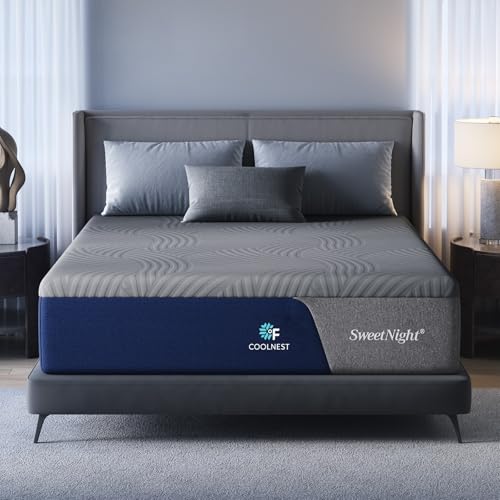
The Sweetnight CoolNest closes the guide with the side sleeper’s lower-back answer: a 5-zone ergo support design in a 14-inch cooling build. On your side, the lower back’s fate is decided at the waist — the span that sags if unsupported — and five zones let the CoolNest firm that span while the shoulder and hip zones give, keeping the spine’s line straight from neck to tailbone. Its maker notes American Chiropractic Association recognition for the design, cited here as the maker’s claim; the comfort geometry is visible without it.
Strengths
- Five zones give the waist its own support assignment — the side sleeper’s lower-back key
- Deep 14-inch stack lets the hip sink without dragging the waist down with it
- Cooling system suits side sleepers, who press the most surface into the bed
Trade-offs
- Medium feel may under-hold a heavier stomach sleeper’s pelvis
- The tall profile requires deep-pocket sheets
- Full expansion is listed at up to 72 hours
| Color | Grey & Blue |
| Size | Queen (U.S. Standard) |
| Dimensions | 80 x 60 x 14 inches |
| Weight | 68.67 pounds |
The CoolNest’s depth is a lower-back feature in disguise for side sleepers: the hip must sink far enough to spare its pressure point, and in a shallow mattress that sink reaches the base and tilts the pelvis, taking the lumbar with it. Fourteen inches with zoning means the hip’s descent is arrested by support foam arranged for the purpose, at a depth where the waist is still held. Add PCM and gel cooling — side sleeping is a high-contact, high-heat posture — and deep motion isolation, and the CoolNest is the most completely side-optimized lower-back pick in the pool.
If your lower back’s complaints arrive wearing a side-sleeping costume — sore waist-side mornings, a hip that co-signs them — start here and with the Casper, and let the two zoned maps compete across your trial weeks.
Best for: Side sleepers whose lower back and waist complain together / Not suited for: Stomach sleepers and low bed frames
Choose it for five-zone side support. Skip it for a firm, flat feel. Check on Amazon
Comparison Table
| Pick | Lower-back mechanism | Construction | Profile | Check price on Amazon |
|---|---|---|---|---|
| Signature Design by Ashley Chime | Dedicated gel lumbar layer | Foam over pocketed coils | 12 inches | Check price on Amazon |
| Nectar 12” Memory Foam Mattress | Contour fill + firm base | All-foam | 12 inches | Check price on Amazon |
| Casper Sleep Original | Zoned firmness | All-foam, zoned | 11 inches | Check price on Amazon |
| Serta Perfect Sleeper Ultimate | Zoned coil system | Coils + pillow top | 14.5 inches | Check price on Amazon |
| Sealy Dreamlife 12” Hybrid | Proportional encased coils | Foam over encased coils | 12 inches | Check price on Amazon |
| Sweetnight CoolNest | 5-zone ergo support | All-foam, zoned, cooling | 14 inches | Check price on Amazon |
How to Choose the Best Mattress for a Bad Lower Back
Diagnose the Morning Before Shopping
Your mornings carry a pattern worth a week of notes: stiff-then-loosening suggests a positional, mattress-addressable strain; sore-after-side-nights points at waist support; sore-after-stomach-nights points at pelvic sink; unchanged by any bed or position points away from the mattress entirely. Shop against the pattern you actually have — the picks in this guide are ordered so each pattern finds its mechanism quickly.
Hold the Pelvis, Fill the Curve
Every mechanism here does one or both of those two jobs. Judge any candidate — in this guide or beyond it — by asking both questions separately: what holds my pelvis at height all night, and what meets my lumbar curve while it does so? A mattress that answers one question brilliantly and the other not at all will fix half your mornings.
Stay in the Supportive Middle on Firmness
As general guidance, medium-firm is the lower back’s center of gravity. Softer lets the pelvis hammock; firmer bridges the curve and presses the hip. Lean by position — stomach sleepers firmer, side sleepers zoned or a shade softer — and let three weeks of logged mornings make the final adjustment, including the return decision if the data says so.
Audit the Frame and the Pillow as Co-Defendants
A frame that sags at the center manufactures pelvic drop with industrial reliability, and a pillow that props the head high bends the spine from the top while the mattress straightens it from below. Before any mattress is convicted by your log, verify the frame’s center legs touch the floor and trial a lower pillow for a week. The cheapest fixes in this category are embarrassingly often the real ones.
Consider the Adjustable Option Honestly
A slight knee elevation flattens the lumbar curve gently against full support — many lower backs describe it as their best position. Two picks here document adjustable compatibility. It is an enhancement with a mechanism, not a miracle; if your mornings are your metric, it is a variable worth one trial week.
How Do You Test a Mattress Against a Bad Lower Back?
Log the first ten minutes of every morning for three weeks: a word for the stiffness on rising, the minute you felt loosened, and the position you woke in. That log is the trial. Two in-bed checks supplement it: the hand test — on your back, a hand should slide beneath your lumbar with gentle resistance, neither floating in a gap nor locked out by a sunken pelvis — and the side-line test, where a partner or mirror confirms the spine runs straight with the waist neither sagging nor propped. Decide at week three with the whole log open. A mattress that halves your loosening time has earned its place; one that changes nothing has given you clean information to take to a professional, which is the other successful outcome of a well-run trial.
Problem: Stiffness is worst after stomach-sleeping nights — Your pelvis is sinking into extension. Lean firmer within this guide, and trial a thinner pillow or none for those nights.
Problem: Your waist aches after side-sleeping nights — The midsection is sagging. Zoned support at the waist — Casper, Sweetnight — is the mechanism your log is asking for.
Problem: The hand test finds a big gap — Your curve is bridged and unsupported: you need contour fill over support (Nectar) rather than more firmness.
Problem: The hand test finds no gap at all — The pelvis has sunk and flattened the curve: the support layer or the frame beneath it is too soft. Check the frame’s center first.
Problem: Three good weeks, then the old mornings return — Inspect for early impressions and frame shift, rotate the mattress, and re-log; if the pattern holds, the warranty and your clinician are the next two conversations, in either order.
The First Ten Minutes: A Morning Routine That Tells the Truth
Since this purchase is judged in the day’s first ten minutes, make those minutes a fair judge. Rise the same way each day during the trial — roll to the edge, sit, pause, stand — because a chaotic exit adds noise to the measurement. Walk the same short route (bedroom to bathroom to kitchen is the universal course) and note when the back stops being the headline of your sensations. Loosening time is a genuinely useful personal metric: it trends down across good weeks and spikes after bad nights with a fidelity that memory alone never achieves. Pair it with the position log and you hold, in three weeks, a small dataset that would cost a clinic real effort to reproduce — which is why, if the trend disappoints, the log itself is worth bringing to the appointment. Your back has been filing these reports for years; the trial simply starts writing them down.
Lower Backs at Work: The Daytime Half of the Story
No mattress out-supports a sixteen-hour day, and this guide’s honesty requires the paragraph. The lower back that sits in a collapsed chair for nine hours arrives at bed pre-strained; the one that lifts badly arrives pre-injured in miniature; the one that stands on concrete arrives compressed. The mattress’s shift is recovery: eight hours in an aligned, supported, unloaded position is the longest single therapy-adjacent interval in a working back’s day, and it is squandered by a bed that holds the spine in the same flexion the chair did. Choose the mattress as the night shift of a two-shift system — chair, movement breaks, and lifting mechanics by day; pelvic support and a filled curve by night — and judge the system by the trend of your mornings across a working month, not by any single heroic night. Readers whose whole back, not just its lower span, is the story will find the management framing in Best Mattresses For Back And Shoulder Pain a fair companion.
Lower Backs and Aging: Support Across the Decades
The lower back’s mattress needs migrate across a lifetime on a predictable arc. Younger backs forgive almost anything and complain mostly after exertion; middle-aged backs begin filing the morning reports this guide is built around, as discs lose height and the margin for a sunken pelvis narrows; older backs add the transition problem — rising from a low, soft bed becomes the day’s first lift — and a tissue tolerance that punishes both hammock and slab. The purchasing consequence is that a lower-back mattress should be re-audited by decade, not by failure: the medium-firm zoned bed that served at forty-five is a sensible default at sixty, but its height, edge, and surface kindness deserve fresh eyes, and the trial log deserves a fresh three weeks. Households equipping a parent’s room around these needs can time the wider furnishing to the windows tracked under Black Friday Bedding Deals 2026, provided — as always in this program — the trial outranks the discount.
The Guest-Bed Problem for a Bad Lower Back: Travel and Family Visits
A lower back managed carefully at home meets its trials away from it: the soft guest bed at a relative’s house, the hotel mattress chosen by a purchasing department, the sleeper sofa whose bar has introduced itself to a thousand spines. The traveler’s defenses are layered. A portable lumbar roll restores contact in a bridged curve; a pillow under the knees buys the flattened, rested position on any surface; and the floor, honestly assessed, beats a true hammock for a night or two — a truth every bad lower back discovers and every host understands when it is explained kindly. For the convertible beds in your own home, the standards in Best Mattresses For Sleeper Sofas apply the same pelvic-support logic at guest scale. And for the recurring visit — the grandparent who comes monthly — the kindest upgrade is a real supportive bed in the guest room, sized by guides like Best Mattresses Under $600, because a lower back should not have to choose between family and mornings.
Stiffness Versus Soreness: Reading Your Own Mornings More Precisely
The morning log sharpens when its vocabulary does, and the most useful distinction a lower-back sleeper can learn is stiffness versus soreness. Stiffness is the reluctance to move that loosens with motion — the positional signature, the mattress’s home turf. Soreness is tenderness that persists into activity and often traces to the previous day’s loads rather than the night’s position. Logging them separately — one line each, a word each — separates the mattress’s report card from the day’s, and prevents the two classic errors: replacing a good mattress during a sore week earned by gardening, and enduring a bad mattress because its stiff mornings were blamed on age. Three weeks of the two-word log is a genuinely clinical-grade artifact; bring it to appointments, use it to judge trials, and let it arbitrate every future bed argument in the household. The lower back has been speaking all along. Precision is just learning its grammar.
Lower Backs and Mattress Toppers: The Tempting Shortcut, Examined
Every lower-back household eventually holds the topper conversation, usually in the presence of a mattress that has begun to fail. The verdict divides cleanly by what is failing. A topper can legitimately soften a sound mattress whose surface has firmed with age — two inches of quality foam restoring the greeting while the support underneath continues its work. A topper cannot rescue a support failure: laid over a dipped core, it conforms to the dip, the pelvis follows, and the lower back receives an expensive reproduction of its problem with better marketing. The third case is the new mattress inside its trial that feels wrong for the lower back — there, the topper is a way of spending money to avoid the return that the trial exists to make painless. The rule that survives all three cases: toppers adjust surfaces; lower backs live on support. Diagnose which layer is failing before buying the layer that is not.
Delivery Day for a Bad Lower Back: The Setup Checklist
The day the mattress arrives is a lifting day — precisely the activity this audience should not improvise. Plan it like the clinical event it is: the delivery path cleared in advance, the old mattress’s removal arranged rather than wrestled, a second pair of hands recruited before the box crosses the threshold, and the unboxing done on the frame so the expanded bed never needs carrying. Once expanded, run the setup audit while the light is good: frame center legs down and touching, slats seated, the mattress centered with its zones where the sleeper’s body will actually lie. Photograph the flat, fresh surface for the warranty file, start the morning log with tomorrow’s first entry, and resist grading the bed on night one — the foam is still expanding and the back is still calibrated to the old bed’s failures. Delivery day done carefully is the trial’s first gift to the lower back: a new support system that did not begin by injuring its owner.
Lower Backs and Sitting in Bed: Reading, Screens, and the Slouch Tax
The lower back’s night often begins with an hour of sitting in bed — reading, scrolling, watching — in the one posture no mattress can redeem: propped on pillows with the pelvis slid forward and the lumbar curve flattened into a slump. An hour of slouch pre-loads the exact strain the mattress was bought to relieve, and the sleeper then grades the bed for a night that started compromised. The fixes are furniture, not willpower: a proper sitting wedge or a firm pillow stack that keeps the back upright and the curve intact, legs extended rather than crossed, and a household rule that the bed’s sitting chapter ends before the sleeping chapter begins — ideally with a position reset, standing and moving for a minute between the two. Adjustable-base owners hold the elegant version of this fix, raising the backrest for the reading hour and flattening fully for sleep. However it is achieved, separating the slouch from the sleep is the cheapest lower-back intervention in this entire guide, and the morning log usually notices within the week.
The Lower Back’s Nightstand: Small Things Within Reach
The last furnishing in this guide costs almost nothing and is arranged in five minutes: the nightstand, audited from the lower back’s point of view. Everything the night might require should live within one un-twisted reach — water, medication the clinician has approved for the night hours, the phone, a light that can be operated without sitting up — because every sit-up-and-twist at 3 a.m. is a small withdrawal from the account the mattress has been filling all night. A low drawer or a tray keeps the surface from becoming a landslide risk, and the morning’s first objects — glasses, the log notebook this guide keeps recommending — belong at the front edge where the day’s first careful movements can find them. It is a fitting final note for a guide about a five-vertebra neighborhood: the lower back’s wellbeing is an accumulation of small mercies, and the nightstand, humble as it is, delivers several of them nightly.
A Last Word Before the Shortlist
Everything recommended here serves one measurement: the first ten minutes of your morning, logged honestly across three weeks. Let that small dataset choose between the lumbar layer and the contour, between steel zoning and foam zoning, and between keeping the bed and sending it back. A lower back that has been filing its reports unheard for years deserves, at last, a purchase process that listens to them — and a household that keeps listening long after the delivery truck has gone.
Common Buying Mistakes
Buying the Hardest Mattress in the Store
Hard is not supportive. A slab bridges the lumbar curve and leaves the muscles holding it — the exact overnight labor you are paying to end. Support means contact plus alignment.
Buying the Softest Mattress for Its First-Minute Mercy
Plush lets the pelvis sink below the line, and the lower back pays by morning for what the surface forgave at bedtime. The hammock is this keyword’s oldest trap.
Skipping the Frame Audit
Center-sagging frames manufacture the symptom this entire guide exists to relieve. Verify the base before the mattress arrives; re-verify when mornings mysteriously regress.
Judging by a Single Heroic Night
Lower backs have weather. Three weeks of logged first-ten-minutes is the smallest sample that separates the mattress from the weather.
Delaying the Clinician for One More Mattress
Radiating pain, weakness, numbness, injury-born pain, or a steadily worsening trend are not shopping problems. Book the appointment; let the mattress be a comfort decision made alongside care, not instead of it.
Final Recommendation
Start with the Signature Design by Ashley Chime 12 Inch Hybrid: a dedicated lumbar layer over durable pocketed coils is the most literal answer to this keyword in the pool, and its adjustable compatibility adds the knee-elevated rest position to your toolkit. The runner-up is the Nectar 12” Memory Foam Mattress — Check on Amazon — for back sleepers who want the curve filled personally by contour, with the Casper as the zoned all-position alternative. Audit the frame, log the first ten minutes for three weeks, and let the trend — not a single morning — decide.
Frequently Asked Questions
What firmness is best for a bad lower back?
Medium-firm is the reliable center: it holds the pelvis at height while still meeting the lumbar curve. Stomach sleepers lean firmer, side sleepers lean zoned or slightly softer, and three weeks of logged mornings should arbitrate the final call.
Is memory foam or hybrid better for the lower back?
Both work by different mechanisms: memory foam fills the curve personally (Nectar), hybrids hold the pelvis with durable, proportional coils (Ashley, Sealy). Foam suits curve-dominant complaints; hybrids suit support-fade histories and couples.
Why is my lower back worst in the morning?
The pattern of waking stiff and loosening with movement commonly reflects the position the back spent the night in — a sunken pelvis or an unsupported curve. It is one of the more mattress-addressable patterns, which is why this guide judges everything by the first ten minutes of the day.
Can a mattress cure lower back pain?
No. A mattress can remove a nightly positional strain, and many sleepers’ mornings improve substantially for it. It cannot treat a condition. Radiating, worsening, or persistent pain should be evaluated by a clinician.
What is the hand test for lumbar support?
Lying on your back, slide a hand under your lower back. Gentle resistance means the curve is met and supported. A free-sliding hand means the curve is bridged; no room to slide means the pelvis has sunk and flattened it. The test takes ten seconds and grades any mattress.
How long should I give a new mattress before judging it for my lower back?
Three weeks of logged mornings. Your muscles recalibrate from the old bed while the foam breaks in, and lower backs have weather that single nights cannot average out. Use the full trial window the listing allows.


