Disclosure: As an Amazon Associate, dailyhomedecorating.com earns from qualifying purchases. Links to Amazon on this page are affiliate links; they cost you nothing extra. Prices and availability change often, so check the current Amazon listing before you buy.
The best mattresses for heavy couples are engineered for a load most mattresses never honestly face: two full-grown bodies, night after night, year after year, concentrating their combined weight on the same support zones. Standard mattresses are designed and tested around average single sleepers, and heavy couples discover the gap in predictable places — a center trough where two bodies roll toward each other, edges that quit under a seated adult, comfort layers that compact in eighteen months instead of eight years, and heat that two warm bodies generate faster than foam can shed it. This guide chooses for the load directly: coil systems and high-density cores that hold support under combined weight, reinforced edges, deep profiles with real travel, and cooling that treats two sleepers as the thermal event they are. Every pick was screened against the pool’s verified data for exactly those properties, and the trade-offs are stated in load terms, not euphemisms.
One framing note: “heavy” in this guide is an engineering term, not a judgment — it means combined loads that standard mattress design margins do not contemplate, and it deserves the same respectful, specification-first treatment as any other requirement. Your household’s comfort is a physics problem with good answers; here they are.
Where to Buy
All six picks are sold on Amazon — verify current price, size, and warranty terms on the listing before buying, and note that for heavy couples the king size is often the right call where the room allows it. Start with the Sealy Dreamlife 12″ Hybrid Mattress-in-a-Box, whose encased coils are the load-bearing champions of the pool; confirm it via this Check on Amazon link. The remaining picks: Serta Perfect Sleeper Ultimate 14.5″ Queen Mattress — Check on Amazon; Purple Mattress — Check on Amazon; Nectar 12″ Memory Foam Mattress — Check on Amazon; Signature Design by Ashley Chime 12 Inch Hybrid Mattress — Check on Amazon; Sweetnight CoolNest Queen Mattress — Check on Amazon.
In this guide
Quick Picks
| Pick | Badge | Why it earns its place |
|---|---|---|
| Sealy Dreamlife 12″ Hybrid Mattress-in-a-Box | Best Overall | Encased coils carry combined load with targeted, independent support that foam alone cannot match for durability. |
| Serta Perfect Sleeper Ultimate 14.5″ Queen Mattress | Best Premium | Zoned high-density coils, deep profile, and BestEdge encasement — the most load engineering in the pool. |
| Purple Mattress | Best for Pressure and Heat | The grid distributes each body’s load locally and sleeps temperature-neutral under two warm sleepers. |
| Nectar 12″ Memory Foam Mattress | Best Warranty | Firm support with a forever warranty — the support-fade risk transferred to the brand, in writing. |
| Signature Design by Ashley Chime 12 Inch Hybrid Mattress | Best Coil Value | 13-gauge pocketed coils with reinforced perimeter rows — firm-gauge load discipline at a sensible tier (full size). |
| Sweetnight CoolNest Queen Mattress | Best Cooling | Fourteen inches of zoned foam with a full cooling system, for couples whose combined heat is the nightly issue. |
Key Takeaways
- Coils are the load technology: encased and zoned coil systems hold combined weight longer than any foam core in this pool.
- Edge support is a heavy couple’s daily feature — sitting, standing, and using the full width all depend on it.
- Depth is travel: twelve inches and up gives combined loads room to be absorbed without bottoming out.
- Heat scales with bodies; cooling systems and coil airflow stop being luxuries at two sleepers.
- Warranties matter more under load — the forever and decade terms here are load insurance, read them as such.
- The foundation must be rated for the total: mattress plus two sleepers is a structural number, and Best Mattresses For Overweight works the single-sleeper version of the same math.
How These Picks Were Chosen
We screened the verified pool for load engineering: coil systems with stated construction (encased, zoned, firm gauge, reinforced perimeters), high-density support cores, deep profiles, edge systems with names, and warranty strength. Pure foam mattresses without a density story were excluded; thin mattresses were excluded regardless of other virtues. The Ashley Chime is included in a full size — flagged plainly — because its 13-gauge coil discipline is the pool’s firmest load engineering and full-size heavy couples exist; queen shoppers should treat the Sealy and Serta as its scaled siblings.
We also state the pool’s honest limit: it contains no mattress marketed specifically as a heavy-duty or plus-size model with reinforced construction beyond these mainstream flagships. The picks here are the strongest mainstream answers available in the pool, chosen and ranked for load — and their reviews say where the load ceiling of each design honestly sits.
The 6 Best Mattresses for Heavy Couples — Reviewed

Sealy Dreamlife 12″ Hybrid Mattress-in-a-Box
Our badge: Best Overall
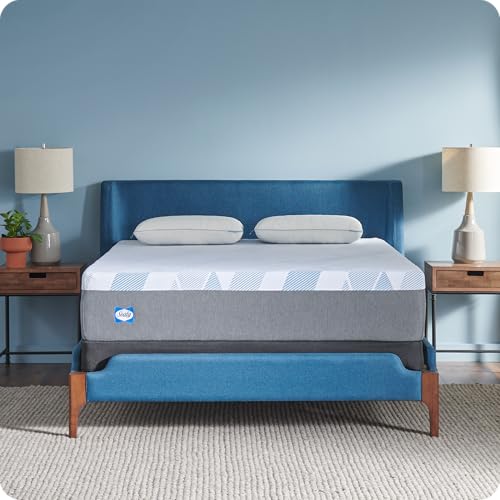
The Sealy Dreamlife 12″ Hybrid Mattress-in-a-Box leads because coils are the correct answer to combined load, and its coils are the right kind: seven inches of individually encased SealyResponsive coils that provide targeted support across the entire surface, each moving independently. Independence is the load feature that matters for couples — each body is carried by its own coil neighborhood rather than by a shared platform that dips between two sleepers and rolls them together. Above the coils, gel memory foam cushions pressure points and a high-density transition foam protects the comfort layer from the load’s daily work. Surface-Guard antimicrobial technology and CertiPUR-US foams complete the build.
Strengths
- Encased coils localize support per sleeper — no shared trough, no roll-together
- Coil cores hold their support profile under load for years beyond foam’s horizon
- Airflow through the core sheds two sleepers’ heat passively, all night
Trade-offs
- Motion isolation trails all-foam picks, though encased coils narrow the gap
- Just over eighty pounds — and under load, choose the king if the room allows
- Comfort layer is gel foam over coils: supportive, not plush
| Color | Dreamlife |
| Size | Queen |
| Dimensions | 80 x 60 x 12 inches |
| Weight | 80.6 pounds |
The Dreamlife’s load story compounds over years, which is where heavy couples’ purchases are won and lost. Foam comfort layers everywhere soften with use; the question is whether the support beneath them is also foam (softening in sympathy) or coils (holding the line). Here the line holds: the transition foam distributes the couple’s load across the coil field, the coils return it as support, and the surface the couple calibrated to in month one is substantially the surface they keep. Edge behavior is correspondingly honest — the perimeter carries a seated adult without the collapse foam edges perform.
Practical counsel: put this mattress on a foundation rated for the total load — mattress plus sleepers — with center support, and rotate it quarterly. Under that regime, it is the pool’s most defensible heavy-couple purchase: mainstream price position, load-bearing architecture, and a legacy brand’s quality control.
Best for: heavy couples wanting durable, localized coil support / Not suited for: couples prioritizing foam-grade motion isolation above all
Choose it for the load-bearing core; skip it if you need total motion silence. Check on Amazon

Serta Perfect Sleeper Ultimate 14.5″ Queen Mattress
Our badge: Best Premium
The Serta Perfect Sleeper Ultimate 14.5″ Queen Mattress is the pool’s maximum load engineering in a mainstream product: a high-density zoned coil system with support zones for the lower back and hips, PillowSoft Aire and Cool Twist gel memory foam comfort layers, a medium pillow top, and BestEdge foam encasement providing an extra-deep rail against edge roll-off. Fourteen and a half inches of profile gives combined loads the deepest travel in this guide, and the zoning spends support density where two bodies weigh most.
Strengths
- Zoned high-density coils plus the deepest profile here: load capacity with engineering margin
- BestEdge encasement defends the perimeter — critical when two adults use the full width
- Pillow top comfort means load capacity does not feel like a plank
Trade-offs
- Premium position in the guide’s range
- Deep profile needs deep-pocket sheets and a low frame plan under load
- At over eighty-two pounds, setup and rotation are planned events
| Color | Dark Blue |
| Size | Queen |
| Dimensions | 79.5 x 60 x 14.5 inches |
| Weight | 82.26 pounds |
The Serta understands that heavy couples do not only sleep on a mattress — they sit on its edges to dress, they claim its full width, they load its center from two directions. Its answers are correspondingly systemic: coils for the vertical load, zones for the distribution, encasement for the perimeter, pillow top for the pressure. The hundred-night trial and ten-year warranty frame a flagship purchase appropriately, and its compatibility with adjustable bases (rated appropriately) keeps elevation options open.
For couples at the upper end of the load range this pool can serve, the Serta is the pick with the most engineering margin — the one least likely to be outgrown by the load it carries. That margin, bought once, is the premium’s justification.
Best for: heavier couples wanting maximum mainstream load engineering with premium comfort / Not suited for: high frames or strict budgets
Choose it for margin; skip it if your load is moderate and the Sealy’s value beckons. Check on Amazon

Purple Mattress
Our badge: Best for Pressure and Heat
The Purple Mattress answers load with distribution: two inches of GelFlex Grid flex under each body’s pressure points — cradling hips and shoulders — while the lattice’s upright cells hold the surface’s line between and beneath the sleepers. Because the grid’s response is local by structure, a heavier partner’s depression does not become the lighter partner’s slope: each body gets its own geometry. The grid is also temperature-neutral with air channels throughout, which under two warm sleepers is not a luxury but the difference between settled sleep and a shared sauna. Edge support foam and a durable base complete the build, at a substantial hundred pounds.
Strengths
- Local flex isolates each sleeper’s load — no shared trough physics
- Temperature neutrality scales to two bodies without trying
- Grid does not take foam-style body impressions under load
Trade-offs
- The heaviest setup in the pool — a planned, two-person event, minimum
- Premium tier positioning
- Foam support layers beneath the grid still carry long-term load; rotation discipline matters
| Color | White |
| Size | Queen |
| Dimensions | 80 x 60 x 11 inches |
| Weight | 100 pounds |
Couples with a significant weight difference between partners are the Purple’s special constituency: uniform mattresses mediate that difference badly (too soft for one, too firm for the other, a slope toward the heavier), while the grid’s point-by-point response simply declines to mediate — each point gets what its own load dictates. Add the coolest sleep surface in the guide and the easiest position changes (no foam extraction effort, which heavier bodies pay more for), and the premium assembles its case.
Honest limit: at the very top of the load range, the foam base beneath any grid is the long-term question, and the coil picks above carry more structural margin. Within the mainstream range, though, the Purple offers heavy couples something no foam or coil here can: two independent sleep geometries on one shared surface.
Best for: weight-mismatched couples and hot sleepers wanting load-local response / Not suited for: the highest load ranges, where coil margin should lead
Choose it for independent geometries and cool sleep; skip it if maximum structural margin is the brief. Check on Amazon

Nectar 12″ Memory Foam Mattress
Our badge: Best Warranty
The Nectar 12″ Memory Foam Mattress is the foam entry that survives this keyword’s screening, and it survives on contract as much as construction: the forever warranty is the only instrument in this guide that directly addresses the heavy couple’s central anxiety — support fade under load — by transferring its cost to the manufacturer. The construction earns its place alongside: firm-leaning contouring over an adaptive support layer that promotes alignment for back, side, and stomach sleepers, in a twelve-inch profile with a cooling top layer for the two-body thermal load. The 365-night trial lets a couple verify support across seasons before the warranty even becomes the argument.
Strengths
- Forever warranty: support fade under load is the brand’s problem, contractually
- Firm-leaning support holds two bodies’ alignment better than plush foam ever could
- A year-long trial is the longest real-world load test available before commitment
Trade-offs
- All-foam cores remain the long-term load question — the warranty answers it financially, not physically
- Motion isolation is superb, but position changes cost foam effort for heavier bodies
- Seventy-eight pounds at setup
| Color | White |
| Size | Queen |
| Dimensions | 80 x 60 x 12 inches |
| Weight | 78 pounds |
The Nectar pitch to heavy couples is risk allocation. Buy the coils if you want the physics handled structurally; buy the Nectar if you want it handled contractually — and the contract here is unusually strong, paired with a trial long enough to expose early softening before the decision is final. Its firm-leaning feel also suits the load: soft foam under two bodies bottoms out into the core and stays there, while the Nectar’s support layer is designed to hold the line the couple calibrated to.
For couples whose priority is undisturbed sleep — foam’s silence when a heavier partner’s movements would otherwise transmit — the Nectar also wins the motion category outright. It is the guide’s considered foam answer: not the strongest structure, but the strongest guarantee wrapped around an adequate one.
Best for: motion-sensitive heavy couples wanting contractual protection against support fade / Not suited for: couples wanting coil physics as the primary load answer
Choose it for the guarantee; skip it if you want springs under the load. Check on Amazon

Signature Design by Ashley Chime 12 Inch Hybrid Mattress
Our badge: Best Coil Value
The Signature Design by Ashley Chime 12 Inch Hybrid Full Size Mattress in a Box brings the pool’s firmest coil specification — 13-gauge pocketed coils — with reinforced perimeter rows and a high-density gel lumbar layer, at a value position. Gauge is the load shopper’s favorite number: lower gauge means thicker wire means support that shrugs at loads that fatigue finer coils. The honest flag, stated in the Quick Picks and repeated here: this listing is a full size. For heavy couples, a full is narrow — this pick serves full-size households, smaller rooms, and couples who sleep close by preference; queen shoppers should take its engineering brief to the Sealy or Serta.
Strengths
- Thickest-gauge coils in the pool: maximum load fatigue resistance per dollar
- Reinforced perimeter rows defend the edges two adults actually use
- 180-night trial and ten-year warranty at a value tier
Trade-offs
- Full size only in this listing — narrow for two adults, stated plainly
- Firm-leaning comfort; plush seekers look elsewhere
- Less premium motion isolation than the encased Sealy
| Color | White |
| Size | Full |
| Dimensions | 74.4 x 53.3 x 12 inches |
| Weight | 62 pounds |
Within its size, the Chime is arguably the guide’s pound-for-pound load champion: the coil gauge, the perimeter reinforcement, and the lumbar density are exactly the specifications a load-first shopper writes on a notepad, and they arrive without flagship pricing. Couples in full-size frames — guest-room conversions, smaller primary bedrooms, close sleepers — get load engineering their size category rarely offers, since full-size mattresses are usually built to guest-room standards rather than nightly two-adult standards.
The 180-night trial suits the load test’s timeline: support fade announces itself over months, not weekends, and this trial covers the announcement window. Paired with a properly rated full-size foundation, the Chime is the value answer to a structural question.
Best for: full-size heavy couples wanting maximum coil discipline per dollar / Not suited for: couples needing queen width
Choose it if your frame is full and your load is real; skip it for queen rooms. Check on Amazon
Sweetnight CoolNest Queen Mattress
Our badge: Best Cooling
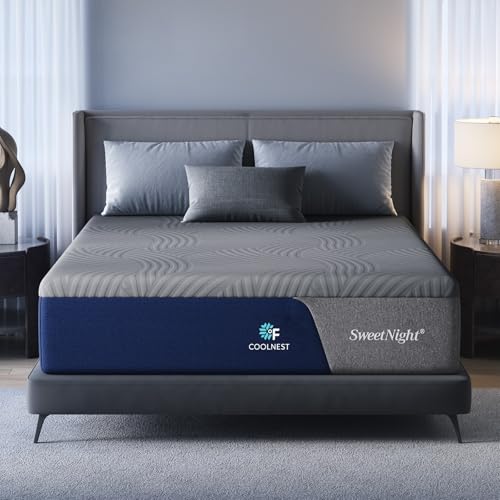
The Sweetnight CoolNest Queen Mattress closes the guide for the couple whose load problem is thermal: two bodies generate heat that foam traps, and the CoolNest is the pool’s most complete cooling system — a CoolNest Xcel memory foam layer with phase-change material that absorbs and releases heat, a PCMflux foam layer, a cooling cover, and zoned open-cell structure for airflow — over a full fourteen inches of profile. Its five-zone design, firmer at the waist and softer at the shoulders, also serves combined load distribution, and the medium-firm feel is described for pressure relief across positions.
Strengths
- The deepest foam profile here — fourteen inches of load travel
- The most complete cooling system in the pool, sized for two bodies’ heat
- Five-zone support firms the waist zone where couples’ combined load concentrates
Trade-offs
- All-foam support under sustained heavy load remains the category’s durability question
- Newer brand against legacy quality-control records
- Medium-firm feel may read soft to couples at the top of the load range
| Color | White |
| Size | Queen |
| Dimensions | 80 x 60 x 14 inches |
| Weight | 68.67 pounds |
The CoolNest’s inclusion is a judgment this guide defends: for a real subset of heavy couples, the nightly failure is not support but heat — two bodies, one foam block, rising temperature, fractured sleep. Its cooling stack is the pool’s only system engineered as a system, and its depth and zoning give it more load credibility than its foam category suggests. Couples at moderate-heavy loads who sleep hot will find it the most comfortable answer here; couples at the highest loads should let coils carry the structure and treat cooling as the secondary criterion.
Its fiberglass-free construction and CertiPUR-US certification close the safety file, and the zoned design’s edge-to-edge consistency means the full width works — no soft perimeter tax on the couple’s usable space.
Best for: hot-sleeping heavy couples at moderate loads wanting depth and zoned foam / Not suited for: the highest load ranges needing coil structure
Choose it when heat is the headline problem; skip it when structural margin is. Check on Amazon
Comparison Table
| Pick | Load System | Edge Answer | Profile | Check price on Amazon |
|---|---|---|---|---|
| Sealy Dreamlife 12″ | Encased coils, per-sleeper | Coil perimeter | 12 inch | Check price on Amazon |
| Serta Perfect Sleeper 14.5″ | Zoned high-density coils | BestEdge encasement | 14.5 inch | Check price on Amazon |
| Purple Mattress | Grid distribution + foam base | Edge support foam | 11 inch | Check price on Amazon |
| Nectar 12″ Memory Foam | Adaptive foam support | Firm foam perimeter | 12 inch | Check price on Amazon |
| Ashley Chime 12″ | 13-gauge pocketed coils | Reinforced perimeter rows | 12 inch (Full) | Check price on Amazon |
| Sweetnight CoolNest | Five-zone foam, 14 inch | Consistent zoned width | 14 inch | Check price on Amazon |
How to Choose the Best Mattress for a Heavy Couple
Do the Combined-Load Math First
Add the sleepers’ weights, the mattress’s own weight, and bedding: that total is what your foundation must be rated for, and it is the number that should govern every downstream choice. Then apply it honestly to mattress categories — sustained combined loads in the upper ranges belong on coils or the deepest, firmest foam, and any mattress whose listing whispers “lightweight and plush” is answering a different household’s question. Our Best Mattresses For Obese guide works the upper end of this same load spectrum in depth.
Edges Are Square Footage You Paid For
Two adults on a queen already negotiate width; weak edges shrink the negotiable surface by inches on every side and punish the morning sit-to-stand that every sleeper performs daily. Under combined load, edge systems are not a luxury specification — they are the difference between a queen that sleeps like a queen and one that sleeps like a generous full. Sit on the edge during any trial’s first week and grade it like a feature, because it is one.
Depth Buys Durability
Load compresses; compression needs travel. A fourteen-inch mattress absorbing two bodies has room to distribute force that a ten-inch mattress spends entirely, bottoming its comfort layers against its core and compacting them ahead of schedule. When two mainstream options tie on other criteria, the deeper one is the load-durability choice — a rule this guide applied repeatedly.
Heat Is a Load Problem Too
Two bodies double the thermal input while the mattress’s surface area stays fixed, so cooling that is optional for a single sleeper becomes structural for a couple. Coil airflow, phase-change layers, gel infusions, and grid ventilation all count; a hot heavy couple on a heat-trapping mattress will blame the support for what the temperature did. Grade cooling as a load feature, not a comfort extra.
Plan the Logistics Like Adults
Heavy mattresses plus heavy sleepers means: a foundation with center support rated for the total, delivery planned to the room (not the door), two people for setup and quarterly rotation, and deep-pocket sheets for deep profiles. None of this is glamorous, and all of it is where heavy-couple purchases quietly succeed or fail. The Best Mattresses For Sleeper Sofas guide covers the guest-room end of household sleeping; this guide’s households should also protect the primary bed’s supporting cast — the frame, the slats, the floor protection — with the same seriousness as the mattress itself.
How Do You Protect a Mattress Under Heavy Couple Load?
Start at delivery: inspect for shipping damage before signing, let the mattress expand fully before the first night (deep profiles need their hours), and place it on the rated foundation from hour one — a week on an inadequate base can set early impressions no rotation fully erases. Fit a quality protector: under load, spills and sweat penetrate deeper, and the protector is the warranty’s best friend. Rotate head-to-foot quarterly on the calendar, not on memory — two fixed sleep zones are exactly what rotation redistributes. Keep the room’s humidity moderate, vacuum the surface seasonally, and re-check the foundation’s center support annually: under sustained total load, the base is a consumable too, and its quiet sag is the most misdiagnosed cause of “mattress failure” in heavy households.
Problem: a center trough is forming and you roll together — rotate immediately, audit the foundation’s center rail, and accept the physics: shared foam platforms trough first; encased coils and grid structures resist longest, which is why they lead this guide.
Problem: edges feel like they are disappearing — the perimeter foam or coil row is fatiguing; rotate to redistribute sit-loads, and grade edge systems first in the replacement.
Problem: the bed sleeps hotter every year — comfort foams compact with load and lose their airflow; a cooling-focused replacement or a breathable protector upgrade are the honest levers.
Problem: one partner’s movements wake the other more than they used to — compacted foam transmits what fresh foam absorbed; foam picks restore isolation best, encased coils are the structural compromise.
Problem: morning aches are returning on a three-year-old mattress — measure the trough unloaded; visible permanent impression under load-rated use is a warranty conversation, and the Nectar’s forever terms exist for exactly this file.
The Center Trough: Anatomy of the Heavy Couple’s Main Enemy
Two sleepers create a load map with two peaks and a valley between them, and mattresses fail along that map: the peaks compact, the valley — constantly crossed and shared — compacts differently, and the surface becomes terrain. Sleepers roll toward low ground; the couple wakes entangled at the center, blaming each other for what the mattress did. The defenses are structural and behavioral: independent support units (encased coils, grid cells) that localize each peak’s wear, rotation that moves the map around the mattress, and foundations that never add their own sag to the terrain. When you evaluate any heavy-couple mattress — in this guide or beyond it — ask how it handles the map. The answers in this guide were chosen because they have one.
When Should a Heavy Couple Choose King Over Queen?
Width is the cheapest load feature available: a king gives each sleeper the width of a twin, which spreads the load map, restores personal territory, and reduces the center-crossing traffic that builds the trough. If the room and budget allow it, the king upgrade often delivers more heavy-couple value than a tier upgrade within queen — a truth this guide states while reviewing queens, because the pool’s verified listings are queens (and one full), and honest guidance includes knowing when the answer is a size rather than a model. Measure the room, leave walking clearance, and if the king fits, price it first.
Two Bodies, Two Preferences: Negotiating Firmness Without a Split Bed
Load is only half of a couple’s mattress problem; preference is the other half, and heavy couples face it with fewer escape routes, because the split-firmness and dual-chamber products that solve it for average couples are rarely built to heavy-load specifications. The negotiation therefore happens inside mainstream designs, and three strategies cover most households. The first is the local-response strategy: encased coils and the grid, which let each body’s zone behave semi-independently, so a firmness disagreement of one step often dissolves — each sleeper experiences something closer to their own preference than any uniform surface could offer. The second is the layered-compromise strategy: a support core chosen for the heavier or more support-needy partner, with surface comfort adjusted per side by bedding — a thinner protector and lighter duvet on the side that runs warm or prefers firm, and the reverse on the other — small asymmetries that cost little and settle arguments that looked structural. The third, when the disagreement is genuinely two steps or more, is the honest split: two twin XL mattresses on one king frame, each specified independently, with a bridge and a shared sheet to close the seam — the nuclear option, held in reserve, but a real one that heavy couples should know exists rather than suffering a decade of compromise neither body chose.
Whichever strategy the household runs, the trial protocol doubles: two morning logs, an agreed decision rule (the worse-served sleeper’s trend decides, as this lot’s shopping guides advise), and rotation duties shared explicitly, because a heavy mattress’s quarterly turn is a two-person job that fails silently when it is nobody’s assignment. Couples whose load story is primarily one partner’s will find the single-sleeper specification worked in Best Mattresses For Overweight, and households furnishing the rest of the home to the same standard of welcome can carry the thinking through to Best Throw Pillows For Bedrooms Under $200 for the finishing layers. The bed is the household’s most-used shared asset; it deserves a negotiation as deliberate as its engineering. And when two heavy sleepers also run hot — a frequent pairing, since load and heat travel together — Best Mattresses For Night Sweats applies the same systems thinking to the thermal half of the shared problem.
The Guest Test and Other Ways Heavy Couples Misjudge Their Bed
A heavy couple’s mattress hides its decline behind adaptation: the trough deepens by millimeters, the sleepers unconsciously colonize the firmer edges, and the bed is declared “fine” for a year after it stopped being so. Two external audits cut through the adaptation. The guest test is the first: a night in a decent hotel or a family member’s newer bed, after which the morning comparison — logged honestly against home mornings — reveals what habituation concealed; couples are routinely surprised by how much better the away morning feels, and that surprise is data. The straightedge test is the second: a taut string or long level across the unloaded mattress at the two sleep zones, photographed, turns “I think it’s dipping” into a measurement that a warranty department must answer in kind. Run both audits annually, the way you would service any load-bearing structure in the house, because that is what the bed is. The couples who replace on evidence rather than exhaustion consistently spend less across a decade — they claim warranties while they are valid, they buy during planned sale windows rather than in crisis, and they never pay the desperation premium that a collapsed mattress charges at the worst possible moment.
There is a corollary worth stating for couples at the beginning of the search rather than the end: your current bed’s failure pattern is the best specification document you own. Photograph its troughs, note where the edges went first, recall the month the heat became a complaint — then shop this guide’s reviews against that evidence, pick by pick. The mattress that answers your actual failure history is the right one, whatever any list, including this one, ranks first in the abstract.
Heat, Revisited: The Two-Body Thermal Problem in Detail
It deserves more than the paragraph it usually gets, because for many heavy couples heat — not support — is what finally sends them shopping. The physics are unforgiving: two large bodies generate substantially more heat than one, the shared duvet traps it in a single microclimate, and foam — the default mattress material of the last decade — insulates exactly where ventilation is needed. The couple’s countermeasures layer in order of cost. Bedding first: two separate duvets at individually chosen weights end the shared-microclimate problem for the price of a sheet set, and moisture-wicking sleepwear does more per dollar than any mattress feature. Room second: a cooler bedroom and moving air lower every surface’s starting temperature, and the mattress’s job becomes shedding a smaller load. Mattress third and structurally: coil cores that breathe, grid surfaces that are mostly air, and phase-change systems sized for the input — the picks in this guide were ranked with this section’s physics in mind, and couples whose complaint history is thermal should weight the Sealy’s airflow and the CoolNest’s system above the guide’s general ordering.
Diagnose before prescribing, though: a couple that sleeps hot because the room is hot needs a fan, not a flagship. The log that settles it records room temperature alongside the wake count for a fortnight — data first, as ever in this lot, and the mattress last.
Delivery Day for a Heavy Mattress: Logistics as a Couple’s Project
The picks in this guide weigh between sixty and a hundred pounds, arrive compressed in boxes that disguise their eventual size, and must travel the household’s narrowest hallway and tightest turn before they can be slept on. Heavy couples should plan delivery day the way they plan the purchase: measure the path — door widths, stair turns, the bedroom’s clearance for unrolling a queen — before the box arrives, because a mattress that cannot reach the room has failed at logistics regardless of its engineering. Choose delivery-to-room where the channel offers it; the fee is the cheapest insurance in the transaction against a strained back acquired while acquiring back support. Two able adults minimum for the unboxing, the old mattress’s exit staged before the new one’s entrance, and the expansion clock started early in the day so the first night is slept on a fully realized surface rather than a half-risen one.
Keep the packaging until the trial’s verdict is in — return logistics for a mattress this size are the seller’s job under good terms, but the box and bag you retained make every conversation about it easier. Photograph the expanded mattress on day one for the household file. Then sleep, log, and let the evidence accumulate: logistics got the mattress to the room, and from here the engineering takes over.
When One Partner Travels: The Half-Loaded Bed
A small, real phenomenon deserves a paragraph: the heavy couple’s bed behaves differently when one partner travels — support zones calibrated by two bodies suddenly carry one, and the remaining sleeper often reports the mattress feels firmer, stranger, occasionally better. The observation matters for trial honesty: a mattress graded during a partner’s two-week trip has been examined under half its working load, and its verdict should be provisional until the full crew returns. It matters for rotation too, since travel weeks are the natural moment to turn the mattress without negotiating two schedules. And it matters, quietly, for the relationship ledger: the traveling partner’s first night home is a data point about the bed that couples rarely collect deliberately. Collect it. The bed serves the household’s whole life, including its absences.
A Final Word on Buying Together
Every specification in this guide can be researched by one partner alone — and the purchase will still fail if it arrives as one partner’s decision imposed on the other’s sleep. The couples who land these purchases best treat the shortlist as a joint document from the first line: both bodies’ loads, both sleepers’ positions, both morning logs, one agreed verdict rule. The mattress is the most democratic object in the house — it serves two citizens equally or it serves neither — and it rewards being bought that way.
Common Buying Mistakes
Buying a Standard Mattress and Hoping
Hope is not a load rating. Standard designs assume standard loads; combined heavy loads on standard margins produce troughs on a schedule. Buy the engineering that names your requirement.
Forgetting the Foundation’s Rating
A flagship mattress on an underrated base fails like a budget mattress, and the warranty may side with the base’s inadequacy. Total the load, rate the base, keep the receipt.
Judging Edge Support in the First Five Minutes
Edges fatigue under repeated sit loads over months. Choose named edge systems at purchase; you cannot retrofit a perimeter.
Ignoring the Weight Difference Between Partners
A uniform mattress mediates mismatched loads badly. Local-response designs — encased coils, the grid — exist precisely for couples whose bodies file different requirements.
Skipping Rotation Because the Mattress Is Heavy
The heavier the mattress and load, the more rotation matters and the more it gets skipped. Calendar it, recruit help, and treat it as the maintenance that doubles a support system’s honest life.
Final Recommendation
The Sealy Dreamlife 12″ Hybrid Mattress-in-a-Box is our top pick for heavy couples: encased coils that carry each sleeper independently, hold their support under load for years, and breathe through two bodies’ heat. Couples wanting maximum engineering margin should step up to the Serta — Check on Amazon for its zoned system and trial — weight-mismatched couples should trial the Purple’s independent geometries, and motion-sensitive couples should take the Nectar’s guarantee. Whatever you choose: rate the foundation for the total, rotate quarterly, and if the room fits a king, buy the width. Two sleepers’ shared load deserves engineering, not optimism.
Frequently Asked Questions
Are hybrid mattresses really better for heavy couples?
For sustained combined load, generally yes: coil cores hold their support profile under load far longer than foam cores, and encased coils localize each sleeper’s support so the couple does not share a trough. Foam answers back with motion isolation and, in the Nectar’s case, a forever warranty — but the structural default for heavy couples is coils.
How thick should a heavy couple’s mattress be?
Twelve inches is a sensible floor and fourteen-plus is better: depth is compression travel, and combined loads spend travel fast. Thin mattresses bottom out their comfort layers against the core and compact early. Every pick in this guide is eleven inches or deeper for that reason.
What foundation does a heavy couple need?
One rated for the total — both sleepers plus the mattress — with a center support rail for queen and king frames, and slats close enough that the mattress’s base layer is fully supported. Check the rating before purchase; an underrated foundation voids warranties and manufactures sag that gets blamed on the mattress.
Can one mattress suit partners of very different weights?
Yes, if its support is local: encased coils and the Purple grid respond point-by-point, so each body gets support scaled to its own load instead of a compromise firmness. Uniform soft foam mediates the difference worst — the heavier partner sinks, the lighter one rolls in.
How long should a heavy couple’s mattress last?
Shorter than a single sleeper’s, honestly — load is wear. Coil systems and quality foam under combined load typically deliver their best support for a solid run of years, with rotation and a rated foundation extending it. Judge by support feel and visible impressions rather than the calendar, and treat strong warranties as part of the product.
Is a king worth it for a heavy couple?
Usually, when the room allows: the width spreads the load map, restores each sleeper’s territory, and reduces center-trough traffic. It is often a better use of budget than a tier upgrade within queen. Measure the room first — a king that blocks the door’s swing trades one problem for another.


