Disclosure: As an Amazon Associate, dailyhomedecorating.com earns from qualifying purchases. Links to Amazon on this page are affiliate links; they cost you nothing extra. Prices and availability change often, so check the current Amazon listing before you buy.
If you are shopping for best mattresses for heavy person, you are probably dealing with finding a bed that feels solid and dignified rather than soft and temporary.
That problem has a pattern: the wrong mattress does not just feel uncomfortable for a night, it repeats the same stress every night until you change it. This guide compares the strongest verified options side by side, explains exactly who each one suits, and is honest about where each one falls short. Readers working through neighbouring decisions often also look at Best Mattresses For Murphy Beds before they commit.
Every linked pick below comes from a verified product pool with confirmed listings, dimensions and materials. Where a keyword asks for something the pool cannot honestly supply, this guide says so in plain language and explains what to buy instead, rather than dressing up a mismatch as a recommendation.
Where to Buy
All six picks in this guide are sold on Amazon, which is where you should check the latest price and availability for your size before buying. Mattress pricing moves with promotions and sizes, so this guide never prints a fixed figure.
- Sealy Dreamlife 12” Hybrid Mattress-in-a-Box (Best Overall) — Check on Amazon
- Nectar 12” Memory Foam Mattress (Best Firm Support) — Check on Amazon
- Serta Perfect Sleeper Ultimate 14.5″ Queen Mattress (Best Plush Support) — Check on Amazon
- GhostBed Classic 11 Inch Queen Memory Foam Mattress (Best Lightweight Strong Feel) — Check on Amazon
- Sweetnight CoolNest Queen Mattress (Best Tall Support) — Check on Amazon
- Signature Design by Ashley Chime 12 Inch Hybrid Mattress (Best Full Size) — Check on Amazon
In this guide
Quick Picks
| Pick | Badge | Why it earns its place |
|---|---|---|
| Sealy Dreamlife 12” Hybrid Mattress-in-a-Box | Best Overall | Individually encased coils give targeted support and independent movement, cutting motion transfer for a coil bed |
| Nectar 12” Memory Foam Mattress | Best Firm Support | Firm feel with a contouring memory foam comfort layer that cushions hips and shoulders without a deep sink |
| Serta Perfect Sleeper Ultimate 14.5″ Queen Mattress | Best Plush Support | Zoned coil design gives targeted support for the lower back and hips with cradled comfort elsewhere |
| GhostBed Classic 11 Inch Queen Memory Foam Mattress | Best Lightweight Strong Feel | Four layers blend cooling gel memory foam, aerated latex and high-density support foam for a balanced feel |
| Sweetnight CoolNest Queen Mattress | Best Tall Support | CoolNest system layers PCM high-resilience foam with gel memory foam for sustained cooling comfort |
| Signature Design by Ashley Chime 12 Inch Hybrid Mattress | Best Full Size | Pocketed coil system with two reinforced perimeter rows gives durable edge support and reduces motion transfer |
Key Takeaways
- A support core with real depth that cannot bottom out under load
- Firmness that keeps hips level instead of letting them hammock
- Edge support that survives sitting, dressing and standing every day
- Airflow, because greater compression means greater warmth
- A foundation plan rated for the combined load
How These Picks Were Chosen
We started from a verified pool of mattresses with confirmed Amazon listings, then filtered for this keyword’s specific demands: a support core with real depth that cannot bottom out under load; firmness that keeps hips level instead of letting them hammock; edge support that survives sitting, dressing and standing every day; airflow, because greater compression means greater warmth; a foundation plan rated for the combined load.
Products were cut when their construction contradicted the brief: beds too thin for the load, too stiff or too soft for the position, too heavy to move for the setting, or impossible to protect and keep clean. What survived is ranked by how completely it answers the keyword, not by brand size. If you are also furnishing the rest of the room, Black Friday Bedding Deals 2026 covers a closely related decision.
A note on method, because honesty matters more than polish: these picks were assessed from verified specifications, manufacturer construction details and category knowledge, not from a warehouse of test beds. That is exactly why every review below leads with the trade-offs as prominently as the strengths, and why the trial period features so heavily in the buying advice.
The 6 Best Mattresses for Heavy Person — Reviewed

Sealy Dreamlife 12” Hybrid Mattress-in-a-Box
Our badge: Best Overall
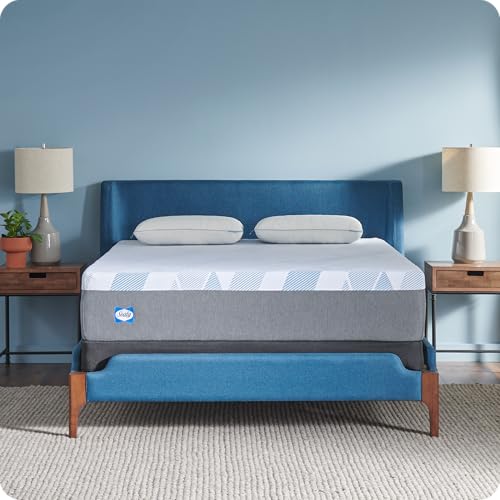
The Sealy Dreamlife 12” Hybrid Mattress-in-a-Box is one of the six mattresses that survived our filtering for this keyword. The Sealy Dreamlife is a 12-inch queen hybrid that stacks two inches of SealyComfort gel memory foam over a transition foam and a seven-inch core of individually encased coils. The encased coils move independently, so support is targeted rather than uniform and a partner’s movement is damped before it crosses the bed. The foams are CertiPUR-US certified, and the surface carries the brand’s Surface-Guard antimicrobial treatment, which is designed to inhibit bacteria growth and allergen build-up where you sleep.
The Dreamlife feels like a modern hotel bed: cushioned on top, springy and supportive underneath, with edges that hold up when you sit or sleep near the side. That balance makes it a safe recommendation for mixed households and guest rooms where you do not know the sleeper’s preference. It arrives as a mattress in a box despite its substantial build, though at just over 80 pounds you should plan the route to the bedroom before it lands. Rotate it seasonally, keep the surface protected, and the coil core should hold its support for years.
For a heavier sleeper, the Sealy Dreamlife 12” Hybrid Mattress-in-a-Box makes this list on the strength of its support core and how it holds its shape under sustained load, not on first-night softness.
A few weeks in, most owners of the Sealy Dreamlife 12” Hybrid Mattress-in-a-Box report that the second fortnight feels different from the first, and that is normal rather than a defect. Your body unlearns the old bed’s dips while the new surface finishes breaking in. If you are on the fence at day ten, wait until day twenty before deciding, and use any rotation or flip the design allows before reaching for a topper or a return label.
Strengths
- Individually encased coils give targeted support and independent movement, cutting motion transfer for a coil bed
- Two inches of gel memory foam conforms for tailored pressure relief, over a dedicated transition foam layer
- Surface-Guard antimicrobial technology helps prevent bacteria growth and allergen build-up on the surface
Trade-offs
- At over 80 pounds it is a heavy lift; use two people and a hand truck for stairs
- Hybrid feel has real bounce, so strict motion-isolation seekers may prefer all-foam
- 12-inch profile plus a protector needs deep-pocket sheets
| Color | Dreamlife |
| Size | Queen |
| Dimensions | 80 x 60 x 12 inches |
| Weight | 80.6 pounds |
Best for: readers who want best overall / Not suited for: anyone expecting a mattress to solve a problem its construction was never designed to address
Choose this pick if its strengths line up with your main sleep problem and its trade-offs do not touch your deal-breakers. Skip it and move to the next review if they do. Check on Amazon

Nectar 12” Memory Foam Mattress
Our badge: Best Firm Support
The Nectar 12” Memory Foam Mattress is one of the six mattresses that survived our filtering for this keyword. The Nectar is a 12-inch all-foam mattress built around a firm feel with a contouring memory foam top. Its maker describes a layered sleep system that pairs a breathable cooling fabric with memory foam and a dynamic support foam underneath, so the surface cradles pressure points while the base keeps the spine from sagging into a hammock shape. It arrives as a mattress in a box, unrolls in the bedroom, and is generally ready to sleep on within about a day as the foam finishes expanding.
In everyday use the firmness is the headline: back and stomach sleepers tend to feel held up rather than swallowed, and the foam does a good job of muting a partner’s movements because there are no springs to carry vibration across the bed. Edge support is typical of all-foam designs, which means sitting on the side feels softer than the centre. Rotate it head-to-foot every few months, keep it on a firm slatted or platform base with slats close together, and use a washable protector from day one so the cover stays fresh for the long life this mattress is built for.
For a heavier sleeper, the Nectar 12” Memory Foam Mattress makes this list on the strength of its support core and how it holds its shape under sustained load, not on first-night softness.
Care for the Nectar 12” Memory Foam Mattress is mostly about restraint. Vacuum the surface monthly with an upholstery attachment, blot spills immediately with a barely damp cloth, and never soak the core or use harsh solvents on the cover. A breathable protector does the heavy lifting between cleanings. Keep pets’ claws in mind on knitted covers, and trim rather than pull any loose thread so the weave does not run.
Strengths
- Firm feel with a contouring memory foam comfort layer that cushions hips and shoulders without a deep sink
- Cooling top layer and breathable cover help the surface feel less stuffy than basic all-foam beds
- Very long home trial period and a substantial warranty give you time to judge it properly
Trade-offs
- The firm feel is too much for strict side sleepers who want a plush shoulder cradle
- At 78 pounds it is awkward to rotate alone, and it needs a solid, well-supported base
- All-foam build means less bounce and a slower response when you change position
| Color | White |
| Size | Queen |
| Dimensions | 80 x 60 x 12 inches |
| Weight | 78 pounds |
Best for: readers who want best firm support / Not suited for: anyone expecting a mattress to solve a problem its construction was never designed to address
Choose this pick if its strengths line up with your main sleep problem and its trade-offs do not touch your deal-breakers. Skip it and move to the next review if they do. Check on Amazon

Serta Perfect Sleeper Ultimate 14.5″ Queen Mattress
Our badge: Best Plush Support
The Serta Perfect Sleeper Ultimate 14.5″ Queen Mattress is one of the six mattresses that survived our filtering for this keyword. The Serta Perfect Sleeper Ultimate is a tall 14.5-inch queen pillow-top mattress built on a zoned coil system. The coils are arranged in support zones that firm up under the lower back and hips while cradling the rest of the body, and the comfort stack includes the brand’s PillowSoft Aire foam, a rippled soft foam that promotes airflow, plus Cool Twist gel memory foam that swirls gel through the foam for contouring comfort that sleeps cooler. A deep foam encasement around the edge reduces roll-off and makes the whole surface usable.
This is the plushest, most traditional-feeling bed in the guide, and it suits sleepers who find flat foam beds austere. The pillow top cushions shoulders for side sleeping while the zoned coils keep hips from dropping too far, and it is compatible with traditional frames, box springs, platforms, slats and adjustable frames. It is made in the USA with global components and CertiPUR-US certified foams. Measure your frame and sheet pockets for the height, recruit help for setup, and rotate it regularly to keep the pillow top wearing evenly.
For a heavier sleeper, the Serta Perfect Sleeper Ultimate 14.5″ Queen Mattress makes this list on the strength of its support core and how it holds its shape under sustained load, not on first-night softness.
Fitting the Serta Perfect Sleeper Ultimate 14.5″ Queen Mattress into a real room raises practical questions the spec sheet ignores. Check door and stair clearances for the boxed dimensions, confirm your existing sheets have the pocket depth for its profile plus a protector, and measure the finished bed height if anyone in the house has mobility concerns. None of these is a reason to reject a good mattress, but all of them are cheaper to solve before delivery day.
Strengths
- Zoned coil design gives targeted support for the lower back and hips with cradled comfort elsewhere
- Cool Twist gel memory foam swirls cooling gel through premium foam for contouring comfort with better airflow
- BestEdge foam encasement adds a deep foam rail that reduces edge roll-off and extends the usable sleep surface
Trade-offs
- At 14.5 inches it is the tallest bed here; low frames and deep-pocket sheets need checking first
- Pillow-top plushness suits back and side sleepers more than strict stomach sleepers who want a flat, firm plane
- Heavy at over 82 pounds, so rotating it is a two-person job
| Color | Dark Blue |
| Size | Queen |
| Dimensions | 79.5 x 60 x 14.5 inches |
| Weight | 82.26 pounds |
Best for: readers who want best plush support / Not suited for: anyone expecting a mattress to solve a problem its construction was never designed to address
Choose this pick if its strengths line up with your main sleep problem and its trade-offs do not touch your deal-breakers. Skip it and move to the next review if they do. Check on Amazon

GhostBed Classic 11 Inch Queen Memory Foam Mattress
Our badge: Best Lightweight Strong Feel
The GhostBed Classic 11 Inch Queen Memory Foam Mattress is one of the six mattresses that survived our filtering for this keyword. The GhostBed Classic is an 11-inch queen mattress with a four-layer build that mixes cooling gel memory foam, aerated latex, and a high-density support core. That recipe produces a medium-firm feel that is soft, supportive and a little springy at once: the latex keeps the surface lively and breathable, the gel foam cushions pressure points, and the dense core holds the spine in line. Despite the layered build it weighs only 50 pounds in queen, which makes it unusually manageable.
The Classic is a strong all-position bed. Back sleepers get alignment, side sleepers get shoulder cushioning without a deep sink, stomach sleepers get a surface that does not let hips bow, and the minimal motion transfer keeps couples undisturbed. It is CertiPUR-US certified and made in the USA and Canada. Because it is lighter than most rivals, rotation is easy enough to actually happen, which helps long-term evenness. Pair it with a supportive base and a breathable protector, and give it a few weeks if you are switching from an old innerspring.
For a heavier sleeper, the GhostBed Classic 11 Inch Queen Memory Foam Mattress makes this list on the strength of its support core and how it holds its shape under sustained load, not on first-night softness.
Temperature behaviour is worth a deliberate test with the GhostBed Classic 11 Inch Queen Memory Foam Mattress: sleep on it for several nights with your normal bedding and room settings, not stripped-down test conditions. If you run warm, adjust the duvet weight and protector breathability first; those two changes fix most heat complaints without touching the mattress. If you run cold, the same levers work in reverse, which is why adaptable bedding beats a one-season mattress.
Strengths
- Four layers blend cooling gel memory foam, aerated latex and high-density support foam for a balanced feel
- High-density core supports spinal alignment and keeps motion transfer minimal for a responsive bed
- At 50 pounds it is one of the lightest queen mattresses here, and it is made in the USA and Canada
Trade-offs
- Medium-firm foam feel will not satisfy sleepers hunting for a deep plush pillow top
- Latex-blend responsiveness means a little more bounce than pure memory foam, which some couples dislike
- No zoned support system; support is uniform rather than targeted
| Color | White |
| Size | Queen |
| Dimensions | 80 x 60 x 11 inches |
| Weight | 50 pounds |
Best for: readers who want best lightweight strong feel / Not suited for: anyone expecting a mattress to solve a problem its construction was never designed to address
Choose this pick if its strengths line up with your main sleep problem and its trade-offs do not touch your deal-breakers. Skip it and move to the next review if they do. Check on Amazon
Sweetnight CoolNest Queen Mattress
Our badge: Best Tall Support
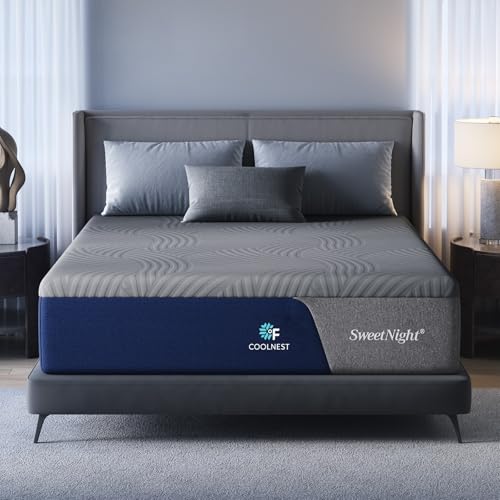
The Sweetnight CoolNest Queen Mattress is one of the six mattresses that survived our filtering for this keyword. The Sweetnight CoolNest is a 14-inch queen memory foam mattress built around cooling. Its CoolNest system combines phase-change high-resilience foam with gel-infused memory foam, and the cover uses a 3D-woven ventilation design that the maker rates as substantially more breathable than standard fabrics. Under the cooling layers, a five-zone ergonomic support design varies the support from head to toe, cushioning pressure areas while keeping the overall platform stable. The foams are CertiPUR-US certified and the design is recognised by the American Chiropractic Association.
Hot sleepers who have bounced off ordinary memory foam are the audience here: the surface is engineered to dissipate heat continuously rather than just feel cool for the first ten minutes, and the multi-layer foam stack isolates motion well for couples. The medium feel and deep 14-inch cushioning suit side and back sleepers and anyone furnishing a primary bedroom that needs a substantial bed. Allow the full 72-hour expansion, use deep-pocket sheets, rotate it seasonally, and keep the breathable cover unobstructed by heavy plastic protectors if cooling is your priority.
For a heavier sleeper, the Sweetnight CoolNest Queen Mattress makes this list on the strength of its support core and how it holds its shape under sustained load, not on first-night softness.
Finally, judge the Sweetnight CoolNest Queen Mattress against the job you actually bought it for, on the mornings that matter. Keep three mornings of notes (how you woke, where you felt pressure, how unbroken the night was) rather than a vague overall impression. That small record turns a gut-feel decision into an evidence-based one, and it is exactly what a long home trial is for.
Strengths
- CoolNest system layers PCM high-resilience foam with gel memory foam for sustained cooling comfort
- Five-zone ergonomic support cushions pressure areas from head to toe while keeping the bed stable
- Highly breathable 3D-woven cover and hollow-structure foam are designed to move air and wick moisture
Trade-offs
- At 14 inches it is a tall mattress; check frame height, guard rails and sheet pocket depth first
- Needs up to 72 hours to expand fully, so judge the feel after the first few days, not the first hour
- Medium feel with deep cushioning may be too plush for strict stomach sleepers at higher weights
| Color | Grey & Blue |
| Size | Queen (U.S. Standard) |
| Dimensions | 80 x 60 x 14 inches |
| Weight | 68.67 pounds |
Best for: readers who want best tall support / Not suited for: anyone expecting a mattress to solve a problem its construction was never designed to address
Choose this pick if its strengths line up with your main sleep problem and its trade-offs do not touch your deal-breakers. Skip it and move to the next review if they do. Check on Amazon

Signature Design by Ashley Chime 12 Inch Hybrid Mattress
Our badge: Best Full Size
The Signature Design by Ashley Chime 12 Inch Hybrid Mattress is one of the six mattresses that survived our filtering for this keyword. The Ashley Chime is a 12-inch hybrid in full size that combines gel memory foam with a pocketed coil core. Each coil is individually wrapped, so it compresses independently: the bed responds where you press it instead of dipping as one stiff sheet, and movement on one side is far less likely to ripple across. A high-density gel memory foam layer is placed to support the lumbar region, and two perimeter rows of heavier-gauge coils firm up the edges so the full width of the mattress stays usable.
The feel is medium-firm and buoyant rather than sinking, which suits back and combination sleepers and anyone who dislikes the stuck feeling of deep memory foam. It works on most frames and on adjustable bases, arrives compressed for easier delivery through hallways, and uses CertiPUR-US certified foams. Give the coils and foam a few weeks of break-in, rotate it head-to-foot a couple of times a year, and support it on a base rated for hybrid weight so the coil unit lasts.
For a heavier sleeper, the Signature Design by Ashley Chime 12 Inch Hybrid Mattress makes this list on the strength of its support core and how it holds its shape under sustained load, not on first-night softness.
Ownership details matter with the Signature Design by Ashley Chime 12 Inch Hybrid Mattress. Delivery is compressed and boxed, so plan the route to the bedroom and let it expand in place rather than dragging it after inflation. Once open, give it the full expansion window before judging firmness, because corners and edges recover last. Keep the original listing details (size, model and order number) in a note on your phone; if you ever need warranty help, having the exact variant to hand saves days of back and forth.
Strengths
- Pocketed coil system with two reinforced perimeter rows gives durable edge support and reduces motion transfer
- Gel memory foam lumbar layer adds targeted cushioning through the lower back zone
- Adjustable-base compatible and built with CertiPUR-US certified foams, with a long home trial
Trade-offs
- Full size is cosy for two adults; couples who spread out should look at queen options instead
- Hybrid bounce means it isolates motion well for a coil bed, but not as completely as all-foam
- At 12 inches plus bedding, check your fitted sheet pocket depth before ordering
| Color | White |
| Size | Full |
| Dimensions | 74.4 x 53.3 x 12 inches |
| Weight | 62 pounds |
Best for: readers who want best full size / Not suited for: anyone expecting a mattress to solve a problem its construction was never designed to address
Choose this pick if its strengths line up with your main sleep problem and its trade-offs do not touch your deal-breakers. Skip it and move to the next review if they do. Check on Amazon
Comparison Table
| Pick | Size (verified) | Dimensions | Weight | Check price on Amazon |
|---|---|---|---|---|
| Sealy Dreamlife 12” Hybrid Mattress-in-a-Box | Queen | 80 x 60 x 12 inches | 80.6 pounds | Check price on Amazon |
| Nectar 12” Memory Foam Mattress | Queen | 80 x 60 x 12 inches | 78 pounds | Check price on Amazon |
| Serta Perfect Sleeper Ultimate 14.5″ Queen Mattress | Queen | 79.5 x 60 x 14.5 inches | 82.26 pounds | Check price on Amazon |
| GhostBed Classic 11 Inch Queen Memory Foam Mattress | Queen | 80 x 60 x 11 inches | 50 pounds | Check price on Amazon |
| Sweetnight CoolNest Queen Mattress | Queen (U.S. Standard) | 80 x 60 x 14 inches | 68.67 pounds | Check price on Amazon |
| Signature Design by Ashley Chime 12 Inch Hybrid Mattress | Full | 74.4 x 53.3 x 12 inches | 62 pounds | Check price on Amazon |
How to Choose the Best Mattresses for Heavy Person
Support Depth Matters More Than Surface Softness
Heavier bodies compress a mattress further, so what matters most is what is underneath the comfort layer: a dense foam core or a substantial coil unit that still has travel left when you are fully settled. Thin mattresses bottom out, which is why slim budget beds score poorly here no matter how pleasant the top feels. As a rule of thumb in this guide, prioritise 11 inches and up, treat 10 inches as a minimum for nightly use, and save the 6-8 inch profiles for guests and occasional beds.
Firmness: Medium-Firm Is the Starting Point
At higher body weights, a labelled medium often behaves like a soft, because you sink through more of it. Medium-firm and firm designs keep hips level with shoulders instead of letting them drop into a hammock. That said, side sleepers still need shoulder give, so look for firm support with a genuinely cushioning top rather than a board-stiff bed. Zoned and hybrid designs thread this needle best.
Two comparisons readers make again and again while deciding are Best Mattresses For Neck Pain and Black Friday Throw Pillow And Blanket Deals; both are worth a look if your situation sits between categories.
Edge Support Is a Daily Feature, Not a Luxury
You sit on the edge to dress, you sleep nearer the edge when sharing, and you push off the edge to stand. Reinforced perimeters, foam encasement and heavier-gauge border coils stop that edge from collapsing, which effectively gives you the full width you paid for. All-foam beds without edge reinforcement are the weakest here; if you choose one, expect to sleep toward the centre.
Heat, Airflow and Materials That Last
More compression means more body contact and more warmth, so airflow matters: coil cores breathe naturally, and gel, graphite, copper and open-cell foams all exist to move heat in foam beds. Durability matters just as much. Look for high-density support foams, CertiPUR-US certification as a baseline, and warranties that signal the maker expects the bed to hold its shape under real loads for years.
Foundations and Weight Ratings
A strong mattress on a weak base will still sag. Use a platform or slatted base rated for the combined weight of mattress and sleepers, with slats close together and a centre rail on larger sizes. Check the maker’s stated limits on the listing before ordering, and remember that an adjustable base needs a mattress explicitly rated as flexible enough to bend.
How to Set Up a Mattress Built for Real Weight
Set the mattress up with two people and a clear path; several picks here weigh 80 pounds or more in queen. Let foam models expand fully, and hybrids settle, before the first night, and fit a sturdy protector that can handle frequent washing.
Rotate head-to-foot every two to three months rather than twice a year; heavier loads wear one zone faster, and rotation is the cheapest life-extension there is. Check the base at the same time: tighten frame bolts, look for bowed slats, and fix a dipping foundation before blaming the mattress.
Keep the sleep surface dry and aired. Strip the bed for an hour when you change sheets, vacuum the surface monthly, and deal with spills immediately by blotting, never soaking. Foam that stays damp degrades and smells; a washable protector prevents most of it.
While you settle in, the companion shortlist at Best Innerspring Mattresses For Side Sleepers answers the question readers ask most alongside this one.
Problem: Problem: A body-shaped dip is forming where you sleep — Rotate the mattress, verify the base has a centre support, and check slat spacing. If the dip persists on a flat floor test, it is a warranty conversation, not a topper conversation.
Problem: Problem: You roll toward the middle when sharing — The centre is compressing more than the edges. Reinforced-edge hybrids resist this best; in the short term, rotating and flipping if the design allows will even it out.
Problem: Problem: The bed sleeps hotter than your old one — Switch to cotton bedding, drop the heavy waterproof protector for a breathable one, and lower the room temperature a degree or two before replacing the mattress.
Problem: Problem: Getting out of bed feels like climbing — The surface is too soft or too low. A firmer model, a taller foundation, or a bed frame at a better height fixes the mechanics more than any mattress feature.
Foam Cores Versus Coil Cores Under Load
Dense foam cores resist sagging by brute material quality: the higher the density, the slower the permanent compression. Coil cores resist it mechanically, and individually wrapped coils in heavier gauges keep working after connected springs have started to feel tired. Hybrids combine both, which is why they dominate the top of this guide. The enemy in every construction is the same: a soft comfort layer asked to do a support layer’s job. When you compare any two beds, compare what is doing the supporting, not what is doing the welcoming.
Sharing a Bed Across Different Body Weights
Couples of very different sizes need a bed that supports the heavier partner without feeling like a plank to the lighter one. Zoned designs and medium-firm hybrids are the usual answer, helped by strong motion isolation so the lighter sleeper is not bounced by every turn. If the difference is extreme, a split arrangement or different toppers per side can fine-tune what one mattress cannot. What rarely works is a soft all-foam bed: it will feel perfect to one of you and like a valley to the other.
For the finishing pieces that complete the room around a new mattress, Best Mattresses For Sleeper Sofas is the natural next read.
Living With Your New Mattress: The First 90 Days
Days one to three are logistics: expansion, airing and the first impressions you should mostly ignore. Foam odours, if present, fade fastest with the windows open and the bedding off for a few hours a day. Sleep on the bed from night one unless the maker says otherwise; use, not storage, finishes the expansion.
Weeks two to six are adaptation. This is when to rotate or flip if the design allows, when to fine-tune pillow height against the new shoulder depth, and when couples should compare notes honestly rather than letting one person’s preference silently win. Small bedding changes (a lighter duvet, a different protector) belong in this window too.
By day ninety the mattress has shown you its real character: where it cushions, where it holds, and whether the morning feeling that made you shop in the first place has actually changed. If it has not, a good trial policy is your exit, and the notes you kept are your evidence. If it has, settle into the long rhythm: rotate seasonally, wash the protector monthly, and expect years of unremarkable, restorative nights, which is the whole point.
Common Buying Mistakes
Buying a thin mattress to save money
Slim beds bottom out under heavier loads and wear out fast, making them the expensive option within a year. Depth is the first spec to protect.
Assuming firm means supportive
A firm top on a weak core still sags. Judge the support layer and the base, not the showroom poke test.
Ignoring the foundation’s weight rating
Frames and slats have limits too. An overloaded base bows, and the mattress follows it down.
Skipping rotation because the bed is heavy
Heavy beds need rotation most. Get help, use the handles or a fitted-sheet grip technique, and put it on the calendar.
Choosing plush pillow tops for nightly heavy use
Thick soft tops compress permanently fastest exactly where load is highest. Prefer moderate cushioning over a strong core.
Protectors are the highest-value accessory in this entire category. A breathable, well-fitted protector intercepts sweat, skin cells and spills before they reach foam that can never be washed. It preserves the surface, the freshness and, in many cases, the warranty, which frequently excludes stained products. Wash it monthly, keep a spare for laundry days, and treat it as part of the mattress purchase rather than an optional extra.
The base deserves a paragraph of its own in any honest guide. Slats spaced too widely let foam squeeze between them and coil units flex where they should not; a solid platform that is not level does the same damage more slowly. When comfort drops, test the mattress on the floor for two nights. If the problem vanishes, you have found the culprit, and it is considerably cheaper than a new mattress.
Room conditions quietly shape how a mattress feels. Foam firms up in a cold room and softens in a warm one, which is why the same bed can feel different in January and July and why the first night in a new home is a poor test. Keep the bedroom ventilated, avoid pushing the bed hard against a radiator, and if the feel swings wildly with the seasons, look at bedding weight before blaming the mattress itself.
One habit separates mattresses that age well from mattresses that disappoint early: rotation on a schedule rather than on a whim. Foam compresses where load repeats, and rotating head-to-foot redistributes that load across the whole surface. Put it on the same calendar rhythm as changing smoke-alarm batteries or servicing a boiler, every three to four months, and the bed will feel noticeably more even in year three than an identical bed that was never turned. If the design is flippable, flipping adds a second fresh surface and doubles the benefit.
Finally, think about the whole sleep system rather than the mattress in isolation. Pillow height should match the depth your shoulder sinks into the new bed; bedding weight should match the bed’s cooling design; and light, noise and room temperature do as much for sleep quality as any material. The mattress is the foundation, and it is worth buying well, but the best results in this guide come to readers who tune the system around it.
Sizing mistakes are embarrassingly common and entirely avoidable. Nominal sizes vary slightly between brands, and older frames vary more. Measure the frame’s internal dimensions, compare them with the verified dimensions in each review above, and remember that thickness interacts with sheets, protectors and toppers. Five minutes with a tape measure before ordering prevents the single most common reason for returns in this category.
Expect a genuine adjustment period with any new mattress, whatever the category. Your body has learned the old bed’s dips and ridges, and it reads a flat, supportive surface as strange for the first week or two. Shoulders and hips adapt first; sleep quality usually follows within a fortnight. This is why trial length matters more than almost any feature, and why judging a bed on night one is the most common and most expensive mistake in this market.
Protectors are the highest-value accessory in this entire category. A breathable, well-fitted protector intercepts sweat, skin cells and spills before they reach foam that can never be washed. It preserves the surface, the freshness and, in many cases, the warranty, which frequently excludes stained products. Wash it monthly, keep a spare for laundry days, and treat it as part of the mattress purchase rather than an optional extra.
The base deserves a paragraph of its own in any honest guide. Slats spaced too widely let foam squeeze between them and coil units flex where they should not; a solid platform that is not level does the same damage more slowly. When comfort drops, test the mattress on the floor for two nights. If the problem vanishes, you have found the culprit, and it is considerably cheaper than a new mattress.
Room conditions quietly shape how a mattress feels. Foam firms up in a cold room and softens in a warm one, which is why the same bed can feel different in January and July and why the first night in a new home is a poor test. Keep the bedroom ventilated, avoid pushing the bed hard against a radiator, and if the feel swings wildly with the seasons, look at bedding weight before blaming the mattress itself.
One habit separates mattresses that age well from mattresses that disappoint early: rotation on a schedule rather than on a whim. Foam compresses where load repeats, and rotating head-to-foot redistributes that load across the whole surface. Put it on the same calendar rhythm as changing smoke-alarm batteries or servicing a boiler, every three to four months, and the bed will feel noticeably more even in year three than an identical bed that was never turned. If the design is flippable, flipping adds a second fresh surface and doubles the benefit.
Final Recommendation
Start with the Sealy Dreamlife 12” Hybrid Mattress-in-a-Box: it answers this keyword most completely, and its trade-offs are the easiest to live with for the widest range of readers. If its feel or format does not fit your room or your body, the runner-up is the practical alternative: Check on Amazon.
Still torn between two neighbouring shortlists? Best Mattresses For Cool Sleeping is the comparison most readers in your position read last before ordering.
Frequently Asked Questions
How thick should a mattress be for a heavier sleeper?
For nightly use, treat 11 to 12 inches as the comfortable zone and 10 inches as a floor. Thickness alone is not enough: the support core must be dense foam or a substantial coil unit, on a rated base.
Are hybrids or all-foam beds better at higher weights?
Hybrids usually win on airflow, edge support and long-term resilience; quality dense foam wins on motion isolation. Either can work if the core is genuinely heavy-duty and the base is rated for the load.
Will a firm mattress feel too hard?
At higher weights you sink further into any given firmness, so a firm bed often feels medium in practice. Side sleepers should keep some surface cushioning for the shoulder rather than choosing the hardest option.
How can I make a mattress last longer at my weight?
Rotate every two to three months, use a rated foundation with centre support, keep it protected and dry, and avoid sitting on the same edge spot for long periods day after day.
What weight limits should I check?
Check the maker’s stated sleeper weight guidance and the foundation’s rating on the listing before buying. If you are near a limit, choose the next construction up rather than hoping for the best.
Does a longer warranty mean a stronger mattress?
Not directly, but makers put long warranties on builds they expect to survive. Treat warranty length as a supporting signal alongside core density, coil design and materials, never as the whole case.


