Disclosure: As an Amazon Associate, dailyhomedecorating.com earns from qualifying purchases. Links to Amazon on this page are affiliate links; they cost you nothing extra. Prices and availability change often, so check the current Amazon listing before you buy.
The best mattresses for heavy side sleepers have to deliver two things that fight each other: deep enough give for a shoulder and hip carrying real load, and strong enough support that the give stops before the spine sags out of line. Most mattresses are calibrated for a middle-weight body, and heavier side sleepers meet the calibration’s limits nightly — bottoming out at the hip, perching at the shoulder, waking with both complaints at once. If you are choosing among the best mattresses for heavy side sleepers, you are choosing which constructions keep their promises at your weight, in your position, for years.
An honesty note about our verified pool: it contains no mattress marketed specifically as a high-capacity or plus-size model, and this guide will not pretend otherwise. What it contains are the pool’s strongest support constructions — encased and zoned coil systems, a grid that cannot bottom out the way foam does, deep profiles with dense support layers — ranked by how their engineering answers the heavy side sleeper’s physics. Where a specification that matters to you (a stated weight capacity, a coil gauge) is not in the verified materials, the reviews say so and direct you to the listing rather than inventing a number. Verify capacities on the current listing before ordering, and let the trial be the final arbiter. Sleepers whose situation overlaps ours should also see Best Hybrid Mattresses For Side Sleepers, where the side-sleeping mechanics are treated in depth.
Where to Buy
All six mattresses are sold on Amazon, with current pricing, sizes, and any stated capacity details on each listing. Start with our top pick, the Sealy Dreamlife 12” Hybrid Mattress-in-a-Box, Queen — Check on Amazon. The other five are the Serta Perfect Sleeper 14.5″ Ultimate Hybrid Pillow Top Mattress — Check on Amazon; the Purple Mattress — Check on Amazon; the Sweetnight CoolNest 14 Inch Queen Mattress — Check on Amazon; the Nectar 12” Memory Foam Mattress — Check on Amazon; and the Signature Design by Ashley Chime 12″ Hybrid Mattress — Check on Amazon. Check the current listing for your size and any capacity guidance before ordering.
In this guide
Quick Picks
| Pick | Badge | Why it earns its place |
|---|---|---|
| Sealy Dreamlife 12” Hybrid Mattress-in-a-Box | Best Overall | Encased coils carry load by spring force, not by foam displacement — support that scales with weight |
| Serta Perfect Sleeper Ultimate 14.5″ Pillow Top Mattress | Best Heavy-Duty Build | Zoned coils with a lumbar band under a deep pillow top — the guide’s most substantial construction |
| Purple Mattress | Best for Pressure | The grid flexes at the hip and shoulder without a foam layer to bottom out |
| Sweetnight CoolNest 14 Inch Queen Mattress | Best Deep Profile | Fourteen inches of five-zone support — depth is a heavy sleeper’s margin |
| Nectar 12” Memory Foam Mattress | Best Foam Option | Firm-leaning contour over a dynamic support layer, with a year to verify it at your weight |
| Signature Design by Ashley Chime 12 Inch Hybrid Mattress | Best Coil Value | 13-gauge pocketed coils and a gel lumbar layer at a friendly position (listed in full) |
Key Takeaways
- At higher loads, support mechanism matters more than firmness label: coils and grids scale; soft foams surrender.
- Depth is margin — twelve inches and above gives the shoulder room to sink without the hip bottoming out.
- Side sleeping concentrates load at two points; pressure relief must be structural, not a thin topper’s promise.
- Edges carry more weight in this category — sitting and exiting load the perimeter at full body weight.
- Verify any stated weight capacity on the current listing; where none is stated, the trial is your evidence.
- Rotation and a rigid foundation are not optional maintenance at higher loads — they are the lifespan.
How These Picks Were Chosen
From our verified pool we selected for load-bearing side sleep: support systems whose force scales with weight (encased coils, zoned coil units, a polymer grid), profiles of twelve inches or more where possible, pressure-relief surfaces thick enough to matter at concentrated loads, and edge constructions that survive sitting at full weight. We deprioritized thin profiles and soft uniform foams regardless of their other virtues, because at this brief their failure modes arrive early. Every pick’s trade-offs state its limits plainly; none is described as a specialist plus-size product, because the pool contains none and honesty is a feature of this guide.
Method note: rankings rest on verified construction from the pool’s listing materials. Where makers publish capacity or gauge details (the Ashley’s 13-gauge coils, for instance), we cite them; where they do not, we do not estimate. The trial guidance in the buying section is written for this population specifically — heavier loads reveal a mattress’s truth faster, and the first month should be used accordingly. Readers managing back symptoms alongside should cross-read Best Mattresses For Side Sleepers With Back Pain, whose differential analysis complements this guide’s load focus.
The 6 Best Best Mattresses for Heavy Side Sleepers — Reviewed

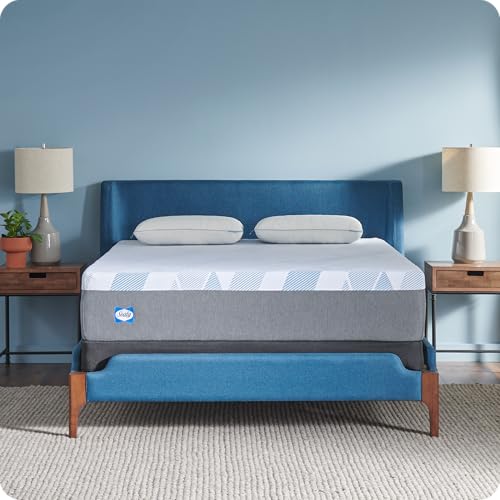
Sealy Dreamlife 12″ Hybrid
Our badge: Best Overall
The Sealy Dreamlife 12” Hybrid leads because its support physics scale correctly: individually encased coils answer load with spring force, compressing proportionally and recovering completely, where foam answers by displacement and eventually by surrender. Under a heavy side sleeper, the hip’s coils work harder and the shoulder’s coils yield more — a self-adjusting differential no uniform material can imitate — while the gel memory foam surface relieves the two pressure points and the coil core ventilates the heat a larger body generates.
Strengths
- Coil support that scales with load and recovers nightly for years
- Independent response creates a natural shoulder-hip differential
- Airflow and gel manage the warmth heavier sleepers disproportionately fight
Trade-offs
- Just over 80 pounds — installation is a two-person event
- Motion transfer exceeds the foam picks
- Twelve inches is the guide’s floor for depth, not its ceiling
| Color | Dreamlife |
| Size | Queen |
| Dimensions | 80 x 60 x 12 inches |
| Weight | 80.604164 pounds |
The aging argument decides this category more than any first-night feel: a heavy side sleeper consumes a mattress’s margin at roughly double the standard rate, so the construction whose support degrades slowest wins the decade even if it merely ties the first month. Steel’s fatigue curve is the pool’s flattest, and the Dreamlife’s CertiPUR-US foams and Surface-Guard treatment keep the surface layers honest alongside the core.
On the foundation side, this population should treat rigidity as non-negotiable: a coil mattress on a flexing base spends its support compensating for the furniture. Slats close, or a platform solid — the Sealy will do the rest.
For heavy side sleepers who want the soundest default, this is it.
Best for: heavy side sleepers wanting durable, scaling support / Not suited for: motion-sensitive partners or solo installers
Choose the Sealy if longevity under load leads. Skip it if you need foam’s silence. Check on Amazon

Serta Perfect Sleeper Ultimate 14.5″ Pillow Top
Our badge: Best Heavy-Duty Build
The Serta Perfect Sleeper Ultimate is the guide’s most substantial construction: a zoned coil system with a center lumbar band, Cool Twist gel memory foam, BestEdge foam encasement for a perimeter that survives sitting at full weight, and a genuine pillow top spreading the shoulder and hip loads across more area. At 14.5 inches and over 82 pounds in queen, it is built like the category’s heavy end — because for this population, mass in the mattress is not a drawback; it is the support budget made visible.
Strengths
- Zoned coils plus lumbar band: support spent where heavy loads concentrate
- Pillow top spreads point loads — pressure relief by area, not just softness
- Foam-encased edges hold the perimeter for sitting and exiting
Trade-offs
- The plush top will compress over years faster than the core ages
- Tall profile demands deep-pocket sheets and a low frame for easy exits
- The heaviest installation in the guide
| Color | Dark Blue |
| Size | Queen |
| Dimensions | 79.5 x 60 x 14.5 inches |
| Weight | 82.26 pounds |
The Serta’s relevance sharpens at the category’s upper weights, where the shoulder’s load can overwhelm a standard comfort layer entirely. Here the defense is layered: pillow top spreading, gel foam contouring, transition grading, and zoned steel deciding — a heavy hip meets four lines of engineering before it can bottom out. The stated 100-night trial gives that stack a fair season to prove itself at your actual weight, which is the only weight that matters.
Adjustable-frame compatibility is listed for this model, and heavier sleepers considering an adjustable base should note it — elevation changes the load map, and a mattress cleared for the geometry is the safe pairing.
For the heaviest side sleepers in this guide’s audience, this is the maximal construction.
Best for: heavier sleepers wanting maximum layered defense / Not suited for: low frames, firm purists, or solo movers
Choose the Serta if load is your headline variable. Skip it if you want a low, firm profile. Check on Amazon

Purple Mattress
Our badge: Best for Pressure
The Purple Mattress answers the heavy side sleeper’s pressure problem with a mechanism that has no foam to bottom out: the GelFlex Grid flexes at concentrated points — the shoulder, the hip — while its walls hold support across the broader back, and the whole lattice breathes. For a heavier body, whose contact points carry proportionally more load, a surface that yields exactly at the points and nowhere else is a physics argument few foams can match. The grid’s listed build is also the pool’s heaviest queen, at 100 pounds per the specs — mass that reflects a substantial polymer structure.
Strengths
- Point-flexing relief with no comfort layer to exhaust
- Temperature-neutral lattice: heat scales with body mass, and so does this solution
- Instant response makes position changes easy at any weight
Trade-offs
- The grid feel polarizes — the trial must be used honestly
- Heaviest installation in the guide per pool specs
- Premium positioning within the guide
| Color | White |
| Size | Queen |
| Dimensions | 80 x 60 x 11 inches |
| Weight | 100 pounds |
The bottoming-out question deserves the grid’s specific answer: foam bottoms out when its cells fully compress, a state heavier loads reach nightly; a grid’s flexing walls redistribute instead, buckling at the point and recruiting neighbors, so the failure state is approached far more gradually. Side sleepers at higher weights who have “gone through” foam mattresses will recognize the difference in the first week — the hip’s landing has a floor that feels designed rather than discovered.
The maker’s listing cites third-party sleep-study support for the grid’s feel — recorded as the maker’s claim — and the construction’s openness gives heavier, warmer sleepers the airflow their nights disproportionately need.
For pressure-first heavy side sleepers, this is the radical answer.
Best for: pressure-sensitive heavy sleepers and hot sleepers / Not suited for: traditionalists or the trial-averse
Choose the Purple if foam has failed your pressure points. Skip it if you love a conventional hug. Check on Amazon
Sweetnight CoolNest 14″
Our badge: Best Deep Profile
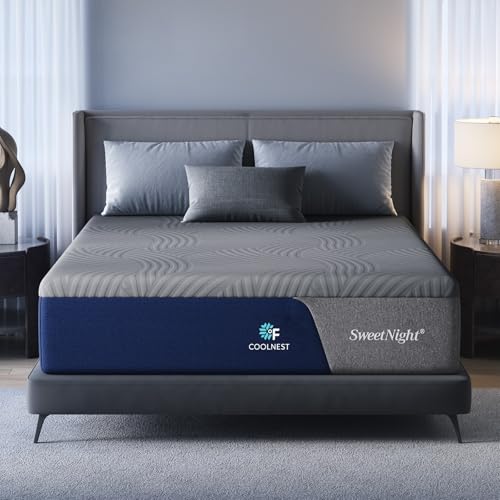
The Sweetnight CoolNest 14 Inch Queen Mattress makes the heavy side sleeper’s depth argument: fourteen inches of profile with a five-zone ergonomic support design, PCM and gel cooling, and room for the shoulder to travel downward without the hip exhausting the stack. Depth is the simplest form of margin — every additional inch is an inch of compression the load can use before the support core is even consulted — and this is the deepest construction in the guide.
Strengths
- Fourteen inches of travel for high-load shoulders and hips
- Five-zone support differentiates the load map
- PCM plus gel cooling serves a population that runs warm
Trade-offs
- Allow the full stated expansion window (up to 72 hours) before judging
- All-foam aging will trail the coil picks across a long horizon
- Tall profile changes sheet pockets and exit heights
| Color | Grey & Blue |
| Size | Queen |
| Dimensions | 80 x 60 x 14 inches |
| Weight | 68.67 pounds |
The five-zone design spends its differentiation where heavy side sleepers need it: the shoulder zone’s give and the hip zone’s hold are different calibrations of the same stack, and at higher loads the difference between zoned and uniform foam is the difference between a spine that rests level and one that lists toward the heavier end. The maker cites ergonomic recognition from the American Chiropractic Association for the design — recorded as the maker’s claim.
Cooling deserves its weight in this category: larger bodies generate more heat and insulate more of the surface they touch, so PCM’s phase-change absorption plus gel’s conduction is a system aimed at a real, scaled problem rather than a marketing one.
For depth-first heavy side sleepers, this is the margin pick.
Best for: heavy side sleepers wanting maximum depth and zoning / Not suited for: low frames or coil loyalists
Choose the Sweetnight if depth is your margin strategy. Skip it if you want steel’s aging curve. Check on Amazon

Nectar 12″ Memory Foam
Our badge: Best Foam Option
The Nectar 12” Memory Foam Mattress is the foam type’s strongest entry for this brief: therapeutic memory foam contouring over a dynamic support foam that firms the deeper the body travels — the foam architecture most resistant to bottoming out — in a firm-leaning calibration, with the maker’s stated one-year trial standing behind the experiment. For a heavy side sleeper, that trial length is not a perk; it is the only honest way to verify foam at your load across seasons.
Strengths
- Progressive support: the deeper the sink, the firmer the answer
- Maximum pressure distribution for concentrated hip and shoulder loads
- A year-long trial suits a category where foam verdicts must be earned slowly
Trade-offs
- Foam will soften at the load points across years faster than coils
- Slow response makes position changes deliberate
- Seventy-eight pounds: rotation needs a partner
| Color | White |
| Size | Queen |
| Dimensions | 80 x 60 x 12 inches |
| Weight | 78 pounds |
The Nectar’s case rests on pressure mathematics at scale: contact area is the heavy sleeper’s friend, and no type creates more of it than memory foam done with a real support layer beneath. The shoulder and hip stop being points and become regions; the spine’s line is held by the support foam’s progressive resistance rather than by the sleeper’s muscles. Sleepers whose partners are much lighter should note the other side of that coin — a shared foam surface calibrates to the heavier load’s geography — and couples with large weight differences may prefer the coil picks’ independence.
The cooling top layer moderates the foam type’s warmth, which this population feels more than most.
For foam loyalists at higher weights, this is the credible entry.
Best for: pressure-first heavy side sleepers who prefer foam / Not suited for: restless sleepers or large weight-difference couples
Choose the Nectar if foam’s pressure math is your priority. Skip it if you want spring response. Check on Amazon

Signature Design by Ashley Chime 12″ Hybrid
Our badge: Best Coil Value
The Signature Design by Ashley Chime 12″ Hybrid brings the category’s key specification — a stated coil gauge — to a friendly position: 13-gauge pocketed coils (a firm, load-grade gauge) under a gel-infused lumbar support layer, in a twelve-inch profile whose listing also states adjustable-base compatibility and a 180-night trial. Our pool listing is verified in full size; the construction is the story, and the queen configuration should be confirmed on the listing.
Strengths
- Stated 13-gauge pocketed coils — a load-grade specification, published
- Gel lumbar layer spends support at the heavy sleeper’s hinge
- Adjustable-base compatibility is stated in the listing
Trade-offs
- Pool listing verified in full — confirm your size on the listing
- Firmer coil character will read hard to plush habitués
- Hybrid motion transfer exceeds foam picks
| Color | White |
| Size | Full |
| Dimensions | 74.4 x 53.3 x 12 inches |
| Weight | 62 pounds |
Coil gauge is the specification heavy sleepers should learn to ask for by name: lower gauge numbers mean thicker steel and firmer, more durable support, and a maker who publishes the number is a maker designing for the question. The Ashley’s 13-gauge unit, pocketed for independent response, gives this pick a load story that outruns its price position — with the gel lumbar layer addressing the zone where a side sleeper’s weight pivots the spine.
The 180-night trial is the second-longest in the guide, and at this population’s rate of mattress consumption, six months of verification is worth real money.
For value-minded heavy side sleepers, this is the specified answer.
Best for: budget-conscious heavy sleepers who read specifications / Not suited for: plush seekers
Choose the Ashley if gauge and value lead. Skip it if you want a soft first impression. Check on Amazon
Comparison Table
| Pick | Load mechanism | Construction | Size listed | Profile | Check price on Amazon |
|---|---|---|---|---|---|
| Sealy Dreamlife Hybrid | Encased coils, proportional response | Hybrid | Queen | 12 inches | Check price on Amazon |
| Serta Perfect Sleeper | Zoned coils + lumbar band | Pillow top hybrid | Queen | 14.5 inches | Check price on Amazon |
| Purple Mattress | Point-flexing grid | GelFlex Grid | Queen | 11 inches (specs) | Check price on Amazon |
| Sweetnight CoolNest | Five-zone deep foam | Foam | Queen | 14 inches | Check price on Amazon |
| Nectar Memory Foam | Progressive support foam | Memory foam | Queen | 12 inches | Check price on Amazon |
| Ashley Chime Hybrid | 13-gauge pocketed coils | Hybrid | Full | 12 inches | Check price on Amazon |
How to Choose the Best Mattress as a Heavy Side Sleeper
Shop the mechanism, then the firmness
At higher loads, the support mechanism decides whether firmness survives the night: a “firm” soft foam is neither firm nor supportive by 3 a.m. Coils, grids, and progressive dense foams hold their calibration under load; choose among those first, then tune firmness within the type. Verify any stated capacity on the listing, and treat its absence as a reason to lean harder on the trial.
Buy depth like insurance
Twelve inches is this category’s working floor and fourteen its comfort zone, because depth is compression travel the load can spend. Thin mattresses ask heavy shoulders to find the support core immediately; deep ones grade the landing. Bedding must match the profile — deep pockets for the tall picks, sourced via Black Friday Bedding Deals 2026, with Best Throw Pillows Under $500 covering the propped hours.
Interrogate the edges and the foundation
Sit on the edge during the trial — at your full weight, morning and night. A perimeter that collapses steals sleeping width and makes exits a climb. Below, the foundation must be rigid and rated for the combined load; a flexing base spends the mattress’s support on the furniture’s failures.
Use the trial at full honesty
Heavier loads reveal truth faster: run the full trial, log mornings, photograph the surface monthly for early valleys, and rotate on schedule from week one. A mattress that will fail you in year two usually whispers it in month two — this population’s trials should be listened to closely.
How Should a Heavy Side Sleeper Set Up the Bed?
Start with the spine’s lateral line: shoulder sunk enough for the neck to rest level (a higher-loft pillow than average bodies use), waist supported, a pillow between the knees to keep the pelvis from rotating the lumbar spine. The mattress supplies the differential; the pillows finish the geometry, and at higher loads both halves of the system work harder — fit them in the trial’s second week against the new surface’s real sink, not against the old bed’s memory.
Then manage the microclimate: heavier sleepers warm the bed more, so breathable protectors, natural-fiber sheets, and the cooling constructions in this guide (coils’ airflow, the grid’s lattice, PCM and gel) earn their specifications nightly. Warmth drives position changes, and position changes at higher loads are the night’s most expensive events — every one a small negotiation the spine must win again.
Problem: the hip bottoms out by month two — the comfort stack is too thin or soft for your load; the deep and coil picks exist for this exact report. Use the trial while it is open.
Problem: the shoulder perches while the hip sinks — the differential is inverted for your body; zoned constructions (Serta, Sweetnight) or the grid’s point flex are the corrections.
Problem: the edge collapses when you sit — foam-encased or coil perimeters (Serta’s BestEdge, the hybrids) are the specification to demand; test it in week one.
Problem: you and your partner need different beds — a split arrangement of two twins lets each load have its own surface; our twin guide covers the format.
Problem: mornings improve, then plateau — check rotation and foundation before the mattress: at higher loads, maintenance lapses announce themselves as product failures.
The Physics of Load: Why This Category Is Different
Pressure is force divided by area, and the heavy side sleeper raises the force while the position shrinks the area to two points — the arithmetic is unforgiving and entirely mechanical. It explains the category’s every rule: why depth matters (more travel before the core), why mechanisms that recruit area win (grids flexing neighbors in, pillow tops spreading load, memory foam maximizing contact), why coils scale (spring force rises with compression instead of surrendering to it), and why aging accelerates (the same points, loaded harder, every night). None of this is about comfort preference; it is about matching engineering to arithmetic. The picks in this guide are the pool’s best arithmetic — and the trial, run honestly at your actual weight, is how the arithmetic gets verified in the only laboratory that counts.
Durability Is the Real Luxury at Higher Loads
Every mattress category talks about longevity; this one lives it. A heavy side sleeper will consume a standard mattress’s satisfactory life in a fraction of the standard time, which reframes value completely: the expensive mattress is the one replaced twice, and the economical one is the construction — steel, density, depth — that holds its line for years under real load. Buy the aging curve, maintain it like the investment it is (protector, rotation, rigid base), and audit it annually with a straightedge across the hip zone. The households that do this stop shopping for mattresses as emergencies and start replacing them as plans — the surest sign the category has been beaten.
Heavier side sleepers with hip-dominant discomfort should read this guide alongside our Best Mattresses For Hip Pain analysis, because the two briefs share a contact point and a physics: the hip is where the load concentrates, where the pressure protests, and where the mattress’s differential is ultimately judged. The hip-pain guide’s cradle-first logic and this guide’s load-first logic meet in the same shortlist — the grid’s point flex, the Serta’s layered spread, the Sealy’s proportional coils — and a sleeper carrying both briefs can buy one mattress for both with a clear conscience, provided the trial logs the hip’s mornings separately from the back’s.
Couples with a large weight difference between partners form this category’s quiet second audience, and their version of the problem deserves its own counsel: a shared surface calibrates to the heavier load’s geography, leaving the lighter partner on a mattress mapped for someone else. The structural answers are independence — encased coils that answer each side’s load separately, as in the Sealy and Ashley here — or literal separation, the split arrangement of two twins, each bought for its own body, whose format logic our Best Twin Mattresses For Adults guide lays out. What does not work is averaging: a compromise firmness that under-supports one partner and over-pressures the other is the category’s most returned purchase.
Common Buying Mistakes
Trusting the firmness label
Labels are calibrated to average loads. At yours, mechanism decides what firmness means by 3 a.m. — shop coils, grids, and progressive foams.
Buying thin to save money
Depth is the heavy sleeper’s margin. A thin mattress replaced twice costs more than a deep one kept, in money and in mornings.
Ignoring the foundation’s rating
The base carries you plus the mattress. A flexing or underrated foundation spends the mattress’s support before you lie down.
Skipping the edge test
Sitting and exiting load the perimeter at full weight, daily. Test it in week one, while the trial can still act on the answer.
Judging foam by week one
Foam’s verdict at higher loads arrives across months. Prefer long trials (the Nectar’s year, the Ashley’s 180 nights) and use them fully.
Heavy side sleepers should also negotiate the delivery and installation with the seriousness the weights in this guide demand: these are 60-to-100-pound objects arriving in boxes, destined for frames that must be ready, level, and rated before the mattress lands. Clear the path, recruit the second pair of hands the reviews keep prescribing, and schedule the setup for a morning — when the expansion window and the first judged night can be separated by a full day of the mattress finding its shape. A heavy sleeper’s first impression of a half-expanded mattress is the category’s most preventable false verdict; the calendar is the fix.
And keep the warranty paperwork with the trial log, in the same folder, from day one. At higher loads, warranty conversations happen earlier in a mattress’s life than manufacturers’ brochures imply, and the household that can document its foundation, its rotation schedule, and its purchase terms wins those conversations on evidence. Durability may be this category’s real luxury, but documentation is how the luxury gets collected when a specific mattress falls short of it.
Heavy side sleepers who travel know the category’s truth in its purest form: hotel beds, calibrated for the average guest, bottom out and perch in the same night, and the morning after a trip is the control group against which the home mattress should be judged. Use the comparison deliberately. If your home finalist does not clearly beat the hotel average within its trial — at your load, in your position — the trial has told you something worth the freight of a return. The constructions in this guide were chosen to beat that average by mechanism rather than by margin: proportional coils, flexing grids, layered depths that a hotel’s anonymous slab cannot imitate.
There is also the matter of the bed’s other furniture at higher loads: pillows rated for the loft a heavy shoulder creates, bedding that does not bind a larger body’s turns, and a frame whose own rating exceeds the combined load with room to spare. A mattress is the middle of a load path that runs from the floor to the shoulder, and the path is only as honest as its weakest component. Audit the whole path at purchase — floor, frame, foundation, mattress, pillow — and the heavy side sleeper’s system stops having a weakest link to discover at 3 a.m.
Aging relatives and caregivers will find this category’s logic familiar from the other direction: the heavy side sleeper’s requirements — support that scales, edges that hold a full-weight sit, exits that do not strand — are the same requirements an aging body files as it loses the strength to compensate for a bad bed. A household buying for both generations at once can shop this guide once and serve both, which is not a coincidence: good load engineering is good engineering, and the bodies that test it hardest are doing every other sleeper a favor by filing the strictest reports.
And the category’s closing truth is one of proportion: at higher loads, the mattress stops being furniture and becomes equipment — specified, rated, maintained, and replaced on evidence. Households that adopt the equipment standard early stop experiencing mattress failure as a surprise and start experiencing it as a schedule. The six constructions above are the pool’s best equipment for the brief; choose among them by mechanism, maintain them by calendar, and audit them by straightedge, and the heaviest sleeper in the house will sleep like the category finally took them seriously — because, in this guide at least, it did.
Heavy side sleepers should also expect — and budget for — the category’s one honest asymmetry: your mattress’s satisfactory life will be shorter than the same model’s in a lighter household, and pretending otherwise produces the emergency purchases this guide exists to prevent. Put the replacement on the calendar at purchase, at the conservative end of the construction’s realistic range, and let the straightedge audits move the date with evidence. A planned replacement at year six, bought calmly with this guide’s method, costs less in every currency than a desperate one at year four bought in a weekend of bad mornings.
And the last word belongs to the trial, as it does in every guide in this series, with this category’s emphasis: run it at your full, honest weight, in your true position, on your real foundation — no lighter test body, no guest-room substitute, no verdict by proxy. The constructions here were ranked for the real experiment. Give them nothing less.
The heavy side sleeper’s bedroom system extends one step further than most guides follow: the floor and the frame’s feet. Concentrated loads find every weakness in the chain, and a frame foot sinking into carpet or a caster denting a softwood floor tilts the whole geometry by degrees the spine reads as a hillside. Level the bed at installation — shims are honorable engineering — and re-check the level at each rotation, because a heavy household’s floor settles unevenly under the bed’s four posts faster than anywhere else in the room. The mattress’s differential, so carefully chosen, deserves a level stage to perform on.
Sleep temperature closes the system: heavier bodies warm the bed’s microclimate more, and side sleeping’s smaller contact patch concentrates that warmth at the two points least able to afford it. The cooling specifications in this guide — coil airflow, the lattice’s openness, PCM absorption — were weighted as load-bearing features for this population, not as comfort garnish, and the bedding choices (breathable protector, natural fibers, a duvet rated for the sleeper rather than the season’s photograph) should be made with the same seriousness. A heavy side sleeper who solves heat solves half their position changes, and position changes at load are the night’s most expensive events.
Buy the mechanism, level the stage, cool the microclimate, and log the mornings: that is the whole method, and it scales to any weight this category serves.
One more constituency reads this keyword in silence and deserves direct address: the heavy side sleeper who has concluded that comfortable sleep is simply not available at their weight, usually after a sequence of mattresses that were never designed for the load. The conclusion is understandable and false. The engineering exists — it is ranked in this guide, in steel and lattice and layered depth — and what failed in those earlier purchases was the calibration of the category, not the sleeper. Buy the mechanism that was designed for your arithmetic, trial it at your full weight without apology, and let the mornings revise the conclusion. They usually do, within the first month, in the log’s own handwriting.
And the household around that sleeper should hear the corollary: a heavy side sleeper’s mattress is not an indulgence line in the budget but the hardest-working furnishing in the home, audited nightly at full load. Fund it like equipment, maintain it like equipment, and replace it on the evidence like equipment. The sleeper has been carrying the category’s hardest physics without complaint; the least the purchasing process can do is carry its share.
The heavy side sleeper’s checklist, compressed for the listing page and the showroom floor, runs: differential support stated or demonstrable, comfort depth that survives arithmetic at your weight, edges that hold sitting loads, cooling that works at load rather than in a brochure, and trial rights long enough for the third week’s evidence. Five questions, asked in that order, will eliminate most of the category’s wrong answers before the first night — and the six mattresses above are the ones that answered them best in this pool.
Print the checklist, take it to the listings, and buy the surface that passes at your full weight. Then rotate it, log it, and sleep on the evidence.
Your weight is not the obstacle to good sleep; it is the specification good sleep must be built to. The manufacturers in this ranking built to it. Meet them with the trial, the log, and the rotation calendar, and the mornings will make the introduction properly.
And a note to the manufacturers reading over the market’s shoulder: this population is loyal, vocal, and underserved in proportion to its size. The brands in this ranking earned the loyalty available here by building mechanisms instead of disclaimers. The opportunity — in steel gauges, lattice geometry, and honest capacity testing — remains the category’s largest open door.
Steel where it counts, depth where it matters, evidence over apology — the heavy side sleeper’s standard, met by the six above.
The mornings are the audit, the log is the record, and the mattress that passes at full weight has earned its place the only way this category respects: under load, over weeks, in writing.
Built for the load, judged by the log, kept by the calendar — that is the heavy side sleeper’s whole contract with the bed, and the six above sign it.
Sleep at full weight, on a surface built for it, is not a luxury this population is requesting — it is the baseline every sleeper is owed, finally engineered.
Final Recommendation
For most heavy side sleepers, the Sealy Dreamlife 12” Hybrid is the soundest engineering answer in this guide: coil support that scales with your load, a self-adjusting shoulder-hip differential, and airflow that respects the heat. If your load is at the category’s upper end, take the runner-up — Check on Amazon for the Serta’s layered, zoned, edge-armored maximum. Pressure-first sleepers belong with the Purple’s grid, depth-first with the Sweetnight, foam loyalists with the Nectar and its year of verification, and specification readers with the Ashley’s published gauge. Verify capacities on the listing, build the bed on a rigid foundation, and run the trial like the laboratory it is — your weight, your position, your mornings, logged.
Frequently Asked Questions
What type of mattress is best for heavy side sleepers?
Hybrids with encased or zoned coils lead for most, because spring support scales with load and ages slowly; the grid type is the strongest alternative for pressure-first sleepers. Deep profiles — twelve inches and up — matter in every type.
How firm should a heavy side sleeper’s mattress be?
Firmer in mechanism than in label: a medium-firm hybrid will support a heavy side sleeper better than a “firm” soft foam. The shoulder still needs travel — depth and zoning provide it without surrendering the hip.
Do these mattresses have weight limits?
Check the current listing for any stated capacity for your finalist; where the verified materials state none, this guide does not invent one. The trial is your verification, and the long-trial picks (Nectar, Ashley) are structured for exactly that.
Why does my mattress sag faster than my partner’s side?
Load concentrates where you sleep, and side sleeping concentrates it most. Rotation redistributes the wear; coil cores resist it longest. A straightedge audit twice a year catches the valley while warranty remedies are fresh.
Is a thicker mattress always better for heavy sleepers?
Depth helps until it doesn’t: what matters is what the depth contains — progressive support, zoning, real cores. Fourteen inches of soft foam loses to twelve inches of zoned hybrid for most heavy side sleepers, as the Serta and Sealy reviews argue.
What foundation should a heavy side sleeper use?
A rigid, load-rated one: close slats or a solid platform, verified for the combined weight of sleepers and mattress. The foundation is half the support system at higher loads — budget and inspect it accordingly.


