Disclosure: As an Amazon Associate, dailyhomedecorating.com earns from qualifying purchases. Links to Amazon on this page are affiliate links; they cost you nothing extra. Prices and availability change often, so check the current Amazon listing before you buy.
The best rugs for cats are chosen by a creature who did not consult you: the cat will scratch what invites scratching, shed where it pleases, track litter on small deliberate feet, and nap on the warmest square of any textile in the house. The best rugs for cats therefore win on cat terms first — constructions claws cannot snag, piles that surrender hair and litter to a vacuum, surfaces that forgive the occasional hairball, and patterns that keep a room looking civilized between cleanings. Choose against those terms and you will spend years managing a rug your cat is slowly, methodically unmaking.
This guide reviews six verified rugs ranked by feline reality: claw behavior, litter control, shedding, and washability. For the wider pet-rug strategy, see Best Rugs For Pets, and for the hair-removal half of cat ownership, Best Lint Remover For Pet Hair covers the tools and technique.
Where to Buy
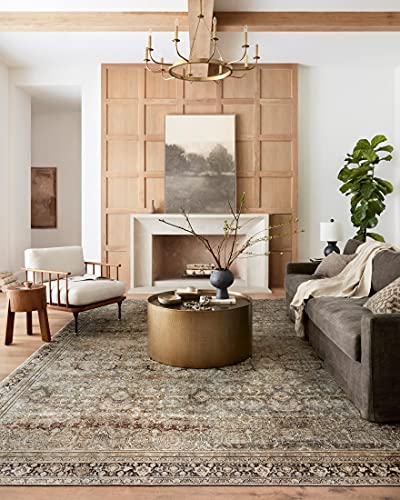
Every rug in this guide is sold on Amazon, where you can check the current price and availability and confirm specifications on the listing before you buy. Start with our top pick, the Loloi Layla Olive/Charcoal 7′-6″ x 9′-6″ Area Rug — Check on Amazon. The other five are the Lahome Insect 5×7 (Check on Amazon), the nuLOOM Blythe 5×7 (Check on Amazon), the SAFAVIEH Madison (Check on Amazon), the Maples Reggie (Check on Amazon), and the GORILLA GRIP Washable Rug (Check on Amazon).
In this guide
Quick Picks
| Pick | Badge | Why it earns its place |
|---|---|---|
| Loloi Layla Olive/Charcoal 7′-6″ x 9′-6″ Area Rug | Best Overall | A printed flat surface claws cannot snag and hair cannot hide in — the cat-proof ideal. |
| Lahome Insect 5×7 Area Rugs | Best for Litter Zones | Thin, gripping, and washable where litter scatter and accidents concentrate. |
| nuLOOM 5×7 Moroccan Blythe Area Rug | Best Camouflage | Faded trellis swallows shed hair between vacuums and lifts for full cleaning. |
| SAFAVIEH Madison Area Rug 8×10 – Silver/Ivory | Best Large | Dense patterned coverage that stays planted through zoomies and hides the week. |
| Maples Rugs Reggie Kitchen Rug and Mats | Best Small Zone | Washable, skid-resistant precision for feeding stations and doorways. |
| GORILLA GRIP Slip Resistant Soft Washable Stain Resistant Area Rug | Best Nap Surface | The plush cats actually choose, washable when the hairball lands. |
Key Takeaways
- Cats destroy looped and loose constructions first; dense, low, or printed surfaces deny claws their purchase.
- Litter is a zoning problem: thin washable rugs at the box’s exit path catch what paws carry out.
- Shed hair surrenders to short piles and printed surfaces, and felts permanently into deep or natural piles.
- Pattern is a cat owner’s camouflage system — mottled and faded designs hide the interval between vacuums.
- For the machine side of hair control, see Best Vacuums For Pet Hair On Carpet.
- Dog households sharing the same floors should compare Best Area Rugs For Dogs for the canine version of this map.
How These Picks Were Chosen
Each pick is a verified pool product, ranked by feline criteria rather than human ones: whether its construction can be snagged, how its pile handles hair and litter, whether it washes or only wipes, and whether its pattern works as camouflage. Specifications in the mini spec boxes come only from verified listing data. No scratch-deterrent products are linked or invented; the scratching strategy here is furnishing and placement, which is the part of the problem a rug page can honestly solve.
The 6 Best Best Rugs for Cats — Reviewed
Loloi Layla Olive/Charcoal 7′-6″ x 9′-6″ Area Rug
Our badge: Best Overall
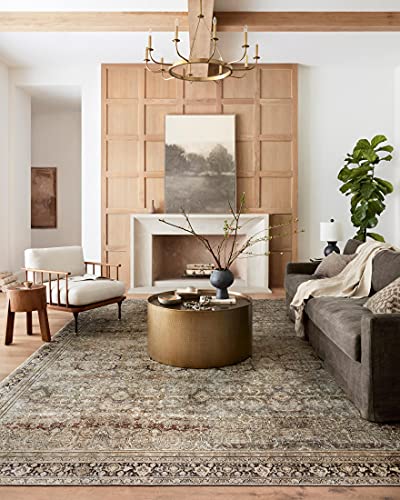
The Loloi Layla Olive/Charcoal 7′-6″ x 9′-6″ Area Rug is the cat-proof ideal because it offers claws nothing: a printed design on a pile of about an eighth of an inch, with no loops to catch, no yarns to pull, and nowhere for hair or litter to hide. A vacuum pass restores it completely, and its vintage pattern hides the day’s shedding in the meantime.
Strengths
- Printed surface cannot be snagged or unraveled by claws.
- Hair and litter sit on top, surrendering to any vacuum pass.
- Non-shedding construction adds no fiber of its own.
Trade-offs
- Flat feel; cats seeking plush will nap elsewhere.
- Pad needed for grip and cushion.
- Spot-clean care only for hairballs.
| Color | Olive / Charcoal |
| Size | 7’6″ x 9’6″ (Rectangular) |
| Dimensions | 114 x 90 x 0.13 inches |
| Weight | 6.61 pounds |
The Layla also solves the scratching-adjacent problem: cats scratch textured, grippy surfaces that reward the effort, and a smooth printed face offers no reward, so most cats redirect to the post you provide instead. Pair it with a genuinely attractive scratcher in the same room and the rug simply leaves the cat’s agenda. Living rooms and dining rooms — where the good furniture lives — are where this combination earns its keep. The Layla’s lightness adds a seasonal virtue cat owners appreciate in spring and autumn, the heavy shedding turns: it lifts in seconds for a full outdoor shake, the reset no vacuum quite matches, and a rug light enough to shake weekly actually gets shaken weekly. Hair management is mostly the management of small efforts taken on time, and this rug makes every one of them small.
Best for: Living rooms where claws and good furniture coexist / Not suited for: Cats who demand plush napping
Choose the Layla for claw-proof calm; skip it for a cat bed substitute. Check on Amazon

Lahome Insect 5×7 Area Rugs
Our badge: Best for Litter Zones
The Lahome Insect 5×7 Area Rugs work the litter frontier: ultra-thin, gripping on a TPE backing, and machine washable, placed on the exit path from the litter box where paws deposit their cargo. Litter lands on a surface that vacuums in seconds and washes when the week demands it, instead of migrating through the house.
Strengths
- Catches litter at the source and releases it to a quick pass.
- Machine washable for accidents and litter dust buildup.
- Grips the floor through digging-adjacent traffic.
Trade-offs
- Thin, minimal cushion.
- Bold pattern is a specific taste.
- Creases on arrival need patience.
| Color | Green |
| Size | 5′ x 7′ (Rectangular) |
| Dimensions | 84 x 60 x 0.19 inches |
Size the litter zone generously — cats exit boxes with momentum, and the scatter zone is wider than the box’s footprint suggests. The Lahome’s 5×7 covers a realistic scatter field, and its washability means the fine litter dust that vacuuming leaves behind gets a periodic full reset. Households that zone this way stop finding litter in the bed, which is the metric that actually matters. One refinement separates good litter zones from great ones: texture sequencing. Cats wipe their paws in the first steps after the box, so the zone’s first section does the catching and the remainder does the polishing; a single rug covers both if it is long enough in the exit direction, which is why orientation matters more than raw size here. Lay the Lahome’s long axis along the exit path, vacuum it in the same direction the cat walks, and the zone performs like equipment twice its price.
Best for: Litter box rooms, laundry rooms, and cat corridors / Not suited for: Comfort-led rooms
Choose the Lahome to contain the litter map; skip it as a centerpiece. Check on Amazon

nuLOOM 5×7 Moroccan Blythe Area Rug
Our badge: Best Camouflage
The nuLOOM 5×7 Moroccan Blythe Area Rug is the shedding household’s friend: a faded grey trellis that makes cat hair — light or dark — visually disappear between vacuums, on a sleek power-loomed polypropylene pile that releases what it catches. At eight pounds it lifts for the full shake-and-vacuum reset in minutes.
Strengths
- Faded pattern camouflages shed hair between sessions.
- Sleek pile releases hair and litter cleanly.
- Light enough for effortless full-service cleaning.
Trade-offs
- Pad advisable to stop creep during zoomies.
- Compact coverage only.
- Cool grey palette.
| Color | Blythe Grey |
| Size | 5′ x 7’5″ (Rectangular) |
| Dimensions | 84 x 60 inches |
| Weight | 8 pounds |
Camouflage is not vanity; it is what keeps a cat home looking kept on the days between sessions, and it lowers the household’s cleaning stress to a sustainable level. The Blythe’s mid-grey works for both black and white cats — the two extremes that defeat solid rugs — because the faded pattern breaks up contrast in both directions. Studies, bedrooms, and apartments are its natural territory. The Blythe also earns a note for guest-readiness: a cat home with visitors coming learns to schedule its deep session the day before, and a camouflage rug is what makes the day-before session still look fresh at the visit itself, because the overnight shed lands on a pattern that absorbs it visually. Hosts with cats judge rugs by exactly that twenty-four-hour test, and it is the test solids fail and the Blythe passes without effort.
Best for: Shedding cats in small-to-medium rooms / Not suited for: Large seating areas
Choose the Blythe for camouflage with easy service; skip it for big rooms. Check on Amazon
SAFAVIEH Madison Area Rug 8×10 – Silver/Ivory
Our badge: Best Large
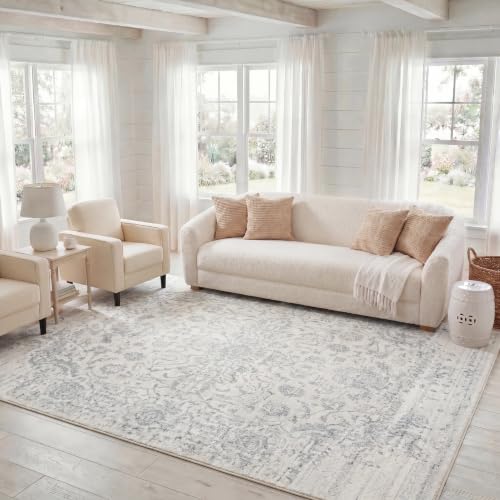
The SAFAVIEH Madison Area Rug 8×10 – Silver/Ivory anchors the big rooms of a cat house: a dense polypropylene pile at full 8×10, heavy enough to stay planted through midnight zoomies, and patterned in silver and ivory that hides a multi-cat household’s daily output between weekly sessions.
Strengths
- Dense pile resists claw purchase better than loose constructions.
- Weight keeps it planted through play and vacuuming.
- Pattern camouflages hair at family scale.
Trade-offs
- Not machine washable; hairballs are spot events.
- Heavier to lift for beneath-cleaning.
- Busy pattern in minimalist rooms.
| Color | Silver/Ivory |
| Size | 8′ x 10′ (Rectangular) |
| Dimensions | 96 x 120 inches |
| Weight | 21.5 pounds |
Multi-cat homes live or die on interval management: the rug must look acceptable on day six, not just day one. The Madison’s pattern density is calibrated for exactly that, and its pile releases hair to a proper vacuum session when the day comes. Give it a scratching post at its border — cats scratch at territory edges — and the big room’s textile survives the household that actually lives on it. The border post placement deserves underlining, because it is the most-missed detail in cat furnishing: posts are usually bought and then exiled to a corner the humans find tidy, while the cat’s chosen scratching site — the rug’s edge, the sofa’s arm, the doorway’s frame — sits elsewhere, unprovided. Put the post where the behavior already is, however untidy the spot, and the transfer takes days; exile it, and the rug keeps the job forever.
Best for: Multi-cat living rooms needing large coverage / Not suited for: Washable-first households
Choose the Madison for planted, camouflaged scale; skip it for laundry resets. Check on Amazon
Maples Rugs Reggie Kitchen Rug and Mats
Our badge: Best Small Zone
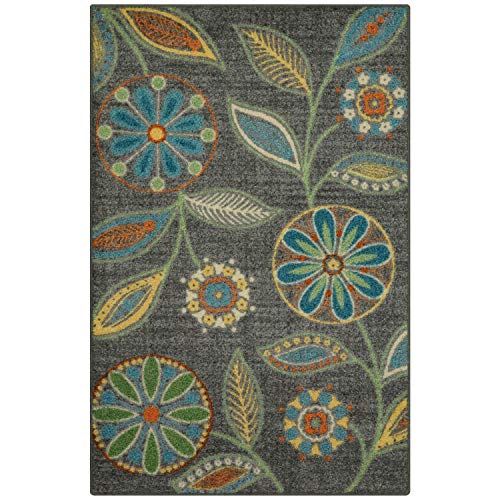
The Maples Rugs Reggie Kitchen Rug and Mats handle the precision zones: the feeding station, the water bowl’s splash radius, the doorway the cat owns. It is washable, skid-resistant on its latex backing, low enough for doors, and made in the USA — a small rug with exactly the cat-household specification.
Strengths
- Washable reset for feeding-station messes.
- Skid-resistant backing stays put under paws.
- Low profile fits doors and tight zones.
Trade-offs
- Small coverage by design.
- Kitchen scale, not a room anchor.
- Bohemian pattern is a specific taste.
| Color | Dark Grey |
| Size | 2’6″ x 3’10” (Rectangular) |
| Weight | 2.93 pounds |
Feeding zones fail rugs in a specific way — kibble oil, water rings, the occasional regurgitation — and the only durable answer is a rug that washes completely and often. The Reggie rotates through the laundry without ceremony, and a pair of them means the station is never bare during wash day. Dark grey hides the between-wash evidence with equal discretion. The feeding station deserves one operational note: elevate nothing, mat everything. Bowls placed directly on the Reggie keep the splash and scatter inside the washable boundary, and a cat that eats on a stable, gripped surface pushes its bowl less, which keeps the boundary intact. Small disciplines at small stations are what keep the big rooms’ rugs out of the laundry entirely — the zoning system pays for itself station by station.
Best for: Feeding stations, water bowls, and cat doorways / Not suited for: Room-scale coverage
Choose the Reggie for washable precision zones; skip it as a main rug. Check on Amazon

GORILLA GRIP Slip Resistant Soft Washable Stain Resistant Area Rug
Our badge: Best Nap Surface
The GORILLA GRIP Slip Resistant Soft Washable Stain Resistant Area Rug accepts the truth other picks route around: the cat will nap where it is softest, and a plush washable rug makes that choice safe. Its dense softness wins the cat’s vote over your furniture, and when the hairball inevitably lands, the whole rug goes through the wash.
Strengths
- Genuinely plush — the surface cats choose.
- Machine washable, so the nap spot can always reset.
- Stays put during play and vacuuming.
Trade-offs
- Plush pile holds more hair between washes than flat picks.
- Verify current size and backing details on the listing.
- Too casual for formal rooms.
| Color | Navy Blue |
| Size | 5′ x 7′ (Rectangular) |
Strategy beats resistance with cats: give the animal a sanctioned, superior nap surface in the room’s warm square, and the sofa’s claim weakens. The GORILLA GRIP is that sanctioned surface, and its washability is what makes generosity safe — the hair, the dander, and the occasional accident all leave in the laundry. Bedrooms and sunny dens are its home ground. One caution completes its file: a plush nap rug concentrates dander where the cat sleeps longest, so its wash rhythm should be the strictest in the house — fortnightly in shedding season is not excessive — and its placement should favor rooms with a door, so the deepest reservoir in the home can be closed off when guests or sensitive sleepers need the air of a room the cat has not seasoned. Managed that way, the plush is a gift to everyone, cat first.
Best for: Sunny nap zones and bedrooms in cat homes / Not suited for: Litter-adjacent placement
Choose the GORILLA GRIP to win the nap honestly; skip it near the litter box. Check on Amazon
Comparison Table
| Pick | Size | Profile | Cat-proof strength | Check price on Amazon |
|---|---|---|---|---|
| Loloi Layla | 7’6″ x 9’6″ | Printed flat | Claw-proof surface | Check price on Amazon |
| Lahome Insect | 5′ x 7′ | 0.19″ thin | Litter-zone washable | Check price on Amazon |
| nuLOOM Blythe | 5′ x 7’5″ | Medium sleek | Hair camouflage | Check price on Amazon |
| SAFAVIEH Madison | 8′ x 10′ | Dense patterned | Planted multi-cat scale | Check price on Amazon |
| Maples Reggie | 2’6″ x 3’10” | Low washable | Feeding-zone precision | Check price on Amazon |
| GORILLA GRIP Washable | 5′ x 7′ | Plush 0.40″ | Sanctioned nap surface | Check price on Amazon |
How to Choose the Best Rugs for Cats
Read construction through a claw
Looped pile, loose weaves, and long shag yarns are scratching invitations with price tags. Dense low pile, flat weaves, and printed surfaces deny the claw its catch-and-pull reward. Run your fingernails across any candidate in the store of your mind: if you can hook a fiber, so can the cat, and it will, at 3 a.m., with feeling.
Zone the litter, do not chase it
Litter leaves the box on paws and lands within a few feet. A washable, gripping rug under and beyond the box, vacuumed in seconds daily, contains ninety percent of the problem; the rest of the house’s rugs then only handle hair. The dog-side version of zoning lives in Best Rugs For Dogs That Pee — different fluid, same principle of containment at the source.
Choose camouflage that matches your cat
Mid-tone, mottled, or faded patterns hide both light and dark hair; solids in either extreme advertise it. Match the rug’s busyness to your vacuuming interval: the longer the interval, the busier the pattern you need, honestly assessed.
Provide the sanctioned alternatives
A rug strategy without a scratching post and a sanctioned nap surface is a prohibition, and cats do not honor prohibitions. Place the post at the rug’s border, the soft washable where the sun lands, and the picks in this guide do the rest.
Setting Up a Cat Home: The Weekly Rhythm
Daily: thirty seconds on the litter zone. Twice weekly: a full pass on the napping and living rugs, slow enough to pull hair from the pile rather than skating it. Weekly: lift the small rugs, shake them outside, vacuum beneath. Monthly: wash the washables, inspect edges for the first claw damage while it is still a trim rather than a unraveling. The rhythm is short because the constructions were chosen for it — that is the whole thesis of this guide, that cat-proofing is a furnishing decision renewed by minutes, not a cleaning war renewed by hours. Write the rhythm where the household will see it, as with every system in this series of guides, because a rhythm held in one person’s head leaves with that person, while a rhythm on the laundry-room wall survives vacations, sitters, and the teenager’s promotion to cat duty. The cat, indifferent to paperwork, will keep its side of the schedule regardless. That reliability is, in the end, the cat owner’s great advantage: the animal’s behavior is the most predictable variable in the house, and a system built honestly around it almost cannot fail. Build it once, from the six constructions above, and the years take care of themselves. The household that has done it recognizes the state immediately: guests ask how the house stays this clean with a cat in it, and the honest answer — zoning, camouflage, sanctions, and twenty minutes a week — sounds too simple to be the whole truth, which it is. Simplicity is the signature of a system matched to its animal: nothing in it is heroic, nothing in it is expensive, and nothing in it depends on the cat becoming a different creature than the one asleep in the sun right now. That is the deepest principle in this guide, and it generalizes past cats: furnish for the household’s real behavior, animal and human alike, and the furnishings stop being a battleground and become what they were meant to be — the quiet background of a shared life, which is all any rug, in any home, was ever really for.
Problem: The cat scratches the rug’s corner relentlessly. — Corners are territory markers. Put the scratching post exactly there, make it taller and sturdier than feels reasonable, and let the rug’s construction deny reward while the post provides it.
Problem: Litter appears in every room. — The exit zone is too small or not washable. Extend the washable zone along the cat’s actual exit path and add the daily thirty-second pass.
Problem: Hair felts into the rug despite vacuuming. — The pile is too deep or too natural for the interval. Move that rug to a low-traffic room and put a short-pile or printed pick in its place.
Problem: Hairballs always land on the good rug. — They land where the cat naps and grooms. Give the nap zone a washable surface and treat the good rug’s room as a door-closed territory during grooming hours.
Kittens and Senior Cats: The Two Special Cases
Kittens are litter-training, claw-learning chaos in miniature: furnish their rooms entirely with washables, expect the scratching education to take weeks, and protect every good rug by geography until the habits set. Senior cats reverse the brief — they need softness for aging joints, warmth, and rugs that stay absolutely planted, because an old cat’s slip on a traveling rug is a genuine injury risk. The GORILLA GRIP’s plush grip serves the senior; the Lahome’s washability serves the kitten; and the household that plans for both ends of the life it invited in will not be caught redecorating in a crisis. Between those ends lies the long middle — the healthy adult years — where the system’s main job is simply to stay zoned and calm while the cat’s routes harden into the household’s geography. Rugs bought for the map in those years serve a decade; rugs bought against it serve until the first shredded corner, which is why this guide keeps returning to the same unfashionable advice: watch the cat first, then buy the rug.
Common Buying Mistakes
Buying looped or shag textures for a scratching cat
They are claw playgrounds. The better move is dense, low, or printed constructions, with the plush provided in washable, sanctioned form.
Solid pale rugs in a shedding home
They advertise every hair. The better move is mottled mid-tone camouflage matched to your interval.
No rug at the litter exit
Litter then zones itself — everywhere. The better move is a washable gripping zone on the exit path.
Prohibiting without providing
Cats route around bans. The better move is a superior sanctioned option for scratching and napping, placed where the cat already wants to be.
One rug for every cat job
Litter, feeding, napping, and living are four briefs. The better move is zoning, as this guide’s picks divide it.
Final Recommendation
Start with the Loloi Layla Olive/Charcoal 7′-6″ x 9′-6″ Area Rug: its printed, snag-proof surface and total hair release make it the rug cats can do least to and owners can clean fastest. The runner-up for the litter end of the house is the Lahome Insect 5×7 (Check on Amazon), washable and gripping where containment matters. Furnish on the cat’s terms, zone the litter, sanction the nap — and the best rugs for cats turn out to be the ones still looking deliberate in year three.
Frequently Asked Questions
What type of rug do cats scratch least?
Printed flat surfaces and dense low piles give claws no purchase and no reward. Looped, loose, and long constructions invite scratching; provide a sturdy post at the rug’s border regardless.
How do I keep litter off the rest of the house?
Zone it: a washable, gripping rug covering the box’s exit path, vacuumed in seconds daily and washed on rhythm. Containment at the source beats chasing scatter through every room.
Are washable rugs worth it for cat owners?
For litter zones, feeding stations, kittens, and seniors — unambiguously yes. Hairballs and accidents are certainties; a rug that resets in the laundry converts them from damage to chores.
What color rug hides cat hair best?
Mid-tone mottled or faded patterns hide both light and dark hair. Solid black shows light hair, solid white shows everything, and busy mid-tones forgive the whole spectrum between vacuums.
Can cats and nice rugs coexist?
Yes, with honest placement: the finest rug in the calm room, washable and claw-proof constructions where the cat’s life actually happens, and sanctioned scratching and napping surfaces provided generously.
Do cats prefer certain rug textures for sleeping?
Warmth and softness win: plush, dense surfaces in sun or near heat sources are chosen over flat ones almost every time. Use that preference deliberately — place the washable plush where you want the cat to sleep, and it will outcompete the furniture you want it to avoid.
How do I stop my cat scratching the rug without declawing debates?
Provide the better tool: a tall, heavy post at the exact spot being scratched, on a rug whose construction gives claws no reward. Transfer usually takes days to weeks. The rug’s job is to be boring to claws; the post’s job is to be irresistible.
How often should cat rugs be vacuumed?
Litter zones daily in seconds, living rugs twice weekly, and the washables laundered on a monthly rhythm or after incidents. The constructions in this guide are chosen to make that schedule sufficient.
Should I keep cats off rugs entirely during training?
No — access is how habits form, and a kitten learns the map by living on it. Supervise, provide the sanctioned surfaces from day one, protect the one or two precious rugs by geography, and let the washables absorb the education. Training by access, with the right constructions underfoot, converges in weeks; training by exclusion restarts every time a door is left open. Keep the training month’s expectations low and its laundry hot: everything washable will be washed, everything sanctioned will be tested, and the household that treats the month as fieldwork rather than failure emerges with a map no catalog could have sold it. Photograph the map, literally, if it helps: the nap square at noon, the corridor at dusk, the box’s exit after a week. The photographs make the zoning decisions obvious to every member of the household, including the ones who were skeptical that a cat could be a design input. Skepticism usually converts at the first fully zoned month, when the litter stays in its room, the good rug survives its first season unmarked, and the nap happens, photographably, on the sanctioned plush in the sun. Keep one of those photographs. Years later, when the cat is old and the system has quietly served a whole life, it will be the picture that explains the house. The rugs in it will still be working, too — zoned, washed, and calm — because that is what constructions chosen on the animal’s own terms do: they last as long as the life they were chosen for. Choose them once, choose them honestly, and the choosing is done — the rest is just the living, which was the point all along, for the cat and for you, in every room of the house you share together, year after good year, season after season, nap after long, sunny afternoon nap in the warm square by the big sunny window, together, always.
The Scratching Question, Answered Honestly
Cats scratch to maintain their claws, to stretch, and to mark territory with scent glands in their paws — three needs, none of them negotiable. Rug strategy therefore never aims at zero scratching; it aims at scratching that lands on sanctioned surfaces. The mechanics matter: cats prefer vertical or steeply angled surfaces taller than their stretched length, with a texture that catches and resists — sisal-like resistance is the classic preference, which is precisely why looped rugs suffer. Place a tall, heavy, unmoving post beside the rug the cat has chosen, and the preference usually transfers within weeks, because the post simply offers the better tool for the job. What does not work: punishing after the fact, which teaches the cat to scratch when you are absent, and flimsy posts that wobble, which teach it that furniture is sturdier. The household-wide pet framework in Best Area Rugs For Pets extends the same provide-don’t-prohibit logic to every animal in the house.
There is also a claw-maintenance dividend in getting this right: a cat with a sanctioned, satisfying scratching surface keeps its claws in better condition, snags less accidentally on everything else, and is calmer in the rooms it shares with textiles. The rug you save is the visible benefit; the cat whose needs are met on purpose is the larger one, and it shows in a hundred small ways — less night scratching, less furniture testing, a household where the animals’ agenda and the furnishings’ survival stop being opposing forces.
Multi-Cat Homes: Scaling the System
Each additional cat multiplies hair, litter traffic, and territory behavior, and the system scales by zoning harder rather than cleaning longer. Two litter boxes want two exit zones, ideally in different rooms, because cats divide territory whether you plan it or not. Napping sanctions multiply too — one plush washable per sun patch the cats contest — since a contested nap surface exports its conflict to your sofa. Camouflage standards rise with the population: at three cats, only the busiest patterns keep a room honest between twice-weekly sessions. And the washables rotation needs depth, a spare Reggie-class rug for every station, because laundry day cannot leave a zone bare. Multi-cat households that zone deliberately report the same paradox as pet households generally: more animals, calmer system, because the system — not heroic cleaning — is carrying the load. One scaling rule deserves its own line: never let two cats share one contested resource of any kind if a second can be provided — boxes, zones, posts, nap surfaces — because contested resources are where territory behavior, and therefore rug damage, is manufactured. Abundance is the cheapest behavior management ever sold, and in rug terms it costs a second washable, not a second mortgage.
The Cat’s Map of Your Home
Every cat keeps a map: the warm square, the watching post, the corridor run, the private corner. Rugs succeed when they are laid along that map rather than across it. The nap surface belongs in the warm square the cat already chose — move the sanctioned plush there, not where the catalog photograph suggests. The corridor run wants a planted, low rug that survives the 3 a.m. grand prix without bunching into a hazard. The watching post, usually a windowsill’s floor, wants camouflage, because a cat that sits in one place for hours deposits its hair in one place too. And the private corner — litter, feeding, retreat — wants washability above all. Households that map first and buy second stop fighting their cats’ geography, and the living room’s own best version, cat included, is surveyed in Best Rugs For Living Room. The map is the strategy; the six picks are simply the constructions that serve its territories best. Redraw the map once a year — cats age, routes soften, a kitten’s corridor becomes a senior’s sun patch — and adjust one zone at a time rather than refurnishing in a sweep. The system stays calm because its changes are small, observed, and earned, which is more than can be said for most decorating, with or without a cat directing it.
When the Cat Chooses Your Rug Anyway
Some cats will claim a rug no strategy sanctioned — usually the best one, in the calm room, because cats have excellent taste in textiles. The mature response is management, not war: a washable throw over the claimed square during the cat’s hours, the door’s discipline during yours, and a sanctioned alternative close enough to compete. Most claims soften when the alternative is genuinely superior on cat terms — warmer, softer, better placed. The ones that do not soften become the household’s negotiated peace, and a throw washed weekly is a small price for a home where both species’ preferences are visibly honored. Perfection was never available; a beautiful, washable truce is. The truce has a look, once you have seen it: the good rug carries a throw in the cat’s square, the throw carries the hair, the laundry carries the throw weekly, and guests simply see a styled room with a cat asleep in the sun — which is to say, they see the goal itself, achieved by arrangement rather than by victory.
Allergy-Aware Cat Homes: Comfort Framing, Honest Limits
Many cat homes include a person whose comfort around dander is a real consideration, and rugs sit at the center of that negotiation because they are the home’s largest hair-and-dander reservoir — or, managed well, its largest filter. The comfort-first approach is mechanical, not medical: short piles and printed surfaces that surrender everything to the vacuum, washables on a true rhythm, hard floors left bare where possible, and the cat’s sanctioned zones concentrated where they can be serviced completely. This guide makes no health claims; sensitivity varies and belongs to conversations with clinicians. What furnishing can honestly promise is a home whose textiles hold less, release more, and reset fully — and on those terms the picks here, led by the flat Layla and the washable Lahome and GORILLA GRIP, are the strongest configuration the pool offers a mixed household of cats and the people who love them at varying distances. The daily habits complete what furnishing starts: shoes and outdoor grit managed at the door so the rugs’ load is mostly the cat’s own, the cat brushed on a rhythm its coat accepts — hair harvested at the cat never reaches the rug at all — and the bedroom door’s discipline kept kindly but consistently. Comfort in a cat home is a system property, and every part of the system is cheap compared to the misery of a home fighting its own textiles.
The First Month With a New Cat and Old Rugs
Adoption month is not the time to judge any rug. The cat is mapping, stress-shedding, testing surfaces, and establishing the routes this guide keeps mentioning; the household’s job is observation before investment. Note where the cat actually naps, exits, scratches, and runs — then zone with the picks that fit the observed map, not the imagined one. Protect the existing good rugs by geography for those weeks, run the washables hard, and let the scratching post audition in the spots the cat nominates. By month two the map is stable, the habits are legible, and every purchase lands where the animal’s life actually happens. Households that furnish in that order rarely buy a rug twice; households that furnish for an imagined cat own a storage unit of almost-right textiles. The observation month has one more yield: it reveals the humans’ map too — which rooms are truly lived in, which chairs are actually sat in, where the household’s own traffic runs — and rugs bought for the real double map, feline and human overlaid, are the ones still looking inevitable, rather than merely placed, years later.
Reading a Rug After a Year With Cats
The honest review of any cat rug is written at month twelve, and it has four chapters. The edges tell the scratching story: intact borders mean the construction denied purchase or the post won; fraying means one of those failed early and quietly. The nap zone tells the washing story: a rug that still smells neutral after a year of hairballs was washed on rhythm, and one that carries a permanent note was not — or could not be. The traffic lanes tell the camouflage story, and the underside tells the household’s discipline story, because what lives under a cat rug after a year — litter dust, hair felt, grit — is the true record of the lifting habit. Read your own rugs this way before replacing any of them; the diagnosis usually names a rhythm or a placement, not a product, and the replacement bought without the diagnosis inherits the same four chapters. The picks in this guide were chosen to ace all four readings — snag-proof or washable, camouflaged, liftable — but the readings themselves belong to the household, and they are free.
Budgeting a Cat Home’s Rug System
Spend where the cat’s life is hardest on textiles and save where it is gentle. The litter zone and feeding station deserve real washables bought in pairs; the nap sanction deserves genuine plush, because a cheap, thin imitation will lose the cat’s vote to your sofa; the big living coverage can be a printed or patterned workhorse whose cost per year is tiny once camouflage and claw-proofing are doing their work. What never deserves money in a cat home is delicate construction at a premium — natural loops, long shag, anything whose beauty depends on the cat’s restraint. The budget follows the animal’s honesty: fund the zones, sanction the comforts, camouflage the intervals, and let the calm room hold the one beautiful rug the geography protects. Total cost of the system, honestly run, is less than replacing one wrong premium rug a year — which is the alternative most unzoned cat homes are quietly paying. There is a resale-and-regret footnote worth adding: the wrong premium rug, once clawed, is worth nothing to anyone, while the zoned system’s pieces — washables, printed workhorses, a protected good rug — hold their usefulness through every rearrangement of the house. Cat homes do not need bigger budgets; they need budgets pointed at the animal’s actual behavior, and behavior, unlike taste, does not change with the season’s catalog.


