Disclosure: As an Amazon Associate, dailyhomedecorating.com earns from qualifying purchases. Links to Amazon on this page are affiliate links; they cost you nothing extra. Prices and availability change often, so check the current Amazon listing before you buy.
The best area rugs for hardwood floors have two jobs that pull in opposite directions: they must soften, warm and define a room, and they must do it without ever harming the expensive, scratchable, stainable surface beneath them. The best area rugs for hardwood floors are therefore chosen from the underside up — backing first, pad strategy second, and only then the pattern your guests will admire. A beautiful rug over the wrong backing is a slow refinishing bill; a beautiful rug over the right one is the cheapest floor protection you will ever buy, with a living room makeover thrown in free.
This guide reviews six verified rugs whose constructions treat hardwood kindly: jute and cotton backings that lie flat without menace, low piles that keep grit where a vacuum can reach it, an included-pad system that removes the interface question entirely, and washable options for the rooms where hardwood meets real life. None of them asks you to choose between a room that feels finished and a floor that stays flawless — that false choice is exactly what the right constructions eliminate, and eliminating it is the standard every review below was held to, from the first pick to the last. Alongside the reviews you get the full hardwood protocol — pads, grit discipline, moisture rules and the seasonal lift that keeps both rug and floor young. If your hard surface is vinyl rather than wood, Best Rugs For Vinyl Plank Flooring covers its different chemistry, and for the kitchen’s splash zone on wood, see Best Kitchen Rugs For Hardwood Floors.
Where to Buy
All six rugs are sold on Amazon, where you can check the current price and availability and confirm backing and size details on the listing before you buy. Start with our top pick, the Unique Loom Sofia Collection Area Rug – Salle Garnier (7′ 1″ x 10′ Rectangle — Check on Amazon. The other five are the Tumble Lisa Washable Rug (Check on Amazon), the SAFAVIEH Madison (Check on Amazon), the Loloi Layla (Check on Amazon), the Loloi Loren (Check on Amazon), and the nuLOOM Moroccan Blythe (Check on Amazon).
In this guide
Quick Picks
| Pick | Badge | Why it earns its place |
|---|---|---|
| Unique Loom Sofia Collection Area Rug – Salle Garnier (7′ 1″ x 10′ Rectangle | Best Overall | Jute backing the maker rates safe for hardwood, over a forgiving polypropylene face. |
| Tumble Lisa Washable Area Rug | 9×12 Living Room Bedroom Area Rug | Best Premium | Included cushioned pad ends the interface debate and the rug itself washes. |
| SAFAVIEH Madison Area Rug 8×10 | Best for Pet Owners | Low-pile, low-shedding polypropylene with maker guidance to pair it with a pad. |
| Loloi Layla Olive/Charcoal 7′-6″ x 9′-6″ Area Rug | LAY-03 Printed Approx. 8×10 Green Livi | Best for Dining Rooms | Near-zero pile keeps grit visible and vacuum-able instead of grinding under chairs. |
| Loloi Loren Terracotta/Sky 8′-4″ x 11′-6″ Area Rug | LQ-15 Printed Approx. 8×12 Orange Liv | Best Vintage Look | Cotton-backed traditional drape with a pad recommendation stated up front. |
| nuLOOM 5×7 Moroccan Blythe Area Rug | Best Budget | Light polypropylene layer that protects high-wear zones in rentals and first homes. |
Key Takeaways
- On hardwood, the backing and pad are the product; the pattern is the bonus.
- Grit is the enemy: low piles and a weekly vacuum protect the finish better than any coating.
- Natural backings (jute, cotton) lie flat and floor-kind; add a quality pad for grip and cushion.
- Never trap moisture: lift rugs seasonally and after any spill that reaches the backing.
- Size generously — a rug that covers the traffic lane protects it; a small rug concentrates wear at its edges.
- Every pick here was screened for hardwood-safe construction before style was considered — and each one also had to earn its room on looks, because a protective rug you dislike will be rolled up by spring, and a rolled-up rug protects nothing.
How These Picks Were Chosen
We filtered the verified pool for hardwood compatibility first: backings with maker statements about floor safety, constructions that pair naturally with pads, and piles low enough that grit stays reachable. Rubber-heavy utility pieces and deep shag — the first a long-contact risk on some finishes, the second a grit reservoir — were excluded from the linked set. Within the survivors we ranked by interface kindness, cleanability, and how completely each listing prepares the buyer for pad and care decisions.
Product facts come only from the verified pool data. The floor-care guidance — pad types, moisture discipline, grit mechanics — is general hardwood knowledge that applies to any rug you place on wood, including ones you already own.
Finally, a word about confidence: hardwood owners sometimes hesitate to use rugs at all, fearing hidden damage, and leave beautiful floors bare, cold and echoing as a result. That caution is understandable but backwards. A bare floor takes every grit crystal directly; a properly managed rug system intercepts the same traffic behind layers of discipline. The six rugs below were chosen so that a careful household can stop choosing between enjoying its rooms and preserving its floors — with the right constructions, those are the same decision.
The 6 Best Area Rugs for Hardwood Floors — Reviewed

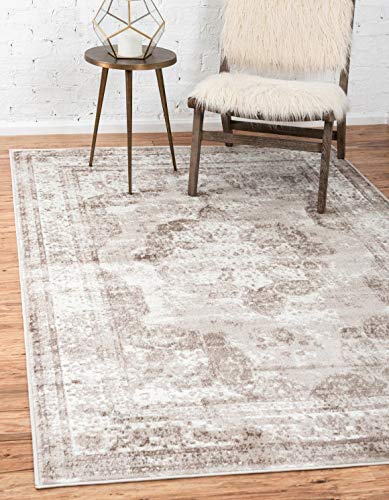
Unique Loom Sofia Collection Area Rug – Salle Garnier (7′ 1″ x 10′ Rectangle
Our badge: Best Overall
The Unique Loom Sofia Collection Area Rug – Salle Garnier (7′ 1″ x 10′ Rectangle leads because its maker answers the hardwood question in the specifications: a 100% jute backing described as safe for all floor types, including hardwood floors, under a soft quarter-inch polypropylene pile. Jute lies flat, breathes, and carries no rubber compounds to argue with a finish, while the synthetic face above it handles the household — spot cleaning, regular vacuuming, even a careful carpet-cleaner pass dried immediately and evenly, per the maker.
On wood, the Sofia’s daily behavior is what protection looks like: grit lands on a low pile where the vacuum actually retrieves it, chair legs glide instead of digging, and the rug’s French-inspired vintage pattern makes the protected zone the prettiest part of the room. Add a felt or natural-rubber pad beneath — our standing advice for every rug in this guide — and the system is complete: grip, cushion, airflow and a barrier between backing and boards.
Strengths
- Maker-stated hardwood-safe jute backing
- Low polypropylene pile keeps grit vacuum-reachable
- Traditional styling suits the rooms hardwood usually anchors
Trade-offs
- Jute backing must stay dry — blot deep spills fast and lift to check
- Quarter-inch pile is pleasant, not plush
- Pad is a separate, necessary purchase
| Color | Beige/Ivory |
| Size | 7’1″ x 10′ (Rectangular) |
Choose the Sofia as the default hardwood answer: a proven construction, honestly specified, that treats the floor as a partner. It is the rug we would lay on a freshly refinished oak floor without a second thought — with its pad, and with the seasonal lift habit described below.
Best for: living and dining rooms on any hardwood species / Not suited for: chronically damp rooms where a jute backing cannot dry
Choose this if you want the interface question answered by the maker. Check on Amazon

Tumble Lisa Washable Area Rug | 9×12 Living Room Bedroom Area Rug
Our badge: Best Premium
The Tumble Lisa Washable Area Rug | 9×12 Living Room Bedroom Area Rug removes the interface question by shipping its own answer: a cushioned quarter-inch non-slip pad engineered for the rug, anchored by a corner-pocket system that keeps everything flat and registered. For hardwood owners, that means no third-party pad roulette — the surface that meets your floor was designed by the same people who made the rug, and the rug above it is spillproof and machine washable.
The hardwood logic compounds: spills bead on the spillproof face instead of soaking toward the boards; the wash cycle resets the rug without wet-cleaning anywhere near your floor; and the low-pile chenille releases grit to the vacuum rather than storing it against the finish. In family rooms and dining spaces on wood — the exact rooms where hardwood is most at risk — this is the most complete protection system in the pool.
Strengths
- Included engineered pad — no interface guesswork
- Spillproof, washable face keeps moisture off the floor
- Anchored corners lie flat, protecting edges and finish alike
Trade-offs
- System pricing applies — check the listing
- Re-seating the rug on its pad after washing takes a few minutes
- Low-pile softness rather than deep cushion underfoot
| Color | Midnight |
| Size | 9×12′ |
Choose the Tumble when the hardwood is precious and the household is busy. It is the premium pick because it is the only one that arrives as a finished floor-protection system rather than a component.
Best for: prized hardwood in family and dining rooms / Not suited for: buyers who already own a pad system they trust
Choose this for protection as a system. Check on Amazon
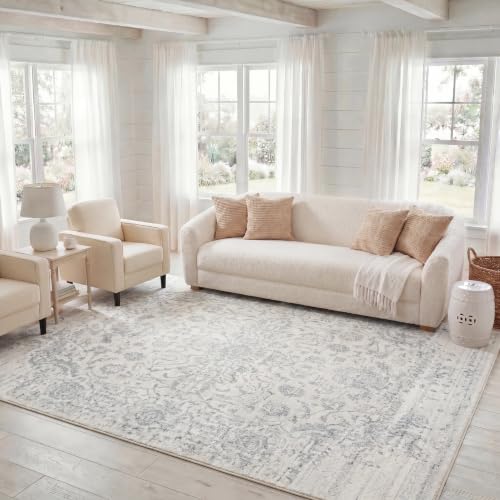
SAFAVIEH Madison Area Rug 8×10
Our badge: Best for Pet Owners
The SAFAVIEH Madison Area Rug 8×10 earns the pet-owner badge on hardwood for a specific mechanical reason: claws and grit are the two things pets deliver to wood floors, and a low 3/8-inch polypropylene pile with low-shedding manners intercepts both. Hair and tracked litter stay on a surface that vacuums clean without a beater bar (the maker’s instruction), and the maker explicitly pairs the rug with a pad to protect floors — the correct system, stated on the listing.
Daily life bears it out: the Madison’s vintage medallion in silver and ivory hides the visual evidence of pet life between cleanings, its OEKO-TEX certification suits floor-level lounging, and its substantial 8×10 format covers the zones where dogs actually orbit — sofa front, door path, sunny spot. On hardwood beneath, the pad does the quiet work of grip and barrier while the rug takes the claws.
Strengths
- Low pile intercepts claws, hair and grit before the floor does
- Maker directs pad use for floor protection
- Pattern hides pet-life evidence between vacuums
Trade-offs
- No-beater-bar vacuuming is a habit to learn
- Pad cost is additional
- Light palette shows muddy prints on the rug itself (the floor, notably, does not)
| Color | Silver/Ivory |
| Size | 8′ x 10′ (Rectangular) |
Choose the Madison when pets and hardwood must coexist in a room that still looks grown-up. It protects the floor by taking the household’s hardest traffic onto a surface built for it.
Best for: pet households with hardwood living rooms / Not suited for: mudroom duty — that wants a washable
Choose this for claw-and-grit interception. Check on Amazon
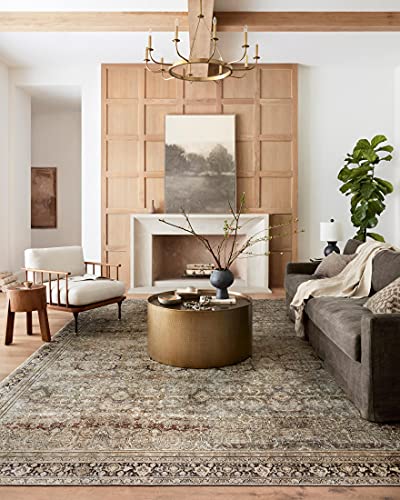
Loloi Layla Olive/Charcoal 7′-6″ x 9′-6″ Area Rug | LAY-03 Printed Approx. 8×10 Green Livi
Our badge: Best for Dining Rooms
The Loloi Layla Olive/Charcoal 7′-6″ x 9′-6″ Area Rug | LAY-03 Printed Approx. 8×10 Green Livi is the dining-on-hardwood specialist because dining is where floors get sanded by life: chair legs drag grit with every seat taken and left. The Layla’s near-zero printed pile denies grit a hiding place — crumbs and sand sit visible on the surface, where a two-minute vacuum removes them before chair traffic can grind them into the finish. Its maker also recommends a pad for cushion and placement, completing the protection circuit.
Chairs glide across the low surface instead of catching, the vintage olive-and-charcoal pattern flatters wood tones from honey to walnut, and the rug’s drape keeps its perimeter calm under table traffic. In open-plan homes the Layla also defines the dining zone on a sea of hardwood without a single nail, screw or threshold — the original promise of an area rug, kept.
Strengths
- Near-zero pile keeps abrasive grit visible and removable
- Chairs glide; no pile to catch or crush
- Pattern and palette flatter most wood tones
Trade-offs
- Thin build relies on its pad for cushion
- Printed detail is flat at close range
- Creases on arrival need settling time
| Color | Olive / Charcoal |
| Size | 7’6″ x 9’6″ (Rectangular) |
Choose the Layla under any table that seats people daily on hardwood. It is the difference between a floor that ages gracefully and one that records every meal in scratches around the table legs.
Best for: dining rooms and open-plan zoning on hardwood / Not suited for: comfort-first lounge corners
Choose this where chairs meet wood. Check on Amazon
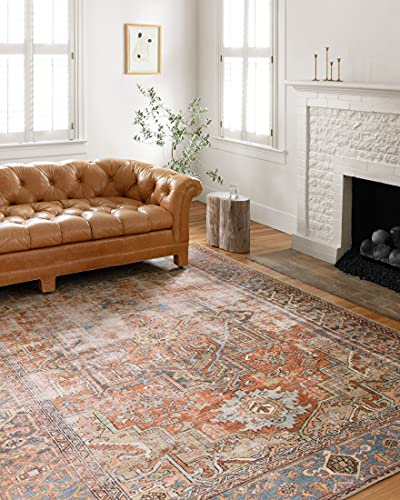
Loloi Loren Terracotta/Sky 8′-4″ x 11′-6″ Area Rug | LQ-15 Printed Approx. 8×12 Orange Liv
Our badge: Best Vintage Look
The Loloi Loren Terracotta/Sky 8′-4″ x 11′-6″ Area Rug | LQ-15 Printed Approx. 8×12 Orange Liv brings the traditional hardwood pairing — a cotton-backed rug — in a large, warm format: a polyester printed face over cotton backing, with the maker stating plainly that a pad is not included but highly recommended for comfort, rug longevity and floor protection. Cotton backing is the classic rug underside: it lies flat, drapes honestly, and has partnered with wood floors for generations when a pad mediates the contact.
The Loren’s terracotta and sky palette is made for wood — it warms pale oak and deepens walnut — and its printed knot-by-knot detail gives a hand-knotted impression across a footprint big enough to anchor a full living room. On the floor-protection ledger, its low profile keeps grit accessible and its size spreads traffic across a broad, even field instead of concentrating wear.
Strengths
- Classic cotton backing with explicit pad guidance
- Large format spreads traffic and anchors big rooms
- Warm vintage palette designed for wood tones
Trade-offs
- Cotton backing and moisture are enemies — keep the interface dry
- Pad is an essential extra purchase
- Bold colorway directs the room’s whole scheme
| Color | Terracotta / Sky |
| Size | 8’4″ x 11’6″ (Rectangular) |
Choose the Loren when the hardwood room needs warmth and scale and you are happy to run the classic rug-plus-pad system properly — dry interface, seasonal lift, weekly vacuum.
Best for: large traditional living rooms on dry hardwood / Not suited for: damp-prone floors or pad-free setups
Choose this for classic pairing at scale. Check on Amazon

nuLOOM 5×7 Moroccan Blythe Area Rug
Our badge: Best Budget
The nuLOOM 5×7 Moroccan Blythe Area Rug is the rental-and-first-home hardwood protector: a light 100% polypropylene layer that drops over the highest-wear zone — in front of the sofa, under the desk, beside the bed — and takes the grit and friction that would otherwise mark a landlord’s floor or your own. Its stain-resistant surface and quick-vacuuming profile keep the protection honest, and its faded bohemian grey flatters the pale woods common in newer builds.
Because it is light, the Blythe’s hardwood manners depend on anchoring: a pad beneath, or furniture legs registering its corners, keeps it from traveling and bunching. Set up that way, it is the cheapest insurance in this guide per square foot of finish protected, and it lifts in seconds for the monthly under-rug sweep that hardwood hygiene requires.
Strengths
- Affordable sacrificial layer over high-wear zones
- Polypropylene surface vacuums and spot-cleans fast
- Light enough for effortless monthly lifting and floor checks
Trade-offs
- Needs a pad or furniture anchoring to stay registered
- 5×7 protects a zone, not a whole room
- Boho pattern is a defined style
| Color | Blythe Grey |
| Size | 5′ x 7’5″ (Rectangular) |
Choose the Blythe when the hardwood is rented, new, or simply not yours to scar — and when the budget for protection has to be as light as the rug.
Best for: rentals, first homes and high-wear zones / Not suited for: anchoring a large formal room
Choose this for light, honest protection. Check on Amazon
Comparison Table
| Pick | Backing | Pile | Pad plan | Check price on Amazon |
|---|---|---|---|---|
| Unique Loom Sofia | 100% jute | 1/4″ polypropylene | Add felt/rubber pad | Check price on Amazon |
| Tumble Lisa | Included pad system | Low chenille | Included | Check price on Amazon |
| SAFAVIEH Madison | Woven base | 3/8″ polypropylene | Maker recommends pad | Check price on Amazon |
| Loloi Layla | Power-loomed base | Near-zero print | Maker suggests pad | Check price on Amazon |
| Loloi Loren | Cotton | Printed low | Pad highly recommended | Check price on Amazon |
| nuLOOM Blythe | Woven base | Low-medium polypropylene | Pad or furniture anchor | Check price on Amazon |
How to Choose the Best Area Rugs for Hardwood Floors
Choose the pad before the rug pattern
For hardwood, the pad is a floor-protection device that also grips and cushions. Dense felt protects without chemistry; felt-and-natural-rubber hybrids add grip for rugs that travel; avoid cheap PVC pads that can react with some finishes over long contact, and never use a pad that feels tacky like adhesive. Thickness around a quarter to three-eighths inch suits most rooms without creating a tripping lip or a door problem. The pad should be cut an inch smaller than the rug on every side so it stays invisible and untrampled.
Read backings like a floor inspector
Jute and cotton backings are the traditional hardwood partners — flat, breathable, chemically quiet — provided they stay dry. Latex and synthetic grip backings are convenient but deserve a maker’s floor-safety statement and periodic lifting on delicate finishes. Included-pad systems remove the question. Whatever the backing, the rule is identical: the interface must stay dry, grit-free and inspectable, a discipline Best Padding For Area Rugs explores from the pad’s side.
Size for the traffic, not the furniture alone
Hardwood wears where feet and chairs actually move. Dining rugs need two feet of margin beyond the table for chairs; living rugs need front legs of all seating on board; entry-adjacent rugs need to cover the full grit-decay zone inside the door, which is longer than most people guess. A rug that is slightly too large protects; a rug slightly too small concentrates damage at its border, where chair legs and heels strike the exposed ring of wood.
Keep pile low where grit is heavy
Grit is powdered stone, and in a deep pile it becomes a grinding compound stored against your finish. Entries, dining rooms and pet zones on hardwood argue for the lowest piles in this guide. Save deeper comfort for bedrooms, where grit loads are light — the balance struck in Best Area Rugs For Bedrooms.
Plan the moisture protocol
Spills on a rug over hardwood are a two-surface event: blot the rug, then lift a corner and check the interface before you declare victory. Plant stands need trays, pet bowls need mats, and any rug that gets soaked gets lifted until both sides are dry. Hardwood forgives water that is removed; it records water that is stored.
How Do You Maintain Hardwood Under an Area Rug?
Weekly: vacuum the rug’s surface with the method its pile wants, and sweep or vacuum the exposed floor border where grit accumulates at the rug’s edge. Monthly: roll the rug back, vacuum the floor beneath and the rug’s underside, inspect the pad for crumbling or grit load, and check the finish for any change in sheen that would signal trapped moisture or abrasion. Seasonally: rotate the rug 180 degrees so sun and traffic distribute evenly — hardwood itself fades in sunlight, and a rug left unmoved for years can leave a visible “shadow” of unfaded floor when finally lifted, which rotation and occasional full lifts prevent. After any significant spill, flood-adjacent event or pet accident that soaked through: lift, dry both sides with airflow, and do not re-lay until the interface is bone dry. That calendar, kept, is why some thirty-year-old floors under rugs look five.
Problem: fine scratches appear in a halo around the rug — Grit is collecting at the border and being ground by passing feet. Extend the rug’s coverage, vacuum the border more often, and check for a gritty shoe zone just outside it.
Problem: the floor under the rug looks different when lifted — Sun-fade differential. Rotate rugs seasonally and vary exposure; the difference fades toward even over time once light reaches the covered area.
Problem: the rug creeps and bunches — The pad is wrong, worn or missing. Replace with a felt-rubber hybrid cut an inch inside the rug’s footprint.
Problem: a musty smell when you lift the rug — Moisture has been stored at the interface. Dry everything fully, find the source (plant, pet bowl, spill history), and shorten your lift interval.
Hardwood Species, Finishes and Rug Pairings
Softwoods and soft finishes (pine, American cherry, site-finished oil surfaces) dent and scratch eagerly: they want the fullest coverage, the densest pads and the strictest grit discipline in this guide. Hard oaks and factory-finished floors with aluminum-oxide coatings are more forgiving but not immune — their enemy is the slow halo of micro-scratches that dulls a traffic lane. Dark-stained floors show pale grit and light rug lint, arguing for mid-tone rugs; pale floors show everything dark, arguing the same conclusion from the other side. Radiant-heated hardwood adds one rule: avoid thick insulating pads and rubber backings that trap heat unevenly, and favor breathable felt. In every pairing the rug’s job description is constant — intercept, cushion, breathe, and be lifted on schedule — which is why the same six constructions keep qualifying across species.
Rugs on Hardwood in Open-Plan Homes
Open plans turn area rugs into architecture: they are how one continuous hardwood field becomes a living room, a dining room and a reading corner without walls. The technique is zoning with intent — each rug sized to its furniture group, palettes related but not matched, and lanes of bare wood left between zones so the floor itself remains a design element rather than a problem to cover. Hardwood protection improves as a side effect, because zoned rugs cover exactly the high-wear islands and leave low-wear lanes bare and inspectable. The full zoning method, with pet and family overlays, is developed in Best Rugs For Living Room, and the vacuum routine that keeps zoned rugs and bare lanes equally clean is in Best Vacuum For Hardwood Floors And Area Rugs.
Common Buying Mistakes
Skipping the pad to save money
On hardwood this is the most expensive economy in home goods: grip, cushion and the protective barrier all live in the pad. Buy it with the rug, sized an inch inside.
Using a rubber-backed utility rug as a room rug
Long rubber contact on delicate finishes can mark or react, and utility rugs trap moisture. Keep them at thresholds and give rooms breathable systems.
Choosing deep pile for an entry-adjacent room
Deep pile stores grit against the finish. Entries and dining rooms get low piles; bedrooms get the plush.
Never lifting the rug
The interface is where hardwood damage hides. Monthly lifts are the inspection that makes rugs protective instead of concealing.
Placing a rug over a damp floor
New concrete-adjacent wood, recently mopped floors, or a known leak must be dry before a rug lands — a rug over damp wood is a mold blanket with good styling.
The Grit Economy: How Hardwood Actually Gets Scratched
Understanding the enemy improves every decision in this guide. Hardwood is rarely scratched by furniture or by rugs themselves; it is scratched by mineral grit — sand, soil crystals, tiny stones — dragged under pressure. A shoe sole carrying grit across bare wood scratches it once; grit that settles into a rug and stays there scratches with every footstep for months, which is why a neglected rug can be worse than no rug. The defense is a system with three valves: stop grit at the door (a serious entry mat and a shoe habit), keep the rug’s pile shallow enough that the vacuum empties it fully, and lift monthly to clear the under-layer where the finest, sharpest particles migrate. Each pick in this guide was chosen to cooperate with those valves — low piles that empty, backings that tolerate lifting, sizes that cover the lanes where grit travels. When a household complains that its floors scratched “despite the rug,” the post-mortem almost always finds a closed valve: a deep pile never emptied, an interface never lifted, an entry never matted. Open the valves and the same rugs become the floor’s best friends, which is the entire premise of buying area rugs for hardwood in the first place.
Rugs, Acoustics and Warmth: The Comfort Dividend
Hardwood’s virtues — beauty, hygiene, longevity — come with two honest costs: it is acoustically bright and thermally cool. Area rugs are the standard remedy for both, and the remedy is measurable in daily life: a large low-pile rug with a felt pad absorbs the footfall and voice reflections that make wood-floored rooms feel echoey, and it breaks the cold conduction that makes winter mornings brisk at floor level. This is comfort framing, not magic — the rug does not heat the room, it makes the room feel finished to ears and feet. It is also why skimping on size disappoints twice: a too-small rug under-covers the traffic (protection failure) and under-covers the seating zone (comfort failure), while the correctly sized rug with its pad delivers the full dividend the purchase promised. When you budget, remember you are buying three products in one — floor protection, acoustic treatment and thermal comfort — and the six constructions here were ranked with all three ledgers open.
Stairs, Hallways and Other Hardwood Front Lines
The same principles scale down to the narrow places. Hallway runners on hardwood take the house’s entire grit commute and should be the lowest, densest, most frequently vacuumed rugs you own, on pads that grip absolutely — a traveling runner on wood is a sled with a passenger. Stair treads and landing rugs need anchoring that survives directional force, and their edges deserve monthly inspection because stair traffic concentrates at borders. In front of kitchen sinks and stoves on wood floors, a washable low rug with a contained pad protects against the water-and-grease combination that dulls finishes fastest; that specialized brief is covered in depth in our kitchen-rug guidance for wood floors. The through-line is that hardwood never asks for anything exotic — it asks for interception, dryness and inspection, delivered consistently in every room including the narrow ones.
What to Do in the First Week on New Hardwood
If the floor itself is new — newly laid or newly refinished — sequence matters more than selection. Let the finish cure fully before any rug lands, per your installer’s timeline. Clean the bare floor meticulously first, because grit sealed under a new rug on day one starts grinding on day two. Lay the pad, let it rest a day, then the rug; walk the perimeter to confirm no edge sits on a vent or a door swing. Photograph the floor under the rug’s center before covering it — a dated baseline that settles any future argument about whether a mark pre-dates the rug. Then start the calendar: weekly surface, monthly lift, seasonal rotate. Households that begin this way rarely think about their floors again, which is the highest compliment a protection system can earn.
Children, Pets and Wheels on Hardwood: Load Cases
Three everyday forces deserve explicit planning. Children deliver concentrated spills and drag toys with grit in their treads; the answer in kids’ zones is a washable or low synthetic rug whose cleaning happens off the floor entirely. Pets deliver claws, hair and the occasional accident that must never be allowed to sit at the interface — speed of blotting and a pad that can be cleaned or cheaply replaced matter more than any fiber claim. Wheels — office chairs, rolling carts, walkers — are the strictest test: they demand low, dense piles and firm pads, because a soft thick pad under a caster chair feels like steering through sand and chews both rug and floor. None of these loads requires a different philosophy, just the same interception system specified one notch tougher, which is why family homes so often converge on the Tumble and Madison end of this list for their busiest rooms.
When a Rug Should Come Off the Floor
Protection includes knowing when to separate rug and floor entirely: during any plumbing or roof leak until the wood is verified dry; during refinishing or deep floor treatments in adjacent zones, when dust and solvents are in the air; during a move, when grit traffic spikes beyond any rug’s ability to intercept; and whenever an inspection reveals moisture, odor or finish change that needs the floor exposed to diagnose. A rug is a servant of the floor, not its owner — lifting it promptly in these moments is part of the same discipline that makes it protective the rest of the year. Store it rolled, clean and dry, and its return will be a non-event.
Reading a Hardwood Room Before You Shop
Spend ten minutes as your floor’s advocate before opening a single listing. Map the sun: which boards take direct light, and therefore where a rug’s shadow will read most strongly — rotation will matter there. Map the traffic: door to sofa, sofa to kitchen, the arcs chairs describe — coverage belongs on those lines, not centered on the room’s geometry. Map the water: plant corners, pet bowls, the sink’s splash radius in an open plan, the entry’s wet footprint in winter. Map the weight: which furniture legs are sharp, which pieces get dragged rather than lifted. Then shop with the map open. The Sofia’s zone, the Tumble’s system, the Layla’s dining discipline — each corresponds to a feature on a real room’s map, and the rug chosen from a map fits the first time, which no amount of return-window generosity can substitute for.
The Long View: Rugs as Floor Insurance
Refinishing a hardwood floor costs days of displacement and a serious invoice; a rug-and-pad system costs a fraction of that and pays its dividend daily in comfort. Viewed as insurance, the math is not subtle: the rooms where floors wear fastest — entries, dining zones, sofa fronts, hallways — are precisely the rooms where a well-chosen rug looks most natural. The six picks in this guide were priced by their makers for the decor market, but their real economic role in a hardwood home is protective infrastructure with a pattern on it. Buy them that way — backing first, pad always, size generously, lift monthly — and the floor you hand to the next decade will testify that the system worked.
Seasonal Rhythms on Wood Floors
Hardwood homes live seasonally, and rugs should follow the calendar. Winter brings the heaviest grit and moisture load at entries — tighten vacuum frequency, check interfaces after storms, and let wet-zone rugs dry fully between soakings. Spring is the deep-clean and rotation season: wash the washables, air the rest outdoors, inspect pads with fresh eyes, and turn every rug so the year’s sun distributes evenly. Summer’s open windows bring pollen and dust that settle into piles; a mid-season thorough vacuum keeps the load from compacting. Autumn is placement season — the moment to add coverage before the grit months, verify pad condition, and confirm that heating vents are not blasting a rug edge dry and curled. None of this is burdensome spread across a year, and all of it is cheaper than the single refinishing it postpones. The households with the best old floors are not fussier than everyone else; they are simply seasonal on purpose.
A Note for Historic and Character Homes
Older hardwood — wide planks, hand-scraped surfaces, a century of patina — deserves the same system with the gentleness turned up. Finishes on historic floors can be softer and less chemically predictable, so breathable natural backings and felt pads are the conservative default, adhesive anything is out, and the monthly lift becomes a genuinely important inspection rather than a formality. The reward is that character floors and traditional rugs — the Loren’s vintage warmth, the Sofia’s French-inspired pattern — look like they were designed for each other, because historically, they were. Protect the patina with interception and dryness, and the pairing will outlast every trend cycle in the catalog.
Final Recommendation
For most hardwood homes the answer is the Unique Loom Sofia Collection Area Rug – Salle Garnier (7′ 1″ x 10′ Rectangle: a maker-certified hardwood-safe jute backing under a forgiving, low polypropylene face. The runner-up is the system pick, the Tumble Lisa — Check on Amazon — for households that want the pad question answered by the manufacturer. Add the Madison for pets, the Layla for dining, the Loren for warm traditional scale, and the Blythe for rented floors, and every hardwood room in the house is both softer and safer.
Frequently Asked Questions
Will an area rug damage hardwood floors?
Only through neglect: trapped grit, stored moisture or a reactive backing left uninspected. With a proper pad, weekly vacuuming and monthly lifts, a rug protects hardwood measurably.
What is the best rug pad for hardwood?
Dense felt or a felt-and-natural-rubber hybrid, cut an inch smaller than the rug on all sides. Avoid adhesive-tacky PVC pads on delicate finishes. The pad is only half of the hardwood system, though; the cleaning half — which vacuum settings and routines protect both rug and finish — is covered in Best Vacuums For Hardwood Floors And Carpet, and the two halves together are what keep a floor looking newly finished years after the rug first went down.
Can I put a rug on newly refinished hardwood?
Wait until the finish has fully cured per your refinisher’s guidance — commonly several weeks — before any rug or pad makes long contact.
Do dark rugs stain light hardwood?
Dye transfer is rare with modern synthetics but possible with some natural-dyed pieces on damp contact. A pad barrier and a dry interface eliminate the risk in practice.
How big should a living room rug be on hardwood?
Large enough that the front legs of all seating sit on it, with a border of wood visible around the room’s perimeter — coverage for traffic, exposure for beauty.
Can a rug help with a cold hardwood floor in a bedroom?
Yes — that is one of its oldest jobs. A rug plus pad breaks the direct conduction between feet and boards, and the effect is immediate on winter mornings. Bedroom placements can favor comfort more than grit armor, since bedroom grit loads are light.
Do I need a different rug for winter?
Not a different rug — a tighter routine. Winter multiplies grit and moisture at every entry, so the same rug that coasts in July needs twice-weekly vacuuming, faster spill response and an extra interface check after storm weeks. Some households add a sacrificial runner inside the door for the season and retire it in spring; the main rugs never notice the difference, which is the point.
What about rugs under pianos and other very heavy furniture?
Spread the load: a dense pad under the rug, furniture coasters under the legs, and a rug footprint large enough that the piece sits fully on it rather than half on the border. Check the interface at your monthly lift for point dents in the finish; rotating a rug under a piano is impractical, which makes the pad-and-coaster prevention doubly important.
Should I rotate the rug even if it looks fine?
Yes. Rotation is preventive, not corrective: it equalizes sun exposure on both rug and floor, distributes traffic wear, and gives you a scheduled reason to inspect the interface. Twice a year is enough for most rooms; sunny rooms benefit from quarterly turns. Mark the calendar when you lay the rug down, because “later” is how five unrotated years happen to careful people.
Are washable rugs good for hardwood?
Excellent, because spills are contained and cleaned off-site in a laundry rather than wet-cleaned over the floor — the Tumble system in this guide is built on exactly that logic.
Can I use rug tape or grippers on hardwood?
Prefer pad grip over adhesives. Some tapes leave residue or react with finishes; corner grippers designed for rugs are safer than general tapes, but a proper felt-rubber pad solves the same problem without anything sticking to your floor.
How do I stop chair legs denting the floor through a rug?
Add felt furniture pads to the legs themselves, choose a denser rug pad, and rotate the rug so dents distribute. The rug spreads load; the leg pads remove the point pressure; together they end the denting story.


