Where to buy
Four of the six picks below have verified Amazon listings and carry Amazon links — check the current price on Amazon for each of them before you buy, because listing prices change often. The remaining two are real, current products covered in prose without a link, positioned by where they sit within this budget tier. Check the latest price, availability and delivery on Amazon before you buy. Orders are placed on Amazon. We may earn a commission from qualifying purchases.
- Best wall-wash spotlight: URPOWER 2-in-1 Solar Spotlight, 2-Pack — Check on Amazon
- Best flush-mount coverage: SOLPEX Solar Ground Lights, 12-Pack, Cool White — Check on Amazon
- Best brightness choice: XMCOSY+ Solar Pathway Lights, 6-Pack — Check price on Amazon
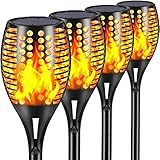
- Best flame effect, with a design warning: Aityvert Solar Torch Lights, 43-Inch, 4-Pack — Check price on Amazon
- GIGALUMI Solar Pathway Lights, 6-Pack, Bronze — the best-built set in this tier, in the tier’s least modern color, sitting in the upper part of this tier; see the review
- MAXvolador Hanging Solar Lights, 12-Pack — crackle-glass hanging globes sitting comfortably inside this tier; see the review
See 2 more options in the reviews
- DERAYSION Solar Pathway Lights, 6-Pack — a second glass-and-stainless path set, covered as a check-price alternative inside the GIGALUMI review
- TomCare Solar Torch Lights, 4-Pack — the best-known flame torch, currently sitting above this budget; covered as a near-miss inside the flame review
Read the full guide ↓
Disclosure: As an Amazon Associate, dailyhomedecorating.com earns from qualifying purchases. Links to Amazon on this page are affiliate links; they cost you nothing extra. Listing details such as price and availability change often, so check the current Amazon listing before you buy.
Modern landscape lighting runs on restraint. The fixtures disappear; the light does the work — a wash up a rendered wall, a rhythm of low points along a straight path, one sculptural accent. So this version of the guide asks a different question of the tier. The general ranking of this same verified list is at Best Solar Garden Lights Under $40; here, every pick is re-judged against the modern test: does the form stay quiet, does the color sit inside a black, white and grey-steel palette, and can one product be repeated at an even rhythm — because repetition of a single form is the first rule of a modern scheme. The tier answers awkwardly, and this guide will not tidy that away. The best-built product in it wears the least modern finish. The most modern form — a disk that vanishes into the ground — shines in the coldest light.
One boundary applies before any design judgment: solar garden lights are accent lights. The lumen figures in these listings are maker numbers with no common measurement standard behind them — a path light rated at 10 lumens by its maker and a spotlight rated at 200 by its maker were not measured the same way, or in some cases measured at all. Use the numbers only to sort products into classes: single-digit and low-double-digit lumens mark a path and glow decoratively; they do not light a work area, and none of these products is security lighting. Runtime claims carry the mirror-image warning: every runtime in this guide assumes six to eight hours of direct sun on the panel, and shade, a north-facing bed or a northern winter cuts the real figure hard — in one case below, the maker itself prints a winter runtime less than half its summer one. What $40 does genuinely buy, for the first time in the ladder, is material: real glass shades and metal bodies enter at this tier, in path lights first. Readers working to a tighter cap should also see Best Solar Garden Lights Under $30, where several of these same families are ranked on a smaller budget.
Quick Picks
Short on time? Each row below names a modern-home buyer type and the product that suits it. For every linked pick, check price on Amazon — prices change often, and the pack size named in the row is what any live price has to be judged against.
| Buyer type | Pick | Why it stands out | Link |
|---|---|---|---|
| Best overall for modern homes | SOLPEX Solar Ground Lights, 12-Pack, Cool White | Twelve flush in-ground disks in a single pack — check price on Amazon. The fixture disappears; all you see at night is the rhythm | Check on Amazon |
| Best wall wash | URPOWER 2-in-1 Solar Spotlight, 2-Pack | The only genuinely directional light here: a 200-lumen maker rating, a 2,200 mAh battery and a panel that aims separately from the head — check the current price on Amazon; hide the fixture, keep the wash | Check on Amazon |
| Best path light, soft modern | XMCOSY+ Solar Pathway Lights, 6-Pack | Crackle glass on a stainless body with two warm-white modes — 10 lumens for up to 10 hours, or 25 for up to 8 — chosen by a switch | Check price on Amazon |
| Best materials, wrong color | GIGALUMI Solar Pathway Lights, 6-Pack, Bronze | Real ripple glass and a metal body — the tier’s material upgrade, finished in bronze. See the review for when that works | See review ↓ |
| Best sculptural accent | MAXvolador Hanging Solar Lights, 12-Pack | Crackle-glass globes on hooks — hung at one height on an even spacing, the closest thing in this tier to a light sculpture, with honest warnings about its clips | See review ↓ |
| Best flame effect | Aityvert Solar Torch Lights, 43-Inch, 4-Pack | A 96-LED dancing flame on a height-adjustable stake; decoration only, off-language for most modern schemes, and the maker itself prints the winter runtime drop | Check price on Amazon |
How These Picks Were Chosen
The first filter was the budget, applied per pack. Pack size matters as much as the budget itself in this category: a 2-pack and a 12-pack can both sit under the same cap while covering very different amounts of ground, so every pick below is judged as the pack named in its heading, never as a single light. Configurations were fixed before anything else was compared — path lights as the standard stake sets their makers lead with, spotlights as the 2-pack, ground lights as the 12-pack — because a small pack posing as whole-yard coverage is the oldest trick in solar lighting. For any live figure, check price on Amazon and judge it against the pack size and the budget, not against a headline alone.
The second filter was verification, and it is why two of the six picks carry no link. We did not stake these lights in a test garden. We read the maker listings and their specification fields, and cross-checked them against independent roundups and retailer listings. A product earned an Amazon link only when its listing at the stated pack size could be verified from independent sources; for those picks, check the current price on Amazon rather than relying on any figure printed elsewhere, because prices move. Where a listing could not be verified to that standard, the product is covered in prose and positioned by where it sits within this tier. That standard excluded some famous names: the category’s best-known flame torch currently sits above this budget and appears only as a labeled near-miss.
The third filter was material honesty, and the fourth — the one this version adds — was design fit. On materials: every claim in the reviews comes from specification fields and independent teardowns, never from the word “premium” in a title, and the pattern is consistent enough to state as a rule — in this tier, the glass and metal are real in path lights and partial everywhere else. IP ratings are printed only where a spec field or a maker’s own documentation states a number; a title that says “waterproof” without a number is marketing. Battery capacity is printed wherever the maker publishes it, and its absence is flagged too, because an unpublished capacity on a sealed unit means the light’s whole lifespan is a guess. On design fit, each pick was asked three questions: is the fixture visually quiet or absent, is its finish inside the palette, and does its light fall where a designer would put it rather than spraying in all directions? Two picks pass all three; the reviews say where the others fail, because a modern garden is exactly where a good product in the wrong language is still the wrong product.
The 6 Best Solar Garden Lights Under $40 for Modern Homes
SOLPEX Solar Ground Lights, 12-Pack, Cool White
Who it suits: Modern homeowners with a straight path, a driveway edge or a terrace perimeter to draw a line under — buyers whose ideal fixture is no fixture at all.
The ground disk is the most modern object in this guide because it refuses to be an object. A stainless-topped puck, roughly the diameter of a drinks coaster, presses into the soil so its face sits level with the grass, gravel or paving, and at night the scheme contains no visible hardware at all — just a measured row of light points at ankle height. Check the current price on Amazon for the SOLPEX 12-pack — twelve disks in one pack give the widest coverage in this guide by a wide margin, and enough disks for both sides of a front path or one long driveway edge. Each disk carries eight LEDs under its cover, and the maker’s runtime is 8 to 10 hours after a 4-to-6-hour charge. The charging figure is shorter than the path picks’ 6 to 8 hours because the panel is the disk’s whole face, lying flat to the sky — efficient on an open lawn, and the first thing to suffer when a disk lands under a shrub, a parked car’s shadow line, or the drip edge of a roof. Placement discipline matters more here than with any other form in the guide: a disk in shade is not a dimmer disk, it is a dead one by nine in the evening, and a dead disk in a row of twelve breaks the rhythm that is the entire point.
On materials, the spec fields give the cover as stainless steel, and independent teardowns describe the body beneath it as ABS plastic with a sealing ring — a fair construction for this tier, as long as you know which part is which: the metal is the face you see and the part that takes the weather, and the plastic is the buried shell. Sealing is listed as IP65 in the spec data collected for this model, though at least one aggregator lists IP44 for the same set — we print the discrepancy rather than picking the prettier number, and the practical advice is the same either way: these are rain-proof ground lights, not lights to set in a puddle-prone hollow or below a downspout. The battery is a 600 mAh NiMH cell per disk, published — the same capacity class as the GIGALUMI path set — and the light is cool white. Against pale stone, gravel and grey render it reads as deliberate; against warm timber decking or red brick it reads as a mistake. A warm white version of the same 12-pack exists on a sibling listing for buyers whose modern is the softer kind, and its spec sheet rates output at just 5 lumens, which tells you plainly what flush disks are: markers. The weak point, reported consistently by owners and roundups, is the plastic ground spike under each disk — the part that snaps in hard or stony soil, so pre-loosen the holes. Control is a photocell, on at dusk and off at dawn, with no modes.
- Twelve lights in a single pack — check price on Amazon — the most coverage in this guide.
- Flush in-ground form disappears in daylight and cannot be knocked over, tripped on or caught by a mower deck the way stake lights can.
- Published 600 mAh NiMH battery per disk and a stainless cover per the spec fields.
Honest limitation: Cool white is the verified configuration here and it is a hard, blue-leaning light beside warm-white path sets; output is marker-class, the spikes are plastic, and any disk that lands in shade simply will not perform.
Choose it if your scheme is lines and repetition and the run gets sun. Skip it if your modern runs warm — timber, brick, warm render — where the warm sibling or the crackle-glass path set below will sit better, or if your path edges are shaded, where stake lights you can reposition will serve you better.

URPOWER 2-in-1 Solar Spotlight, 2-Pack
Who it suits: Anyone whose modern garden has one thing worth lighting — a sculptural tree, a house number, a textured wall, a single specimen in a gravel bed — and who understands the modern rule that you should see the light, never the fixture.
Every other pick in this guide spreads a little light in all directions. This one aims, and aiming is what designed lighting is. The URPOWER is a solar spotlight: a light head on an adjustable mount, a separate solar panel on its own adjustable mount, and two ways to install it — staked into the ground among the planting, or screwed to a wall or fence with the panel angled at the sun. The separation of panel and head solves the solar spotlight’s classic contradiction: the thing you want lit is often in shade, while the panel needs sun. Here the head can sit low in a bed, invisible by day, washing up through a small tree while the panel tilts — through about 180 degrees, independently of the head’s own roughly 90-degree tilt — toward whatever patch of sky the bed actually gets. A beam raking up a rendered wall is the most architectural effect in this tier, and this is the only pick that produces it. The maker’s brightness figure is 200 lumens from four LEDs, read the way every figure in this guide is read: as an unstandardized maker number. What can be said without the number is the class — this is visibly a beam, the brightest useful light in the guide, in a different category from the 10-lumen path markers — and independent testing of this long-running model has treated it as a genuine small spotlight rather than a glow stick.
The supporting specs are the strongest in the guide, and they are why a plastic spotlight earns its place in a tier whose headline is materials. The battery is a built-in 2,200 mAh cell — several times the capacity of any path light here, and published, which itself is a tier above the unpublished norm. Two brightness modes trade output for hours: the maker’s figures are roughly 6 hours on high and 10 on low after a full charge, and high mode is an evening feature, not a dusk-to-dawn one. Sealing is IP64 in the listing’s specification data — splash-proof from any direction, adequate for rain, a step below the IP65 of the path picks; one secondary source describes this model as IP65, and we print the listing’s own figure, because the spec field is the authority this guide uses everywhere. The housing is ABS plastic, stated plainly: in this tier there is no metal spotlight in this guide. In a modern scheme that matters less than elsewhere, because the correct installation hides the housing entirely. Control is a photocell plus the mode button; there is no motion sensor — it is an accent uplight, not a security light. Check price on Amazon for the 2-pack: as the only 2-pack here it covers the least ground per pack, and what the pack buys is the panel, the battery and the beam. The same aimed beam, which lights the planting without shining into the room behind it, is why the bedrooms version of this guide leads with this pick for the area outside a bedroom window or patio door: Best Solar Garden Lights For Bedrooms Under $40.
- A real beam with an independently aimable panel — the only pick that lights a chosen object or wall instead of a radius.
- Published 2,200 mAh battery and two brightness modes, roughly 6 hours high or 10 hours low per the maker.
- Stakes in the ground or mounts on a wall; check price on Amazon for the pair.
Honest limitation: The housing is plastic and the sealing is IP64, a step below the path picks — and with only two lights in the pack, this is a feature light, not path coverage. High mode will not run dusk to dawn.
Choose it if one or two features deserve real light and their beds get sun for the panel. Skip it if you need to line a whole path — the disks above cover far more ground in a single pack — or if the only placement is deep shade.

XMCOSY+ Solar Pathway Lights, 6-Pack
Who it suits: Soft-modern and Scandinavian-leaning homes — pale timber, white render, natural planting — where a path light is allowed to be visible, provided its texture is organic rather than ornate.
The XMCOSY+ set is built around a crackle-glass shade — glass with a bubbled, fractured texture that breaks the light into a sparkling pattern — on a bronze-toned stainless body, standing as a conventional path stake. Whether crackle glass belongs in a modern scheme depends on which modern you mean. In a hard modern garden of polished concrete and black steel, a sparkling shade is texture the scheme did not ask for. In the softer modernism most houses actually have — oak, limewash, ornamental grasses — the crackle reads as a natural material, closer to ice or stone than to decoration, and it is the warmest-looking path light in this tier. Its specification fields are honest in a way this guide appreciates: the material line lists ABS, glass, metal, plastic and stainless steel together, which is to say the fixture is a mixed build — glass where you see it, stainless in the body, plastic in the working parts — rather than the all-metal construction the product photos imply. The set’s distinguishing feature is its two warm-white modes, selected by switch: a low mode rated by the maker at 10 lumens for up to 10 hours, and a high mode rated at 25 lumens for up to 8 hours. Both figures are maker numbers under this guide’s standing warning, but the structure of the offer is real — 25 lumens is the highest path-light rating in the tier, and the trade is printed on the box: brightness or hours, your choice, set once per light. The low mode matches the GIGALUMI’s output with a longer claimed runtime; the high mode suits a short, dark front path where strong light beats faint. For a modern scheme the switch has a second, quieter use: set every light on the run to the same mode and the line stays uniform all evening, instead of heads drifting apart as their batteries fade at different rates.
Sealing is rated IP65 in the maker’s materials, and the control is the mode switch plus a photocell for dusk-to-dawn running. Now the caveat that shapes this pick’s presentation: check the current price on Amazon before you buy, and buy it only if the live price for the 6-pack lands within the under-$40 budget; the set’s case is “the tier’s brightness choice inside this tier,” and it evaporates above the cap. If it is over the cap on the day you shop, the disks above remain the modern default.
- Two switchable warm-white modes — 10 lumens for up to 10 hours, or 25 for up to 8, per the maker — the only path set here with a brightness choice.
- Crackle-glass shade and stainless body, with an unusually candid mixed-materials spec field.
- IP65 sealing and photocell dusk-to-dawn running, like the tier’s other path sets.
Honest limitation: Check the current price on Amazon before relying on this pick fitting the budget — and both mode figures are maker numbers, with the high mode’s 8 hours assuming a full sunny charge.
Choose it if the live price sits within the under-$40 budget — check price on Amazon — your modern runs soft and warm, and you want the brightest path option in the tier. Skip it if the listing is trading above the cap, or if your scheme is hard modern — the flush disks will disappear into it in a way a crackle shade never will.

GIGALUMI Solar Pathway Lights, 6-Pack, Bronze
Who it suits: Owners of warm-modern houses — cedar cladding, stone, corten, limewashed brick — who want the one set in this tier built from real glass and metal, and whose palette has a place for bronze.
Start with the contradiction, because this pick is the tier’s best product and its worst color at the same time. The GIGALUMI set’s shade is glass — a tiered, ripple-textured glass lens, confirmed in the listing’s material fields and by every independent roundup that has handled the set — over a bronze-finished stainless steel body and cap. That combination matters for a specific, unglamorous reason: the failure mode of cheap solar path lights is not the LED, it is the shade. Plastic shades yellow, cloud and turn brittle under UV, and the light looks tired long before it stops working. Glass does not yellow. The set stands about 19 inches tall with a head roughly 5.3 inches across, taller and broader than the stubby plastic stakes it replaces, so the light sits above low planting, and the ripple glass throws a patterned pool of light rather than a bare dot. The problem is the finish itself. Bronze is a traditional landscape color — it belongs with brick, terracotta and cottage planting — and against the black, white and grey-steel palette of a strict modern house it reads as a period detail that wandered in from another garden. It works, genuinely, in warm modernism: cedar and bronze are cousins, stone and bronze are old friends, and a bronze head among ornamental grasses looks intentional. It fails against polished concrete, black aluminum and white render, where every bronze head in the row announces itself as the wrong decision, repeated six times.
The light itself is modest. The maker’s figure is 10 lumens of warm white per fixture — decorative-plus output that marks a path edge clearly and lights a step, and does not illuminate a work area or a doorway the way a wired fixture would. The battery is a replaceable AA NiMH cell of 600 mAh per light, and replaceable is the operative word: when the cells fade after a few seasons, as all NiMH cells do, a set of fresh AAs restores the set instead of landfilling it. The maker’s runtime is 8 to 10 hours after 6 to 8 hours of full sun — a summer figure for a sunny bed; expect materially less from a shaded or northern winter placement. Sealing is rated IP65 in the maker’s materials: rain and sprinkler spray are fine, submersion is not the test. Control is a photocell and nothing else — no brightness mode, no color mode, no remote. On the stake, honesty requires a flag: sources disagree. The maker’s side describes stainless stakes; a detailed independent roundup lists the stake and battery cap as ABS plastic. Either way, pre-loosen hard or rocky soil rather than leaning on the fixture. Why is there no Amazon link for this set? Because its listing could not be verified to this guide’s standard, so it is covered in prose: the 6-pack bronze set sits in the upper part of this tier, while the larger 8-pack sibling sits above this budget — make sure the configuration you are looking at is the 6-pack, and judge it as an upper-tier option rather than a budget one. A second glass-and-stainless option, if this set is out of stock: the DERAYSION 6-pack lists glass and stainless steel in its own spec fields in a similar lantern form — check price on Amazon and buy only if the live price lands within the under-$40 budget.
- Real ripple glass shade and bronze-finished stainless body — the material upgrade this tier exists for, verified in spec fields.
- Replaceable AA 600 mAh NiMH batteries: the set can be revived with fresh cells instead of replaced whole.
- IP65 sealing and a 19-inch stance that keeps the light above low planting.
Honest limitation: Output is 10 maker-rated lumens — path marking, not illumination — and owners and roundups note more brightness variation from light to light within a set than pricier brands show, which a strict modern rhythm exposes rather than hides. It is covered in prose without an Amazon link in this guide, and the bronze finish is a palette decision, not a neutral one.
Choose it if your house is warm modern and materials and longevity are the priority. Skip it if your palette is black, white and grey — buy the disks or the crackle set and keep the scheme clean — or if your beds are shaded, where no stake light in this guide will charge properly.
MAXvolador Hanging Solar Lights, 12-Pack
Who it suits: Modern homeowners with a pergola, a fence line or a row of small trees — anyone whose scheme has a horizontal line in it that a row of identical hanging points would complete.
Every other pick in this guide stands in the ground. This one hangs, and hanging is where a modern scheme gets its one permitted ornament: twelve identical crackle-glass globes, each with its own small solar panel in its cap and a hook for hanging from branches, fence hooks, shepherd’s crooks or a pergola beam. Hung at one height on an even spacing along a beam, the set stops looking like garden decoration and starts looking like an installation — the same globe, the same drop, repeated until the repetition itself is the design. Scattered at random heights across a tree, the same twelve globes look like clutter. The globes’ material fields give stainless steel and crackle glass — real glass, which is why the light has the fractured, firefly-in-a-jar quality that plastic globes imitate badly — and the set is sold in a multicolor version as well as warm and cool white variants, so check which version is in your cart, because the listings share a page family; the multicolor version has no place in a modern palette at all. The maker’s runtime claim is 8 to 10 hours, and the 12-pack sits comfortably inside this tier — the lower part of the tier for a full set of twelve — which is part of its appeal as a single repeated gesture; it is covered in prose here, so verify availability through the retailer listing before you plan a run around it. On a balcony or small walled patio, this set is also the one the rental-friendly version of this guide builds around: Best Solar Garden Lights For Apartments Under $40.
The honest limitations are unusually specific, because owners report them consistently. First, the battery: the maker does not publish its capacity for this model, and on a sealed globe that means the set’s lifespan is unknowable in advance — when a globe fades in year three, the globe is done. Second, the weather claim: the specification data gives its water resistance only as the word “waterproof,” with no IP number — the weakest weather documentation in this guide — so treat the globes as rain-tolerant ornaments, not fixtures for an exposed spot. Third, and most reported of all, the hanging hardware: the clips are small and the sockets in the hanging brackets are shallow, and owners describe losing globes in surprisingly modest wind — one account describes four of twelve globes down and shattered after a night of roughly 12-mile-per-hour wind — so hang them where a fall lands on soil or planting, not on stone or polished concrete, and consider a dab of wire or a zip tie through each hook if your site is breezy; a modern scheme, with hard surfaces everywhere, is precisely where a falling globe does not survive. The same owners confirm the solar rule from the other side: globes hung in partial shade under a tree canopy were reported running about two hours, against the 8 to 10 claimed.
- Twelve real crackle-glass globes in one pack, sitting in the lower part of this tier — the only hanging form factor in the guide, and a genuine sculptural accent when hung on a disciplined line.
- Each globe is self-contained — panel in the cap, no wiring, no string to untangle — so globes can spread across a whole garden.
- Warm white, cool white and multicolor versions exist; the glass is specified in the material fields, not just the title.
Honest limitation: The battery capacity is unpublished and the unit is sealed, the spec data states no IP number, and the hanging clips are the documented weak point — globes have been lost to ordinary wind.
Choose it if your scheme has a beam, a fence line or a pergola asking for a repeated point of light, and your hanging spots still see direct sun. Skip it if your site is windy and paved, or if you want specifications you can plan a lifespan around — no pick with an unpublished battery earns that trust.
Aityvert Solar Torch Lights, 43-Inch, 4-Pack
Who it suits: Buyers whose “modern” is resort modern — a pool terrace, a fire-bowl patio, a warm-climate courtyard — and who want the flame as a deliberate, contained gesture rather than a theme.
This pick carries the guide’s clearest aesthetic warning, so it comes first: a fake flame is a borrowed language. The flickering torch belongs to tiki bars, themed restaurants and cottage gardens, and in a strict modern scheme — concrete, steel, clipped green — four plastic flames do not read as atmosphere; they read as a costume the garden is wearing. If your modern is the warm, resort kind, where a real fire bowl already anchors the terrace, a flame light can echo it at a distance and the effect holds together. The torch itself is the category’s purest piece of theater: a 43-inch stake topped with a mesh cylinder inside which 96 LEDs ripple in sequence to imitate a dancing flame. Judged as lighting, it is nearly useless, and this guide will not soften that: the output is a warm flicker meant to be looked at, not to see by — it will not light a step, a lock or a path edge, and the comparison table lists its output as decorative because the maker publishes no useful lumen figure for it. Judged as decoration, the Aityvert is the pick because its paperwork survives this guide’s checks: a verified, current Amazon listing, extension pipes in the box so the height adjusts to the planting, a photocell for automatic dusk-to-dawn running, and — the detail that earned it the slot — a maker that prints its own winter warning. The stated runtime is up to 12 hours in summer and 5 hours in winter after a full charge, with an 8-hour charging time.
The construction is honest plastic: the package contents list plastic ground spikes, and the body is ABS — in this tier there is no metal flame torch, and the bronze-toned torches in listing photos are colored plastic like this one, a second design warning in itself. Weather resistance is described as water resistant without a headline IP number in the data we could verify, so site them as garden ornaments rather than exposed fixtures. Check the current price on Amazon for this pick: buy it only if the live price for the 4-pack lands within the under-$40 budget. That instruction matters because the category’s famous name is currently outside this budget entirely: the TomCare 4-pack, the torch that defined the type, sits well above this budget, and the Otdair 4-pack tested by Tom’s Guide also sits above this tier. If your heart is set on the TomCare, budget for a higher tier rather than buying a no-name torch inside this budget and expecting the same flame; if the effect is what you want and the cap is firm, the Aityvert is the verifiable way to get it.
- The most convincing LED flame in the tier — 96 LEDs in a 43-inch torch with height-adjustable extension pipes.
- The maker prints its own winter runtime (5 hours against 12 in summer) — the category’s honesty benchmark.
- Photocell auto on/off; no fuel, no wick, no open flame near planting or children.
Honest limitation: It produces atmosphere, not usable light; the stakes are plastic; check the current price on Amazon before you buy — and its whole effect speaks a design language most modern schemes are trying not to use.
Choose it if your terrace is warm resort modern, the flame is the purchase, and the live price fits the cap. Skip it if your scheme is strict modern, or if any part of the job is seeing — steps, paths, locks — or if you want the TomCare name, which this budget no longer buys.
Comparison Table
For every linked pick, check price on Amazon — the pack size in the second column is what any live price has to be judged against. The two prose-only picks are positioned by where they sit within this tier. Brightness and runtime are maker figures throughout, printed so you can compare classes, not because the numbers share a measurement standard; they do not.
| Pick | Pack | Price | Tier position | Maker brightness | Battery | Build (spec fields) | Best for |
|---|---|---|---|---|---|---|---|
| SOLPEX Solar Ground Lights, Cool White | 12 | Check price on Amazon | Widest coverage in this guide | Marker class (8 LEDs) | 600 mAh NiMH | Stainless cover, ABS body | Best overall for modern homes |
| URPOWER 2-in-1 Solar Spotlight | 2 | Check price on Amazon | Feature light, not coverage | 200 lumens | 2,200 mAh, built in | ABS plastic, IP64 | Best wall wash |
| XMCOSY+ Solar Pathway Lights | 6 | Check price on Amazon — buy only within the under-$40 budget | — | 10 or 25 lumens, two modes | Not published | Crackle glass, stainless and ABS | Best path light, soft modern |
| GIGALUMI Solar Pathway Lights, Bronze | 6 | See review — no Amazon link in this guide | Upper part of this tier | 10 lumens | AA 600 mAh NiMH, replaceable | Ripple glass, bronze-finished stainless | Best materials, warm modern only |
| MAXvolador Hanging Solar Lights | 12 | See review — no Amazon link in this guide | Lower part of this tier | Decorative glow | Not published, sealed | Stainless and crackle glass globes | Best sculptural accent |
| Aityvert Solar Torch Lights, 43-Inch | 4 | Check price on Amazon — buy only within the under-$40 budget | — | Decorative flame, 96 LEDs | Built in, capacity not verified | ABS plastic, plastic spikes | Best flame effect |
How to Choose
Pick one form, then repeat it. This is the whole method, and it is what separates a modern scheme from a collection of lights. One product, one height, one spacing, run the full length of the line it serves — and then stop. A modern front garden typically needs exactly one gesture: a row of disks along the path, or path lights along the bed, or globes along the pergola beam. The budget enforces this whether you plan it or not: $40 buys one short run done properly — twelve disks along one edge, six path lights on one path, two spotlights on one wall — and it does not buy a whole yard. Spend it on the run people see from the street or the terrace, and let the rest of the garden stay dark; in a modern scheme, darkness is a material too. For compact courtyards and small terrace gardens, see the small-spaces version of this guide: Best Solar Garden Lights For Small Rooms Under $40.
Match the light’s color to your house’s materials, not to the product photo. The verified SOLPEX configuration is cool white — right against pale stone, concrete, gravel and grey render, wrong against warm timber and brick. The path sets are warm white — right against timber, stone and warm render, softer against concrete. The GIGALUMI’s bronze is the extreme case: a feature on a cedar-clad house, an error on a white one. Decide your palette from the wall your garden actually has, then buy inside it.
Walk your sun before you walk the store. Every runtime in this guide assumes six to eight hours of direct sun on the panel. Look at each intended spot at midday and again at four in the afternoon: if it is shaded for most of that window, the light planted there will run two to four hours regardless of its rating — and in a repeated row, one dead light in a line of identical lights is the most visible object in the garden. In shaded gardens, choose the spotlight and put its panel where the sun is, or shorten the run to the sunny stretch and end it cleanly. Plan north-facing beds on winter runtimes — roughly half the headline figure — from November onward.
Compare pack size, then materials. Start with what a pack actually covers: a full pack of flush disks lines a whole edge, a small pack of glass path lights covers one short path, and a pair of spotlights lights one or two features. Then ask what each light buys you in the spec fields — glass or plastic shades, a published battery capacity or an unpublished one, a replaceable cell or a sealed unit — and check the current price on Amazon for any linked pick before you decide.
Hide what can be hidden. The disk disappears by design. The spotlight should disappear by installation — low in the planting, behind a wall edge; only its wash should show. Path lights and globes cannot hide, so they must earn their visibility with material and rhythm. Nothing in this tier has a motion sensor or a timer worth the name, and nothing should be bought as security lighting — for a door or driveway you actually need watched, buy a wired or battery security light and let these do design.
Common Buying Mistakes
Mixing forms along one run. Disks for half the path and stakes for the rest, because the first pack ran out, is the commonest way a modern scheme dies. Count the run before you order, buy the count in one product, and if the run is longer than the budget, shorten the run — a clean ending beats a patchwork one.
Letting a finish talk you out of your palette. The GIGALUMI is the best-built set here, and on a black-and-white house it is still the wrong set, six times over. Materials are a reason to choose a product inside your palette, never a reason to change the palette around a single light.
Believing the lumen number. Solar listings carry figures from 5 to several hundred lumens with no shared measurement standard behind them. Use the figures only to sort picks into classes — marker, path, spotlight — and distrust any path light claiming floodlight numbers.
Planting first, checking sun later. The most common failure in this category is not a bad product; it is a good product in a shaded bed, returning two hours of light and a broken rhythm. Check the sun path of the exact spots first, and remember that a tree’s summer canopy is not its spring one.
Reading “waterproof” as a rating. A number — IP64, IP65 — is a test result; the word alone is a mood. One pick in this guide states no IP number at all in its spec data, and it is sold as waterproof in its title. Match the claim to the exposure: in an open, sprinkler-soaked, freeze-thaw bed, insist on a printed IP65.
Expecting flame torches to light something. A flickering-flame torch is a lantern-shaped ornament. It lights nothing you need to see — not steps, not locks, not the path it stands beside — and in a modern scheme it usually fails the design test before the lighting one. Buy it, if at all, as a deliberate resort-modern gesture, not as a light.
Throwing away a set whose battery died. The commonest death in solar lighting is a faded NiMH cell, not a dead LED. Sets with replaceable AA cells — the GIGALUMI in this guide — revive with a set of fresh cells. Before replacing any set, check whether its cells swap; if they are sealed, factor that into the next purchase.
Final Recommendation
For most modern homes, buy the SOLPEX disks first — check price on Amazon — and run them, evenly spaced, along the one line your garden shows the street: the fixture vanishes and the rhythm does the design work. Add the second gesture only if the scheme asks for it: the URPOWER spotlights — check the current price on Amazon — hidden in the planting, washing the wall or the one tree that deserves it. If your modern runs soft and warm and a visible path light is part of the scheme, check the XMCOSY+ set and buy it only if its live price sits within the under-$40 budget; if your house is warm modern in timber and stone, the GIGALUMI’s bronze stops being a compromise and becomes the best-built answer in the tier — an upper-tier option within this budget, covered in prose in its review above. Treat the hanging globes as the one permitted sculpture, hung on a disciplined line, and the flame torch as a resort-modern exception rather than a default. And hold the tier’s honest bottom line in view: $40 buys real glass and metal in path lights, one genuine spotlight beam, and exactly one run done with modern discipline. It does not buy a whole yard, brighter path light in any standardized sense, longer winter nights, or security lighting — and a modern scheme is built on knowing what to leave out.
FAQ
What kind of solar light suits a modern house best? The kind you cannot see. Flush in-ground disks and hidden spotlights fit a modern scheme because the effect — a line of light, a washed wall — arrives without a visible fixture. Visible path lights can work if their material is real and their finish sits inside your palette, repeated at an even spacing; what breaks a modern garden is not any single product but a mixture of styles along one run.
Is cool white or warm white better for a modern garden? It depends on the house, not the trend. Cool white suits pale stone, concrete, gravel and grey render; warm white suits timber, natural stone and warm render. The verified configuration of the flush-disk pick here is cool white, with a warm-white sibling on a separate listing; the path sets are warm. Buy the color your walls ask for.
How many solar lights does a modern front garden actually need? Fewer than the packs want you to think. One run — typically six path lights or twelve ground disks on a single path or edge — plus, at most, one accent gesture. At this budget, one run is also what the money covers; a second area is a second budget.
Are solar garden lights bright enough to light a path safely? They are bright enough to mark one. A 10-lumen path light shows you where the path edge is and keeps guests on it; it will not light steps, uneven paving or a lock the way a wired fixture does. For a step or a gate that must be seen clearly, use the spotlight pick aimed at it, and for genuine security lighting buy a dedicated wired or battery security light — nothing in this tier is that product.
How long do solar garden lights actually stay on? On a full charge from six to eight hours of direct sun, the picks here claim eight to ten hours in their standard modes. Shade, cloud and winter all cut it — one maker in this guide prints 5 winter hours against 12 summer hours for the same product, and that ratio is a fair planning rule for the whole category.
Can the batteries be replaced? In the GIGALUMI path set, yes — it uses standard AA NiMH rechargeable cells, and replacing them after a few seasons revives the set. The spotlight’s larger cell is built in, and the hanging globes are sealed with an unpublished battery, so those products’ lifespans are fixed at purchase.