Where to buy
Check the latest price, availability and delivery on Amazon. Orders are placed on Amazon. We may earn a commission from qualifying purchases.
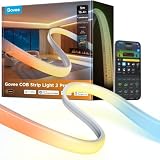
- Best overall: Govee COB Strip Light 2 Pro, 16.4 ft, RGBWWIC with Matter — Check on Amazon
- Philips Hue Solo Lightstrip, 33 ft, RGBWW with Hue App Control — Check on Amazon
- Govee LED Strip Light M1, 16.4 ft, RGBICW with Matter — Check on Amazon
- Nanoleaf Essentials Matter HD Lightstrip, 16.4 ft (5 m), Matter over Wi-Fi — Check on Amazon
See 2 more Amazon options
- TP-Link Tapo L930-5 Smart Light Strip, 16.4 ft, RGBWIC with HomeKit — Check on Amazon
- Govee COB LED Strip Light Pro, 16.4 ft, RGBICW with Matter — Check on Amazon
Read the full guide ↓
Disclosure: As an Amazon Associate, dailyhomedecorating.com earns from qualifying purchases. Links to Amazon on this page are affiliate links; they cost you nothing extra. Listing details such as price and availability change often, so check the current Amazon listing before you buy.
Start with the confession every “under $500” guide owes you: there is no $500 smart light strip. The most expensive single strip any major maker offers is the Philips Hue Gradient Lightstrip Ambiance, sold as an 80 inch base kit through Hue’s own store and first-party retail. Govee’s flagship COB Strip Light 2 Pro, in its 16.4 ft kit, sits just below it at the top of the category, and Hue’s longest strip, the 33 ft Solo, sits below that. Even the priciest single strip sits far below this budget: no honest guide can spend $500 on one strip, because the product does not exist. The small-room version has a second confession: a small room is where $500 is most excessive. A small bedroom or studio room — call it 8×10 to 10×12 ft — has one or two runs worth lighting, and its longest wall is 10 to 12 ft: one 16.4 ft kit, the standard flagship size in this guide, covers it with footage left to turn a corner. Done properly, a small room is finished well inside this budget, and the rest is money the room genuinely cannot absorb.
So this guide does two honest things with the budget instead of one dishonest thing. First, it shows the perfected small room: one flagship kit on the run you actually look at, a second zone where it earns its place, a sensor where a sensor makes sense — and whatever budget remains stated plainly as money to keep. Second, it shows the other legitimate reading of the number: $500 as the budget for a whole small home of small rooms — bedroom, kitchen, hallway — each lit by a mid-range kit in one ecosystem, with the reasoning shown. What it will not do is invent spending: the Hue sync box exists precisely to absorb budgets like this one, and in a small room without a large television it is the most pointless purchase in the guide. The six picks are the same verified building blocks as in our other $500 guides — for the exact lengths named — re-judged by the only standard a small room cares about: how much of the strip you will actually use.
Three honesty notes run through everything. Brightness first: there is no common measurement standard behind this category’s lumen figures, so this guide prints one only where a maker’s own specification states it, attributed every time — a maker’s claim, not a measurement. In a small room the risk runs the other way — too much light, not too little — so behavior at the bottom of the dimming range matters more than headline output. Ecosystem tolls second: Hue strips do their best work behind a Hue Bridge, sold through Hue’s own store and on Amazon, and that toll is counted in every plan below. Cutting third: on every smart strip here, cutting is one-way, and the footage trimmed off a too-long kit is not a spare for the next room — it is scrap. Add the standing adhesive warning — peel-and-stick backing is the weakest component of every strip sold, and serious runs belong in aluminum channel, sold in multi-packs of 1 m lengths — and the shape of this tier in a small room is simple: buy the run, not the reel.
Quick Picks
Short on time, or comparing several options at once? Each row below names a buyer type and the strip that suits it, with a link to the listing.
| Buyer type | Pick | Why it stands out | Link |
|---|---|---|---|
| Best overall | Govee COB Strip Light 2 Pro, 16.4 ft | A dotless COB line at a maker-claimed 1,344 LEDs per meter, with real warm and cool white channels — check price on Amazon — and 16.4 ft is exactly one small room’s feature run | Check on Amazon |
| Best for under-bed duty | Philips Hue Solo Lightstrip, 33 ft | One 33 ft run rings a small bed’s underside and still reaches the closet — but it is two to three times a small room’s ordinary need — check price on Amazon | Check on Amazon |
| Best two-zone value | Govee LED Strip Light M1, 16.4 ft | A real warm-white channel and Matter in a mid-priced kit — check price on Amazon — for bed zone and desk zone, independently controlled | Check on Amazon |
| Best for Matter and Apple Home | Nanoleaf Essentials Matter HD Lightstrip, 16.4 ft (5 m) | Matter over Wi-Fi with tunable whites and a circadian mode in Nanoleaf’s app — check price on Amazon — with no proprietary hub | Check on Amazon |
| Best budget | TP-Link Tapo L930-5, 16.4 ft | Segmented RGBWIC color with a real white channel and HomeKit support, no hub — check price on Amazon — which is why lighting three rooms with it stays easy on the budget | Check on Amazon |
| Best dotless value | Govee COB LED Strip Light Pro, 16.4 ft | The original COB flagship: a maker-claimed 1,260 LEDs per meter and a warm-white channel — check price on Amazon — positioned as the lower-priced COB option in this guide | Check on Amazon |
How These Picks Were Chosen
The first filter was verification. Every linked pick below had to be pinned to a real Amazon listing confirmed from at least two independent sources for the exact configuration named — the maker’s own store, first-party retail and the listing itself. Two genuinely relevant products failed that test and are handled the way this series always handles them: in prose, described qualitatively and with no link. The Hue Gradient Lightstrip Ambiance (80 inch) — the category’s ceiling model, sold through Hue’s store and first-party retail — could not be pinned to the standard, so it appears in the Hue plan below as a prose-only component, not a pick. The Hue Bridge and the Hue Motion Sensor, both sold through Hue’s store and Amazon, get the same treatment.
The second filter was small-room fitness, and it inverts several of the usual priorities. Footage per dollar — the metric that decides guides for big rooms — falls almost to zero here: no run in a small room is long, so a kit’s value is what you get for each foot you actually use, and a 33 ft kit trimmed to 14 ft is the worst value in the guide by that measure. What rises instead is emitter density, because you are never more than about ten feet from the strip: dots that would vanish across a large living room sit at reading distance here. Two of the six picks are COB strips whose light reads as one continuous line for exactly that reason. White quality rises too: a small room is usually multi-purpose — sleep, work, dressing in the same hundred square feet — so every pick here carries a dedicated white emitter set rather than white mixed from color emitters, and plain-RGB bulk reels were excluded no matter how little they cost per foot. Finally, dimming and control: a strip that cannot go genuinely dim is useless as a night path light, and control has to work from the bed, by voice or app.
We did not use these strips ourselves. We read the maker listings, manuals, specification sheets and price records, and compared what decides whether a small-room system works: the footage in the box against the footage a small room can absorb; whether white comes from a dedicated channel or from mixing color emitters; the control path (Bluetooth app, Wi-Fi app and voice, Matter, or a Zigbee bridge); the true system cost, counting every bridge and sensor a plan needs; and the maker’s cutting terms, one-way on every pick here. Brightness and color-rendering figures are maker claims throughout — the COB 2 Pro publishes a maker CRI figure, attributed wherever it appears; the other makers publish none we could verify, so this guide prints none for them.
The 6 Best Smart Light Strips for Small Rooms Under $500
Govee COB Strip Light 2 Pro, 16.4 ft
Who it suits: Small-room buyers whose one feature run will be looked at every day — behind the headboard, above the desk, along the shelf — from a distance of a few feet, and who want that run to read as a fixture rather than as a strip of diodes.
In a small room, this strip’s virtues stop being luxuries and become the whole brief. COB construction packs a maker-claimed 1,344 LEDs into every meter under a continuous diffuser, so there are no individual diodes to see or count — and in a small room there is no distance at which dots would blur away. Behind a headboard it throws a single unbroken band of light up the wall, with no dotted reflection to catch in a screen or window. The chips are RGBWWIC: segmented color control, plus dedicated warm and cool white emitters, so white is produced by white diodes across a maker-claimed 1,000K to 10,000K range rather than approximated by mixing colors — candlelight-warm for the wind-down hour, neutral for the desk hours, a sunrise ramp in between. Govee publishes a maker CRI figure of 92+ for its white and claims 540 lumens per meter; both are maker’s figures, attributed as such, though at any plausible fraction of the second, 16.4 ft is ample ambient light in a small room. The footage fits the room, too: the longest wall with a corner turned, or a headboard with both drops to the floor — the one flagship here whose full length a small room can use. Control is the modern full set with no hub — Wi-Fi and Bluetooth, Matter, Alexa, Google Assistant and SmartThings — with the Govee app carrying segmented scenes, a DaySync mode that walks white temperature through the day, and scheduled wake and sleep ramps. Check the current price on Amazon for the 16.4 ft kit — it sits at the flagship end of this guide, so confirm the live listing before you buy.
The compromises are its flagship positioning and finality. Priced as a premium kit, this is a feature strip, not a coverage strip: it earns its money on the one run that gets looked at, and the plans below hand the hidden runs — under-bed, closet — to cheaper picks. Cutting follows the family rule with unusually fine marks — every 6.5 cm, per Govee — and the maker’s terms are explicit that once cut, the strip cannot be reconnected or extended, so measure the small room twice. The best of its effects live in Govee’s app rather than in the voice assistants; and Govee’s own listed lifespan figure, 25,000 hours, is a maker number below some rivals’ claims — still many years at small-room hours. None of that dethrones it for this brief: in the room where every run is a close-up, it is the best-looking light in the guide.
- The smoothest light here: COB at a maker-claimed 1,344 LEDs per meter — no dots at reading distance, in direct view or in reflections.
- Real whites for a multi-purpose room: dedicated warm and cool white channels across a maker-claimed 1,000K–10,000K, with a maker CRI figure of 92+.
- Right-sized flagship: 16.4 ft is one small room’s whole feature run, with no hub and no toll — check price on Amazon.
Honest limitation: It is priced as a feature strip, not a coverage strip; cutting is one-way despite the fine 6.5 cm marks; and its headline brightness and CRI figures are the maker’s own claims, not independent measurements.
Choose it if one visible run — headboard or desk wall — has to look like a fixture from a few feet away. Skip it if your runs are hidden, where its smoothness is wasted and the Tapo below covers the same footage for far less — check price on Amazon.
Philips Hue Solo Lightstrip, 33 ft
Who it suits: Hue households — or buyers willing to become one — with one specific job only this strip does in a single run: the under-bed perimeter that lights the 3 a.m. path, with footage left to climb into the closet.
The strip itself is excellent for hidden duty — and this is the pick where the small-room lens bites hardest. Its light is the honest kind for routines: Hue builds the Solo on RGBWW emitters, so whites come from dedicated white diodes across a warm-to-cool range, and Hue rates the strip at up to 1,700 lumens. Read that figure as the maker’s own rating — and read its footnote: 1,700 lumens is the same total Hue claims for the 10 ft Solo, so the money buys length, not brightness; spread over 33 ft it is gentle ambient light, precisely right for under-bed and closet duty. Behind a Hue Bridge, sold through Hue’s store and on Amazon, it gains the full Hue app: the Wake Up automation, sleep routines, grouping with every other Hue light you own, and pairing with the Hue Motion Sensor so the under-bed run lights itself, low and warm, when feet hit the floor. In a small room, where the bathroom path is four steps, that sensor pairing is the most convincing trick in this guide, and only the Hue plan does it natively. On Bluetooth out of the box it does basic app control — and in a small room, Bluetooth range is no limitation at all.
Now the other side. Thirty-three feet is two to three times what a small room ordinarily needs: the longest wall is 10 to 12 ft, a headboard run with both drops about 13 ft, and even the under-bed job is smaller here than in a master bedroom — a twin frame’s underside runs about 19 ft around, a full’s about 21.5 ft. The Solo’s one small-room triumph is doing that under-bed ring and the closet in a single zone on a single controller, with a few feet to spare. Everywhere else the surplus is a liability, because cutting is one-way: trim a 33 ft Solo to a 13 ft headboard run and you have paid a long-strip price for 13 ft of light — the worst value per used foot in this guide — and thrown 20 ft away. The listing adds its own chore: the Amazon page linked here is a family listing whose default view is the 10 ft kit, so select the 33 ft size and check its live price before you buy — the live price on the listing is the one that counts. The strip shows one color along its whole length at a time — no segmented zones or gradients. Judged as general small-room footage, it is the guide’s clearest example of buying a room you do not have.
- One run, two jobs: 33 ft rings a small bed’s under-bed perimeter and still reaches the closet, as a single zone.
- Real white from RGBWW emitters, plus Hue’s Wake Up and sleep routines and native motion-sensor pairing behind a Bridge.
- The longest Hue strip in this guide — good value per foot among Hue options, provided you use the feet — check price on Amazon.
Honest limitation: Two to three times a small room’s ordinary need, and the surplus cannot be reused — trimmed footage is scrap, which makes its effective value per used foot the lowest here; the Bridge and sensor that unlock its tricks are extra purchases on top; and the listing defaults to the 10 ft kit, so the 33 ft size must be selected and its live price checked.
Choose it if the under-bed-plus-closet single run is your plan and you are building the Hue system in the plans below. Skip it if your runs are one wall and a headboard — a 16.4 ft kit does both, with better value for the footage you actually use, and nothing thrown away.

Govee LED Strip Light M1, 16.4 ft
Who it suits: Small-room buyers who think in zones — a bed zone and a desk zone, independently controlled — and want the sunrise-routine essentials in a mid-priced kit — check price on Amazon.
A small room usually does two jobs — sleeping and working — in the same square footage, and the M1 is the natural unit for lighting them separately. Its four-in-one RGBICW chips pack 60 LEDs into every meter — double the density of standard strips — with a dedicated warm-white emitter alongside the color ones, so the whites both zones live on are produced honestly and colors blend along the line instead of separating into beads. At small-room distances the dots still show in direct view — this is not a COB strip — but behind a headboard or under a desk shelf the density keeps the glow even. It is Govee’s Matter strip: over Wi-Fi it joins Apple Home, Alexa, Google Home and SmartThings through the Matter standard, while the Govee Home app carries the scene library, segmented DIY effects and scheduled wake and sleep ramps. The strip is 24V, mains-powered with the adapter included, trims at its marked points, and per its manual can be extended toward a 32.8 ft maximum — headroom a small room rarely needs, which is itself the point: the kit size is the room size. Value is the argument: the 16.4 ft kit sits in the middle of this guide’s pricing — check price on Amazon. Two kits — bed zone plus desk zone — together still sit below the flagship COB tier: the whole room, zoned, for less than one flagship COB strip.
The compromises are the Matter caveat, the density ceiling and the finality of cutting. The Matter caveat deserves plain words: over Matter, this strip behaves as a single-color strip — one color along its whole length, with brightness and white temperature adjustable — while the gradients, segments and effects that justify its price live only inside the Govee app. A buyer whose home runs strictly on Matter and who never opens vendor apps is paying for features they will not use. At 60 LEDs per meter it is a glow strip, not a line of light, and a small room offers no distance to forgive that — keep it indirect. Cutting is one-way: the manual is explicit that detached pieces cannot be reconnected, so measure twice. Govee publishes no CRI figure we could verify for the M1, so none is printed. Within its brief — the zone unit for a room that does everything — nothing else in the guide matches it at the price.
- Dense and honest: 60 LEDs per meter of RGBICW chips with a real warm-white channel for sunrise and wind-down whites.
- Matter over Wi-Fi for Apple Home, Alexa, Google and SmartThings, with the full scene and scheduling library in Govee’s app.
- Mid-tier pricing in this guide — check price on Amazon — for two independently controlled zones.
Honest limitation: Over Matter it is a single-color strip — the segmented effects live only in Govee’s app; cut pieces cannot be reconnected; and at 60 LEDs per meter its dots show in direct view at small-room distances, so it belongs behind and under things, not on show.
Choose it if your small room works in zones — bed and desk — and you want each on its own schedule. Skip it if the strip will sit in direct view and dots would bother you: that is the COB 2 Pro’s job, at a clear step up in price — check price on Amazon.

Nanoleaf Essentials Matter HD Lightstrip, 16.4 ft (5 m)
Who it suits: Matter-first and Apple Home households whose small room does everything — sleeps, works, dresses — and who want one strip whose white follows the day automatically, without adopting a proprietary hub or a vendor’s bridge.
Nanoleaf’s pitch is standards instead of ecosystems. This 5 m Smarter Kit — model NF085K03-5ALS on the listing — connects over Wi-Fi and Bluetooth and speaks Matter natively, so it joins Apple Home, Google Home, Alexa and SmartThings through whichever Matter controller the home already has, with no Nanoleaf bridge to buy. In a small multi-purpose room, its most relevant feature is in Nanoleaf’s own app: a Circadian Lighting mode that walks the strip’s white temperature through the day automatically — cool and bright for the morning desk hours, warm and dim by night. In a room with one light doing every job, that standing setting is worth more than a library of scenes. The whites are tunable across 2700K to 6500K per Nanoleaf’s specification, the strip carries the line’s animated multicolor scenes, and the in-line controller means basic control works from the hardware when the phone is in another room — a small thing at 2 a.m. that small-room buyers learn to value. Its positioning undercuts every other name brand in this guide for the full 16.4 ft kit — check price on Amazon — and it is also sold through Apple’s store.
The compromises are newness and paperwork. This Wi-Fi HD generation is the line’s newest, and its documentation is thinner than the Thread-based kit it succeeds: zone counts conflict between the listing’s own style naming and manuals for sibling models, so this guide prints no zone count rather than repeat a number two maker documents disagree on. What is certain: animated scenes run through Nanoleaf’s app, while over Matter it behaves as a color-and-white strip like every Matter strip here. Nanoleaf’s brightness figures for the line are maker figures that vary by model, so none is printed for this kit. The Matter setup itself, while hub-free, still needs a Matter controller in the home for ecosystem control — an Apple TV, HomePod, Echo or SmartThings hub — and buyers whose home lacks one are back to Bluetooth and the Nanoleaf app, which in a single small room is honestly less of a hardship than anywhere else: one room, one strip, one app is a coherent system, limiting only when the rest of the home joins in. Within its brief — the standards-based strip for a platform household — it is the cheapest credible way in.
- Matter over Wi-Fi with no proprietary hub: joins Apple Home, Google Home, Alexa and SmartThings through the controller you already own.
- A circadian mode in Nanoleaf’s app walks white temperature through the day — the multi-purpose room’s routine as a standing setting.
- The full 16.4 ft kit — the lowest-priced name-brand pick in this guide — check price on Amazon.
Honest limitation: The newest generation’s paperwork conflicts with itself — zone counts disagree between the listing and sibling manuals, so none is printed; Matter control needs a controller in the home; and its animated scenes live in Nanoleaf’s app, not in the voice assistants.
Choose it if your home already runs on Matter or Apple Home and your small room needs one white that follows the day. Skip it if you want segmented gradient effects as the main event — that is Govee’s app-driven specialty, above.

TP-Link Tapo L930-5 Smart Light Strip, 16.4 ft
Who it suits: The honest default for a small room, and the engine of the whole-small-home plan: anyone who wants segmented color, a real white channel and HomeKit support in one no-hub kit, at a price that makes lighting three small rooms an easy decision.
The L930-5 is the pick that embarrasses the price ladder, and in a small room the embarrassment is total: as the budget pick in this guide — check price on Amazon — it does the complete small-room job. TP-Link builds it as RGBWIC: segmented color across 50 addressable zones per the maker’s specification, plus a dedicated white emitter set, so its whites are real whites rather than a blue-leaning mix, and it wraps the strip in a polyurethane coating that shrugs off dust and splashes in a way bare strips cannot. It runs on Wi-Fi with no hub, works with Apple HomeKit alongside Alexa and Google Assistant — HomeKit support at this price is genuinely rare — and carries Tapo’s app scheduling, timers and sunrise/sunset automation, music sync, and an Away mode. TP-Link rates it at 1,000 lumens; that is a maker’s figure, like every number in this category — what matters in a small room is that it dims smoothly for night duty and that its white channel makes its sunrise ramps look like morning rather than like a screen. One kit covers the longest wall with footage to spare, and the saving against one flagship strip covers more rooms — which is why it anchors the whole-home plan below: three small rooms, one app, one modest outlay.
The compromises are polish and platform. Fifty zones is coarser segmentation than Govee’s app-driven strips produce, and the effects library is smaller; the strip is a 2.4 GHz Wi-Fi device, so homes with congested or band-steered networks can expect the usual pairing dance; and Tapo’s app, while competent, asks for a TP-Link account and offers none of the scene depth of Govee’s or the automation depth of Hue’s. The coating that protects it also makes it a strip to route in channel or clips rather than bend around tight abuse. None of that dents its proposition: judged as light for the money with the small-room essentials intact — real white, scheduling, voice from bed, no hub — it is the best value in this guide by a wide margin.
- The full small-room checklist at a budget price: segmented RGBWIC color, a real white channel, scheduling and sunrise/sunset automation, no hub.
- HomeKit support alongside Alexa and Google — rare at any price, remarkable at this one.
- The budget pick in this guide — check price on Amazon — with a wipe-clean coated strip.
Honest limitation: Coarser zones and a smaller effects library than Govee’s strips; 2.4 GHz Wi-Fi only; and its 1,000-lumen figure is the maker’s own, like every brightness number in this category.
Choose it if you want the room done properly for the price of a takeaway dinner, or you are lighting several small rooms in one app. Skip it if the strip will be stared at nightly and smoothness is the point — the COB picks above exist for that wall.

Govee COB LED Strip Light Pro, 16.4 ft
Who it suits: Small-room buyers who want the dotless COB look as the lower-priced route to that finish — and who are willing to check the current price on Amazon before buying, because this pick’s positioning against its successor is the thing to verify.
This is the original COB flagship, the 2024 strip that started the category’s density race: COB construction at a maker-claimed 1,260 LEDs per meter, RGBICW chips with a dedicated warm-white emitter, Matter alongside Alexa and Google Assistant, and the full Govee app scene library. In a small room it does the same headboard job as its successor — one continuous band of light at reading distance, honest warm whites for the evening, scheduled ramps for the morning — and, positioned below the 2 Pro in this guide’s pricing, it does it for noticeably less — check price on Amazon to confirm the gap is still there. The differences are real but narrow, and small rooms argue both ways: the successor’s silicone-sleeve diffusion is smoother still and its white range runs wider, with both warm and cool white channels where this strip’s dedicated channel is warm white — and a small room is exactly where a reflection in a dark window will find the older strip’s hotspots, while a matte wall at ordinary brightness will never show them. On one matte headboard wall, most buyers would struggle to separate them; where glass, gloss paint or a mirror shares the room, the newer strip earns its premium.
The compromises start with pricing, and this guide states it plainly: this model sits below its successor in Govee’s range, but its pricing has drifted toward its successor’s before — buy it only while it is clearly priced below the 2 Pro — check the current price on Amazon; if the live price has converged on the 2 Pro’s, the 2 Pro above is the better buy at similar money and this pick’s reason to exist is gone for the day. Govee publishes no CRI figure we could verify for it, so none is printed. It is also, unavoidably, yesterday’s flagship: the app support and Matter credentials are current, but buyers who keep strips for a decade should know the line has moved on. Within its terms — the COB look, the small-room essentials, money back toward the part of the budget you keep — it remains the value route to a dotless headboard.
- Dotless COB light at a maker-claimed 1,260 LEDs per meter, with a dedicated warm-white channel and Matter.
- The full 16.4 ft kit — the cheapest route in this guide to a continuous line of light — check price on Amazon.
- The full Govee app library: scenes, segmented effects, scheduling and voice control with no hub.
Honest limitation: Its value depends on staying clearly below its successor — buy only while it is priced below the 2 Pro, and walk away to the 2 Pro if the two have converged; its diffusion is a step behind its successor’s, which a small room’s reflections can expose, and no CRI figure is published for it.
Choose it if the current price on Amazon is clearly below the 2 Pro’s and the room’s feature wall is matte and ordinarily lit. Skip it if the price has converged on the 2 Pro’s, or the strip will share the room with glass, gloss or a big mirror.

Comparison Table
| Product | Format & length | Light & control | Best use | Link |
|---|---|---|---|---|
| Govee COB Strip Light 2 Pro | COB strip, 16.4 ft, maker-claimed 1,344 LEDs/m | Segmented RGBWWIC color with real warm and cool whites; Matter + Govee app, no hub | The visible run — headboard or desk wall, seen up close | Check on Amazon |
| Philips Hue Solo Lightstrip | Standard strip, 33 ft, trims at marked intervals | Single-color RGBWW with real whites; Hue app via Bridge, Bluetooth basics | Under-bed perimeter plus closet in one long run | Check on Amazon |
| Govee LED Strip Light M1 | Dense strip, 16.4 ft, 60 LEDs/m | Segmented RGBICW with real warm white; Matter + Govee app | Two-zone small rooms — bed zone and desk zone | Check on Amazon |
| Nanoleaf Essentials Matter HD Lightstrip | Standard strip, 16.4 ft (5 m) | Tunable whites 2700K–6500K and animated scenes; Matter over Wi-Fi + Nanoleaf app | Multi-purpose rooms on Matter and Apple Home, circadian mode | Check on Amazon |
| TP-Link Tapo L930-5 | Coated strip, 16.4 ft, 50 zones per maker | Segmented RGBWIC with real white; Wi-Fi app, HomeKit, no hub | The honest default — and the easy pick for lighting three rooms | Check on Amazon |
| Govee COB LED Strip Light Pro | COB strip, 16.4 ft, maker-claimed 1,260 LEDs/m | Segmented RGBICW with warm-white channel; Matter + Govee app | The dotless headboard at the lower COB tier | Check on Amazon |
How to Choose a Smart Light Strip for a Small Room
Measure the room before the reel. A small room has one or two runs: the longest wall (10 to 12 ft), a headboard with both drops (about 13 ft), three sides of a bed’s underside (about 16 ft for a twin). Every one of them fits inside a single 16.4 ft kit. If a kit’s footage is two or three times your longest run, you are not buying headroom — you are buying scrap.
Apply the white test. A small room’s strip does every job — sunrise ramp, desk white, wind-down hour — so its white has to be honest at all of them. If a strip’s nameplate lacks a W — RGBW, RGBWW, RGBICW, RGBWWIC — its “white” is color emitters mixing toward a cold blue approximation, and it will look like a screen, not like morning. Every pick in this guide passes the test; most bargain-bin strips do not, which is the honest core of the step down to Best Smart Light Strip Under $300.
Judge density, not footage. In a small room the strip is always close: across the desk, beside the pillow, reflected in the window. Dots that a big room forgives are the first thing you see here. If the run is visible, density (the COB picks) decides how it feels; if the run is hidden, density is wasted money and footage-plus-routines (the Solo, the Tapo) win instead.
Count the ecosystem toll before the strip. Hue’s routines, sensor pairing and out-of-home control live behind the Bridge, sold through Hue’s store and Amazon — so a Hue small room carries that extra purchase before the first strip. Govee, Nanoleaf and Tapo charge no toll, but keep their best effects inside their own apps. In one small room the toll is hardest to justify; across a whole small home, it is paid once and serves every room. Budgeting as if the toll does not exist is the only wrong answer.
Decide how you will command it from the bed. Voice through a bedside speaker, an app, or an in-line controller button — pick the one you will actually use at 2 a.m., and check the power-restore behavior while you are at it: Hue’s app offers a power-on behavior setting, so an outage need not end with the room snapping to full brightness; on other platforms, look for the equivalent memory setting before you buy. In a small room, the blast radius of a 3 a.m. full-brightness surprise is the whole room, and you are in it.
What $500 Buys in a Small Room — Three Honest Ways to Spend It
Plan one: one small room, perfected — and keep the rest. Two builds do it. The Govee build: the COB 2 Pro takes the visible run — headboard or desk wall — and one M1 takes the under-bed zone on its own schedule; two mid-to-flagship kits, no hub, no toll — check price on Amazon for each. The Hue build: the headboard gets the strip this guide could not link, the Hue Gradient Lightstrip Ambiance 80 inch, sold through Hue’s own store and first-party retail — search for it by name, and buy it through a first-party seller, not at a marketplace markup — plus the Bridge and the Motion Sensor, both sold through Hue’s store and Amazon. Either way, the room is finished and a large share of the budget is left over — keep it. That leftover is the correct outcome of a room that only had two runs to light; compare Best Smart Light Strip For Bedrooms Under $500, where more runs genuinely exist to absorb it.
Plan two: read $500 as the whole small home. Small rooms rarely live alone — bedroom, kitchen, hallway — and a budget that is absurd for one of them is generous for all of them, provided every kit speaks to one app. The Tapo route: three L930-5 kits — check price on Amazon — with real white, scheduling and HomeKit in every room and most of the budget still unspent. The Govee route: three M1 kits together stay comfortably inside the budget; or the flagship mix — a COB 2 Pro for the room you look at plus two M1s — which also fits with room to spare. Planned as a home rather than a room, this is also the frame of Best Smart Light Strip For Modern Homes Under $500.
Plan three: the trap, fenced off. The Hue Play HDMI Sync Box 8K is a premium-priced accessory that would swallow a large share of this budget on its own. It syncs a strip to a television’s picture, and a small room has no source worth syncing to: no media wall, no gaming rig. Adding it to the Hue build above pushes a finished room well past what the room needs, and on its own it costs more than the entire Tapo whole-home plan several times over. If a seller’s bundle math ever makes it look like the natural next step, that is the moment to close the tab. And for readers who suspect the honest answer is a smaller budget altogether: they are right, and the proof is worked out in Best Smart Light Strip For Small Rooms Under $300, where one flagship kit and one zone complete the same room.
Measuring Your Small Room for Strips
The longest wall runs 10 to 12 ft. Headboards run about 42 inches wide for a twin and 56 for a full, so a 16.4 ft kit covers any small-room headboard with both drops to the floor and footage to spare. Under-bed runs are the surprise in the other direction: a twin frame’s underside is about 19 ft around and a full’s about 21.5 ft, so no single 16.4 ft kit rings one completely — but three sides of a twin (the two long sides and the head end) come to about 15.7 ft, which fits inside one kit and leaves the wall side, which nobody sees, dark. That three-sided trick is the small room’s standard under-bed answer. A ceiling perimeter is about 40 ft in a 10×10 room — beyond any single kit here and, in a room this size, usually glare rather than glow; skip it. Whatever the run: clean the surface, let the adhesive cure, and put any run you will see daily — in a small room, every run — into aluminum channel (sold in multi-packs of 1 m lengths) instead of trusting tape.
Common Buying Mistakes
- Buying footage for a room you do not have. A 33 ft reel in a 10×10 room is not future-proofing; at best it is one under-bed run, at worst 20 ft of expensive scrap.
- Spending the budget because it is there. A small room has two runs. Once both are lit well, the next dollar buys nothing the room can show you — keep it; the plans above show the shape of it.
- Buying a sync box for a small room. The premium-priced sync box syncs a television’s picture. A small room has no source worth syncing to, and it is the only accessory that can blow this budget single-handedly.
- Judging by the lumen headline. There is no common standard behind strip brightness figures, and in a small room the risk runs the other way: a strip that cannot dim genuinely low is a failed night light, whatever its maximum. Density, placement and the bottom of the dimming range decide how a small-room strip feels.
- Expecting a strip to replace the desk lamp or bedside lamp. Strips are indirect ambient light. Reading and working still need a lamp; no pick in this guide, at any price, changes that.
Final Recommendation
Perfect the room, then stop. For most small rooms: the Govee COB Strip Light 2 Pro on the run you look at and an M1 under the bed — two kits, no hub, honest whites at both ends of the day, and a large share of the budget unspent, which is the surest sign it was spent honestly. For Hue households: the Gradient through a first-party retailer, the Bridge, and the motion sensor, with the Solo bought only for its one under-bed-plus-closet trick, and no sync box, ever. For a small home of small rooms: the Tapo, three times over — check price on Amazon — and keep the change. And if your room is truly one run and a bed, say so and start lower — Best Smart Light Strip For Small Rooms Under $200 still buys a real white channel and native scheduling. The $500 strip does not exist; the $500 small room, done properly, costs well under the full budget — and the rest is still yours.
Frequently Asked Questions
Is there really no smart light strip that costs $500?
None that we could verify from any major maker. The category’s ceiling is the Hue Gradient Lightstrip Ambiance, sold through Hue’s own store for 80 inches; Govee’s flagship COB 2 Pro and Hue’s 33 ft Solo sit just below it at the top of the range — check price on Amazon for each. Marketplace listings priced above first-party retail are markups on the same strips, not more expensive products — which is why this guide treats $500 as a system budget, and says plainly that in a small room part of it should stay unspent.
How much strip does a small room actually need?
Less than any flagship reel holds. The longest wall is 10 to 12 ft; a headboard with both drops is about 13 ft; three sides of a twin bed’s underside are about 15.7 ft. One 16.4 ft kit covers any single one of those runs. Two kits zone the whole room. A 33 ft kit only earns its footage as a single under-bed-plus-closet run — everything beyond your measured runs is scrap.
Is the 33 ft Hue Solo worth it in a small room?
Only for one specific plan: ringing the bed’s underside and continuing into the closet as a single zone behind a Bridge, ideally with the motion sensor. For ordinary runs it is two to three times the footage the room can absorb, and trimming it down wastes what you paid for — a 16.4 ft kit does a wall or a headboard for less.
Do I need a Hue Bridge for one small room?
For basics, no — Hue strips pair over Bluetooth for app control in the room, and in a small room you are always in Bluetooth range, which makes the no-Bridge setup genuinely workable here. For the things that make a Hue room worth building, yes: the Wake Up and sleep automations, out-of-home control and pairing the motion sensor all live behind the Bridge. Budget for it as an extra purchase, once — check the current price on Amazon.
Can I cut a strip and rejoin the pieces later?
No. On every pick in this guide, cutting at the marked points is permanent: the detached piece cannot be reconnected and lit again, and several makers state the point explicitly in their own documentation. Buy footage to cover the run, test before you trim, and treat offcuts as scrap, not as the next room’s starter.
Should I just spend less than $500?
Yes, if your room is one or two runs — which most small rooms are. A single flagship kit perfects the visible run, two zones complete the room, and the worked plans above show exactly where the money stops buying anything. Spend the full amount only if you are lighting several small rooms as one system; otherwise the best purchase here leaves half the budget in your pocket.