Affiliate disclosure: As an Amazon Associate, DailyHomeDecorating.com earns from qualifying purchases. If you buy through links on this page, we may receive a commission at no extra cost to you.
Amazon content disclosure: Product titles, images, and identifiers in the example cards are supplied through Amazon’s Creators API. Features and availability can change; confirm current details on the linked listing and manufacturer documentation before buying.
A good camping water cooler makes clean drinking water easy to reach without opening a food cooler, juggling bottles, or setting up an electric office dispenser. For a campsite, the useful format is usually an insulated beverage jug with a tap, a gravity water container with a spigot, or a rugged cooler-style dispenser that can sit on a picnic table. They are simple, portable, and work without power. This guide focuses on those drink-water dispensers and storage containers for tent camping, car camping, group sites, and day-use areas.
“Water cooler” can also mean a powered hot-and-cold bottle dispenser for a kitchen or break room, and “cooler” can mean an ice chest that does not dispense water. This page is about portable drinking-water jugs and beverage coolers with taps. It does not cover CPU liquid-cooling loops, electric countertop dispensers, or ordinary food coolers without a water outlet. If you are comparing household dispensers, see our guide to office water coolers.
Camping water cooler examples

Igloo 5 Gallon Portable Sports Cooler Water Beverage Dispenser with Flat Seat Lid, Insulated Beverage Dispenser, Grey/Black
ASIN: B08GVSXNPG
The verified Amazon listing identifies a portable, insulated five-gallon Igloo sports cooler with a beverage tap and seat-style lid. This format can work for a group at a drive-in campsite, but a full jug is heavy; plan where it will sit and how it will be filled.
Product details and care instructions: Igloo product page.View on Amazon

Reliance Products Aqua-Tainer 7 Gallon Rigid Water Container, Blue , 11.3 Inch x 11.0 Inch x 15.3 Inch
ASIN: B001QC31G6
The Aqua-Tainer listing is for a rigid seven-gallon water container with a spigot, not an insulated beverage cooler. Consider it for carrying and dispensing potable water when storage volume matters; do not expect it to keep water cold like an insulated jug.
Product classification and fit: REI Aqua-Tainer overview.View on Amazon
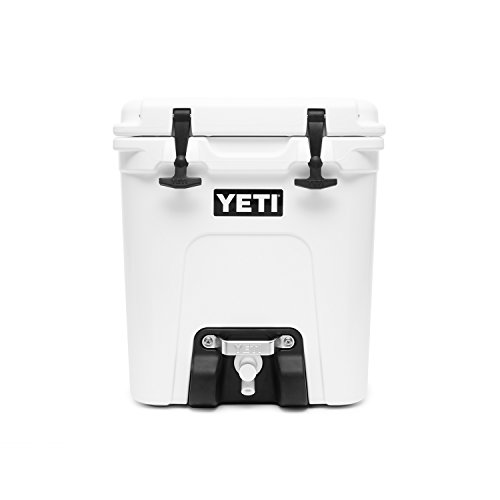
YETI Silo 6 Gallon Water Cooler, White
ASIN: B07FPVMRV8
The verified listing identifies a six-gallon YETI Silo water cooler. Its larger capacity suits a fixed campsite hydration station better than a backpacking load. Confirm current handles, tap, dimensions, empty weight, and care instructions before purchase.
Current dimensions, weight, cleaning, and mounting information: YETI Silo FAQ.View on Amazon

RTIC Halftime 3 Gallon Water Cooler Dispenser, Dual Taps, White | Insulated Beverage Dispenser for Sports, Parties, Camping, BBQ and Picnics, Dual Taps, Stackable, BPA Free
ASIN: B0CC6JX18L
The RTIC Halftime listing describes a three-gallon insulated dispenser with dual taps. A smaller full load is easier to manage than a six- or seven-gallon container, while dual taps may suit a shared table. Check current listing details and dimensions.
Current size and feature details: RTIC Halftime product page.View on Amazon
What works as a camping water cooler?
For most campsites, a camping water cooler is a container designed to hold drinking water and dispense it through a low-mounted tap. Insulation slows warming and helps keep pre-chilled water cooler. It does not refrigerate water. A non-insulated water carrier may store and dispense clean water but will track the ambient temperature. Powered hot-and-cold office units need electricity, a stable indoor surface, and often bottled-water handling; they are a poor match for a basic tent campsite unless you deliberately have a compatible power source and a sheltered setup.
There are two practical families to compare. Insulated beverage dispensers often have a large opening for ice, thick foam walls, handles, and a push or lever spigot. They can keep water pleasant to drink in hot weather, but their bulk and full weight matter. Rigid water storage containers prioritize volume, stacking, and transport, sometimes with a separate spigot or removable faucet. They are useful for bringing a clean supply to camp but may not insulate and may be awkward to place on a table.
A third option is a small refillable bottle or hydration bladder, which is easier for walking but not a shared group station. Some campers bring both: a larger sealed supply in the vehicle and a smaller tap dispenser at the picnic table. For backpacking, even a three-gallon dispenser is generally too heavy and bulky. Use a purpose-designed, lightweight bottle or treatment system instead.
Choose capacity by group and trip length
Capacity is the first tradeoff because a gallon of water weighs about 8.3 pounds before adding the container. A full five-gallon jug therefore contains roughly 41.5 pounds of water; the actual total is heavier once you include the cooler itself. Six and seven gallons mean even more weight. That load is manageable for a vehicle-supported campsite when filled close to where it will stay, but it is not an easy lift over uneven ground. A smaller three-gallon model lowers the carrying burden and may be enough for a couple or a short outing.
Do not choose capacity from the number printed on the label alone. Estimate drinking, cooking, coffee or tea, handwashing, and dish rinsing separately. Follow campground rules for greywater disposal, and do not treat water set aside for washing as drinking water. Hot weather, strenuous activity, kids, and pets can increase demand, while a campground tap nearby can let you refill. The CDC’s emergency planning guidance uses at least one gallon per person per day as a baseline for emergency water supply, but camping needs depend on activity, temperature, cooking, hygiene, and reliable access to potable water. Treat it as a planning reference, not a guaranteed trip allowance.
Use a container size that your household can move safely when full. If a five-gallon jug is too heavy to lift onto a picnic table, fill it in place using a clean hose or faucet and leave it on a stable lower surface with room beneath the spigot for a cup. Another approach is to carry a larger sealed supply in the vehicle and refill a smaller dispenser. You can also choose a collapsible container for low-bulk storage when empty, though flexible walls may be less stable and need protection from abrasion.
Insulated beverage jug or water-storage can?
An insulated beverage dispenser is the better choice when keeping water cool is a priority and the unit will serve several people at a campsite. Its foam insulation can slow temperature rise, particularly if you start with cold water, keep the lid closed, place it in shade, and avoid frequent opening. It is not a refrigerator: it will not chill warm water or hold a precise temperature. Some designs accept ice through a wide top opening, but ice takes up volume and melts into the drinking supply. Confirm whether that is acceptable for the way you will refill and clean it.
A dedicated water-storage container is useful when the main goal is to carry more potable water with a secure cap and tap. Many camping containers are not insulated. They can be placed inside a shaded vehicle or covered area, but do not leave them in direct sun and assume the water will stay cool. Some rectangular designs can be stacked or wedged into cargo space more easily than a rounded sports cooler. Check whether the tap can be protected during transport and whether the cap, vent, and spigot seal reliably in the upright orientation.
An ordinary food cooler with ice can keep bottles cold, but it is different from a dispensing water cooler. Melting ice may collect around packaged foods, and repeated opening lets warm air enter. If you use an ice chest, keep drinking water in clean, closed bottles or a dedicated sealed jug rather than relying on melted cooler water as drinking water. The container needs to be designed for potable water and cleaned appropriately.
Spigot design and dispensing height
The tap can make or break the experience. A recessed spigot is less likely to be struck when the cooler is carried or placed against a seat. A drip-resistant valve helps limit a puddle around the campsite, but no tap should be assumed leakproof during transport. Inspect the seal, threads, handle movement, and how the spout sits relative to the cooler wall. A push-button style may be easy for one-handed dispensing, while a lever can offer more deliberate flow. For small children, an easy-to-press tap can also mean more accidental spills.
Pay attention to spigot clearance. If the outlet sits close to the bottom edge, the container may need to be raised so a bottle or cup fits beneath it. Raising a full heavy cooler on an unstable camp table can create a fall hazard. A water carrier with a low faucet can work from a sturdy bench or a purpose-built stand; test the setup when empty first and secure it so it cannot slide. Check whether a replacement spigot is available and whether its thread and gasket are specific to that model.
For group use, the tap should be easy to see, reach, and close. Keep cups below the outlet without touching it. Do not let people put a bottle mouth against the spout, since that can transfer dirt or saliva to a surface other campers touch. A drip tray or washable cloth can help keep the serving area tidy. If a cooler uses a removable tap, follow the manufacturer’s instructions for cleaning and reinstalling the gasket.
Lid, opening, and cleaning access
A broad lid makes it easier to add ice and scrub the interior, but it can also invite hands, cups, leaves, or insects into the water if it is left open. A tight lid helps prevent spills and contamination during transport. Check whether the lid latches or simply rests in place. A seat-style top is convenient as a perch only if the manufacturer says it is designed for that use, and it should not be used as a step stool. Handle placement also matters: you need a secure two-handed lift when the jug is full.
Look inside the container path before you buy. Can you reach the corners with a cleaning brush? Can the tap be removed for thorough washing? Will the container air-dry with the lid open? A narrow-neck storage jug can limit contact with stored water but may be harder to scrub. A wide-mouth beverage cooler may be easier to clean, but its interior still needs careful rinsing and drying after sweetened drink mixes or flavored beverages. If you plan to use it only for water, avoid adding sports drinks or sugary beverages, which can leave residues that support odor and make cleaning more involved.
Material and odor also deserve consideration. New plastic may have a noticeable smell; wash and rinse it according to the manufacturer’s care directions before use. Do not assume that any plastic storage container is food-safe. Check product labeling and the manufacturer’s guidance for potable water use. Never repurpose a container that previously held fuel, pesticides, cleaning chemicals, or other toxic substances for drinking water.
Transportation and campsite setup
Plan the cooler’s route from the fill point to the campsite. A full five-gallon container weighs more than many people expect. Avoid carrying a full jug across rocky terrain, stairs, or a long walk from a parking area. Fill it at the tap if practical or transport it mostly empty and top it up in place. For car camping, secure the cooler upright so it cannot tip, roll, or press its spigot against cargo. Keep it away from fuel, pesticides, cleaning supplies, and anything that could contaminate a loose cap or tap.
At camp, place the dispenser on a level, stable surface in shade, away from campfire sparks, cooking grease, and foot traffic. Leave clear space for cups and hands at the tap. Do not put it on the ground if mud or runoff could reach the spout. If you use a folding table, check its load rating and stability before placing a heavy container on it. Kids may pull on handles or taps, so set the water station where it will not tip toward them.
For a vehicle or rooftop setup, consider temperature and movement. A parked car can become hot in the sun, which can warm water and make plastic odors more apparent. Secure the container before driving, then inspect for leaks at every stop. Do not store the cooler with water in a position that rests its weight on the spigot. If your chosen model is not designed for sideways transport, keep it upright and follow the manufacturer’s instructions.
Potable water hygiene at camp
Use a food-grade container intended for drinking water. Start with water from a trusted potable source or treat it according to authoritative instructions when the source is uncertain. A clear stream is not proof of safe water. The CDC notes that water from outdoor sources may contain germs even if it looks clean, and treatment depends on the source and risk. Follow current public health recommendations and the exact directions for any filter, disinfectant, or boiling method you use. Some contaminants, including harmful chemicals, cannot be removed by boiling or routine disinfection.
Before storing safe water, clean and sanitize the container as directed by the manufacturer or public health guidance. The CDC’s safe-storage guide recommends washing with soap and water, rinsing completely, and sanitizing a storage container before filling. Use its current instructions and concentration guidance rather than improvising a bleach mixture. Do not mix bleach with other cleaners. Allow the container to dry or rinse it with safe water as the guidance specifies. If your cooler’s manufacturer gives a compatible cleaning process, follow that too.
Keep the opening closed when the cooler is not being filled. Dispense through the tap instead of dipping cups, hands, or utensils into the container. Keep the spout clean and do not allow bottle rims to touch it. Use dedicated drinking-water containers, label them if you bring multiple jugs, and store them away from fuel or chemicals. At the end of the trip, empty and clean the cooler as directed, then let it dry fully before storage to reduce odors and residue.
Reference: the CDC safe water storage instructions cover container choice, cleaning, sanitizing, and protected storage. The CDC guide to water treatment while hiking, camping, or traveling explains why questionable surface water needs treatment and that contaminants can require a different source. This article is product-selection guidance, not a substitute for public-health advice or product manuals.
How long will the water stay cool?
There is no universal number of hours or days that applies to every camping water cooler. The result depends on starting water temperature, ambient heat, direct sunlight, how often the lid is opened, the insulation and lid seal, the amount of water, and whether ice is added. Manufacturers may publish an ice-retention duration under stated conditions, but that does not mean water will remain at a refrigerator temperature for the same period. Treat cooler claims as comparative context and test your own setup in ordinary use.
To slow warming, pre-chill the container if the manufacturer permits, fill with cold potable water, keep it shaded, close the lid quickly, and avoid leaving the cooler in a hot vehicle. A larger full container changes temperature more slowly than a small one because there is more water mass, but it is heavier and harder to move. Ice can extend the time water feels cold, yet takes up space and melts. If you use ice, use potable ice and clean the cooler before refilling.
Cold water is a preference; safe water is a necessity. Do not keep water simply because it still feels cool if you suspect the container or supply was contaminated. When in doubt, discard it and clean the container. Follow campground advisories and local water notices. For longer trips without a reliable refill point, carry enough sealed potable water for the group’s planned needs and a reasonable contingency, without exceeding the vehicle’s safe payload or handling capacity.
When a powered dispenser or purifier makes sense
An electric countertop dispenser can heat or chill water, but it needs electricity and a protected, level surface. It is more often a home or office appliance than a campsite water jug. Some RVs or van builds have a suitable electrical system, yet the dispenser’s wattage, startup draw, water bottle loading, ventilation, and anchoring all need checking. A passive insulated jug is usually simpler for a tent site because it does not need an inverter, generator, or shore power.
A water filter or purifier solves a different problem from an insulated cooler. A cooler keeps water in a container and may slow warming; it does not make unsafe water safe. A filter’s performance depends on the technology and certified claims, and viruses or chemicals can require different treatment. Use equipment rated for the specific hazards likely at the source and follow its maintenance schedule. Never assume that adding a filter to a cooler makes every water source potable.
If a campground provides treated drinking water, filling a clean cooler can be straightforward. If you plan to collect backcountry water, build a separate treatment plan based on current public health guidance and the device’s instructions. Keep untreated water away from the clean cooler and dispensing area, and avoid using the same cap, hose, or hands for both sides unless they have been cleaned. This separation prevents the clean container from becoming the weak link.
Comparing four common formats
The Igloo five-gallon insulated dispenser is the familiar large-group option. The benefits are a broad beverage-cooler design, a tap, and an ice-compatible body. The tradeoffs are bulk and the weight of a full load. It works best when you can fill it near the campsite and leave it in one spot. Check if the product variant includes a cup dispenser or if that is a separate add-on.
The Reliance Aqua-Tainer is a seven-gallon rigid storage container with a spigot. It can transport a larger reserve, but it is not the same as an insulated cooler. Think of it as a water carrier that you may keep shaded or use as a supply source for a smaller dispenser. Verify its current orientation, cap, vent, and spigot instructions; don’t put weight on the faucet during transport. Its gallon capacity means a very heavy full container, so plan to fill it where it will be used.
The YETI Silo is a six-gallon cooler-style water dispenser aimed at demanding use. Its size and construction may suit a permanent base-camp station, but the loaded weight and purchase cost can be high. Confirm exact dimensions and lifting handles against your vehicle and table. A premium exterior does not remove the need for sanitation or gentle tap handling.
The RTIC Halftime three-gallon cooler is a smaller-capacity dispenser with dual taps in the listed version. It can be easier to carry when full and can fit a smaller group, though the cooler may need more frequent refills. Verify tap spacing and serving access, and make sure its size aligns with the volume you actually use. These examples illustrate different priorities; no single product is best for every campground or group.
What to inspect on the listing and in person
- Usable water capacity and full weight, not just the empty product weight.
- Whether it is insulated, and whether cooling claims are for ice retention rather than refrigeration.
- Food-contact or potable-water suitability and the manufacturer’s cleaning instructions.
- Spigot style, replacement availability, thread compatibility, and clearance under the outlet.
- Lid seal, venting, handles, tie-down points, and whether the cooler must stay upright.
- Interior opening size, ability to add ice, and whether interior surfaces are reachable for cleaning.
- Exterior dimensions and whether it will fit in the vehicle, campsite storage bin, or table.
- Whether cups, a cup dispenser, spigot, drain, or other accessories are included or sold separately.
- Return terms and current model details; color and size variants can have different listings.
Before a trip, fill the container with clean water at home or at a trusted potable source, inspect the tap and lid for leaks, and leave it standing on a washable surface for a while. That simple check can reveal a loose spigot gasket or a lid that does not close as expected. Pack a clean backup water bottle or sealed supply rather than relying on one dispenser as the only water source.
Common buying mistakes
The first mistake is buying too much capacity. Bigger may reduce refills but increases filled weight and can become difficult to lift or secure. Choose a capacity you can manage, then plan how to refill it. The second mistake is assuming “cooler” means refrigeration. Passive insulation only slows heat gain; it cannot chill warm water and needs cold water or ice to start. Third, people sometimes buy a large storage jug expecting it to be insulated. Confirm the product category and construction before ordering.
Another common error is ignoring the spigot. A tap that leaks, sits too low for a cup, or is exposed to bumps can create a messy campsite. Read the parts list and care guidance; check whether the model’s outlet can be replaced. Do not plan to lay a filled container on its side unless its maker explicitly permits it. A cap or vent can leak even if the spigot is shut.
Finally, don’t buy a powered household water dispenser for tent camping without planning power, weather protection, and secure placement. Don’t choose a water cooler as a substitute for a water treatment device. And don’t trust a container of unknown history for drinking water; a jug previously used for chemicals must never be repurposed for potable water. Simple product-category checks can prevent most of these problems.
Frequently asked questions
What size camping water cooler should I get? For a small group or short outing, a smaller three-gallon dispenser may be easier to handle. Larger groups or base camps may benefit from five to seven gallons, but a full container is heavy. Estimate daily needs and how easy the refill point is, then choose a size you can safely lift or fill in place.
Does a camping water cooler keep water cold without ice? Insulation slows warming but does not refrigerate. Start with cold water, keep the jug shaded, and limit lid openings. Add potable ice only if the cooler’s instructions allow it and you are comfortable with the melted ice becoming part of the drinking water.
Can I use any water jug for drinking water? No. Use a clean, food-grade container intended for potable water. Never use a jug that held fuel, pesticides, cleaning products, or other toxic chemicals. Clean and sanitize it according to manufacturer and public-health guidance.
Is a water cooler the same as a water purifier? No. A cooler stores and dispenses water, and insulation may slow temperature change. A purifier or treatment method is designed to address specified contaminants. Use the right treatment for the source; a cooler does not make unsafe water safe.
Can a five-gallon cooler stay in a car? It can be transported if secured upright according to the maker’s instructions, but a hot vehicle warms water and can increase odors. Keep it out of direct sun where possible, prevent the spigot from pressing against cargo, and inspect for leaks when you arrive.
How do I keep the tap sanitary? Keep the lid closed, avoid touching the outlet with bottle rims or hands, wipe it with a clean cloth as needed, and clean the unit after trips using its manual. Dispense water directly into cups rather than dipping items into the container.
Can I use a household hot-and-cold dispenser at a campsite? Only if it is designed for the intended environment and you have compatible power, a stable protected location, and a secure water bottle setup. For ordinary tent camping, a passive dispenser is simpler and avoids power use.
How much water should I bring? Plan for drinking, cooking, and hygiene based on the group, weather, activity, and refill reliability. Public-health emergency guidance offers a baseline for emergency planning, but it does not replace trip-specific needs. Carry extra when conditions are hot or refill access is uncertain.
Final campsite checklist
Choose the format first: insulated beverage dispenser for cold-water service, rigid container for larger potable-water transport, or a smaller jug for easier handling. Measure the intended storage spot and calculate loaded weight. Check the lid, spigot, tap clearance, cleaning access, tie-down plan, and any accessories. Fill only with safe water, keep it shaded and closed, set the cooler on stable ground or a rated table, and clean it after the trip. Those details are more useful than a headline capacity or an unverified promise that water will stay cold for a fixed number of days.
For a group campsite, a five-gallon insulated jug can serve as a shared water station if someone can fill and position it safely. For transporting a larger supply, a rigid non-insulated container such as the Aqua-Tainer is a different tool and should be treated as storage, not as a chilled dispenser. A three-gallon model can be easier to move. Choose based on safe-water handling and actual trip logistics, then verify the linked product’s current features and included parts.
For practical related planning, our guide to portable generators for camping can help when evaluating powered campsite appliances; remember that passive water coolers do not need electricity. If your water dispenser is for an office or home break room, compare the stationary bottleless and bottled models in our office water cooler guide instead.
Amazon disclaimer: As an Amazon Associate, DailyHomeDecorating.com earns from qualifying purchases. Product details, images, and pricing may change; Amazon and its sellers control current listing information.