Affiliate disclosure: As an Amazon Associate, DailyHomeDecorating.com earns from qualifying purchases. If you buy through links on this page, we may receive a commission at no extra cost to you.
Safety first: This guide assumes fully cooled ash only. Never vacuum burning or glowing embers. Follow your exact vacuum manual and fireplace or stove instructions before cleaning.
Ash vacuum examples to compare
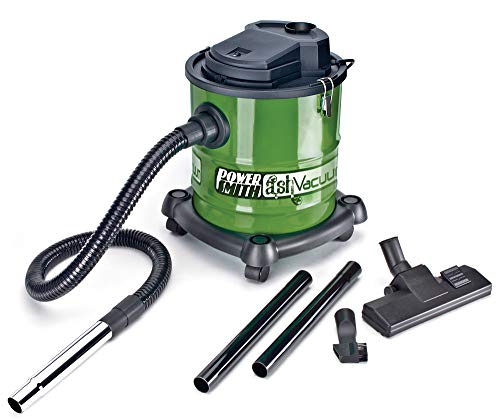
PowerSmith PAVC101 10 Amp Ash Vacuum,Green / Black | Vacuum Cleaners, Ash Vacuums, Canister Vacuums, Fireplace Cleaning, Metal, 3 gal, 16 ft, 120 V, PowerSmith PAVC101 Canister
ASIN: B0060EUA32
The verified Amazon listing identifies the PowerSmith PAVC101 as a 10-amp ash vacuum with a metal canister and a listed 3-gallon ash capacity. The manufacturer describes a heat-resistant filter system and metal hose. Confirm the exact model, filter parts, cord and accessory bundle on the current product page; use it only as its manual allows.

PowerSmith Ash Vacuum 10 Amp 4 Gallon Vacuum and Blower PAVC102 | 10′ Hose, Wheeled Base, Crevice Tool, Brush Nozzle, Pellet Stove Hose, 16′ Power Cord, 1 1/4″ Adapter, and 2 Filters
ASIN: B0193TKNBE
The PowerSmith PAVC102 listing describes a 4-gallon ash capacity, wheeled base, 10-foot hose, accessory tools, and two filters. A larger canister may reduce emptying frequency, but it takes more storage space. Verify the included accessories and the current manufacturer instructions before use.

DEWALT 4 Gallon 4 HP Metal Ash Vacuum for Pellet Stoves, Fireplace DXV04A | Metal Canister Vacuum Heat Resistant Dual Efficient Filtration Safe Ash Vacuum for Pellet Stoves, Fireplace and Grill
ASIN: B0CTN4SYZ4
The DEWALT DXV04A listing describes a 4-gallon metal ash vacuum for pellet stoves, fireplaces, and grills with dual filtration. Check filter availability, capacity, and the exact ash-temperature limits in the current manual. Never treat a heat-resistant canister as permission to vacuum hot or glowing embers.
Certain content that appears on this site comes from Amazon. This content is provided “as is” and is subject to change or removal at any time. Product examples and images are supplied through Amazon Creators API; confirm specifications and availability on the current listing.
For official fire-safety guidance, read the U.S. Fire Administration’s ash-disposal instructions. For other cleanup tools, compare our shop vacuum guide or small shop-vacuum guide; a general shop vac is not automatically safe for ash.
What an ash vacuum is designed to do
An ash vacuum is a dedicated dry vacuum for collecting cooled fireplace, wood-stove, pellet-stove, or grill ash. Its design usually includes a metal collection canister, heat-resistant hose or nozzle, and a filter system intended to keep fine ash from reaching the motor or escaping back into the room. Those details make it more appropriate for a hearth than a standard household vacuum, but they do not make the appliance safe for burning coals or glowing embers.
This guide compares ash vacuums by canister construction, filter design, capacity, hose and nozzle access, storage, and service parts. It does not treat them as shop vacs for general debris, nor as household vacuums for carpets and upholstery. Product pages and manuals vary. We recommend vacuuming only fully cooled ash with no live embers, and following the exact manufacturer instructions even when a product listing uses terms like “warm ash.”
The essential safety rule: ash must be cold
Wait until the fire is completely out and ash has cooled. Do not vacuum hot ash, burning pieces, or glowing embers. Airflow inside a vacuum can intensify hidden embers, while a metal canister or heat-resistant hose cannot prevent every fire hazard. A dry surface can look cold while an ember remains underneath, so carefully stir or rake the ash with an appropriate metal tool and check for warmth before cleaning. If there is any doubt, wait longer.
The U.S. Fire Administration advises allowing ashes to cool, placing them in a tightly covered metal container, and keeping that container at least 10 feet from the home and other buildings; it also warns against emptying ash directly into a trash can. Read its safe ash-disposal guidance. A vacuum is a cleanup tool for cooled ash, not a shortcut for disposing of warm fireplace contents.
Heat-resistant does not mean hot-ash proof
Product descriptions may say “heat-resistant” or “warm ash.” Those terms refer to particular components or manufacturer conditions; they do not mean the vacuum can collect fire, glowing coals, or material above the manual’s stated limit. The PowerSmith PAVC101 page describes a heat-resistant metal hose and filter system, while its operator manual warns against hot ash. Snow Joe’s ASHJ202E manual says to collect cold, noncombustible ash and gives its own temperature limit. The rule for each machine comes from its own manual.
For this guide, all product comparisons assume fully cold ash. Do not infer a temperature limit from another model, another brand, a seller title, or a customer review. If your manual allows a specific warm-ash condition, follow it exactly and never exceed its limit; if the instructions are unclear, do not vacuum ash until it is cold. Use the manufacturer’s PAVC101 product and manual page and the Snow Joe ASHJ202E operator manual as examples of model-specific guidance.
Ash vacuum versus shop vacuum
A shop vacuum is built for utility pickup through a hose: sawdust, chips, workshop debris, or liquid when correctly configured. Its standard tank, hose, filter, and nozzle may not be designed for fine ash or ember risk. A shop vac can also spread ash from exhaust if its filter is unsuitable or not seated. An ash vacuum’s metal collection components and ash-specific filter system are purpose-built for hearth cleanup, but still require cold ash and careful maintenance.
If you need general garage or workshop cleanup, compare our shop vacuum buying guide or compact wet/dry vacuums. Do not use those general-purpose recommendations as ash-vac substitutes unless the manufacturer explicitly approves that exact configuration for ash. Likewise, do not use an ash vacuum for ordinary dust collection or liquids unless its manual specifically permits it.
Metal canister, hose, and nozzle
A metal canister is common in ash vacuums because it is durable and helps manage residual warmth within the specific limits of the appliance. Check the canister’s ash capacity, lid latches, gasket, and how easily it empties. A secure lid helps contain fine dust during transport and emptying. A metal hose and nozzle are also useful in a hearth, where the tool contacts gritty surfaces and can pick up small pieces that would wear a standard plastic hose.
Inspect how the hose attaches and whether the seal is tight. A loose connection can leak fine ash before it reaches the filter. A narrow nozzle can reach corners of a stove, while a broader metal end may clean open hearth areas more quickly. Never push a nozzle into ash that may still be hot or probe a live fire. Use the nozzle only on cold, dry residue and avoid scraping delicate refractory panels or glass.
Filtration: ash is fine and easy to spread
Ash particles can be very fine and light. If they pass through a filter or escape around a seal, they can settle on nearby furniture and floors. Compare the filter type, number of filtration stages, whether the filter is heat-resistant or washable, and the availability of replacements. A pleated cartridge, cloth bag, pre-filter, or multi-layer setup may be used depending on the model. Do not assume a filter called “HEPA” is included unless the exact product specification says so.
Keep the filter installed and seated as directed. Never operate the machine with a missing, damaged, or damp filter. A clogged filter can reduce suction, strain the motor, and increase exhaust dust. Follow the manual for cleaning and replacement; some filter media must not be washed or brushed aggressively. When servicing, take the canister outdoors if the instructions permit, wear appropriate dust protection, and keep the motor head away from the ash cloud.
Collection capacity and ash type
Capacity affects how often the canister needs emptying, but a larger number is not automatically better. A 3-gallon ash capacity may be easier to lift and store than a 4-gallon model, while a bigger canister may suit a frequently used stove. Fine ash can fill the filter before the tank is physically full, so monitor suction and the filter indicator if present. Do not compact ash inside the canister to make more room.
Wood fireplaces, pellet stoves, and grills can produce different ash textures and residues. The appliance manual may restrict what fuel ash is permitted. Do not collect liquids, soot if prohibited, charcoal pieces, metal fragments, or debris from treated materials unless expressly allowed. If you burn mixed or unknown materials, check the appliance instructions and local disposal rules before vacuuming or discarding the residue.
Hose reach, cord, and maneuverability
Before buying, measure the distance from the hearth to the outlet and the storage area. A longer cord can reduce outlet changes but creates a trip path across the room. Keep it away from hot fireplace surfaces, sharp edges, water, and foot traffic. A wheeled base is easier to move across a flat room; a compact canister may be easier to lift over a threshold or store in a small closet.
Hose length and diameter affect reach and clog risk. A longer hose can reach into a stove insert, but a narrow passage may block more easily on chunks of debris. Ash vacuums are for fine cooled ash, not large coals or objects. Check whether the hose is metal-lined, heat-resistant, or a special ash-vac component for that exact model. Do not substitute a generic shop-vac hose unless the manufacturer confirms compatibility.
Filter cleaning and parts availability
Routine service determines whether an ash vacuum remains useful. Check filter replacement availability, part numbers, sealing gaskets, hose compatibility, and whether the motor head can be serviced. A washable filter may reduce replacement costs but still needs gentle cleaning and full drying. A multi-filter arrangement may trap fine ash effectively but can involve more maintenance steps. Read the manual before removing or cleaning any filter.
After a session, empty the canister only when the ash is cold. Do it outdoors or in a controlled area, and avoid shaking ash into the air. Inspect the filter and seals for damage. Clean the nozzle and hose if the manufacturer allows it. Store the vacuum away from the fireplace and away from household dust, moisture, and extreme temperature. Keep a record of filter part numbers so maintenance does not become guesswork.
Choosing an ash vacuum for a fireplace
A traditional fireplace may leave a broad shallow layer of ash and narrow corners near the firebox. Look for a stable canister, hose that reaches the back without pulling the machine, and a nozzle small enough to clean along edges. If the hearth has a decorative stone or tile surface, avoid dragging a metal nozzle across it. Use a soft brush only if the manufacturer includes and approves it for that surface.
Consider whether the ash pan can be removed and emptied manually instead. A vacuum is convenient for fine residue but adds filter care and a powered device near the fireplace. Keep the vacuum well away from active flames and ensure all ash is cold. The USFA also recommends placing disposed ashes in a covered metal container outdoors, at least 10 feet from the home. Treat disposal as a separate step after vacuuming.
Choosing for a wood stove or pellet stove
Wood-stove and pellet-stove owners may clean more often and may have narrow ash channels or baffles. A crevice nozzle, longer metal-lined hose, and a filter that is easy to inspect can help reach the firebox. Check the stove manual for which areas may be cleaned and whether ash should remain in any tray or firebox section. Never vacuum into a burner, live ember bed, or hot ash pan.
Pellet ash can be especially fine, so filter sealing and maintenance matter. A clogged filter can make suction drop during the job. If the stove maker requires a particular cleaning process or cool-down interval, follow it. Do not clean a pellet appliance while it is powered or hot unless its instructions explicitly say how; disconnect it for service where required. Keep the ash vacuum’s motor head, cord, and filter away from residual heat.
A closer look at PowerSmith PAVC101
The verified Amazon listing identifies the PowerSmith PAVC101 as a 10-amp ash vacuum with a metal canister and a listed 3-gallon ash capacity. The manufacturer lists a heat-resistant filter system, metal hose, accessories, and a 16-foot cord. This smaller-capacity configuration may suit a household that wants a dedicated fireplace or stove vacuum and has a convenient outdoor location for filter service.
Check which nozzle, extensions, filters, and wheeled base are included in the exact listing. The manufacturer’s page and operator manual should be reviewed before use; product marketing about warmth is not permission to pick up hot or glowing ash. For routine cleaning, wait for fully cold ash. Confirm filter replacement availability and the return terms before purchasing.
A closer look at PowerSmith PAVC102
The PAVC102 listing describes a 4-gallon ash capacity, 10-foot hose, wheeled base, multiple tools, and two filters. A larger capacity and accessory bundle can be useful for a frequently cleaned hearth or pellet stove, but the canister takes more room than a small model. The listed hose is shorter than the PAVC101 configuration in current manufacturer information, so compare the exact version and your firebox reach.
As with any ash vacuum, the critical items are the filter, seals, metal components, and clear instructions for cold ash. Confirm that the current package includes the expected filters and tools, and check whether replacement parts are available. Empty the container only after ash has cooled completely and follow the manual’s method for filter cleaning.
A closer look at DEWALT DXV04A
The DEWALT DXV04A listing describes a 4-gallon metal ash vacuum for pellet stoves, fireplaces, and grills with dual filtration. The larger capacity may reduce how often it needs to be emptied, while the metal canister and filter configuration distinguish it from a standard household vacuum. Check the exact manual for filter maintenance, approved fuels, temperature limitations, and what nozzle or hose comes in the selected package.
Product titles are not safety instructions. Do not vacuum anything hot or glowing, regardless of claims about heat-resistant construction. Keep the unit away from the fire, inspect the filter before use, and confirm the canister is sealed correctly. If the instructions do not clearly cover your stove or ash type, contact the manufacturer before using the machine.
Safe ash-cleanup workflow
First, let the fire go out and allow the contents to cool. Follow your fireplace or stove manual for the appropriate cool-down period, and check for hidden embers by carefully raking with a metal tool. If any part remains warm, smoking, or glowing—or if you are unsure—wait. Never rely solely on appearance or a product’s “warm ash” advertising claim.
Next, read the ash vacuum instructions, install the correct dry filter, and inspect the canister, hose, latches, and cord. Vacuum only the permitted cooled ash, without disturbing dust unnecessarily. Switch off and unplug the appliance before servicing. Empty it outdoors when safe, keep the ash in an appropriate covered metal container, and store it away from the building until it is fully cold. Follow local disposal rules.
What not to vacuum
Do not vacuum glowing coals, flames, smoking ash, hot debris, liquids, flammable materials, or unknown chemical residues. Do not use a household vacuum or a standard shop vacuum on fireplace ash unless its manufacturer expressly approves that use and specifies the required filter configuration. Do not operate an ash vacuum without its filter or with a damaged seal. Do not use it near flammable vapors or in a wet area.
Ash can conceal embers even when the surface looks gray. If a vacuum or hose becomes warm, emits smoke, or smells unusual, stop immediately, unplug it if safe, and move away from combustibles. Do not open a hot canister indoors. Follow the manufacturer’s emergency guidance and contact local fire services if you cannot safely manage a fire risk. The safest routine is to prevent hot ash from entering the vacuum at all.
Common buying mistakes
One mistake is choosing by motor amps or wattage alone. Those numbers do not tell you whether the filter seals well, whether the hose reaches your stove, or how easy the canister is to empty. Another is assuming a “heat-resistant” canister can handle live embers. The manual’s temperature and material limits are the controlling instructions, and the safest common practice is to vacuum only fully cooled ash.
Also check filter replacement costs and parts availability before buying. An inexpensive vacuum can become frustrating if the filter is hard to replace or the gasket leaks. Measure storage space and cord reach. Confirm whether the product is an ash vacuum, a shop vac, or just an ash canister accessory. Product names and listings can be confusing; verify the model code and all included parts.
Frequently asked questions
Can an ash vacuum pick up hot ash? Do not vacuum hot, burning, or glowing ash. Wait until it is fully cold and follow the exact product manual. Heat-resistant materials do not make an appliance safe for embers.
How long should I wait before vacuuming fireplace ash? Follow your stove or fireplace instructions and confirm there are no warm or glowing pockets. If uncertain, wait longer. The surface can look cold while embers remain below.
Can I use a regular shop vac for fireplace ash? Only if the manufacturer explicitly approves that exact model and required filter setup. Otherwise, use an ash-specific vacuum for cooled ash.
What filter should an ash vacuum have? Use the exact filter specified by the manufacturer. A heat-resistant or multi-layer filter may be part of an ash-vac design, but do not substitute a generic filter.
How do I dispose of ash after vacuuming? Follow local rules and fire-safety guidance. The U.S. Fire Administration recommends a tightly covered metal container kept outdoors at least 10 feet from the home and other buildings until the ashes are cold.
Can I use an ash vacuum for pellet-stove ash? Only if the specific vacuum and stove manuals allow it. Pellet ash can be fine; filter sealing and cleaning are especially important.
Is an ash vacuum the same as a fireplace shop vacuum? The dedicated ash vacuum is built with ash-specific collection and filtration components. A generic shop vacuum is for utility cleanup and may not be approved for ash.
Final buying checklist
Before choosing among the best ash vacuums, check the metal canister’s ash capacity, hose and nozzle material, filter design, seal quality, cord length, weight, accessory bundle, and replacement filter availability. Confirm the model is intended for your fireplace, wood stove, pellet stove, or grill ash. Read the actual manual, not only the retailer’s product title. Make sure you can store and empty the canister safely outdoors.
The PowerSmith PAVC101 is a smaller-capacity comparison, its PAVC102 offers a larger 4-gallon ash capacity and more included tools, and the DEWALT DXV04A is another 4-gallon metal-canister option with dual filtration listed. All are for ash-specific use within their manuals. For routine cleanup, use only fully cooled ash with no hidden embers. A good filter and metal canister help contain fine dust, but safe cool-down and careful disposal remain essential.