Affiliate disclosure: As an Amazon Associate, Daily Home Decorating earns from qualifying purchases. If you buy through a link on this page, we may receive a commission at no additional cost to you. Product examples are included to help readers compare design and use cases; they are not claims of hands-on testing.
A hand vacuum is most useful when it solves a small, repeated cleanup job without making you drag out a full-size machine. It might be a cordless dustbuster kept near the kitchen for crumbs, a corded model ready for longer upholstery work, a compact blower-vac for a workshop bench, or a stick vacuum that converts into a hand unit for stairs. Those designs all fit the phrase “hand vacuum,” but they do not do the same work or offer the same trade-offs.
This guide looks across hand-vacuum formats rather than treating battery-powered dustbusters as the whole category. We explain when corded power helps, when cordless convenience is worth prioritizing, how flexible hoses and 3-in-1 conversions change the job, and what to check in filtration, capacity, attachments, noise, weight, and upkeep. The Amazon product examples below were surfaced with Amazon Creators API and include verified ASINs and images. Product listings can change; confirm current model details, included tools, prices, and availability on the linked page before buying.
Quick answer: the best hand vacuum depends on the job
For short, everyday pickups in several rooms, a cordless hand vac is easy to keep close by and quick to use. For longer cleaning sessions where a battery would run down, a corded handheld provides continuous power as long as an outlet is within reach. A model with a hose can reach vents, shelves, vehicle footwells, and narrow gaps without forcing the main body into a cramped space. A convertible stick vacuum may be the better choice if you want one unit for floors, stairs, and small above-floor spills.
Choose by the cleanup you repeat most, not by a headline suction number. If the regular mess is cereal or dust around a counter, a light, easy-empty cordless model may be enough. If you clean upholstery or stairs over a longer period, cord length, hand weight, grip, and hose reach can matter more than battery-free convenience. For a garage bench or equipment cabinet, an accessory-rich vacuum/blower could be more useful than a small dustbuster, but it may be louder and less refined for everyday indoor use.
Hand-vacuum examples to compare
These examples cover different formats. They are not ranked lab-test winners, and their order is not a performance score. Compare each listing against the tasks and storage space you actually have.

ASIN: B002D47XOM

ASIN: B075L1Z6GW

ASIN: B0046AO1I2
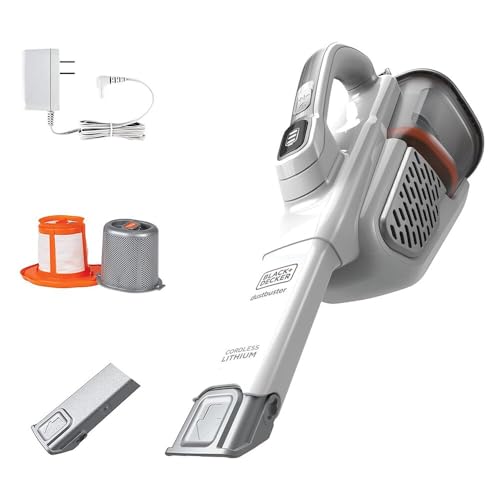
ASIN: B07R9GP85M
Dirt Devil Scorpion Plus QuickFlip: corded pickup with an integrated crevice tool
The Scorpion Plus is a compact, plug-in style suited to jobs where you prefer not to wait for a battery to charge. The QuickFlip crevice tool is stored on the body, so a narrow nozzle can be ready without looking for a separate accessory. That is useful along sofa seams, stair edges, baseboards, and between car seats. A corded hand vac also makes sense if a storage closet has a nearby outlet and the machine is used for several small areas in one session.
The same power cord is its main limitation. Before choosing it, think through the distance from your outlet to the stairs, sofa, or parked vehicle. A cord that reaches one room may not reach the next, and moving an extension lead around furniture can become tedious. The attached tool is convenient, but it does not replace a soft upholstery brush or a flexible hose for every surface. Check the current package contents and cord details on the listing because product bundles and model revisions can differ.
Koblenz HV-120 KG3: long cord for car seats and household upholstery
Koblenz describes the HV-120 KG3 as a corded handheld vacuum with a 400-watt motor, an 18-foot cord, a washable sealed cloth filter, a dust cup, and a crevice accessory. The longer reach can be helpful around a vehicle parked near an outlet or in a room where the plug is not right beside the furniture. Its intended tasks include cars, trucks, furniture, and hard-to-reach spaces. The maker lists a three-year limited warranty on its product page; always read the current warranty terms and exclusions before purchase.
This model is most compelling for someone who prefers continuous power and does not mind managing a cord. The washable cloth filter is not the same thing as a certified whole-machine HEPA system, so do not infer allergy performance from the word “sealed.” Follow the owner’s instructions for washing and drying the filter completely before reinstalling it. Compare the cup and nozzle dimensions with the type of debris you collect. A small tool may handle dry crumbs and dust well but take longer with a large amount of hair or workshop debris.
MetroVac Vac N Blo VM12500T: a hand vacuum/blower for a bench or equipment
The MetroVac Vac N Blo is a different kind of handheld. The manufacturer describes the 500-watt model as a dry-pickup vacuum and blower, with an all-steel body, about three pounds of weight, 60 inches of water lift, and multiple accessories. It is designed for mechanics, DIYers, and craftspeople who want one compact machine for debris and blowing tasks. It may suit a workbench, keyboard enclosure, tool drawer, or equipment area better than a standard household hand vac.
A blower function adds versatility, but it also changes how you should use the machine. Blowing dust out of a device or across a room can simply move it elsewhere, so use an appropriate collection setup and follow the equipment maker’s cleaning guidance. The product is for dry pickup only; do not use it to collect liquids. Its cord, accessory set, and more specialized design are not necessarily advantages for a kitchen cleanup. Check the VM12500T listing carefully to distinguish it from related VM12500 bundles, since accessory packages can differ by model suffix.
BISSELL FeatherWeight 2033: a stick vacuum that converts to hand mode
The BISSELL FeatherWeight is not a standalone dustbuster. BISSELL describes its 2033 as a corded, three-in-one unit that can work as a stick vacuum, stair vacuum, and hand vacuum. The product page lists a 15-foot power cord, a 0.67-liter dirt tank, a 2-amp rating, and a crevice tool, and states it is intended for low-pile carpet, rugs, and hard floors. That makes the convertible format worth comparing when you want one appliance for quick floor passes and above-floor touch-ups.
Conversion saves storage space compared with keeping a stick vacuum and a separate hand vac, but it may be less convenient than grabbing a dedicated compact unit. Think about where you will keep the floor nozzle and whether it is easy to switch modes. The included accessories and filtration are relatively simple, so a household with heavy shedding, deep upholstery, or repeated fine-dust cleaning may need a different tool. The 2033 is corded, so the 15-foot reach and outlet location still matter.
BLACK+DECKER AdvancedClean+ HHVK320J10: cordless reach and larger dust cup
BLACK+DECKER lists the HHVK320J10 as a cordless 12-volt MAX handheld with an extra-long built-in crevice tool, two speeds, a battery indicator, a washable filter and pre-filter, and a 750-milliliter dust bin. The brand states up to 25 minutes of runtime, while actual runtime varies with the selected mode, debris, battery condition, and usage. Its larger cup and integrated nozzle may make it a convenient option for small home tasks where a cord would get in the way.
Do not treat a manufacturer runtime claim as a guarantee for every cleaning session. Higher power modes may use the battery more quickly, and a battery-powered model should be stored and charged according to the manual. The HHVK320J10’s extended crevice tool favors narrow, hard-to-reach spaces; it is not a substitute for a full-width floor head. Check whether the listing includes the charger and filter you need and confirm battery-service options before buying.
Start by separating the main hand-vacuum formats
Dedicated cordless hand vacuums
A cordless model is built around quick access. It can live on a charging dock or shelf and be picked up for crumbs, dry dirt, car interiors, or upholstery. There is no cord to pull around a chair, and many units include a crevice nozzle or brush. Battery capacity, run time, charging time, and replacement-battery support deserve attention. If the machine will be used for more than a few short bursts at a time, a battery indicator and a clear charging routine help reduce surprises.
Small cordless machines vary widely. Some are very light and simple, while others add a motorized brush, flexible hose, or larger bin. More attachments can improve reach, but they also need storage. A compact machine that empties neatly may be more useful day to day than a feature-packed vacuum that stays buried in a cabinet. Empty the cup before it is packed tight, and clean filters only as directed so that airflow does not gradually decline.
Corded handheld vacuums
A corded hand vac can run continuously without waiting for charging. It is often a practical choice for longer tasks in a garage, workshop, stairwell, or vehicle near a power outlet. The cord length, plug location, and path around furniture determine how convenient it feels. Before buying, imagine using it in the farthest location you care about. A long cord is useful only if it reaches safely without stretching across a walkway or creating a trip hazard.
Some corded handhelds use a basic direct-suction layout; others add a flexible hose or integrated crevice nozzle. A hose makes it easier to keep the motor body supported while reaching into a gap, but hose diameter and stiffness affect maneuverability. A plug-in design may be heavier than a light battery dustbuster, and the cord needs to be wrapped and stored. For a one-minute kitchen crumb pickup, cord management can outweigh the benefit of continuous power.
Convertible stick vacuums with a hand mode
A convertible stick vacuum can cover floor debris, stair treads, sofa cushions, and small overhead areas in one package. The floor nozzle is helpful for quick passes over hard surfaces, while the hand configuration can handle limited above-floor cleaning. This arrangement suits small homes where storage is tight or where a full-size upright feels excessive. Check whether conversion requires moving the dust cup or floor head, and whether the hand unit feels balanced after the stick is removed.
Conversion also creates trade-offs. The motor and dirt bin may sit in your hand, so weight distribution matters. A stick vacuum’s hand mode might be awkward in a car or tight shelf compared with a true handheld with a short body and hose. If above-floor cleaning is your main need, a dedicated hand vac may be easier to handle. If floors are part of the routine too, a 2-in-1 format can save space and reduce the number of machines to maintain.
Vacuum/blower hybrids
A vacuum/blower can be useful in a dedicated work area where you want to collect dry debris and move air for a suitable task. The blower function is not a replacement for vacuuming: it can scatter dust into the room, onto nearby items, or toward the person using it. Keep the nozzle controlled, use protective equipment when appropriate, and avoid blowing debris into electronic devices unless their manufacturer recommends that method. For ordinary indoor surfaces, a brush or a vacuum nozzle is usually easier to control.
How to choose a hand vacuum for your home
Match the vacuum to the debris
Dry crumbs, loose dust, pet fur, tracked-in grit, and fine workshop dust behave differently. A broad opening can collect cereal or larger bits but may be clumsy in narrow seams. A crevice tool reaches gaps but can clog when the debris is too large or fibrous. A brush attachment can loosen hair from fabric, though it may not be appropriate for delicate textiles. Check the owner’s manual for surfaces and materials the manufacturer says are suitable.
Do not use a dry-only hand vacuum for spills or wet debris. If a household needs liquid pickup, look for a product specifically designed and labeled for wet/dry use, then follow its tank, filter, and safety requirements. A normal cloth or paper filter can be damaged by moisture, and water mixed with electrical equipment creates a serious hazard. The product examples in this guide are intended for dry cleaning unless the linked listing explicitly identifies an appropriate wet/dry model.
Think about reach, not just size
Reach includes the tool length, hose flexibility, cord or battery, and the angle of the nozzle. A short unit may fit a cabinet but force you to bend toward baseboards. A flexible hose can reach under a seat or into a cabinet corner while the vacuum body remains in a more comfortable position. A long crevice nozzle is useful in a narrow gap but may be harder to store. Consider your most frequent cleaning locations before you prioritize compactness.
For stairs, the weight you hold and the grip shape may matter more than the total machine weight shown on a product page. A vacuum that is easy to lift at waist height might feel tiring when your arm is extended. For a car, the distance from the nearest outlet and the location of the charging dock are practical considerations. If your vehicle is parked outdoors with no convenient outlet, a cordless vacuum may be much easier than a plug-in household model.
Evaluate bin capacity and emptying
Hand vac bins are usually smaller than the dust cups on full-size machines, so frequent emptying is part of the trade. A transparent bin can help you see when debris reaches the fill line. A one-touch release can reduce contact with the dirt, but dust may still plume when the cup is opened. Empty it into a waste container, ideally before it is overfilled, and follow the manual for cleaning the bin and filter.
Capacity should be judged against your routine rather than an isolated number. A small bin may be fine for daily crumbs, while a larger family or pet cleanup might fill it quickly. Hair can wrap around a filter or collect across the air path before the bin itself looks full. Inspect the chamber and separator as recommended by the maker. Avoid washing parts that are not labeled washable, and let washable filters dry fully before reinstalling them.
Check filtration and filter costs
Manufacturers use different filter descriptions, so compare the actual filtration design and maintenance instructions instead of assuming that words such as “HEPA-style” or “sealed” mean the same thing across brands. If filtration performance is important to your household, look for a clearly defined specification from the manufacturer and confirm whether it applies to the complete vacuum or only to a replacement filter. Do not use a hand vacuum as a medical device or assume it will resolve allergy or breathing concerns.
Filter availability is important because a hand vacuum’s performance depends on airflow. Before purchasing, search for the replacement filter model and confirm that it is sold for your exact vacuum version. A washable filter can lower replacement frequency but needs careful cleaning and complete drying. A disposable filter may be easier to maintain but adds ongoing cost. Keep a spare if the manufacturer recommends regular replacement and the product is used often.
Compare noise, storage, and charging
Small vacuums can be surprisingly loud because the motor is close to the user. If you will use one in a shared home, early in the morning, or around a sleeping child, consider how sound may affect your routine. Product pages do not always publish comparable noise measurements, so avoid treating adjectives such as “quiet” as a standardized rating. Store the unit where it is easy to reach but not exposed to spills, heat, or accidental drops.
For cordless machines, decide where charging will happen and whether the cord or dock fits that location. A convenient home reduces the chance of finding a dead battery after a mess. For corded machines, plan where the cord will be wrapped, and avoid storing it tightly against hot parts or sharp edges. A hand vac should be easy to take out and put away; if setup and storage are frustrating, it may not be used regularly.
Best hand vacuum format by cleaning task
Kitchen crumbs and small dry spills
For frequent small spills, a lightweight cordless hand vac is usually easiest to deploy. Choose a wide enough nozzle for cereal and crumbs, a bin that empties easily, and a design that can stand or dock in a convenient place. A crevice tool is useful along the counter edge, but a broad opening often clears a larger spill in fewer passes. Avoid vacuuming hot ash, liquids, sharp glass, or anything the manual says not to collect.
Upholstery, stairs, and pet beds
Upholstery cleaning is more demanding than picking up a few crumbs. A brush attachment or motorized tool may loosen hair, while a hose can let you move around cushions without holding a bulky unit against the fabric. Check how the tool contacts the material and test gently in an inconspicuous place. For heavy shedding or full-carpet cleaning, a hand vacuum is usually a spot-cleaning companion; a full-size floor vacuum or pet-focused machine may be better for the larger job.
Vehicle interiors
Cars have deep seat gaps, mats, door pockets, and irregular surfaces. A flexible hose and narrow nozzle can reach between seats, while a brush can help on fabric. A cordless model removes the outlet constraint, but battery life and the number of trips to empty the cup matter. A corded car vacuum designed for a vehicle outlet differs from a household plug-in model. Check the power source and connectors rather than assuming that any corded hand vacuum plugs into a car.
Workshop and equipment cleanup
For a bench, tool drawer, or dry debris in a work area, durability, attachments, filter availability, and cord reach may be more important than a slim profile. A vacuum/blower hybrid can serve two purposes, but control the airflow so dust is collected instead of dispersed. Confirm whether the machine is designed for fine dust, and use an appropriate filter. Do not use a consumer hand vacuum to collect hazardous construction dust, flammable material, metal shavings that can damage the unit, or liquids unless the manufacturer specifically allows it.
Common hand-vacuum buying mistakes
- Choosing only by suction claims: There is no single number that describes pickup on every surface. Nozzle shape, airflow, filter condition, and debris type all matter.
- Ignoring the cord or battery: A long-running corded machine can be inconvenient in a place without an outlet; a cordless model can stop mid-task if it is not charged.
- Expecting a hand vac to replace a floor vacuum: Small bins and narrow cleaning paths make most handhelds better for spots than whole rooms.
- Overlooking attachments: A crevice tool, upholstery brush, hose, or charging dock can change whether the vacuum works for your use case.
- Assuming every filter is washable: Follow the manual. Washing a non-washable filter can damage it or impair performance.
- Buying a model without checking replacement parts: Filters, chargers, batteries, and specialized tools affect the long-term usefulness of the unit.
- Using a dry vacuum on liquid: Only use a vacuum specifically rated and configured for wet pickup.
Simple maintenance for better day-to-day use
Empty the dust cup before debris reaches the maximum line. Hair and string can build up around the intake or separator, so inspect those areas with the vacuum powered off. Clean a washable filter only as described in the manual and allow it to dry completely. A damp filter can restrict airflow, produce odor, or damage the machine. Replace filters at the interval specified by the manufacturer or sooner if they are torn or cannot be cleaned effectively.
Check accessories for obstructions. A crevice nozzle can be blocked by paper, hair, or a small object, and the vacuum may sound different when airflow is restricted. Do not insert a sharp object into a powered unit. If the vacuum has a brush roll, remove tangled hair only according to the manual and keep fingers away from moving parts. Unplug a corded model or remove/disable the battery before clearing a blockage.
For a cordless machine, store and charge it in the temperature range described by the manufacturer. Avoid leaving the unit near a heater or a wet sink. For corded units, inspect the cable and plug occasionally; stop using a damaged cord and follow the service guidance from the maker. A quick maintenance check every few weeks can prevent a small blockage from turning into a frustrating loss of suction.
Hand vacuum vs. cordless handheld vacuum vs. shop vacuum
“Hand vacuum” is a broad category. A cordless handheld typically prioritizes grab-and-go convenience. A corded hand vac can favor uninterrupted use and may include a longer hose. A shop vacuum is generally larger, with a tank and hose meant for a different scale of debris. A convertible stick vacuum sits between formats by handling floor passes and limited hand cleaning. The most suitable option is the one sized for the repeated task—not necessarily the most powerful machine available.
For an in-depth comparison focused on battery-powered designs, see our guide to cordless handheld vacuums. For larger workshop cleanup, the shop-vacuum guide covers a different machine class. Households focused on animal hair can also review our pet-vacuum overview and the dog-hair-specific vacuum guide for dog hair. These articles address different cleaning needs, so compare their intended tasks before choosing a machine.
Frequently asked questions
Are corded hand vacuums better than cordless ones?
Neither format is universally better. A corded model can run continuously and may suit longer cleanups near an outlet. A cordless model is easier to move between rooms, stairs, and a car. Choose based on where you clean, how long each job takes, and whether cord management or battery charging is more inconvenient for you.
Can a hand vacuum clean an entire room?
Most hand vacuums are intended for small messes and above-floor cleaning, not a full room. Their narrow path and smaller bins make them inefficient for broad floor areas. A convertible stick vacuum can cover floors in a pinch, but for regular whole-room cleaning, compare a stick, canister, or upright vacuum designed for that purpose.
What is a good hand vacuum for stairs?
Look for a manageable weight, a comfortable grip, suitable attachments, and enough cord or battery reach to finish the stairway safely. A convertible vacuum with a stair configuration may work for some homes. Keep a stable stance and avoid pulling a cord across a step where it can catch your foot.
Can I use a handheld vacuum on furniture?
Yes, if the manufacturer lists the surface as suitable and you use the correct attachment. A brush can help lift loose hair, while a crevice tool handles seams. Test delicate fabric in a hidden area and use gentle pressure. Do not use a rotating brush on a material unless the care instructions allow it.
How long should a cordless hand vacuum run?
Runtime varies by model, mode, battery age, and task. A manufacturer’s figure is generally based on stated conditions and may not represent continuous use at maximum power. Consider the actual length of your typical cleanup and look for battery indicators, charging details, and replacement-battery support.
Are hand vacuums good for pet hair?
They can be useful for localized hair on furniture, beds, car seats, and stairs when equipped with an appropriate brush. A handheld is rarely the most efficient choice for heavy hair across multiple carpeted rooms. For that need, compare a full-size pet vacuum with a powered floor head and the right filtration and bin size.
Can a vacuum/blower be used to clean electronics?
Follow the electronics manufacturer’s instructions. Blowing debris can push dust deeper into a device or spread it into the surrounding room. Do not use a vacuum nozzle that could contact delicate components, and avoid static or powered cleaning methods unless approved. A blower/vac’s intended dry-pickup capability does not automatically make it suitable for sensitive electronics.
How often should I clean the filter?
Follow the schedule in the vacuum manual and check the filter more often if you use the machine heavily or collect dusty debris. A clogged filter can reduce airflow. A washable filter must dry fully before being installed. Replace a damaged or worn filter with the correct part for the model.
Do hand vacuums work on carpet?
They can pick up a small spill or surface debris on a rug, especially if the nozzle or brush is appropriate. They are not designed to deep-clean a large carpeted room. A powered floor head and larger dust bin are more suitable for regular carpet maintenance.
Should I buy a hand vacuum with a charging dock?
A dock can make a cordless vacuum easier to store and charge, which may encourage frequent use. Check the dock dimensions, mounting requirements, charger inclusion, and outlet location. If counter space is limited, a wall mount or compact shelf may be more practical.
Final recommendation
The best hand vacuum is the one that fits your regular cleanup: cordless for quick access, corded for extended use near a socket, hose-equipped for awkward gaps, a convertible stick for mixed floor and above-floor work, or a vacuum/blower for an appropriate dry workshop task. Compare reach, weight in hand, attachments, bin emptying, filter care, charging or cord handling, and replacement parts before buying. Read the current listing and owner manual to confirm specifications and use limits; then choose a machine that is easy to retrieve, maintain, and put away.
Certain content that appears on this site comes from Amazon. This content is provided “as is” and is subject to change or removal at any time. Product titles, images, specifications, and availability should be confirmed on the current Amazon listing. Product examples in this article were obtained through Amazon Creators API.
Product information sources: Koblenz HV-120 KG3 specifications; MetroVac Vac N Blo specifications; BISSELL FeatherWeight 2033 specifications; BLACK+DECKER HHVK320J10 specifications.