Best Inground Pool Robot Cleaners: How to Choose for Your Pool
An inground pool asks more of a cleaner than almost any other home pool. Depths change, floors slope into a deep end, steps and benches break up the surface, and finishes range from plaster and tile to fiberglass and vinyl. A robot cleaner is attractive precisely because it handles that work independently, scrubbing and collecting debris in its own filter while your circulation system does its separate job. But the best inground pool robot cleaners are not interchangeable. A robot that thrives in a simple rectangular plaster pool may struggle in a freeform pool with a tanning ledge, and one built for gentle liner care may not scrub a hard surface the way its owner expects.
This guide gives you a criteria-first way to choose. It explains what to assess before comparing models, how robots differ from suction and pressure cleaners, and how your pool’s shape, depth, and surface should decide questions such as wall climbing, brush type, and navigation.It also shortlists specific models below as examples to compare, chosen from published manufacturer specifications rather than hands-on test results.
Disclosure: As an Amazon Associate, Daily Home Decorating earns from qualifying purchases made through links in this article, at no extra cost to you. Product details are based on published manufacturer specifications.
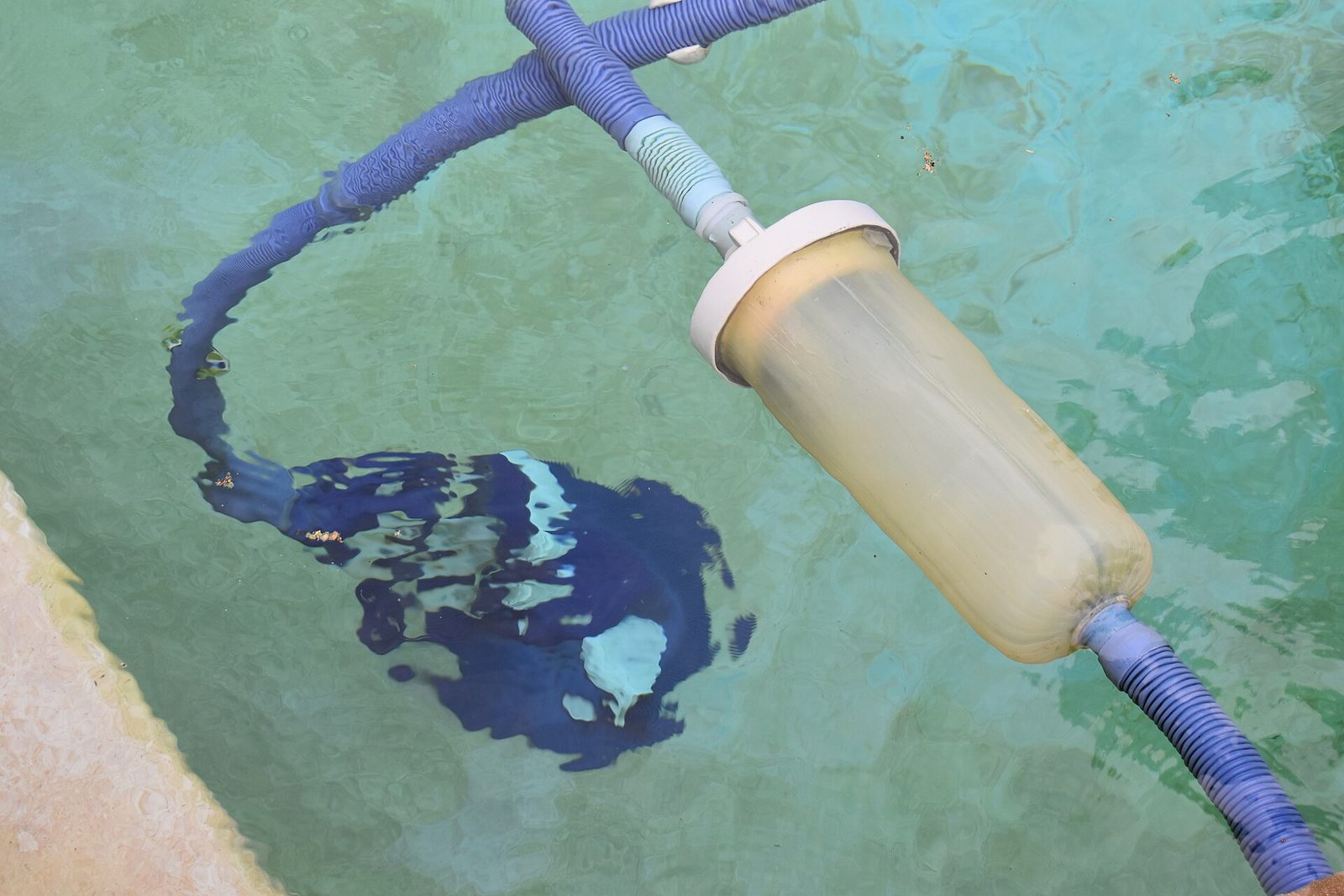
Quick Picks
| Pick | Product | Best For |
|---|---|---|
| 1 | Dolphin Nautilus CC Plus Wi-Fi | Best Overall for Most Inground Pools |
| 2 | Dolphin Premier | Best for Leaf-Heavy Pools |
| 3 | Polaris VRX iQ+ | Best Smart Features and App Control |
| 4 | Hayward TigerShark QC | Best When You Want a Fast Quick Clean |
| 5 | Aiper Scuba S1 | Best Cordless Option |
| 6 | Dolphin Sigma | Best for Large and Freeform Pools |
Our Picks
1. Dolphin Nautilus CC Plus Wi-Fi — Best Overall for Most Inground Pools
The Nautilus CC Plus Wi-Fi is the corded workhorse most inground owners should look at first. It is rated for pools up to 50 feet, climbs walls, and scrubs with an active brush while a top-loading filter basket traps leaves and grit where you can rinse it in seconds. Wi-Fi through the MyDolphin Plus app adds weekly scheduling, so the robot can run on a routine instead of waiting for you to remember it. The roughly two-hour cycle and swivel cable suit rectangular and gently shaped pools well. Choose it if you want proven plug-in reliability, app scheduling, and no battery to charge between cleans.
2. Dolphin Premier — Best for Leaf-Heavy Pools
The Premier answers the biggest weakness of cartridge robots: leaf volume. Its MultiMedia system lets you swap between an oversized leaf bag, standard cartridges, and ultra-fine filters, so the same machine handles autumn leaf drops and fine spring dust. It cleans floor, walls, and the waterline on pools up to 50 feet, and a weekly timer automates regular runs. Dual scrubbing brushes and a long swivel cable help it work through debris that would choke smaller baskets. Pick the Premier if your pool sits under trees and you would rather empty one large bag than stop a cycle halfway to clear a clogged cartridge.
3. Polaris VRX iQ+ — Best Smart Features and App Control
The VRX iQ+ is Polaris’s flagship corded robot, built around control. Through iAquaLink you get seven cleaning modes, targeted spot cleaning, a dirty-canister indicator, and a Lift System that brings the robot to the surface and expels water so it is lighter to remove. Its extra-long 70-foot cable with a tangle-reducing swivel reaches across large pools up to about 60 feet, and the large debris canister with a clear lid shows when it needs emptying. A SMART Cycle mode calculates a runtime matched to your pool. Choose it for a big pool where app control, scheduling, and easy lift-out matter more than a low purchase price.
4. Hayward TigerShark QC — Best When You Want a Fast Quick Clean
The TigerShark QC (model W3RC9990CUB) is built for owners who clean in two gears. Its full cycle runs about four hours for a deep clean of floor, walls, coves, and waterline, while the Quick Clean cycle finishes in about 90 minutes when guests are coming or debris is light. Onboard microprocessor logic maps the pool, and the reinforced cartridge filter rinses clean with a hose. It suits inground pools up to 20 by 40 feet and runs independently of your pump and filter, saving wear on the main system. Choose it if you like a long-established design with a genuinely useful short cycle.
5. Aiper Scuba S1 — Best Cordless Option
The Scuba S1 removes the cable from the equation entirely. This cordless robot covers floors, walls, and the waterline in pools up to about 1,600 square feet, using caterpillar treads for grip and WavePath navigation to work in deliberate passes rather than random wandering. Multiple modes, including an Eco setting for longer, lighter runs, let you match effort to how dirty the pool actually is, and an ultra-fine filter option helps with dust and silt. The trade-off is planning around charge time instead of unlimited corded runtime. Choose it if cord storage and tripping hazards annoy you more than recharging does.
6. Dolphin Sigma — Best for Large and Freeform Pools
The Sigma is Maytronics’ navigation specialist. A gyroscope helps it hold efficient paths through freeform shapes, benches, and curves where simpler robots lose their pattern, and split brushes plus powerful motors keep contact on slopes and walls. It is rated for pools up to 50 feet, offers Wi-Fi control with scheduling and mode selection, and uses a large top-load cartridge with both standard and ultra-fine media. That combination suits owners whose pools are not simple rectangles and who found lesser robots missing the same corners every week. Choose the Sigma when coverage intelligence, not just suction, is the problem you are paying to solve.
What to Look for First
Your Surface Comes Before Everything Else
An inground pool’s finish decides what a robot’s brushes and wheels will touch thousands of times. Plaster and concrete finishes are hard and textured, tile is hard but smooth with grout lines, fiberglass is smooth and comparatively slick, and inground vinyl liners are softer and more easily marked. A robot’s scrubbing action and traction need to suit that surface: enough grip and brush contact to clean it, without a design intended for a different material. For that reason, surface compatibility is the first filter to apply to any short list, before features or price enter the discussion.
Note, too, the condition of the surface. Aging plaster that is rough or flaking, loose tiles, or a liner with patches all deserve attention, because a robot will pass over the same weak spots on every run.
The Debris and the Shape of the Problem
Consider what actually falls into your pool. Leaf-heavy yards need generous debris capacity and intakes that do not choke on the first cluster of leaves. Pools surrounded by planting and open sky collect fine grit, seeds, and dust that demand finer filtration and more frequent runs. Then consider where debris ends up: deep-end corners, the foot of steps, along benches, and in the curve where floor meets wall are typical collection points. A robot earns its keep in those places, not on the easy open floor.
How Much Pool You Have to Cover
Size, depth, and complexity together set the workload. A long pool, a deep end, and features such as steps, benches, a swim-out, or an attached spa all add area and obstacles. The robot you choose needs a running window, cable or battery arrangement, and navigation approach that can plausibly cover the whole pool in a session, with margin for a dirty week after a storm. Buying exactly to your pool’s minimum needs leaves no reserve; a comfortable fit cleans better with less supervision.
How Robot Cleaners Differ From Other Types
Robotic Cleaners in Brief
Robots are self-contained: they propel themselves, brush the surface, and filter debris into an onboard compartment, powered through a cord from an external supply or from an internal battery on cordless designs. Because they do not depend on the pool pump, their cleaning is consistent whether your filter system is new or aging, and the debris they gather never loads your main filter. For inground pools, robots are also the type most often designed to climb walls and scrub the waterline, which matters for the tile line and for film that forms where water meets air.
Suction-Side Cleaners
Suction cleaners draw power from the pump through a hose connected to the skimmer or a suction port, and send debris to the main filter. They can cover a floor adequately on a well-matched system, but their movement is typically less deliberate, wall coverage is limited, and performance shifts with pump and filter condition. Owners who must backwash or clean the main filter after every heavy clean often find a robot’s self-contained filtration the deciding difference.
Pressure-Side Cleaners
Pressure cleaners are driven by water returning under pressure, sometimes with a booster pump and a dedicated line, and collect debris in a bag. They handle large leaves well and keep debris out of the main filter, but they add plumbing demands and energy use, and scrubbing action at the wall and waterline is generally not their strength. Comparing the three types honestly usually comes down to this: robots offer the most independent, surface-focused cleaning, which is why this guide treats them as the main option for inground pools while acknowledging the others can suit simpler needs.
Choosing by Pool Type: Inground Versus Above Ground
An inground robot is designed around assumptions an above ground pool does not meet, and the reverse is also true. Inground pools have rigid walls a robot can climb, sloped floors it can traverse, and hard finishes it can scrub. Above ground pools have flexible walls, shallow uniform depth, and vinyl liners over a soft base. A robot chosen for an inground pool should be judged on inground strengths — climbing, traction on slopes, and surface-appropriate scrubbing — and not borrowed from an above ground short list, where floor-only coverage and gentler action are often the right design. If you own both types of pool, expect to need different equipment for each rather than one machine that compromises on both.
Within inground pools, construction still varies. A vinyl-lined inground pool needs liner-appropriate brushes even though its structure is rigid, while a tiled pool needs traction that works on a smooth surface and brushes that can address grout lines. Let your specific construction, not just the word inground, guide the details.
Size, Shape, and Depth
Rectangular Pools
A classic rectangle is the easiest inground shape to clean systematically. Straight walls, predictable corners, and a regular slope let a robot with methodical navigation cover the floor efficiently and climb walls in an orderly way. For these pools, coverage pattern and cycle completeness matter most, because there are few excuses for missed areas.
Freeform and Feature-Rich Pools
Curved walls, kidney and lagoon shapes, tanning ledges, benches, and steps all interrupt a robot’s path. In these pools, judge navigation by behavior: how the robot turns in curves, whether it can climb onto a shallow ledge or will leave it to you, and how it recovers from steps rather than wedging against them. Expect some features — a high step, a narrow ledge, an attached spa — to need an occasional hand brush or a separate quick pass, whatever robot you buy. A realistic expectation here prevents disappointment more than any feature claim.
Depth, Slopes, and Drains
The transition from shallow to deep end tests traction and balance. A robot should hold the slope without sliding sideways or repeatedly abandoning the deep end, and it should cross the main drain cover without high-centering or becoming stranded on it. If your deep end is where debris collects, as it often is, watch for evidence in product information that the design is intended for fully sloped inground floors rather than mainly flat ones. Cord length or battery range must also account for depth and distance together: the far deep corner is farther from the power source than the pool’s surface measurements suggest.
Floor, Wall, and Surface Materials
Plaster and Concrete
Hard, textured finishes reward a robot with firm brush contact and durable wheels or tracks that grip rather than skate. These surfaces can also develop algae in their texture when chemistry slips, so scrubbing action matters, and a robot that genuinely brushes — rather than only vacuuming loose dirt — is worth prioritizing. Inspect older plaster before blaming a robot for a poor result; rough, deteriorating finishes are hard for any cleaner and hard on brushes.
Tile and Fiberglass
Smooth surfaces change the problem from grip-by-texture to grip-by-design. On tile, a robot needs traction that works when the surface is slick with a film of algae, plus brushes that reach grout lines where dirt lodges. On fiberglass, which is smooth and comparatively delicate, avoid overly aggressive scrubbing intended for rough concrete, and keep the surface’s gel coat in mind. In both cases, waterline attention matters, because the line shows on smooth finishes quickly.
Inground Vinyl Liners
A liner in an inground pool needs the same courtesy as in an above ground pool: brushes and wheels stated to be suitable for vinyl, regular inspection for wear or trapped grit, and care around seams, fittings, and patches. Do not assume an inground label means a robot is automatically liner-safe; check the surface list for each design you consider.
Walls and the Waterline
Wall and waterline cleaning separates a floor vacuum from a full pool cleaner. Sunscreen, oils, and fine dirt collect at the waterline, and walls develop a film that dulls the finish. If that matters in your pool — and on light-colored or tiled surfaces it usually does — look for a robot intended to climb your wall type and scrub at the waterline, and confirm its climbing suits your wall profile, including the curve where wall meets floor. A robot that climbs in a deep, straight-walled pool may behave differently against a tight radius, so match the claim to your geometry.
Key Features That Actually Matter
Navigation and Coverage
Robots range from simple reactive movement to more systematic, mapped coverage. Systematic patterns tend to finish complex pools more predictably and waste less time re-cleaning one end, while simpler patterns can still serve a small rectangle. What counts is completed coverage of your floor, walls, and features within a session, plus sensible recovery from obstacles.
Brushes, Traction, and Climbing
Brush style and drive design decide whether a robot scrubs or merely passes over dirt. Consider how the brush contacts your surface, whether the drive keeps the unit planted on slopes and walls, and how parts wear and can be replaced. Worn brushes quietly turn a scrubbing robot into a weak vacuum, so replaceable wear parts and easy access to them are practical virtues.
Filtration and Debris Handling
An onboard filter should match your debris: capacity for leaves where trees overhang, finer capture where dust and grit dominate, and an opening and rinsing routine simple enough to do after every run. A filter that is awkward to remove will be rinsed late and cleaned badly, and performance will fade in a way owners often blame on the machine. Check also how the unit handles the moment its filter is full — a graceful slowdown is easier to live with than a robot that keeps driving while collecting nothing.
Power: Cord, Battery, and Placement
Corded robots can run long or repeated cycles without a charging pause, but the cable must reach every corner with sensible slack and the power supply must be placed dry, shaded, and as the instructions direct. Cordless robots remove the cable from the water entirely, which many owners prefer, but each session is bounded by the charge, so the fit depends on your pool’s size and features. For either type, respect the electrical guidance in the manual, keep connections dry, and never swim while a robot is working unless its instructions explicitly allow it.
Controls, Cycles, and Scheduling
Useful controls are simple ones: a clear start, cycle choices suited to a quick floor clean or a fuller session, and an obvious indication that a cycle has finished. Scheduling suits households with a regular rhythm and can keep a pool steady between weekends. Treat advanced extras as secondary; coverage, surface fit, and filtration decide satisfaction long after novelty fades.
Care and Maintenance
After Every Run
Remove the robot when its cycle ends rather than leaving it in treated water indefinitely. Empty and rinse the filter until it runs reasonably clear, clear debris from intakes and brushes, and let the unit drain and dry before storing it. This short habit preserves suction, prevents odor and slime, and keeps the next run honest.
Routine Inspection
Every few weeks, check brushes, wheels or tracks, and the cable on corded models for wear or damage, and look for grit embedded where the robot meets the surface. Replace worn cleaning parts as the manufacturer directs, because tired brushes explain many gradual declines in results. Keep water chemistry balanced as well; robots live immersed in that water, and harsh or neglected chemistry ages seals and plastics while encouraging the algae the robot then has to fight.
Seasonal Storage
Before winter or a long break, clean and dry the robot thoroughly, care for any battery exactly as instructed, coil cables loosely, and store the unit sheltered from freezing, heat, and strong sun. Stored properly, a robot starts the next season ready; stored wet and forgotten, it often starts with a repair.
Common Mistakes to Avoid
The most frequent mistake is choosing by feature list without checking surface compatibility, so a robot scrubs the wrong way for a liner or skates on tile. Next is ignoring geometry: steps, ledges, tight curves, and a steep deep-end slope defeat robots chosen only for a pool’s length and width. Power mistakes follow — a cord that cannot comfortably reach the far deep corner, a battery window too short for a feature-rich pool, or a power supply placed where it gets wet.
In use, owners commonly leave the robot sitting in the pool for days, let its filter clog until it collects nothing, expect it to clean an attached spa or a high tanning ledge it was never designed to reach, or skip brushing steps entirely. Skipping the manual is the quiet mistake behind many others, because brush guidance, surface limits, and charging or cable rules differ between designs. A few minutes with the manual and an honest look at your pool’s surfaces and shapes will prevent most regrets.
Frequently Asked Questions
Are robot cleaners better than suction or pressure cleaners for inground pools?
For many inground pools, robots offer the most complete package: independent power, onboard filtration, deliberate coverage, and, on suitable designs, wall and waterline scrubbing. Suction and pressure cleaners can still suit simpler pools or existing plumbing, but their performance depends more on the pump and system condition.
Can one robot clean the floor, walls, and waterline?
Many inground robots are designed to do all three, but ability depends on your wall material, the curve between floor and wall, and the robot’s traction. Confirm that a design is intended for your surface and wall type, and expect steps, ledges, and spas to still need occasional hand attention.
How do I choose a robot for a tiled or fiberglass pool?
Prioritize traction on smooth surfaces and brushes appropriate to the finish: enough contact to address grout lines on tile, and a gentler touch for fiberglass. Surface compatibility should be stated clearly for any robot you consider; if it is not mentioned, treat that as a reason to look further.
Is a cordless robot practical for a large inground pool?
It can be, provided a single charge comfortably covers your pool’s size, depth, and features with time to spare. For larger or more complex pools, a corded design removes the running-window limit. Judge by your pool’s full workload, not by surface area alone.
Will a robot cleaner damage my pool surface?
A robot matched to your surface and kept in good condition should clean without harming it. Risk rises when a design intended for hard surfaces is used on a liner, when brushes are worn or packed with grit, or when sharp debris is trapped underneath. Inspect the robot and clear sharp objects before runs.
How often should I run an inground pool robot?
Many owners run theirs two or three times a week in season, adding a run after storms, heavy use, or visible debris, and reducing frequency in quieter weeks. Regular runs keep algae film and grit from gaining a hold and are easier on the filter than rare, heavy catch-up sessions.
Conclusion
The best inground pool robot cleaners are matched, in order, to your surface, your pool’s shape and depth, and your debris. Confirm that brushes, traction, and climbing suit your finish and walls, check that navigation and power can cover your floor, deep end, and features in a session, and favor filtration you will happily rinse after every run. Shortlist a few robots that meet those tests and read their manuals and full specifications before you decide. Chosen on fit rather than features, a robot becomes steady, quiet help: a cleaner floor, clearer walls, and a pool that is ready when you are.