Best Portable Band Saws
A portable band saw is a handheld power saw built around a continuous loop blade. Unlike a reciprocating saw, whose blade moves back and forth with an exposed stroke, a portable band saw carries the moving blade around two wheels inside a guarded frame. The user guides the tool through metal stock, pipe, threaded rod, conduit, strut, or other compatible material. Its continuous cutting action can produce a controlled, relatively narrow kerf and can be useful where a chop saw is too bulky or where sparks from an abrasive wheel are undesirable.
Choosing the best portable band saw means matching the throat or cut capacity, blade dimensions, tooth pitch, speed control, power source, weight, and grip to the material and work position. It also means planning how the stock will be clamped. The saw is handheld, but the workpiece should generally be fixed securely so the operator brings the tool to the stock while maintaining control. A tool that is too heavy or too large for the planned work can be difficult to guide even if it has ample capacity.
This guide focuses on handheld portable band saws, especially metal-cutting work. It is distinct from stationary benchtop and floor-standing woodworking band saws, which have a table and are set up for feeding wood past a vertical blade. We cover blade size and TPI, speed, corded versus cordless power, balance, accessories, workholding, safety, maintenance, and common applications. This is a research-based guide rather than a hands-on ranking of current models.
Affiliate disclosure: DailyHomeDecorating.com may earn a commission from qualifying purchases made through links. This does not affect the criteria in this article or the price you pay. Specifications and product availability change; confirm the current manufacturer listing and manual before purchasing or using any tool.
Amazon product examples to compare
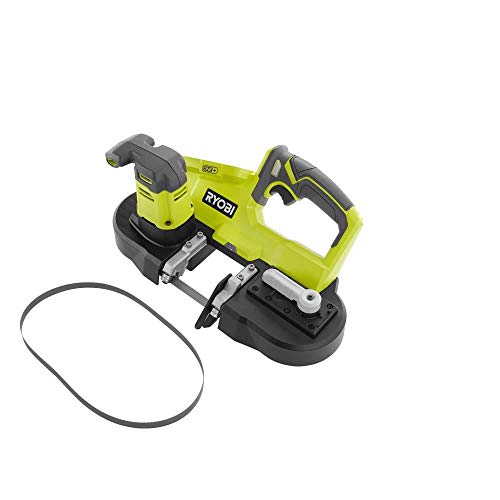
ASIN: B082P84VLY

ASIN: B00LIV0QOU

ASIN: B08GXDK9Z3

ASIN: B07N9JF78R
Certain content that appears on this site comes from Amazon. This content is provided “as is” and is subject to change or removal at any time. Product examples and images are supplied through Amazon Creators API; confirm specifications and availability on the current listing.
Quick answer: what should you compare first?
Start with the largest shape you need to cut. A saw’s frame creates a maximum opening, often called throat depth or capacity. Confirm that the stock fits through the frame in the actual orientation of the cut. Then check the blade length and width required by the model, whether compatible blades are available in the tooth pitch you need, and whether the saw’s speed range suits the material. If the tool will be used overhead, on ladders, or for repeated cuts, its weight and balance matter as much as its capacity.
Choose corded if work is near power and runs are long or frequent. Choose cordless if mobility matters, and account for battery weight, runtime, and kit cost. Look for a clear blade guard arrangement, a secure grip with both hands, manageable trigger control, and a work light if the site is dim. Regardless of features, clamp the workpiece securely and follow the exact manual. A portable band saw is not a stationary machine; the operator must control the tool while its blade is moving.
What is a portable band saw?
A portable band saw uses a narrow continuous blade that travels around wheels within a C-shaped or closed frame. The open throat of the frame allows the user to bring the blade around stock and cut from one side. Common portable designs are intended for metalworking and field work, including cuts in pipe, conduit, strut, threaded rod, angle, and compatible solid stock. Some models are compact for small stock; others have a larger “deep cut” frame for larger sections.
The term “band saw” also describes stationary machines used in woodworking. A stationary saw has a table, blade guides, and usually a vertical blade; stock is fed into the blade. A portable saw is carried to the material, so the frame capacity, weight, hand positions, and clamping method define a different buying decision. Our general band saw guide covers the wider category, and the benchtop band saw guide focuses on stationary shop machines.
A portable band saw can be used freehand in some situations, but for predictable cuts the stock should be secured in an appropriate vise or clamp. The saw’s guide or frame is then brought into contact with the stock and the tool is held with the intended grip. DeWALT’s portable band saw manual, for example, directs users to clamp the material and bring the tool to the workpiece while holding the tool with both hands. Always use the procedure in the manual for your exact model.
Capacity and frame design
Understand throat capacity
Capacity describes the size of stock that can fit within the band saw’s frame. Manufacturers may list a maximum cut capacity as a diameter or as width by height. These measurements are not interchangeable across models. A round pipe may fit differently from rectangular tube, and a wide shallow piece may fit when a tall piece of the same cross-sectional area does not. Check the geometry drawing or manual and visualize the stock passing through the frame before buying.
Do not choose a saw only by the largest advertised capacity. The frame around the blade can make a deep-cut saw heavier and bulkier. If your routine work is small conduit or threaded rod, a compact model may be easier to position and control. If you regularly cut larger tube, channel, or structural stock, a deep-cut frame may be necessary. For occasional large cuts, compare the cost and effort of a larger saw with using a stationary or shop-based cutting method.
Frame shape and access
The frame must be able to approach the work and clear nearby obstructions. A large frame can be difficult to position in a crowded mechanical room, inside a cabinet, or close to a wall. The handle and frame orientation also affect whether the blade can meet the material squarely. Study manufacturer images and dimensions, and look for the location of the grip, shoe or material guide, battery, and motor housing. If possible, hold the tool or a comparable model before buying.
Cut square versus cut freehand
Portable band saws can make straight cuts, but accuracy depends on starting alignment, work support, blade condition, speed, and operator control. A material guide or shoe helps maintain contact with the workpiece; it does not automatically guarantee a square cut. For repeated accurate cuts, use a suitable jig or portable band saw stand where compatible and allowed by the manufacturer. A stand changes the machine setup and guarding, so confirm the approved conversion and instructions rather than improvising.
Blade size, TPI, and material
Blade dimensions must match the saw
Portable band saw blades are specified by length, width, and thickness. The saw requires a specific blade length and may have limits on blade width or thickness. Use only a blade that fits the model and is designed for its wheel arrangement. A blade that is too long, short, wide, or thick can track poorly or fail. Check the manual or manufacturer blade chart, including the allowed blade material and tooth configuration.
Before changing blades, disconnect the saw from power or remove the battery. Follow the manual for opening guards, releasing tension, removing the old blade, orienting the teeth, installing the new blade, and restoring the guard. The blade teeth must face the correct direction of travel. Do not rely on memory from another model, since guard and tension mechanisms differ.
Teeth per inch and stock thickness
Tooth pitch, usually expressed as teeth per inch (TPI), affects how the blade engages material. A finer pitch places more teeth in contact with thin-wall tubing or thin stock. A coarser pitch may suit thicker solid stock and can clear larger chips. As a general principle, the blade should have enough teeth engaged in the cut to avoid rough impact, while not so many that chips cannot clear. The exact selection depends on the stock profile, wall thickness, material, and blade maker’s guidance.
For tube, sheet, and thin-wall sections, the blade must not have too few teeth engaged at the same time; otherwise individual teeth can snag and break. For thick solid bars, very fine pitch can make cutting slow and load the blade with small chips. Use a blade selection chart from the manufacturer or blade supplier rather than choosing TPI from a rule of thumb alone. If one tool routinely handles both thin tube and thick bar, variable-pitch blades may offer flexibility, but verify compatibility and intended use.
Blade material and tooth form
Blade material and tooth construction should match the workpiece. Bi-metal blades are common in portable metal-cutting applications because the blade body and cutting teeth are designed to combine flexibility with wear resistance, but the appropriate blade still depends on material, speed, and production conditions. Specialty blades may be offered for stainless steel, aluminum, plastics, or other materials. Do not use a wood-cutting blade for metal simply because it fits the wheels, or vice versa.
For best results, use a sharp blade and avoid twisting the saw during the cut. A dull or damaged blade can wander, heat up, or make the operator push harder. If the cut changes sound, the blade stalls, or the cut face becomes unexpectedly rough, stop and inspect blade condition, tension, speed, stock support, and material compatibility.
Speed control
Blade speed can affect cut quality and blade life. Different materials and blade types call for different surface speeds, and manufacturer charts may recommend a speed range. Some saws use a variable-speed trigger; others have a speed dial or multiple settings. A variable control is useful if you work with more than one material, but a speed feature only helps when the operator can set it based on the tool and blade guidance.
Do not assume that the highest speed is always fastest in real use. Excessive speed for a given blade/material combination can cause heat and premature tooth wear; an unsuitable slow speed can also impair cutting. Consult the tool manual and blade manufacturer’s chart. Feed pressure also matters: let the blade cut at a steady pace rather than forcing the frame into the stock. If the tool offers variable speed, test settings on scrap of the same material and inspect the cut.
Speed control can be especially useful for materials with different hardness or wall thickness, but it adds controls that must be understood. Look for markings that are readable and a control that can be changed without compromising grip. For one material and occasional cuts, a simpler fixed-speed model may be adequate if its speed is suitable for that work.
Corded or cordless power
Corded portable band saws
A corded model can be a practical choice for a workshop or job with accessible power and sustained cutting. It avoids battery runtime limitations and avoids buying into a battery platform. The cord can restrict movement, however, and must be routed away from the blade, stock, and sharp metal edges. Use only an appropriate power source and extension cord as allowed by the manual. Keep the cord where it cannot snag or be pulled across the cutting path.
Some corded models have a corded motor, speed control, and hanging hook or work light. Compare the actual tool weight and balance, not just motor specifications. The handle and frame should allow the operator to hold the saw steadily at the cut. Inspect the cord and plug before each use and remove damaged equipment from service.
Cordless portable band saws
Cordless saws are useful in field work, on ladders where permitted, or wherever a cord would interfere. The battery adds weight and shifts balance, so compare the tool with the battery installed rather than reading bare-tool weight alone. Runtime depends on battery capacity, material, blade, speed, cut size, and technique. If the tool is sold as a bare tool, include compatible batteries and a charger in the budget.
Existing batteries can make a platform-compatible saw less expensive and easier to support. If you are buying into a new battery system, consider the complete kit cost, battery availability, and the other tools you may use on the same platform. Do not infer performance from voltage or amp-hour labels alone. Check the exact tool’s specifications and manual, including compatible battery types and any limitations.
How to decide
Choose corded when continuous work near power matters most. Choose cordless when mobility, fast setup, and working away from outlets matter more. If most cuts are made at a fixed bench, the cord may be a minor inconvenience. If cuts happen throughout an installation, the cord can be a significant snag and positioning issue. Neither power type removes the need to clamp stock and maintain a controlled two-handed grip.
Weight, balance, and grip
Portable band saws are carried and held during cutting. Weight can become a major issue for overhead work, long sessions, or repeated cuts, while a larger frame can become awkward in confined spaces. Balance determines how much effort it takes to keep the blade square and the material guide against the stock. A well-positioned handle and auxiliary grip can improve control, but every user’s hand size and work position differ.
Look for a model that supports a secure two-handed grip, with both hands away from the blade and moving wheels. Check that the trigger is reachable without shifting your grip and that the lock-on arrangement, if any, matches the manufacturer’s intended use. A work light, sight window, or blade tracking window can help visibility, but it does not replace a stable position or a clear view of the cut.
If you cannot handle the tool before purchasing, compare the manufacturer’s stated weight with the battery installed, if cordless, and note whether the measurement includes a blade or accessories. Consider where you will carry it and whether your work requires supporting the weight at shoulder height. A compact saw with sufficient capacity may be more manageable than a deep-cut model that is larger than necessary.
Features and accessories worth considering
Material guide or shoe
The guide contacts the workpiece and helps establish the cut. It should be easy to inspect and stable against the stock. Some designs permit a flush or close cut in specific conditions; use only approved positions and accessories. A guide is not a substitute for clamping, and it does not make it safe to hold loose stock by hand while cutting.
Work light and sightline
Portable band saws may have a light to illuminate the blade area. This is useful in dim mechanical spaces, but the operator still needs to see the line, frame clearance, stock, and nearby hazards. Dust, chips, shadows, and reflections can obscure the work. Check that the light switch is accessible and does not require a hand to leave the intended grip during a cut.
Blade tracking and tension access
Blade tracking and tension determine whether the blade runs properly around the wheels. The manufacturer may provide a tension release lever, guide adjustments, or tracking procedures. Those controls should be accessible for maintenance while remaining guarded during operation. Do not run a saw with covers open or guards defeated. If a blade repeatedly comes off track, stop and follow the manual or obtain service rather than continuing to operate.
Stands, clamps, and cases
A portable band saw stand can convert certain models into a stationary cutting arrangement, which may help with repetitive cuts. Confirm that the stand is approved for the exact saw and that it provides the guarding and workholding described by the manufacturer. A generic clamp-on stand can alter handling and create pinch hazards. A case protects the tool and blades in storage but does not affect cutting performance. Prioritize a secure vise or clamping system suited to your stock shapes.
Buying decision framework
- List the materials. Identify metal types, pipe and tube profiles, solid stock, or plastic you expect to cut. Check the saw and blade maker’s compatibility guidance.
- Measure the largest cross-section. Compare stock dimensions and orientation with the tool’s published throat capacity and frame drawing.
- Choose a blade family. Confirm the required blade length, width, and thickness, then compare available tooth pitches for your thinnest and thickest material.
- Decide power source. Balance cord routing against battery platform, runtime, kit cost, and battery weight.
- Assess work positions. Consider whether you will cut at a bench, in a confined area, outdoors, or above shoulder height. Compare weight and balance accordingly.
- Inspect controls. Check trigger reach, speed controls, grip arrangement, guard design, material guide, light, and blade-tension access.
- Plan workholding. Select a vise or clamp that secures the stock shape, supports long material, and keeps hands clear of the cut.
- Check ongoing costs. Include replacement blades, batteries, charger, stand if needed, service access, and storage.
- Read the manual. Confirm safe cutting position, blade changes, speed selection, clamping requirements, and maintenance procedures for the exact tool.
This process helps prevent overbuying on capacity while missing the requirements of actual work. A plumber cutting small pipe may favor a compact, light saw and a suitable fine-pitch blade. A metal fabricator may need a larger throat, a range of blade pitches, and a stand for repeated cuts. A maintenance worker may prioritize cordless access and a work light. The right tool is the one that fits material, position, and cut frequency while remaining controllable.
Safe setup and cutting method
Secure the stock first
Clamp the workpiece solidly in an appropriate vise or fixture. Round pipe can roll, thin-wall tube can deform, and long material can sag; select a clamping arrangement that supports the shape without crushing it. Support the far end of long stock so it cannot fall, twist, or pinch the blade. Keep the clamp clear of the frame and cutting path. Do not hold material by hand or rest it loosely on a work surface while bringing the saw to it.
DeWALT’s official portable band saw instruction manual provides a model-specific example: clamp the material, bring the tool to the work, and hold it with both hands. Its instructions also emphasize selecting an appropriate blade for the material. Follow the manual for your own saw, since controls and approved positions can differ.
Mark and align the cut
Mark the cut line around the entire stock when possible, especially for tube or round material. Rotate the piece or use a square to carry the line around all visible sides. This makes it easier to recognize whether the saw is drifting. Position yourself so you can see the line and maintain a stable stance. Keep the frame clear of nearby walls, fittings, other stock, and your body throughout the full cut.
Bring the saw to the material smoothly
Use the exact startup and cutting sequence in the manual. In general, the blade should not be forced into the stock. Allow it to reach the intended speed if the instructions require it, seat the material guide as directed, and apply steady, controlled pressure. Do not twist the frame to correct a crooked cut while the blade is engaged. If the cut is drifting, stop and reassess the setup, blade, and alignment rather than levering the saw sideways.
Finish the cut without losing control
As the blade nears the end of the stock, support the offcut so it does not drop, bind, or pull the blade. Maintain the tool’s intended grip and wait for the blade to stop before moving it away or setting it down. Keep the stock clamped until the blade has stopped. Sharp edges and burrs may remain on cut metal; handle the piece carefully and deburr it using an appropriate method after the saw is off and secured.
Safety essentials
A portable band saw has an exposed working section of moving blade inside its frame. Its portability does not make the cut area harmless. Read and understand the model’s manual before use. OSHA’s band-saw guidance discusses guarding, blade condition, correct blade type, keeping guards adjusted, and avoiding access to the moving blade. Its examples largely address stationary band saws, so do not copy stationary-machine instructions as if they directly describe every handheld tool. Use the OSHA band saw safety overview for general hazard context and the manufacturer’s instructions for the portable model.
- Clamp the stock. Secure it in a vise or suitable clamping device. Keep hands away from the cut and avoid holding stock by hand.
- Use the intended two-handed grip. Keep fingers away from the blade, wheels, and pinch points. Maintain control for the full cut.
- Keep guards in place. Do not operate with a guard or cover removed, damaged, or held open unless the manual explicitly allows a particular setup.
- Wear protective equipment. Use eye and hearing protection, suitable footwear, and any material-specific protection recommended by the manual. Metal chips can be sharp and hot.
- Control loose items. Secure long hair and avoid loose clothing, jewelry, and anything that could catch on the blade or moving parts.
- Support long stock. Prevent the workpiece from tipping, rotating, or falling as the cut completes.
- Disconnect before service. Remove battery or unplug the saw before changing blades, adjusting, clearing a jam, or cleaning, as the manual directs.
- Wait for the blade to stop. Do not retrieve the offcut or set down the tool while the blade is moving.
- Keep the work area clear. Remove clutter and flammable materials. Check for coolant, sparks, hot chips, or other hazards specific to the material and work environment.
Metal cutting can create sharp chips, burrs, heat, and noise. Ensure that nearby people are out of the hazard zone and that chips cannot strike them. Avoid cutting material containing unknown coatings or contaminants without checking the relevant safety information. If the saw binds, stalls, or behaves unexpectedly, release the trigger, keep control, and follow the manual. Do not pull the tool backward through a moving blade or restart with the blade trapped in the kerf.
Use cases and limits
Pipe, conduit, and tubing
A portable band saw is often chosen for cutting pipe, conduit, and tube because the frame can surround stock and the blade creates a relatively narrow cut. The correct TPI is particularly important with thin-wall material, where too coarse a blade can catch individual teeth. Clamp round stock so it cannot roll, and mark around the circumference to help monitor squareness. For repeated production cuts, a dedicated fixture or stand may improve repeatability if approved for the saw.
Threaded rod, strut, and angle
Threaded rod and strut are common installation materials. Support long lengths on both sides, clamp close enough to the cut to prevent vibration, and avoid crushing or distorting the profile. A fine or variable tooth pitch may be appropriate for thinner sections, subject to the blade maker’s selection chart. Deburr and protect cut edges after the saw has stopped.
Solid metal stock
Solid bar demands more from the blade than thin tubing because more tooth length remains engaged as the cut progresses. Select TPI and speed for the alloy and cross-section, use a sharp blade, and avoid excessive feed force. If the stock is large or cuts are frequent, a stationary horizontal band saw or cold saw may offer better support and repeatability. Our chop saw guide compares abrasive and cold-cut saw categories for metalwork.
Wood and plastics
Some band saw blades can cut materials beyond metal, but portable saws are generally selected for the intended material and blade system. Check the saw and blade manuals before cutting wood, plastic, or composites. Dust and chips, blade speed, tooth design, and workholding differ. If your main task is woodworking curves or resawing, a stationary woodworking band saw is usually the relevant category rather than a handheld metal-cutting model.
When another saw may be better
A portable band saw may not be the best choice for every cut. An abrasive chop saw can cut metal quickly but creates sparks and abrasive dust; a cold-cut saw is stationary or handheld depending on model and can provide different cut characteristics. A reciprocating saw is versatile for demolition and rough cutting but may produce less controlled finishes. For demolition, see our reciprocating saw guide. Choose the tool around accuracy, portability, material, speed, and the work environment.
Blade care and maintenance
Disconnect power before maintenance. Clean metal chips from the frame, guard, and blade area using the method permitted by the manufacturer. Check that the blade is correctly tensioned and tracks on the wheels as described in the manual. Inspect the blade for cracks, missing teeth, uneven wear, or damage. Replace a suspect blade rather than continuing to cut. Do not adjust tracking or tension while the saw is running unless a manual specifically describes a safe procedure; most service and blade changes require the tool to be disconnected.
Keep ventilation openings clear and inspect the cord, plug, battery contacts, trigger, handles, guards, and material guide. Do not use the tool if a guard is broken, a trigger sticks, the frame is damaged, or the blade repeatedly slips off the wheels. Refer repairs to qualified service personnel. Use only replacement parts specified for the model.
Store blades in packaging or a protective holder. Do not bend, kink, or leave blades loose in a toolbox. Keep the saw dry and store it so it cannot fall. Cordless batteries should be stored and charged according to their maker’s instructions. A clean, sharp blade and correctly adjusted saw cut more predictably and reduce the temptation to push too hard.
How this guide was prepared
This guide is research-based and does not claim hands-on product testing. It draws on OSHA’s general band-saw hazard guidance and manufacturer documentation, including a DEWALT portable band saw manual that describes clamping stock and holding the tool with both hands, plus Makita product documentation that illustrates portable saw capacity, speed control, and material use cases. Those examples do not prove that a particular product is best for every buyer, and model specifications must be checked on current official product pages.
For a model shortlist, compare frame dimensions and cut capacity, blade requirements, supported blade speed, weight with battery if applicable, grip and guard layout, service parts, included accessories, and warranty. Verify every value for the exact model and region. No live prices, invented performance tests, or unsupported product rankings are included here.
Frequently asked questions
What is a portable band saw used for?
It is a handheld saw used to cut compatible stock such as pipe, conduit, tube, threaded rod, strut, angle, and some solid materials. Its frame allows the user to bring the blade around stock that may be awkward to take to a stationary machine. Use the blade and speed recommended for the material.
What does deep-cut mean on a portable band saw?
“Deep-cut” generally refers to a larger frame opening and greater capacity for larger stock, but naming is not standardized. Compare the manufacturer’s capacity dimensions and drawings with the actual stock shape. A larger frame may also be heavier and bulkier.
How do I choose the right TPI?
Use the blade maker’s chart based on material, wall thickness, and cross-section. Thin-wall tubing usually needs a finer tooth pitch than thick solid stock so multiple teeth engage the material. Too fine a blade can cut slowly in thick stock; too coarse a blade can snag or damage teeth in thin material.
Is a corded or cordless portable band saw better?
Choose corded for sustained work near a suitable outlet and cordless for mobility. Compare the total cordless kit cost and weight with the battery installed, and consider runtime for your workload. Route a cord safely when using a corded saw.
Can I use a portable band saw without clamping the material?
For controlled cutting, secure the workpiece in a vise or suitable fixture and bring the saw to it according to the manual. Holding loose stock by hand can allow it to rotate, shift, or trap the blade. The clamp must suit the stock shape and keep hands away from the cut.
Can a portable band saw cut wood?
Only if the tool and blade manufacturers approve the material and provide a compatible blade. Portable metal-cutting models are not substitutes for stationary woodworking band saws. Check speed, blade, dust, and workholding guidance before changing material types.
Can a portable band saw be mounted on a stand?
Some models have compatible stands or conversion accessories. Confirm approval for the exact saw and follow the manufacturer’s mounting and guarding instructions. Do not use an improvised stand that changes the tool’s stability or guard operation.
Why is my band saw blade wandering or breaking?
Possible causes include an unsuitable or damaged blade, incorrect tension or tracking, excessive feed pressure, stock movement, or a blade pitch that does not match the material thickness. Stop using the saw, disconnect it, and follow the manual to inspect the blade and setup. If the issue continues, get qualified service.
Is a portable band saw safer than an abrasive chop saw?
They have different hazards and use cases. A band saw has a moving toothed blade and requires secure workholding and control. An abrasive chop saw can produce sparks and abrasive particles and requires its own guarding and setup. Neither is inherently safe for all materials or workspaces; use the correct tool, blade or wheel, and protective equipment.
How do I make a square cut in pipe?
Clamp the pipe so it cannot roll, mark the cut line around the circumference, align the blade carefully, and follow the saw’s cutting instructions with steady pressure. A suitable guide or stand may improve repeatability if permitted by the manufacturer. Inspect the cut and deburr it after the blade stops.
Final reminder: capacity, blade compatibility, and workholding should drive your choice. Clamp stock securely, select blade pitch and speed for the material, keep both hands on the tool as directed, and stop if the saw binds or behaves unexpectedly. The right portable band saw is one you can position and control for the work you actually do.