Best Cordless Reciprocating Saws: A Practical Buying Guide
The best cordless reciprocating saws are useful when a cut needs to reach into a tight space, follow a rough line, or remove material during demolition without a power cord trailing behind. A reciprocating saw moves a replaceable blade back and forth, which makes it useful for cutting wood, metal, plastic, or mixed materials when the saw and blade are approved for the job. Its strength is access and rough versatility, not a furniture-quality finish.
Battery power adds portability, but choosing a cordless reciprocating saw is more than choosing a voltage label. The battery platform, runtime under load, tool balance, stroke length, orbital settings, vibration, shoe, and blade clamp all influence handling. The right setup depends on how often you cut, what materials you encounter, how long the tool runs between charges, and whether you can keep the workpiece stable.
This article narrows the broad reciprocating-saw category to cordless models and their battery tradeoffs. It does not make hands-on test claims, rank models by invented performance, or state current prices. The research method compares official manufacturer product descriptions and manuals for battery compatibility, stroke and orbital controls, blade clamp, shoe design, intended materials, and included kit contents, then uses OSHA safety guidance for general portable-tool practices. Always verify the exact manual and blade package before cutting.
Affiliate disclosure: DailyHomeDecorating.com may earn a commission from qualifying purchases through links in this article. This does not change the price you pay.
Amazon product examples to compare

ASIN: B082BTT92H

ASIN: B007NVSTCK

ASIN: B076HPKK19
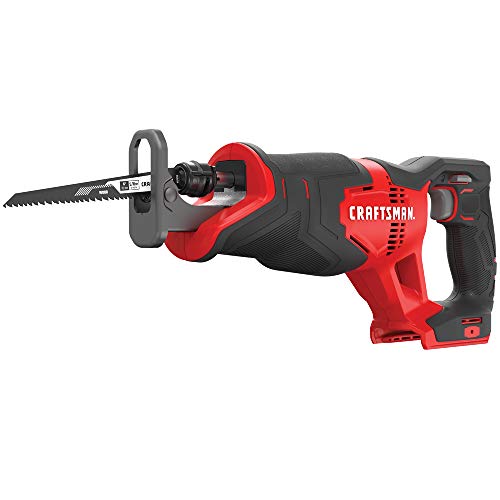
ASIN: B07KKHC784
Certain content that appears on this site comes from Amazon. This content is provided “as is” and is subject to change or removal at any time. Product examples and images are supplied through Amazon Creators API; confirm specifications and availability on the current listing.
Table of contents
- What a cordless reciprocating saw does
- Battery platform and runtime
- Stroke length, speed, and orbital action
- Blade clamp and blade selection
- Shoe, vibration, and handling
- Demolition, pruning, and appropriate uses
- Setup, safety, and maintenance
- Frequently asked questions
What a cordless reciprocating saw does
A reciprocating saw holds a straight blade in a front clamp and moves it rapidly forward and back. The shoe rests against the workpiece to help stabilize the tool while the blade cuts. The user guides the saw into the material and controls direction with grip, trigger, and shoe contact. The tool’s relatively long blade can reach behind trim, cut through a wall opening after hazards are checked, or trim an awkward object where a circular saw cannot fit.
Reciprocating saws are often used in demolition because the work may involve removing fastened material, cutting through mixed layers, or making rough cuts in confined spaces. With a suitable blade, they can also cut branches and wood stock. The blade and tool must be approved for the material. A wood-demolition blade is not automatically right for metal, plastic, masonry, or pruning, and the cut quality may remain rough even when the tool completes the cut.
This saw is not a jigsaw. A jigsaw uses a shorter blade and shoe to follow controlled curves in panels; a reciprocating saw is generally used for rougher removal and access cuts. It is also not a chainsaw: chainsaws use a toothed chain around a guide bar for wood cutting and have distinct kickback, bar, and chain-safety concerns. For curved finish cuts, see the site’s cordless jigsaw guide; for chainsaw work, read the battery chainsaw guide.
The broad reciprocating saw guide covers the overall category. This guide focuses specifically on cordless models: battery investment, runtime planning, balance, and the features that affect field use. A cordless saw removes the cord but does not remove the need for secure work support, correct blade selection, personal protective equipment, and a clear understanding of hidden hazards.
Battery platform and runtime under load
If you already own compatible batteries, a cordless reciprocating saw in that platform may reduce the number of chargers and packs you need to manage. Confirm exact compatibility from the manufacturer. Similar voltage labels, color schemes, or battery shapes do not guarantee that packs or chargers interchange. Check the recommended battery family, pack capacity, charger, and whether the saw is sold as a bare tool or as a kit.
A bare tool may include the saw and a blade but no battery or charger. A kit may include a starter battery, charger, case, and accessories, though bundle contents vary. Compare the complete setup cost, not just the tool price. If you do not own batteries in that system, include a compatible pack and charger in the budget. If the kit battery is small, determine whether it suits your typical workload or whether a different approved pack is appropriate.
Runtime depends on the battery, material, blade condition, stroke and orbital settings, feed pressure, cut duration, temperature, and the number of cuts. Cutting through a nail-filled wall section may use power differently from trimming thin PVC or a branch. A manufacturer’s runtime statement is configuration-specific and should not be treated as a promise of a fixed number of cuts. Plan around the job’s real cutting time and keep a charged compatible spare for extended work.
Battery size affects balance and fatigue. A larger battery may extend time between charges but add weight at the rear or base of the handle. This can help or hinder control depending on the tool’s shape and cutting position. Try the saw with the battery attached if possible, especially if you expect to work overhead only in situations the maker permits or in confined spaces. Avoid prolonged awkward holding; choose a safer access method when possible.
Battery management for intermittent work
For occasional household demolition, a charged battery may be enough for short work periods, but do not start a job with an almost-empty pack if a stalled cut could leave material unstable. Follow the battery maker’s charging, temperature, storage, and transport instructions. Do not use a swollen, cracked, wet, or overheated battery. Keep contacts protected from metal items that could bridge them, and use only approved chargers.
For repeated jobsite use, consider how batteries are shared across tools and how charging fits into the workday. One pack may be on the saw while another charges, but the tool maker’s instructions and battery compatibility govern. Carrying spare packs adds weight and cost. If runtime is a regular constraint, compare battery capacity and available charge infrastructure, but do not infer runtime from amp-hour numbers alone.
Stroke length, speed control, and orbital action
Stroke length is how far the blade travels during each back-and-forth cycle. A longer stroke can move more blade through the material on each cycle, but it can also increase tool motion and demands on the operator. A short-stroke compact saw may be easier to place in tight spaces, while a longer stroke can suit faster rough cutting when the tool and blade are designed for it. Compare the actual specification and intended use for the model rather than assuming that longer is automatically better.
Stroke rate, often listed in strokes per minute, describes how quickly the blade moves. A variable-speed trigger lets the operator control speed with trigger pressure; some models add a dial or speed selector. Fine control can help start a cut or work in a delicate area. A maximum stroke-rate number alone does not reveal how the tool behaves under load, so do not use it as the only comparison.
Orbital action changes the blade path so it moves in a more aggressive arc rather than only straight back and forth. This can speed some rough cuts in approved materials but may reduce cut quality and increase movement. Not all reciprocating saws offer orbital action, and its settings vary. DEWALT’s official cordless reciprocating saw product page describes variable speed, a multi-position clamp, shoe, and stroke features for that model; those details are examples, not a general specification for every saw.
Use the setting recommended for the material and blade. A rough demolition cut may tolerate a more aggressive action, while a controlled cut near a finished surface may call for less. Avoid aggressive orbital action on materials or blades whose instructions prohibit it. Start slowly, keep the shoe supported, and let the saw advance without forcing it. If the blade is bending or the tool is jumping, stop and change the setup.
Speed and control at the start of a cut
Starting a cut can be difficult because the blade may skate across a curved or hard surface. A variable trigger can help bring the blade into contact gradually, but technique and blade choice matter. Use a blade suited to the material, support the work, and keep the shoe engaged as the cut begins when the design permits. Do not try to plunge into an unsupported surface without the procedure and blade intended for that operation.
Feed pressure should be firm enough for the teeth to cut but not so heavy that the blade bends, stalls, or overheats. The right pressure varies with stock and blade. If cutting slows, inspect for a dull blade, wrong tooth pattern, binding, or a battery nearing depletion. Forcing a slow blade may worsen the problem and can make the workpiece move unpredictably.
Blade clamp and blade selection
A blade clamp should hold the blade securely and allow a replacement to be installed without improvised adapters. Some clamps accept blades in multiple orientations or have tool-free levers; others require a tool. Check the manual for blade shank compatibility, insertion depth, orientation, and clamp procedure. Do not assume that every blade fits every reciprocating saw just because the package says “universal.”
A multi-position clamp may allow the blade to face upward, downward, or sideways for access to a cut. The saw’s manual determines which orientations are supported. Changing orientation can improve access but may alter the operator’s grip and the way the shoe contacts stock. Verify that the blade locks firmly and that the guard and shoe remain functional before starting. Never use a blade that is bent, cracked, missing teeth, or loose in the clamp.
Reciprocating blades vary by length, thickness, tooth spacing, tooth shape, and material. The blade should suit the material and cut. Wood-with-nails blades are designed for a different task from metal-cutting blades, while pruning blades have geometry suited to branches. A longer blade can reach behind a workpiece but may flex more, strike hidden objects, or make a rougher cut if unsupported. Choose the shortest blade that safely reaches the cut and is rated for the material.
| Blade consideration | Why it matters | Check before use |
|---|---|---|
| Length | Reach, flex, and risk of contacting hidden material | Use sufficient but not unnecessary length. |
| Tooth pattern | Cutting speed and finish in different materials | Match to stock and blade maker guidance. |
| Thickness and shank | Stability and clamp compatibility | Confirm the clamp accepts the blade. |
| Blade condition | Control, heat, and cut quality | Replace bent, cracked, dull, or damaged blades. |
Changing a blade safely
Remove the battery before changing the blade or clearing a jam. Let a hot blade cool before handling, or use the tool maker’s method to avoid burns. Point the tool away from yourself, release the clamp as directed, remove the old blade, and insert the new one fully. Confirm it locks by the method in the manual. Do not test the clamp by pulling near sharp teeth. Reinstall any guard or accessory and check the blade path before reconnecting the battery.
A quick-release clamp can save time, but it still needs inspection. Dust, metal chips, resin, or wear may prevent the latch from seating correctly. Clean the mechanism as directed and stop using a clamp that does not retain the blade. A blade that comes loose during a cut can create an unpredictable situation and damage the work.
Shoe, vibration, and handling
The shoe rests against the workpiece and can help stabilize the saw. A pivoting or adjustable shoe may let the operator use a different part of the blade and support the tool on an irregular surface. Check how the shoe moves, locks, and contacts the material. It should not be so loose that it shifts unexpectedly. Follow the manual for shoe adjustment and any approved contact method.
Shoe design affects reach and control. A narrow nose may fit behind trim or between framing members, while a broad contact surface may feel more stable against a flat board. No shoe can support every surface. The tool should remain firmly braced when the blade begins cutting; if the shoe cannot rest securely, do not force the saw into the work. Reposition the material or choose another tool.
Reciprocating saws move substantially during operation. Vibration, weight, handle position, and balance can affect comfort and accuracy. Compare tool weight with battery installed and inspect the grip surfaces, trigger reach, and handle orientation. If you have smaller hands or limited grip strength, try the tool before buying. A high-output saw that is difficult to control may be a poor fit for your work.
Vibration can contribute to fatigue, especially during long or overhead tasks. Take breaks, keep the work at a comfortable height, and stop if your hands feel numb or control is declining. Do not use a vibration rating or marketing claim as a guarantee that long use is safe. Choose the shortest effective cut and position yourself so the saw’s reaction does not pull you off balance.
Compact versus full-size reciprocating saws
Compact designs can fit between studs or into cabinets more easily and may be lighter. A shorter overall body helps in tight spaces, but it may use a shorter stroke or have less capacity for demanding cuts, depending on the model. Full-size saws can have longer blades, different stroke characteristics, or additional features, but weight and control are relevant when working overhead or in confined areas.
Compare the tool with battery attached and in the grip position you expect to use. Consider whether the battery blocks access, whether the shoe can be positioned, and whether the blade can make a full stroke without hitting surrounding structures. A compact saw cannot make an inaccessible cut safe by itself. Confirm what is behind the workpiece before inserting a long blade.
Appropriate uses: demolition, repair, and pruning
Demolition and renovation
A reciprocating saw can remove old trim, cut framing or fasteners, and make rough openings when the material and blade are suitable. Before cutting into walls, ceilings, floors, or cabinets, locate wiring, plumbing, gas lines, structural members, and other hidden components. A saw blade can extend beyond the visible cut and contact what lies behind the surface. Use shallow depth control or a shorter blade where appropriate, and do not cut blind.
Demolition often involves mixed materials, so choose a blade specifically rated for the material combination. Nails, screws, and metal straps can damage a wood-only blade. A blade made for nail-embedded wood may cut differently from one for clean lumber. Secure the material or confirm that it cannot fall, swing, pinch the blade, or strike a person as the cut finishes. Plan what will happen to the offcut before starting.
Plumbing and metal cuts
Reciprocating saws can be used for some pipe and metal cuts with a suitable blade and stable support. The blade must match the metal type and thickness, and the workpiece should be secured against vibration. Check for fluid, pressure, electrical contact, or hazardous contents before cutting any pipe or vessel. Do not cut a pressurized or energized component. If you cannot verify the contents or isolate the system, call a qualified professional.
Metal chips can be sharp and hot. Wear eye protection and gloves for handling material before and after the cut, but follow the saw manual on hand positioning and avoid loose gloves near moving parts. Keep bystanders away from the cutting area and allow the blade to stop before handling the piece.
Pruning and yard work
A reciprocating saw may cut certain branches with a pruning blade, but it is not a chainsaw or pole saw. The tool’s action can shake the limb, and a branch under tension can spring when cut. Use only for ground-level work where the branch is stable, within reach, and within your skill. Do not use the saw from a ladder or directly overhead. For larger wood, a chainsaw may be appropriate for a trained user; the site’s battery chainsaw guide addresses that category. For elevated pruning from the ground, consult the pole saw guide.
For small shrubs and hedge shaping, a reciprocating saw is often too rough. A hedge trimmer is built for that task; see the site’s cordless hedge trimmer guide. Choosing a tool designed for the cut can improve control and reduce damage to plants or material.
When another saw is better
A jigsaw is usually a better choice for controlled curves in panels and finish parts; see the cordless jigsaw guide. A circular saw or track saw is designed for straight panel cuts. A chainsaw has a chain and guide bar intended for wood work but carries different kickback hazards. A reciprocating saw is most useful for rough access and removal cuts where the work can be secured and the finish can be refined afterward.
Setup, safety, and maintenance
Read the manual and confirm the blade is approved for the saw and material. Remove the battery before changing blades, adjusting the shoe, or inspecting a jam. Clamp or otherwise secure the workpiece so it cannot shift. Check both sides of the planned cut and the space beyond it for hidden obstacles. The blade should be directed away from other people and the operator’s body path.
OSHA’s handheld saw guidance recommends using the proper blade for the material, maintaining sharp blades, and wearing eye and face protection; it also notes that blade direction and pressure controls matter for handheld power saws. OSHA’s hand and power tool guide advises disconnecting tools before service or accessory changes, securing work, maintaining good footing, and following the manual. These workplace resources support general precautions, not a substitute for model-specific instruction.
Wear eye protection and hearing protection, and use respiratory protection appropriate to the material. Tie back hair, secure loose clothing, and remove jewelry that could catch. Keep both hands on the saw where its design allows and maintain firm footing. If the work is above shoulder height, unstable, or requires one-handed cutting, choose a safer method or get professional help.
- Do not operate a saw with a damaged blade clamp, shoe, battery latch, or trigger.
- Keep the shoe braced against the work when the cut begins where the manual recommends.
- Do not force the blade, twist the tool, or use a blade outside its material rating.
- Wait for the blade to stop before moving the tool or removing the cutoff.
- Stop if the blade binds, jumps, overheats, or contacts an unexpected object.
- Keep children and bystanders clear of the cut path and flying chips.
After a cut, release the trigger and wait for motion to stop before lifting the saw. A reciprocating blade can continue moving after release. Do not touch a hot blade. If it binds, release the trigger, maintain control, remove the battery after the blade stops, and inspect for pinching or hidden fasteners. Do not yank a running blade free.
Maintenance begins with the blade. Replace it when dull, bent, cracked, missing teeth, or unsuitable for the material. Clean the shoe and blade clamp as the manual allows and inspect the battery contacts, housing, trigger, shoe lock, and clamp for damage. Store the tool dry and remove the battery for long-term storage as instructed. Use approved batteries and chargers, and follow battery temperature and storage guidelines.
Research-based comparison method
This draft does not claim hands-on testing or publish measured runtime. It compares official product documentation and manuals for battery family, included kit components, stroke-length and speed controls, orbital action, blade-clamp design, shoe movement, stated intended materials, and maintenance instructions. OSHA’s portable-saw and hand-tool guidance provides safety context. These criteria are useful for comparing categories, but exact performance must be verified for each model and configuration.
Makita’s cordless reciprocating saw manual illustrates model-specific controls and operating precautions. DEWALT’s compact cordless reciprocating saw page illustrates features manufacturers may publish, such as blade-clamp orientation, shoe, and stroke information. These are examples, not endorsements or universal specifications. Consult the current manual for the exact saw you are evaluating.
Battery bundles, prices, and stock change by seller and region, so this guide does not quote current pricing. Check whether a product is a bare tool or kit, which battery and charger are included, and whether the blade and accessories shown are part of the package. Compare the total system you need rather than a product photo or headline price.
Frequently asked questions
What is the main advantage of a cordless reciprocating saw?
It can make rough cuts in locations where a cord would limit movement, such as demolition areas or outdoor repairs. The tradeoffs are battery runtime, weight, and the need to manage compatible packs and charging.
How long will a battery last under load?
Runtime varies with battery capacity, material, blade, stroke settings, feed pressure, temperature, and cut duration. Use manufacturer guidance for the specific tool and pack, and plan a spare battery for extended work. Do not treat a stated runtime as a guaranteed number of cuts.
Does a longer stroke cut faster?
A longer stroke moves more blade through the material per cycle, but speed depends on the saw, blade, material, and technique. It may also increase tool movement. Compare stroke length along with control, balance, and use case rather than selecting on that figure alone.
What does orbital action do on a reciprocating saw?
Orbital action changes the blade path to be more aggressive on some tools. It may help certain rough cuts, but it can reduce control or finish. Use it only for approved materials and follow the manual for the exact model.
Are reciprocating saw blades universal?
Many use common shank styles, but check the blade clamp and manual. Blade length, thickness, tooth geometry, and material rating still need to match the task. Never force an incompatible blade into the clamp.
Can a reciprocating saw cut trees?
It can cut some small branches with a pruning blade when the work is stable and reachable, but it is not a chainsaw. Do not cut overhead, from a ladder, or into limbs under tension. Use a tool designed for the work and get professional help for unstable or elevated tree work.
Can I use it to cut metal pipe?
Only when the saw and blade are rated for the material, the pipe is safely isolated and secured, and the cut will not expose pressure, fluid, or electrical hazards. Confirm what is inside the pipe before cutting; call a qualified professional when uncertain.
Why does my saw jump or vibrate?
Possible causes include a blade that is dull or unsuitable, a poorly supported workpiece, a shoe that is not braced, excessive feed pressure, or contact with hidden fasteners. Stop, wait for the blade to stop, remove the battery, and inspect the setup. Do not continue if the cause is unclear.
What does a pivoting shoe do?
A pivoting shoe can help the base stay in contact with an irregular surface or use different portions of the blade. Its movement and lock vary by model. Follow the manual and make sure the shoe remains stable during the cut.
Is a cordless model as capable as a corded saw?
There is no universal answer. Capability depends on the exact tool, battery, blade, material, and workload. Compare manufacturer ratings and intended use, and consider runtime and balance. Do not infer performance from voltage alone.
Conclusion: match battery, blade, and cut
The best cordless reciprocating saws combine a compatible battery platform, manageable balance, secure blade clamp, useful stroke and speed controls, and a shoe that can be braced against the material. Battery convenience helps in mobile work, but runtime under load varies and the blade determines whether the saw is suited to demolition, metal, wood, or pruning.
Before buying, check the battery and kit details, blade compatibility, clamp, shoe, vibration, and intended material range. Read the manual, secure the work, inspect the path, and use eye and hearing protection. A reciprocating saw excels at rough access and removal cuts; use a jigsaw, circular saw, chainsaw, or other tool when it is designed for the job. Stop whenever material movement or hidden hazards are uncertain.