Disclosure: As an Amazon Associate, dailyhomedecorating.com earns from qualifying purchases. Links on this page are affiliate links; they cost you nothing extra. Prices and availability change often, so check the current Amazon listing before you buy.
This guide is a complete is a wheelbarrow worth it resource for home gardeners, allotment keepers and anyone facing a season of hauling. The short answer comes first in this article, and the rest of the piece exists to test it honestly against your garden, your jobs and your alternatives. A wheelbarrow looks like the simplest tool in the shed, yet the difference between a good one and a frustrating one shows up on every trip: in how the load balances, how the wheel rolls over your ground, how the handles feel in your hands and how cleanly the tray empties when you arrive. Across the sections that follow you will find an honest look at the main designs on the market, the trade-offs that actually matter, worked examples for common jobs, and the care habits that keep a barrow rolling for years. Product picks in this wave are presented in prose while verification is pending, with qualitative tiers instead of prices, so you can shortlist by fit and then check the current listing for the model that matches your ground and your jobs.
Key Takeaways: Match the barrow to your most common load and your tightest corner, not to your biggest imaginable job. A single wheel is nimble but asks your arms to balance; two or four wheels are steadier but need more room. Steel trays take punishment, poly trays resist rust and weigh less. Keep loads low, centred and within the maker’s rating, lift with your legs, keep pneumatic tyres at sidewall pressure, and store the barrow tipped, hung or covered so it never pools water.
The Short Answer
Worth it if you move bulk material — soil, compost, mulch, waste, logs, stone — more than a few times a year, across any distance longer than a couple of steps: a wheelbarrow will save you so many trips and so much lifting that it earns its place quickly, at any qualitative tier from entry to premium. Not worth it if your outdoor space is a small paved area where a trug covers every job, if a good barrow is genuinely available to borrow whenever you need one, or if your real challenge is long distance over rough land, where a cart or powered carrier is the honest answer. Everything below unpacks that verdict.
In this guide
Is a Wheelbarrow Worth It? What You Actually Get
What you actually get is not a tray on a wheel; it is the removal of carrying from your gardening life. Compost arrives at the beds in one roll instead of many bucket journeys. Autumn leaves leave in an afternoon. The log store fills without a single lifted armload crossing the lawn. You also get placement: the load tips out where it is needed, ready to spread, rather than being dumped in a heap that must be handled twice. And you get a tool that is ready instantly, silently, in any weather, with nothing to charge, fuel or warm up.
When you Picture the tightest corner on your usual route and judge every design against that corner, the details come into focus quickly: a barrow that converts into a dolly or cart earns its shed space twice, but every conversion adds joints, latches and compromises that a single-purpose tool simply does not carry. At the same time, pneumatic tyres roll kindly over roots, gravel and uneven lawns, while flat-free tyres remove punctures and pressure checks from your life at the cost of a firmer, less forgiving ride. That is why experienced gardeners talk about wheels, handles and balance far more than they talk about tray colour or badges. In practice that means walking your route once with fresh eyes, noting gates, steps, slopes and soft patches, and then reading every product description against that route rather than against an ideal garden that nobody actually owns.
When you Consider how the tray behaves when it is only half full, which is how most loads actually travel, the details come into focus quickly: a deep tray suits bulky, light material such as leaves, clippings and mulch, while a shallower tray keeps dense material like wet soil and gravel lower and easier to control. At the same time, a barrow that converts into a dolly or cart earns its shed space twice, but every conversion adds joints, latches and compromises that a single-purpose tool simply does not carry. None of these choices is right in the abstract; each is right for a particular garden, a particular route and a particular pair of hands. In practice that means walking your route once with fresh eyes, noting gates, steps, slopes and soft patches, and then reading every product description against that route rather than against an ideal garden that nobody actually owns.
When you Weigh up storage before you weigh up capacity, because a barrow you cannot store well will not last well, the details come into focus quickly: grip shape and handle spacing decide whether the tool feels natural with gloves on in winter and with bare hands in summer, and small differences here are felt on every trip. At the same time, a barrow that converts into a dolly or cart earns its shed space twice, but every conversion adds joints, latches and compromises that a single-purpose tool simply does not carry. Long after the purchase is forgotten, the trips remain, so it pays to choose for the trips. In practice that means walking your route once with fresh eyes, noting gates, steps, slopes and soft patches, and then reading every product description against that route rather than against an ideal garden that nobody actually owns.
When you Notice how a design behaves at walking pace over grass, which is slower and rougher than a showroom floor, the details come into focus quickly: a single wheel tracks neatly between beds and through gates, but it asks your arms to do the balancing, while two wheels or four wheels share that balancing work and ask more room when you turn. At the same time, the legs matter more than they look, because a barrow spends much of its life parked mid-load, and a stance that rocks or sinks into soft ground makes loading awkward and occasionally messy. Write your own short list of non-negotiables before you shop, and let that list, not a headline, make the decision. In practice that means walking your route once with fresh eyes, noting gates, steps, slopes and soft patches, and then reading every product description against that route rather than against an ideal garden that nobody actually owns.
When you Start with the ground the barrow has to cross, because ground decides more than brand does, the details come into focus quickly: the legs matter more than they look, because a barrow spends much of its life parked mid-load, and a stance that rocks or sinks into soft ground makes loading awkward and occasionally messy. At the same time, long handles give leverage that makes a heavy tray feel lighter at the lift, yet they also lengthen the whole tool, which matters in a small shed and on a narrow path. Long after the purchase is forgotten, the trips remain, so it pays to choose for the trips. In practice that means walking your route once with fresh eyes, noting gates, steps, slopes and soft patches, and then reading every product description against that route rather than against an ideal garden that nobody actually owns.
The Real Costs Beyond Money
The honest costs are not financial. A barrow costs storage space, and in a small shed that space is precious. It costs a little maintenance: rinsing, drying, tyre checks, the occasional tightened bolt. It costs a short learning curve while your arms learn to balance a single-wheel load. And it costs a decision, because the wrong type — a giant tray for a tiny plot, a single wheel where stability was needed — quietly taxes every trip for years. None of these costs is large, but a fair worth-it judgement counts them all.
When you Judge a barrow on the day the job goes wrong, not on the day everything is dry and level, the details come into focus quickly: a single wheel tracks neatly between beds and through gates, but it asks your arms to do the balancing, while two wheels or four wheels share that balancing work and ask more room when you turn. At the same time, a steel tray shrugs off rubble, broken concrete and sharp-edged stone, while a poly tray is lighter to lift, quieter in use and immune to rust, though it can flex under a pointed load. The honest test is a loaded run over your own ground, and any design that fights you on that run will fight you for years. In practice that means walking your route once with fresh eyes, noting gates, steps, slopes and soft patches, and then reading every product description against that route rather than against an ideal garden that nobody actually owns.
When you Look at the handles first, since your hands are the part of you that meets the tool every single trip, the details come into focus quickly: a steel tray shrugs off rubble, broken concrete and sharp-edged stone, while a poly tray is lighter to lift, quieter in use and immune to rust, though it can flex under a pointed load. At the same time, the legs matter more than they look, because a barrow spends much of its life parked mid-load, and a stance that rocks or sinks into soft ground makes loading awkward and occasionally messy. Shoppers who match the tool to their most common load almost always end up happier than shoppers who match it to their biggest imaginable load. In practice that means walking your route once with fresh eyes, noting gates, steps, slopes and soft patches, and then reading every product description against that route rather than against an ideal garden that nobody actually owns.
When you Notice how a design behaves at walking pace over grass, which is slower and rougher than a showroom floor, the details come into focus quickly: the legs matter more than they look, because a barrow spends much of its life parked mid-load, and a stance that rocks or sinks into soft ground makes loading awkward and occasionally messy. At the same time, long handles give leverage that makes a heavy tray feel lighter at the lift, yet they also lengthen the whole tool, which matters in a small shed and on a narrow path. A barrow is a simple tool, which is exactly why the small details decide whether it feels like help or like hard work. In practice that means walking your route once with fresh eyes, noting gates, steps, slopes and soft patches, and then reading every product description against that route rather than against an ideal garden that nobody actually owns.
When you Treat the wheel as the engine of the thing, since every push you make travels through it, the details come into focus quickly: long handles give leverage that makes a heavy tray feel lighter at the lift, yet they also lengthen the whole tool, which matters in a small shed and on a narrow path. At the same time, grip shape and handle spacing decide whether the tool feels natural with gloves on in winter and with bare hands in summer, and small differences here are felt on every trip. Write your own short list of non-negotiables before you shop, and let that list, not a headline, make the decision. In practice that means walking your route once with fresh eyes, noting gates, steps, slopes and soft patches, and then reading every product description against that route rather than against an ideal garden that nobody actually owns.
Who It Pays Off For
The regular gardener with beds, borders or a lawn gets value every single week, and for this profile the question barely needs asking. The allotment holder, moving compost, manure and produce along paths no vehicle can use, gets even more. The project household — a patio this year, a pond or a wall next — gets a tool that serves every project and the gardening in between. For all three, the barrow pays off in the currency that matters: time, energy and backs that finish the day unstrained.
Who Should Skip It
Skip it, honestly, if your whole kingdom is a paved courtyard of pots, where everything moves a few steps and a trug plus a hand truck cover the work. Skip it if your plot is so steep and stepped that a loaded barrow cannot travel it safely. Skip it if a neighbour’s or a site association’s barrow is reliably yours to use, in good condition, whenever the big jobs arrive. And postpone it if the budget is genuinely tight and no bulk job is scheduled this season; a barrow bought when the first big job appears loses nothing by waiting.
When you Think about the work in terms of trips saved rather than loads carried, the details come into focus quickly: pneumatic tyres roll kindly over roots, gravel and uneven lawns, while flat-free tyres remove punctures and pressure checks from your life at the cost of a firmer, less forgiving ride. At the same time, the legs matter more than they look, because a barrow spends much of its life parked mid-load, and a stance that rocks or sinks into soft ground makes loading awkward and occasionally messy. That is why experienced gardeners talk about wheels, handles and balance far more than they talk about tray colour or badges. In practice that means walking your route once with fresh eyes, noting gates, steps, slopes and soft patches, and then reading every product description against that route rather than against an ideal garden that nobody actually owns.
When you Think about the work in terms of trips saved rather than loads carried, the details come into focus quickly: a barrow that converts into a dolly or cart earns its shed space twice, but every conversion adds joints, latches and compromises that a single-purpose tool simply does not carry. At the same time, the legs matter more than they look, because a barrow spends much of its life parked mid-load, and a stance that rocks or sinks into soft ground makes loading awkward and occasionally messy. Long after the purchase is forgotten, the trips remain, so it pays to choose for the trips. In practice that means walking your route once with fresh eyes, noting gates, steps, slopes and soft patches, and then reading every product description against that route rather than against an ideal garden that nobody actually owns.
When you Consider how the tray behaves when it is only half full, which is how most loads actually travel, the details come into focus quickly: long handles give leverage that makes a heavy tray feel lighter at the lift, yet they also lengthen the whole tool, which matters in a small shed and on a narrow path. At the same time, pneumatic tyres roll kindly over roots, gravel and uneven lawns, while flat-free tyres remove punctures and pressure checks from your life at the cost of a firmer, less forgiving ride. None of these choices is right in the abstract; each is right for a particular garden, a particular route and a particular pair of hands. In practice that means walking your route once with fresh eyes, noting gates, steps, slopes and soft patches, and then reading every product description against that route rather than against an ideal garden that nobody actually owns.
When you Weigh up storage before you weigh up capacity, because a barrow you cannot store well will not last well, the details come into focus quickly: a steel tray shrugs off rubble, broken concrete and sharp-edged stone, while a poly tray is lighter to lift, quieter in use and immune to rust, though it can flex under a pointed load. At the same time, the legs matter more than they look, because a barrow spends much of its life parked mid-load, and a stance that rocks or sinks into soft ground makes loading awkward and occasionally messy. Long after the purchase is forgotten, the trips remain, so it pays to choose for the trips. In practice that means walking your route once with fresh eyes, noting gates, steps, slopes and soft patches, and then reading every product description against that route rather than against an ideal garden that nobody actually owns.
The Strengths and Trade-Offs of Owning One
Strengths
- Trips collapse: many carries become one roll, on almost every bulk job.
- The wheel bears the weight, sparing your back, arms and knees across a whole season.
- Ownership is nearly free after purchase: no fuel, no charging, minimal maintenance.
Trade-offs
- It needs real storage space and a dry, stable place to live.
- A single-wheel model asks balance from you, especially while the skill is new.
- It cannot climb stairs and dislikes deep mud and very steep ground.
Alternatives to Consider
Before deciding, hold the barrow up against its real rivals. Each alternative below wins in its own territory, and each is presented in prose while verification is pending.

Gorilla Carts Steel Utility Cart — Alternative to Weigh
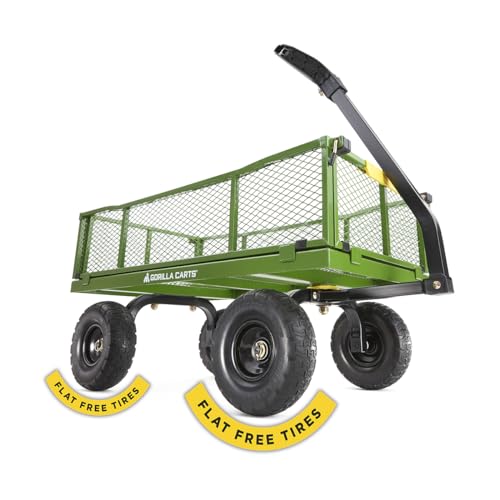
In prose terms, this pick is a four-wheeled steel utility cart take on the classic barrow, built around a steel bed, a pull handle that keeps the load level, and a dump-style release on many versions that lets you tip material out instead of shovelling it. It is presented here without a purchase link while verification is pending, so judge it on the fit described rather than on any headline claim. Best for: readers whose jobs match the strengths just described. Not suited for: readers whose ground, storage or typical load point the other way, and who would be better served by a different shape of tool from the same shortlist. Check the current listing carefully before you buy, compare the tray material, wheel type and handle design against your route, and treat any optional extras as exactly that — optional.

Polar Trailer Cart — Alternative to Weigh
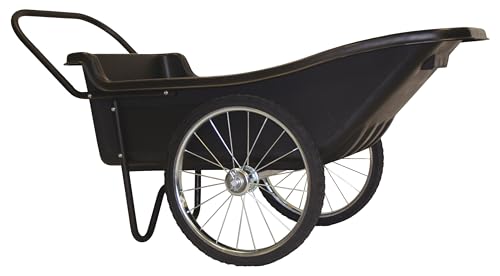
In prose terms, this pick is a tow-and-pull trailer cart approach, with a larger poly bed and four wheels, better suited to flat ground and bigger, bulkier loads moved at walking pace. It is presented here without a purchase link while verification is pending, so judge it on the fit described rather than on any headline claim. Best for: readers whose jobs match the strengths just described. Not suited for: readers whose ground, storage or typical load point the other way, and who would be better served by a different shape of tool from the same shortlist. Check the current listing carefully before you buy, compare the tray material, wheel type and handle design against your route, and treat any optional extras as exactly that — optional.

WORX Aerocart — Alternative to Weigh
In prose terms, this pick is a convertible yard tool that shifts between wheelbarrow, dolly and cart duties, aimed at households that want one piece of kit to cover several lighter jobs rather than a single-purpose barrow. It is presented here without a purchase link while verification is pending, so judge it on the fit described rather than on any headline claim. Best for: readers whose jobs match the strengths just described. Not suited for: readers whose ground, storage or typical load point the other way, and who would be better served by a different shape of tool from the same shortlist. Check the current listing carefully before you buy, compare the tray material, wheel type and handle design against your route, and treat any optional extras as exactly that — optional.
How to Get the Most Value If You Buy
Value multiplies with habits. Keep the barrow where you can reach it without a wrestling match, because a tool that is easy to grab gets used for medium jobs too, and those are where the trips quietly add up. Load it properly — low, centred, within rating — so trips feel easy and the tool lasts. Use it as a mobile bench for tools and pots during big sessions. Rinse and dry it, keep the tyre at sidewall pressure, and store it tipped or hung. Owners who do these things describe their barrow as indispensable; owners who do not, describe it as fine.
When you Start with the ground the barrow has to cross, because ground decides more than brand does, the details come into focus quickly: a deep tray suits bulky, light material such as leaves, clippings and mulch, while a shallower tray keeps dense material like wet soil and gravel lower and easier to control. At the same time, a steel tray shrugs off rubble, broken concrete and sharp-edged stone, while a poly tray is lighter to lift, quieter in use and immune to rust, though it can flex under a pointed load. Write your own short list of non-negotiables before you shop, and let that list, not a headline, make the decision. In practice that means walking your route once with fresh eyes, noting gates, steps, slopes and soft patches, and then reading every product description against that route rather than against an ideal garden that nobody actually owns.
When you Judge a barrow on the day the job goes wrong, not on the day everything is dry and level, the details come into focus quickly: a barrow that converts into a dolly or cart earns its shed space twice, but every conversion adds joints, latches and compromises that a single-purpose tool simply does not carry. At the same time, grip shape and handle spacing decide whether the tool feels natural with gloves on in winter and with bare hands in summer, and small differences here are felt on every trip. A barrow is a simple tool, which is exactly why the small details decide whether it feels like help or like hard work. In practice that means walking your route once with fresh eyes, noting gates, steps, slopes and soft patches, and then reading every product description against that route rather than against an ideal garden that nobody actually owns.
When you Think about the work in terms of trips saved rather than loads carried, the details come into focus quickly: pneumatic tyres roll kindly over roots, gravel and uneven lawns, while flat-free tyres remove punctures and pressure checks from your life at the cost of a firmer, less forgiving ride. At the same time, grip shape and handle spacing decide whether the tool feels natural with gloves on in winter and with bare hands in summer, and small differences here are felt on every trip. When two designs look equal on paper, choose the one whose wheel, handles and storage fit your daily routine more closely. In practice that means walking your route once with fresh eyes, noting gates, steps, slopes and soft patches, and then reading every product description against that route rather than against an ideal garden that nobody actually owns.
When you Look at the handles first, since your hands are the part of you that meets the tool every single trip, the details come into focus quickly: a barrow that converts into a dolly or cart earns its shed space twice, but every conversion adds joints, latches and compromises that a single-purpose tool simply does not carry. At the same time, grip shape and handle spacing decide whether the tool feels natural with gloves on in winter and with bare hands in summer, and small differences here are felt on every trip. That is why experienced gardeners talk about wheels, handles and balance far more than they talk about tray colour or badges. In practice that means walking your route once with fresh eyes, noting gates, steps, slopes and soft patches, and then reading every product description against that route rather than against an ideal garden that nobody actually owns.
The Decision Checklist
- Do you move bulk material at least several times a year?
- Is the distance more than a few steps?
- Can a barrow physically travel your route — gates, paths, slopes?
- Do you have a dry, stable place to store it?
- Would a cart, hand truck or borrowed barrow honestly serve you better?
- Is at least one real bulk job already on your calendar?
If you answered yes to the first four and no to the fifth, buy with confidence and choose the type that matches your ground. If the sixth is also yes, buy before that job, not after it.
Going Deeper: Is a Wheelbarrow Worth It in Everyday Practice
Beyond the headline questions sit the everyday details that decide whether a barrow becomes a favourite tool or a shed ornament, and they deserve a closer look before any decision is finalised.
When you Ask where the load sits in relation to the wheel, because that relationship is the whole physics of the tool, the details come into focus quickly: a deep tray suits bulky, light material such as leaves, clippings and mulch, while a shallower tray keeps dense material like wet soil and gravel lower and easier to control. At the same time, a barrow that converts into a dolly or cart earns its shed space twice, but every conversion adds joints, latches and compromises that a single-purpose tool simply does not carry. The honest test is a loaded run over your own ground, and any design that fights you on that run will fight you for years. In practice that means walking your route once with fresh eyes, noting gates, steps, slopes and soft patches, and then reading every product description against that route rather than against an ideal garden that nobody actually owns.
When you Remember that dumping is half the job, and a tray that empties cleanly saves real effort at the end of each run, the details come into focus quickly: grip shape and handle spacing decide whether the tool feels natural with gloves on in winter and with bare hands in summer, and small differences here are felt on every trip. At the same time, long handles give leverage that makes a heavy tray feel lighter at the lift, yet they also lengthen the whole tool, which matters in a small shed and on a narrow path. Write your own short list of non-negotiables before you shop, and let that list, not a headline, make the decision. In practice that means walking your route once with fresh eyes, noting gates, steps, slopes and soft patches, and then reading every product description against that route rather than against an ideal garden that nobody actually owns.
When you Picture the tightest corner on your usual route and judge every design against that corner, the details come into focus quickly: grip shape and handle spacing decide whether the tool feels natural with gloves on in winter and with bare hands in summer, and small differences here are felt on every trip. At the same time, the legs matter more than they look, because a barrow spends much of its life parked mid-load, and a stance that rocks or sinks into soft ground makes loading awkward and occasionally messy. A barrow is a simple tool, which is exactly why the small details decide whether it feels like help or like hard work. In practice that means walking your route once with fresh eyes, noting gates, steps, slopes and soft patches, and then reading every product description against that route rather than against an ideal garden that nobody actually owns.
Going Deeper: Is a Wheelbarrow Worth It in Everyday Practice
Beyond the headline questions sit the everyday details that decide whether a barrow becomes a favourite tool or a shed ornament, and they deserve a closer look before any decision is finalised.
When you Consider how the tray behaves when it is only half full, which is how most loads actually travel, the details come into focus quickly: the legs matter more than they look, because a barrow spends much of its life parked mid-load, and a stance that rocks or sinks into soft ground makes loading awkward and occasionally messy. At the same time, a steel tray shrugs off rubble, broken concrete and sharp-edged stone, while a poly tray is lighter to lift, quieter in use and immune to rust, though it can flex under a pointed load. Long after the purchase is forgotten, the trips remain, so it pays to choose for the trips. In practice that means walking your route once with fresh eyes, noting gates, steps, slopes and soft patches, and then reading every product description against that route rather than against an ideal garden that nobody actually owns.
When you Treat the wheel as the engine of the thing, since every push you make travels through it, the details come into focus quickly: a deep tray suits bulky, light material such as leaves, clippings and mulch, while a shallower tray keeps dense material like wet soil and gravel lower and easier to control. At the same time, a steel tray shrugs off rubble, broken concrete and sharp-edged stone, while a poly tray is lighter to lift, quieter in use and immune to rust, though it can flex under a pointed load. A barrow is a simple tool, which is exactly why the small details decide whether it feels like help or like hard work. In practice that means walking your route once with fresh eyes, noting gates, steps, slopes and soft patches, and then reading every product description against that route rather than against an ideal garden that nobody actually owns.
When you Remember that dumping is half the job, and a tray that empties cleanly saves real effort at the end of each run, the details come into focus quickly: the legs matter more than they look, because a barrow spends much of its life parked mid-load, and a stance that rocks or sinks into soft ground makes loading awkward and occasionally messy. At the same time, a barrow that converts into a dolly or cart earns its shed space twice, but every conversion adds joints, latches and compromises that a single-purpose tool simply does not carry. Long after the purchase is forgotten, the trips remain, so it pays to choose for the trips. In practice that means walking your route once with fresh eyes, noting gates, steps, slopes and soft patches, and then reading every product description against that route rather than against an ideal garden that nobody actually owns.
Going Deeper: Is a Wheelbarrow Worth It in Everyday Practice
Beyond the headline questions sit the everyday details that decide whether a barrow becomes a favourite tool or a shed ornament, and they deserve a closer look before any decision is finalised.
When you Remember that dumping is half the job, and a tray that empties cleanly saves real effort at the end of each run, the details come into focus quickly: pneumatic tyres roll kindly over roots, gravel and uneven lawns, while flat-free tyres remove punctures and pressure checks from your life at the cost of a firmer, less forgiving ride. At the same time, a steel tray shrugs off rubble, broken concrete and sharp-edged stone, while a poly tray is lighter to lift, quieter in use and immune to rust, though it can flex under a pointed load. A barrow is a simple tool, which is exactly why the small details decide whether it feels like help or like hard work. In practice that means walking your route once with fresh eyes, noting gates, steps, slopes and soft patches, and then reading every product description against that route rather than against an ideal garden that nobody actually owns.
When you Weigh up storage before you weigh up capacity, because a barrow you cannot store well will not last well, the details come into focus quickly: the legs matter more than they look, because a barrow spends much of its life parked mid-load, and a stance that rocks or sinks into soft ground makes loading awkward and occasionally messy. At the same time, a steel tray shrugs off rubble, broken concrete and sharp-edged stone, while a poly tray is lighter to lift, quieter in use and immune to rust, though it can flex under a pointed load. None of these choices is right in the abstract; each is right for a particular garden, a particular route and a particular pair of hands. In practice that means walking your route once with fresh eyes, noting gates, steps, slopes and soft patches, and then reading every product description against that route rather than against an ideal garden that nobody actually owns.
When you Weigh up storage before you weigh up capacity, because a barrow you cannot store well will not last well, the details come into focus quickly: a steel tray shrugs off rubble, broken concrete and sharp-edged stone, while a poly tray is lighter to lift, quieter in use and immune to rust, though it can flex under a pointed load. At the same time, a barrow that converts into a dolly or cart earns its shed space twice, but every conversion adds joints, latches and compromises that a single-purpose tool simply does not carry. None of these choices is right in the abstract; each is right for a particular garden, a particular route and a particular pair of hands. In practice that means walking your route once with fresh eyes, noting gates, steps, slopes and soft patches, and then reading every product description against that route rather than against an ideal garden that nobody actually owns.
Using and Storing a Wheelbarrow Safely
A few safety habits run through everything in this article, and they are worth stating plainly. Never load a barrow beyond the maker’s stated rating for that model; the rating exists because trays bend, axles flex and tyres fail when they are pushed past it, and a load that feels manageable standing still feels very different once it is moving. When you lift loaded handles, bend your knees and lift with your legs, not your back, keeping the handles close and rising in one smooth motion rather than jerking the load up. Keep every load balanced from side to side and settled low in the tray, with the heaviest material over the wheel rather than piled high at the front or back. If your barrow runs a pneumatic tyre, keep its pressure at the figure printed on the tyre sidewall; a soft tyre makes steering vague and a badly overfilled one rides harshly and wears unevenly. For storage, stand the barrow tipped and stable, or hang it securely, so that it cannot topple onto a child, and never leave it sitting upright outdoors collecting standing water, because pooled water breeds mosquitoes and quietly rusts a steel tray from the inside out.
The Earn-Its-Place Test: When a Wheelbarrow Repays the Space It Takes
Worth-it questions about a wheelbarrow are really questions about frequency, so start by honestly counting how often the job it does actually arises in your household in a normal month, not in the motivated week when you decided to shop for one. Multiply that frequency by the friction it removes each time — minutes saved, mess avoided, a workaround retired, a room made usable for longer each day — and the value of a wheelbarrow stops being a feeling and becomes a rough but usable number. Borrowed enthusiasm is the trap here: a wheelbarrow can be excellent and still not be worth it for you, if your neighbours, your feed or your guests use theirs weekly while your own routine would reach for it a handful of times a year. If a problem with the wheelbarrow repeats in the same spot or the same stage of the job, treat the pattern as the clue — patterns point to setup, surface or technique, while random problems point more often to the individual unit.
Decide in advance what good enough looks like for the job the wheelbarrow does in your home, because chasing a flawless result usually costs more time than the flaw itself, and most households are happier with a reliable ninety percent they actually repeat. Check the floor, wall, ground or surface the wheelbarrow will meet, since level, texture, moisture and finish decide more about everyday performance in garden & lawn settings than most shoppers expect when they are comparing listings on a screen. If you want a concrete listing check, take a name already shortlisted in this guide, such as Gorilla Carts Steel Utility Cart, Polar Trailer Cart and WORX Aerocart, and verify that exact wheelbarrow listing against the measurements and compatibility questions above, field by field, rather than trusting the headline description alone. Watch for edge cases in your own home: the pet that investigates everything, the child who treats every new object as furniture, the guest who uses force where you use familiarity, and the weather, light or season that changes how a wheelbarrow behaves.
When something about the wheelbarrow disappoints, change one variable at a time — position, setting, timing, load, accessory or technique — and give the change a fair trial, because changing three things at once leaves you with a better or worse result and no idea why. Seasonal thinking helps more than expected: a wheelbarrow bought in one season will meet different light, humidity, mud, heat, guests and routines in another, so judge its size, storage and upkeep against the hardest season it will face. Keep the packaging of a larger wheelbarrow until those first ordinary tests are done, flattened if space is tight, because re-boxing an awkward shape from scratch is the hidden difficulty inside many otherwise straightforward returns. Test the wheelbarrow in the first week under deliberately ordinary conditions rather than saving it for a special occasion, so that any problem surfaces while returning, exchanging or adjusting your setup is still simple.
Plan the storage home for the wheelbarrow before it arrives, naming the exact cupboard, corner, shelf, hook or stretch of floor, because a product without a home migrates around the house and slowly becomes the clutter it was bought to reduce. Think about who else will use the wheelbarrow and what they will do differently: shorter reach, less patience, stronger habits, no interest in the manual, and a tendency to leave things wherever they were last set down.
Frequently Asked Questions
Is one wheel or two wheels better for a beginner?
Two wheels are usually kinder for a beginner, because the barrow helps with side-to-side balance and your arms can concentrate on pushing and steering. A single wheel is more manoeuvrable in tight beds and on narrow paths, and experienced users love that agility, but it does ask more of your wrists and forearms while you learn. If your ground is open and your loads are modest, either works; if your loads feel heavy, start with the steadier option.
How do I stop a wheelbarrow tipping over sideways?
Most sideways tips come from a load that is high, off-centre or both. Keep heavy material low and centred over the wheel, slow down for turns, and avoid crossing a slope at an angle with a full tray. On a single-wheel barrow, keep a firm two-handed grip and let the barrow slow rather than wrestling it back upright; setting it down and reloading beats a spilled load and a strained wrist every time.
What is the difference between a steel and a poly tray?
A steel tray is the tougher choice for rubble, stone and sharp-edged material, and it can be hammered back into shape after a dent, but it is heavier and will rust if the coating is chipped and ignored. A poly tray is lighter, quieter and cannot rust, which suits soil, compost and garden waste, though it can flex under pointed loads and may crack if abused in hard frost. Match the tray to the roughest load you move regularly.
Are pneumatic or flat-free tyres better?
A pneumatic tyre gives the softest, most forgiving ride over roots, gravel and uneven lawns, and it is easier on your arms over a long session. The trade-off is upkeep: it needs its pressure kept at the figure on the sidewall and it can puncture. A flat-free tyre removes both worries and is a fine choice for thorny ground or a barrow that sits unused for weeks, but it rides firmer and can feel harsher on hard surfaces.
How should I store a wheelbarrow?
Store it tipped up and stable against a wall, hung securely on strong hooks, or upside down, so it cannot fall on a child and cannot collect rain. Never leave it sitting upright outdoors where standing water pools in the tray, because that water breeds mosquitoes and rusts steel from the inside. A quick rinse, a dry-off and a sheltered spot will add years to any barrow, whatever it is made of.
How much should I load at a time?
Load to a level you can lift smoothly with your legs, steer confidently and set down under control, and never beyond the maker’s stated rating for your model. Dense materials such as wet soil, sand and gravel reach a sensible limit far sooner than bulky materials such as leaves or mulch. Two comfortable trips are faster, safer and less tiring than one overloaded trip that ends in a spill or a strain.