Disclosure: As an Amazon Associate, dailyhomedecorating.com earns from qualifying purchases. Links on this page are affiliate links; they cost you nothing extra. Prices and availability change often, so check the current Amazon listing before you buy.
Weighing up sleeper sofa pros and cons means resisting two easy stories: the advertisement that promises a hotel bed inside a sofa, and the horror story that every sleeper is a torture device. The truth about sleeper sofa pros and cons is more useful than either. The pros are real and, for the right household, decisive; the cons are equally real, predictable, and mostly manageable once you see them clearly before buying.
Quick Verdict and Key Takeaways
Suits: hosts without a spare room, small homes, and families whose guests stay a few nights at a time. Does not suit: nightly adult sleeping, buyers who cannot measure a delivery route, or anyone expecting a folded mattress to equal a bedroom bed. The balance tips on your guest pattern, and on nothing else quite as much.
In this guide
Sleeper Sofa Pros and Cons: The Pros
A Guest Bed Without a Guest Room
A sleeper sofa is asked to do two jobs that pull in opposite directions. As a sofa it needs deep, resilient seat cushions, a back angle you can lean into for an evening, and arms at a height that supports reading or conversation. As a bed it needs a flat, even surface, enough length for an adult to stretch out, and a mechanism that opens without a fight late at night. Every design decision trades one job against the other, which is why honest expectations matter more with this category than with almost any other piece of living room furniture you will buy.
Comfort honesty has to come first. A sleeper mattress, even a good one, is a compromise compared with a real bed in a spare room. The mattress must fold or roll away inside the frame, so it is thinner than a bedroom mattress and it rests on a platform or support system rather than on a full foundation. For occasional guests staying one or two nights, a well chosen sleeper is genuinely comfortable and most guests sleep well. For nightly use, night after night, month after month, most people will eventually feel the difference, and a dedicated bed remains the better answer.
The crossbar complaint is real, and it belongs to cheaper pull-out designs. On a traditional fold-out frame, a support bar can sit under the mattress roughly where a sleeper’s lower back or hips rest, and a thin mattress does little to hide it. Better frames move, flatten or pad that support, and better mattresses spread weight more evenly, but the cheapest pull-outs still earn their reputation. If you are sensitive to pressure points, prioritise the frame design and mattress construction over upholstery colour every single time.
One Footprint, Two Jobs
A mattress topper is the honest comfort fix, and it deserves to be said plainly rather than buried. A good topper adds the cushioning layer the folded mattress cannot carry, smooths out seams and support lines, and turns a merely acceptable guest bed into one people compliment in the morning. The trade-off is storage: the topper needs a home in a cupboard or under another bed during the day. Budget the space for it when you buy, and the sleeper you choose will perform noticeably better than its bare specification suggests.
Measure your doorways before you order anything. Sleeper sofas are heavier and often deeper than regular sofas because the bed mechanism lives inside the frame, and the classic delivery failure is a beautiful sofa stuck in a hallway or tilted hopelessly at a bedroom door. Measure the width and height of every door, the turn on any stairs, and the lift if you have one. Compare those numbers with the packaged and assembled dimensions on the listing, not just with the finished width you want in the room.
Mechanism safety deserves a calm, clear warning. Folding frames have pinch points where metal sections meet, pivot and lock. Keep hands well clear of the hinges while you open or close the bed, follow the maker’s sequence rather than forcing a stiff section, and never let children operate the mechanism or play on a half-open frame. Once the bed is fully open and locked flat, it is a stable piece of furniture; it is the movement in between that asks for care and attention.
Hospitality Without the Air Mattress
There are three broad sleeper designs worth understanding. The traditional pull-out folds a mattress into thirds under the seat cushions and opens on a metal frame. The fold-flat or futon style lowers the backrest until seat and back form one sleeping surface, which is simple and robust but only as soft as the cushions themselves. The slide-out or pop-up style pulls a hidden section forward or up to extend the seat into a bed, which suits sectionals and modular designs and avoids a folding mattress altogether.
Seat comfort during the day is the test most buyers forget. You will sit on this piece of furniture far more often than anyone will sleep on it, unless it lives in a dedicated guest room. Sit, in your mind, for a whole film: is the seat deep enough to curl up, firm enough to get out of easily, and wide enough between the arms for two adults and a child or a dog? A sleeper that wins as a bed but fails as a sofa will quietly disappoint you every ordinary evening of the year.
Frame construction decides how the sofa feels in year three. Kiln-dried hardwood and reinforced corner blocks resist the racking forces that opening and closing a bed applies, while softwood and stapled joints loosen faster under the same repeated stress. The mechanism adds weight and leverage, so frame quality matters more here than on a fixed sofa of the same size. Ask what the frame is made from, how the corners are joined, and whether the mechanism itself is steel rather than thin pressed metal.
Modern Designs Hide the Compromise
Upholstery choice is a practical decision disguised as a style one. Tight-weave fabrics shrug off the friction of cushions being lifted and replaced every time the bed is used, and removable, washable covers earn their keep the first time a guest spills coffee. Leather and leather-look surfaces wipe clean but can feel cold as a sleeping base without a topper or a good sheet. Loose, slubby weaves look relaxed and photograph beautifully, yet they show wear sooner on the edges that get handled daily.
Cushion filling shapes both sitting and sleeping comfort. High-resilience foam holds its shape and gives the even support a fold-flat sleeper needs when it becomes the mattress itself. Feather and fibre blends feel softer at first sit but compress into hollows and need daily plumping to look respectable. On a pull-out, the seat cushions come off at night, so their filling matters less for sleep and more for the thousand evenings of sitting that come before any guest arrives.
Flexibility for Life’s Odd Seasons
Weight is a planning issue, not a footnote. Sleeper sofas are among the heaviest items of domestic furniture because of the steel mechanism, and that affects delivery, any future house move, and whether two people can shift the sofa to clean behind it. If you rent, move often, or live up several flights of stairs, a lighter fold-flat design or a modular sleeper that separates into pieces may serve you better than the most luxurious traditional pull-out on the page.
Guest patterns should drive the whole decision. Count the nights, realistically, that someone sleeps in your home across a year. A household hosting family for a week at a time needs a different sleeper from one offering a crash pad after dinner parties. Occasional short stays forgive a thinner mattress; regular week-long visits justify spending more on the bed itself, adding the topper, and choosing the mechanism that opens in under a minute without moving half the room.
The Cons
The Mattress Is a Compromise
Sheets and bedding are part of the real system. Sleeper mattresses are thinner and sometimes slightly different in proportion from standard bed sizes, so ordinary fitted sheets can ride loose or pull off corners. Keep a dedicated set of bedding for the sleeper, stored with the topper if you use one, so making the bed for a guest is a five-minute job rather than a linen-cupboard excavation. A mattress protector is equally worthwhile; it guards the one component you cannot easily replace.
Care routines are simple but they are not optional. Vacuum the mechanism cavity when the bed is open, because crumbs and dust collect exactly where the frame folds. Check the moving joints occasionally for looseness, keep the mechanism clean rather than oiled unless the maker instructs otherwise, and rotate or air the mattress when guests leave. Upholstery care follows the fabric code on the label; the sleeper-specific part is remembering that cushions and covers work harder here than on any fixed sofa.
Noise tells you a lot about a mechanism. A well made frame opens with a firm, muted clunk and sits still once locked; a tired or cheap one squeaks, flexes and rattles when the sleeper turns over. You cannot always test this before buying, but you can read the construction clues: thicker steel, more cross supports, and a deck or solid platform under the mattress instead of loose wires all point to a quieter, flatter night for whoever sleeps on it.
The Crossbar Problem on Cheap Pull-Outs
Style integration matters because this is still your living room. A sleeper does not need to look like a compromise object with a visible seam and a apologetic cushion arrangement. The best current designs hide the bed entirely, carry the same arm profiles and leg styles as their fixed counterparts, and read as ordinary, handsome sofas until the moment they transform. Choose the silhouette you would choose anyway, then check that the sleeper version of it keeps the proportions you fell for.
Value in this category is cost per successful night and per comfortable evening, not the ticket on delivery day. A cheaper sleeper that guests avoid, that sags as a sofa within two years, or that fights you every time it opens, is expensive at any figure. A better built model that hosts family happily for a decade and still sits beautifully is the economical purchase in the only sense that matters. Spend first on frame and mechanism, second on the mattress, and last on decorative details.
Small homes get the largest benefit and face the hardest constraints. In a studio or one-bedroom flat, a sleeper sofa can be the difference between offering a bed and offering a floor, and it may serve as your own bed for a season between moves. That intensity of use changes the advice: prioritise the sleeping surface and the speed of conversion, accept a firmer daytime sit, and be realistic that daily conversion will wear any mechanism faster than occasional guest duty will.
Weight, Delivery and Moving Day
Children change the calculation in two directions. A sleeper is a gift when cousins visit and sleepovers multiply, and children are forgiving sleepers who rarely notice a thinner mattress. At the same time, the mechanism demands respect: teach children that the folding frame is operated by adults only, keep fingers away from hinges, and never allow jumping on an open sleeper bed, where the frame and deck are not built for trampoline duty however sturdy they feel.
Pets add their own wear pattern. Claws find the seams where cushions meet, and the cushion-removal routine for opening the bed gives determined animals new places to investigate. Choose upholstery that tolerates brushing and spot cleaning, keep a throw over the seat if your dog considers the sofa a birthright, and store bedding for guests separately so it stays fresh and hair-free. A sleeper in a pet household works perfectly well; it simply asks for these small, consistent habits.
Allergies and hygiene are easier to manage than many buyers expect. A protector over the sleeper mattress, washed between guests, keeps the sleeping surface fresh, and removable cushion covers handle the daytime side. If guests have dust sensitivities, vacuum the folded mattress and the mechanism cavity before making the bed, and air the mattress for an hour where space allows. These are five-minute jobs that make a noticeable difference to how a guest actually sleeps.
Mechanism Care and Safety Duties
Assembly and first setup reward patience. Many sleepers arrive partly assembled, and the mechanism should be operated slowly through its full cycle a few times before anyone sleeps on it, so you learn where it pivots, where it locks, and how much force is normal. Keep the instructions; the correct folding order for straps, cushions and bedding is rarely obvious six months later when a guest is standing in the room at midnight and you are demonstrating under pressure.
When something feels wrong with a mechanism, stop rather than force it. A frame that suddenly resists is usually telling you that bedding is trapped, a cushion strap is caught, or a section is out of sequence. Open it back up, clear the obstruction, and run the cycle again. Forcing a folding frame bends the very components that keep the bed flat and quiet, and a bent frame is the one sleeper fault that is genuinely difficult and costly to put right.
The Room Must Rearrange Around the Bed
Renters have a specific checklist. Check the lease for furniture and floor-protection expectations, measure the stairwell rather than assuming, and favour designs that separate into sections for the eventual move out. Felt pads under the feet protect floors when a heavy sleeper is shifted for cleaning. A sleeper can be the perfect renter’s purchase because it removes the need for a separate guest bed in a small flat, but only if it can leave the building as gracefully as it arrived.
Finally, judge a sleeper by the morning after. The real product is not the sofa in the showroom photograph or the bed in the listing video; it is a guest who slept properly, a room that returns to normal in minutes, and a sofa you still enjoy that evening. Every criterion in this article, from frame timber to topper storage, exists to protect that morning. Keep it in view, and the differences between good and bad designs become remarkably easy to see.
What the Trade-Offs Mean for You
The crossbar complaint is real, and it belongs to cheaper pull-out designs. On a traditional fold-out frame, a support bar can sit under the mattress roughly where a sleeper’s lower back or hips rest, and a thin mattress does little to hide it. Better frames move, flatten or pad that support, and better mattresses spread weight more evenly, but the cheapest pull-outs still earn their reputation. If you are sensitive to pressure points, prioritise the frame design and mattress construction over upholstery colour every single time.
A mattress topper is the honest comfort fix, and it deserves to be said plainly rather than buried. A good topper adds the cushioning layer the folded mattress cannot carry, smooths out seams and support lines, and turns a merely acceptable guest bed into one people compliment in the morning. The trade-off is storage: the topper needs a home in a cupboard or under another bed during the day. Budget the space for it when you buy, and the sleeper you choose will perform noticeably better than its bare specification suggests.
Measure your doorways before you order anything. Sleeper sofas are heavier and often deeper than regular sofas because the bed mechanism lives inside the frame, and the classic delivery failure is a beautiful sofa stuck in a hallway or tilted hopelessly at a bedroom door. Measure the width and height of every door, the turn on any stairs, and the lift if you have one. Compare those numbers with the packaged and assembled dimensions on the listing, not just with the finished width you want in the room.
Mechanism safety deserves a calm, clear warning. Folding frames have pinch points where metal sections meet, pivot and lock. Keep hands well clear of the hinges while you open or close the bed, follow the maker’s sequence rather than forcing a stiff section, and never let children operate the mechanism or play on a half-open frame. Once the bed is fully open and locked flat, it is a stable piece of furniture; it is the movement in between that asks for care and attention.
How Sleepers Compare with the Alternatives
Seat comfort during the day is the test most buyers forget. You will sit on this piece of furniture far more often than anyone will sleep on it, unless it lives in a dedicated guest room. Sit, in your mind, for a whole film: is the seat deep enough to curl up, firm enough to get out of easily, and wide enough between the arms for two adults and a child or a dog? A sleeper that wins as a bed but fails as a sofa will quietly disappoint you every ordinary evening of the year.
Frame construction decides how the sofa feels in year three. Kiln-dried hardwood and reinforced corner blocks resist the racking forces that opening and closing a bed applies, while softwood and stapled joints loosen faster under the same repeated stress. The mechanism adds weight and leverage, so frame quality matters more here than on a fixed sofa of the same size. Ask what the frame is made from, how the corners are joined, and whether the mechanism itself is steel rather than thin pressed metal.
Upholstery choice is a practical decision disguised as a style one. Tight-weave fabrics shrug off the friction of cushions being lifted and replaced every time the bed is used, and removable, washable covers earn their keep the first time a guest spills coffee. Leather and leather-look surfaces wipe clean but can feel cold as a sleeping base without a topper or a good sheet. Loose, slubby weaves look relaxed and photograph beautifully, yet they show wear sooner on the edges that get handled daily.
Cushion filling shapes both sitting and sleeping comfort. High-resilience foam holds its shape and gives the even support a fold-flat sleeper needs when it becomes the mattress itself. Feather and fibre blends feel softer at first sit but compress into hollows and need daily plumping to look respectable. On a pull-out, the seat cushions come off at night, so their filling matters less for sleep and more for the thousand evenings of sitting that come before any guest arrives.
How to Buy Smart
Guest patterns should drive the whole decision. Count the nights, realistically, that someone sleeps in your home across a year. A household hosting family for a week at a time needs a different sleeper from one offering a crash pad after dinner parties. Occasional short stays forgive a thinner mattress; regular week-long visits justify spending more on the bed itself, adding the topper, and choosing the mechanism that opens in under a minute without moving half the room.
Room layout changes once the bed opens, and good planning allows for it. The coffee table needs somewhere to go, the rug may need to roll back, and there should be a path to the bathroom that does not require climbing over the sleeper. Walk the route in your head at two in the morning, in the dark, as a half-asleep guest would. If the open bed blocks a door or a heater, solve that on paper now, because no mattress quality can fix a room that fights its own furniture.
Sheets and bedding are part of the real system. Sleeper mattresses are thinner and sometimes slightly different in proportion from standard bed sizes, so ordinary fitted sheets can ride loose or pull off corners. Keep a dedicated set of bedding for the sleeper, stored with the topper if you use one, so making the bed for a guest is a five-minute job rather than a linen-cupboard excavation. A mattress protector is equally worthwhile; it guards the one component you cannot easily replace.
Setup and Care That Reduce the Cons
Value in this category is cost per successful night and per comfortable evening, not the ticket on delivery day. A cheaper sleeper that guests avoid, that sags as a sofa within two years, or that fights you every time it opens, is expensive at any figure. A better built model that hosts family happily for a decade and still sits beautifully is the economical purchase in the only sense that matters. Spend first on frame and mechanism, second on the mattress, and last on decorative details.
Small homes get the largest benefit and face the hardest constraints. In a studio or one-bedroom flat, a sleeper sofa can be the difference between offering a bed and offering a floor, and it may serve as your own bed for a season between moves. That intensity of use changes the advice: prioritise the sleeping surface and the speed of conversion, accept a firmer daytime sit, and be realistic that daily conversion will wear any mechanism faster than occasional guest duty will.
Children change the calculation in two directions. A sleeper is a gift when cousins visit and sleepovers multiply, and children are forgiving sleepers who rarely notice a thinner mattress. At the same time, the mechanism demands respect: teach children that the folding frame is operated by adults only, keep fingers away from hinges, and never allow jumping on an open sleeper bed, where the frame and deck are not built for trampoline duty however sturdy they feel.
Representative Models to Consider

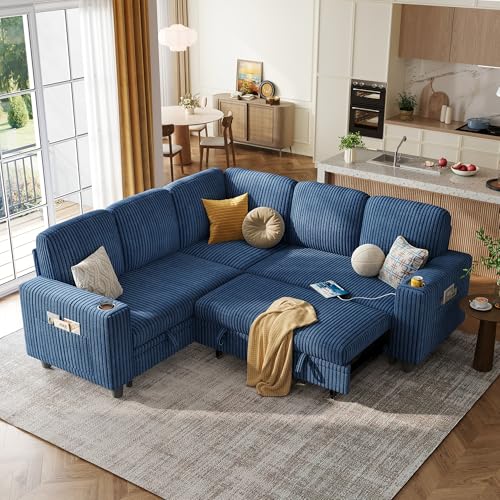
LINSY HOME Rubik Sleeper Sofa
Best for: flexible layouts and movable backrests. Positioning: mid tier. Not suited for: buyers who need a dedicated bed for nightly, long-term sleeping.
Judge this model first as a sofa you will sit on every day, and second as a bed your guests will use occasionally. Check the open footprint against your taped floor plan, confirm the delivery path through every doorway, and plan topper storage before you order. The mechanism should be operated by adults only, with hands kept clear of the folding hinges.
Strengths: honest dual-purpose design, a sleeping surface that suits occasional guests well, and a daytime sit that does not feel like a compromise object. Trade-offs: like every sleeper, the mattress is thinner than a bedroom mattress, the piece is heavy to move, and the best night’s sleep still comes with a topper added.

Mopio Futon Sleeper Sofa
Best for: studio flats and simple fold-flat sleeping. Positioning: entry tier. Not suited for: buyers who need a dedicated bed for nightly, long-term sleeping.
Judge this model first as a sofa you will sit on every day, and second as a bed your guests will use occasionally. Check the open footprint against your taped floor plan, confirm the delivery path through every doorway, and plan topper storage before you order. The mechanism should be operated by adults only, with hands kept clear of the folding hinges.
Strengths: honest dual-purpose design, a sleeping surface that suits occasional guests well, and a daytime sit that does not feel like a compromise object. Trade-offs: like every sleeper, the mattress is thinner than a bedroom mattress, the piece is heavy to move, and the best night’s sleep still comes with a topper added.
Diophin Sleeper Sofa Bed
Best for: everyday sitting with regular guest use. Positioning: mid tier. Not suited for: buyers who need a dedicated bed for nightly, long-term sleeping.
Judge this model first as a sofa you will sit on every day, and second as a bed your guests will use occasionally. Check the open footprint against your taped floor plan, confirm the delivery path through every doorway, and plan topper storage before you order. The mechanism should be operated by adults only, with hands kept clear of the folding hinges.
Strengths: honest dual-purpose design, a sleeping surface that suits occasional guests well, and a daytime sit that does not feel like a compromise object. Trade-offs: like every sleeper, the mattress is thinner than a bedroom mattress, the piece is heavy to move, and the best night’s sleep still comes with a topper added.
Bottom Line
The pros win for occasional hosting in a home without a spare bed; the cons win when the bed would be used nightly or when a cheap pull-out’s frame would be asked to do a premium job. Decide which household you are, and the sleeper sofa pros and cons settle themselves.
Size the bed honestly against the people who will actually sleep on it. A double or queen sleeping surface suits couples and taller guests, while a single or small double works for one adult or for children and teenagers who are far less fussy. Remember that the stated bed size describes the mattress, not the room the sofa needs when open: a fully extended pull-out can stretch deep into the room, and you should pace out that footprint with tape on the floor before committing.
The second-hand market in sleepers is unusually risky, and it is worth understanding why. You cannot easily judge a mechanism’s remaining life, a mattress may carry years of other people’s guests, and missing straps or a lost topper rarely show in photographs. If you do buy used, operate the full cycle several times, lie on the bed and roll across it, and inspect the deck and hinges closely. For most households, a new mid-tier sleeper is the safer long-term purchase than a tired premium one.
Warranty terms reveal how a maker expects its own product to age. A frame and mechanism covered for a long period signals confidence in the parts that are hardest to replace, while a short cover on the mechanism paired with a long one on fabric tells the opposite story. Read what is actually covered rather than the headline number, note whether the mattress is treated as a consumable, and keep the paperwork with the assembly instructions so a future claim does not depend on a lost email.
Delivery day deserves its own plan. Clear the route from the door to the room, protect floors where a heavy frame will pivot, and decide in advance where packaging will go. Once the sofa is positioned, operate the bed mechanism slowly through a full cycle before the delivery team leaves if your service allows it, and check the sleeping surface lies flat and locks securely. Problems found in the first hour are far easier to resolve than problems found when the first guest arrives.
A sleeper earns a different kind of scrutiny in a home office that doubles as a guest room. There, conversion speed matters every single stay, the open bed must coexist with a desk and chair, and daytime sitting is often a work seat as much as a lounge seat. Fold-flat and slide-out designs shine in these rooms because they convert without relocating heavy furniture, and a firmer cushion that supports working posture doubles as a flatter, more even sleeping base at night.
Temperature affects sleep on a sleeper more than on a bed. A thinner mattress offers less insulation and less airflow management than a deep bedroom mattress, so guests may feel warmer in summer and cooler in winter. A breathable protector, season-appropriate bedding and, again, a quality topper with some loft all moderate that effect. Ask your first guests honestly how they slept and adjust the bedding rather than assuming the mattress itself is at fault.
The resale and donation path is worth a thought at purchase time. A sleeper in good order, with a clean mattress, working mechanism and its instructions kept, is a genuinely useful piece of furniture to pass on. A sleeper with a bent frame or a stained, sagging mattress is difficult to give away responsibly. Buying a design with a replaceable mattress and washable covers keeps the piece in the useful category for far longer, which is its own quiet form of value.
Colour and pattern interact with sleeper duty in practical ways. Mid-tone fabrics hide the everyday marks of a cushion that is lifted and replaced nightly during guest weeks, and a subtle pattern forgives the slight cushion misalignment that even the best sleeper shows after conversion. Very pale upholstery looks serene in photographs and demands confidence in your guests, your pets and your own housekeeping; choose it with eyes open rather than by default.
Legs and base design change cleaning more than looks. A sleeper on taller legs lets a vacuum pass underneath and makes the room feel lighter, but the mechanism and its cavity still need periodic attention from above when the bed is open. A plinth base hides dust and looks architectural, yet it makes the piece heavier to shift when you do need access. Neither is wrong; the right choice follows how your household actually cleans.
Sound sleep for guests also depends on the room, not just the sofa. Blackout lining for the window, a small lamp reachable from the bed, and somewhere to put a phone, glasses and a glass of water turn a sleeper from an emergency measure into a considered guest room. These touches cost little, store easily, and do more for a guest’s impression than another increment of mattress specification ever will.
If two sleepers are on your shortlist and you cannot separate them, compare the unglamorous details. Which one locks more positively when open? Which mattress folds without a visible crease line across the middle? Which cushions are reversible, so wear evens out? Which maker sells a replacement mattress for this exact frame? The answers predict ownership satisfaction far better than another look at the fabric swatches.
Hosts develop a routine, and designing for that routine is the last skill in choosing well. The fastest hosts store the topper, protector and guest bedding together, in the room, labelled by habit rather than by system. They know which cushion goes where, which way the coffee table slides, and how the bed folds at midnight without a light on. Choose the sleeper whose conversion routine you can imagine becoming that automatic, and you have chosen correctly.
Insurance against regret in this category is mostly measurement and honesty, repeated at every stage. Honesty about how often guests come, about who will sleep on the bed and for how long, about whether anyone in the house will truly vacuum a mechanism cavity, and about whether a topper will be bought or merely intended. The sleeper sofa is an forgiving product for honest buyers and a punishing one for optimistic ones, and the difference shows up in the first month.
Think about who makes the bed up, and when. A sleeper that one person can convert alone, in a few minutes, without dragging furniture across the room, will be offered to guests generously and often. A sleeper that needs two people, a cleared room and a wrestling match will quietly stop being offered, and friends will be steered to hotels instead. Conversion effort is not a minor specification; it decides whether the product gets used as intended at all.
The environmental ledger of a sleeper is better than it first appears. One durable piece replacing both a sofa and a separate guest bed means less material, less delivery mileage and less furniture eventually discarded. That ledger only balances if the piece lasts, which returns the argument, as every argument in this category eventually does, to frame quality, replaceable mattresses and covers that can be washed rather than replaced.
Guests remember two things: how they slept and whether they felt like a burden. A sleeper that opens quickly, sleeps decently with its topper, and closes away without ceremony in the morning scores on both counts. A sleeper that requires an hour of room surgery announces its own inconvenience. When you evaluate designs, keep both memories in mind, because hospitality is the product and the furniture is only the delivery mechanism.
A final practical note on ordering: confirm what arrives assembled and what does not, whether the mechanism is installed at the factory or fitted on site, and what tools the remaining assembly needs. Sleeper mechanisms are aligned systems; a frame assembled casually can squeak and flex in ways that get blamed on the design. Follow the sequence in the instructions exactly, tighten fixings in the order given, and re-check them after the first few conversions.
Storage inside and around a sleeper is an underrated advantage. Some designs hide a bedding compartment in the base or within an arm or chaise section, which solves the topper and guest-linen problem in one stroke. Where no compartment exists, a slim storage ottoman beside the sofa does the same job and doubles as a footrest or extra seat. Either way, bedding that lives within arm’s reach of the bed is bedding that actually gets used, promptly and without a search party.
Consider the view from the bed, not just the view of the sofa. A guest wakes facing whatever your living room presents: a window with early light, a television’s standby glow, a hallway door. Small kindnesses like a curtain that truly closes, a night light in the hallway and a door that can be pulled to for privacy cost almost nothing and transform the experience of sleeping in a shared room. Evaluate your room as a bedroom for one night before you finalise any purchase.
Sleeper sofas in period or character homes face a proportion test. Deep modern mechanisms can look bulky against delicate architecture, while traditional rolled-arm designs suit older rooms and hide their bed just as completely. The mechanism does not care about style, but you will look at the result daily. Choose a silhouette that belongs in the room first, then verify that its sleeper version keeps the same lines rather than a swollen imitation of them.
For households that host elderly parents, access details matter enormously. A bed that opens to a reasonable height, with a firm edge to sit on while dressing, and a clear, lit path to the bathroom, is the difference between a welcome visit and a worrying one. Test the sit-to-stand effort of both the sofa and the open bed with older knees in mind, and favour mechanisms that lock solidly so the bed never shifts under a cautious sleeper.
Where the Trade-Offs Show Up in Daily Use: Sleeper Sofa in Practice
This section exists to move past the tidy two-column summary and watch where each advantage and disadvantage actually appears during an ordinary week. It adds a layer that a feature list cannot give you, grounded in the living room furniture context this sleeper sofa will actually live in. Where this guide names examples such as LINSY HOME Rubik Sleeper Sofa, Mopio Futon Sleeper Sofa, Diophin Sleeper Sofa Bed, use them as test cases for the checks below rather than as shortcuts past them.
Pay close attention to the recurring friction points, because they compound. With a sleeper sofa, owners tend to run into fabric marking, cushions softening unevenly and legs scratching the floor when the piece gets dragged instead of lifted. None of these is dramatic on its own, and that is exactly why they get underestimated at buying time. Ask how the design you are considering handles each one: can the wearing part be replaced, can the awkward part be reached without tools, does the job take two minutes or twenty. A sleeper sofa that makes its own upkeep easy gets maintained; one that makes upkeep a project gets neglected, and neglected products perform badly in ways that then get blamed on the original purchase.
Use the listings as a checklist rather than as entertainment. For each sleeper sofa you shortlist, note the exact variant, the included parts, what is sold separately, and which photographs show the item in a setting like yours rather than in a studio. If a model named elsewhere in this guide catches your eye, treat it as a worked example for this process: run it through the same measurements, the same weekly rehearsal and the same friction list before letting familiarity turn into preference. Consistency is the whole trick. Shoppers go wrong not by choosing the objectively weaker sleeper sofa, but by judging one contender on features, the next on looks and the third on a single enthusiastic anecdote.
Think about who else has a vote. A sleeper sofa is usually shared, moved, cleaned or complained about by more than one person, and the second user’s priorities are often the ones that surface after the return window closes. Check height, weight, reach, noise, heat, sharp edges or sheer visual presence, whichever apply, against the smallest, oldest or least enthusiastic person who will live with it. If you are buying for a household that includes children, pets, elderly relatives or lodgers, run the clumsy scenario too: the spill, the knock, the curious tug, the door left open. A robust sleeper sofa choice survives other people; a fragile one only survives its buyer.
Consider the edge cases that sit just outside normal use, because a sleeper sofa will meet all of them eventually. The unusually large load, the unusually small task, the day you are in a hurry, the day something else in the room is broken and this has to cover for it. Versatility is not about a long feature list; it is about behaving predictably when conditions are imperfect. Where a design offers settings, modes, attachments or configurations, ask what each one is actually for in your home, and be suspicious of flexibility you cannot attach to a real occasion. One well-judged configuration used weekly beats five clever ones used once, and the honest sleeper sofa for your home is the one whose strengths line up with your most frequent edge case, not your rarest.
Build a simple decision checklist and score it in writing. Five lines are enough: fit in the space, fit with the routine, ease of cleaning or upkeep, quality of the parts that move or wear, and how the sleeper sofa will be stored or will look when it is not the centre of attention. Score each contender quickly, then look only at the lowest scores, because purchases are usually ruined by their weakest point rather than saved by their strongest. If two options tie, choose the one whose weakness is cheapest or easiest to live with. This sounds mechanical, and it is meant to: a written checklist is the best defence against the very human habit of falling for the last photograph you looked at.
Frequently Asked Questions
Are sleeper sofas safe around children?
Yes, with one firm rule: adults operate the mechanism. Folding frames have pinch points at the hinges, so keep hands clear while opening and closing, and never let children play on a half-open frame or jump on the open bed. Once fully open and locked, or fully closed as a sofa, a sleeper is as stable as any other large piece of furniture in the room.
How long should a sleeper sofa last?
A well built frame and steel mechanism should serve for many years of occasional guest use, and the mattress and cushions will usually age before the frame does. Daily conversion shortens mechanism life noticeably. Vacuum the mechanism cavity, avoid forcing a stiff frame, and store bedding correctly, and a mid-tier or better sleeper should give a household of regular hosts a long, uneventful working life.
Can I replace just the sleeper mattress?
Often, yes. Many pull-out designs accept a replacement mattress made for sleeper mechanisms, provided the thickness and folded dimensions match the frame’s capacity. Measure the platform carefully and check the fold clearance before ordering, because a mattress that is too thick will stop the sofa closing properly. A replacement mattress plus a topper is frequently the smartest upgrade for a sofa whose frame and upholstery are still sound.
Is a sleeper sofa comfortable enough for every night?
For most adults, not indefinitely. A sleeper mattress must fold away inside the frame, so it is thinner and less supportive than a bedroom mattress. Occasional nights and short stays are fine, especially with a topper, but nightly use for months usually leads to back complaints. If someone will sleep on it every night long term, a real bed, or at minimum a high quality fold-flat design used with a substantial topper, is the kinder and more honest recommendation.
How do I stop the bar digging into a guest’s back?
The bar sensation comes from thin mattresses over traditional pull-out frames. The practical fixes are a thicker, better quality replacement sleeper mattress where the frame allows one, a good mattress topper over the existing mattress, and choosing newer frame designs that use a flat deck or repositioned supports. Test by lying on the open bed yourself and rolling slowly across it; if you can find the bar with your hips, your guests will find it too.
What size sleeper sofa should I buy?
Work backwards from the sleeper, not the sofa. One adult or children manage well on a single or small double surface; couples and taller guests need a full double or queen mattress. Then check the open footprint against your room with tape on the floor, including space to walk around the bed, and confirm the sofa itself fits through every doorway and turn between the street and its final position.
Related Guides
Keep exploring with these companion guides: sleeper sofa review, sleeper sofa reviews, is a sleeper sofa worth it, sleeper sofa versus a regular sofa, sectional sofa pros and cons, sectional sofa buying guide, best small sleeper sofas, best contemporary sofas, best sofas for homes with kids.


