Disclosure: As an Amazon Associate, dailyhomedecorating.com earns from qualifying purchases. Links on this page are affiliate links; they cost you nothing extra. Prices and availability change often, so check the current Amazon listing before you buy.
If you are asking are sheer curtains worth it, the short answer is that sheer curtains are worth it if your windows need softer light, daytime privacy and a finished look, and they are not worth it as your only window covering if you need darkness, insulation or privacy after dark. Few home purchases are as inexpensive to try, as quick to install or as easy to reverse, which shifts the calculation in their favour: the downside of a wrong set is small, and the daily upside, a calmer and brighter-feeling room, is something you notice every single morning.
Key Takeaways
- Worth it if glare, harsh sun patches or daytime overlooking are your problem.
- Not worth it alone for dark sleep, cold draughty windows or night-time privacy.
- Layered with a blind or heavier curtain, sheers become part of the most flexible window setup a home can have.
- Child safety is simple with sheers on a plain rod, because there is no operating cord to manage.
- One test panel on your brightest window settles the question better than any listing photo.
Are Sheer Curtains Worth It? The Short Answer in Full
Worth it if you spend your days in the room, work at a screen, keep plants, or feel watched from the street in daylight. Worth it if your windows look bare and unfinished but blinds feel too hard and heavy curtains feel too dark. Not worth it if the room’s real problem is light at five in the morning in summer, a rattling single-glazed window in winter, or neighbours who can see in once your lamps are on. Naming the actual problem is the whole decision, because sheers solve a specific set of problems beautifully and the rest barely at all.
In this guide
What You Actually Get
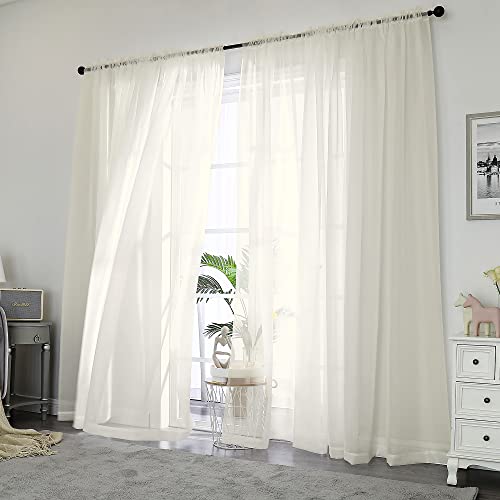
Light is the whole point of a sheer, and it is also the thing people most often misjudge from a product photo. A sheer curtain does not block daylight; it scatters it. Bare glass lets a hard-edged shaft of sun fall across the floor, the sofa and the television screen, and it leaves the edges of the room comparatively dim. A voile or linen-look panel breaks that shaft into a soft wash, so the brightness spreads, shadows soften and the room feels calmer without feeling darker. The effect is strongest on south and west facing windows in the afternoon, and gentlest on north facing glass, where the light is already diffuse. If a room feels cave-like, a sheer will not manufacture light that is not there, but it will make the light you have feel more even and more usable.
How much light a sheer lets through depends on weave density, colour and how much the fabric is gathered. A loose, open voile in white passes the most light and gives the least privacy. A tighter linen-look weave in a warm grey or flax tone passes noticeably less and reads more solid from the street. Gathering matters more than most buyers expect: a panel hung flat is at its most transparent, while the same panel gathered to twice its flat width overlaps itself, deepening the colour, softening the view through it and cutting glare further. When you compare two sheers, compare them gathered, on a window, in daylight, not folded in a packet under shop lighting.
Daytime privacy is the second job of a sheer, and here the physics work in your favour. When it is brighter outside than inside, a sheer panel obscures shapes, colours and detail for anyone looking in, while you can still see out reasonably well. A neighbour across the street sees a soft white rectangle, not your breakfast table. That protection reverses after dark. Once lamps are on inside and the street is dark, a sheer becomes close to transparent from outside, and silhouettes and movement are easy to see. Anyone who needs evening privacy needs a second layer, a lined drape, a blackout panel or a blind behind or in front of the sheer. Treat sheers as a daytime privacy tool and plan the night-time layer separately.
The Light, Privacy and Finished-Look Dividend
In living rooms, sheers do the heavy lifting of making a window look dressed during the day without stealing light, and they take the edge off a view of fences, parked cars or a close neighbour. In bedrooms they are best understood as the daytime half of a partnership with blackout curtains or a blind, giving a soft, private morning light that no blackout fabric can provide. In kitchens, short voile cafe-style panels or sill-length sheers keep the room bright and screen the sink area, provided they hang well clear of the hob and any flame. Bathrooms need the densest sheers you can find, or a sheer paired with frosted glass or a blind, because privacy there is not optional at any hour.
Renters often discover sheers first, because a tension rod inside the reveal needs no drilling, the panels are light enough for almost any fixing, and the whole treatment can move house with you. Home offices benefit more than most rooms: glare control without gloom is exactly what a screen worker needs, and a sheer delivers it all day without batteries, motors or remotes. Dining rooms and hallways, where windows are often more about light than view, are natural sheer territory too. The rooms where sheers alone disappoint are predictable: nurseries that need dark naps, media rooms, and any bedroom on a bright street with lamps outside. Those rooms need layers, not regrets.
Colour choice for sheers is really a light choice. White gives the brightest, cleanest diffusion and the classic look, and it can read slightly cool in a north-facing room. Ivory, cream and soft ecru warm the light, flatter wood and traditional schemes, and hide the first hint of dust better than brilliant white. Pale grey and stone tones suit contemporary rooms and pair well with blackout drapes in charcoal or navy. Strong colours in a sheer are a commitment: a blush or sage panel tints the whole room’s daylight, which can be delightful in a bedroom and distracting in a room where you judge colours for work or hobbies. When in doubt, order the neutral, live with it, and let cushions carry the colour instead.
The Real Costs Beyond Money
The costs of sheers are mostly not financial. There is the upkeep: light fabrics show dust, kitchen grease and road grime sooner than a heavy curtain, so you are committing to a gentle wash a few times a year and a shake outdoors in between. There is the second-layer cost in rooms that need one, because a sheer that reveals the need for a blind has only done half the job. There is a small learning curve in measuring and fullness, since a skimpy panel looks mean and must be supplemented. And there is the evening moment, in the first week, when you stand outside your own lit window and realise how much can be seen, which is a cost in planning rather than money, but a real one to budget for.
A sheer on its own is a fair-weather treatment, and honest guides should say so. It will not darken a bedroom for a shift worker, insulate a draughty single-glazed window in January, or give a street-facing bathroom privacy at night. What it does, softening light, screening the day, making a window look finished rather than bare, it does better and more cheaply than any alternative. Most satisfied sheer owners either live somewhere the limitations rarely bite, or they layer. Most disappointed owners asked one thin panel to be a blackout, a blanket and a wall. Decide which household you are in before you order, and the purchase almost always lands well.
Dust is the main enemy. Sheers sit in the path of every draught and filter the air as it moves, so they grey slowly from the hem up, especially in kitchens, near busy roads and in homes with open fires. A gentle shake outside every few weeks, a vacuum on a low setting with an upholstery brush, or a cool wash a few times a year keeps them bright. Sun is the second enemy: constant strong sun slowly weakens any fabric, and rotating panels between windows, or between the sunny and shaded ends of a wide rod, evens the wear. Handled this way, an everyday sheer set lasts for years; neglected in a smoky kitchen, the same set looks tired within a season or two.
Who It Pays Off For
Daylight households gain the most: people who work from home, read in the daytime, or keep a bright living room in daily use feel the glare reduction within hours. Overlooked households gain next, because daytime screening ends the feeling of living in a goldfish bowl without the gloom of closed blinds. Renters and new movers gain disproportionately, because a tension rod and two panels transform a bare window with no drilling, no landlord negotiation and nothing to repair when they leave. Stylists on a budget gain too: few changes soften a hard, echoing room as quickly as a wall of gently moving fabric.
Who Should Skip It
Skip sheers as a solo purchase if you work nights and sleep in the day, if a baby naps in the room, or if the bedroom faces street lighting, because none of those problems is a daylight problem. Skip them if the window’s issue is cold, condensation or noise; fabric this light cannot help, and the money belongs in glazing, seals or heavy lined curtains first. Skip the most delicate decorative sheers if the window is opened constantly, brushed by a door, or shared with a climbing cat, because you will spend your goodwill on repairs and replacements instead of enjoying the room. In each case the answer is not anti-sheer, it is sequencing: solve the hard problem first, then add sheers for the light.
Strengths and Trade-Offs of Owning Sheers
Strengths
- Softer, more even daylight and less glare on screens and pages.
- Real daytime privacy without closing the room down.
- A finished, furnished look at the window for a modest outlay.
- Light, washable and easy to change with the seasons.
Trade-offs
- No meaningful darkness for sleep or films.
- Little insulation against cold, heat or noise.
- Transparent from outside once lamps are on indoors.
- Light colours show dust and need regular gentle washing.
Alternatives to Consider
A roller blind gives adjustable light control and a clean modern line, and pairs well with a sheer in front of it. A Roman blind adds fabric softness with real evening privacy in one layer, at a higher tier and with cords that must be managed carefully around children. Lined or blackout curtains deliver darkness and insulation and can hang in front of sheers on a double rod. Frosted or privacy window film screens a bathroom or street-level window permanently with no fabric at all, though it cannot be opened for a clear view. Plantation-style shutters are the premium, permanent answer where budget and window shape allow. The sheer is not competing with these so much as completing them, which is why so many homes end up with a sheer plus one of the above.
Sheer Panels Worth Considering
NICETOWN Sheer Curtains
Best for: voile panels with a clean, simple finish and easy-sliding grommet options. Tier: entry — check price on Amazon for the current listing. Not suited for: rooms that need darkness or night-time privacy from a single layer.
The NICETOWN sheer line is the name many households meet first, and it earns that position by being straightforward: light voile panels, a wide choice of lengths and colours, and headers that go up on a standard rod in minutes. In a living room the fabric reads bright and neutral, the folds fall evenly once the panels have hung for a day, and the overall effect is the classic sheer look without any fuss or decoration competing with the room. It suits first-time sheer buyers, renters and anyone dressing several windows at once who wants one consistent fabric throughout the home. The honest limitation is that an entry-tier voile is at the transparent end of the family, so street-facing rooms will want generous fullness or a second layer for the evening. Choose it for bright, easy, everyday coverage; skip it if you want texture, pattern or a heavier, more private weave.

OWENIE Sheer Curtains
Best for: simple rod-pocket voile panels made for soft gathering and quiet rooms. Tier: entry — check price on Amazon for the current listing. Not suited for: rooms that need darkness or night-time privacy from a single layer.
OWENIE sheers lean traditional: rod-pocket voile that gathers into soft, close folds on the rod and gives a gentle, slightly romantic finish that suits bedrooms and quieter living spaces. The gathered pocket header creates fullness almost automatically, which helps daytime privacy, because overlapped fabric screens better than a flat panel. These panels are a natural fit where the sheers will mostly stay drawn or half-drawn rather than being pulled open and closed all day, since rod pockets do not slide as freely as grommets. The limitation follows from the same header: on a very wide window that you open every morning, the daily tug across the rod becomes tiresome. Choose OWENIE for calm rooms and a soft gathered look; skip it for wide, high-traffic windows that need one-handed sliding.
Lush Decor Sheer Curtains
Best for: decorative sheers with pattern, texture and a more designed finish. Tier: premium decorative — check price on Amazon for the current listing. Not suited for: rooms that need darkness or night-time privacy from a single layer.
Lush Decor treats the sheer as decoration rather than background, with patterned, textured and embellished designs that make the window a feature of the room. Hung in a plain room with simple furniture, a patterned sheer does the work that artwork does elsewhere: it adds movement, softness and a deliberate style note, while still filtering light like any sheer. This is the pick for a dining room, a guest bedroom or a living room that feels finished except at the window. The trade-offs are commitment and care: a bold pattern dates faster than a plain voile, dictates more of the room’s palette, and delicate embellished fabrics deserve gentler washing. Choose Lush Decor when the window should be seen; skip it when you want the curtain to disappear and let something else lead the room.

H.VERSAILTEX Linen Sheer Curtains
Best for: linen-look textured panels with a warmer, more substantial hand. Tier: mid — check price on Amazon for the current listing. Not suited for: rooms that need darkness or night-time privacy from a single layer.
The H.VERSAILTEX linen sheer line is for people who find classic voile a little too glassy and thin. The linen-look weave brings visible texture, a matte finish and a slightly weightier fall, so the panels read as part of the furnishing rather than as a film over the glass. That texture buys a little extra daytime privacy, hides dust and minor creases gracefully, and pairs naturally with wood, rattan, wool throws and other matte materials. It suits living rooms and bedrooms in relaxed, natural schemes, and homes that want one fabric to work across several rooms. The limitation is light: a denser weave passes a little less of it, and in a dark, north-facing room the difference is noticeable by late afternoon. Choose it for warmth, texture and screening; skip it if maximum brightness is the whole point of the purchase.
How to Get the Most Value If You Buy
Measuring for sheers follows the same rules as measuring for any curtain, with one difference: fullness matters more, because a sheer stretched flat looks thin, patchy and far more transparent than the same fabric properly gathered. Start with width. Measure the rod or track, not the window frame, then plan for the fabric to be roughly twice that width in total, so the panels fold into soft, even waves. Two panels each about one and a half times half the rod width is a common, forgiving arrangement. Too little fabric is the most common sheer mistake of all; it cannot be fixed afterwards except by buying another panel, which, fortunately, is easy with sheers because panels are usually sold singly or in pairs and match well.
Rod position changes the whole result. Mounting the rod a few inches above the frame and wider than the frame makes the window read larger, lets the gathered sheers sit over the wall rather than the glass when open, and keeps more daylight available. Inside a deep reveal, a tension rod or a slim track gives a neat, layered look, especially with a heavier curtain in front. Whatever you choose, fix the rod first, or at least decide its exact height, before you order lengths. Ordering fabric before the hardware position is settled is how households end up with panels that are two inches too short and no patience left to exchange them.
Layering is where sheers earn their keep in a layered window scheme. The classic arrangement is a sheer closest to the glass for daytime light and privacy, with a heavier, lined or blackout curtain in front for night, warmth and darkness. Each layer does the job it is good at, and neither is asked to do the other one’s work. A roller or Roman blind can play the second role instead, sitting inside the reveal while the sheer softens the whole opening. Layering also solves the colour problem: a white or ivory sheer is a neutral base that lets you change the front curtain with the seasons or the sofa, without re-doing the whole window.
Order samples or a single panel first whenever the window is large or the room matters to you. Sheers are unusually hard to judge from a screen, because their whole character is how they behave against light, and a fabric that looks flat grey in a listing can glow warm on a sunny window. Hang the sample at different times of day, look at it from the street as well as from the sofa, and check it against the wall colour with the lamps on in the evening. One panel bought and tested is far cheaper than a full set returned, and with sheers the test panel can usually join the final set if the colour proves right.
Safety First: Cords, Children, Heat and Secure Fixings
Window coverings and child safety belong in every sheer curtain conversation, because the danger is not the fabric, it is the cords and hardware around it. Loose cords from blinds, corded tracks and tie-backs can form loops, and loops are a strangulation hazard for babies and young children. Keep every cord well out of reach, fit a cleat high on the wall and wrap cords around it every single time, use cord tidies or tensioners where a blind shares the window, and never place a cot, bed, highchair or play area within reach of a cord. Where you can, choose cordless options: a simple rod with grommet or rod-pocket sheers has no operating cord at all, which is one more reason sheers on a plain rod are a sensible choice in a child’s room.
Length and placement matter for safety too. In rooms where small children play, avoid long panels that pool on the floor where they can be pulled, climbed on or wrapped in, and keep the hem at sill or just-below-sill length, or floor length only where the rod is firmly fixed and the fabric cannot be pulled down. Use a tension rod inside the reveal or a securely bracketed rod, check brackets and screws periodically, and move furniture that children climb on away from the window. A rod that falls is a hazard in itself, so fix into studs or use proper wall anchors for the wall type, and never rely on adhesive fixings for a long or heavy layered arrangement.
Fire safety is simpler and just as non-negotiable. Sheer fabrics are light and can move in a draught, so keep panels well away from candles, open fires, portable heaters, hobs and any naked flame, and never let a sheer hang where it can blow across a heat source when a window is open. In kitchens, choose shorter lengths that end well above worktop level and away from the cooker. If fire performance matters for a particular room, look for fabrics described by their maker as flame retardant and follow that maker’s guidance, rather than assuming any curtain fabric is treated. Distance from heat is the rule that does most of the work.
Revisit this checklist whenever you change the window treatment, move furniture in a child’s room or add a blind or tie-back to the same window. Habits, not hardware alone, keep cords tidy: a cleat only works if every adult in the house wraps the cord every time, and a tension rod only stays safe if it is checked when the seasons change and the panels come down for washing. Build the safe routine on the day the sheers go up, while the ladder is still out.
The Decision Checklist
Answer honestly: mostly yes means worth it; several no answers mean solve the other problem first.
- Is my main problem daytime: glare, harsh sun or being overlooked?
- Can I add a blind or heavier curtain later if evenings need privacy?
- Will the panels hang clear of heaters, candles and the hob?
- Is there a cord-free way to hang them in any child’s room?
- Have I measured the rod and planned roughly double fullness?
- Am I content to wash light fabric a few times a year?
- Have I tested one panel on the brightest window first?
Worth It Window by Window: Bay Windows, Doors and Rentals
Bay and bow windows reward sheers and punish guesswork. The fabric has to turn corners without bunching into the angles or leaving triangular gaps of bare glass at each bend. A flexible track or a rod joined at the angles keeps the line continuous, and panels gathered evenly across the whole span look calm rather than crowded. Measure each section of the bay separately, add the widths together, then apply the same fullness rule to the total. Sit in the bay seat, if there is one, and check the view at seated eye level, because a bay is usually read from inside at sitting height, not standing. Done well, a sheered bay becomes the softest seat in the house, bright without glare and private without curtains drawn against the day.
Sliding doors and wide patio glass are the other special case. Panels must travel clear of the opening side, stack neatly without eating the doorway, and survive being brushed past daily. Grommet headers on a sturdy rod, or a track with a smooth glide, suit doors far better than a clinging rod pocket. Length should kiss the floor and no more, because a hem dragged by a sliding panel or stepped on at the threshold wears and dirties quickly. Consider splitting the fabric so the moving side stacks over the fixed panel of glass, keeping the walkway completely clear. Households that plan the traffic path first are the ones still pleased with door sheers a year later.
For renters and frequent movers, sheers have a practical profile few treatments match. They are light enough for tension rods and existing fixings, quick to take down without damage, compact to store and forgiving of the odd window sizes that rental homes specialise in. A single set of long white or ivory panels can serve three different homes in a decade, dressed up or down by whatever hangs in front of them. Keep the original packaging note or a phone photo of the label, because matching an extra panel in the next home depends on knowing the exact line. When a tenancy ends, the window returns to bare in minutes and the sheers move on with you, which is more than can be said for blinds cut to a previous window.
The Seasonal and Wellbeing Case
Sheers change character with the seasons, and using that is part of owning them well. In summer they take the bite out of low evening sun, soften the view of a garden in full glare and let a room feel airy even with the windows closed against heat or pollen. In winter they add a visible layer of softness between the room and cold glass, reduce the starkness of early darkness at the window, and sit happily in front of radiators only when the fabric hangs clear and never rests on a hot surface. Spring and autumn are washing and rotation seasons: panels down, gently cleaned, swapped between sunny and shaded windows to even the wear, and rehung with the folds rearranged. A household that treats sheers as a living layer, adjusted through the year, gets far more from them than one that hangs them once and forgets them.
A note on light and wellbeing, kept honest. Daylight is the main reason rooms feel good, and sheers protect daytime light while removing its harshest edges, which is why a sheered room often feels calmer at the same measured brightness. People who work at screens benefit from the glare control; people who read paper benefit from the softer contrast; houseplants benefit from the removal of the scorching direct stripe. What sheers do not do is replace blackout sleep hygiene, proper insulation or ventilation, and a balanced guide should keep those ledgers separate. Credit sheers with the light quality they genuinely deliver, and they never need exaggerating.
One underrated effect is acoustic softness. A room with large areas of bare glass, hard floors and plain walls reflects sound sharply, and conversations can feel echoing and tiring. A full wall of gathered sheer fabric will not soundproof anything, and it should never be sold as doing so, but it does take a small edge off that glassy reflection, in the same gentle way a rug softens a hard floor. The effect is subtle and secondary, yet in a minimal, hard-surfaced living room it is one of the differences people notice without naming. It is a fair minor point in the pros column, provided nobody mistakes it for insulation.
Six Myths That Distort the Worth-It Decision
Myth: Sheers Are Only for Traditional Rooms
The floaty net of memory was traditional because it was skimpy, shiny and usually white. The same category today includes matte linen-look weaves, wave folds on ceiling tracks and stone and flax tones that sit comfortably in the most minimal modern interior. What makes a sheer look traditional or contemporary is the fullness, the length, the header and the texture, all of which are choices. Judge the category by a full-length, well-gathered modern installation and the myth dissolves on sight.
Myth: One Panel Across a Wide Window Is Enough
A single panel stretched across wide glass is the most common false economy in the category. Stretched flat, the fabric is at its most transparent, its patchiest and its least attractive, and the window reads as underdressed no matter how good the fabric is. Wide windows want fabric totalling about twice the rod width, whether that arrives as two, three or four panels. The extra panel is not upselling; it is the difference between the product working and the product being blamed.
Myth: White Is the Only Safe Colour
White is the brightest choice, not the only safe one. Ivory and ecru warm a cold room, flax and stone ground a modern one, and pale grey flatters contemporary schemes while hiding dust better than brilliant white. The genuinely risky colours are the strong ones, which tint the whole room’s daylight. Within the pale neutral family, choose by the room’s light temperature and your tolerance for visible dust, and order a test panel when the window is large.
The Room-by-Room Worth-It Playbook
Living Room Playbook
In the living room the sheer is the daytime anchor of the whole window scheme. Hang it floor length where the architecture allows, gather it generously, and let it be the layer that never really closes, while a front curtain or blind handles the evening. Check the television and the main reading chair at the worst hour of sun and adjust density or fullness for those seats specifically, because a living room is judged from its chairs, not from the door. If the room has both a bright window and a shaded one, match the fabric across both so the light feels designed rather than accidental, and expect visitors to comment on the calm of the room without knowing that a few metres of voile are responsible.
Bedroom Playbook
In the bedroom, plan the pair, not the panel. The sheer gives the soft waking light and the private daytime dressing hour; the blackout or lined layer gives the night. Fit them so each moves without disturbing the other, and test the blackout layer’s edges for light leaks at dawn if sleep quality is the reason for the purchase. Keep lengths calm and hardware secure, avoid any corded element within reach of a child’s bed, and choose warm ivory over stark white if the morning light feels cold. A bedroom sheer judged at seven in the morning, glowing gently while the street stays invisible, is the category at its very best.
Home Office Playbook
In the home office, the sheer is a tool of trade. Its job is to kill the glare that makes screens unreadable and video calls squinting, without turning the room into a cave that needs lamps at noon. Classic voile in white or pale ivory, hung with full fullness on a header that slides, is the usual answer, positioned so the desk sits in the scattered light rather than in the remaining bright patch. Check the screen at the brightest hour, check your face on camera for harsh side light, and adjust the gathering until both settle. Few office upgrades this small are felt this many hours a day.
The Longer View: Guests, Photographs and Moving On
Guests feel sheers before they notice them. A living room that glows softly reads as welcoming in a way a bare, glaring window never does, and the compliment hosts hear is about the room, not the curtains, which is exactly how background improvements should work. The same effect shows in photographs: rooms with dressed, diffused windows photograph calmer and larger, a point anyone selling or letting a home can use, because the first viewing now happens on a screen. Sheers are one of the cheapest ways to make a listing photo look finished rather than vacant.
Moving on is painless, which belongs in any worth-it ledger. Panels unhook in minutes, wash, fold flat into a single drawer and travel to the next home or the next room without professional help. Compare that with blinds cut to one window, shutters fixed to one frame or heavy curtains that need a specific rod. The sheer is the rare furnishing that is both a commitment to a room’s daily comfort and a completely reversible one. Low regret is a genuine feature, and for renters, new movers and the chronically undecided it may be the deciding one.
Seasonal swapping is the final quiet dividend. Households that keep two sets, a bright voile for summer and a warmer linen-look for winter, describe the change as the fastest room refresh they own, taking an afternoon including the wash of the set coming down. The stored set takes almost no space. Nobody needs two sets, and this guide is not inventing a need, but the option exists only because sheers are light, washable and easy to hang, and owners who discover it tend to keep the habit for years.
One-Page Summary Before You Decide
Strip the question back to its frame. Your windows either hurt in the daytime or they do not. If they glare, overlook or look bare between morning and evening, a sheer is a direct, inexpensive and reversible answer whose benefits arrive the day it is hung and repeat every day after. If they hurt at night, in winter or in the small hours, the sheer is not the answer to that hurt, though it may still be the finishing layer once the real answer is in place. Households that keep those two ledgers separate almost always judge sheers worth it; households that merge them blame a light fabric for a heavy problem.
- Buy sheers for light, daytime privacy and finish.
- Layer sheers for darkness, warmth and night privacy.
- Protect the fullness; it is half the product.
- Keep cords out of children’s reach by choosing cordless hanging.
- Keep fabric clear of heat and flame, always.
- Test one panel for a week before dressing the whole home.
A Word on Timing: When to Buy
Buy sheers when you move in, when a room changes use, or when the season turns toward strong light, because those are the moments the benefit is largest and the bare window is most obvious. There is little reason to wait for a perfect moment that never announces itself, and little reason to rush a whole house in a weekend either. One room, done properly with fullness, layering and safety settled, teaches you your own light and your own standards; the rest of the home then takes an hour of ordering rather than a week of wondering. Sequencing, like everything else in this category, rewards the household that starts with its brightest, most-used window.
The Deciding Sentence
If you remember one sentence, make it this one: sheers are worth it for the day you live in, provided the night has its own plan. Everything in this article is commentary on that sentence. The day is long, the light is daily, and the plan for the night is a single extra layer in the rooms that need it. Households that buy on that basis stop asking the question within a week, because the window answers it every morning.
There is also a small, real pleasure in how quickly the change lands. Many home improvements promise a transformation and deliver a schedule of tradespeople; this one arrives in a parcel, goes up in an hour and is working before lunch. Speed is not quality, but speed plus daily benefit plus reversibility is a combination few purchases in the home can match, and it belongs on the worth-it side of the page.
The Ownership Test: What a Sheer Curtains Must Do Month After Month
Whether a sheer curtains is worth it is rarely settled on the day it arrives, so this section judges value across ordinary weeks of ownership: how often it is used, what it replaces, what it costs in space and upkeep, and the point at which it has quietly paid for its place in the home.
Start With Your Space and Your Routine
Recheck any adjustable part of the sheer curtains after the first week of use, once materials have settled and the household has stopped being careful with it. Compare how each option handles the in-between moments, such as being half full, partly open, moved aside or used in a hurry, because daily life happens mostly in those moments. Think about the season in which the sheer curtains will work hardest, and judge it against that season rather than the mild week in which you happen to be shopping. Dust, moisture, sunlight and heat each age Home Decor & Lighting items in different ways, so match the finish and material of the sheer curtains to the conditions of the room or outdoor spot it will occupy.
A sheer curtains earns its place when it removes a recurring irritation, and the clearest sign of value is noticing, a month later, that a small daily frustration has simply stopped happening. A slight wobble, a stiff action or a small misalignment on day one rarely improves on its own, so address it during setup while adjustments are still easy to make. Apply the same checks to each shortlisted example, whether that is the H.VERSAILTEX Linen Sheer Curtains; the OWENIE Sheer Curtains; the Lush Decor Sheer Curtains, because consistent testing is what makes the differences between models visible. Think about the end of the sheer curtains’s life with you as well, including whether it could move to another room, be passed on, or be stored without damage when your needs change.
When Small Problems Appear
Keep the fittings, spare parts and instructions that come with the sheer curtains together in one labelled place, because the part you need in a year is always the one that was put somewhere safe. Think about who else will use the sheer curtains, how often, and in what way, because a choice that suits one person perfectly can frustrate everyone else in the household. Guests notice different things than owners do, so if the sheer curtains will be used by visitors, test it from a fresh user’s point of view, without the habits you have already built around it. Finally, judge the sheer curtains against the life you actually lead this year, not the tidier or more ambitious life in the listing photographs, and the choice will usually make itself.
Measure the space where the sheer curtains will live, including the clearance needed to use it, move around it and clean behind or beneath it, and keep those numbers beside you while you compare options. Worth is easiest to judge in cost per use rather than cost per purchase, so estimate honestly how often the sheer curtains will be used each week and let that frequency carry most of the verdict. If you shop with someone else, agree the must-haves together before looking, so that the sheer curtains you choose is a shared decision rather than one person’s compromise discovered later. Start by writing down the job the sheer curtains has to do in your home, in one plain sentence, before you look at another listing, because a clear job statement turns a long shortlist into a short one.
When something about the sheer curtains starts to annoy you, note whether the cause is the product itself, its position, or the way it is being used, since each cause has a different and usually cheaper fix.
A Short Decision Checklist
- The material and finish, matched to light, moisture and wear in its spot
- Packaging kept until the sheer curtains has passed its first trial in place
- Delivery path, from the door to the final position
- What your current arrangement does badly that the sheer curtains must fix
- Who will use the sheer curtains most, and any limits they have
- The one feature you will not compromise on
- The main job the sheer curtains must do, written in one sentence
- The measured space, including clearance to use and clean around the sheer curtains
Taken together, these checks take only a little time, yet they answer the questions that decide whether the sheer curtains suits your home, your household and your routine, and they do so before money changes hands rather than after.
Frequently Asked Questions
Are sheer curtains worth it for a living room?
Usually yes. Living rooms are used in daylight, watched from the street in daylight and judged by how finished they look, and sheers help with all three. They soften television glare without darkening the room, screen the daytime view in, and make a bare window look dressed. Add a heavier curtain or blind only if the room also needs evening privacy or film-watching darkness, and the combination covers every hour of the day.
Do sheer curtains provide privacy at night?
Not on their own. Once it is dark outside and lamps are on inside, sheers become easy to see through from the street, and shapes and movement show clearly. Pair them with a lined curtain, a blackout panel or a blind for the evening, and treat the sheer as your daytime privacy and light layer. This is the most important expectation to set before buying, because most disappointment with sheers traces back to this single misunderstanding.
Can sheer curtains be used in a child’s room safely?
Yes, with the cord rules followed properly. A plain rod with grommet or rod-pocket sheers has no operating cord, which removes the main loop hazard. Keep any blind cords on the same window wrapped on a high cleat and out of reach, choose a length that does not pool where a child plays, fix the rod securely, and keep cots, beds and climbable furniture away from the window and its cords.
Do sheers help with heat from the sun?
A little, in a specific way. A sheer scatters direct sun so it lands as diffuse light rather than one hot patch, which makes a room feel more comfortable and protects fabrics and floors from a concentrated sun stripe. It is not insulation and will not cool a hot room the way external shading or proper glazing can. Expect comfort and glare relief, not a temperature transformation, and you will judge the purchase fairly.
How long do sheer curtains last?
Years, with ordinary care. Polyester voile and linen-look panels that are washed gently, kept out of constant harsh sun where possible and hung on secure hardware commonly serve for several seasons before the fabric tires or the household simply wants a change. Kitchen sheers near cooking grease age fastest. Because replacement is straightforward and panels match easily, longevity is rarely the factor that decides whether sheers are worth it.
Related Guides
best sheer curtains for bedrooms