Disclosure: As an Amazon Associate, dailyhomedecorating.com earns from qualifying purchases. Links on this page are affiliate links; they cost you nothing extra. Prices and availability change often, so check the current Amazon listing before you buy.
This rocking chair review exists because the category is full of beautiful photographs and very little honest explanation. If you are trying to decide whether a rocking chair belongs in your home at all, and which kind of rocking chair deserves your floor space, this rocking chair review works through the design, the motion, the materials and the daily reality in that order. By the end you will know what a good rocker does, where it disappoints, and which of the named chairs in this guide best matches the way you actually sit.
Key Takeaways
Key Takeaways: A rocking chair earns its keep through its runner curve or glider mechanism, not its styling. Look for controlled travel with reassuring stop blocks, a seat that fits your body, and materials matched to your room and your tolerance for upkeep. Gliders move level and quiet but hide pinch points in their linkage. Wooden chairs age gracefully and can often be tightened or refinished; upholstered chairs feel softer on day one and ask more of your cleaning routine. Nursery use is about adult comfort during long sits, nothing more medical than that. Best for: readers, parents, porch sitters and anyone who fidgets in a static chair. Not suited for: tight rooms with no clearance, or anyone who really wants a recliner.
In this guide
What a Rocking Chair Is and Where It Fits
A rocking chair is a seat mounted either on curved runners or on a gliding base, designed to move gently with the sitter’s weight. That single sentence hides three quite different families. Traditional runner rockers are the oldest form, at home on porches and in sitting rooms, with a motion that rises and falls in a shallow arc. Upholstered rockers borrow the silhouette of an armchair and add runners underneath, trading rustic character for living-room softness. Glider rockers replace the arc with a level glide, which is why they dominate nurseries and quiet corners. Understanding which family you are looking at matters more than any individual brand name, because the family decides the feel, the floor behaviour and the maintenance before the maker gets a say.
The runner is the heart of a traditional rocking chair, and its curve decides almost everything about how the chair feels. A long, gently curved runner produces a slow, deep rock that most people find relaxing for reading or conversation. A shorter, tighter curve produces a quicker, shallower motion that can feel busy rather than calm. When you compare chairs, look at photographs of the runner profile from the side and ask whether the curve looks gradual or abrupt. A gradual curve also spreads your weight more evenly across the floor contact patch, which tends to make the motion quieter and more predictable from the first rock to the last.
Stop blocks matter just as much as the curve itself. A well-designed rocker limits how far the chair can travel in each direction, so the motion ends with a soft sense of arrival rather than a jolt or a feeling that you might tip backwards. Be honest with yourself here: a chair that lets you rock far beyond the point where the runners still feel planted is a chair that will eventually catch someone out, especially a tired parent at night or a guest who does not know the chair. Prefer designs where the backward travel stops while your weight still feels centred, and where the forward stop arrives before your feet lose their easy contact with the floor.
Gliders replace the curved runner with a flat base and a linked mechanism, so the chair moves backwards and forwards in a smooth, level glide instead of an arc. Many people prefer that level motion in a nursery because feeding, holding and settling a baby involves small, repeated movements rather than big relaxing rocks, and a glider stays put on the floor instead of travelling. The trade-off is mechanical: a glider has moving joints, and moving joints need respect. Keep fingers, children’s hands, pet paws and loose blanket corners away from the linkage underneath the seat, because a pinch point does not announce itself before it bites.
If you choose a glider such as a Windsor-style model, make a habit of a quick under-seat check before long sessions: no stored toys in the mechanism, no trailing throws near the linkage, and no grit worked into the moving parts. A glider that develops a squeak or a notch in its travel is telling you something has changed, and the honest response is to stop, inspect and clean rather than to push through the noise. Treated that way, a good glider is one of the calmest seats in the house; treated carelessly, its hidden mechanism is exactly where its few real hazards live.
Design, Build and Setup
Setup for most rockers in this class is modest: attach the runners or base, fit the back, and tighten everything in the order the maker specifies, then re-check the fixings after the first weeks of use. The design details worth your attention are the ones you can verify from photographs and descriptions. Look at the runner profile from the side. Look at how the arms join the seat, because that joint carries real load every time someone pushes themselves up. Look at whether the back is one supportive shape or a collection of decorative slats that will print themselves onto your shoulder blades during a long read.
Frame material shapes both the feel and the future of the chair. Solid wood rockers carry a reassuring density: they rock with a slower, more deliberate rhythm, they can often be tightened, glued or refinished years later, and small knocks become patina rather than damage. Engineered wood and mixed-material frames can be lighter and more affordable, and many are perfectly serviceable, but they ask you to be more careful about loose joints, because a joint that works loose in a rocking chair is not merely cosmetic — it changes the geometry of every rock. Upholstered frames hide their structure entirely, which looks calm and tailored, yet it means you are trusting the maker’s internal joinery, so brand reputation and clear construction descriptions matter more.
Upholstery is the other half of the material decision. Woven fabrics breathe and feel friendly in warm rooms, but they hold crumbs, pet hair and spills more readily. Tighter weaves and smoother finishes wipe clean more easily and suit dining-adjacent or family use. Wooden seats avoid the fabric question altogether and pair beautifully with a cushion you can remove, wash or replace, though an unpadded wooden seat will tell you honestly after an hour whether your body agrees with it. There is no universally right answer; there is only the answer that matches how the chair will actually be used in your home, by your people, on your ordinary days.
Fit is personal in a way that photographs cannot settle. Taller sitters need enough back height that the top rail supports rather than interrupts the shoulder blades, and enough seat depth that the seat does not end mid-thought. Smaller sitters need the opposite discipline: a seat shallow enough that their back can actually reach the backrest, and a height that lets their feet steer the rock instead of dangling. Arms deserve the same scrutiny, because arms that sit too high shrug your shoulders for you, and arms that sit too low are decoration. If two people of different sizes will share the chair, favour the middle ground and use cushions to fine-tune rather than buying for one body and apologising to the other.
Doorways and stairs are part of fit, too, and they are the part everyone forgets. A generously scaled rocker that cannot turn the corner of your hallway is not generously scaled; it is stranded. Note the chair’s widest points, compare them with your tightest turn, and remember that runners make a chair longer than it looks at rest. None of this requires specialist knowledge — it requires a tape measure, ten honest minutes, and the willingness to let arithmetic overrule enthusiasm while the chair is still a photograph rather than a problem in your hall.
Performance in Real Use
Reading and Quiet Sitting
For reading, the test is whether the motion disappears. A good rocker lets you hold a gentle rhythm almost unconsciously while your attention stays on the page, and it keeps your feet in easy contact with the floor so steering never becomes exercise. Chairs with a tighter runner curve tend to feel livelier here, which some readers love and others find distracting; chairs with a longer curve settle into the background. Arm height matters more than cushion softness over a long chapter, because arms that support your elbows at a natural height stop your shoulders creeping toward your ears.
Nursery and Family Use
In a nursery, a rocking chair or glider earns its place through comfort during long, ordinary hours: night feeds, story time, and the slow work of settling down for sleep. Frame it honestly as comfort only. A rocker does not treat anything, cure anything or guarantee that any baby will sleep, and any seller who implies otherwise is selling you a story rather than a chair. What a good nursery chair genuinely offers is a supported seat for the adult, a repeatable gentle motion, arms at a height that lets you hold a baby without hiking your shoulders, and a base that stays quiet on the floor at three in the morning.
Practical nursery details separate the chairs you keep from the chairs you tolerate. Upholstery that wipes clean will meet milk, medicine and worse, so treat washable or wipeable surfaces as a real feature rather than a luxury. A glider’s pinch points deserve extra respect in a room where small fingers explore everything, so check the mechanism regularly and keep the space beneath the seat clear. Leave walking room around the runners or base so a sleep-deprived adult carrying a baby never has to step over the chair’s moving parts in the dark, and place a small side table within reach so you are never twisting out of the seat while holding your child.
Porch, Sunroom and Everyday Family Traffic
In harder-working rooms the questions change. Can the finish survive a mug set down on the arm, a dog’s enthusiastic greeting and a child’s sticky hands in the same week? Wooden designs usually shrug this life off with a wipe and the occasional tightening session, while light upholstery records every incident. Motion matters differently too: in a busy room a chair that travels across the floor as it rocks becomes a hazard and an annoyance, which is one more argument for controlled stops and, on smooth floors, a rug that quietly keeps the chair in its territory.
Floors and rockers have a long, complicated relationship. Hardwood, tile and laminate can all be marked by wooden runners over time, particularly if grit gets trapped underneath and is ground back and forth thousands of times. A flat-weave rug or a purpose-made runner pad solves most of that risk and also quietens the chair, but it changes the feel of the rock slightly, adding a softness some people love and others find vague. Deep carpet does the opposite: it can swallow the motion, making the chair feel reluctant and heavy, and it can let the runners dig in unevenly. The honest approach is to decide the chair’s permanent home first and then judge every candidate against that exact surface.
Noise is the other floor issue nobody mentions until the first evening. A rocker that is silent on a showroom’s carpet tiles may tap, creak or drum on your boards, and a glider’s mechanism can develop sounds that travel through a quiet house at night. None of this is a defect in itself; it is physics plus materials. Felt protection on contact points, tight joints, a suitable rug and a level floor remove most of it. What you should not do is ignore a new noise that appears suddenly in a chair that used to be quiet, because in a moving piece of furniture, a new sound usually marks a new looseness.
Stability deserves plain language. Any rocking chair can tip if it is rocked violently, overloaded on one arm, or used on an uneven surface, and no curved runner changes that basic physics. What good design does is widen the margin: longer runners, a low centre of gravity, a seat that keeps you seated deep rather than perched, and stop geometry that resists over-travel. Test a new chair the way you would test a ladder — deliberately, on a flat floor, increasing the motion gradually and paying attention to the moment the character of the rock changes. If the chair feels vague or floaty well before the stops, that is information worth trusting.
Children change the stability calculation completely. A rocker that feels rock-solid to an adult can become a climbing frame in a toddler’s eyes, and a chair rocked empty by small hands can travel across a floor surprisingly fast. Place nursery and family-room rockers so the runners cannot strike a cot, a wall edge or a passing ankle, and teach older children early that the chair is for sitting, not for standing, surfing or launching. These are not reasons to avoid a rocker; they are reasons to place it thoughtfully and to choose a design whose stops and weight you respect.
Strengths and Trade-Offs
- Strengths: a genuinely relaxing, repeatable motion that static chairs cannot offer.
- Strengths: a compact social footprint — a rocker invites conversation and fits corners beautifully.
- Strengths: simple mechanics in runner designs, with little to wear out beyond joints and finish.
- Trade-offs: the chair travels, so it needs clearance behind it that a normal chair does not.
- Trade-offs: runners and hard floors need a mediator, usually a rug, to stay quiet and unmarked.
- Trade-offs: a poor fit cannot be disguised — seat depth and height decide comfort completely.
How It Compares
Set against its closest rivals, the category divides cleanly. The upholstered living-room rocker wins on softness and styling and loses on spill tolerance. The traditional wooden rocker wins on durability, repairability and back support, and loses on first-sit cushioning unless you add a pad. The glider wins on level, quiet, stationary motion and loses on mechanical complexity, because its linkage needs the pinch-point respect described earlier. None of these is the best rocking chair in the abstract; each is the best answer to a different room and a different sitter, which is precisely why this review keeps returning to the job you are hiring the chair to do.

Yaheetech Rocking Chair
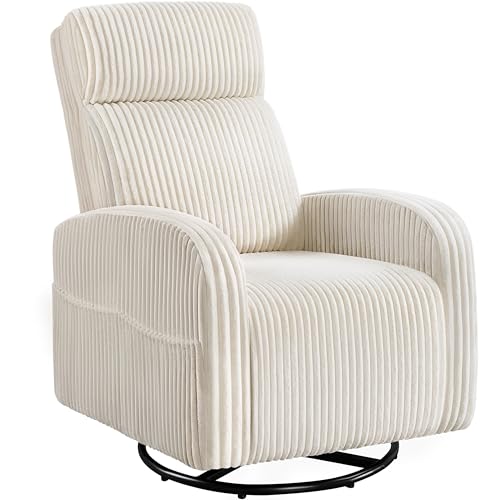
The Yaheetech Rocking Chair is a mid-priced upholstered rocker with a padded seat, supportive back and smooth wooden runners that suits living rooms and reading corners. In daily use it reads as the sensible middle of the market: padded enough for long sits, composed enough for a living room, and simple enough that nobody needs the motion explained to them. Its appeal is balance rather than any single headline feature.
Best for: sitters who want that particular balance of motion, support and room presence, in a chair that can be lived with daily rather than admired occasionally. Not suited for: buyers expecting a different category of chair entirely — a recliner’s stretch, a lounge chair’s sprawl, or a dining chair’s compact footprint — because a rocker that is judged against the wrong job always disappoints.
Strengths: a motion character that matches its styling; a seat that supports real, repeated sitting; a presence that earns its floor space. Trade-offs: like every chair in this cluster it needs clearance behind it, regular joint and fabric care, and a floor surface chosen with its base in mind. Treat it as a prose-described pick for now and check the current Amazon listing for the latest details before you buy.

Angel Line Windsor Glider Rocker
The Angel Line Windsor Glider Rocker is a glider take on the classic Windsor shape, pairing a smooth gliding base with a matching ottoman for nursery and lounge use. As a glider it moves level and quiet, which is exactly why it belongs in nursery conversations. Respect the mechanism, keep the linkage clear, and it offers the calm, repeatable glide that night-time feeding routines are built around.
Best for: sitters who want that particular balance of motion, support and room presence, in a chair that can be lived with daily rather than admired occasionally. Not suited for: buyers expecting a different category of chair entirely — a recliner’s stretch, a lounge chair’s sprawl, or a dining chair’s compact footprint — because a rocker that is judged against the wrong job always disappoints.
Strengths: a motion character that matches its styling; a seat that supports real, repeated sitting; a presence that earns its floor space. Trade-offs: like every chair in this cluster it needs clearance behind it, regular joint and fabric care, and a floor surface chosen with its base in mind. Treat it as a prose-described pick for now and check the current Amazon listing for the latest details before you buy.
Who Should Buy It and Who Should Skip It
Buy a rocking chair if you read in long stretches, if you are furnishing a nursery and want a supported seat for night feeds, if your porch or sunroom has a sitting-shaped gap in it, or if you simply think better in motion. Skip it if your room cannot spare the clearance behind the seat, if your floors are precious and you will not use a rug, if you need a chair several people of very different sizes will share without compromise, or if what you actually want is to stretch out — that is a recliner’s job, and a rocker asked to do it will disappoint you nightly. Before you buy, run this checklist: name the room, name the floor, name the main sitter, measure the doorway, and decide honestly between runner and glider.
Buying well starts with naming the job. A rocker for a nursery, a rocker for a porch, a rocker for a reading corner and a rocker for a gaming room are four different chairs wearing similar silhouettes, and the market will happily sell you the wrong one if you shop by photograph alone. Write down the primary job, the room, the floor surface, the main sitter and the second-most-likely sitter. That short list, honestly made, eliminates most of the catalogue and protects you from the classic mistake of falling for a chair that is beautiful in the wrong life. Every later decision — runner or glider, wood or upholstery, arms or no arms — gets easier once the job is named.
Then interrogate the unglamorous details. Look for clear information about the frame, the runner or mechanism, the upholstery and the care it needs, and be suspicious of listings that are all lifestyle photography and no construction. Check the returns route before you fall in love, because a chair is one of the hardest purchases to judge from a screen and one of the bulkiest to send back. Read the assembly story honestly as well: a chair that needs an evening of careful assembly is fine if you know that in advance, and miserable if you expected to sit down tonight.
Placement is a design decision disguised as a logistics problem. A rocking chair needs clearance behind it that a normal chair does not, because the chair itself travels; measure the full arc of the rock, not just the footprint at rest, and keep that swept space free of walls, radiators, bookcase edges and walkways. Corners suit rockers beautifully, angled toward the room rather than flat against a wall, because the diagonal gives the runners room and turns the seat into a conversational place rather than a waiting-room exile. Near a window the light is lovely for reading, but remember the fabric-fading point and the draught you will feel in winter before you commit.
Think about the chair’s companions, too. A side table at the right height turns a rocker into a reading station; a floor lamp placed behind the shoulder rather than in the rocking arc gives light without collision; a footstool can soften the leg position on longer sits, provided it is light enough to move and never wedged where the runners need to travel. In open-plan rooms, a rug under the chair quietly defines its territory and protects the floor in the same gesture. Good placement is invisible when it works: the chair simply feels inevitable, like it was always meant to be exactly there.
Setup, Care and Maintenance Essentials
Wooden rockers ask for simple, regular care rather than expertise. Dust the runners and joints with a soft cloth, because grit is the enemy of both finishes and quiet motion. Tighten any accessible fixings gently when you first assemble the chair and again after the first few weeks of use, since new joints settle as the wood and hardware get to know each other. Keep the chair out of prolonged direct sun where you can, not because wood is fragile, but because finishes fade unevenly and a chair that lives half in a sunbeam will eventually show it. Small marks can usually be cleaned, touched in or simply accepted as the record of a used and loved object.
Fabric rockers trade that simplicity for softness, and their care is about rhythm rather than rescue. Vacuum upholstery regularly with a soft brush attachment so dust does not work into the weave, deal with spills immediately by blotting rather than rubbing, and rotate any loose cushions so wear and light fall evenly. Removable covers are a genuine advantage in family homes because they turn a disaster into a laundry load. Whichever material you choose, the rule is the same: little and often beats heroic and late, and a chair that is looked after in small ways rarely needs dramatic intervention.
Rocking Chair Review: Final Verdict
A good rocking chair is one of the most honest pieces of furniture you can buy: its quality is visible in its curve, its stops and its joints, and its value is proven in evenings rather than advertisements. Choose the family first, the fit second and the finish third, and the specific chair mostly chooses itself. For most living rooms the upholstered middle of the market is the safest delight; for nurseries, respect the glider; for porches and purists, solid wood remains undefeated.
A Short History That Explains the Design
The rocking chair has survived every fashion cycle thrown at it because its appeal is mechanical rather than decorative. Long before it became a nursery fixture it was porch furniture, parlour furniture and workshop furniture, valued because the motion made long, seated work and long, seated rest equally easier to sustain. Modern versions add upholstery, tailored styling and gliding mechanisms, but the underlying promise is unchanged from the earliest runner chairs: a seat that moves with you instead of holding you still. That history explains the category’s resilience — and also its conservatism, because designs that respect the original geometry tend to outlast designs that chase novelty.
It also explains why the best modern rockers look restrained. Makers who understand the chair’s job spend their effort on runner profiles, joint strength and seat geometry rather than on ornament, and the chairs read as calm because of it. When you compare a restrained design with a theatrical one, remember which budget went where: every decorative flourish was paid for from the same total as the joinery you cannot see. History’s verdict is consistent — the chairs people keep for decades are the ones whose makers spent on the moving parts first.
Sitting Down and Standing Up, Honestly
Getting out of a rocking chair is a design test nobody advertises. Because the chair moves, standing up requires a moment of coordination: feet planted, weight forward, hands on the arms if they are offered, and a seat height that lets your legs do the work rather than your back. For older sitters, and for anyone holding a baby, this matters daily. A seat that sits too low or too deep turns every departure into a negotiation, and arms that are too low or too narrow remove the leverage that makes standing graceful. When you assess a chair, sit down and stand up three times in a row; the third attempt tells the truth that the first one hides.
The same logic applies in reverse to sitting down. A chair that rolls away from you as you lower yourself is a chair that will eventually surprise someone, particularly on a smooth floor. This is another quiet argument for controlled geometry and, on hard floors, for the rug that keeps the chair’s territory defined. None of this makes a rocker unsuitable for older sitters — generations of them have been the chair of choice in exactly those homes — but it does mean the fit checks in this guide are safety checks as much as comfort checks, and they deserve to be done slowly and honestly.
The Chair at Night: Sound and Light
Night changes what a chair needs to be. In a nursery at three in the morning, or in a quiet house where others are sleeping, sound becomes a feature as real as comfort: a tapping runner, a creaking joint or a notchy glider mechanism carries through still air and turns a soothing seat into a household negotiation. This is why the care rhythm in this guide keeps returning to tight joints, clean runners, level floors and suitable rugs — each one is partly a silence measure. When you trial a chair, trial it in the quietest conditions you can, because that is when its true character speaks.
Light belongs in the same conversation. A chair used for night feeds or late reading needs a lamp that can be reached and switched without standing, placed so its light falls over the shoulder rather than into the eyes of the person being held or the pages being read. Plan the chair, the lamp and the small table as one station, and the room will work at night the way it works in the day: without improvisation, without twisting out of the seat, and without waking the house to do it.
Cushions and Throws as Fine-Tuning
Cushions and throws are the fine-tuning system of a rocking chair, and they work best when treated as adjustment rather than decoration. A thin seat pad can take the edge off a wooden seat without changing its geometry; a small lumbar cushion can correct a backrest that sits slightly too far away for a smaller sitter; a washable throw can protect upholstery exactly where children, snacks and pets make contact. The discipline is thickness: every layer you add changes seat depth and height a little, and a chair buried under soft furnishing eventually fits nobody. Add one layer at a time, live with it for a week, and keep what earns its place.
Seasonality is the other quiet benefit. A wooden rocker with a cushion for winter evenings and bare, cool runners-and-slats simplicity in summer is effectively two chairs across the year, which is part of why the type has lasted so long in porches and sunrooms. Upholstered chairs cannot change their nature with the seasons, but a breathable throw in summer and a warmer one in winter still shift the experience meaningfully. Buy the chair for its geometry; dress it for the calendar.
Returns, Trials and Keeping the Packaging
Because a rocking chair is hard to judge from a screen, the returns route is part of the product. Before ordering, understand how a return would actually happen for a bulky, assembled item in your home: who collects, what condition is expected, and what the timeline looks like. This is not pessimism; it is the practical recognition that fit is geometry, and geometry sometimes disagrees with a body despite everyone’s best measurements. A maker or seller with a clear, workable returns story is telling you something reassuring about their confidence in the chair.
Keep the packaging until the chair has survived its trial period — the first evenings of real use, in the real room, on the real floor. Trial it properly during that window: long sits, night use if that is its job, standing and sitting repeatedly, and a deliberate stability check on its permanent surface. A chair that passes a week of honest trials has effectively been inspected more thoroughly than any showroom visit allows, and you can recycle the boxes with a clear conscience.
Rocking Chairs in Homes With Pets
Pets rewrite the rules of any chair, and rockers add two specific chapters. The first is the tail-and-runner problem: a moving runner and a sleeping pet share floor space badly, so rocker households learn to check beneath the chair before long sessions, the same way glider owners learn to check the linkage. The second is upholstery. Hair, claws and the occasional muddy arrival will find fabric eventually, which is why washable cushions, tighter weaves and wooden frames earn their keep in pet homes. None of this is a reason to avoid a rocker; it is a reason to choose its materials with the household’s real residents in mind.
There is also a training dividend. A chair that is clearly someone’s seat, placed in a defined spot on a rug, is easier for animals to learn than furniture that drifts around the room. Keep the chair’s territory consistent, keep its moving parts respected, and most pets settle into treating the rocker as they treat the stairs: part of the house’s geography, to be used on the house’s terms. The owners who struggle are usually the ones who bought delicate fabric for a household that was never going to be delicate.
Assembly and the Second Tightening
Assembly is where a rocking chair’s quality first becomes tangible. Parts that align cleanly, fixings that bite without forcing, and instructions that sequence the build in a sensible order all signal a maker who understands that a moving chair lives or dies by its joints. Work on a soft surface to protect finishes, tighten in stages rather than fully at each step so the frame can settle square, and resist the temptation to use power tools aggressively on fixings designed for hand tension. A joint crushed at assembly is a joint that will loosen early and complain loudly.
After assembly, schedule the second tightening before you need it. New joints settle as materials compress and the chair takes its first hundred rocks, and fixings that were snug on day one can be a quarter-turn loose by week three. That settling is normal, not a defect, and catching it early is the difference between a chair that stays silent for years and one that develops the squeak its owner then blames on the design. Keep the tools the chair came with, or note their sizes, in the room where the chair lives.
Buying Second-Hand: What to Inspect
Rocking chairs are among the safest furniture purchases to make second-hand, precisely because their condition is so legible. Rock the chair and listen: looseness announces itself. Inspect the runners for flat spots, cracks and uneven wear, because the runner is both the mechanism and the biography of the chair. Check every joint for movement that should not be there, sit in the chair and stand from it, and examine a glider’s linkage for bent parts, trapped debris and notchy travel. Upholstery can be cleaned or recovered; geometry and joinery are the chair itself, so spend your inspection there.
The economics follow the inspection. A solid wooden rocker with honest wear is often a better buy than a newer chair with hidden looseness, because wood can be tightened, glued and refinished back to service. What you should walk away from is damage to the moving geometry itself — a cracked runner, a distorted glider linkage — because those parts define the chair’s safety as well as its feel, and they are rarely economical to put right. Buy the bones, forgive the cosmetics, and the second-hand market will treat you well.
A Second Look After the First Impression: Testing Rocking Chair Against Real Routines
This section exists to look again after the first impression has faded, because the qualities that sell a product in the first hour are rarely the ones that decide whether it is still liked in month three. It adds a layer that a feature list cannot give you, grounded in the living room furniture context this rocking chair will actually live in. Where this guide names examples such as Yaheetech Rocking Chair, Angel Line Windsor Glider Rocker, use them as test cases for the checks below rather than as shortcuts past them.
Pay close attention to the recurring friction points, because they compound. With a rocking chair, owners tend to run into fabric marking, cushions softening unevenly and legs scratching the floor when the piece gets dragged instead of lifted. None of these is dramatic on its own, and that is exactly why they get underestimated at buying time. Ask how the design you are considering handles each one: can the wearing part be replaced, can the awkward part be reached without tools, does the job take two minutes or twenty. A rocking chair that makes its own upkeep easy gets maintained; one that makes upkeep a project gets neglected, and neglected products perform badly in ways that then get blamed on the original purchase.
Use the listings as a checklist rather than as entertainment. For each rocking chair you shortlist, note the exact variant, the included parts, what is sold separately, and which photographs show the item in a setting like yours rather than in a studio. If a model named elsewhere in this guide catches your eye, treat it as a worked example for this process: run it through the same measurements, the same weekly rehearsal and the same friction list before letting familiarity turn into preference. Consistency is the whole trick. Shoppers go wrong not by choosing the objectively weaker rocking chair, but by judging one contender on features, the next on looks and the third on a single enthusiastic anecdote.
Think about who else has a vote. A rocking chair is usually shared, moved, cleaned or complained about by more than one person, and the second user’s priorities are often the ones that surface after the return window closes. Check height, weight, reach, noise, heat, sharp edges or sheer visual presence, whichever apply, against the smallest, oldest or least enthusiastic person who will live with it. If you are buying for a household that includes children, pets, elderly relatives or lodgers, run the clumsy scenario too: the spill, the knock, the curious tug, the door left open. A robust rocking chair choice survives other people; a fragile one only survives its buyer.
Consider the edge cases that sit just outside normal use, because a rocking chair will meet all of them eventually. The unusually large load, the unusually small task, the day you are in a hurry, the day something else in the room is broken and this has to cover for it. Versatility is not about a long feature list; it is about behaving predictably when conditions are imperfect. Where a design offers settings, modes, attachments or configurations, ask what each one is actually for in your home, and be suspicious of flexibility you cannot attach to a real occasion. One well-judged configuration used weekly beats five clever ones used once, and the honest rocking chair for your home is the one whose strengths line up with your most frequent edge case, not your rarest.
Build a simple decision checklist and score it in writing. Five lines are enough: fit in the space, fit with the routine, ease of cleaning or upkeep, quality of the parts that move or wear, and how the rocking chair will be stored or will look when it is not the centre of attention. Score each contender quickly, then look only at the lowest scores, because purchases are usually ruined by their weakest point rather than saved by their strongest. If two options tie, choose the one whose weakness is cheapest or easiest to live with. This sounds mechanical, and it is meant to: a written checklist is the best defence against the very human habit of falling for the last photograph you looked at.
Frequently Asked Questions
Are rocking chairs safe on hardwood floors?
They can be, with two conditions. First, keep the runners clean, because trapped grit is what scratches finishes as the chair moves. Second, use a flat-weave rug or runner protection under the chair, which also quietens the motion and stops the chair travelling. Check the floor beneath monthly at first; if you see any dulling of the finish, improve the protection rather than hoping the problem will settle down on its own.
What is the difference between a rocker and a glider?
A rocker moves on curved runners in a shallow arc, so the whole chair travels slightly and your height changes gently through the stroke. A glider sits on a fixed base with a linkage that moves the seat level, forwards and backwards, so the chair itself stays put. Gliders feel calmer and quieter in nurseries; rockers are simpler, with no mechanism to maintain, and many people prefer their more traditional, deliberate motion.
Can a rocking chair tip over?
Yes, if it is abused: rocked violently, used on an uneven surface, or pushed far beyond its designed travel. Good chairs reduce the risk with long runners, a low centre of gravity and stop geometry that ends the stroke while your weight still feels centred. Treat the stops as a boundary rather than a target, keep the chair on a flat floor, and teach children that it is a seat, not a climbing frame.
Is a rocking chair a good choice for a nursery?
For adult comfort during feeds and story time, yes — a supported seat, helpful arm height and a gentle repeatable motion make long night sits easier. Frame it as comfort only: no chair treats or cures anything. In a nursery, favour wipeable upholstery, check a glider’s linkage regularly for the pinch-point risk, and leave clear walking space around the base for tired adults carrying a baby.
How much space does a rocking chair need?
More than its resting footprint suggests, because the chair travels as it moves. Measure the full arc of the rock and keep that swept area behind the chair free of walls, radiators and walkways. Angling the chair in a corner usually gives the runners room while turning the seat toward the room, and a rug underneath helps define the chair’s territory in open-plan spaces.
Wood or upholstered: which is easier to live with?
Wood is easier to clean, easier to repair and more forgiving of spills, pets and sunlight, though an unpadded seat will tell you honestly after an hour whether it suits your body. Upholstery is softer immediately and looks calmer in styled rooms, but it asks for regular vacuuming, prompt blotting of spills and tolerance for gradual wear. Match the material to the room’s real life, not its photograph.
Related Guides and Next Steps
Keep exploring with these connected guides, chosen to sit naturally alongside this one:
- rocking chair reviews
- rocking chair buying guide
- rocking chair pros and cons
- best rocking chairs for a nursery
- best swivel chairs for the living room
- best chairs for long hours
Deeper Notes Before You Decide
Comfort in a rocking chair is a system, not a cushion. Seat depth decides whether your back can rest against the backrest while your feet still reach the floor to steer the rock. Seat height decides how easily you can stand up again, which matters enormously when you are holding a baby, a book or a sleeping toddler. Back angle decides whether the chair invites an upright conversation posture or a reclined, end-of-day slump, and arm height decides whether your shoulders can actually drop. Judge a chair by sitting in your real posture, not by pressing the seat foam with a thumb in a showroom.
The rocking motion itself is part of the comfort system. A well-matched rocker lets you sustain a gentle rhythm with occasional, almost unconscious pushes from your feet, so your legs stay relaxed rather than working. If you find yourself bracing, pushing hard on every stroke or gripping the arms, the chair’s curve, seat height or your floor surface is fighting you. A small rug under the runners, a change of footwear, or a footstool to rest your heels on can transform the experience, which is why a fair trial means a full evening in the chair, in the room where it will live, doing the thing you bought it for.
Deeper Notes Before You Decide
Value in a rocking chair is measured in years of evenings, not in the drama of delivery day. A chair that is sat in daily, that suits its room and its sitter, and that can be cleaned, tightened and repaired will repay a mid-level or even premium outlay many times over in the only currency that matters here: use. The reverse is equally true. A bargain chair that wobbles, squeaks, fades or simply does not fit its intended corner will be quietly avoided, and an avoided chair is expensive at any tier. When you weigh tiers, weigh them against expected hours of real use, and be honest about whether this is a daily seat or an occasional one.
That honesty cuts both ways. Occasional-use chairs — a guest room, a spare corner, a seasonal porch — do not need to carry the same construction burden as the chair a parent will live in for a year of night feeds. Spending premium money on a rarely used chair is not prudence; it is waste dressed as quality. Equally, economising on the chair that will hold you and your baby every night for months is a false saving that you will feel in your back and your patience. Match the tier to the job, and the question of worth mostly answers itself.


