Disclosure: As an Amazon Associate, dailyhomedecorating.com earns from qualifying purchases. Links on this page are affiliate links; they cost you nothing extra. Prices and availability change often, so check the current Amazon listing before you buy.
A rocking chair buying guide should do one thing well: turn a confusing wall of similar chairs into a short list that fits your room, your body and your life. This rocking chair buying guide does that in order — types first, then the questions that actually decide comfort and safety, then picks, then the mistakes that catch buyers out. Keep a tape measure nearby; this is a guide that rewards honest numbers over hopeful guesses.
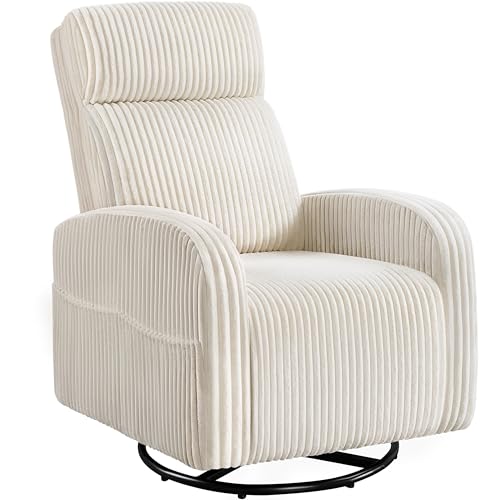
Key Takeaways
Key Takeaways: Decide the family before the finish: runner rocker, upholstered rocker or glider. Runner curve and stop blocks govern feel and safety; glider linkages move level but carry pinch points to respect. Fit beats foam — seat depth, height, back and arms decide whether you will still love the chair in month six. Match material to the room’s real life, plan the floor protection before delivery day, and match your spending tier to expected hours of use rather than to hope.
In this guide
What a Rocking Chair Does and the Main Types
Traditional Runner Rockers
The original design: a wooden or mixed-frame chair on two curved runners. The motion is a gentle arc, the mechanics are visible and simple, and the chair can often be maintained for many years with tightening, cleaning and occasional refinishing. These suit porches, sunrooms, sitting rooms and anyone who values repairability. Their honest costs are a firmer seat unless you add a cushion, and a footprint that travels as it rocks.
Upholstered Rockers
Armchair comfort on runners. These are the living-room natives: soft on first sit, tailored in appearance, and available in styles that sit naturally beside a sofa. Their costs are upkeep — fabric records spills, crumbs and pet hair — and opacity, because the frame’s joinery is hidden inside the upholstery, so you are trusting the maker’s construction.
Glider Rockers
A fixed base with a linkage that moves the seat in a level glide. The chair stays in place, the motion is quiet and repeatable, and nurseries have adopted the type for good reason. The condition is mechanical respect: moving joints underneath the seat create pinch points, so the space beneath must stay clear and the mechanism deserves periodic checks.
The runner is the heart of a traditional rocking chair, and its curve decides almost everything about how the chair feels. A long, gently curved runner produces a slow, deep rock that most people find relaxing for reading or conversation. A shorter, tighter curve produces a quicker, shallower motion that can feel busy rather than calm. When you compare chairs, look at photographs of the runner profile from the side and ask whether the curve looks gradual or abrupt. A gradual curve also spreads your weight more evenly across the floor contact patch, which tends to make the motion quieter and more predictable from the first rock to the last.
Stop blocks matter just as much as the curve itself. A well-designed rocker limits how far the chair can travel in each direction, so the motion ends with a soft sense of arrival rather than a jolt or a feeling that you might tip backwards. Be honest with yourself here: a chair that lets you rock far beyond the point where the runners still feel planted is a chair that will eventually catch someone out, especially a tired parent at night or a guest who does not know the chair. Prefer designs where the backward travel stops while your weight still feels centred, and where the forward stop arrives before your feet lose their easy contact with the floor.
Gliders replace the curved runner with a flat base and a linked mechanism, so the chair moves backwards and forwards in a smooth, level glide instead of an arc. Many people prefer that level motion in a nursery because feeding, holding and settling a baby involves small, repeated movements rather than big relaxing rocks, and a glider stays put on the floor instead of travelling. The trade-off is mechanical: a glider has moving joints, and moving joints need respect. Keep fingers, children’s hands, pet paws and loose blanket corners away from the linkage underneath the seat, because a pinch point does not announce itself before it bites.
If you choose a glider such as a Windsor-style model, make a habit of a quick under-seat check before long sessions: no stored toys in the mechanism, no trailing throws near the linkage, and no grit worked into the moving parts. A glider that develops a squeak or a notch in its travel is telling you something has changed, and the honest response is to stop, inspect and clean rather than to push through the noise. Treated that way, a good glider is one of the calmest seats in the house; treated carelessly, its hidden mechanism is exactly where its few real hazards live.
Rocking Chair Buying Guide: Top Picks at a Glance
Four picks cover most honest briefs. Treat the badges as starting points for the mini-reviews below rather than verdicts, because the right pick is the one matched to your named job.
- Best Overall: Yaheetech Rocking Chair — the balanced mid-tier all-rounder.
- Best Traditional: Giantex Rocking Chair — tall-backed wooden honesty for porches and sitting rooms.
- Best for Nurseries: Angel Line Windsor Glider Rocker — level, quiet glide with an ottoman.
- Best Budget: Homall Rocking Chair — an entry-tier start for bedrooms and first apartments.

Yaheetech Rocking Chair
The Yaheetech Rocking Chair is a mid-priced upholstered rocker with a padded seat, supportive back and smooth wooden runners that suits living rooms and reading corners. In daily use it reads as the sensible middle of the market: padded enough for long sits, composed enough for a living room, and simple enough that nobody needs the motion explained to them. Its appeal is balance rather than any single headline feature.
Best for: sitters who want that particular balance of motion, support and room presence, in a chair that can be lived with daily rather than admired occasionally. Not suited for: buyers expecting a different category of chair entirely — a recliner’s stretch, a lounge chair’s sprawl, or a dining chair’s compact footprint — because a rocker that is judged against the wrong job always disappoints.
Strengths: a motion character that matches its styling; a seat that supports real, repeated sitting; a presence that earns its floor space. Trade-offs: like every chair in this cluster it needs clearance behind it, regular joint and fabric care, and a floor surface chosen with its base in mind. Treat it as a prose-described pick for now and check the current Amazon listing for the latest details before you buy.

Giantex Rocking Chair
The Giantex Rocking Chair is a traditionally styled wooden rocker with a high back and wide seat that suits porches, sunrooms and calm sitting rooms. Its traditional profile is its strength. The tall back gives taller sitters somewhere to actually rest, the wooden build gives the rock a deliberate pace, and the whole chair feels honest about what it is: a rocker first, and furniture second.
Best for: sitters who want that particular balance of motion, support and room presence, in a chair that can be lived with daily rather than admired occasionally. Not suited for: buyers expecting a different category of chair entirely — a recliner’s stretch, a lounge chair’s sprawl, or a dining chair’s compact footprint — because a rocker that is judged against the wrong job always disappoints.
Strengths: a motion character that matches its styling; a seat that supports real, repeated sitting; a presence that earns its floor space. Trade-offs: like every chair in this cluster it needs clearance behind it, regular joint and fabric care, and a floor surface chosen with its base in mind. Treat it as a prose-described pick for now and check the current Amazon listing for the latest details before you buy.

Angel Line Windsor Glider Rocker
The Angel Line Windsor Glider Rocker is a glider take on the classic Windsor shape, pairing a smooth gliding base with a matching ottoman for nursery and lounge use. As a glider it moves level and quiet, which is exactly why it belongs in nursery conversations. Respect the mechanism, keep the linkage clear, and it offers the calm, repeatable glide that night-time feeding routines are built around.
Best for: sitters who want that particular balance of motion, support and room presence, in a chair that can be lived with daily rather than admired occasionally. Not suited for: buyers expecting a different category of chair entirely — a recliner’s stretch, a lounge chair’s sprawl, or a dining chair’s compact footprint — because a rocker that is judged against the wrong job always disappoints.
Strengths: a motion character that matches its styling; a seat that supports real, repeated sitting; a presence that earns its floor space. Trade-offs: like every chair in this cluster it needs clearance behind it, regular joint and fabric care, and a floor surface chosen with its base in mind. Treat it as a prose-described pick for now and check the current Amazon listing for the latest details before you buy.

Homall Rocking Chair
The Homall Rocking Chair is an entry-tier padded rocker aimed at gaming rooms, bedrooms and first apartments where simple comfort matters most. It aims squarely at younger rooms and tighter budgets of space and money, in the qualitative entry tier. Expect straightforward padding and a friendly motion rather than heirloom joinery, and judge it as a first rocker rather than a forever chair.
Best for: sitters who want that particular balance of motion, support and room presence, in a chair that can be lived with daily rather than admired occasionally. Not suited for: buyers expecting a different category of chair entirely — a recliner’s stretch, a lounge chair’s sprawl, or a dining chair’s compact footprint — because a rocker that is judged against the wrong job always disappoints.
Strengths: a motion character that matches its styling; a seat that supports real, repeated sitting; a presence that earns its floor space. Trade-offs: like every chair in this cluster it needs clearance behind it, regular joint and fabric care, and a floor surface chosen with its base in mind. Treat it as a prose-described pick for now and check the current Amazon listing for the latest details before you buy.
How Much Room Do You Actually Have?
Measure the space the chair will sweep, not the space it occupies at rest. A rocking chair travels through its arc, and the area behind the seat must stay clear of walls, radiators and walkways for the chair to move freely and safely. Add the human space too: room to sit down, stand up, and walk past without stepping over runners. In open-plan rooms a rug defines the chair’s territory; in small rooms a glider, which does not travel across the floor, often solves the geometry that defeats a runner design.
Fit is personal in a way that photographs cannot settle. Taller sitters need enough back height that the top rail supports rather than interrupts the shoulder blades, and enough seat depth that the seat does not end mid-thought. Smaller sitters need the opposite discipline: a seat shallow enough that their back can actually reach the backrest, and a height that lets their feet steer the rock instead of dangling. Arms deserve the same scrutiny, because arms that sit too high shrug your shoulders for you, and arms that sit too low are decoration. If two people of different sizes will share the chair, favour the middle ground and use cushions to fine-tune rather than buying for one body and apologising to the other.
Doorways and stairs are part of fit, too, and they are the part everyone forgets. A generously scaled rocker that cannot turn the corner of your hallway is not generously scaled; it is stranded. Note the chair’s widest points, compare them with your tightest turn, and remember that runners make a chair longer than it looks at rest. None of this requires specialist knowledge — it requires a tape measure, ten honest minutes, and the willingness to let arithmetic overrule enthusiasm while the chair is still a photograph rather than a problem in your hall.
How Will the Chair Really Be Used?
Comfort in a rocking chair is a system, not a cushion. Seat depth decides whether your back can rest against the backrest while your feet still reach the floor to steer the rock. Seat height decides how easily you can stand up again, which matters enormously when you are holding a baby, a book or a sleeping toddler. Back angle decides whether the chair invites an upright conversation posture or a reclined, end-of-day slump, and arm height decides whether your shoulders can actually drop. Judge a chair by sitting in your real posture, not by pressing the seat foam with a thumb in a showroom.
The rocking motion itself is part of the comfort system. A well-matched rocker lets you sustain a gentle rhythm with occasional, almost unconscious pushes from your feet, so your legs stay relaxed rather than working. If you find yourself bracing, pushing hard on every stroke or gripping the arms, the chair’s curve, seat height or your floor surface is fighting you. A small rug under the runners, a change of footwear, or a footstool to rest your heels on can transform the experience, which is why a fair trial means a full evening in the chair, in the room where it will live, doing the thing you bought it for.
In a nursery, a rocking chair or glider earns its place through comfort during long, ordinary hours: night feeds, story time, and the slow work of settling down for sleep. Frame it honestly as comfort only. A rocker does not treat anything, cure anything or guarantee that any baby will sleep, and any seller who implies otherwise is selling you a story rather than a chair. What a good nursery chair genuinely offers is a supported seat for the adult, a repeatable gentle motion, arms at a height that lets you hold a baby without hiking your shoulders, and a base that stays quiet on the floor at three in the morning.
Practical nursery details separate the chairs you keep from the chairs you tolerate. Upholstery that wipes clean will meet milk, medicine and worse, so treat washable or wipeable surfaces as a real feature rather than a luxury. A glider’s pinch points deserve extra respect in a room where small fingers explore everything, so check the mechanism regularly and keep the space beneath the seat clear. Leave walking room around the runners or base so a sleep-deprived adult carrying a baby never has to step over the chair’s moving parts in the dark, and place a small side table within reach so you are never twisting out of the seat while holding your child.
How Much Upkeep Will You Honestly Do?
Frame material shapes both the feel and the future of the chair. Solid wood rockers carry a reassuring density: they rock with a slower, more deliberate rhythm, they can often be tightened, glued or refinished years later, and small knocks become patina rather than damage. Engineered wood and mixed-material frames can be lighter and more affordable, and many are perfectly serviceable, but they ask you to be more careful about loose joints, because a joint that works loose in a rocking chair is not merely cosmetic — it changes the geometry of every rock. Upholstered frames hide their structure entirely, which looks calm and tailored, yet it means you are trusting the maker’s internal joinery, so brand reputation and clear construction descriptions matter more.
Upholstery is the other half of the material decision. Woven fabrics breathe and feel friendly in warm rooms, but they hold crumbs, pet hair and spills more readily. Tighter weaves and smoother finishes wipe clean more easily and suit dining-adjacent or family use. Wooden seats avoid the fabric question altogether and pair beautifully with a cushion you can remove, wash or replace, though an unpadded wooden seat will tell you honestly after an hour whether your body agrees with it. There is no universally right answer; there is only the answer that matches how the chair will actually be used in your home, by your people, on your ordinary days.
Wooden rockers ask for simple, regular care rather than expertise. Dust the runners and joints with a soft cloth, because grit is the enemy of both finishes and quiet motion. Tighten any accessible fixings gently when you first assemble the chair and again after the first few weeks of use, since new joints settle as the wood and hardware get to know each other. Keep the chair out of prolonged direct sun where you can, not because wood is fragile, but because finishes fade unevenly and a chair that lives half in a sunbeam will eventually show it. Small marks can usually be cleaned, touched in or simply accepted as the record of a used and loved object.
Fabric rockers trade that simplicity for softness, and their care is about rhythm rather than rescue. Vacuum upholstery regularly with a soft brush attachment so dust does not work into the weave, deal with spills immediately by blotting rather than rubbing, and rotate any loose cushions so wear and light fall evenly. Removable covers are a genuine advantage in family homes because they turn a disaster into a laundry load. Whichever material you choose, the rule is the same: little and often beats heroic and late, and a chair that is looked after in small ways rarely needs dramatic intervention.
How Safe Is the Design, Honestly?
Stability deserves plain language. Any rocking chair can tip if it is rocked violently, overloaded on one arm, or used on an uneven surface, and no curved runner changes that basic physics. What good design does is widen the margin: longer runners, a low centre of gravity, a seat that keeps you seated deep rather than perched, and stop geometry that resists over-travel. Test a new chair the way you would test a ladder — deliberately, on a flat floor, increasing the motion gradually and paying attention to the moment the character of the rock changes. If the chair feels vague or floaty well before the stops, that is information worth trusting.
Children change the stability calculation completely. A rocker that feels rock-solid to an adult can become a climbing frame in a toddler’s eyes, and a chair rocked empty by small hands can travel across a floor surprisingly fast. Place nursery and family-room rockers so the runners cannot strike a cot, a wall edge or a passing ankle, and teach older children early that the chair is for sitting, not for standing, surfing or launching. These are not reasons to avoid a rocker; they are reasons to place it thoughtfully and to choose a design whose stops and weight you respect.
How to Prioritise by Use Case
The nursery parent should prioritise arm height, wipeable surfaces, a quiet base and, in a glider, a mechanism they are willing to keep clear and checked. The devoted reader should prioritise back support, arm geometry and a runner curve that disappears beneath attention. The porch sitter should prioritise a forgiving wooden build and finishes that shrug off daily life. The small-room dweller should prioritise footprint discipline — compact proportions or a glider — plus a doorway measurement taken before, not after, ordering.
First Setup and Care Essentials
Assemble on a soft surface so finishes survive the process, tighten in the maker’s order, and re-check every fixing after the first few weeks as joints settle. Decide the floor protection before the first rock: clean runners, a suitable rug or pad, and a level surface. Then adopt the little-and-often rhythm — dust, vacuum, blot, tighten — that keeps a moving chair quiet and safe for years.
Floors and rockers have a long, complicated relationship. Hardwood, tile and laminate can all be marked by wooden runners over time, particularly if grit gets trapped underneath and is ground back and forth thousands of times. A flat-weave rug or a purpose-made runner pad solves most of that risk and also quietens the chair, but it changes the feel of the rock slightly, adding a softness some people love and others find vague. Deep carpet does the opposite: it can swallow the motion, making the chair feel reluctant and heavy, and it can let the runners dig in unevenly. The honest approach is to decide the chair’s permanent home first and then judge every candidate against that exact surface.
Noise is the other floor issue nobody mentions until the first evening. A rocker that is silent on a showroom’s carpet tiles may tap, creak or drum on your boards, and a glider’s mechanism can develop sounds that travel through a quiet house at night. None of this is a defect in itself; it is physics plus materials. Felt protection on contact points, tight joints, a suitable rug and a level floor remove most of it. What you should not do is ignore a new noise that appears suddenly in a chair that used to be quiet, because in a moving piece of furniture, a new sound usually marks a new looseness.
Mistakes to Avoid
Buying by photograph without naming the job. Measuring the footprint and forgetting the arc. Ignoring the doorway turn between the street and the chair’s room. Choosing fabric for a room whose life is spills, or bare wood for a sitter who needs softness. Overlooking the glider linkage because it is hidden. And the quietest mistake of all: spending a premium tier on a chair that will be sat in twice a month, or an entry tier on the chair that will hold you through a year of night feeds.
Buying well starts with naming the job. A rocker for a nursery, a rocker for a porch, a rocker for a reading corner and a rocker for a gaming room are four different chairs wearing similar silhouettes, and the market will happily sell you the wrong one if you shop by photograph alone. Write down the primary job, the room, the floor surface, the main sitter and the second-most-likely sitter. That short list, honestly made, eliminates most of the catalogue and protects you from the classic mistake of falling for a chair that is beautiful in the wrong life. Every later decision — runner or glider, wood or upholstery, arms or no arms — gets easier once the job is named.
Then interrogate the unglamorous details. Look for clear information about the frame, the runner or mechanism, the upholstery and the care it needs, and be suspicious of listings that are all lifestyle photography and no construction. Check the returns route before you fall in love, because a chair is one of the hardest purchases to judge from a screen and one of the bulkiest to send back. Read the assembly story honestly as well: a chair that needs an evening of careful assembly is fine if you know that in advance, and miserable if you expected to sit down tonight.
Value in a rocking chair is measured in years of evenings, not in the drama of delivery day. A chair that is sat in daily, that suits its room and its sitter, and that can be cleaned, tightened and repaired will repay a mid-level or even premium outlay many times over in the only currency that matters here: use. The reverse is equally true. A bargain chair that wobbles, squeaks, fades or simply does not fit its intended corner will be quietly avoided, and an avoided chair is expensive at any tier. When you weigh tiers, weigh them against expected hours of real use, and be honest about whether this is a daily seat or an occasional one.
That honesty cuts both ways. Occasional-use chairs — a guest room, a spare corner, a seasonal porch — do not need to carry the same construction burden as the chair a parent will live in for a year of night feeds. Spending premium money on a rarely used chair is not prudence; it is waste dressed as quality. Equally, economising on the chair that will hold you and your baby every night for months is a false saving that you will feel in your back and your patience. Match the tier to the job, and the question of worth mostly answers itself.
Returns, Trials and Keeping the Packaging
Because a rocking chair is hard to judge from a screen, the returns route is part of the product. Before ordering, understand how a return would actually happen for a bulky, assembled item in your home: who collects, what condition is expected, and what the timeline looks like. This is not pessimism; it is the practical recognition that fit is geometry, and geometry sometimes disagrees with a body despite everyone’s best measurements. A maker or seller with a clear, workable returns story is telling you something reassuring about their confidence in the chair.
Keep the packaging until the chair has survived its trial period — the first evenings of real use, in the real room, on the real floor. Trial it properly during that window: long sits, night use if that is its job, standing and sitting repeatedly, and a deliberate stability check on its permanent surface. A chair that passes a week of honest trials has effectively been inspected more thoroughly than any showroom visit allows, and you can recycle the boxes with a clear conscience.
Assembly and the Second Tightening
Assembly is where a rocking chair’s quality first becomes tangible. Parts that align cleanly, fixings that bite without forcing, and instructions that sequence the build in a sensible order all signal a maker who understands that a moving chair lives or dies by its joints. Work on a soft surface to protect finishes, tighten in stages rather than fully at each step so the frame can settle square, and resist the temptation to use power tools aggressively on fixings designed for hand tension. A joint crushed at assembly is a joint that will loosen early and complain loudly.
After assembly, schedule the second tightening before you need it. New joints settle as materials compress and the chair takes its first hundred rocks, and fixings that were snug on day one can be a quarter-turn loose by week three. That settling is normal, not a defect, and catching it early is the difference between a chair that stays silent for years and one that develops the squeak its owner then blames on the design. Keep the tools the chair came with, or note their sizes, in the room where the chair lives.
A Short History That Explains the Design
The rocking chair has survived every fashion cycle thrown at it because its appeal is mechanical rather than decorative. Long before it became a nursery fixture it was porch furniture, parlour furniture and workshop furniture, valued because the motion made long, seated work and long, seated rest equally easier to sustain. Modern versions add upholstery, tailored styling and gliding mechanisms, but the underlying promise is unchanged from the earliest runner chairs: a seat that moves with you instead of holding you still. That history explains the category’s resilience — and also its conservatism, because designs that respect the original geometry tend to outlast designs that chase novelty.
It also explains why the best modern rockers look restrained. Makers who understand the chair’s job spend their effort on runner profiles, joint strength and seat geometry rather than on ornament, and the chairs read as calm because of it. When you compare a restrained design with a theatrical one, remember which budget went where: every decorative flourish was paid for from the same total as the joinery you cannot see. History’s verdict is consistent — the chairs people keep for decades are the ones whose makers spent on the moving parts first.
Sitting Down and Standing Up, Honestly
Getting out of a rocking chair is a design test nobody advertises. Because the chair moves, standing up requires a moment of coordination: feet planted, weight forward, hands on the arms if they are offered, and a seat height that lets your legs do the work rather than your back. For older sitters, and for anyone holding a baby, this matters daily. A seat that sits too low or too deep turns every departure into a negotiation, and arms that are too low or too narrow remove the leverage that makes standing graceful. When you assess a chair, sit down and stand up three times in a row; the third attempt tells the truth that the first one hides.
The same logic applies in reverse to sitting down. A chair that rolls away from you as you lower yourself is a chair that will eventually surprise someone, particularly on a smooth floor. This is another quiet argument for controlled geometry and, on hard floors, for the rug that keeps the chair’s territory defined. None of this makes a rocker unsuitable for older sitters — generations of them have been the chair of choice in exactly those homes — but it does mean the fit checks in this guide are safety checks as much as comfort checks, and they deserve to be done slowly and honestly.
Cushions and Throws as Fine-Tuning
Cushions and throws are the fine-tuning system of a rocking chair, and they work best when treated as adjustment rather than decoration. A thin seat pad can take the edge off a wooden seat without changing its geometry; a small lumbar cushion can correct a backrest that sits slightly too far away for a smaller sitter; a washable throw can protect upholstery exactly where children, snacks and pets make contact. The discipline is thickness: every layer you add changes seat depth and height a little, and a chair buried under soft furnishing eventually fits nobody. Add one layer at a time, live with it for a week, and keep what earns its place.
Seasonality is the other quiet benefit. A wooden rocker with a cushion for winter evenings and bare, cool runners-and-slats simplicity in summer is effectively two chairs across the year, which is part of why the type has lasted so long in porches and sunrooms. Upholstered chairs cannot change their nature with the seasons, but a breathable throw in summer and a warmer one in winter still shift the experience meaningfully. Buy the chair for its geometry; dress it for the calendar.
Rocking Chairs in Homes With Pets
Pets rewrite the rules of any chair, and rockers add two specific chapters. The first is the tail-and-runner problem: a moving runner and a sleeping pet share floor space badly, so rocker households learn to check beneath the chair before long sessions, the same way glider owners learn to check the linkage. The second is upholstery. Hair, claws and the occasional muddy arrival will find fabric eventually, which is why washable cushions, tighter weaves and wooden frames earn their keep in pet homes. None of this is a reason to avoid a rocker; it is a reason to choose its materials with the household’s real residents in mind.
There is also a training dividend. A chair that is clearly someone’s seat, placed in a defined spot on a rug, is easier for animals to learn than furniture that drifts around the room. Keep the chair’s territory consistent, keep its moving parts respected, and most pets settle into treating the rocker as they treat the stairs: part of the house’s geography, to be used on the house’s terms. The owners who struggle are usually the ones who bought delicate fabric for a household that was never going to be delicate.
Buying Second-Hand: What to Inspect
Rocking chairs are among the safest furniture purchases to make second-hand, precisely because their condition is so legible. Rock the chair and listen: looseness announces itself. Inspect the runners for flat spots, cracks and uneven wear, because the runner is both the mechanism and the biography of the chair. Check every joint for movement that should not be there, sit in the chair and stand from it, and examine a glider’s linkage for bent parts, trapped debris and notchy travel. Upholstery can be cleaned or recovered; geometry and joinery are the chair itself, so spend your inspection there.
The economics follow the inspection. A solid wooden rocker with honest wear is often a better buy than a newer chair with hidden looseness, because wood can be tightened, glued and refinished back to service. What you should walk away from is damage to the moving geometry itself — a cracked runner, a distorted glider linkage — because those parts define the chair’s safety as well as its feel, and they are rarely economical to put right. Buy the bones, forgive the cosmetics, and the second-hand market will treat you well.
The Chair at Night: Sound and Light
Night changes what a chair needs to be. In a nursery at three in the morning, or in a quiet house where others are sleeping, sound becomes a feature as real as comfort: a tapping runner, a creaking joint or a notchy glider mechanism carries through still air and turns a soothing seat into a household negotiation. This is why the care rhythm in this guide keeps returning to tight joints, clean runners, level floors and suitable rugs — each one is partly a silence measure. When you trial a chair, trial it in the quietest conditions you can, because that is when its true character speaks.
Light belongs in the same conversation. A chair used for night feeds or late reading needs a lamp that can be reached and switched without standing, placed so its light falls over the shoulder rather than into the eyes of the person being held or the pages being read. Plan the chair, the lamp and the small table as one station, and the room will work at night the way it works in the day: without improvisation, without twisting out of the seat, and without waking the house to do it.
Before You Commit: A Hands-On Fit and Compatibility Check for Rocking Chair
This section exists to treat this as the final check before money changes hands, the point where a shortlist stops being a list of features and becomes a decision about one specific home. It adds a layer that a feature list cannot give you, grounded in the living room furniture context this rocking chair will actually live in. Where this guide names examples such as Yaheetech Rocking Chair, Giantex Rocking Chair, Angel Line Windsor Glider Rocker, use them as test cases for the checks below rather than as shortcuts past them.
Use the listings as a checklist rather than as entertainment. For each rocking chair you shortlist, note the exact variant, the included parts, what is sold separately, and which photographs show the item in a setting like yours rather than in a studio. If a model named elsewhere in this guide catches your eye, treat it as a worked example for this process: run it through the same measurements, the same weekly rehearsal and the same friction list before letting familiarity turn into preference. Consistency is the whole trick. Shoppers go wrong not by choosing the objectively weaker rocking chair, but by judging one contender on features, the next on looks and the third on a single enthusiastic anecdote.
Think about who else has a vote. A rocking chair is usually shared, moved, cleaned or complained about by more than one person, and the second user’s priorities are often the ones that surface after the return window closes. Check height, weight, reach, noise, heat, sharp edges or sheer visual presence, whichever apply, against the smallest, oldest or least enthusiastic person who will live with it. If you are buying for a household that includes children, pets, elderly relatives or lodgers, run the clumsy scenario too: the spill, the knock, the curious tug, the door left open. A robust rocking chair choice survives other people; a fragile one only survives its buyer.
Consider the edge cases that sit just outside normal use, because a rocking chair will meet all of them eventually. The unusually large load, the unusually small task, the day you are in a hurry, the day something else in the room is broken and this has to cover for it. Versatility is not about a long feature list; it is about behaving predictably when conditions are imperfect. Where a design offers settings, modes, attachments or configurations, ask what each one is actually for in your home, and be suspicious of flexibility you cannot attach to a real occasion. One well-judged configuration used weekly beats five clever ones used once, and the honest rocking chair for your home is the one whose strengths line up with your most frequent edge case, not your rarest.
Build a simple decision checklist and score it in writing. Five lines are enough: fit in the space, fit with the routine, ease of cleaning or upkeep, quality of the parts that move or wear, and how the rocking chair will be stored or will look when it is not the centre of attention. Score each contender quickly, then look only at the lowest scores, because purchases are usually ruined by their weakest point rather than saved by their strongest. If two options tie, choose the one whose weakness is cheapest or easiest to live with. This sounds mechanical, and it is meant to: a written checklist is the best defence against the very human habit of falling for the last photograph you looked at.
Frequently Asked Questions
What type of rocking chair is best for beginners?
An upholstered mid-tier rocker is the forgiving start: comfortable immediately, composed in most rooms, and undemanding in its motion. Traditional wooden rockers suit beginners who value durability and do not mind a firmer seat. Whichever family you choose, prioritise controlled travel with clear stop blocks and a seat that fits you, because those two things decide whether your first rocker becomes a habit.
How do I know if a rocking chair will fit me?
Match the chair to your body with four checks: seat depth that lets your back reach the backrest, seat height that lets your feet steer the rock and lets you stand easily, back height that supports rather than interrupts your shoulder blades, and arms that hold your elbows without shrugging your shoulders. If two differently sized people will share it, choose the middle ground and fine-tune with cushions.
Are glider rockers safe around children?
They require specific respect. The linkage under a glider’s seat creates pinch points, so keep small fingers, toys and trailing blankets away from the mechanism and check underneath regularly. Placed thoughtfully, with walking space around the base and the mechanism kept clear, a glider is a calm and practical nursery or family chair — but the check is a habit, not a one-time task.
What floor protection does a rocking chair need?
On hard floors, clean runners plus a flat-weave rug or purpose-made protection prevent marking and quieten the motion. On deep carpet, the motion can feel swallowed, so a firmer surface beneath the chair may help. Gliders stay in one place, which simplifies floor planning, though their bases still deserve a level surface and periodic checks beneath.
Should I choose wood or fabric for a family room?
Choose by the room’s real life. Wood wipes clean, tolerates knocks and can often be repaired or refinished, but an unpadded seat is honest about long sits. Fabric is softer and calmer visually, but records spills and pet hair and asks for regular vacuuming and quick blotting. A wooden chair with a washable cushion is the classic compromise for busy homes.
How much should I spend on a rocking chair?
Think in tiers matched to use, not in figures matched to hope. A daily chair — especially a nursery chair facing months of night sits — justifies the qualitative mid or premium tier through sheer hours of use. An occasional guest-room or seasonal chair does not carry the same burden, and an entry or mid tier serves it honestly. An avoided chair is expensive at any tier.
Related Guides and Next Steps
Keep exploring with these connected guides, chosen to sit naturally alongside this one:
- rocking chair review
- how to choose a rocking chair
- rocking chair pros and cons
- best rocking chairs for a nursery
- best chairs for small spaces
- best swivel chairs for the living room
Deeper Notes Before You Decide
Placement is a design decision disguised as a logistics problem. A rocking chair needs clearance behind it that a normal chair does not, because the chair itself travels; measure the full arc of the rock, not just the footprint at rest, and keep that swept space free of walls, radiators, bookcase edges and walkways. Corners suit rockers beautifully, angled toward the room rather than flat against a wall, because the diagonal gives the runners room and turns the seat into a conversational place rather than a waiting-room exile. Near a window the light is lovely for reading, but remember the fabric-fading point and the draught you will feel in winter before you commit.
Think about the chair’s companions, too. A side table at the right height turns a rocker into a reading station; a floor lamp placed behind the shoulder rather than in the rocking arc gives light without collision; a footstool can soften the leg position on longer sits, provided it is light enough to move and never wedged where the runners need to travel. In open-plan rooms, a rug under the chair quietly defines its territory and protects the floor in the same gesture. Good placement is invisible when it works: the chair simply feels inevitable, like it was always meant to be exactly there.


