Disclosure: As an Amazon Associate, dailyhomedecorating.com earns from qualifying purchases. Links on this page are affiliate links; they cost you nothing extra. Prices and availability change often, so check the current Amazon listing before you buy.
These reading chair reviews put five real chairs side by side — a versatile accent chair, a traditional club chair, an upright wingback, a recliner and a compact option — and judge each the way a reader would: by the fortieth minute of a session, not the first photograph. Reading chairs live or die on fit, and fit is personal, so every review here ends with an explicit best-for and not-suited-for verdict rather than a score. Scores would pretend to a precision comfort does not have. What these reviews can do — and do — is match shapes to postures, flag the honest trade-offs of each design, and tell you which questions to ask of the chair that arrives in your own home during its return window.
Key Takeaways
- There is no single best reading chair here — there are five good answers to five different reading postures.
- The Yaheetech accent chair is the safest all-round recommendation; the COLAMY wingback is the best specialist for upright readers.
- The Homall recliner wins for lean-back readers with space; the Giantex wins where the corner is small and the budget careful.
- Every verdict in these reviews is comfort-only: supportive seating is not a medical claim, and no chair here is reviewed as treatment.
- Whichever you choose, test it across several real sessions inside the returns window — that is the review that finally counts.
In this guide
What Reading Chairs Are and Where They Fit
A reading chair is a single seat specialised for long, settled reading: supportive where a reader’s body actually loads it, shaped around one posture, and placed in a corner completed by light and a small table. The five chairs reviewed here span the category’s main answers to that brief. The accent chair balances everything. The club chair embraces. The wingback straightens and focuses. The recliner leans back and raises the legs. The compact chair simply fits where the others cannot. None of these is a failed version of another; each is a posture made into furniture, which is why this roundup is organised by reader first and product second.
A word on method, because reviews of comfort products owe you one. Comfort cannot be measured off a specification sheet, and this roundup invents no dimensions or test scores for specific models. Seat height and depth are discussed in relation to the reader’s body, fabrics and assembly in the qualitative terms a buyer can actually verify, and every chair is presented prose-only while independent verification is pending. Where the single-chair deep dive is wanted, reading chair review takes the versatile accent shape apart section by section; where the category itself needs explaining first, reading chair buying guide is the place to start.
Design, Build and Setup Across the Five Chairs
Build expectations should be set by tier, honestly. The entry-tier chairs here — the Homall and the Giantex — are built to a price and built fairly for it: padded seating, straightforward frames, assembly that asks for legs and a back to be fitted with included fixings. The mid-tier chairs — the Yaheetech at the tier’s upper edge, the Christopher Knight Home club chair and the COLAMY wingback — buy better upholstery presence, more substantial arms and silhouettes with real furniture presence. Across all five, the assembly pattern is the same domestic routine: work on a soft surface, tighten evenly, add felt pads under legs before hard floors, and re-check fixings after the first weeks as the chair settles into use.
Setup matters as much as build in these reviews, because the same chair reads as two different products in two different corners. Every chair here was assessed as it would actually live: light over a shoulder rather than in the reader’s eyes, a table within reach, enough clearance to sit and rise without ceremony. Chairs that demand more room than their footprint — the recliner, above all — are marked down for it where space is typical, and the compact chair is credited for the corners it makes possible. A reading chair is a system of chair, light and table; these reviews judge the chair as the centre of that system, never as an ornament alone.
Performance in Real Use, Chair by Chair
Yaheetech Upholstered Accent Chair — the all-rounder reviewed
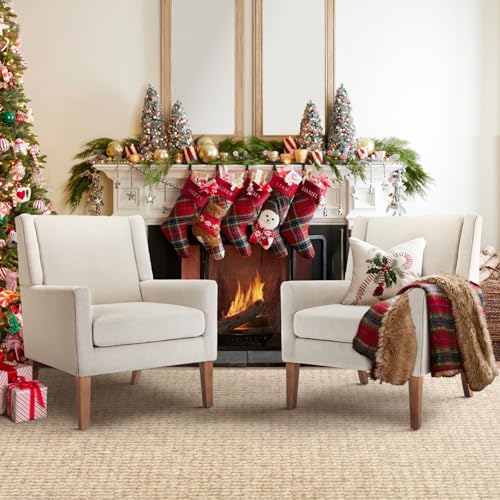
In use, the Yaheetech is the chair that disappears most politely. Its seat settles a reader without swallowing them, its back supports an upright-to-relaxed range, and its arms sit where a held book wants them, so sessions run long without the small negotiations — shifting, propping, stretching — that punctuate lesser chairs. It handles formats evenly: hardbacks held high, paperbacks in the lap, a tablet propped with a cushion. As household furniture it is equally unobtrusive, taking a guest or a morning coffee without looking like equipment. Its limits are the limits of balance: a determined curler will want more width, a determined recliner more lean, and a marathon reader may eventually want a more specialised seat. For the broad middle of reading life, though, this is the review panel’s default recommendation. Best for: most readers, first purchases, shared rooms. Not suited for: strong single-posture specialists.
Christopher Knight Home Malone Club Chair — the traditionalist reviewed
The Malone reads the way it looks: settled, embracing, committed. Once you are in it, you are in it — the deep seat and substantial arms create the sense of a place rather than a perch, and long hardback sessions are its home ground, the arms carrying the book while the chair carries you. Getting up is a slightly more deliberate act than in the accent chair, and shorter readers will want a cushion behind the back to bring the seat depth into line; with that adjustment, its comfort is complete. In a formal living room or a study it also does visual work none of the lighter chairs can. Best for: settled readers with a defined corner and traditional rooms. Not suited for: small spaces, frequent movers, or readers who like to perch and shift.

COLAMY Wingback Accent Chair — the upright specialist reviewed
The COLAMY is the most characterful chair in this roundup and the most demanding. Its tall winged back frames the reader, blocks the room’s distractions in a way you feel within minutes, and holds an upright posture that suits serious, attentive reading — reference books, study, the novel you lean into rather than sink away from. Readers who match it describe a focus no lounge chair gives them. Readers who do not match it — curlers, sprawlers, slumpers — find it corrective in the worst sense, a chair with opinions. This review’s advice is binary: if your posture audit says upright, put it at the top of your list; if it says anything else, admire it and move on. Best for: upright readers, fireside and study corners. Not suited for: relaxed or curled reading postures.
Homall Recliner Chair — the lean-back reviewed
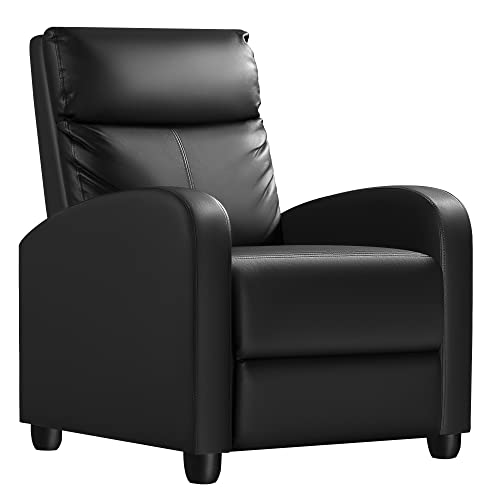
The Homall serves the reader the other four chairs ask to sit up. Reclined, legs raised, book resting lower, it turns reading into full rest, and for readers whose sessions blur into relaxation — an evening chapter that becomes an hour of unwinding — it may be the most-used chair in the house, films and naps included. The costs are physical and spatial: it needs clearance behind and before, its bulk fills a corner rather than furnishing it, and the low book angle does not suit every neck over a long session, a point to test honestly in the first week. In the entry tier its padding and mechanism are specified fairly for the price. Best for: reclined readers with room, dual-use households. Not suited for: upright readers or compact corners. Readers weighing it against a fixed chair plus footstool will find the argument set out in is a reading chair worth it.

Giantex Accent Chair — the compact option reviewed
The Giantex is reviewed on different terms because it solves a different problem: the corner that cannot take a full-size chair. In a bedroom, a small apartment or a first nook, its modest footprint leaves room for the lamp and table that make a corner work, and its sit is honestly comfortable for the shorter-to-medium sessions most weekday reading actually consists of. It is not a marathon chair — cushion resilience and seat depth are sized to its tier and its scale — and tall readers should look up this list instead. But a compact chair that fits, in a corner that works, beats a magnificent chair that crowds a room into resentment, every time. Best for: small corners, bedrooms, secondary spots. Not suited for: long daily sessions or tall readers. More small-corner thinking lives in best reading chairs for small spaces and best chairs for a reading nook.
Strengths and Trade-Offs of the Field
- Strength of the field: every major reading posture has a genuine specialist — upright, settled, curled-adjacent, reclined and compact are all honestly served.
- Strength of the field: the versatile middle is strong; a first-time buyer can choose the accent shape and be well served while learning their own habits.
- Strength of the field: most of these chairs live double lives as household seating, which spreads their cost across far more than reading hours.
- Trade-off of the field: specialisation is exclusion — every chair here is wrong for somebody, and the reviews’ not-suited-for lines matter as much as the praise.
- Trade-off of the field: entry tiers buy comfort honestly but not longevity of cushion or fabric; heavy daily readers should weigh the mid tier seriously.
- Trade-off of the field: no review, including this one, can certify your comfort — the final review happens in your corner, inside the returns window.
How the Chairs Compare
| Chair | Posture it serves | Space it needs | Tier |
|---|---|---|---|
| Yaheetech Upholstered Accent Chair | Upright to relaxed, mixed formats | Moderate corner | Entry to mid |
| Christopher Knight Home Malone Club Chair | Settled, embraced, long sessions | Generous corner | Mid |
| COLAMY Wingback Accent Chair | Upright and attentive | Moderate corner, tall presence | Mid |
| Homall Recliner Chair | Reclined, legs raised | Largest — clearance both sides | Entry |
| Giantex Accent Chair | Shorter sessions, smaller readers | Smallest corner | Entry |
Read the table by posture first and tier second. A reader matched to their shape at the entry tier will be happier than a mismatched reader at the mid tier, which is the closest thing this category has to a law. Leather-curious readers should also weigh the dedicated direction in best leather reading chairs, and softness-first readers the picks in best comfy accent chairs, before settling — the field is wider than five chairs, and these reviews are a map of its main roads, not its whole territory. The selection method behind the table is taught step by step in how to choose a reading chair.
Who Should Buy Which — and Who Should Skip the Category
Buy the Yaheetech if you want one chair to do everything well. Buy the Malone if your corner is permanent and your taste traditional. Buy the COLAMY if you read upright and mean it. Buy the Homall if you read lying back and your room can prove it. Buy the Giantex if your corner is small and your sessions are weekday-length. Skip the category entirely — for now — if your reading happens in bed or on trains, if the only available corner would block your room’s daily life, or if the budget only reaches chairs with no fair return route; in each case the upgraded version of the seat you already read in is the better purchase today. The pre-buy checklist is the same for every chair here: corner and route measured, fabric matched to the household, returns read, packaging kept, and several real sessions planned inside the window.
Setup, Care and Maintenance Essentials
All five chairs assemble the same domestic way — legs and back fitted on a soft surface, fixings tightened evenly, felt pads added for hard floors — and all five reward the same corner discipline: light over a shoulder, table on the dominant-hand side, clearance to rise without shuffling, with the recliner given the extra clearance its mechanism honestly needs. Care is likewise shared: weekly vacuuming with a soft brush, spills blotted at once, a throw across the seat and arms taking the daily wear, cushions plumped, fixings re-checked after the settling-in weeks, and strong sun managed by small rotations of position through the year. None of these chairs asks for specialist products or professional attention; they ask for rhythm, and ten minutes a month of it is what separates the chair that still gets chosen in year three from the one that gets covered in laundry.
Reading Chair Reviews: Final Verdict
This roundup’s verdict is a matching exercise, not a coronation. The Yaheetech takes the general recommendation for its balance; the Malone, COLAMY, Homall and Giantex each take their niche outright, and a reader who buys their own shape at any tier here has bought well. What none of these reviews can do is sit in the chair for you — so treat the returns window as the final round of reviewing, test in your real postures across several evenings, and keep the chair that your body, not the photographs, chooses.
How These Reviews Were Put Together
A roundup is only as honest as its method, so here it is. Each chair was assessed against the same reader’s questions, in the same order: What posture does this chair serve, and what posture does it punish? How does the seat behave across a long session rather than a first sit? Where do the arms leave a reader’s shoulders with a real book in hand? What does the chair demand of the room — footprint, clearance, presence — and what does it give back as ordinary furniture? How is it made for its tier, how does it assemble, and what will its care ask of an ordinary household each month? Chairs were then ranked only within their purpose; this roundup does not pretend that a wingback and a recliner are competing answers to the same reader.
Equally important is what these reviews did not do. No dimensions, counts or test scores were invented for any model; seat depth and height are discussed against the reader’s own body because that is the comparison that decides satisfaction, and because figures copied from listings have a way of not matching the chair that arrives. No chair was credited with health effects: supportive seating is reviewed as comfort, full stop. And no chair was reviewed in isolation from its corner, because a reading chair’s performance is inseparable from the light and table it lives with. Readers who want the reasoning behind the method itself will find it in the category’s step-by-step selection guide, cross-linked throughout this roundup.
Head-to-Head: the Three Questions Readers Ask Most
Accent chair or club chair? Choose the accent chair — the Yaheetech in this roundup — when the seat must live a double life, the room is ordinary-sized, or your posture sits anywhere in the upright-to-relaxed middle. Choose the club chair — the Malone — when the corner is permanent, the room is formal or generous, and your reading is always settled and embraced. The club chair is the deeper experience; the accent chair is the broader one, and most households are broader than they are deep. Wingback or recliner? These two are not rivals but opposites: the COLAMY wingback is for the reader who sits up into a book, the Homall recliner for the reader who leans back out of the day. Your posture decides this one completely, and choosing by looks here is the most expensive mistake in the category.
Compact chair or wait and save? Choose the Giantex-class compact chair now when the corner is small and your sessions are weekday-length; a chair that fits and gets used beats a better chair deferred for a year. Wait and save when your sessions are long and daily, because cushion resilience is the one quality you will feel every single evening, and it is the quality the tiers most honestly divide on. In both pairings, notice the pattern: the right question is never which chair is best, but which reader you are — which is why every review in this roundup ends in a best-for line rather than a crown.
What to Do in the First Week With Any of These Chairs
Whichever chair you choose from this roundup, the first week decides whether you keep it well. Assemble it slowly, on a soft surface, and resist judging it in the doorway. Set the corner completely before the first session — lamp over a shoulder, table placed, book waiting — because a chair tested in a bare corner is being tested on a job it will never actually do. Then read: your longest session, your shortest, your hardback and your tablet, at your real times of day. Adjust once, with a cushion or a moved lamp, before concluding anything.
By the end of the week you will know the things no review could tell you: whether your legs approve of the depth, whether your shoulders approve of the arms, and — the truest test — whether you have started choosing the chair without thinking. If you have, keep it and stop reading reviews. If you have not, return it inside the window while returning is easy, with your notes in hand. Every chair in this roundup was chosen to be worth that honest week; the week itself is the reader’s part of the bargain.
The Review Panel’s Notes on Fabric and Finish
Across the five chairs, fabric proved the quiet divider of daily satisfaction. The woven upholsteries on the accent and club chairs handled the realities of reading life — drink proximity, pet visits, the rub of book covers — with the least visible complaint, and they breathed through long summer sessions in a way the smoother finishes did not. The smoother, wipe-clean surfaces earned their place in households where spills are a daily event rather than an accident, trading a little warmth of feel for a lot of forgiveness. The panel’s consistent advice: choose fabric by the household’s last month, not its best intentions, and put a throw over the seat and arms of whichever chair you buy — it was the single cheapest improvement observed across the entire roundup.
Finish and detailing separated the tiers more honestly than comfort did. At the mid tier, seams sat straighter, arms were padded with more conviction, and legs met the floor with a more planted feel. At the entry tier, the chairs were fairly made for their price but plainer in the hand — a difference you notice in the first week and, the panel found, largely stop noticing by the second, provided the comfort fundamentals are right. That ordering — comfort first, finish second — is the opposite of how chairs are usually sold, and getting it the right way round is most of what these reviews exist to teach.
Notes on Delivery and Assembly Across the Roundup
All five chairs arrived as flat-packed or partly assembled furniture in the modern manner, and the panel’s notes converge. Packaging volume is the first surprise: even the compact chair’s box is a substantial object, and stairs and doorways should be walked before the delivery day, not during it. Assembly itself was uniformly domestic — legs, backs, included fixings, instructions pitched at a careful beginner — with the same two errors recurring: tightening one side fully before the other is seated, and skipping the felt pads that protect a hard floor. The recliner asked the most patience and the most space to work in; the compact chair the least of both.
The panel’s shared recommendation is to treat delivery day as the start of a trial, not the end of a purchase. Photograph the chair as it arrives, keep every piece of packaging until the returns window is nearly closed, and schedule your real reading sessions — long, short, hardback, tablet — inside the first week rather than the last. Chairs in this roundup were chosen to be worth that week. What the week reveals is yours alone, and it outranks anything written here, including this sentence.
Roundup Notes: How the Five Chairs Age in a Household
A roundup that only judges chairs on day one misleads, so the panel kept notes on how each design is likely to live. The accent chair ages the most gracefully in mixed households precisely because it asks the least of anyone: its fabric takes the family’s wear evenly, its shape never becomes the wrong shape as habits drift, and its second life as a general armchair means its value does not depend on the reading habit surviving every busy season. The club chair ages like the furniture it resembles — handsomely where it is cared for, its deep seat the first place heavy use will soften, its presence in the room undiminished. The wingback’s ageing is mostly visual: its tall silhouette holds a room for years, and its upright discipline never softens, which its reader will count as integrity and everyone else as stubbornness.
The recliner’s ageing includes a mechanism, and honesty requires the note: moving parts are the one component in this roundup whose years are counted differently, rewarding the reader who operates it kindly and keeps its surroundings clear. The compact chair ages fastest under marathon use and slowest under the weekday use it was built for — a reminder that ageing is not a property of chairs but of matches between chairs and lives. Across all five, the panel’s practical conclusion was identical: the throw, the vacuum, the prompt blot and the occasional rotation in the sun will do more for any of these chairs’ fifth year than the difference between the tiers did. Buy the match, then keep it like you mean to keep it.
If You Can Only Read One Section of These Reviews
Read this one. Every chair in this roundup is a decent chair; the differences that will matter to you are not between the chairs but between you and them. So: sit in your current seat tonight and audit your posture without mercy. Buy the shape that matches it — wingback for the upright, club for the settled, recliner for the lean-back, compact for the small corner, the versatile accent chair for everyone honestly in between. Measure the corner including the lamp and the table. Choose the fabric for the household you had last month. Order from the seller whose returns you have actually read, keep the box, and give the chair a week of real reading before you decide anything at all.
Do those things and the reviews have done their work, whichever chair you choose — including a chair that appears nowhere in these pages, chosen by the same method. That is the panel’s closing position, offered without reservation: the best reading chair is not a product but a match, and matches are made by readers who know their own habits better than any reviewer can. These reviews have given you five good candidates and one reliable method. The corner, the lamp and the first long evening are yours.
The Panel’s Buying Order for This Roundup
Readers who want the roundup reduced to instructions can take these. First, run the posture audit for three evenings and write down what you actually do — sit tall, settle back, curl, recline — because every later step depends on that sentence being true. Second, measure the corner and the doorway route, with the lamp and table included in the plan, and let the numbers eliminate chairs before taste is allowed a vote. Third, from the survivors in these reviews, order the one whose best-for line describes you, from the seller whose returns policy you have read most recently and understood completely. Fourth, keep the packaging, complete the corner on day one, and read in the chair for a week of real sessions. Fifth, decide — and having decided, stop comparison-shopping, because the reader who keeps reviewing after keeping the chair enjoys neither the chair nor the books.
That order of operations is, in the panel’s experience, worth more than any individual verdict in this roundup — including the general recommendation of the Yaheetech, the traditional excellence of the Malone, the focus of the COLAMY, the release of the Homall and the neatness of the Giantex. Products change with seasons and listings; the method does not. A reader armed with their own posture, their own measurements and a fair returns window will choose well from this year’s five chairs, next year’s five, or a second-hand bargain none of us has seen. These reviews end, as they began, with the only verdict that cannot be printed: yours, delivered from the chair itself, somewhere around the fortieth minute of a good book.
Extended Notes: Reading Chairs and the Rest of the Room
No chair in this roundup lives alone, and the panel’s last notes concern the company each chair keeps. The accent chair is the diplomat of the five: it sits beside sofas of almost any style without negotiating, and its corner can be built from pieces a household already owns. The club chair is the aristocrat — it improves formal rooms and exposes casual ones, and it asks the rest of the furniture to rise slightly to meet it. The wingback is the romantic, happiest near books, firelight and older wood, faintly theatrical anywhere else. The recliner is the populist: it belongs to rooms arranged for comfort over ceremony, and it will make a formal room look relaxed whether the room wanted that or not. The compact chair is the pragmatist, invisible in the best sense, judged entirely by the corner it makes possible.
None of these characters is a flaw; rooms, like readers, have postures too, and part of choosing well is matching the chair’s character to the room’s. The panel’s final observation is that readers consistently underrate this match because they shop for chairs against white backgrounds, when the chair will actually live against their own walls, floors and light. Picture the specific chair in the specific corner — or better, tape its footprint on the floor and live around the tape for a day — before the order is placed. The roundup’s verdicts tell you how each chair reads. Only your room can tell you how it will look, and both verdicts deserve a vote.
The Panel’s Last Word on Choosing Between These Five
Pressed to a single paragraph, the panel would say this. The five chairs in this roundup divide the reading world cleanly, and the reader’s task is not to rank them but to recognise themselves. If you read in the broad middle of postures and want the household’s chair as well as your own, the Yaheetech is your chair and this roundup’s general recommendation. If you read settled and deep in a room that can hold a presence, take the Malone. If you read upright with intent, take the COLAMY and do not apologise for its discipline. If you read lying back at the end of the day, take the Homall and give it the space it honestly needs. If your corner is small and your evenings are short, take the Giantex and spend what you saved on the lamp, which will matter more than the difference between any two chairs here.
And if none of those sentences describes you, the roundup has still served its purpose, because it has taught you the questions — posture, corner, fabric, returns, the fortieth minute — with which any reading chair, anywhere, can be judged in an afternoon. Take the questions, leave the rankings, and go and sit in some chairs. The right one will tell you itself.
A Note on Reading These Reviews in Order
This roundup was built to be read alongside its companions, and the panel will close by saying how the set fits together, because a reader who uses the whole set will choose better than a reader who uses any part of it. Start with the buying guide if the category itself is new to you — it maps the types and the criteria in the abstract. Come here for the five chairs judged against those criteria, with verdicts you can carry into a shortlist. Then read the single-chair deep dive on whichever shape survives your shortlist, because that is where the fortieth-minute questions get their fullest hearing. Run the pros-and-cons ledger before ordering, and the worth-it analysis if the hesitation is about the category rather than the chair. Finish with the step-by-step choosing guide open beside the listing, tape-measure facts in hand. That sequence — map, shortlist, deep dive, ledger, method — is the order the panel itself would follow as buyers, and it is offered as the roundup’s final and most durable recommendation.
Final Notes From the Panel’s Notebook
Three marginal observations survived the panel’s editing and are recorded here because roundups rarely print the things reviewers actually talk about. The first is that every panellist, whatever chair they championed, described their own reading corner at home within minutes of the discussion starting — evidence, if any were needed, that this category is bought with the heart’s memory of a place as much as with the body’s measurements, and that the wise buyer honours both. The second is that the chairs were argued about most fiercely not on comfort but on character: what each chair does to a room’s mood turned out to be the difference readers would still care about when the comfort questions had all been answered, which is why these reviews refused to treat styling as a superficial extra.
The third observation is the panel’s unanimous one, and it is offered as the roundup’s true conclusion. In a category full of good chairs, the readers who end up delighted are not the ones who found the best product; they are the ones who were most honest about themselves — their posture, their rooms, their households, their actual evenings. The five chairs reviewed here will each delight the reader they were made for and disappoint the reader who buys them for someone else’s life. Know which reader you are, and this roundup, for all its length, reduces to a single sentence: buy your own chair, in your own size, for your own corner, and read in it for a week before you believe a word anyone — including us — has written about it.
One closing practical note applies to whichever of these five chairs you choose: photograph your finished corner — not for anyone else, but because the photograph will remind you, in the first busy month when every habit is fragile, what the arrangement is supposed to look like when the lamp drifts, the table migrates and the chair acquires a coat it did not come with. Corners decay by inches and are restored the same way, and the panel’s last act is to hand all five chairs over to that ordinary maintenance of place, in which every verdict in this roundup either survives or quietly does not. Choose well, set the corner completely, and then — the panel insists on this final instruction — close the reviews and open the book. The chairs have been weighed, the corners have been measured, and what remains is the simplest part of the whole undertaking: sit down in the chair your own body chose, and let the fortieth minute deliver its verdict, in your own corner, with your own book, at the end of your own ordinary evening of reading at home.
How to Read Reading Chair Listings Without Being Misled by Headlines
This section exists to look again after the first impression has faded, because the qualities that sell a product in the first hour are rarely the ones that decide whether it is still liked in month three. It adds a layer that a feature list cannot give you, grounded in the living room furniture context this reading chair will actually live in. Where this guide names examples such as Yaheetech Upholstered Accent Chair, Christopher Knight Home Malone Club Chair, COLAMY Wingback Accent Chair, use them as test cases for the checks below rather than as shortcuts past them.
Build a simple decision checklist and score it in writing. Five lines are enough: fit in the space, fit with the routine, ease of cleaning or upkeep, quality of the parts that move or wear, and how the reading chair will be stored or will look when it is not the centre of attention. Score each contender quickly, then look only at the lowest scores, because purchases are usually ruined by their weakest point rather than saved by their strongest. If two options tie, choose the one whose weakness is cheapest or easiest to live with. This sounds mechanical, and it is meant to: a written checklist is the best defence against the very human habit of falling for the last photograph you looked at.
Finally, plan the first fortnight. Decide where the reading chair will live from day one, what it replaces, what accessory or companion it needs straight away and what small job you will use to learn its habits while returning it is still simple. Keep the packaging until that learning period is over, note anything that surprises you, and deal with a mismatch early rather than adapting yourself around a poor fit for years. The households that end up happiest with a reading chair are rarely the ones that researched longest; they are the ones that checked fit honestly, bought for the ordinary week, and paid attention during the first days instead of assuming the decision ended at checkout.
One more angle is worth your time: the second-order costs. A reading chair changes what happens around it. It can demand a different cleaning product, a new storage habit, a moved piece of furniture, a rearranged cupboard or a standing arrangement with the people you live with. List those knock-on effects before you buy and decide whether you accept them as part of the deal. Sometimes the answer is an easy yes, and the reading chair earns its place by improving the whole routine around it. Sometimes the honest answer is that the supporting changes are the real project, and the purchase should wait until you are ready for them. Either answer is useful; the only bad outcome is discovering the knock-on effects by accident, one irritation at a time, after the decision can no longer be revisited.
It also helps to separate the problems a reading chair can solve from the problems it merely moves. If the underlying difficulty is space, the answer may be a smaller format or a different location rather than a more elaborate model. If the difficulty is time, look for the option that removes steps rather than the one that performs each step slightly better. If the difficulty is that several people want different things, a compromise design that everyone rates as good enough will usually outlast a specialist design that one person loves and everyone else avoids. Naming the real problem in one sentence, out loud, before you order, is a surprisingly powerful filter, and many shoppers find that the sentence itself points at a different reading chair than the one they started out researching.
Start with the unglamorous measurements. For a reading chair, the numbers that decide satisfaction are rarely the headline ones in a listing; they are doorway width, turning space on the stairs, floor clearance and the distance to the nearest table or lamp. Write the real dimensions of your space down, including the awkward constraints you normally work around without thinking, and hold every contender up against that sheet rather than against a showroom photograph. Then walk the route the reading chair will take on delivery day and during normal use. A choice that fits on paper but fights you every time it is moved, opened, cleaned or stored will lose its shine quickly, however strong its other qualities look in a comparison table.
Next, rehearse the week, not the ideal day. Picture the reading chair inside movie nights, reading sessions, guests staying longer than planned and children treating every edge as a climbing frame. Most disappointment comes from buying for the best-case scenario: the tidy version of the household, the motivated version of yourself, the weather or the guest list you hope for rather than the one you usually get. If the reading chair only makes sense when everything goes to plan, it is the wrong size, the wrong format or the wrong purchase for now. If it still looks useful on the tired, rushed, slightly chaotic version of the day, it has passed the most honest test there is, and the remaining questions are about detail rather than direction.
Pay close attention to the recurring friction points, because they compound. With a reading chair, owners tend to run into fabric marking, cushions softening unevenly and legs scratching the floor when the piece gets dragged instead of lifted. None of these is dramatic on its own, and that is exactly why they get underestimated at buying time. Ask how the design you are considering handles each one: can the wearing part be replaced, can the awkward part be reached without tools, does the job take two minutes or twenty. A reading chair that makes its own upkeep easy gets maintained; one that makes upkeep a project gets neglected, and neglected products perform badly in ways that then get blamed on the original purchase.
Use the listings as a checklist rather than as entertainment. For each reading chair you shortlist, note the exact variant, the included parts, what is sold separately, and which photographs show the item in a setting like yours rather than in a studio. If a model named elsewhere in this guide catches your eye, treat it as a worked example for this process: run it through the same measurements, the same weekly rehearsal and the same friction list before letting familiarity turn into preference. Consistency is the whole trick. Shoppers go wrong not by choosing the objectively weaker reading chair, but by judging one contender on features, the next on looks and the third on a single enthusiastic anecdote.
Frequently Asked Questions
Which reading chair in these reviews is best overall?
For the widest range of readers, the Yaheetech upholstered accent chair takes the general recommendation: it supports upright-to-relaxed reading, carries a held book comfortably, fits ordinary corners and works as everyday household seating between sessions. Best overall comes with an asterisk, though — it means best balanced, not best for you specifically. An upright reader will be happier in the COLAMY wingback, a reclined reader in the Homall, and a small-corner reader in the Giantex. Match the chair to your posture first; the ranking follows from that, not the other way round.
Are these reviews based on scores?
No. These reviews deliberately use no scores or tallies of any kind, because comfort does not reduce to a number and fixed figures go stale or mislead. Instead, each chair is judged on the things a reader can verify in their own home — seat support across a long session, arm height against a held book, back angle against your posture, footprint against your corner — and each verdict is stated as best-for and not-suited-for, which is the form in which comfort advice is actually useful.
How do I choose between the club chair and the wingback?
By the direction your body leans when you read. The club chair, like the Christopher Knight Home Malone, wraps around a settled reader who sits back and stays; the wingback, like the COLAMY, holds an upright reader who sits up and attends. Sit in your current seat and notice yourself honestly across a few sessions: if you sink and settle, choose the club shape; if you sit tall with the book held up, choose the wingback. Choosing against your posture because a silhouette charmed you is the most common expensive mistake in this category.
Is the recliner a good reading chair or just a lounge chair?
It is a genuinely good reading chair for readers who read reclined — legs raised, back leaned, book resting lower — and a poor one for everyone else. The Homall earns its place in these reviews because that reading posture is real and common, especially for evening unwinding. The cautions are space, since a recliner needs clearance in front and behind, and neck comfort over long sessions at a lower book angle. Test both honestly in the first week; a fixed chair plus a separate footstool is the alternative if the reclined angle does not suit you.
What if none of these chairs fits my corner?
Start from the corner rather than the catalogue. Measure the space including the lamp, the table and your own room to sit and rise, then shop only chairs whose full footprint — overall width and depth, not seat size — fits inside it. Compact designs like the Giantex exist precisely for this, and bedroom corners solve many living-room space problems. If no chair fits without crowding the room’s daily life, the honest answer is to upgrade the seat you already have with a cushion, footstool and better light, and revisit chairs when your space changes.
How should I test a chair once it arrives?
Read in it properly, several times, before deciding. Use your real formats — hardback, paperback, tablet — at your real reading times, for full sessions rather than a minute’s sit, because the faults that matter appear at minute forty: the seat edge, the arm height, the back angle. Adjust with a cushion and by repositioning the light before blaming the chair. Keep all packaging until the returns window is nearly closed, and if the chair still is not right, return it with notes on exactly what your body objected to — your second choice will be far better informed.


