Disclosure: As an Amazon Associate, dailyhomedecorating.com earns from qualifying purchases. Links on this page are affiliate links; they cost you nothing extra. Prices and availability change often, so check the current Amazon listing before you buy.
A reading chair buying guide has one job: to stop you buying a beautiful chair that is wrong for the way you read. A reading chair is single-purpose seating — it must hold you comfortably, book at a steady angle, for sessions far longer than ordinary chairs are designed for — and the market sells it in a dozen shapes that suit a dozen different readers. This guide explains the main types, puts a shortlist of real chairs up front with honest badges, then works through the questions that actually decide comfort: seat depth, back support, arms, fabric, footprint and the unglamorous details of assembly and returns. Read it with your own reading habits in mind, because in this category the best chair is always the best-matched chair.
Key Takeaways
- Match the chair type to your posture first: upright, curled, legs-up and reclined readers each need a different shape.
- Seat depth and cushion resilience decide long-session comfort more than any styling or feature list.
- Arms at the right height quietly carry the weight of a book or tablet; too high is worse than slightly low.
- Buy the whole corner in your head before ordering — chair, light over a shoulder, and a surface within reach.
- Comfort is personal, so a fair returns policy is a buying criterion, not an afterthought.
In this guide
Reading Chair Buying Guide: What a Reading Chair Does and the Main Types
A reading chair does one thing ordinary seating does not: it specialises. A sofa spreads its design across several sitters and several activities; a reading chair can be shaped around one body, one posture and one pastime. That specialisation shows up in deeper or more supportive seats, backs angled for settling in rather than sitting up, and arms positioned to carry a book. Understanding the main types is the fastest way to narrow the field, because each type is a different answer to the question of how you read.
The club chair
The club chair is the traditional reading chair: a deep, embracing seat, low substantial arms and a back that wraps slightly around the sitter. It suits readers who sit back and stay put, and its arms are excellent book-rests through long chapters. Club chairs anchor formal living rooms and study corners beautifully, but they commit real floor space and visual weight, and their depth can defeat shorter readers unless a cushion shortens the seat. If your reading style is settled and your corner is defined, this is the classic choice — the Christopher Knight Home club style in the shortlist below is a representative example.
The wingback chair
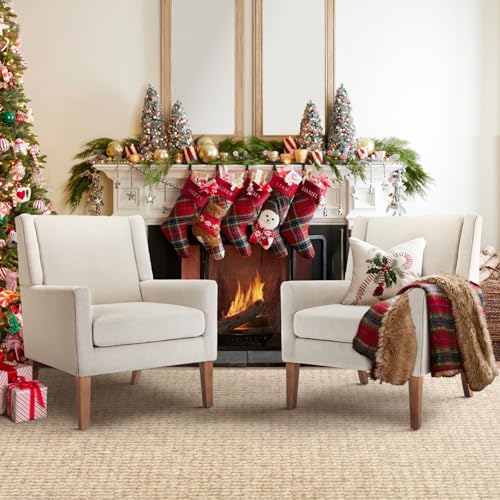
Wingbacks are the oldest reading chairs of all, designed for fireside sessions: a tall back, side wings that block draughts and frame the head, and a more upright sit than modern lounge chairs. They suit attentive, upright readers — the kind who hold a book up and read with intent — and they make a strong visual statement in bedrooms, studies and bay-window corners. They do not suit sprawlers or curlers, and their height can overwhelm a small room. For the right reader, though, nothing else feels as purposeful; the COLAMY wingback in the shortlist carries this shape into a modern form.
The modern accent chair
The upholstered accent chair is the category’s versatile middle: moderate seat depth, a gently angled back, arms at a natural height and styling that disappears into most rooms. Chairs like the Yaheetech and Giantex examples below are the default recommendation for first-time buyers precisely because they offend no posture outright and work as general seating when guests arrive. The trade-off is that they are rarely the absolute best at any single reading style — a dedicated curler or a committed recliner will outgrow the compromise — but for mixed habits and shared households, compromise is often the wisest buy.
The recliner and the chaise
Recliners, represented below by the Homall, serve readers who genuinely read leaning back with legs raised, and they double as the household’s relaxation seat. Their needs are practical: clearance behind and in front, and a reader whose neck is happy with a lower book angle. The chaise takes legs-up reading furthest, supporting the full length of your legs, and rewards readers who read in near-lying positions — at the cost of the largest footprint in the category. Both shapes are excellent for their readers and wrong for everyone else, which is the recurring lesson of this guide: posture first, product second. The methodical version of that lesson is laid out in how to choose a reading chair.
Top Picks at a Glance
Five real chairs, five different answers. Badges here describe fit, not ranking — the best overall chair for an upright reader is a poor buy for a curler — and tiers are given in words because this guide follows a no-static-price rule: check the current listing for the figure that applies today. All five are presented prose-only while verification is pending.
| Chair | Badge | Tier | Best for |
|---|---|---|---|
| Yaheetech Upholstered Accent Chair | Best Overall | Entry to mid | Mixed postures, first-time buyers |
| COLAMY Wingback Accent Chair | Best for Upright Readers | Mid | Attentive, upright reading |
| Christopher Knight Home Malone Club Chair | Best Traditional | Mid | Settled readers, formal rooms |
| Giantex Accent Chair | Best for Small Corners | Entry | Bedrooms, apartments, shorter sessions |
| Homall Recliner Chair | Best for Reclined Reading | Entry | Legs-up readers, dual-use lounging |
How Deep and Supportive Does the Seat Need to Be?
Deep enough that you can sit fully back with your lower back supported and a small gap behind your knees — and no deeper. Seat depth is the criterion buyers most often get wrong by assuming more is better. A deep seat delights tall readers and legs-up curlers and quietly ruins the chair for shorter or upright readers, who end up perched or propped on cushions. Judge every listing’s depth against your own legs, and treat a back cushion as a legitimate depth adjuster: many readers deliberately buy slightly deep and shorten the seat with a cushion that also adds lumbar support.
Supportiveness is about what the cushion does at minute fifty. Resilient foam that pushes back holds your posture kindly through a long session; very soft cushioning welcomes you and then lets you sink into a slump that your back pays for later. In a shop, press hard and watch the recovery. In a listing, look for descriptions of firm, high-resilience seating rather than plushness, and be sceptical of chairs marketed purely on softness. For marathon readers this single criterion outweighs fabric, styling and brand combined.
What Back and Arm Support Do You Actually Need?
Your back needs two things: its lower curve filled in so you do not round into a slump, and, ideally, somewhere for your head when you lean back between chapters. A gentle recline in the backrest suits most readers; bolt-upright backs tire you, and deep lounge angles drop the book and strain the neck. Many chairs are finished by a small cushion of your own — budget for one and do not treat needing it as a defect. Be clear-eyed about claims, though: supportive seating can be genuinely more comfortable for long sits, but a reading chair is furniture, not treatment for a back condition, and it should never be bought on a therapeutic promise.
Arms carry the book so your shoulders do not have to. The right arm height leaves your forearms resting with shoulders dropped and relaxed; arms that are too high shrug your shoulders toward your ears and ache within the half hour, while slightly low arms merely under-support. Wide, flatter arm tops forgive long contact and double as a resting place for the book itself. Curlers and lap-readers can happily choose low arms or none, which also helps a chair fit a tight corner. Tablet readers sit somewhere between: a propped tablet needs less from the arms than a held hardback, so let your real reading format set the requirement.
Which Fabric Fits Your Household?
Fabric is a lifestyle decision disguised as a style one. Busy households — children, pets, drinks in hand — should lean to tightly woven upholstery in mid or darker tones or a pattern, which hides the evidence of daily life and tolerates spot cleaning. Smooth faux leather wipes clean in seconds and suits contemporary rooms, but it can feel warm through a long summer session, cold on a winter morning, and it records claw marks honestly. Leather and leather-look options carry their own care routine and reward it with graceful ageing; readers drawn to them should compare the dedicated roundup of best leather reading chairs before deciding.
Whatever you choose, read the care label before you buy. Removable, washable covers are a genuine practical advantage that rarely makes the headline features. Check sun exposure too: a reading corner beside a bright window is the dream, and fabrics differ in how gracefully they handle years of light. A throw over the seat and arms is the cheapest insurance in the category — it takes the wear, washes easily, and makes the corner feel personal from day one.
How Much Room Does a Reading Corner Really Take?
More than the chair. Budget the chair’s full footprint — overall width and depth, not the seat measurements some listings lead with — plus a lamp beside or behind it, a small table within arm’s reach, and the space your body needs to sit down and rise without shuffling. Then check the delivery route: doorways, hall turns and stairs, with the chair in its packed form. Compact chairs like the Giantex exist for rooms where this arithmetic is tight, and bedroom corners are the classic solution when the living room cannot spare the space, as the ideas in best reading chairs for the bedroom show. In genuinely small homes, start from the corner and let it dictate the chair’s maximum size, as in best reading chairs for small spaces.
How to Prioritise by Use Case
The evening novelist, reading an hour a night in a living-room corner, should spend on cushion resilience and arm support and choose the versatile accent or club shape in a fabric that matches the room, because this chair will also be seen — and probably used — by everyone. The weekend marathon reader should prioritise fit above all: seat depth matched to their legs, a back that supports a long settle, and a returns policy that lets them verify comfort across several long sessions before committing. The bedroom reader, often reading the day’s last chapter, can trade some long-session engineering for a smaller footprint and a calmer look, and should think hardest about light, since bedroom lamps are rarely positioned for reading chairs. The shared-household buyer should choose the compromise shape — moderate depth, gentle back angle, forgiving fabric — and accept that a chair everyone uses passably beats a chair one person loves and everyone else avoids.
The Shortlist in Detail
Yaheetech Upholstered Accent Chair
Best for: first-time buyers and mixed reading habits. Not suited for: committed recliners or very tall curlers needing maximum width. The Yaheetech’s appeal is balance — a padded, supportive sit, arms where book-holders want them, and styling that works in a living room or bedroom without dominating either. In the entry-to-mid tier it is the chair this guide points to when a reader cannot yet name their posture, because its compromises are gentle in every direction. Strengths: versatility, easy presence in most rooms, a sit that suits upright and relaxed readers alike. Trade-offs: specialists will eventually want a more specialised chair, and fabric care should be checked against your household before ordering.

COLAMY Wingback Accent Chair
Best for: upright, attentive readers and statement corners. Not suited for: sprawlers, curlers, or low-ceilinged small rooms it would overwhelm. The wingback shape is a posture commitment — tall back, head framed, sit up and read — and the COLAMY delivers it in a mid-tier modern form. Strengths: a real sense of enclosure and focus, strong support for held-book reading, and fireside character no lounge chair matches. Trade-offs: the upright sit is unforgiving of slouching habits, and the silhouette needs a corner that can take a tall piece of furniture. Judge it against your posture audit, not its photograph.
Christopher Knight Home Malone Club Chair
Best for: settled readers with a defined corner and traditional taste. Not suited for: tight rooms, tight doorways, or readers who rearrange often. The Malone’s club shape — deep seat, substantial arms, mid-tier finish — is built for readers who sit back and stay, and its arms carry a hardback comfortably through long chapters. Strengths: an embracing, settled sit and a presence that anchors a formal room. Trade-offs: footprint and weight are real, and shorter readers should plan on a back cushion to shorten the seat depth into comfort.

Giantex Accent Chair
Best for: small corners, bedrooms and secondary reading spots. Not suited for: marathon sessions or tall readers needing depth. The Giantex represents the compact end of the category in the entry tier, trading lounge depth for a footprint that leaves room for the lamp and table the corner still needs. Strengths: it fits where better chairs cannot, and it is easy to place and move. Trade-offs: cushion resilience and seat depth are sized for shorter-to-medium sessions, so daily long readers should look at the fuller shapes above. Readers whose first priority is softness can compare it with the picks in best comfy chairs for reading.
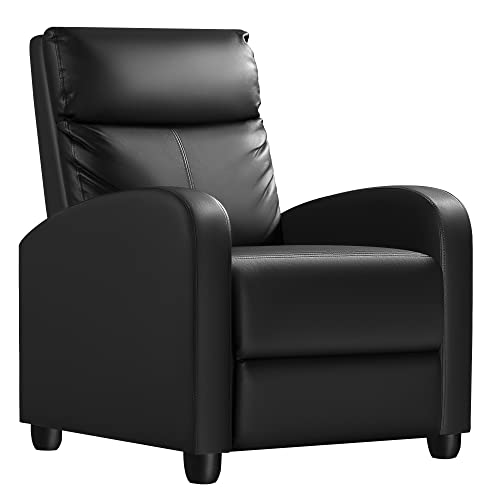
Homall Recliner Chair
Best for: genuinely reclined readers who also want a lounging seat. Not suited for: upright readers or rooms without clearance behind the chair. The Homall brings a padded recliner into the entry tier, letting you raise your legs and lean back with a book, then serve the household for films and rest. Strengths: dual use and a true lean-back reading position. Trade-offs: it needs space to recline, and the lower book angle does not suit every neck — test your own reclined reading honestly before choosing a recliner over a fixed chair and footstool.
First Setup and Care Essentials
Assembly on chairs like these is usually a matter of attaching legs and fitting the back, working on a soft surface so upholstery is not marked, and tightening fixings evenly rather than fully one side at a time. Add felt pads under the legs before the chair meets a hard floor. Position the chair with light coming over a shoulder — from behind and to the side beats light in front of you, which glares off the page — and set the table on your dominant-hand side. For care: vacuum upholstery with a soft brush attachment, deal with spills immediately by blotting rather than rubbing, keep a throw over the highest-wear areas, and rotate the chair’s exact position occasionally if it sits in strong sun. None of this is onerous, and ten minutes a month is what keeps a reading chair feeling worth its place for years.
Mistakes to Avoid
Avoid buying on looks alone, judging comfort in the first minute, and assuming deeper always means more comfortable — the three errors behind most returned chairs. Avoid forgetting the corner: a chair with no lighting plan and nowhere to set a drink is an unfinished purchase. Avoid ignoring the delivery route and the returns terms on a bulky item. And avoid the therapeutic promise: choose a chair for comfort, honestly described, and leave medical claims to clinicians. The value question behind all of this — whether the category itself earns its space in your home — is argued in full in is a reading chair worth it, and the individual verdicts are tested in reading chair review and reading chair reviews.
Reading Chair Sizes and Room Layouts, Worked Through
Because listings lead with seat dimensions, buyers chronically underestimate how much room a reading chair takes. Work instead from the chair’s overall footprint — its widest and deepest points, arms included — and then add the corner around it: roughly a lamp’s worth of space to one side or behind, a table’s width on your dominant side, and clear floor in front for your legs and for standing up. In a living room, that total usually fits along a wall or in a corner by a window without disturbing the sofa arrangement. In a bedroom, the corner by the window or beside the wardrobe is the classic claim. In a small apartment, the honest options are a compact chair in a genuinely unused corner or no chair at all — a truth this guide will keep repeating, because a crowded room punishes its owner daily.
Layout affects comfort in ways buyers do not expect. A chair placed with its back to the room’s traffic feels sheltered; the same chair in a walkway feels exposed, and readers subconsciously shorten their sessions. A chair angled slightly — toward the light, turned a few degrees from the wall — reads as a place and sits better than one squared against the wall like waiting-room seating. If the chair will share a room with a television, decide whose corner wins the good light and the quiet end; a reading chair placed in the television’s glare and noise is a chair bought for a habit that will lose most evenings.
Frame, Foam and Fabric: the Three Builds That Matter
Strip away the marketing and a reading chair is three decisions: what holds it up, what you sit on, and what covers it. The frame — solid wood, engineered wood or a blend in most mainstream chairs — should feel inert: no flex, no creak, no rock that was not designed as a rock. You cannot see the frame in a listing, so judge it on arrival with your full weight and a deliberate shift from side to side, inside the returns window. The foam you sit on matters more to your daily experience: resilient foam that recovers quickly will still be supporting you in year two, while very soft foam trades that future for a welcoming first minute. Press hard, watch the recovery, and believe your hand.
The fabric decision was covered earlier in this guide, but one build point belongs here: upholstery quality shows at the arms and the front edge of the seat, where hands, books and bodies concentrate their wear. Even tension, straight seams and generous padding in those places are the visible signatures of a chair made to be used rather than merely photographed. Check them on arrival the way you would check a coat’s stitching — before the tags come off, while your options are still open.
Delivery, Assembly and the First Fortnight
Plan the purchase as a small project with a fortnight’s tail. Before ordering: measure the corner and the route, read the returns terms, and decide where the packaging will live until the trial is over. On delivery day: inspect the chair before the driver leaves if the service allows, photograph any damage, and assemble on a rug or blanket with the instructions fully read first — most chairs in this category ask for legs and a back to be fitted, and the commonest assembly error is tightening one side fully before the other is seated, which leaves the chair subtly twisted. Tighten evenly, then check again after the first week, when new joints settle.
The first fortnight is the real purchase. Read in the chair across days and session lengths, adjust with a cushion, move the lamp, and notice whether you are reaching for the chair or drifting past it. Keep a short note if it helps — depth, arms, back, in a line each — because memory flatters first impressions. If the chair fails the fortnight, return it inside the window without sentimentality and buy the next one with your notes in hand. Readers who treat the fortnight this way almost always end up with a chair they keep for years; readers who skip it sometimes keep a chair they quietly avoid for just as long.
Questions to Ask Before You Order Any Reading Chair
Run this interrogation on any chair that survives your shortlist, and let the answers — not the photographs — make the final decision. Which of my postures does this chair serve, and which does it punish? Does its overall footprint fit my measured corner with the lamp and table included, and does its packed form fit my doorway route? Is the cushion described in terms of resilience or only softness? What exactly does the care label ask of me, and does my household’s real life — pets, children, drinks, sun — match this fabric? Who pays if it has to go back, and how long do I have to decide? A chair that answers all five well is a buy. A chair that fails two is a photograph.
Reading Chairs for Particular Readers
Tall readers should hunt depth and back height above all: a seat they can sit back in without their knees rising, and a back that reaches high enough to rest against, accepting that compact chairs are rarely built for them. Petite readers face the mirror problem — standard depths strand their backs away from the chair’s — and should favour shallower seats or plan the back cushion as a permanent fitting rather than an accessory. Readers who share with a much differently built partner should revisit the compromise guidance earlier in this guide and resist both extremes. Readers buying for an elderly parent should weight the exit as heavily as the sit: a firmer, higher seat and arms that bear weight turn the end of every session from a negotiation into a non-event, and that kindness outranks styling by a distance.
Gift buyers deserve a specific warning: a reading chair is among the most personal furniture there is, and surprise is its enemy. If you are buying for a reader you love, buy the corner with them — the measuring, the posture conversation, the fabric argument — or give the promise of the chair rather than the chair itself. The exception is the household chair bought openly as a shared present, where compromise is the point. In every other case, the reader’s own body is the only reliable reviewer, and a gift that cannot be returned is a risk dressed as generosity.
A Note on Reading Chair Accessories Worth Having
Three accessories earn their place beside almost any chair in this guide. A small, firm lumbar cushion finishes more fits than any other single purchase. A throw protects the fabric, warms the reader and makes the corner feel claimed. A book stand or cushion-prop for tablet readers raises a screen to a kinder neck angle for the price of a pizza. Beyond those three, buy accessories only in answer to a problem you have actually met in the chair — a footstool when your legs ask for one, a clip light when the lamp cannot reach a rented corner — because a corner cluttered with solutions to imaginary problems stops being the calm place the whole purchase was for.
How to Read a Reading Chair Listing Like a Reviewer
Listings are written to sell, but they can be read for evidence if you know where the facts hide. Start with the dimensions block and translate it: overall width and depth tell you the corner it needs; seat depth tells you the legs it suits; seat height tells you how the sitting and standing will feel. Then read the materials lines for the words that matter — resilient or high-density foam, solid or engineered frame, the fabric’s actual composition — and notice what is missing, because a listing loud about style and silent about foam is telling you something. Assembly information reveals the chair’s construction honesty: chairs that bolt together in obvious, serviceable ways tend to be chairs you can tighten, move and keep.
Photographs deserve the same scepticism. Look for the chair in a room with objects of known size rather than floating in white space, and be wary of images where a model makes the chair look generous — scale is the easiest thing to flatter. Zoom, where the platform allows, into the arms and the front seat edge: upholstery tension and seam quality are visible there to anyone who looks. Finally, read the questions-and-answers and the critical reviews for the specific complaints that repeat — a single report of a wobble is an anecdote, but the same wobble in a dozen reports is a specification. You are not looking for a perfect chair; you are looking for a chair whose known faults are ones your household can live with.
Then stop researching. There is a point in every furniture purchase where more reading produces less deciding, and reading chairs reach it quickly because the decisive evidence — your body in the chair — cannot be gathered online at all. The purpose of listing literacy is to eliminate the wrong chairs efficiently, not to certify the right one. Certify it at home, in the fortnight, with the packaging kept. A buyer who understands that division of labour will make this purchase better than a buyer with ten times the research and no returns policy.
Seasonal and Situational Buying Notes
Reading is a seasonal habit for many households, and a buying guide should acknowledge the calendar. Autumn and winter are the reading chair’s natural season — dark evenings, long sessions, the corner at its most inviting — and they are the right time to judge a chair’s true value to you, because a chair bought and loved in January has proven itself under full load. A chair bought in June should be judged more carefully against the suspicion that summer is flattering your intentions; buy it for the reader you are in February. Fabric, too, has seasons: the woven chair that feels perfect in winter may feel warm in a heatwave, and readers in hot climates should weight breathability as a first-order criterion rather than a footnote.
Life events reorder priorities in ways worth anticipating. A new baby turns the reading chair into a feeding-and-soothing chair for a season — arms and a gentle sit suddenly matter in a new way, and washable fabric becomes priceless. A house move argues for measuring the new corner before the old chair is promised a place in it. Retirement, the great reading expansion, justifies the upgrade deferred for years: the mid-tier chair bought at sixty may be sat in more in a decade than every chair before it combined. A good buying guide cannot foresee your life, but it can insist on the principle that runs through every section above — buy for the reading life you are actually living, or the one you are demonstrably entering, and the chair will take care of the rest.
Worked Layouts: Three Corners Described
The living-room corner: a mid-size accent or club chair angled a few degrees from the wall beside a window, a floor lamp standing behind the chair’s left shoulder for a right-handed reader, a narrow side table on the right carrying the current book, the next book and a coaster that never leaves. The sofa arrangement is untouched, the walkway stays clear, and the corner reads from the doorway as a deliberate vignette. This is the layout most buyers are picturing, and its requirements are honest: a wall run long enough for chair, lamp and table in a row, and a window whose light helps by day without fading the fabric unopposed — a blind or a rotation habit handles the second point.
The bedroom corner: a compact or calm-styled chair in the window bay or beside the wardrobe, a small table doing double duty for water and glasses, and light from a lamp placed for the chair rather than borrowed from the bedside. The discipline here is scale — the room must still feel like a place of rest — and the reward is a reading place that keeps the bed for sleep and gives the day’s last chapter a posture your back will thank you for. Readers with partners on different schedules should note the corner’s other virtue: a chair and a low lamp disturb a sleeping household far less than an overhead light and a restless reader in bed.
The small-flat corner: one compact chair claiming a genuinely dead patch — the end of a hallway widening, the space beside a bookcase, the corner a door’s swing does not quite need — with a wall-mounted or clamp light where a floor lamp will not fit, and a table small enough to be a wide stool. Everything here is chosen by the tape measure first and the eye second, and the layout succeeds precisely to the extent that it refuses to borrow space from the room’s daily life. A small corner that works beats a grand corner that crowds, in this guide’s judgement, every single time.
The Guide in One Page: a Closing Summary
Posture first: name how you read before you look at a single chair. Seat second: depth against your own legs, resilience against the clock. Arms third: at the height your book needs, wide enough to forgive an evening. Fabric fourth: for the household you had last month. Corner always: chair, light and table measured together, route included. Returns as a feature, testing as a fortnight, and the whole purchase judged at minute fifty rather than minute one. A reader who holds those lines will choose a reading chair well from any catalogue, at any tier, in any season — which is what a buying guide is for.
A Brief History of the Reading Chair, for Context
The reading chair has a longer pedigree than most furniture in your home, and its history explains its shapes. The wingback was engineered for draughty rooms and firesides, its wings shielding a reader’s face and candle from the gusts of an unheated house — which is why it still feels like a private room of one. The club chair arrived with the libraries and clubs of a later century, built low and deep for men who intended to sit for hours with newspapers and novels, and its settled embrace has never really been improved for that purpose. The modern accent chair is the democratic descendant of both: smaller, lighter, cheaper to make and to move, shaped by apartments rather than libraries, and honest about serving several purposes in rooms that cannot spare a single-purpose anything.
Knowing the pedigree helps a buyer read the present market. When a listing sells you a wingback’s focus or a club chair’s settle, it is selling a real inheritance, not a styling exercise — those shapes were refined by centuries of readers with candles, fires and long winter evenings as their testing laboratory. When it sells you versatility, it is selling the modern answer to a modern constraint. Neither is a gimmick. The history simply confirms this guide’s opening claim: posture and place decide the chair, and they always have.
One Last Buying Scenario: the Upgrade Path
Many readers will buy twice in this category — a first chair that teaches them their habits, and a second, years later, bought with that knowledge. This guide endorses that path rather than apologising for it. The first chair should be versatile, fairly returnable and bought without preciousness, because its real product is information: your true posture, your true session length, your household’s true behaviour around a reading corner. The second chair can be specialised, committed and chosen with the confidence of a reader who has sat through thousands of pages of evidence. Buyers who try to skip the first chair and purchase the perfect one immediately are not being more economical; they are gambling that their imagination matches their body, which is the one bet this entire guide exists to talk you out of. Let the first chair teach. The second will be easy.
Before You Commit: A Hands-On Fit and Compatibility Check for Reading Chair
This section exists to treat this as the final check before money changes hands, the point where a shortlist stops being a list of features and becomes a decision about one specific home. It adds a layer that a feature list cannot give you, grounded in the living room furniture context this reading chair will actually live in. Where this guide names examples such as Yaheetech Upholstered Accent Chair, COLAMY Wingback Accent Chair, Christopher Knight Home Malone Club Chair, use them as test cases for the checks below rather than as shortcuts past them.
Consider the edge cases that sit just outside normal use, because a reading chair will meet all of them eventually. The unusually large load, the unusually small task, the day you are in a hurry, the day something else in the room is broken and this has to cover for it. Versatility is not about a long feature list; it is about behaving predictably when conditions are imperfect. Where a design offers settings, modes, attachments or configurations, ask what each one is actually for in your home, and be suspicious of flexibility you cannot attach to a real occasion. One well-judged configuration used weekly beats five clever ones used once, and the honest reading chair for your home is the one whose strengths line up with your most frequent edge case, not your rarest.
Build a simple decision checklist and score it in writing. Five lines are enough: fit in the space, fit with the routine, ease of cleaning or upkeep, quality of the parts that move or wear, and how the reading chair will be stored or will look when it is not the centre of attention. Score each contender quickly, then look only at the lowest scores, because purchases are usually ruined by their weakest point rather than saved by their strongest. If two options tie, choose the one whose weakness is cheapest or easiest to live with. This sounds mechanical, and it is meant to: a written checklist is the best defence against the very human habit of falling for the last photograph you looked at.
Finally, plan the first fortnight. Decide where the reading chair will live from day one, what it replaces, what accessory or companion it needs straight away and what small job you will use to learn its habits while returning it is still simple. Keep the packaging until that learning period is over, note anything that surprises you, and deal with a mismatch early rather than adapting yourself around a poor fit for years. The households that end up happiest with a reading chair are rarely the ones that researched longest; they are the ones that checked fit honestly, bought for the ordinary week, and paid attention during the first days instead of assuming the decision ended at checkout.
One more angle is worth your time: the second-order costs. A reading chair changes what happens around it. It can demand a different cleaning product, a new storage habit, a moved piece of furniture, a rearranged cupboard or a standing arrangement with the people you live with. List those knock-on effects before you buy and decide whether you accept them as part of the deal. Sometimes the answer is an easy yes, and the reading chair earns its place by improving the whole routine around it. Sometimes the honest answer is that the supporting changes are the real project, and the purchase should wait until you are ready for them. Either answer is useful; the only bad outcome is discovering the knock-on effects by accident, one irritation at a time, after the decision can no longer be revisited.
It also helps to separate the problems a reading chair can solve from the problems it merely moves. If the underlying difficulty is space, the answer may be a smaller format or a different location rather than a more elaborate model. If the difficulty is time, look for the option that removes steps rather than the one that performs each step slightly better. If the difficulty is that several people want different things, a compromise design that everyone rates as good enough will usually outlast a specialist design that one person loves and everyone else avoids. Naming the real problem in one sentence, out loud, before you order, is a surprisingly powerful filter, and many shoppers find that the sentence itself points at a different reading chair than the one they started out researching.
Start with the unglamorous measurements. For a reading chair, the numbers that decide satisfaction are rarely the headline ones in a listing; they are doorway width, turning space on the stairs, floor clearance and the distance to the nearest table or lamp. Write the real dimensions of your space down, including the awkward constraints you normally work around without thinking, and hold every contender up against that sheet rather than against a showroom photograph. Then walk the route the reading chair will take on delivery day and during normal use. A choice that fits on paper but fights you every time it is moved, opened, cleaned or stored will lose its shine quickly, however strong its other qualities look in a comparison table.
Next, rehearse the week, not the ideal day. Picture the reading chair inside movie nights, reading sessions, guests staying longer than planned and children treating every edge as a climbing frame. Most disappointment comes from buying for the best-case scenario: the tidy version of the household, the motivated version of yourself, the weather or the guest list you hope for rather than the one you usually get. If the reading chair only makes sense when everything goes to plan, it is the wrong size, the wrong format or the wrong purchase for now. If it still looks useful on the tired, rushed, slightly chaotic version of the day, it has passed the most honest test there is, and the remaining questions are about detail rather than direction.
Frequently Asked Questions
What is the difference between a reading chair and an accent chair?
An accent chair is a general-purpose single seat chosen largely for how it looks in a room; a reading chair is an accent-chair shape selected and judged for long seated sessions — seat depth matched to your legs, resilient cushioning, a supportive back and arms at book-holding height. In practice the same model can be either, depending on how it is chosen. If you shop the accent-chair shelves with reading criteria in hand, you will find plenty of genuine reading chairs; if you shop by looks alone, you may end up with neither.
How much should I expect to spend on a good reading chair?
Think in tiers rather than fixed figures, because prices move constantly. Entry-tier chairs cover compact and simple designs for shorter sessions; the mid tier is where most readers find the durable sweet spot of cushion quality, fabric and build; premium tiers buy finer materials, leather and more refined construction. Spend first on the things you feel — cushion resilience and fit — and let styling be the tiebreaker. Whatever tier you choose, check the current listing on the day you buy rather than trusting any figure quoted in a guide.
Is a reading chair a good choice for reading in bed-adjacent corners?
Yes — a bedroom reading corner is one of the best uses of the category, giving you a proper seat for the last chapter instead of reading propped against pillows, which few backs enjoy for long. Choose a calmer, compact design that suits the room, plan the light carefully because bedroom lighting is rarely aimed at a chair, and keep the footprint modest so the room still rests easy. A chair also gives bedroom readers a place that is for sitting up, which helps keep the bed itself for sleep.
Can two people share one reading chair choice?
They can, if the chair is chosen as a deliberate compromise: moderate seat depth, a gentle back angle, arms that support without dictating position, and the most forgiving fabric in the house. What does not work is buying a chair fitted exactly to one body — a deep curler’s chair or a very upright wingback — and expecting a differently built partner to love it. If both readers have strong, different postures, the honest answer may be two modest chairs rather than one perfect one, space permitting.
Do reading chairs need assembly, and is it difficult?
Most mainstream reading chairs arrive partly assembled, typically needing legs attached and the back fitted, with tools included and instructions written for one person working at home. It is straightforward rather than skilled work, but allow unhurried time, work on a rug or blanket to protect the upholstery, and tighten fixings evenly. Check the listing’s assembly description before ordering if you have limited mobility or no help available, and confirm whether the assembled chair’s weight is something you can move for cleaning.
What should I check in the returns policy before ordering?
Three things: how long the trial window runs, who pays for return shipping on a bulky upholstered item, and what condition the chair must be in when it goes back. Because comfort is personal and cannot be fully judged from photographs, these terms are part of the product’s real value. Keep all packaging until you have read in the chair across several proper sessions, and take photographs of the chair on arrival so its starting condition is documented if anything needs discussing with the seller.


