Disclosure: As an Amazon Associate, dailyhomedecorating.com earns from qualifying purchases. Links on this page are affiliate links; they cost you nothing extra. Prices and availability change often, so check the current Amazon listing before you buy.
Reading chair pros and cons deserve a plainer treatment than most furniture writing gives them, because a reading chair is a commitment: of money, of floor space, and of a corner of your home to a single activity. The pros are real — a seat fitted to your posture, a habit that finally has a home, a corner that makes a room feel finished. The cons are just as real — the footprint, the personal gamble of comfort you cannot fully test in advance, the upkeep, and the risk of buying for a reading life you do not actually lead. This article lays out both sides in detail, then shows what the trade-offs mean for different readers, so you can decide with your eyes open.
Key Takeaways
- Pro: nothing else in the house is shaped around one reader’s posture for long sessions — that specialisation is the whole point.
- Pro: a dedicated corner lowers the friction of starting to read, and habits with a home survive busy weeks.
- Con: the chair plus lamp and table permanently claim floor space, which small homes feel immediately.
- Con: comfort is personal and cannot be guaranteed from a listing; the returns policy is part of the purchase.
- Con: a chair bought for an imagined reading life becomes expensive clutter — honesty about habits comes first.
In this guide
Reading Chair Pros and Cons — Quick Verdict: Who They Suit and Who They Do Not
A reading chair suits the reader who reads seated at home most weeks, in sessions long enough for an ordinary seat to become the reason the session ends. It suits households that can give it a real corner — light, table, breathing room — and readers willing to choose by fit rather than by photograph. It does not suit occasional readers, bed-and-train readers, or rooms where the chair would block daily life. Between those poles sits the honest majority, and for them the pros and cons below are not a verdict but a weighing exercise: the same footprint that is nothing in a large living room is everything in a studio flat.
The Pros of a Reading Chair
Pro: Comfort fitted to one reader, for long sessions
General seating is designed by compromise — several bodies, several activities, moderate stretches. A reading chair can be chosen for exactly one body and one activity, and that focus shows up where it matters: seat depth matched to your legs, cushioning that stays supportive at minute fifty, a back that fills your lower curve, arms that carry the book so your shoulders can rest. Over a long session the difference is not subtle. Sessions end because the chapter ends, not because your back or legs call a halt, and that is the core promise of the category — the one every other pro on this list builds on.
Pro: A reading habit that finally has a home
Readers consistently underestimate how much of reading is friction. The book is in another room, the good seat is taken, the lamp points the wrong way — and the phone wins by default. A dedicated corner removes those small defeats in advance: book waiting, light right, the most comfortable seat in the house standing empty and inviting. Behaviour follows environment more reliably than it follows intentions, which is why so many owners say the chair changed how much they read rather than merely how comfortably. No piece of furniture can manufacture discipline, but one that makes starting effortless gives your existing intentions a fair chance.
Pro: A corner that finishes a room
A chair, a lamp and a small table arranged with intent read as design, not as spare furniture. Reading corners give living rooms a vignette, bedrooms a purpose beyond sleep, and awkward spaces — a bay window, the end of a landing, the gap beside a bookcase — a reason to exist. Guests feel it too: a well-placed reading chair is usually the seat visitors choose first. For homeowners who care how a room feels, this secondary benefit is substantial, and it accrues every day whether or not a book is opened, which softens the value question considerably.
Pro: Secondary uses spread the value
Very few reading chairs are used only for reading. They become the morning coffee seat, the phone-call chair, the place a partner sits to chat while dinner cooks, the guest’s favourite spot. That wider use matters to the honest ledger: the cost and footprint are carried by one purchase, but the sitting is done by the whole household across the whole day. A chair chosen as a sensible compromise shape — most versatile accent chairs, like the Yaheetech in the comparison below — maximises this spread of value, which is why dual-purpose thinking appears in every balanced assessment of the category.
Pro: Choice — the category fits almost any reader
Because reading chairs are a purpose rather than a single product, the category stretches from compact entry-tier accent chairs to traditional club chairs, tall wingbacks and full recliners. Upright readers, curlers, legs-up loungers and reclined tablet readers can each find a shape built around their posture, in fabrics from easy-care weaves to leather. Few furniture categories offer that range of honest answers to different bodies. The breadth is itself a pro — provided you use it, by starting from your posture rather than from a photograph, as how to choose a reading chair sets out step by step.
The Cons of a Reading Chair
Con: It permanently claims floor space
The chair is only the beginning of the footprint: add the lamp, the side table, and the clearance to sit and rise comfortably, and a reading corner claims a real patch of a room forever. In a spacious home that is a trivial price. In a small apartment it can crowd a walkway, squeeze a sofa or turn a calm room into an obstacle course — a daily irritation that quietly poisons the pleasure the corner was bought for. This con is absolute and cannot be shopped away; it can only be measured honestly in advance, which is why every serious guide insists on tape measures before order buttons.
Con: Comfort cannot be guaranteed before it arrives
Comfort is personal in a way no listing can fully describe. Leg length, hip width, old aches, how you hold a book — all of it decides whether a chair that delights thousands of readers suits you, and none of it appears in a specification table. That makes every reading-chair purchase a small gamble, and the stake is a bulky object that is awkward to return. The gamble is manageable — fair returns, packaging kept, several real test sessions — but it never disappears, and buyers who ignore it are the ones writing the angriest reviews in the category. Treat the returns policy as a product feature, because it is one.
Con: The corner costs more than the chair
Few readers stop at the chair. A lamp that actually lights the page, a table for the drink and the next book, a cushion to finish the fit, a throw, felt pads — each is sensible, and together they add meaningfully to the true cost of the corner. Buyers who budget only for the chair often end up with an unfinished corner that under-delivers: a comfortable seat in bad light with nowhere to put a cup is a half-kept promise. Count the corner, not the chair, when you decide what you are spending — the fuller value argument is worked through in is a reading chair worth it.
Con: Upholstery demands ongoing care
A reading chair is sat in hard, in the same spot, often with drinks nearby and sometimes with pets claiming it between sessions. Fabrics fade in sunny corners, pale upholstery shows the life of a busy household, smooth faux leather records scratches, and every cushion slowly softens with use. None of this is dramatic, but it is continuous: vacuuming, prompt blotting of spills, a throw over the wear points, the occasional cushion plumping. Readers who want furniture they can ignore entirely should weigh this honestly — a reading chair rewards a little care and visibly sulks without it.
Con: Specialised shapes can miss the household
The chair fitted perfectly to one reader’s posture can be quietly wrong for everyone else in the house. A deep curler’s chair swallows a shorter partner; a bolt-upright wingback lectures a lounger; a recliner dominates a room others use differently. If the chair will be shared — and most are, whatever the intention — specialisation becomes a con, and the wise buy is the compromise shape nobody loves most but everybody uses happily. Buyers should decide in advance whether this is a personal chair or a household chair, because the right answer differs and pretending otherwise serves no one.
Con: Bought for an imagined life, it becomes clutter
The saddest reading chairs are the ones bought for a reader who does not exist: the daily novelist imagined by someone who actually reads twice a month, in bed. Unused furniture is not neutral — it accuses, it gathers laundry, and it takes the space a useful piece could have had. This con is entirely about honesty before purchase. If your reading genuinely happens elsewhere, the pros in this article are theoretical and the cons are the ones you will live with. Improve the seat you actually read in instead, and revisit the category if your habits change.
What the Trade-Offs Mean for You
For the daily reader in a home with space, the ledger is not close: the pros compound with every session and the cons are one-off or minor, so the real work is choosing well rather than deciding whether. For the small-space reader, everything hinges on the footprint con — a compact chair in a genuinely dead corner keeps the pros alive, while a full-size chair in a working room lets one con eat all the others; the compact-first thinking in best reading chairs for small spaces is written for exactly this weighing. For the shared household, the specialisation con dominates the decision: choose the compromise shape and the forgiving fabric, and the pros arrive slightly diluted but reliably. For the returning reader rebuilding a habit, the habit pro is the prize and the imagined-life con is the risk — the defence is to build the whole corner, give it a month of honest use, and judge by the books finished rather than by intentions.
Reading Chairs in Context: Two Alternatives Compared
Context sharpens the ledger. Against a reading chair, the upgraded sofa corner — better cushion, footstool, repositioned lamp — offers perhaps most of the comfort pro with almost none of the footprint or cost cons, but none of the fitted-to-one-reader precision and no dedicated place of its own. Against it the other way, a recliner offers the lean-back reader more comfort than any fixed chair, at the price of the largest footprint and a mechanism to maintain. The table below sets the three honest options side by side.
| Option | Main advantage | Main drawback | Suits |
|---|---|---|---|
| Dedicated reading chair | Fit and a habit-forming corner | Footprint and fit gamble | Regular seated readers |
| Upgraded sofa corner | Low cost, no new footprint | Shared, compromised fit | Occasional readers, tight budgets |
| Recliner | True lean-back, legs-up comfort | Largest footprint, mechanism | Reclined readers, dual-use rooms |
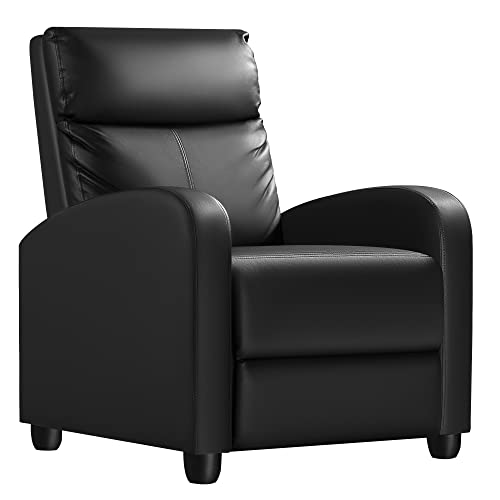
Yaheetech Upholstered Accent Chair — the balanced case
The Yaheetech illustrates the category’s balance in one chair: versatile enough to spread its value across readers and uses, comfortable enough for proper sessions, modest enough in presence not to dominate a room. Its pros are the category’s pros in moderate form; its cons likewise — specialists will find it a compromise, and that is precisely its household appeal. Best for: shared homes and first-time buyers. Not suited for: readers with a strong single posture who should buy their shape instead.
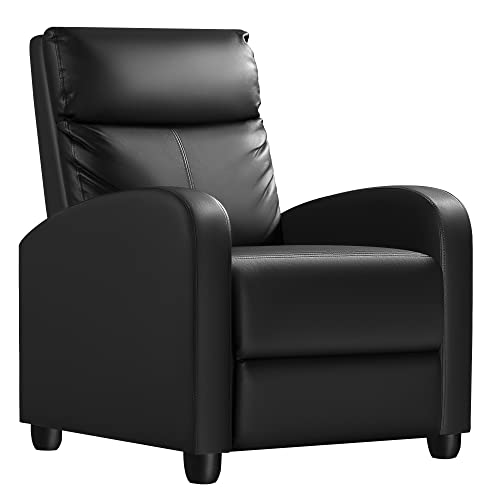
Homall Recliner Chair — the trade-offs at full strength
The Homall recliner shows both sides of the ledger turned up: the comfort pro at its most complete for a reclined reader, the footprint con at its most demanding, plus a mechanism in the care column. For the right reader it is the best answer in this article; for everyone else it is the clearest warning. Best for: lean-back readers with room to spare. Not suited for: small rooms or upright readers, whatever the discount.
How to Buy Smart: Checks That Shrink the Cons
Most cons in this article shrink with preparation. Measure the corner and the delivery route to tame the footprint. Choose by posture audit, not photograph, to tame the fit gamble — then buy where returns are fair, keep the packaging, and test across several real sessions before the window closes. Budget the whole corner in advance so the extras never feel like ambushes. Pick fabric for the household you have, put a throw over the wear points on day one, and decide honestly whether the chair is personal or shared before choosing its shape. The complete method is gathered in reading chair buying guide, and softness-first readers can cross-check against best comfy accent chairs.
Setup and Care That Reduce the Cons
Setup decides how large the cons loom in daily life. Position the chair so light falls over a shoulder onto the page, and the squinting con never appears. Give the table a permanent home within reach, and the drink-on-the-arm stains never happen. Add felt pads before the chair first meets a hard floor. For care, make it rhythm rather than project: a weekly vacuum with a soft brush, spills blotted immediately, the throw washed rather than the upholstery, cushions plumped and turned where the design allows, and the chair shifted slightly through the year if a sunny window is fading one side faster. Ten unglamorous minutes a month is the difference between a chair that ages into the room and one that ages out of it. Corner planning help lives in best chairs for a reading nook, and long-session alternatives in best lounge chairs for reading.
Bottom Line
A reading chair’s pros are about use and its cons are about commitment, and the balance between them is set by your habits, your space and your honesty — not by any single product. Regular readers with a real corner available will find the pros decisive and should spend their energy on fit. Occasional readers and tight rooms will find the cons decisive and should upgrade the seat they already use. Everyone in between should run the checks above, weigh the alternatives in context, and remember the verdicts tested chair by chair in reading chair review before deciding.
The Pros and Cons by Chair Type
The category-level ledger splits differently by shape, and readers choosing between types should weigh the type’s own balance, not the category’s average. Club chairs concentrate the comfort pro — the embraced, settled sit — and the footprint con in equal measure: nothing here coddles a long session better, and nothing commits a corner harder. Wingbacks trade some of that embrace for focus and posture, gaining a pro for attentive readers — the sense of being held in the book’s world — while adding a con of intolerance: they serve one posture and correct all others. Accent chairs dilute every pro and every con together, which is precisely their household genius. Recliners push the comfort pro furthest for their reader and the space and mechanism cons furthest for everyone. A chaise is the extreme of the legs-up trade: supreme for its reader, the largest claim on the room in the category.
Seeing the types this way prevents the commonest weighing error, which is to buy a type for the category’s pros and discover it carries its own type’s cons. A reader who wants the reading chair’s habit-forming corner but chooses a recliner for a small room has not bought the pros and cons they weighed; they have bought a different ledger entirely. Match the ledger to the type, and the type to the posture, in that order.
The Hidden Pro and the Hidden Con
The hidden pro is sleep. Not in the chair — though it will happen — but after it. Readers who spend their last waking hour in a chair with a book, away from the bed until they are actually going to sleep, often find the boundary between evening and night sharpens: the bed becomes for sleeping, the chair for reading, and both work better. No one buys a reading chair for this, and this article will not sell it as a benefit with any promise attached — bodies differ — but it is the advantage owners mention with the most surprise a year later, and it belongs in an honest accounting of the pros.
The hidden con is success. A truly good reading corner gets colonised: partners discover it, children claim it, cats annex it within the hour. The chair you bought for solitary reading becomes the most contested seat in the house, and more than a few owners report negotiating for their own chair or quietly buying a second. This is a pleasant problem, and it is also a genuine entry in the ledger — if your household is large and your corners are few, weigh the shared-use reality in advance and choose the compromise shape that keeps the peace, rather than the perfect personal fit that starts a nightly negotiation.
Weighing It for Special Situations
Some readers weigh the ledger under particular constraints, and the balance shifts honestly for each. Readers with limited mobility should weight two factors above all: a seat height and firmness that make standing up easy, and arms solid enough to push from — for them, a well-chosen chair’s pros include independence at the end of every session, and low lounge chairs carry a con that barely registers for other readers. Readers in hot climates should weight fabric breathability and the warmth of deep foam more heavily; a chair that is a pleasure in January can be a penance in August. Readers with allergies should look for smooth, easily vacuumed upholstery and removable covers, and weigh the upkeep con accordingly.
Households with toddlers occupy their own row in the ledger: the chair will be climbed, the fabric will be tested, and sharp-edged side furniture is a hazard — but the corner also becomes where a child first sees reading modelled as something adults choose for pleasure, which some parents count as the largest pro of all. None of these situations changes the method of this article. They change the weights. The pros and cons are fixed; what they are worth is yours to assign.
Pros and Cons for Particular Readers
The ledger re-weights itself for readers in specific situations, and pretending otherwise would make this article neater and less true. For the reader recovering their evenings after years of screens, the habit pro swells until it dwarfs every con — the chair is not furniture but a strategy, and its success is measured in reclaimed hours. For the reader in a house already full of seating, the marginal pro shrinks: a sixth seat must argue against five incumbents, and often the honest verdict is to upgrade the best existing seat instead. For the reader whose home is also their office, the boundary pro grows — a chair that is never used for work becomes a genuine threshold between the working day and the reading evening, a benefit no specification lists.
For the frequent mover — the renter on yearly leases, the professional who relocates — the cons column gains a line this article has not yet charged: transport. A bulky chair costs money and effort at every move, and its footprint con is paid again in every new home whose corners differ. Light, compact, easily disassembled chairs soften this considerably, but the honest weighing for a mobile life may still favour the portable kit — cushion, throw, good lamp — that turns any reasonable seat into a reading seat, anywhere. Furniture is a bet on staying; make sure your life is placing the same bet.
How the Pros and Cons Play Out Over Time
Time edits the ledger in predictable ways. In the first month, the pros are novelty-bright and the cons are administrative — assembly, packaging, the corner’s rearrangement. In the first year, the habit pro either establishes itself or quietly doesn’t, and that, more than any product quality, decides which column the purchase ultimately belongs to. By the third year, the care con has either been absorbed into rhythm or has left visible evidence, and the cushion’s quality — invisible in every photograph ever taken of the chair — has become the main character of the comfort story. Buyers who weigh the ledger as a snapshot miss this entirely. Weigh it as a film: the chair you are really choosing is the three-year-old version, in the life you will actually be living.
That is also why the strongest single predictor in this whole article is unglamorous: whether the corner gets completed in the first week. Completed corners create habits; habits create use; use makes pros compound and cons amortise. An incomplete corner — chair without light, light without table — stalls the film at its least flattering frame. If you take one action from this pros-and-cons analysis, let it be that: whatever you decide about the chair, decide the whole corner, and build it all at once.
The Pros and Cons of Buying at Each Tier
Tier changes the ledger’s entries, not just its totals, and buyers weighing pros and cons should weigh them at the tier they actually intend to buy. At the entry tier, the pros are accessibility and lightness: a chair that lets a reader test the whole idea of a reading corner without a major commitment, in a form easy to move, place and — if the experiment fails — pass on. Its cons concentrate in longevity: cushions that may flatten under daily marathon use, fabrics that show their years sooner, and construction that assumes a gentler life. For a light reader or a first corner, those cons may never be met in practice; for a daily reader, they are not risks but appointments.
At the mid tier — where this article’s balance tips for most households — the pros become durability and refinement together: resilient cushioning that survives the daily reader, upholstery that ages gracefully, arms and frames that feel like furniture rather than equipment. The cons are the obvious one of cost and the subtler one of weight, literal and visual: mid-tier chairs commit a corner more fully. At the premium tier, the pros are materials and longevity at their best — leather that improves with age, joinery that outlasts trends — and the cons are that the premium buys little additional comfort for most bodies, while raising the stakes of the fit gamble: a costly chair that does not suit you is a more painful return, emotionally if not financially. The rational buyer weighs all three ledgers against their expected hours, and notices that the tiers mostly trade money against time — how long the pros will keep arriving.
A Short Decision Procedure
For readers who have absorbed the pros and cons and want the weighing done in order, here is the procedure this article recommends, in five questions. First: do I read seated at home often enough, in long enough sessions, for a dedicated seat to be used weekly for years? If no, stop — upgrade your current seat and spend the difference on books. Second: can I name the corner, measured, with lamp and table included, without damaging how the room works? If no, solve the space first or choose the compact path. Third: is the chair personal or shared? Let the answer fix the shape’s specialisation. Fourth: does the fabric match my household’s real last month? If not, change the fabric, not the household. Fifth: can I return it fairly if my body disagrees? If yes to the run of them, the pros have won in your case — buy carefully and build the whole corner at once.
Notice what the procedure never asks: which chair is best, which is most popular, which is discounted this week. Those questions feel like the decision and are actually distractions from it, because the pros and cons of a reading chair are not properties of products but of matches — between chair and body, corner and room, purchase and life. Get the matches right and almost any decent chair becomes a good buy. Get them wrong and the finest chair in the category becomes an elegant mistake. That, stated once more because it is the whole article, is the honest summary of reading chair pros and cons.
Pros and Cons in the Showroom Versus at Home
Buyers weigh the ledger in the worst possible place: a showroom, or its online equivalent, where the pros are staged and the cons are invisible. In a showroom every chair is comfortable for the ninety seconds you give it, the footprint looks modest against a warehouse floor, the fabric is unworn and unspilled-on, and the corner — lamp, table, quiet — is implied by art direction rather than present in fact. The cons live at home: in the walkway the chair narrows, the third week when the cushion declares itself, the first drink on the pale fabric. A pros-and-cons list like this one exists to move the weighing to where the cons can be seen — which is why it keeps prescribing tape measures, posture audits and fortnight tests instead of opinions about upholstery.
The practical defence is to rehearse the cons before purchase. Measure the corner and walk the route carrying something chair-sized, if only in imagination disciplined by numbers. Sit in your current chair for a full session and log where it fails, so you know which pros you are actually buying. Read the returns terms as if you already needed them. Imagine the chair in its third year, in your household’s real light, with your real habits written on it — and ask whether the pros still outnumber. Readers who rehearse this way are rarely surprised by furniture, and surprise, in this category, is almost always the expensive kind.
None of this is an argument against buying. It is an argument for buying with the ledger open at the right page. The pros of a reading chair, when they are real, are among the most durable pleasures furniture offers — nightly, for years, in the company of every book you will read in it. They deserve to be weighed against the real cons, in the real room, by the real reader. Do that, and whichever way your own ledger balances, the decision will be one you can defend to yourself in year three — which is the only review period that finally matters.
The Final Weighing
Set the two columns side by side one last time. For the chair: fit no general seat can match, a habit given a home, a room finished, value spread across the household’s whole day, and a category wide enough to hold almost any reader’s posture. Against it: a permanent claim on space, a comfort gamble no listing can settle, a corner that costs more than its centrepiece, upholstery that asks for care, and the standing risk of buying for a life you do not lead. The columns do not change from reader to reader. Their weights do — set by hours read, rooms available, households shared and honesty applied. Weigh yours, trust the result, and act on it completely: build the whole corner if you buy, and improve the seat you have, without a backward glance, if you do not.
How Couples and Households Actually Decide
Because so many reading chairs are household decisions wearing a personal disguise, it is worth recording how the successful ones are actually made. The pattern in contented households is boring and consistent: the corner is agreed before the chair is discussed, the primary reader’s posture sets the shortlist, the other household members veto on fabric and footprint rather than on shape, and the returns window is treated as belonging to everyone — anyone who will sit in the chair daily gets a session in it during the trial. Arguments, when they happen, are almost never about the chair; they are about the corner’s location, which is a room-planning question and should be settled as one, with a tape measure rather than taste as the referee.
The unsuccessful pattern is equally consistent: one person buys a specialised chair as a surprise or a unilateral upgrade, the household discovers its opinions afterward, and the chair becomes a monument to a decision nobody else was part of. The pros-and-cons ledger cannot capture that failure mode in a product column, because it is not a product failure at all — it is a process failure, and it is entirely avoidable. Weigh the pros and cons together, out loud, in the room where the chair will live. The conversation takes twenty minutes and is worth more than any single feature discussed in it.
The Pros and Cons of Waiting
One option this article has not yet weighed is doing nothing for now, and it has its own ledger. The pros of waiting are real: prices and ranges refresh, your reading life may clarify itself, a house move may redraw the corner question entirely, and money not spent on the wrong chair remains available for the right one. Readers in flux — new home, new baby, new job — are often wisest to let a season pass and weigh the purchase against settled facts rather than guesses. The cons of waiting are equally real, if quieter: every month of postponement is a month of sessions ended early by a bad seat, habits unbuilt, books unfinished — and for a confirmed daily reader, that cost compounds exactly like the chair’s value does, in the opposite direction.
The weighing, as always, comes back to use. If you are reading daily in discomfort, waiting is not caution but expense, and the right move is to buy carefully now with a fair return as your insurance. If your reading is sporadic and your life unsettled, waiting costs little and may save the whole purchase. What waiting should never be is a default adopted to avoid deciding — the pros and cons in this article are knowable, your last month of reading is knowable, and a decision made from both, in either direction, will serve you better than a decision indefinitely deferred.
One Reader’s Ledger, Filled In
To make the weighing concrete, consider a reader who finishes this article and fills in the ledger honestly. She reads four evenings a week, in sessions her sofa ends at forty minutes when her back complains. Her living room has a window corner currently occupied by a plant and good intentions. Her household is two adults and a dog; the fabric must forgive all three. Her budget reaches the mid tier if the chair earns it, and the seller she prefers offers returns she has actually read. On the pro side she writes: sessions that end with the chapter, a habit with an address, a corner that finishes the room, a seat her partner will use every morning. On the con side: the corner is real space, the fit is a gamble until the fortnight decides it, the lamp and table add to the bill, and the dog will claim the chair daily. Her weighing takes ten minutes and the answer is yes — not because the pros outnumber the cons, but because the pros are weekly and the cons are one-off, manageable or, in the dog’s case, charming. That is what a completed ledger looks like, and every reader’s will read differently. The article’s only insistence is that you fill yours in, in your own handwriting, before the order button gets a vote.
Where the Trade-Offs Show Up in Daily Use: Reading Chair in Practice
This section exists to move past the tidy two-column summary and watch where each advantage and disadvantage actually appears during an ordinary week. It adds a layer that a feature list cannot give you, grounded in the living room furniture context this reading chair will actually live in. Where this guide names examples such as Yaheetech Upholstered Accent Chair, Homall Recliner Chair, use them as test cases for the checks below rather than as shortcuts past them.
Consider the edge cases that sit just outside normal use, because a reading chair will meet all of them eventually. The unusually large load, the unusually small task, the day you are in a hurry, the day something else in the room is broken and this has to cover for it. Versatility is not about a long feature list; it is about behaving predictably when conditions are imperfect. Where a design offers settings, modes, attachments or configurations, ask what each one is actually for in your home, and be suspicious of flexibility you cannot attach to a real occasion. One well-judged configuration used weekly beats five clever ones used once, and the honest reading chair for your home is the one whose strengths line up with your most frequent edge case, not your rarest.
Build a simple decision checklist and score it in writing. Five lines are enough: fit in the space, fit with the routine, ease of cleaning or upkeep, quality of the parts that move or wear, and how the reading chair will be stored or will look when it is not the centre of attention. Score each contender quickly, then look only at the lowest scores, because purchases are usually ruined by their weakest point rather than saved by their strongest. If two options tie, choose the one whose weakness is cheapest or easiest to live with. This sounds mechanical, and it is meant to: a written checklist is the best defence against the very human habit of falling for the last photograph you looked at.
Finally, plan the first fortnight. Decide where the reading chair will live from day one, what it replaces, what accessory or companion it needs straight away and what small job you will use to learn its habits while returning it is still simple. Keep the packaging until that learning period is over, note anything that surprises you, and deal with a mismatch early rather than adapting yourself around a poor fit for years. The households that end up happiest with a reading chair are rarely the ones that researched longest; they are the ones that checked fit honestly, bought for the ordinary week, and paid attention during the first days instead of assuming the decision ended at checkout.
One more angle is worth your time: the second-order costs. A reading chair changes what happens around it. It can demand a different cleaning product, a new storage habit, a moved piece of furniture, a rearranged cupboard or a standing arrangement with the people you live with. List those knock-on effects before you buy and decide whether you accept them as part of the deal. Sometimes the answer is an easy yes, and the reading chair earns its place by improving the whole routine around it. Sometimes the honest answer is that the supporting changes are the real project, and the purchase should wait until you are ready for them. Either answer is useful; the only bad outcome is discovering the knock-on effects by accident, one irritation at a time, after the decision can no longer be revisited.
It also helps to separate the problems a reading chair can solve from the problems it merely moves. If the underlying difficulty is space, the answer may be a smaller format or a different location rather than a more elaborate model. If the difficulty is time, look for the option that removes steps rather than the one that performs each step slightly better. If the difficulty is that several people want different things, a compromise design that everyone rates as good enough will usually outlast a specialist design that one person loves and everyone else avoids. Naming the real problem in one sentence, out loud, before you order, is a surprisingly powerful filter, and many shoppers find that the sentence itself points at a different reading chair than the one they started out researching.
Start with the unglamorous measurements. For a reading chair, the numbers that decide satisfaction are rarely the headline ones in a listing; they are doorway width, turning space on the stairs, floor clearance and the distance to the nearest table or lamp. Write the real dimensions of your space down, including the awkward constraints you normally work around without thinking, and hold every contender up against that sheet rather than against a showroom photograph. Then walk the route the reading chair will take on delivery day and during normal use. A choice that fits on paper but fights you every time it is moved, opened, cleaned or stored will lose its shine quickly, however strong its other qualities look in a comparison table.
Next, rehearse the week, not the ideal day. Picture the reading chair inside movie nights, reading sessions, guests staying longer than planned and children treating every edge as a climbing frame. Most disappointment comes from buying for the best-case scenario: the tidy version of the household, the motivated version of yourself, the weather or the guest list you hope for rather than the one you usually get. If the reading chair only makes sense when everything goes to plan, it is the wrong size, the wrong format or the wrong purchase for now. If it still looks useful on the tired, rushed, slightly chaotic version of the day, it has passed the most honest test there is, and the remaining questions are about detail rather than direction.
Frequently Asked Questions
What is the biggest disadvantage of a reading chair?
For most households it is the permanent claim on floor space — not the chair alone, but the chair plus lamp, table and clearance, in a room that must still work for everything else. The second disadvantage, close behind, is that comfort cannot be guaranteed from a listing, so the purchase carries a fit risk that has to be managed with a fair returns policy and honest testing. Both disadvantages are knowable in advance, which is why measuring and policy-checking matter more than most product features.
Are reading chairs comfortable enough to justify the cons?
For regular readers, yes — that is the category’s core exchange. A chair fitted to your posture holds you comfortably through sessions that ordinary seating cuts short, and that difference, repeated over months of evenings, outweighs the footprint and upkeep for anyone who reads often. For occasional readers the same chair is comfortable but unjustified, because comfort you rarely use cannot pay for space you always give up. The chair does not change between those two verdicts; the reading life around it does.
Do reading chairs wear out quickly?
A decently made reading chair should give years of daily use, but it is used hard in one spot, so wear shows first where you would expect: the seat cushion softening, fabric fading in sun, arms polished by hands and books. You can slow all of it with simple habits — a throw over the wear points, regular vacuuming, prompt attention to spills, and rotating the chair’s position in bright rooms. Very cheap chairs with thin cushioning are the exception; their seats can flatten within a season, which is a false economy.
Is a reading chair a bad idea in a rental home?
Not inherently, but renters should weigh two cons more heavily: the footprint in a home you did not design, and moving a bulky chair when the tenancy ends. Compact, lighter chairs that assemble and break down easily suit rentals well, and felt pads protect floors you do not own. If your tenancy is short or your rooms are small, the upgraded-sofa-corner alternative — cushion, footstool, better lamp — delivers much of the benefit with nothing bulky to move when you leave.
Can a reading chair be a bad choice for my back?
A poorly fitted chair can certainly leave you stiff: a seat too deep to sit back in, arms that shrug your shoulders, or cushioning that lets you slump will all make a long session uncomfortable. A well-fitted chair, chosen against your own posture and tested over real sessions, is a different matter. What no chair should claim is to treat or fix a back condition — supportive furniture and therapy are different things. If you have ongoing pain, get clinical advice for the pain and choose the chair purely for comfort.
How do I know if I will actually use a reading chair?
Audit the last month honestly: how often did you read seated at home, for how long, and where did the session end — because the book ended, or because the seat did? Frequent, seat-limited sessions are the strongest predictor that a reading chair will be used and loved. If your reading is mostly in bed, in transit or in short bursts, the honest prediction is an underused chair. You can also trial the corner first with your current seat, a lamp and a table, and watch whether the ritual forms before buying furniture.


