Disclosure: As an Amazon Associate, dailyhomedecorating.com earns from qualifying purchases. Links on this page are affiliate links; they cost you nothing extra. Prices and availability change often, so check the current Amazon listing before you buy.
If you are working through picture light buying guide, start with the picture rather than the product page: the frame, the wall, the power you can honestly use and the evenings you actually spend in the room decide almost everything. This guide covers the whole category, from cordless bars for renters to hardwired fixtures for a permanent gallery wall.
Key Takeaways
- Types divide by power first: battery, plug-in and hardwired.
- Width, evenness and glare control matter more than brightness claims.
- Dimming and reachable controls decide daily use.
- Secure mounting above artwork is a safety requirement, not a detail.
- Match tier to how long the picture will stay on the wall.
In this guide
Picture Light Buying Guide: What a Picture Light Does and the Main Types
Battery and rechargeable picture lights
The flexible type. No outlet, no wiring, often frame-mounted or lightly wall-fixed, and ideal for renters and single frames. The honest costs are charging, a bulkier profile and light that can fade as charge falls, so judge this type by how easily it removes and recharges.
Plug-in picture lights
The steady middle route. Constant power, simple controls and a wide choice of widths and finishes, paid for with a cord that must be routed straight and tidily, ideally under a paintable cover. If a tidy cord route exists, this type is often the best balance in the whole category.
Hardwired picture lights
The permanent, cleanest type, with no visible cord and the least daily attention, installed as real electrical work with the breaker off and a licensed electrician unless you are qualified and local code permits. Choose it when the picture, the wall and the arrangement are settled for years.
Power is the fork in the road that shapes everything else. Battery and rechargeable models free you from outlets and electricians, and they suit renters, brick walls and frames that move often, but they ask for ongoing charging and they can dim as the charge fades. Plug-in models give steady light and simple controls, at the cost of a visible cord that needs honest routing. Hardwired models disappear into the wall for the cleanest look, but they involve real electrical work and a fixed position you should be sure about before anyone opens the wall.
Artwork conservation deserves a calm, qualitative rule rather than fear. Modern LED picture lights are the safe default for most home art because they run far cooler than older halogen styles and produce very little of the ultraviolet light that worries conservators. Avoid placing a hot light source close to canvas, keep any light from baking the surface for long hours, and for a genuinely valuable or fragile piece, ask a framer or conservator before you commit to hours of daily illumination. For ordinary prints, posters and family photographs, a sensible LED used in the evenings is a reasonable, low-risk choice.
Evenness matters more than raw brightness. A picture light that is painfully bright in the middle and dim at the edges is worse than a softer light that covers the whole surface calmly. When you test a position, step back to normal viewing distance, then move left and right as a guest would. If the image disappears into reflection from one side, adjust the tilt before you blame the picture, the glass or the room. Small angle changes do more for glare than a brighter bulb ever will.
Finish and proportion are design decisions, not afterthoughts. A slim modern bar in a dark finish suits a contemporary frame and a quiet wall, while a warmer metallic finish can echo a traditional gilt frame without trying to match it exactly, which rarely works. Let the fixture support the picture rather than compete with it. If visitors notice the light before the art, the bar is too large, too shiny or mounted too far from the frame for that room.
Mounting security is non-negotiable because the fixture sits above something you value. A bracket should fix into studs where possible, or use proper wall anchors rated for the fixture weight where studs are not available, never just screws into plasterboard and hope. Check the mount is level, firm and unable to creep forward over time. A picture light that sags or falls damages the very artwork it was bought to celebrate, so the unglamorous bracket work is the most important part of the whole project.
Top Picks at a Glance
Qualitative tiers only, with no fixed figures: a slim LED bar as the all-round reference, a traditional bar for classic frames, a hardwired option for permanent installs, a cordless option for renters, and a simple wireless option for an easy refresh. The mini-reviews below give each a clear best-for and not-suited-for verdict.
How Wide Does the Bar Need to Be?
Mounting security is non-negotiable because the fixture sits above something you value. A bracket should fix into studs where possible, or use proper wall anchors rated for the fixture weight where studs are not available, never just screws into plasterboard and hope. Check the mount is level, firm and unable to creep forward over time. A picture light that sags or falls damages the very artwork it was bought to celebrate, so the unglamorous bracket work is the most important part of the whole project.
Controls decide whether the light gets used. A simple switch on the fixture suits a single picture by a chair. A remote suits a high-mounted bar above a mantel or a long gallery run where reaching each fixture is a chore. Dimming is worth prioritising because the right level at dusk is too strong at midday and too weak during a bright gathering, and a dimmable light adapts instead of forcing you to choose between on and off. Whatever control you choose, make sure a guest could work it out without instructions.
Think about the wall as a composition, not a single frame. A picture light over the largest piece in a gallery wall can anchor the whole arrangement, while lighting every small frame individually usually looks busy and wastes effort. In a hallway, one well-lit piece gives the passage a destination. Over a mantel, the light has to share attention with the fireplace and whatever stands on the shelf, so restraint in size and brightness keeps the arrangement balanced rather than theatrical.
Cord management separates a finished look from a temporary one on plug-in models. Route the cord straight down from the bracket where possible, use a paintable cord cover that matches the wall, and avoid draping cable across the frame or trailing it sideways to a distant outlet at an angle. If no tidy route exists, that is honest information: a battery model or a properly installed hardwired model will probably serve the picture better than a plug-in light with an ugly cord you notice every day.
How Much Brightness and Control Do You Need?
Battery life should be judged by your habits, not by optimism. If the picture hangs in a living room that is used every evening, a rechargeable light will need regular attention, and a model that is easy to remove, charge and replace will age better than one that requires a ladder and patience each time. If the light is for occasional evenings, a dinner party glow or a hallway accent, battery power is often the simplest and happiest answer. Match the maintenance to the use and the technology stops being a compromise.
Hardwired installation is electrical work, and the rule is absolute: switch the power off at the breaker before any wiring is touched, and use a licensed electrician unless you are qualified and your local code permits the work. That is not caution for its own sake. A picture light circuit has to be safe inside the wall for years, the junction has to be sound, and the fixture has to be supported properly. Paying for a correct installation once is cheaper and safer than correcting a hidden fault later.
Ladder safety sounds obvious until you are holding a fixture, a level and a screwdriver above a mantel. Use a stable ladder on a flat floor, keep three points of contact where you can, move the ladder rather than overreaching sideways, and have a second person hold the artwork or pass tools when the piece is large. Take the picture down before you drill above it. Dust, vibration and a slipped tool are all unkind to frames and glass, and the artwork is safer leaning in another room than hanging under active work.
Colour temperature shapes mood more than most buyers expect. Warmer light flatters traditional paintings, wood frames and the warm tones of a living room in the evening. Neutral light can suit black-and-white photography, modern prints and workspaces where accuracy matters more than cosiness. The safest approach is consistency: do not mix a warm picture light with cool room lighting over the same wall, because the picture will look like it belongs to a different house. Choose for the art and the room together.
Which Power Source Fits Your Wall?
Renters are not excluded from picture lights, but the honest options are narrower. Battery and rechargeable frame-mounted models that clamp or fix to the frame itself avoid wall damage and new wiring, and they travel when you move. The trade-offs are charging, a slightly bulkier profile and light that may be less even than a wall-mounted bar. For a renter who loves one key piece, those compromises are usually worth it. For a landlord-restricted wall of many frames, a single lit hero piece beats a row of compromises.
A picture light changes how a room feels after dark out of proportion to its size. Rooms lit only from the ceiling can feel flat in the evening, with walls in shadow and furniture lit from above. A lit picture gives the eye a warm focal point at standing height, makes the wall feel intentional and often makes the whole room feel finished even when nothing else changes. That is why people who buy one for a favourite painting often end up planning a second for the hallway or the piece above the sideboard.
Sizing by eye is the most common mistake. A bar that looks modest in a product photograph can dominate a small frame in person, and a bar chosen for a single frame will look lost above a wide landscape or a triptych. Judge width against the frame, not the wall: the light should relate to the picture it serves, covering the image evenly while staying visually quieter than the frame itself. When in doubt between two widths for a wide piece, the broader, more even wash usually looks calmer.
Glass changes everything about placement. Behind glass or acrylic, the light source can reflect straight back at the viewer, so angle and viewing height matter as much as brightness. Test from where people actually stand and sit, not from directly in front at arm’s length. Non-glare glazing helps, but position helps more. Open canvas has the opposite character: texture and brushwork reward a light that rakes gently across the surface, revealing depth that flat ceiling light hides completely.
How Will It Mount, and Is It Safe?
Do not forget the off state. A picture light is visible all day, switched off, as a piece of metal above your frame. Its finish, its profile and how neatly it sits against the wall or frame are daytime decisions. Slim, well-finished bars earn their place around the clock. Bulky fixtures with visible battery packs or trailing cords can make a beautiful frame look like equipment. If you only love it in the evening photographs, keep looking.
Maintenance is light but real. Dust settles on top of a bar and dulls both the finish and, over time, the light. A soft dry cloth during ordinary cleaning keeps it bright. Battery models need their charging rhythm kept up before a gathering, not during it. Plug-in cords and covers should be checked when you repaint or move furniture. Hardwired models need the least attention, which is part of what their installation cost buys. None of this is burdensome, but pretending it is zero leads to a dim, dusty light above a picture you once loved.
A gallery run of several pictures rewards planning over impulse. Decide which pieces are heroes and which are supporting players. Light the heroes properly, keep spacing and bar height consistent so the run reads as one idea, and use the same finish and colour temperature throughout. Mixed finishes and mixed tones across a single wall look accidental even when each light is good on its own. Consistency is the difference between a collection and a corridor of unrelated purchases.
Budget in tiers, honestly and without fixed figures. Entry-level battery lights prove the idea cheaply and suit renters and single frames. Mid-tier plug-in and rechargeable bars bring better evenness, dimming and finishes for the main picture in a main room. Premium hardwired and furniture-grade fixtures buy materials, refinement and permanence for art you expect to keep for decades. Spending follows importance: the painting you inherited deserves a different tier from the poster you may replace next year, and there is no shame in either choice when it is made deliberately.
How to Prioritise by Use Case
The single heirloom: prioritise evenness, finish and secure mounting, in a mid or premium tier. The renter’s hero print: prioritise cordless power and frame mounting over ultimate evenness. The gallery wall: prioritise consistency of finish, tone and bar height across the hero pieces. The mantel: prioritise a slim profile, dimming and a fixing that stays firm above a busy shelf.
Budget in tiers, honestly and without fixed figures. Entry-level battery lights prove the idea cheaply and suit renters and single frames. Mid-tier plug-in and rechargeable bars bring better evenness, dimming and finishes for the main picture in a main room. Premium hardwired and furniture-grade fixtures buy materials, refinement and permanence for art you expect to keep for decades. Spending follows importance: the painting you inherited deserves a different tier from the poster you may replace next year, and there is no shame in either choice when it is made deliberately.
Finally, give any new picture light a week of evenings before you judge it. First impressions are dominated by novelty and by the brightness you happened to set on day one. Live with it at a modest level, adjust the tilt once the picture is back on the wall, and notice whether you reach for it without thinking. A light that becomes part of the evening routine, that makes you pause at the picture on your way past, has done its job. A light you keep apologising for has not, whatever it cost.
A picture light does one job that no ceiling light or floor lamp can do as well: it puts a controlled wash of light exactly where the artwork is, from just above the frame, so colour and texture read clearly without flooding the whole room. That closeness is also why choosing badly is so visible. A bar that is too narrow leaves the corners in shadow, a bar that throws light too steeply creates glare on glass, and a finish that fights the frame turns a quiet picture into a hardware display.
Mini-Reviews of the Picks

Cocoweb Tru-Slim LED Picture Light
Best for: Best for a clean, gallery-style bar above framed art. Not suited for: artwork that needs a completely different power approach than this model offers, or a frame whose width the bar cannot cover evenly.
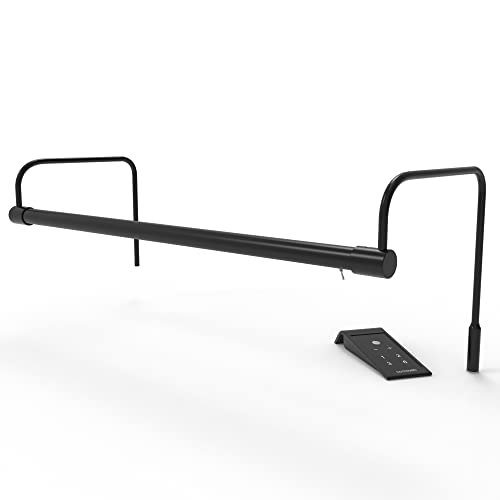
The all-round reference for a main picture in a main room, in a mid-to-premium qualitative tier. The Cocoweb Tru-Slim LED Picture Light is discussed here in prose only, at a qualitative tier that reflects its build and intended use rather than any fixed figure, and you should confirm the current listing, the exact width options and the power details before you order. What matters most is the match: the bar should span the frame without overwhelming it, the light should wash the surface evenly without a harsh hotspot in the centre, and the controls should be easy enough that you actually use the light on ordinary evenings, not only when guests arrive.
In daily use, notice three things. First, glare: tilt and position decide whether you see the picture or a bright reflection, especially behind glass. Second, colour: a warm, art-friendly LED tone flatters skin, wood and most pigments, while a cooler tone can make a traditional painting feel flat. Third, upkeep: battery models ask for charging or battery changes, plug-in models ask for tidy cord routing, and hardwired models ask for proper electrical work up front in exchange for the cleanest result afterwards.

House of Troy Advent LED Picture Light
Best for: Best for a traditional, furniture-grade finish. Not suited for: artwork that needs a completely different power approach than this model offers, or a frame whose width the bar cannot cover evenly.
The classic-frame choice, in a premium-leaning tier where finish and proportion justify themselves daily. The House of Troy Advent LED Picture Light is discussed here in prose only, at a qualitative tier that reflects its build and intended use rather than any fixed figure, and you should confirm the current listing, the exact width options and the power details before you order. What matters most is the match: the bar should span the frame without overwhelming it, the light should wash the surface evenly without a harsh hotspot in the centre, and the controls should be easy enough that you actually use the light on ordinary evenings, not only when guests arrive.
In daily use, notice three things. First, glare: tilt and position decide whether you see the picture or a bright reflection, especially behind glass. Second, colour: a warm, art-friendly LED tone flatters skin, wood and most pigments, while a cooler tone can make a traditional painting feel flat. Third, upkeep: battery models ask for charging or battery changes, plug-in models ask for tidy cord routing, and hardwired models ask for proper electrical work up front in exchange for the cleanest result afterwards.
WAC Lighting LED Picture Light
Best for: Best for a hardwired, architectural installation. Not suited for: artwork that needs a completely different power approach than this model offers, or a frame whose width the bar cannot cover evenly.
The permanent-install choice, whose tier reflects installation as much as hardware. The WAC Lighting LED Picture Light is discussed here in prose only, at a qualitative tier that reflects its build and intended use rather than any fixed figure, and you should confirm the current listing, the exact width options and the power details before you order. What matters most is the match: the bar should span the frame without overwhelming it, the light should wash the surface evenly without a harsh hotspot in the centre, and the controls should be easy enough that you actually use the light on ordinary evenings, not only when guests arrive.
In daily use, notice three things. First, glare: tilt and position decide whether you see the picture or a bright reflection, especially behind glass. Second, colour: a warm, art-friendly LED tone flatters skin, wood and most pigments, while a cooler tone can make a traditional painting feel flat. Third, upkeep: battery models ask for charging or battery changes, plug-in models ask for tidy cord routing, and hardwired models ask for proper electrical work up front in exchange for the cleanest result afterwards.

Concept Lighting Cordless LED Picture Light
Best for: Best for renters and frames with no nearby outlet. Not suited for: artwork that needs a completely different power approach than this model offers, or a frame whose width the bar cannot cover evenly.
The renter and no-outlet choice, in an entry-to-mid tier with charging as the accepted trade-off. The Concept Lighting Cordless LED Picture Light is discussed here in prose only, at a qualitative tier that reflects its build and intended use rather than any fixed figure, and you should confirm the current listing, the exact width options and the power details before you order. What matters most is the match: the bar should span the frame without overwhelming it, the light should wash the surface evenly without a harsh hotspot in the centre, and the controls should be easy enough that you actually use the light on ordinary evenings, not only when guests arrive.
In daily use, notice three things. First, glare: tilt and position decide whether you see the picture or a bright reflection, especially behind glass. Second, colour: a warm, art-friendly LED tone flatters skin, wood and most pigments, while a cooler tone can make a traditional painting feel flat. Third, upkeep: battery models ask for charging or battery changes, plug-in models ask for tidy cord routing, and hardwired models ask for proper electrical work up front in exchange for the cleanest result afterwards.

Situ Lighting Wireless Picture Light
Best for: Best for a simple battery-powered refresh. Not suited for: artwork that needs a completely different power approach than this model offers, or a frame whose width the bar cannot cover evenly.
The simple refresh choice, in an entry tier for a picture that needs light without a project. The Situ Lighting Wireless Picture Light is discussed here in prose only, at a qualitative tier that reflects its build and intended use rather than any fixed figure, and you should confirm the current listing, the exact width options and the power details before you order. What matters most is the match: the bar should span the frame without overwhelming it, the light should wash the surface evenly without a harsh hotspot in the centre, and the controls should be easy enough that you actually use the light on ordinary evenings, not only when guests arrive.
In daily use, notice three things. First, glare: tilt and position decide whether you see the picture or a bright reflection, especially behind glass. Second, colour: a warm, art-friendly LED tone flatters skin, wood and most pigments, while a cooler tone can make a traditional painting feel flat. Third, upkeep: battery models ask for charging or battery changes, plug-in models ask for tidy cord routing, and hardwired models ask for proper electrical work up front in exchange for the cleanest result afterwards.
First Setup and Care Essentials
Finish and proportion are design decisions, not afterthoughts. A slim modern bar in a dark finish suits a contemporary frame and a quiet wall, while a warmer metallic finish can echo a traditional gilt frame without trying to match it exactly, which rarely works. Let the fixture support the picture rather than compete with it. If visitors notice the light before the art, the bar is too large, too shiny or mounted too far from the frame for that room.
Mounting security is non-negotiable because the fixture sits above something you value. A bracket should fix into studs where possible, or use proper wall anchors rated for the fixture weight where studs are not available, never just screws into plasterboard and hope. Check the mount is level, firm and unable to creep forward over time. A picture light that sags or falls damages the very artwork it was bought to celebrate, so the unglamorous bracket work is the most important part of the whole project.
Controls decide whether the light gets used. A simple switch on the fixture suits a single picture by a chair. A remote suits a high-mounted bar above a mantel or a long gallery run where reaching each fixture is a chore. Dimming is worth prioritising because the right level at dusk is too strong at midday and too weak during a bright gathering, and a dimmable light adapts instead of forcing you to choose between on and off. Whatever control you choose, make sure a guest could work it out without instructions.
Mistakes to Avoid
Cord management separates a finished look from a temporary one on plug-in models. Route the cord straight down from the bracket where possible, use a paintable cord cover that matches the wall, and avoid draping cable across the frame or trailing it sideways to a distant outlet at an angle. If no tidy route exists, that is honest information: a battery model or a properly installed hardwired model will probably serve the picture better than a plug-in light with an ugly cord you notice every day.
Battery life should be judged by your habits, not by optimism. If the picture hangs in a living room that is used every evening, a rechargeable light will need regular attention, and a model that is easy to remove, charge and replace will age better than one that requires a ladder and patience each time. If the light is for occasional evenings, a dinner party glow or a hallway accent, battery power is often the simplest and happiest answer. Match the maintenance to the use and the technology stops being a compromise.
Hardwired installation is electrical work, and the rule is absolute: switch the power off at the breaker before any wiring is touched, and use a licensed electrician unless you are qualified and your local code permits the work. That is not caution for its own sake. A picture light circuit has to be safe inside the wall for years, the junction has to be sound, and the fixture has to be supported properly. Paying for a correct installation once is cheaper and safer than correcting a hidden fault later.
More Detail Worth Knowing
Start every decision with the artwork itself rather than the fixture catalogue. Look at the frame width, the depth of the frame from the wall, whether the piece is behind glass or open canvas, and how dark or light the image is. Dark, detailed work needs an even, generous wash. A pale print or watercolour needs gentler handling so the centre does not wash out while the edges stay dim. The picture tells you the job; the fixture is only the tool that does it.
Power is the fork in the road that shapes everything else. Battery and rechargeable models free you from outlets and electricians, and they suit renters, brick walls and frames that move often, but they ask for ongoing charging and they can dim as the charge fades. Plug-in models give steady light and simple controls, at the cost of a visible cord that needs honest routing. Hardwired models disappear into the wall for the cleanest look, but they involve real electrical work and a fixed position you should be sure about before anyone opens the wall.
Artwork conservation deserves a calm, qualitative rule rather than fear. Modern LED picture lights are the safe default for most home art because they run far cooler than older halogen styles and produce very little of the ultraviolet light that worries conservators. Avoid placing a hot light source close to canvas, keep any light from baking the surface for long hours, and for a genuinely valuable or fragile piece, ask a framer or conservator before you commit to hours of daily illumination. For ordinary prints, posters and family photographs, a sensible LED used in the evenings is a reasonable, low-risk choice.
Evenness matters more than raw brightness. A picture light that is painfully bright in the middle and dim at the edges is worse than a softer light that covers the whole surface calmly. When you test a position, step back to normal viewing distance, then move left and right as a guest would. If the image disappears into reflection from one side, adjust the tilt before you blame the picture, the glass or the room. Small angle changes do more for glare than a brighter bulb ever will.
Evenness matters more than raw brightness. A picture light that is painfully bright in the middle and dim at the edges is worse than a softer light that covers the whole surface calmly. When you test a position, step back to normal viewing distance, then move left and right as a guest would. If the image disappears into reflection from one side, adjust the tilt before you blame the picture, the glass or the room. Small angle changes do more for glare than a brighter bulb ever will.
Finish and proportion are design decisions, not afterthoughts. A slim modern bar in a dark finish suits a contemporary frame and a quiet wall, while a warmer metallic finish can echo a traditional gilt frame without trying to match it exactly, which rarely works. Let the fixture support the picture rather than compete with it. If visitors notice the light before the art, the bar is too large, too shiny or mounted too far from the frame for that room.
Mounting security is non-negotiable because the fixture sits above something you value. A bracket should fix into studs where possible, or use proper wall anchors rated for the fixture weight where studs are not available, never just screws into plasterboard and hope. Check the mount is level, firm and unable to creep forward over time. A picture light that sags or falls damages the very artwork it was bought to celebrate, so the unglamorous bracket work is the most important part of the whole project.
Controls decide whether the light gets used. A simple switch on the fixture suits a single picture by a chair. A remote suits a high-mounted bar above a mantel or a long gallery run where reaching each fixture is a chore. Dimming is worth prioritising because the right level at dusk is too strong at midday and too weak during a bright gathering, and a dimmable light adapts instead of forcing you to choose between on and off. Whatever control you choose, make sure a guest could work it out without instructions.
Controls decide whether the light gets used. A simple switch on the fixture suits a single picture by a chair. A remote suits a high-mounted bar above a mantel or a long gallery run where reaching each fixture is a chore. Dimming is worth prioritising because the right level at dusk is too strong at midday and too weak during a bright gathering, and a dimmable light adapts instead of forcing you to choose between on and off. Whatever control you choose, make sure a guest could work it out without instructions.
Think about the wall as a composition, not a single frame. A picture light over the largest piece in a gallery wall can anchor the whole arrangement, while lighting every small frame individually usually looks busy and wastes effort. In a hallway, one well-lit piece gives the passage a destination. Over a mantel, the light has to share attention with the fireplace and whatever stands on the shelf, so restraint in size and brightness keeps the arrangement balanced rather than theatrical.
Cord management separates a finished look from a temporary one on plug-in models. Route the cord straight down from the bracket where possible, use a paintable cord cover that matches the wall, and avoid draping cable across the frame or trailing it sideways to a distant outlet at an angle. If no tidy route exists, that is honest information: a battery model or a properly installed hardwired model will probably serve the picture better than a plug-in light with an ugly cord you notice every day.
Battery life should be judged by your habits, not by optimism. If the picture hangs in a living room that is used every evening, a rechargeable light will need regular attention, and a model that is easy to remove, charge and replace will age better than one that requires a ladder and patience each time. If the light is for occasional evenings, a dinner party glow or a hallway accent, battery power is often the simplest and happiest answer. Match the maintenance to the use and the technology stops being a compromise.
Battery life should be judged by your habits, not by optimism. If the picture hangs in a living room that is used every evening, a rechargeable light will need regular attention, and a model that is easy to remove, charge and replace will age better than one that requires a ladder and patience each time. If the light is for occasional evenings, a dinner party glow or a hallway accent, battery power is often the simplest and happiest answer. Match the maintenance to the use and the technology stops being a compromise.
Hardwired installation is electrical work, and the rule is absolute: switch the power off at the breaker before any wiring is touched, and use a licensed electrician unless you are qualified and your local code permits the work. That is not caution for its own sake. A picture light circuit has to be safe inside the wall for years, the junction has to be sound, and the fixture has to be supported properly. Paying for a correct installation once is cheaper and safer than correcting a hidden fault later.
Ladder safety sounds obvious until you are holding a fixture, a level and a screwdriver above a mantel. Use a stable ladder on a flat floor, keep three points of contact where you can, move the ladder rather than overreaching sideways, and have a second person hold the artwork or pass tools when the piece is large. Take the picture down before you drill above it. Dust, vibration and a slipped tool are all unkind to frames and glass, and the artwork is safer leaning in another room than hanging under active work.
Colour temperature shapes mood more than most buyers expect. Warmer light flatters traditional paintings, wood frames and the warm tones of a living room in the evening. Neutral light can suit black-and-white photography, modern prints and workspaces where accuracy matters more than cosiness. The safest approach is consistency: do not mix a warm picture light with cool room lighting over the same wall, because the picture will look like it belongs to a different house. Choose for the art and the room together.
Before You Commit: A Hands-On Fit and Compatibility Check for Picture Light
This section exists to treat this as the final check before money changes hands, the point where a shortlist stops being a list of features and becomes a decision about one specific home. It adds a layer that a feature list cannot give you, grounded in the home decor & lighting context this picture light will actually live in. Where this guide names examples such as House of Troy Advent LED Picture Light, WAC Lighting LED Picture Light, Concept Lighting Cordless LED Picture Light, use them as test cases for the checks below rather than as shortcuts past them.
One more angle is worth your time: the second-order costs. A picture light changes what happens around it. It can demand a different cleaning product, a new storage habit, a moved piece of furniture, a rearranged cupboard or a standing arrangement with the people you live with. List those knock-on effects before you buy and decide whether you accept them as part of the deal. Sometimes the answer is an easy yes, and the picture light earns its place by improving the whole routine around it. Sometimes the honest answer is that the supporting changes are the real project, and the purchase should wait until you are ready for them. Either answer is useful; the only bad outcome is discovering the knock-on effects by accident, one irritation at a time, after the decision can no longer be revisited.
It also helps to separate the problems a picture light can solve from the problems it merely moves. If the underlying difficulty is space, the answer may be a smaller format or a different location rather than a more elaborate model. If the difficulty is time, look for the option that removes steps rather than the one that performs each step slightly better. If the difficulty is that several people want different things, a compromise design that everyone rates as good enough will usually outlast a specialist design that one person loves and everyone else avoids. Naming the real problem in one sentence, out loud, before you order, is a surprisingly powerful filter, and many shoppers find that the sentence itself points at a different picture light than the one they started out researching.
Start with the unglamorous measurements. For a picture light, the numbers that decide satisfaction are rarely the headline ones in a listing; they are ceiling height, wall finish, the direction of natural light during the day and where the switch or socket actually sits. Write the real dimensions of your space down, including the awkward constraints you normally work around without thinking, and hold every contender up against that sheet rather than against a showroom photograph. Then walk the route the picture light will take on delivery day and during normal use. A choice that fits on paper but fights you every time it is moved, opened, cleaned or stored will lose its shine quickly, however strong its other qualities look in a comparison table.
Next, rehearse the week, not the ideal day. Picture the picture light inside a quiet evening at home, a room full of guests, and the morning after when harsh light or a crooked fitting is impossible to ignore. Most disappointment comes from buying for the best-case scenario: the tidy version of the household, the motivated version of yourself, the weather or the guest list you hope for rather than the one you usually get. If the picture light only makes sense when everything goes to plan, it is the wrong size, the wrong format or the wrong purchase for now. If it still looks useful on the tired, rushed, slightly chaotic version of the day, it has passed the most honest test there is, and the remaining questions are about detail rather than direction.
Pay close attention to the recurring friction points, because they compound. With a picture light, owners tend to run into bulbs that are awkward to change, finishes that show every fingerprint, and fittings that look balanced in a photograph but dominate a smaller room. None of these is dramatic on its own, and that is exactly why they get underestimated at buying time. Ask how the design you are considering handles each one: can the wearing part be replaced, can the awkward part be reached without tools, does the job take two minutes or twenty. A picture light that makes its own upkeep easy gets maintained; one that makes upkeep a project gets neglected, and neglected products perform badly in ways that then get blamed on the original purchase.
Frequently Asked Questions
Do picture lights work on any frame?
Most frames can take a picture light, but the mounting route differs. Wall-mounted bars fix above the frame and suit most hanging pictures, while frame-mounted models clamp or screw to the frame itself and suit renters or walls you cannot drill. Very deep frames, shadow boxes and pieces hung on picture rails need a bracket with enough reach to clear the frame depth. Check the frame construction before ordering, because a light that cannot sit at the right distance will glare or leave the lower half of the picture dim.
Are LED picture lights safe for artwork?
LED is the safe default for home artwork because it runs cool and produces very little ultraviolet light compared with older halogen styles. Keep the light at a sensible distance, avoid leaving any light baking a delicate surface for very long hours, and ask a framer or conservator about genuinely valuable or fragile pieces. For ordinary prints, photographs and decorative paintings used in the evenings, a modern LED picture light is a reasonable and widely used choice.
Should I choose battery, plug-in or hardwired power?
Choose by permanence and by the wall. Battery and rechargeable models suit renters, single frames and walls with no nearby outlet, and they ask for regular charging in return. Plug-in models give steady, low-maintenance light where a cord can be routed tidily to an outlet. Hardwired models give the cleanest, most permanent result and need proper electrical work, with the breaker off and a licensed electrician unless you are qualified and local code permits. Your wall and your habits decide, not fashion.
How do I stop glare on a picture behind glass?
Adjust angle before brightness. Tilt the bar so the light washes down the surface rather than reflecting toward where people stand and sit, then check from normal viewing positions on both sides of the room. Moving the light slightly further from the wall or lowering its angle often removes the reflection entirely. Non-glare glazing helps, but position does most of the work. Test in the evening with room lights as you normally use them, because glare that is invisible at midday can dominate after dark.
How wide should a picture light be?
Judge the bar against the frame rather than the wall. The light should cover the width of the image evenly without extending so far that the fixture becomes the feature. Narrow bars on wide landscapes leave the corners dim, while an oversized bar on a small portrait looks top-heavy all day. For wide pieces and triptychs, a broader bar or a pair planned as one composition usually looks calmer. When torn between two widths, choose the one that gives the more even wash.
Can a picture light work in a hallway or over a mantel?
Yes, and those are two of its best uses. In a hallway, one properly lit picture gives a plain passage a destination and makes the space feel considered. Over a mantel, keep the bar slim and the level modest so it shares attention with the fireplace rather than competing with it, and make sure the mounting is firm and level above a surface where objects stand. In both places, secure fixing into studs or proper anchors matters because people pass and reach beneath the fixture daily.
Related Guides
Keep exploring with these companion guides: how to choose a picture light, how to install picture light, is a picture light worth it, picture light pros and cons, picture light review, picture light reviews, lamps that work alongside a lit picture, wall sconces for apartments, wall mirrors that share a gallery wall well, table lamps for layered light, smart lighting ideas for the same room.


