Disclosure: As an Amazon Associate, dailyhomedecorating.com earns from qualifying purchases. Links on this page are affiliate links; they cost you nothing extra. Prices and availability change often, so check the current Amazon listing before you buy.
If you are working through is a picture light worth it, start with the picture rather than the product page: the frame, the wall, the power you can honestly use and the evenings you actually spend in the room decide almost everything. This verdict weighs what you actually get against the charging, cords and commitment that come with it.
Short answer: worth it if you own a picture you genuinely look at, in a room you use after dark, and you will choose the power route honestly. Not worth it if the picture is a placeholder, the wall will change within months, or you know a battery light will sit uncharged and a cord will offend you daily. A picture light is a small purchase with an outsized effect on one wall, which is exactly why the fit matters more than the fixture.
Key Takeaways
- Worth it for a loved picture in an evening room; skip it for temporary walls.
- The value is a focal point and visible detail, not more general light.
- Real costs are charging, cords or electrical work, chosen in advance.
- LED keeps the artwork side of the bargain calm and cool.
- One hero picture lit well beats a wall of half-lit frames.
In this guide
Is a Picture Light Worth It: What You Actually Get
Start every decision with the artwork itself rather than the fixture catalogue. Look at the frame width, the depth of the frame from the wall, whether the piece is behind glass or open canvas, and how dark or light the image is. Dark, detailed work needs an even, generous wash. A pale print or watercolour needs gentler handling so the centre does not wash out while the edges stay dim. The picture tells you the job; the fixture is only the tool that does it.
Power is the fork in the road that shapes everything else. Battery and rechargeable models free you from outlets and electricians, and they suit renters, brick walls and frames that move often, but they ask for ongoing charging and they can dim as the charge fades. Plug-in models give steady light and simple controls, at the cost of a visible cord that needs honest routing. Hardwired models disappear into the wall for the cleanest look, but they involve real electrical work and a fixed position you should be sure about before anyone opens the wall.
Artwork conservation deserves a calm, qualitative rule rather than fear. Modern LED picture lights are the safe default for most home art because they run far cooler than older halogen styles and produce very little of the ultraviolet light that worries conservators. Avoid placing a hot light source close to canvas, keep any light from baking the surface for long hours, and for a genuinely valuable or fragile piece, ask a framer or conservator before you commit to hours of daily illumination. For ordinary prints, posters and family photographs, a sensible LED used in the evenings is a reasonable, low-risk choice.
Evenness matters more than raw brightness. A picture light that is painfully bright in the middle and dim at the edges is worse than a softer light that covers the whole surface calmly. When you test a position, step back to normal viewing distance, then move left and right as a guest would. If the image disappears into reflection from one side, adjust the tilt before you blame the picture, the glass or the room. Small angle changes do more for glare than a brighter bulb ever will.
Finish and proportion are design decisions, not afterthoughts. A slim modern bar in a dark finish suits a contemporary frame and a quiet wall, while a warmer metallic finish can echo a traditional gilt frame without trying to match it exactly, which rarely works. Let the fixture support the picture rather than compete with it. If visitors notice the light before the art, the bar is too large, too shiny or mounted too far from the frame for that room.
Mounting security is non-negotiable because the fixture sits above something you value. A bracket should fix into studs where possible, or use proper wall anchors rated for the fixture weight where studs are not available, never just screws into plasterboard and hope. Check the mount is level, firm and unable to creep forward over time. A picture light that sags or falls damages the very artwork it was bought to celebrate, so the unglamorous bracket work is the most important part of the whole project.
Controls decide whether the light gets used. A simple switch on the fixture suits a single picture by a chair. A remote suits a high-mounted bar above a mantel or a long gallery run where reaching each fixture is a chore. Dimming is worth prioritising because the right level at dusk is too strong at midday and too weak during a bright gathering, and a dimmable light adapts instead of forcing you to choose between on and off. Whatever control you choose, make sure a guest could work it out without instructions.
The Real Costs Beyond Money
Controls decide whether the light gets used. A simple switch on the fixture suits a single picture by a chair. A remote suits a high-mounted bar above a mantel or a long gallery run where reaching each fixture is a chore. Dimming is worth prioritising because the right level at dusk is too strong at midday and too weak during a bright gathering, and a dimmable light adapts instead of forcing you to choose between on and off. Whatever control you choose, make sure a guest could work it out without instructions.
Think about the wall as a composition, not a single frame. A picture light over the largest piece in a gallery wall can anchor the whole arrangement, while lighting every small frame individually usually looks busy and wastes effort. In a hallway, one well-lit piece gives the passage a destination. Over a mantel, the light has to share attention with the fireplace and whatever stands on the shelf, so restraint in size and brightness keeps the arrangement balanced rather than theatrical.
Cord management separates a finished look from a temporary one on plug-in models. Route the cord straight down from the bracket where possible, use a paintable cord cover that matches the wall, and avoid draping cable across the frame or trailing it sideways to a distant outlet at an angle. If no tidy route exists, that is honest information: a battery model or a properly installed hardwired model will probably serve the picture better than a plug-in light with an ugly cord you notice every day.
Battery life should be judged by your habits, not by optimism. If the picture hangs in a living room that is used every evening, a rechargeable light will need regular attention, and a model that is easy to remove, charge and replace will age better than one that requires a ladder and patience each time. If the light is for occasional evenings, a dinner party glow or a hallway accent, battery power is often the simplest and happiest answer. Match the maintenance to the use and the technology stops being a compromise.
Hardwired installation is electrical work, and the rule is absolute: switch the power off at the breaker before any wiring is touched, and use a licensed electrician unless you are qualified and your local code permits the work. That is not caution for its own sake. A picture light circuit has to be safe inside the wall for years, the junction has to be sound, and the fixture has to be supported properly. Paying for a correct installation once is cheaper and safer than correcting a hidden fault later.
Ladder safety sounds obvious until you are holding a fixture, a level and a screwdriver above a mantel. Use a stable ladder on a flat floor, keep three points of contact where you can, move the ladder rather than overreaching sideways, and have a second person hold the artwork or pass tools when the piece is large. Take the picture down before you drill above it. Dust, vibration and a slipped tool are all unkind to frames and glass, and the artwork is safer leaning in another room than hanging under active work.
Who It Pays Off For
The heirloom owner with a painting that has hung unlit for years gets the clearest payoff: detail, colour and an evening presence that guests notice without knowing why. The renter with one hero print gets a finished focal wall without wiring or wall damage, using a cordless model that moves house too. The hallway and mantel household gets a destination in a passage and a calm glow above the fireplace that makes the whole room feel arranged rather than accumulated.
Colour temperature shapes mood more than most buyers expect. Warmer light flatters traditional paintings, wood frames and the warm tones of a living room in the evening. Neutral light can suit black-and-white photography, modern prints and workspaces where accuracy matters more than cosiness. The safest approach is consistency: do not mix a warm picture light with cool room lighting over the same wall, because the picture will look like it belongs to a different house. Choose for the art and the room together.
Renters are not excluded from picture lights, but the honest options are narrower. Battery and rechargeable frame-mounted models that clamp or fix to the frame itself avoid wall damage and new wiring, and they travel when you move. The trade-offs are charging, a slightly bulkier profile and light that may be less even than a wall-mounted bar. For a renter who loves one key piece, those compromises are usually worth it. For a landlord-restricted wall of many frames, a single lit hero piece beats a row of compromises.
A picture light changes how a room feels after dark out of proportion to its size. Rooms lit only from the ceiling can feel flat in the evening, with walls in shadow and furniture lit from above. A lit picture gives the eye a warm focal point at standing height, makes the wall feel intentional and often makes the whole room feel finished even when nothing else changes. That is why people who buy one for a favourite painting often end up planning a second for the hallway or the piece above the sideboard.
Sizing by eye is the most common mistake. A bar that looks modest in a product photograph can dominate a small frame in person, and a bar chosen for a single frame will look lost above a wide landscape or a triptych. Judge width against the frame, not the wall: the light should relate to the picture it serves, covering the image evenly while staying visually quieter than the frame itself. When in doubt between two widths for a wide piece, the broader, more even wash usually looks calmer.
Who Should Skip It
Skip it if the artwork is temporary, if you are about to repaint, rehang or move, or if every power route annoys you: you will not charge it, you hate cords and you do not want electrical work. Skip it, too, for a wall of many small frames where one light would look arbitrary; better to improve the general lighting and choose one hero piece first. And skip the premium tier for a poster you expect to replace, because the value case rests on looking at the same picture for years.
Sizing by eye is the most common mistake. A bar that looks modest in a product photograph can dominate a small frame in person, and a bar chosen for a single frame will look lost above a wide landscape or a triptych. Judge width against the frame, not the wall: the light should relate to the picture it serves, covering the image evenly while staying visually quieter than the frame itself. When in doubt between two widths for a wide piece, the broader, more even wash usually looks calmer.
Glass changes everything about placement. Behind glass or acrylic, the light source can reflect straight back at the viewer, so angle and viewing height matter as much as brightness. Test from where people actually stand and sit, not from directly in front at arm’s length. Non-glare glazing helps, but position helps more. Open canvas has the opposite character: texture and brushwork reward a light that rakes gently across the surface, revealing depth that flat ceiling light hides completely.
Do not forget the off state. A picture light is visible all day, switched off, as a piece of metal above your frame. Its finish, its profile and how neatly it sits against the wall or frame are daytime decisions. Slim, well-finished bars earn their place around the clock. Bulky fixtures with visible battery packs or trailing cords can make a beautiful frame look like equipment. If you only love it in the evening photographs, keep looking.
Maintenance is light but real. Dust settles on top of a bar and dulls both the finish and, over time, the light. A soft dry cloth during ordinary cleaning keeps it bright. Battery models need their charging rhythm kept up before a gathering, not during it. Plug-in cords and covers should be checked when you repaint or move furniture. Hardwired models need the least attention, which is part of what their installation cost buys. None of this is burdensome, but pretending it is zero leads to a dim, dusty light above a picture you once loved.
Strengths and Trade-Offs of Owning One
Strengths: a true focal point after dark; detail and texture you have never actually seen in your own picture; a finished, intentional wall for a modest commitment. Trade-offs: ongoing charging on battery models or a cord to hide on plug-in models; a fixed position on hardwired models; one more object to dust, aim and occasionally adjust. Neither list is hidden, and the decision is simply which list describes your evenings more accurately.
Maintenance is light but real. Dust settles on top of a bar and dulls both the finish and, over time, the light. A soft dry cloth during ordinary cleaning keeps it bright. Battery models need their charging rhythm kept up before a gathering, not during it. Plug-in cords and covers should be checked when you repaint or move furniture. Hardwired models need the least attention, which is part of what their installation cost buys. None of this is burdensome, but pretending it is zero leads to a dim, dusty light above a picture you once loved.
A gallery run of several pictures rewards planning over impulse. Decide which pieces are heroes and which are supporting players. Light the heroes properly, keep spacing and bar height consistent so the run reads as one idea, and use the same finish and colour temperature throughout. Mixed finishes and mixed tones across a single wall look accidental even when each light is good on its own. Consistency is the difference between a collection and a corridor of unrelated purchases.
Budget in tiers, honestly and without fixed figures. Entry-level battery lights prove the idea cheaply and suit renters and single frames. Mid-tier plug-in and rechargeable bars bring better evenness, dimming and finishes for the main picture in a main room. Premium hardwired and furniture-grade fixtures buy materials, refinement and permanence for art you expect to keep for decades. Spending follows importance: the painting you inherited deserves a different tier from the poster you may replace next year, and there is no shame in either choice when it is made deliberately.
Alternatives to Consider

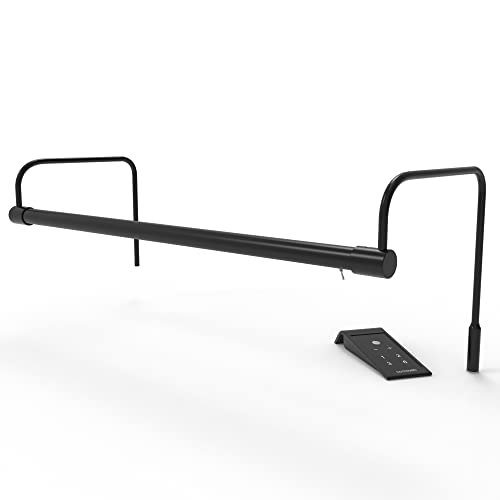
Cocoweb Tru-Slim LED Picture Light
Best for: Best for a clean, gallery-style bar above framed art. Not suited for: artwork that needs a completely different power approach than this model offers, or a frame whose width the bar cannot cover evenly.
Consider the slim LED route if you decide the main picture deserves a permanent, even wash. The Cocoweb Tru-Slim LED Picture Light is discussed here in prose only, at a qualitative tier that reflects its build and intended use rather than any fixed figure, and you should confirm the current listing, the exact width options and the power details before you order. What matters most is the match: the bar should span the frame without overwhelming it, the light should wash the surface evenly without a harsh hotspot in the centre, and the controls should be easy enough that you actually use the light on ordinary evenings, not only when guests arrive.
In daily use, notice three things. First, glare: tilt and position decide whether you see the picture or a bright reflection, especially behind glass. Second, colour: a warm, art-friendly LED tone flatters skin, wood and most pigments, while a cooler tone can make a traditional painting feel flat. Third, upkeep: battery models ask for charging or battery changes, plug-in models ask for tidy cord routing, and hardwired models ask for proper electrical work up front in exchange for the cleanest result afterwards.

House of Troy Advent LED Picture Light
Best for: Best for a traditional, furniture-grade finish. Not suited for: artwork that needs a completely different power approach than this model offers, or a frame whose width the bar cannot cover evenly.
Consider the traditional route if the frame is classic and the room is formal in the evenings. The House of Troy Advent LED Picture Light is discussed here in prose only, at a qualitative tier that reflects its build and intended use rather than any fixed figure, and you should confirm the current listing, the exact width options and the power details before you order. What matters most is the match: the bar should span the frame without overwhelming it, the light should wash the surface evenly without a harsh hotspot in the centre, and the controls should be easy enough that you actually use the light on ordinary evenings, not only when guests arrive.
In daily use, notice three things. First, glare: tilt and position decide whether you see the picture or a bright reflection, especially behind glass. Second, colour: a warm, art-friendly LED tone flatters skin, wood and most pigments, while a cooler tone can make a traditional painting feel flat. Third, upkeep: battery models ask for charging or battery changes, plug-in models ask for tidy cord routing, and hardwired models ask for proper electrical work up front in exchange for the cleanest result afterwards.
WAC Lighting LED Picture Light
Best for: Best for a hardwired, architectural installation. Not suited for: artwork that needs a completely different power approach than this model offers, or a frame whose width the bar cannot cover evenly.
Consider the cordless route first if you are testing the idea as a renter or on a single frame. The WAC Lighting LED Picture Light is discussed here in prose only, at a qualitative tier that reflects its build and intended use rather than any fixed figure, and you should confirm the current listing, the exact width options and the power details before you order. What matters most is the match: the bar should span the frame without overwhelming it, the light should wash the surface evenly without a harsh hotspot in the centre, and the controls should be easy enough that you actually use the light on ordinary evenings, not only when guests arrive.
In daily use, notice three things. First, glare: tilt and position decide whether you see the picture or a bright reflection, especially behind glass. Second, colour: a warm, art-friendly LED tone flatters skin, wood and most pigments, while a cooler tone can make a traditional painting feel flat. Third, upkeep: battery models ask for charging or battery changes, plug-in models ask for tidy cord routing, and hardwired models ask for proper electrical work up front in exchange for the cleanest result afterwards.
Budget in tiers, honestly and without fixed figures. Entry-level battery lights prove the idea cheaply and suit renters and single frames. Mid-tier plug-in and rechargeable bars bring better evenness, dimming and finishes for the main picture in a main room. Premium hardwired and furniture-grade fixtures buy materials, refinement and permanence for art you expect to keep for decades. Spending follows importance: the painting you inherited deserves a different tier from the poster you may replace next year, and there is no shame in either choice when it is made deliberately.
Finally, give any new picture light a week of evenings before you judge it. First impressions are dominated by novelty and by the brightness you happened to set on day one. Live with it at a modest level, adjust the tilt once the picture is back on the wall, and notice whether you reach for it without thinking. A light that becomes part of the evening routine, that makes you pause at the picture on your way past, has done its job. A light you keep apologising for has not, whatever it cost.
A picture light does one job that no ceiling light or floor lamp can do as well: it puts a controlled wash of light exactly where the artwork is, from just above the frame, so colour and texture read clearly without flooding the whole room. That closeness is also why choosing badly is so visible. A bar that is too narrow leaves the corners in shadow, a bar that throws light too steeply creates glare on glass, and a finish that fights the frame turns a quiet picture into a hardware display.
How to Get the Most Value If You Buy
Evenness matters more than raw brightness. A picture light that is painfully bright in the middle and dim at the edges is worse than a softer light that covers the whole surface calmly. When you test a position, step back to normal viewing distance, then move left and right as a guest would. If the image disappears into reflection from one side, adjust the tilt before you blame the picture, the glass or the room. Small angle changes do more for glare than a brighter bulb ever will.
Finish and proportion are design decisions, not afterthoughts. A slim modern bar in a dark finish suits a contemporary frame and a quiet wall, while a warmer metallic finish can echo a traditional gilt frame without trying to match it exactly, which rarely works. Let the fixture support the picture rather than compete with it. If visitors notice the light before the art, the bar is too large, too shiny or mounted too far from the frame for that room.
Mounting security is non-negotiable because the fixture sits above something you value. A bracket should fix into studs where possible, or use proper wall anchors rated for the fixture weight where studs are not available, never just screws into plasterboard and hope. Check the mount is level, firm and unable to creep forward over time. A picture light that sags or falls damages the very artwork it was bought to celebrate, so the unglamorous bracket work is the most important part of the whole project.
Controls decide whether the light gets used. A simple switch on the fixture suits a single picture by a chair. A remote suits a high-mounted bar above a mantel or a long gallery run where reaching each fixture is a chore. Dimming is worth prioritising because the right level at dusk is too strong at midday and too weak during a bright gathering, and a dimmable light adapts instead of forcing you to choose between on and off. Whatever control you choose, make sure a guest could work it out without instructions.
Think about the wall as a composition, not a single frame. A picture light over the largest piece in a gallery wall can anchor the whole arrangement, while lighting every small frame individually usually looks busy and wastes effort. In a hallway, one well-lit piece gives the passage a destination. Over a mantel, the light has to share attention with the fireplace and whatever stands on the shelf, so restraint in size and brightness keeps the arrangement balanced rather than theatrical.
The Decision Checklist
Answer honestly: Do you look at this picture weekly? Is the room used after dark? Is there a power route you accept without resentment? Can the fixture be fixed securely into studs or proper anchors? Will the picture stay on this wall for at least a year or two? Do you prefer a warm, calm wash to a brighter ceiling light for this wall? If most answers are yes, a picture light is worth it for you. If most are no, improve the room lighting first and revisit the idea when a hero picture earns the wall.
Cord management separates a finished look from a temporary one on plug-in models. Route the cord straight down from the bracket where possible, use a paintable cord cover that matches the wall, and avoid draping cable across the frame or trailing it sideways to a distant outlet at an angle. If no tidy route exists, that is honest information: a battery model or a properly installed hardwired model will probably serve the picture better than a plug-in light with an ugly cord you notice every day.
Battery life should be judged by your habits, not by optimism. If the picture hangs in a living room that is used every evening, a rechargeable light will need regular attention, and a model that is easy to remove, charge and replace will age better than one that requires a ladder and patience each time. If the light is for occasional evenings, a dinner party glow or a hallway accent, battery power is often the simplest and happiest answer. Match the maintenance to the use and the technology stops being a compromise.
Hardwired installation is electrical work, and the rule is absolute: switch the power off at the breaker before any wiring is touched, and use a licensed electrician unless you are qualified and your local code permits the work. That is not caution for its own sake. A picture light circuit has to be safe inside the wall for years, the junction has to be sound, and the fixture has to be supported properly. Paying for a correct installation once is cheaper and safer than correcting a hidden fault later.
More Detail Worth Knowing
Start every decision with the artwork itself rather than the fixture catalogue. Look at the frame width, the depth of the frame from the wall, whether the piece is behind glass or open canvas, and how dark or light the image is. Dark, detailed work needs an even, generous wash. A pale print or watercolour needs gentler handling so the centre does not wash out while the edges stay dim. The picture tells you the job; the fixture is only the tool that does it.
Power is the fork in the road that shapes everything else. Battery and rechargeable models free you from outlets and electricians, and they suit renters, brick walls and frames that move often, but they ask for ongoing charging and they can dim as the charge fades. Plug-in models give steady light and simple controls, at the cost of a visible cord that needs honest routing. Hardwired models disappear into the wall for the cleanest look, but they involve real electrical work and a fixed position you should be sure about before anyone opens the wall.
Artwork conservation deserves a calm, qualitative rule rather than fear. Modern LED picture lights are the safe default for most home art because they run far cooler than older halogen styles and produce very little of the ultraviolet light that worries conservators. Avoid placing a hot light source close to canvas, keep any light from baking the surface for long hours, and for a genuinely valuable or fragile piece, ask a framer or conservator before you commit to hours of daily illumination. For ordinary prints, posters and family photographs, a sensible LED used in the evenings is a reasonable, low-risk choice.
Evenness matters more than raw brightness. A picture light that is painfully bright in the middle and dim at the edges is worse than a softer light that covers the whole surface calmly. When you test a position, step back to normal viewing distance, then move left and right as a guest would. If the image disappears into reflection from one side, adjust the tilt before you blame the picture, the glass or the room. Small angle changes do more for glare than a brighter bulb ever will.
Evenness matters more than raw brightness. A picture light that is painfully bright in the middle and dim at the edges is worse than a softer light that covers the whole surface calmly. When you test a position, step back to normal viewing distance, then move left and right as a guest would. If the image disappears into reflection from one side, adjust the tilt before you blame the picture, the glass or the room. Small angle changes do more for glare than a brighter bulb ever will.
Finish and proportion are design decisions, not afterthoughts. A slim modern bar in a dark finish suits a contemporary frame and a quiet wall, while a warmer metallic finish can echo a traditional gilt frame without trying to match it exactly, which rarely works. Let the fixture support the picture rather than compete with it. If visitors notice the light before the art, the bar is too large, too shiny or mounted too far from the frame for that room.
Mounting security is non-negotiable because the fixture sits above something you value. A bracket should fix into studs where possible, or use proper wall anchors rated for the fixture weight where studs are not available, never just screws into plasterboard and hope. Check the mount is level, firm and unable to creep forward over time. A picture light that sags or falls damages the very artwork it was bought to celebrate, so the unglamorous bracket work is the most important part of the whole project.
Controls decide whether the light gets used. A simple switch on the fixture suits a single picture by a chair. A remote suits a high-mounted bar above a mantel or a long gallery run where reaching each fixture is a chore. Dimming is worth prioritising because the right level at dusk is too strong at midday and too weak during a bright gathering, and a dimmable light adapts instead of forcing you to choose between on and off. Whatever control you choose, make sure a guest could work it out without instructions.
Controls decide whether the light gets used. A simple switch on the fixture suits a single picture by a chair. A remote suits a high-mounted bar above a mantel or a long gallery run where reaching each fixture is a chore. Dimming is worth prioritising because the right level at dusk is too strong at midday and too weak during a bright gathering, and a dimmable light adapts instead of forcing you to choose between on and off. Whatever control you choose, make sure a guest could work it out without instructions.
Think about the wall as a composition, not a single frame. A picture light over the largest piece in a gallery wall can anchor the whole arrangement, while lighting every small frame individually usually looks busy and wastes effort. In a hallway, one well-lit piece gives the passage a destination. Over a mantel, the light has to share attention with the fireplace and whatever stands on the shelf, so restraint in size and brightness keeps the arrangement balanced rather than theatrical.
Cord management separates a finished look from a temporary one on plug-in models. Route the cord straight down from the bracket where possible, use a paintable cord cover that matches the wall, and avoid draping cable across the frame or trailing it sideways to a distant outlet at an angle. If no tidy route exists, that is honest information: a battery model or a properly installed hardwired model will probably serve the picture better than a plug-in light with an ugly cord you notice every day.
Battery life should be judged by your habits, not by optimism. If the picture hangs in a living room that is used every evening, a rechargeable light will need regular attention, and a model that is easy to remove, charge and replace will age better than one that requires a ladder and patience each time. If the light is for occasional evenings, a dinner party glow or a hallway accent, battery power is often the simplest and happiest answer. Match the maintenance to the use and the technology stops being a compromise.
Battery life should be judged by your habits, not by optimism. If the picture hangs in a living room that is used every evening, a rechargeable light will need regular attention, and a model that is easy to remove, charge and replace will age better than one that requires a ladder and patience each time. If the light is for occasional evenings, a dinner party glow or a hallway accent, battery power is often the simplest and happiest answer. Match the maintenance to the use and the technology stops being a compromise.
Hardwired installation is electrical work, and the rule is absolute: switch the power off at the breaker before any wiring is touched, and use a licensed electrician unless you are qualified and your local code permits the work. That is not caution for its own sake. A picture light circuit has to be safe inside the wall for years, the junction has to be sound, and the fixture has to be supported properly. Paying for a correct installation once is cheaper and safer than correcting a hidden fault later.
Ladder safety sounds obvious until you are holding a fixture, a level and a screwdriver above a mantel. Use a stable ladder on a flat floor, keep three points of contact where you can, move the ladder rather than overreaching sideways, and have a second person hold the artwork or pass tools when the piece is large. Take the picture down before you drill above it. Dust, vibration and a slipped tool are all unkind to frames and glass, and the artwork is safer leaning in another room than hanging under active work.
Colour temperature shapes mood more than most buyers expect. Warmer light flatters traditional paintings, wood frames and the warm tones of a living room in the evening. Neutral light can suit black-and-white photography, modern prints and workspaces where accuracy matters more than cosiness. The safest approach is consistency: do not mix a warm picture light with cool room lighting over the same wall, because the picture will look like it belongs to a different house. Choose for the art and the room together.
The Break-Even Question in Real Life: When a Picture Light Pays Its Way
This section exists to ask the break-even question honestly, counting not just the purchase but the space, upkeep and attention the item will claim for as long as it is owned. It adds a layer that a feature list cannot give you, grounded in the home decor & lighting context this picture light will actually live in. Where this guide names examples such as House of Troy Advent LED Picture Light, WAC Lighting LED Picture Light, use them as test cases for the checks below rather than as shortcuts past them.
Use the listings as a checklist rather than as entertainment. For each picture light you shortlist, note the exact variant, the included parts, what is sold separately, and which photographs show the item in a setting like yours rather than in a studio. If a model named elsewhere in this guide catches your eye, treat it as a worked example for this process: run it through the same measurements, the same weekly rehearsal and the same friction list before letting familiarity turn into preference. Consistency is the whole trick. Shoppers go wrong not by choosing the objectively weaker picture light, but by judging one contender on features, the next on looks and the third on a single enthusiastic anecdote.
Think about who else has a vote. A picture light is usually shared, moved, cleaned or complained about by more than one person, and the second user’s priorities are often the ones that surface after the return window closes. Check height, weight, reach, noise, heat, sharp edges or sheer visual presence, whichever apply, against the smallest, oldest or least enthusiastic person who will live with it. If you are buying for a household that includes children, pets, elderly relatives or lodgers, run the clumsy scenario too: the spill, the knock, the curious tug, the door left open. A robust picture light choice survives other people; a fragile one only survives its buyer.
Consider the edge cases that sit just outside normal use, because a picture light will meet all of them eventually. The unusually large load, the unusually small task, the day you are in a hurry, the day something else in the room is broken and this has to cover for it. Versatility is not about a long feature list; it is about behaving predictably when conditions are imperfect. Where a design offers settings, modes, attachments or configurations, ask what each one is actually for in your home, and be suspicious of flexibility you cannot attach to a real occasion. One well-judged configuration used weekly beats five clever ones used once, and the honest picture light for your home is the one whose strengths line up with your most frequent edge case, not your rarest.
Build a simple decision checklist and score it in writing. Five lines are enough: fit in the space, fit with the routine, ease of cleaning or upkeep, quality of the parts that move or wear, and how the picture light will be stored or will look when it is not the centre of attention. Score each contender quickly, then look only at the lowest scores, because purchases are usually ruined by their weakest point rather than saved by their strongest. If two options tie, choose the one whose weakness is cheapest or easiest to live with. This sounds mechanical, and it is meant to: a written checklist is the best defence against the very human habit of falling for the last photograph you looked at.
Frequently Asked Questions
Do picture lights work on any frame?
Most frames can take a picture light, but the mounting route differs. Wall-mounted bars fix above the frame and suit most hanging pictures, while frame-mounted models clamp or screw to the frame itself and suit renters or walls you cannot drill. Very deep frames, shadow boxes and pieces hung on picture rails need a bracket with enough reach to clear the frame depth. Check the frame construction before ordering, because a light that cannot sit at the right distance will glare or leave the lower half of the picture dim.
Are LED picture lights safe for artwork?
LED is the safe default for home artwork because it runs cool and produces very little ultraviolet light compared with older halogen styles. Keep the light at a sensible distance, avoid leaving any light baking a delicate surface for very long hours, and ask a framer or conservator about genuinely valuable or fragile pieces. For ordinary prints, photographs and decorative paintings used in the evenings, a modern LED picture light is a reasonable and widely used choice.
Should I choose battery, plug-in or hardwired power?
Choose by permanence and by the wall. Battery and rechargeable models suit renters, single frames and walls with no nearby outlet, and they ask for regular charging in return. Plug-in models give steady, low-maintenance light where a cord can be routed tidily to an outlet. Hardwired models give the cleanest, most permanent result and need proper electrical work, with the breaker off and a licensed electrician unless you are qualified and local code permits. Your wall and your habits decide, not fashion.
How do I stop glare on a picture behind glass?
Adjust angle before brightness. Tilt the bar so the light washes down the surface rather than reflecting toward where people stand and sit, then check from normal viewing positions on both sides of the room. Moving the light slightly further from the wall or lowering its angle often removes the reflection entirely. Non-glare glazing helps, but position does most of the work. Test in the evening with room lights as you normally use them, because glare that is invisible at midday can dominate after dark.
How wide should a picture light be?
Judge the bar against the frame rather than the wall. The light should cover the width of the image evenly without extending so far that the fixture becomes the feature. Narrow bars on wide landscapes leave the corners dim, while an oversized bar on a small portrait looks top-heavy all day. For wide pieces and triptychs, a broader bar or a pair planned as one composition usually looks calmer. When torn between two widths, choose the one that gives the more even wash.
Can a picture light work in a hallway or over a mantel?
Yes, and those are two of its best uses. In a hallway, one properly lit picture gives a plain passage a destination and makes the space feel considered. Over a mantel, keep the bar slim and the level modest so it shares attention with the fireplace rather than competing with it, and make sure the mounting is firm and level above a surface where objects stand. In both places, secure fixing into studs or proper anchors matters because people pass and reach beneath the fixture daily.
Related Guides
Keep exploring with these companion guides: how to choose a picture light, how to install picture light, picture light buying guide, picture light pros and cons, picture light review, picture light reviews, wall mirrors that share a gallery wall well, seasonal lamp deals worth checking, table lamps for layered light, smart lighting ideas for the same room.