Disclosure: As an Amazon Associate, dailyhomedecorating.com earns from qualifying purchases. Links on this page are affiliate links; they cost you nothing extra. Prices and availability change often, so check the current Amazon listing before you buy.
The short answer to is an insulated lunch bag worth it is: worth it if you carry perishable lunch regularly and will run a two-minute routine of frozen packs and quick cleaning; not worth it if your lunch is shelf-stable, eaten at home, or if you are hoping the bag will refrigerate food on its own. Everything below that answer is evidence. This page sets out what you actually get for owning one, the real costs that are not money, the people for whom it clearly pays off, the people it clearly does not, and the alternatives worth considering before you spend anything. It ends with a checklist you can answer honestly in a minute.
Key Takeaways
- Worth it for daily and near-daily carriers of perishable food – the bag pays for itself in saved bought lunches quickly, in habit terms.
- Not worth it as a fridge substitute: no bag refrigerates, and warm leftovers are thrown out regardless of price paid.
- The real costs are freezer space, a nightly freeze routine and a wipe after spills – small, but daily.
- Alternatives – a plain container, a bento box, a cool box – each beat it for specific, narrower jobs.
- If you buy, buy for lining, zip and size; those decide whether you still use it in a year.
In this guide
What You Actually Get
What you get is a cold bridge and a protective shell: food packed cold with frozen packs arrives at lunchtime still properly cold and physically intact, in a carrier that contains leaks, fits fridges and lockers, and makes the packed-lunch habit easy enough to keep. You also get flexibility money cannot easily buy at midday – your own food, your own portions, ready when your break actually happens rather than when a queue allows. What you do not get is refrigeration, indefinite safety, or freedom from cleaning. Valuing the bag means valuing the first list without imagining the second.
Start with the rule that matters more than any fabric, zip or colour: insulation alone does not refrigerate. An insulated lunch bag slows warming down, and that is genuinely useful, but it does not chill food that went in warm and it does not make perishable food safe indefinitely. Anything perishable – cooked meat, dairy, eggs, cut fruit, dressed salads, leftovers – needs frozen packs packed in with it, ideally snug against the containers rather than loose at the bottom. Food that has sat warm for hours should be thrown out, not eaten, however good it still looks or smells, because the bacteria that cause trouble do not announce themselves. Treat the bag as one part of a cold chain that starts in your fridge, and the rest of your choices get much easier and much safer.
How you pack matters almost as much as what you pack into. Put the frozen packs against the food that most needs the cold – the sandwich filling, the yoghurt, the leftover chicken – rather than isolating them in a separate pocket where they chill the lining and little else. Fill dead space with the food itself, a cloth napkin or a piece of fruit, because a full bag holds its temperature better than a half-empty one full of warm air. Keep raw and ready-to-eat items in separate sealed containers, stand anything liquid upright with its lid checked, and put the most fragile items on top rather than underneath a heavy drink. Pack in the order you will eat if you can, and the bag opens at lunchtime like a small, calm kitchen instead of a rummage sale.
Structure is the quiet divide inside the lunch bag category itself. Soft, unstructured bags collapse when empty, squeeze into other bags and weigh almost nothing, but they offer food little protection and can slump into a shapeless bundle. Structured bags hold a box shape, protect containers from knocks, stand upright on a desk or fridge shelf and pack in a predictable arrangement every day, at the cost of bulk when empty. Neither is better in the abstract: a commuter slipping a bag inside a rucksack wants soft, while a worker stacking lunch in a crowded fridge wants structure. Many of the best-regarded designs sit between the two, with a firm base and softer walls. Think about the emptiest and fullest moments of your bag’s day – the journey home as well as the journey out – and choose the structure that behaves at both.
The Real Costs Beyond Money
The purchase is the smallest cost. The real ones are a slice of freezer space every night for packs or a freezable bag; a minute of wiping when something spills and a proper wash now and then; cupboard space for a clean, dry bag; and the mental slot of one more morning step. There is also a learning curve of about a week – what fits, how your containers stack, where the bag lives at work – after which the routine runs itself. None of these costs is large, but they are daily, which is why the honest question is never really about the bag’s price. It is about whether your life has a packed-lunch routine for the bag to serve.
At home, where the bag lives between uses decides how fresh it stays. Store it open or loosely closed in a dry cupboard, never sealed tight while the lining is still cool and damp from the day. Freezable bags live in the freezer, which solves storage and readiness in one move, provided your freezer has the flat space to take the folded bag without it being crushed out of shape. Soft bags that collapse flat suit small kitchens; structured bags need a shelf home or they end up squashed behind the cereal. Keep frozen packs together in one freezer spot so the morning routine never becomes a search party. A bag stored clean, dry and findable is a bag that gets used; a bag stored damp in a heap is how people quietly go back to buying lunch out.
The best lunch bag is the one that disappears into a routine. The households that eat well from bags are not the ones with the most impressive kit; they are the ones where packing takes two minutes because the bag, the packs, the containers and the fridge are arranged so the steps happen in order without thinking. Freeze the packs or the bag the night before as part of clearing the kitchen. Pack in the morning from cold food, never from food that sat out while you did other things. Empty, wipe and open the bag when you get home, at the same moment you unpack everything else. Teach children the same three steps and the bag stops being a source of morning friction. Every buying decision in this guide is really in service of that routine: choose the bag that makes the safe, clean, easy thing the automatic thing.
A freezable bag, where the cooling gel lives in the walls of the bag itself, removes the loosest part of that cold chain: there is no separate pack to forget on the freezer shelf on a rushed morning. You fold the whole bag down, freeze it overnight, and pack into a cold container from the first minute. That convenience is real, and for school runs and short commutes it is often the difference between a system that happens and a system that gets skipped. But be clear about the limit: a freezable bag helps, and the same food-safety rule still applies in full. Perishable food that has warmed through and sat warm for hours goes in the bin, not back in the fridge for tomorrow, and no wall of frozen gel changes that judgement.
Who It Pays Off For
It pays off for the daily commuter whose bought lunches are a budget line they resent; the parent running school lunches five days a week, where one bag organises a whole family’s mornings; the shift worker – nurse, teacher, driver – whose meal times are irregular and whose food must wait safely until a break appears; and the meal prepper whose Sunday cooking only delivers its savings if weekday carrying is effortless. In each case the pattern is the same: frequent use, perishable food, and a routine the bag makes easier. Frequency is the multiplier that turns a modest purchase into an obviously good one.
For work lunches, the bag lives a double life: it must look acceptable in a shared office, fit a communal fridge without annoying colleagues, and carry food that may be the main meal of a long shift. A structured bag that holds its shape stacks neatly in that fridge and protects food from being crushed by someone else’s leftovers. Exterior pockets earn their keep for cutlery, napkins and the small things that otherwise vanish. If your workplace has no fridge, the frozen pack discipline becomes the whole game, and a freezable bag or generous pack space moves up the list. If you reheat at work, containers that suit the microwave and a bag that carries them upright and leak-free matter most. Nurses, teachers and drivers eating in fragments through a shift often do best with a bag that opens wide and recloses fast, one-handed, many times a day.
For children, the priorities reorder themselves: the bag must open easily for small hands, survive being dropped, dragged and occasionally sat on, and come home in a state a parent can clean without a project. A wide-opening zip, a lining that wipes in seconds and a size matched to a child’s actual appetite matter more than any adult idea of capacity. Fun prints genuinely help, because a bag a child likes is a bag that comes home instead of being left on the school field. Pack frozen packs as part of the routine from the start, keep perishables modest on very hot days, and teach the simple rule that food left warm and uneaten at school does not get eaten later. A spare bag for the inevitable lost or soaking week is a cheaper sanity saver than any single premium purchase.
Meal preppers ask more of a bag than anyone: several containers, consistent portions, often a drink and snacks for a long day, all repeated five days running. Capacity finally matters here, but organised capacity – a bag whose interior takes your standard containers in a fixed arrangement, so the week’s prep loads in the same pattern every morning. Durability stops being abstract when a zip cycles twice a day all year, and cleaning stops being optional when the same bag carries cooked food daily. Many preppers keep two bags in rotation so one can dry fully while the other works, which also solves the freezable-bag problem of a bag that did not make it back into the freezer. The bag is the cheapest part of a meal prep system and the part touched most often, so it repays choosing for the routine rather than for the photograph.
Who Should Skip It
Skip it if you work from home and eat from your own fridge; if your carried lunch is genuinely shelf-stable – whole fruit, crackers, sealed snacks – and a simple container does the job; if you know you will not clean it, because an unwiped bag becomes an unpleasant one quickly; or if what you actually need is group capacity for family days out, where a cool box is the right tool and a lunch bag will frustrate you. Skipping is not failure: it is matching the tool to a life that does not include its job.
Outdoors, a lunch bag stops being a solo carrier and becomes shared kit: sandwiches for a walk, snacks for children at the park, a small picnic without hauling a full cool box. Here a slightly larger, soft bag that squeezes into a rucksack beats a rigid box, and an exterior that shrugs off grass, sand and a rain shower earns its keep. Frozen packs do double duty keeping drinks pleasant, but keep the safety rule front of mind in warm weather, because a bag sitting in sunshine warms far faster than the same bag in an office. Eat perishables first, keep the bag in shade while you stop, and treat anything that has sat warm through a long afternoon as finished rather than as tomorrow’s lunch. For a full family day, be honest when the job has outgrown a lunch bag and a proper cool box is the right tool.
Price tiers in lunch bags buy real things, but not always the things buyers assume. Entry-level bags cover the basics honestly: an insulated foam body, a simple lining and a zip, entirely adequate for a short commute with a frozen pack and a wipe-clean routine. Mid-range bags usually add the things daily users actually feel – better zips, a lining designed to clean easily, more thoughtful pockets, straps that carry comfortably and construction that survives years of cycles. Premium bags sell design, materials and brand: nicer fabrics, refined details, shapes that look at home in a boardroom, and in the freezable designs, well-integrated gel walls. What no tier buys is exemption from food safety: the most expensive bag on the shelf still needs frozen packs, still needs cleaning, and still cannot rescue food left warm for hours. Spend on the moving parts and the lining, and let the logo look after itself.
Strengths and Trade-Offs
Strengths
- Slows warming so a properly packed lunch stays properly cold through a normal morning.
- Protects food from knocks, crushing and the chaos of shared fridges and school bags.
- One durable bag replaces a stream of disposable carriers and makes bringing food from home easier to sustain.
Trade-offs
- It does not refrigerate: frozen packs and fridge discipline are still required, every time.
- It needs cleaning after spills and open drying, or odour builds quickly.
- The wrong size – too big for the fridge or too small for the containers – undermines everything else.
Alternatives to Consider
A bento box alone suits short, cool days and lovers of portioned, separated food, provided perishables are eaten promptly or the box rides in a fridge. A simple container plus a plain tote suits shelf-stable lunches entirely. A cool box suits groups and long outdoor days. And doing nothing – continuing to buy lunch – is also an alternative, worth pricing honestly against your own routine before dismissing. The named designs below show what the money buys in bag form, in prose, with pick slots where verified links will sit.
A bento lunch box takes the opposite approach to the same problem: instead of a soft insulated carrier, it is a rigid or semi-rigid box divided into compartments that keep foods separate, portioned and visually tidy. The compartment discipline is its genius – rice here, protein there, fruit in its own corner, nothing touching, nothing leaking into its neighbour, and a lid that often seals the whole arrangement in one move. Bento boxes carry beautifully flat, stack in a fridge like books and make a modest lunch feel composed. What a plain bento box does not do is insulate: left unrefrigerated on a warm desk, perishable food inside warms at room pace, which is why so many bento owners end up carrying the box inside an insulated bag, combining both ideas rather than choosing between them.

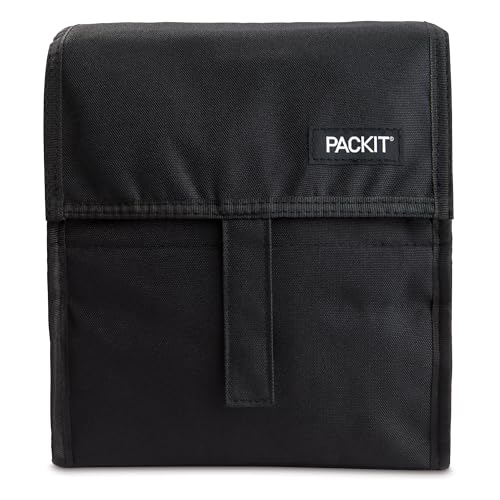
PackIt Freezable Lunch Bag
Best for: forgetful packers, school runs and short commutes where a separate ice pack would get left behind. Not suited for: anyone whose freezer cannot give a folded bag flat space overnight, or who needs to carry a large meal-prep spread.
The PackIt idea is the freezable wall: the cooling gel is built into the bag itself, so the whole carrier goes in the freezer overnight and you pack straight into a cold space in the morning. In daily life that removes the single most common failure in lunch safety, the forgotten frozen pack, and it makes the routine simple enough for children to run themselves. The trade-offs follow from the same design. The bag must actually reach the freezer every night, it takes freezer room, and while it is frozen it is less flexible to squeeze into odd spaces. Judged as a system rather than a bag, it is one of the most sensible designs in the category for short, predictable days, provided the same food-safety rule is respected: perishable food that has warmed through and sat warm for hours is thrown out, not saved.
Hydro Flask Lunch Bag
Best for: buyers who want a premium-feeling, durable everyday bag for work, the gym or days out, and who already like the brand’s bottles. Not suited for: bargain hunters, since the appeal here is materials and finish rather than entry-level value.
Hydro Flask carried the design language of its insulated bottles into lunch bags: clean lines, sturdy fabrics, a structured body and a wipe-clean interior intended for daily, years-long use. In practice the appeal is durability and feel – zips and straps that seem built for repetition, and a bag that looks as at home in a boardroom-adjacent office as at a trailhead picnic table. It sits in the premium tier, so judge it on construction and longevity rather than on any promise of colder performance, because insulation physics does not improve with branding: frozen packs still do the safety work, and the cleaning routine still decides whether the bag smells fresh in month six. For a buy-once carrier that will be handled twice a day for years, that construction focus is a rational place for money to go.

Igloo Lunch Bag
Best for: value-focused families, cooler loyalists and anyone stocking several bags for several children. Not suited for: buyers chasing premium fabrics or a highly structured, tailored shape.
Igloo is one of the oldest names in portable cooling, and its lunch bags bring a cooler maker’s priorities: practical insulation, straightforward shapes and designs across a wide spread of sizes and styles, from small personal carriers to larger tote-style bags. For a family buying bags for more than one child, or a workplace buyer who needs spares, that breadth and value are the point. The compromises are the expected ones at this tier: finishes are functional rather than luxurious, and you should choose carefully within the range for the lining and zip quality, because those are the parts your daily routine will judge. None of that undermines the core job. With frozen packs packed properly and a wipe-clean habit, an Igloo bag performs the same essential task as bags costing far more.
How to Get the Most Value If You Buy
Hygiene is the quiet core of owning any lunch bag, because the inside of a bag that carries food every day is a place where small spills go to become smells. Wipe or wash the interior after any spill, and honestly after most days: leaked yoghurt, salad dressing or meat juices left in a seam will breed bacteria and a sour odour that then perfumes every sandwich that follows. Most linings wipe clean with warm soapy water and a soft cloth; some bags tolerate a gentle machine wash, and the care label decides, not optimism. Open the bag wide to dry fully before you close it, because a damp lining stored shut is an invitation to mildew. A bag that is easy to clean is a bag that actually gets cleaned, which is why lining design matters more than exterior looks.
Every well-used lunch bag eventually faces the smell test, and the bags that pass are the ones that were cleaned before the smell set in. Odours come from residue, not from the bag itself: a film of old spills in seams and corners, left warm and closed, will perfume everything packed afterwards. The fix is boring and complete – wash the interior properly with warm soapy water, work a soft brush into the corners, rinse, and dry the bag wide open, ideally in moving air. A paste of bicarbonate of soda left on a stubborn patch before washing helps lift lingering smells from a lining. What does not work is perfume, scented sprays or sealing the smell in and hoping. Prevention is cheaper: wipe spills the day they happen, never store the bag closed while damp, and retire a bag whose lining is cracked, because cracks harbour what cleaning cannot reach.
Size is the decision buyers most often get backwards, choosing the biggest bag in the range and then carrying a half-empty box that fits nothing – not the locker, not the work fridge, not the side pocket of a backpack. Start from the containers you actually own: lay out your usual lunch, and choose a bag that swallows that layout with a little room for a frozen pack and a piece of fruit. Too small is just as bad, because a zip forced shut over an overfilled bag strains the teeth, squashes soft food and leaves no room for the pack that keeps lunch safe. Think about where the bag will live between meals as carefully as what goes in it, because a bag that fits your real storage places gets used daily.
The bag and the containers inside it work as a system, and mismatched containers defeat good insulation. Flat, wide containers stack efficiently and put more food surface near the frozen packs; tall, narrow ones waste corners and tip. Lids that seal properly are non-negotiable for anything wet, and a lid that merely rests on top will eventually decorate the lining instead. If you pack salads, keep dressing separate until you eat, both for texture and because a leaked dressing pot is the single most common lunch bag disaster. Glass feels premium and washes beautifully but adds real weight and a breakage worry in a school bag; good food-grade plastic is lighter and shrugs off drops. Whatever you choose, standardise on a small family of shapes that nest at home, and packing in the morning becomes a quick habit rather than a puzzle.
Closures sound dull until one fails over a bag of soup. A smooth, chunky zip that runs around three sides lets the bag open wide for packing, cleaning and drying, and wide opening is a genuine daily pleasure compared with wrestling containers through a narrow mouth. Check that the zip pulls feel firmly attached and that the track is protected from the lining catching in it, because a zip that eats its own lining will jam at the worst moment. Magnetic and roll-top closures look clean and work well for dry, simple lunches, but a full zip contains a tipped bag better. Whatever the closure, it should work one-handed on a busy morning and with cold fingers in winter, and it should never be the reason you have to force the bag shut, because forcing is how teeth separate and seams give up.
Carry options decide whether a bag suits a five-minute walk from the car or a long commute on foot and train. A short grab handle is enough for the car-to-desk carrier and keeps the bag tidy in a fridge. A detachable, adjustable shoulder strap earns its place the moment the bag shares the trip with a laptop bag, a gym kit or a child’s hand that needs holding. Padding on the strap matters more than width, and a strap that attaches with decent hardware will outlast one sewn in a way that cannot be replaced. Some bags add a sleeve or straps to ride on a backpack or a rolling bag, which suits students and travellers. Be honest about your actual route to lunch: the right carry for a driver is dead weight for a cyclist, and the reverse is equally true.
Exterior fabrics take the daily abuse: dragged across car boots, wedged into lockers, set down on wet picnic grass. A tightly woven synthetic shell sheds light rain, wipes clean and resists scuffs, and a reinforced base panel is worth looking for because the bottom of the bag meets every surface first. Inside, the lining is the working surface: it should be smooth, seamless where possible, and free of the stitched corners where leaked food hides and festers. Insulation itself is usually a foam layer between the two, and its job is simply to slow heat transfer; thicker is not automatically better if it makes the bag bulky and stiff to pack. Judge the whole sandwich of materials by how it will clean, carry and survive a year of weekdays, not by how technical the description sounds in a listing.
Pockets are where lunch bags either respect your time or waste it. One well-placed exterior pocket for cutlery, a napkin and a small condiment pot saves you opening the cold interior repeatedly, and every opening lets the cold you packed so carefully spill out. An interior mesh pocket keeps a frozen pack in contact with the food instead of sliding to the bottom, and can corral the small items that otherwise migrate. Too many pockets, though, becomes its own problem: crumbs and spills find every seam, cleaning turns into archaeology, and you will forget which pocket holds what. Judge a design by whether each pocket has a job you recognise from your own lunch, not by the count. The best pocket layout is the one you can describe from memory after a week of use.
Hot food needs the opposite discipline, and it is the one people get wrong most often. Do not seal hot food into an insulated bag and leave it sitting: a warm, closed, insulated space holds food in exactly the lukewarm range you want it to pass through quickly, and the bag will dutifully keep it there. If food is cooked ahead, cool it promptly, refrigerate it, and pack it cold with frozen packs the next day, then reheat it thoroughly at the other end if you have the facilities. If you genuinely want food eaten hot, use a proper insulated food flask filled with piping hot food in the morning and eaten at lunchtime, and treat anything left lukewarm and uneaten afterwards as finished. The fridge rules do not change because the food travelled in a nice bag.
Condensation is the small annoyance that separates thoughtful designs from careless ones. A very cold pack in a warm room gathers moisture, and that moisture ends up on container lids, napkins and occasionally a soggy sandwich wrapper. Packing the frozen pack in a thin cloth or placing it above the food rather than beneath it keeps drips off the items that suffer most. A lining that wipes dry in seconds turns condensation into a non-event, while absorbent interior fabrics hold the damp and the smell that follows it. Ventilate the bag open at home after use rather than zipping the day’s cold dampness inside overnight. None of this is a reason to skip frozen packs – the cold is doing essential safety work – it is simply a reason to arrange them with a moment’s thought.
Salads test a lunch system honestly. Leaves wilt from warmth and from dressing in equal measure, crisp items soften against wet ones, and a salad packed carelessly in the morning is a sad bowl by lunchtime. The bag’s job is to keep the whole box properly cold with packs in contact with the container, and your job is to keep the dressing separate, the crunchy elements in their own small pot, and anything warm – grilled chicken, roasted vegetables – cooled and refrigerated before it ever meets the leaves. A wide, flat container serves salad better than a deep one, and a bag that carries it flat rather than tipped on its side keeps the layers where you put them. Eat the salad first on warm days, and let anything that has sat warm and dressed for hours go, however virtuous it felt when you made it.
Soup and other wet lunches are where leak discipline stops being theoretical. The bag is only the second line of defence; the first is a container whose lid genuinely seals, tested at home over the sink with water before it is trusted with tomato soup near a work laptop. Carry wet food upright, pack the container so it cannot tip – wedged by other items or the frozen pack – and consider a simple extra barrier on the days the contents are at their most staining. Hot soup belongs in an insulated flask filled piping hot, not in a standard container in an insulated bag, where it will sit lukewarm. A lining that wipes clean in seconds is the difference between a leak being an anecdote and a leak being the end of the bag.
Drinks complicate a lunch bag more than food does. A bottle inside the bag adds weight in the worst place, sweats condensation over everything, and turns a small leak into a full-bag event. Many carriers do better with the bottle in an exterior mesh or sleeve pocket, or carried separately, keeping the insulated space for the food that actually needs the cold. If a drink must go inside, stand it upright, check the cap like you mean it, and pack it away from anything in paper or fabric. Frozen packs placed between a cold drink and a sandwich can over-chill one side of the food; arrange so the cold is shared rather than concentrated. For children, a small bottle inside a sealed interior pocket is the usual compromise, and a lining that wipes clean makes that compromise painless when, not if, it leaks.
Cars are the harshest environment a lunch bag meets: a parked car warms fast, even on a mild day, and a bag left on a seat in the sun is in trouble long before lunchtime. If lunch must travel and wait in a car, keep the bag in the coolest, shadiest place available, out of direct sun, with generous frozen packs, and shorten the plan: eat earlier, or choose a lunch that day that is less perishable. Site workers, sales reps and parents on a long run of errands all face this, and the honest answer is that no lunch bag is made for a hot car – the bag slows warming, it does not stop it. When in doubt, the food goes in the bin, not in you. A bag that fits a footwell in shade, carries a bottle separately and opens wide for eating in a parked break is the practical shape for car-based days.
For travel days – trains, flights, long drives – a lunch bag earns its place by being unremarkable: it fits under a seat or inside a larger bag, it does not leak onto documents, and it carries food safely through a journey whose delays nobody controls. Pack for the delay, not the timetable, which means frozen packs even for a short hop and a bias towards foods that forgive a longer wait. Keep the bag with you rather than in a hot boot or an overhead locker in the sun. Anything perishable that has warmed through during a long, delayed journey should be finished with, not saved for arrival. A slim, soft bag that collapses once empty is the traveller’s friend on the return leg, and an exterior pocket for cutlery and wipes saves opening the cold space repeatedly, which itself helps the inside stay cold.
A lunch bag is a high-cycle object: zips, straps and seams work twice a day, and the difference between a bag that lasts a school year and one that lasts several is mostly in those moving parts. Look for stitching that is dense and even, strap attachments that are reinforced or replaceable, and a zip whose pulls feel like metal rather than foil. Linings fail by cracking and peeling, usually after heat damage from being left on radiators or washed too hot, so treat the care label as part of the product. A bag that can be repaired – a replaceable strap, a zip a cobbler can service – will outlast a sealed design. Read the construction the way you would a school shoe, because the duty cycle is the same, and a slightly sturdier bag bought once is cheaper and less wasteful than a flimsy one bought repeatedly.
The environmental case for a good lunch bag is simple and does not need exaggerating: one durable bag, used daily, replaces a long stream of disposable bags and takeaway packaging, and it makes bringing food from home – usually the lower-waste option – easier to stick with. The greenest bag is the one you keep, which is why durability and cleanability outrank any recycled-content claim on a bag that falls apart in a term. Wash it gently, repair a strap rather than replacing the whole bag, and pass an outgrown children’s bag on rather than binning it. When a bag truly reaches the end, with a cracked lining and a dead zip, replace it without guilt and choose the next one for years of use. Sustainability here is mostly a buying-once habit wearing an environmental hat, and that is a perfectly good reason.
Is an Insulated Lunch Bag Worth It: The Honest Answer
Yes, if the checklist below reads like your life: regular perishable lunches, a freezer you can use nightly, and a willingness to wipe a lining. No, if it does not. The bag is a small purchase with a daily footprint, and the worth lives entirely in the frequency and honesty of its use.
The Decision Checklist
Answer yes or no, honestly: Do I carry perishable lunch at least a few times a week? Do I have freezer room for packs or a freezable bag? Will I wipe the lining after spills rather than leaving them? Does a bag fit my commute, locker and fridge? Am I buying it as a carrier, not as a fridge? Is my current lunch spending or waste something I actually want to change? Four or more yes answers: buy a good one and do not look back. Mostly no: keep your money, use a container, and revisit the question if your routine changes.
The Break-Even Question: When a Insulated lunch bag Earns Its Space, and When It Honestly Does Not
Worth it is a personal verdict dressed as a product question. The same insulated lunch bag can be money well spent for one household and an expensive ornament for another, and the difference is almost never quality — it is frequency of use, fit with the space, and what it replaces. This section gives you a break-even way of thinking about the insulated lunch bag: a simple accounting of cost per use, space per benefit, and effort per result, plus the honest signs that your household should skip it, borrow it, or buy the simpler version instead. Run your own numbers through it before you decide.
The Arithmetic That Actually Matters
Start with cost per use. Take the full cost of owning the insulated lunch bag — purchase, any consumables, any accessories you genuinely need, and the space it occupies valued honestly — and divide it by a realistic count of uses in its first two years. Realistic is the key word: count the uses your calendar supports, not the uses your intentions promise in January. Then compare that figure with the alternatives you would actually use — hiring, borrowing, a service, or the simpler item you already own. A insulated lunch bag that wins that comparison on your real schedule is worth it almost regardless of its badge; one that only wins on an imagined schedule is not.
The Signs on Each Side of the Line
On the worth-it side: you already do the task or feel the gap weekly; you have measured the space and it fits with room to live around; someone besides the buyer will use it too; and you can name what it replaces or retires. On the skip-it side: the purchase is motivated by a rare event, a visitor, or a version of your routine you have never actually kept; the space only works if something else is moved into storage; or the honest plan is to change your habits first and buy later. Neither list is a judgement — households change, and a insulated lunch bag that fails the test this year may pass it easily after a move, a new job or a new family member.
A tape measure, a spirit level and ten patient minutes prevent more insulated lunch bag regrets than any amount of comparison shopping after the fact. When a listing is vague about a dimension, material or included part that matters to you, treat the vagueness itself as information and look for a clearer seller.
The last question is the sharpest: immediate replacement means the insulated lunch bag has become infrastructure in your home, and purchases like that are almost always worth it. Quiet relief means the opposite, however good the reviews were. Decide with your own arithmetic and your own answers, and whichever way the verdict falls you will have bought — or saved — with your eyes open, which is the only definition of value that survives contact with real life.
Frequently Asked Questions
Do I really need a frozen pack if the bag is insulated?
Yes, for anything perishable. Insulation slows warming but does not refrigerate, so the cold has to come from somewhere, and that somewhere is a frozen pack or a freezable bag wall. Pack the pack against the food that needs it most, not loose in a side pocket. For a short trip with shelf-stable food – whole fruit, crackers, a sealed snack – you can skip it, but the moment lunch includes meat, dairy, eggs or leftovers, the pack is not optional decoration. It is the part of the system that keeps lunch safe rather than merely cool-feeling.
What should I do with food that sat warm in my bag all afternoon?
Throw it out, plainly. Perishable food that has sat warm for hours should not be eaten, reheated back to life or saved for tomorrow, however fine it looks or smells. This is the rule people most want to negotiate with, and it is the one that matters most. When it happens, treat it as information: the day ran longer than the lunch plan allowed, so next time pack more frozen capacity, choose less perishable food for long uncertain days, or eat the perishable items earlier while they are still properly cold.
Can I pack hot food in an insulated lunch bag?
Not to sit, no. Sealing hot food into an insulated bag holds it lukewarm, which is exactly the range food should pass through quickly rather than rest in. Cook-ahead food should be cooled promptly, refrigerated, packed cold with frozen packs and reheated thoroughly at the other end if you can. If you want food eaten hot, use an insulated food flask filled piping hot and eaten at lunchtime. The fridge rules for cooked food do not change because the journey happened in an insulated bag.
How do I stop my lunch bag smelling?
Clean it before the smell sets in. Wipe or wash the interior after spills, and give it a proper warm soapy wash whenever residue builds up in the seams, working a soft brush into the corners. Rinse, then dry the bag wide open in moving air; storing a damp bag closed is how mildew and sour smells start. A bicarbonate of soda paste on a stubborn patch before washing helps. Prevention beats all of it: leaked food left in a lining breeds bacteria and odour, so the day-of wipe is the real answer.
How long will an insulated lunch bag keep food cold?
That depends on the day more than the bag: the starting temperature of the food, how much frozen pack you include, how full the bag is, how often it is opened and how warm the room, car or playground is. Any single figure would be invented precision, which is why this guide avoids one. What can be said plainly is that frozen packs, cold food packed straight from the fridge and a full, closed bag give you the longest safe window, and that perishable food which has warmed through and sat warm for hours should be thrown out rather than tested on yourself.
Can an insulated lunch bag go in the washing machine?
Some can and many should not, and the care label is the authority, not a guess. Linings and insulation layers can crack, delaminate or lose shape in a hot or vigorous wash, which quietly ruins the bag. The safe default for most bags is hand washing the interior with warm soapy water, a rinse, and a thorough open-air dry. If the label allows a gentle machine wash, use a cool, gentle cycle and dry it fully and openly afterwards. Never tumble dry or radiator-dry a lining unless the label says so, because heat is the usual cause of cracked, peeling interiors.
Related Guides
Related reading: the single-product insulated lunch bag review
Related reading: the roundup of insulated lunch bag reviews
Related reading: the insulated lunch bag buying guide
Related reading: the honest insulated lunch bag pros and cons
Related reading: how to choose an insulated lunch bag, step by step
Related reading: the insulated lunch bag vs bento lunch box comparison
Related reading: a mini fridge for the office or dorm
Related reading: coolers sized for camping days out
Related reading: how to clean a water cooler properly
Related reading: absorbent kitchen towels for spill duty