Disclosure: As an Amazon Associate, dailyhomedecorating.com earns from qualifying purchases. Links on this page are affiliate links; they cost you nothing extra. Prices and availability change often, so check the current Amazon listing before you buy.
This insulated lunch bag buying guide is written for the buyer standing in front of a wall of near-identical bags, all promising cold lunches and easy cleaning, wondering what actually separates them. The answer is less glamorous and more useful than the marketing: a handful of decisions about size, lining, closure, carry and cold source decide whether a bag becomes a weekday fixture or a cupboard regret. This guide walks through the types, names the designs worth shortlisting, turns each criterion into a plain question, and finishes with the safety and care rules that no purchase can skip. Read it once and the wall of bags becomes a shortlist of two or three.
Key Takeaways
- Decide your cold source first: separate frozen packs, or a freezable bag that lives in the freezer.
- Size the bag to your own containers plus a frozen pack – not to the biggest lunch you can imagine.
- A wipe-clean lining and a wide-opening zip are the two features daily life rewards most.
- Insulation does not refrigerate: perishable food needs frozen packs, and warm leftovers get thrown out.
- Spend on zips, straps and lining before spending on looks.
In this guide
What an Insulated Lunch Bag Does and the Main Types
The Classic Soft Lunch Bag
The default design: an insulated foam body, a zip top, a handle, sometimes a front pocket. It is the lightest, cheapest and most packable form, and for a straightforward commute with a frozen pack it is honestly all most people need. Its limits are protection and structure – food can be crushed in a busy bag, and the shape slumps when half empty.
Structure is the quiet divide inside the lunch bag category itself. Soft, unstructured bags collapse when empty, squeeze into other bags and weigh almost nothing, but they offer food little protection and can slump into a shapeless bundle. Structured bags hold a box shape, protect containers from knocks, stand upright on a desk or fridge shelf and pack in a predictable arrangement every day, at the cost of bulk when empty. Neither is better in the abstract: a commuter slipping a bag inside a rucksack wants soft, while a worker stacking lunch in a crowded fridge wants structure. Many of the best-regarded designs sit between the two, with a firm base and softer walls. Think about the emptiest and fullest moments of your bag’s day – the journey home as well as the journey out – and choose the structure that behaves at both.
The Freezable Lunch Bag
A freezable bag, where the cooling gel lives in the walls of the bag itself, removes the loosest part of that cold chain: there is no separate pack to forget on the freezer shelf on a rushed morning. You fold the whole bag down, freeze it overnight, and pack into a cold container from the first minute. That convenience is real, and for school runs and short commutes it is often the difference between a system that happens and a system that gets skipped. But be clear about the limit: a freezable bag helps, and the same food-safety rule still applies in full. Perishable food that has warmed through and sat warm for hours goes in the bin, not back in the fridge for tomorrow, and no wall of frozen gel changes that judgement.
The Structured and Tote Styles
Structured bags hold a box shape that stacks in fridges and protects containers; tote styles trade some of that order for capacity and a shoulder carry that suits market trips, picnics and parents carrying for more than one. Both are answers to specific days, and the guide below helps you recognise yours.
Size is the decision buyers most often get backwards, choosing the biggest bag in the range and then carrying a half-empty box that fits nothing – not the locker, not the work fridge, not the side pocket of a backpack. Start from the containers you actually own: lay out your usual lunch, and choose a bag that swallows that layout with a little room for a frozen pack and a piece of fruit. Too small is just as bad, because a zip forced shut over an overfilled bag strains the teeth, squashes soft food and leaves no room for the pack that keeps lunch safe. Think about where the bag will live between meals as carefully as what goes in it, because a bag that fits your real storage places gets used daily.
Insulated Lunch Bag Buying Guide: Top Picks at a Glance
Best Overall for most routines: a structured mid-range bag with a wipe-clean lining. Best for forgetful packers: a freezable design. Best for children: a child-scaled, print-led bag. Best for outdoor and worksite days: a rugged cooler-style bag. The named designs below are presented in prose, with pick slots marking where verified links will sit.

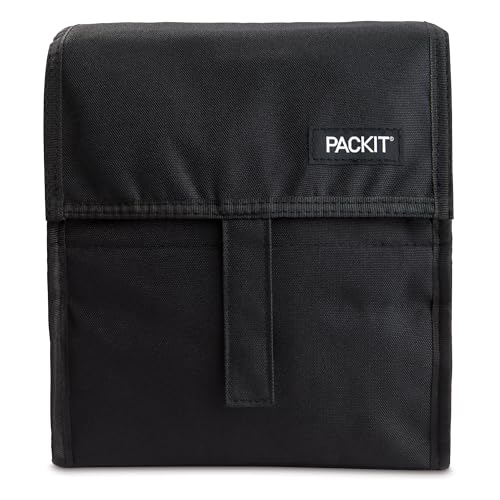
PackIt Freezable Lunch Bag
Best for: forgetful packers, school runs and short commutes where a separate ice pack would get left behind. Not suited for: anyone whose freezer cannot give a folded bag flat space overnight, or who needs to carry a large meal-prep spread.
The PackIt idea is the freezable wall: the cooling gel is built into the bag itself, so the whole carrier goes in the freezer overnight and you pack straight into a cold space in the morning. In daily life that removes the single most common failure in lunch safety, the forgotten frozen pack, and it makes the routine simple enough for children to run themselves. The trade-offs follow from the same design. The bag must actually reach the freezer every night, it takes freezer room, and while it is frozen it is less flexible to squeeze into odd spaces. Judged as a system rather than a bag, it is one of the most sensible designs in the category for short, predictable days, provided the same food-safety rule is respected: perishable food that has warmed through and sat warm for hours is thrown out, not saved.
Bentgo Lunch Bag
Best for: organised packers who use compartment containers and want a tidy, structured carrier for work or school. Not suited for: anyone carrying oversized containers that fall outside standard lunch-box footprints.
Bentgo built its name on compartment lunch boxes, and its lunch bag designs follow the same tidy-minded logic: a structured shape, room arranged around standard containers, and pockets placed where cutlery and small extras actually live. For the packer who likes a place for everything, that orderliness is the appeal, and a structured body protects food in a crowded fridge or school cubby. The honest limitation is the mirror image of the strength: a bag designed around a family of containers is less forgiving of odd-shaped pots, tall bottles and improvised packaging. Pair it with the containers it expects and it runs like clockwork; fight its layout and you will feel it every morning. As ever, the bag organises lunch, it does not refrigerate it, so frozen packs remain part of the system.
Hydro Flask Lunch Bag
Best for: buyers who want a premium-feeling, durable everyday bag for work, the gym or days out, and who already like the brand’s bottles. Not suited for: bargain hunters, since the appeal here is materials and finish rather than entry-level value.
Hydro Flask carried the design language of its insulated bottles into lunch bags: clean lines, sturdy fabrics, a structured body and a wipe-clean interior intended for daily, years-long use. In practice the appeal is durability and feel – zips and straps that seem built for repetition, and a bag that looks as at home in a boardroom-adjacent office as at a trailhead picnic table. It sits in the premium tier, so judge it on construction and longevity rather than on any promise of colder performance, because insulation physics does not improve with branding: frozen packs still do the safety work, and the cleaning routine still decides whether the bag smells fresh in month six. For a buy-once carrier that will be handled twice a day for years, that construction focus is a rational place for money to go.

Coleman Lunch Bag
Best for: outdoor-leaning users, worksite lunches, fishing trips and anyone who wants a rugged, unfussy carrier. Not suited for: formal office settings where a slimmer, more polished profile matters.
Coleman approaches the lunch bag from the campsite rather than the office, and its designs tend to be roomy, tough and unbothered by being set down on grass, gravel or a truck bed. That heritage suits site workers, anglers, coaches and families whose lunch bag doubles as picnic kit, and the larger shapes in the range swallow a hearty appetite’s worth of food without a fight. The trade-off is polish: these are practical carriers, not boardroom accessories, and the roomier models are bulkier in a small office fridge. Linings on outdoor-style bags still need the same wipe-after-spills discipline as any other, because a bag that lives outdoors meets more spills, not fewer. Treat it as honest workwear for food and it will not disappoint.

Igloo Lunch Bag
Best for: value-focused families, cooler loyalists and anyone stocking several bags for several children. Not suited for: buyers chasing premium fabrics or a highly structured, tailored shape.
Igloo is one of the oldest names in portable cooling, and its lunch bags bring a cooler maker’s priorities: practical insulation, straightforward shapes and designs across a wide spread of sizes and styles, from small personal carriers to larger tote-style bags. For a family buying bags for more than one child, or a workplace buyer who needs spares, that breadth and value are the point. The compromises are the expected ones at this tier: finishes are functional rather than luxurious, and you should choose carefully within the range for the lining and zip quality, because those are the parts your daily routine will judge. None of that undermines the core job. With frozen packs packed properly and a wipe-clean habit, an Igloo bag performs the same essential task as bags costing far more.
Wildkin Lunch Bag
Best for: children, full stop – school lunches, nursery days and young kids who need a bag they can open, carry and love. Not suited for: adult meal prep or large appetites, since the sizing is honestly child-scaled.
Wildkin makes lunch bags as children’s kit first: manageable size for small appetites, zips little hands can work, and the kind of cheerful prints that make a child claim a bag as theirs and actually bring it home. For parents, the practical questions are whether the lining wipes clean in seconds after the inevitable yoghurt incident, and whether the shape takes a child’s container and a frozen pack without a wrestling match – and this is a range designed around exactly those school-day realities. It will be outgrown, as all children’s kit is, and that is fine: judge it on a few school years of cheerful service. Keep the safety routine simple and consistent – cold pack in, uneaten perishables out – and a child’s bag teaches good habits along with carrying lunch.
How Much Capacity Do You Actually Need?
The bag and the containers inside it work as a system, and mismatched containers defeat good insulation. Flat, wide containers stack efficiently and put more food surface near the frozen packs; tall, narrow ones waste corners and tip. Lids that seal properly are non-negotiable for anything wet, and a lid that merely rests on top will eventually decorate the lining instead. If you pack salads, keep dressing separate until you eat, both for texture and because a leaked dressing pot is the single most common lunch bag disaster. Glass feels premium and washes beautifully but adds real weight and a breakage worry in a school bag; good food-grade plastic is lighter and shrugs off drops. Whatever you choose, standardise on a small family of shapes that nest at home, and packing in the morning becomes a quick habit rather than a puzzle.
Meal preppers ask more of a bag than anyone: several containers, consistent portions, often a drink and snacks for a long day, all repeated five days running. Capacity finally matters here, but organised capacity – a bag whose interior takes your standard containers in a fixed arrangement, so the week’s prep loads in the same pattern every morning. Durability stops being abstract when a zip cycles twice a day all year, and cleaning stops being optional when the same bag carries cooked food daily. Many preppers keep two bags in rotation so one can dry fully while the other works, which also solves the freezable-bag problem of a bag that did not make it back into the freezer. The bag is the cheapest part of a meal prep system and the part touched most often, so it repays choosing for the routine rather than for the photograph.
Which Cold Source Suits Your Mornings?
Start with the rule that matters more than any fabric, zip or colour: insulation alone does not refrigerate. An insulated lunch bag slows warming down, and that is genuinely useful, but it does not chill food that went in warm and it does not make perishable food safe indefinitely. Anything perishable – cooked meat, dairy, eggs, cut fruit, dressed salads, leftovers – needs frozen packs packed in with it, ideally snug against the containers rather than loose at the bottom. Food that has sat warm for hours should be thrown out, not eaten, however good it still looks or smells, because the bacteria that cause trouble do not announce themselves. Treat the bag as one part of a cold chain that starts in your fridge, and the rest of your choices get much easier and much safer.
How you pack matters almost as much as what you pack into. Put the frozen packs against the food that most needs the cold – the sandwich filling, the yoghurt, the leftover chicken – rather than isolating them in a separate pocket where they chill the lining and little else. Fill dead space with the food itself, a cloth napkin or a piece of fruit, because a full bag holds its temperature better than a half-empty one full of warm air. Keep raw and ready-to-eat items in separate sealed containers, stand anything liquid upright with its lid checked, and put the most fragile items on top rather than underneath a heavy drink. Pack in the order you will eat if you can, and the bag opens at lunchtime like a small, calm kitchen instead of a rummage sale.
What Makes a Lining Easy to Live With?
Hygiene is the quiet core of owning any lunch bag, because the inside of a bag that carries food every day is a place where small spills go to become smells. Wipe or wash the interior after any spill, and honestly after most days: leaked yoghurt, salad dressing or meat juices left in a seam will breed bacteria and a sour odour that then perfumes every sandwich that follows. Most linings wipe clean with warm soapy water and a soft cloth; some bags tolerate a gentle machine wash, and the care label decides, not optimism. Open the bag wide to dry fully before you close it, because a damp lining stored shut is an invitation to mildew. A bag that is easy to clean is a bag that actually gets cleaned, which is why lining design matters more than exterior looks.
Exterior fabrics take the daily abuse: dragged across car boots, wedged into lockers, set down on wet picnic grass. A tightly woven synthetic shell sheds light rain, wipes clean and resists scuffs, and a reinforced base panel is worth looking for because the bottom of the bag meets every surface first. Inside, the lining is the working surface: it should be smooth, seamless where possible, and free of the stitched corners where leaked food hides and festers. Insulation itself is usually a foam layer between the two, and its job is simply to slow heat transfer; thicker is not automatically better if it makes the bag bulky and stiff to pack. Judge the whole sandwich of materials by how it will clean, carry and survive a year of weekdays, not by how technical the description sounds in a listing.
Every well-used lunch bag eventually faces the smell test, and the bags that pass are the ones that were cleaned before the smell set in. Odours come from residue, not from the bag itself: a film of old spills in seams and corners, left warm and closed, will perfume everything packed afterwards. The fix is boring and complete – wash the interior properly with warm soapy water, work a soft brush into the corners, rinse, and dry the bag wide open, ideally in moving air. A paste of bicarbonate of soda left on a stubborn patch before washing helps lift lingering smells from a lining. What does not work is perfume, scented sprays or sealing the smell in and hoping. Prevention is cheaper: wipe spills the day they happen, never store the bag closed while damp, and retire a bag whose lining is cracked, because cracks harbour what cleaning cannot reach.
Which Closure and Carry Match Your Route?
Closures sound dull until one fails over a bag of soup. A smooth, chunky zip that runs around three sides lets the bag open wide for packing, cleaning and drying, and wide opening is a genuine daily pleasure compared with wrestling containers through a narrow mouth. Check that the zip pulls feel firmly attached and that the track is protected from the lining catching in it, because a zip that eats its own lining will jam at the worst moment. Magnetic and roll-top closures look clean and work well for dry, simple lunches, but a full zip contains a tipped bag better. Whatever the closure, it should work one-handed on a busy morning and with cold fingers in winter, and it should never be the reason you have to force the bag shut, because forcing is how teeth separate and seams give up.
Carry options decide whether a bag suits a five-minute walk from the car or a long commute on foot and train. A short grab handle is enough for the car-to-desk carrier and keeps the bag tidy in a fridge. A detachable, adjustable shoulder strap earns its place the moment the bag shares the trip with a laptop bag, a gym kit or a child’s hand that needs holding. Padding on the strap matters more than width, and a strap that attaches with decent hardware will outlast one sewn in a way that cannot be replaced. Some bags add a sleeve or straps to ride on a backpack or a rolling bag, which suits students and travellers. Be honest about your actual route to lunch: the right carry for a driver is dead weight for a cyclist, and the reverse is equally true.
Pockets are where lunch bags either respect your time or waste it. One well-placed exterior pocket for cutlery, a napkin and a small condiment pot saves you opening the cold interior repeatedly, and every opening lets the cold you packed so carefully spill out. An interior mesh pocket keeps a frozen pack in contact with the food instead of sliding to the bottom, and can corral the small items that otherwise migrate. Too many pockets, though, becomes its own problem: crumbs and spills find every seam, cleaning turns into archaeology, and you will forget which pocket holds what. Judge a design by whether each pocket has a job you recognise from your own lunch, not by the count. The best pocket layout is the one you can describe from memory after a week of use.
How to Prioritise by Use Case
The office carrier should prioritise fridge footprint, a tidy profile and leak-proof carrying for reheated meals. The parent buying for school should prioritise a child-manageable zip, a wipe-clean lining and a size matched to a child’s appetite, plus a spare bag. The meal prepper should prioritise organised capacity and zip durability, and consider two bags in rotation. The outdoor and site worker should prioritise ruggedness, generous frozen pack room and a bag that can sit in shade all morning without complaint. Same category, four different right answers – which is why criteria outrank rankings.
For work lunches, the bag lives a double life: it must look acceptable in a shared office, fit a communal fridge without annoying colleagues, and carry food that may be the main meal of a long shift. A structured bag that holds its shape stacks neatly in that fridge and protects food from being crushed by someone else’s leftovers. Exterior pockets earn their keep for cutlery, napkins and the small things that otherwise vanish. If your workplace has no fridge, the frozen pack discipline becomes the whole game, and a freezable bag or generous pack space moves up the list. If you reheat at work, containers that suit the microwave and a bag that carries them upright and leak-free matter most. Nurses, teachers and drivers eating in fragments through a shift often do best with a bag that opens wide and recloses fast, one-handed, many times a day.
For children, the priorities reorder themselves: the bag must open easily for small hands, survive being dropped, dragged and occasionally sat on, and come home in a state a parent can clean without a project. A wide-opening zip, a lining that wipes in seconds and a size matched to a child’s actual appetite matter more than any adult idea of capacity. Fun prints genuinely help, because a bag a child likes is a bag that comes home instead of being left on the school field. Pack frozen packs as part of the routine from the start, keep perishables modest on very hot days, and teach the simple rule that food left warm and uneaten at school does not get eaten later. A spare bag for the inevitable lost or soaking week is a cheaper sanity saver than any single premium purchase.
Outdoors, a lunch bag stops being a solo carrier and becomes shared kit: sandwiches for a walk, snacks for children at the park, a small picnic without hauling a full cool box. Here a slightly larger, soft bag that squeezes into a rucksack beats a rigid box, and an exterior that shrugs off grass, sand and a rain shower earns its keep. Frozen packs do double duty keeping drinks pleasant, but keep the safety rule front of mind in warm weather, because a bag sitting in sunshine warms far faster than the same bag in an office. Eat perishables first, keep the bag in shade while you stop, and treat anything that has sat warm through a long afternoon as finished rather than as tomorrow’s lunch. For a full family day, be honest when the job has outgrown a lunch bag and a proper cool box is the right tool.
Cars are the harshest environment a lunch bag meets: a parked car warms fast, even on a mild day, and a bag left on a seat in the sun is in trouble long before lunchtime. If lunch must travel and wait in a car, keep the bag in the coolest, shadiest place available, out of direct sun, with generous frozen packs, and shorten the plan: eat earlier, or choose a lunch that day that is less perishable. Site workers, sales reps and parents on a long run of errands all face this, and the honest answer is that no lunch bag is made for a hot car – the bag slows warming, it does not stop it. When in doubt, the food goes in the bin, not in you. A bag that fits a footwell in shade, carries a bottle separately and opens wide for eating in a parked break is the practical shape for car-based days.
Strengths and Trade-Offs
Strengths
- Slows warming so a properly packed lunch stays properly cold through a normal morning.
- Protects food from knocks, crushing and the chaos of shared fridges and school bags.
- One durable bag replaces a stream of disposable carriers and makes bringing food from home easier to sustain.
Trade-offs
- It does not refrigerate: frozen packs and fridge discipline are still required, every time.
- It needs cleaning after spills and open drying, or odour builds quickly.
- The wrong size – too big for the fridge or too small for the containers – undermines everything else.
First Setup and Care Essentials
Hot food needs the opposite discipline, and it is the one people get wrong most often. Do not seal hot food into an insulated bag and leave it sitting: a warm, closed, insulated space holds food in exactly the lukewarm range you want it to pass through quickly, and the bag will dutifully keep it there. If food is cooked ahead, cool it promptly, refrigerate it, and pack it cold with frozen packs the next day, then reheat it thoroughly at the other end if you have the facilities. If you genuinely want food eaten hot, use a proper insulated food flask filled with piping hot food in the morning and eaten at lunchtime, and treat anything left lukewarm and uneaten afterwards as finished. The fridge rules do not change because the food travelled in a nice bag.
Condensation is the small annoyance that separates thoughtful designs from careless ones. A very cold pack in a warm room gathers moisture, and that moisture ends up on container lids, napkins and occasionally a soggy sandwich wrapper. Packing the frozen pack in a thin cloth or placing it above the food rather than beneath it keeps drips off the items that suffer most. A lining that wipes dry in seconds turns condensation into a non-event, while absorbent interior fabrics hold the damp and the smell that follows it. Ventilate the bag open at home after use rather than zipping the day’s cold dampness inside overnight. None of this is a reason to skip frozen packs – the cold is doing essential safety work – it is simply a reason to arrange them with a moment’s thought.
At home, where the bag lives between uses decides how fresh it stays. Store it open or loosely closed in a dry cupboard, never sealed tight while the lining is still cool and damp from the day. Freezable bags live in the freezer, which solves storage and readiness in one move, provided your freezer has the flat space to take the folded bag without it being crushed out of shape. Soft bags that collapse flat suit small kitchens; structured bags need a shelf home or they end up squashed behind the cereal. Keep frozen packs together in one freezer spot so the morning routine never becomes a search party. A bag stored clean, dry and findable is a bag that gets used; a bag stored damp in a heap is how people quietly go back to buying lunch out.
The best lunch bag is the one that disappears into a routine. The households that eat well from bags are not the ones with the most impressive kit; they are the ones where packing takes two minutes because the bag, the packs, the containers and the fridge are arranged so the steps happen in order without thinking. Freeze the packs or the bag the night before as part of clearing the kitchen. Pack in the morning from cold food, never from food that sat out while you did other things. Empty, wipe and open the bag when you get home, at the same moment you unpack everything else. Teach children the same three steps and the bag stops being a source of morning friction. Every buying decision in this guide is really in service of that routine: choose the bag that makes the safe, clean, easy thing the automatic thing.
Mistakes to Avoid
The recurring mistakes are buying by capacity fantasy instead of by your real containers; assuming insulation alone keeps perishable food safe; packing hot food to sit warm; choosing a lining that cannot be wiped and then not wiping it; forcing an overfilled zip until it fails; storing the bag damp and closed; and leaving lunch in a hot car while expecting the bag to perform a miracle. Every one of them is avoided by the rules in this guide, none of which costs anything.
Salads test a lunch system honestly. Leaves wilt from warmth and from dressing in equal measure, crisp items soften against wet ones, and a salad packed carelessly in the morning is a sad bowl by lunchtime. The bag’s job is to keep the whole box properly cold with packs in contact with the container, and your job is to keep the dressing separate, the crunchy elements in their own small pot, and anything warm – grilled chicken, roasted vegetables – cooled and refrigerated before it ever meets the leaves. A wide, flat container serves salad better than a deep one, and a bag that carries it flat rather than tipped on its side keeps the layers where you put them. Eat the salad first on warm days, and let anything that has sat warm and dressed for hours go, however virtuous it felt when you made it.
Soup and other wet lunches are where leak discipline stops being theoretical. The bag is only the second line of defence; the first is a container whose lid genuinely seals, tested at home over the sink with water before it is trusted with tomato soup near a work laptop. Carry wet food upright, pack the container so it cannot tip – wedged by other items or the frozen pack – and consider a simple extra barrier on the days the contents are at their most staining. Hot soup belongs in an insulated flask filled piping hot, not in a standard container in an insulated bag, where it will sit lukewarm. A lining that wipes clean in seconds is the difference between a leak being an anecdote and a leak being the end of the bag.
Drinks complicate a lunch bag more than food does. A bottle inside the bag adds weight in the worst place, sweats condensation over everything, and turns a small leak into a full-bag event. Many carriers do better with the bottle in an exterior mesh or sleeve pocket, or carried separately, keeping the insulated space for the food that actually needs the cold. If a drink must go inside, stand it upright, check the cap like you mean it, and pack it away from anything in paper or fabric. Frozen packs placed between a cold drink and a sandwich can over-chill one side of the food; arrange so the cold is shared rather than concentrated. For children, a small bottle inside a sealed interior pocket is the usual compromise, and a lining that wipes clean makes that compromise painless when, not if, it leaks.
For travel days – trains, flights, long drives – a lunch bag earns its place by being unremarkable: it fits under a seat or inside a larger bag, it does not leak onto documents, and it carries food safely through a journey whose delays nobody controls. Pack for the delay, not the timetable, which means frozen packs even for a short hop and a bias towards foods that forgive a longer wait. Keep the bag with you rather than in a hot boot or an overhead locker in the sun. Anything perishable that has warmed through during a long, delayed journey should be finished with, not saved for arrival. A slim, soft bag that collapses once empty is the traveller’s friend on the return leg, and an exterior pocket for cutlery and wipes saves opening the cold space repeatedly, which itself helps the inside stay cold.
A lunch bag is a high-cycle object: zips, straps and seams work twice a day, and the difference between a bag that lasts a school year and one that lasts several is mostly in those moving parts. Look for stitching that is dense and even, strap attachments that are reinforced or replaceable, and a zip whose pulls feel like metal rather than foil. Linings fail by cracking and peeling, usually after heat damage from being left on radiators or washed too hot, so treat the care label as part of the product. A bag that can be repaired – a replaceable strap, a zip a cobbler can service – will outlast a sealed design. Read the construction the way you would a school shoe, because the duty cycle is the same, and a slightly sturdier bag bought once is cheaper and less wasteful than a flimsy one bought repeatedly.
The environmental case for a good lunch bag is simple and does not need exaggerating: one durable bag, used daily, replaces a long stream of disposable bags and takeaway packaging, and it makes bringing food from home – usually the lower-waste option – easier to stick with. The greenest bag is the one you keep, which is why durability and cleanability outrank any recycled-content claim on a bag that falls apart in a term. Wash it gently, repair a strap rather than replacing the whole bag, and pass an outgrown children’s bag on rather than binning it. When a bag truly reaches the end, with a cracked lining and a dead zip, replace it without guilt and choose the next one for years of use. Sustainability here is mostly a buying-once habit wearing an environmental hat, and that is a perfectly good reason.
Price tiers in lunch bags buy real things, but not always the things buyers assume. Entry-level bags cover the basics honestly: an insulated foam body, a simple lining and a zip, entirely adequate for a short commute with a frozen pack and a wipe-clean routine. Mid-range bags usually add the things daily users actually feel – better zips, a lining designed to clean easily, more thoughtful pockets, straps that carry comfortably and construction that survives years of cycles. Premium bags sell design, materials and brand: nicer fabrics, refined details, shapes that look at home in a boardroom, and in the freezable designs, well-integrated gel walls. What no tier buys is exemption from food safety: the most expensive bag on the shelf still needs frozen packs, still needs cleaning, and still cannot rescue food left warm for hours. Spend on the moving parts and the lining, and let the logo look after itself.
The Bottom Line
Work through this insulated lunch bag buying guide in order – cold source, size, lining, closure, carry – and the right bag usually identifies itself. Then run it properly: cold food, frozen packs, a wipe after spills, open drying, and no second chances for food that sat warm for hours.
Putting the Shortlist to Work: A First-Month Reality Check for Your Insulated lunch bag
A buying guide can rank features, but a insulated lunch bag only proves itself once it is living in your food storage & organization routine. The first month is the honest test period: the novelty fades, the daily habits settle in, and the small mismatches between a listing photo and your room become impossible to ignore. Use the weeks after delivery as a structured trial rather than a victory lap. Keep the packaging until you have lived with the insulated lunch bag through ordinary weekdays and one busy weekend, because the two situations stress very different qualities. What follows is a practical way to judge whether the model you chose is genuinely right, and what to adjust while adjusting is still easy.
Week One: Fit, Clearance and the Walk-Past Test
Start with movement. Walk the routes you actually use — carrying laundry, a tray, a vacuum, or shopping bags — and notice whether the insulated lunch bag narrows any of them. Open every door, drawer, lid or panel to its full travel and check it against walls, skirting and neighbouring furniture. Sit or stand where you will normally use it and look at it from that height, not from the doorway: proportions that looked balanced in a listing can feel top-heavy or lost once your eye level changes. If something feels awkward now, it will not improve with familiarity; small placement changes made in week one are far easier than returns made in month three.
If the insulated lunch bag passes the month with only minor grumbles, you have bought well, and the remaining niggles are usually arrangement problems rather than product problems. If it fails on fit or on daily friction, act while the return window is open instead of hoping the irritation will fade. Either way, the trial turns a hopeful purchase into a known quantity, and that knowledge is what makes the next food storage & organization decision faster and calmer.
Frequently Asked Questions
Do I really need a frozen pack if the bag is insulated?
Yes, for anything perishable. Insulation slows warming but does not refrigerate, so the cold has to come from somewhere, and that somewhere is a frozen pack or a freezable bag wall. Pack the pack against the food that needs it most, not loose in a side pocket. For a short trip with shelf-stable food – whole fruit, crackers, a sealed snack – you can skip it, but the moment lunch includes meat, dairy, eggs or leftovers, the pack is not optional decoration. It is the part of the system that keeps lunch safe rather than merely cool-feeling.
What should I do with food that sat warm in my bag all afternoon?
Throw it out, plainly. Perishable food that has sat warm for hours should not be eaten, reheated back to life or saved for tomorrow, however fine it looks or smells. This is the rule people most want to negotiate with, and it is the one that matters most. When it happens, treat it as information: the day ran longer than the lunch plan allowed, so next time pack more frozen capacity, choose less perishable food for long uncertain days, or eat the perishable items earlier while they are still properly cold.
Can I pack hot food in an insulated lunch bag?
Not to sit, no. Sealing hot food into an insulated bag holds it lukewarm, which is exactly the range food should pass through quickly rather than rest in. Cook-ahead food should be cooled promptly, refrigerated, packed cold with frozen packs and reheated thoroughly at the other end if you can. If you want food eaten hot, use an insulated food flask filled piping hot and eaten at lunchtime. The fridge rules for cooked food do not change because the journey happened in an insulated bag.
How do I stop my lunch bag smelling?
Clean it before the smell sets in. Wipe or wash the interior after spills, and give it a proper warm soapy wash whenever residue builds up in the seams, working a soft brush into the corners. Rinse, then dry the bag wide open in moving air; storing a damp bag closed is how mildew and sour smells start. A bicarbonate of soda paste on a stubborn patch before washing helps. Prevention beats all of it: leaked food left in a lining breeds bacteria and odour, so the day-of wipe is the real answer.
How long will an insulated lunch bag keep food cold?
That depends on the day more than the bag: the starting temperature of the food, how much frozen pack you include, how full the bag is, how often it is opened and how warm the room, car or playground is. Any single figure would be invented precision, which is why this guide avoids one. What can be said plainly is that frozen packs, cold food packed straight from the fridge and a full, closed bag give you the longest safe window, and that perishable food which has warmed through and sat warm for hours should be thrown out rather than tested on yourself.
Can an insulated lunch bag go in the washing machine?
Some can and many should not, and the care label is the authority, not a guess. Linings and insulation layers can crack, delaminate or lose shape in a hot or vigorous wash, which quietly ruins the bag. The safe default for most bags is hand washing the interior with warm soapy water, a rinse, and a thorough open-air dry. If the label allows a gentle machine wash, use a cool, gentle cycle and dry it fully and openly afterwards. Never tumble dry or radiator-dry a lining unless the label says so, because heat is the usual cause of cracked, peeling interiors.
Related Guides
Related reading: the single-product insulated lunch bag review
Related reading: the roundup of insulated lunch bag reviews
Related reading: the honest insulated lunch bag pros and cons
Related reading: whether an insulated lunch bag is worth it
Related reading: how to choose an insulated lunch bag, step by step
Related reading: the insulated lunch bag vs bento lunch box comparison
Related reading: a mini fridge for the office or dorm
Related reading: coolers sized for camping days out
Related reading: how to clean a water cooler properly
Related reading: absorbent kitchen towels for spill duty