Disclosure: As an Amazon Associate, dailyhomedecorating.com earns from qualifying purchases. Links on this page are affiliate links; they cost you nothing extra. Prices and availability change often, so check the current Amazon listing before you buy.
So, are led strip lights worth it? Short answer: worth it if your rooms have adequate light but no atmosphere, if you want that atmosphere without wiring or landlord negotiations, and if a remote in your hand is automation enough. Not worth it if you expect a strip to light a room on its own, to follow schedules and voice commands, or to survive a steamy bathroom on an indoor kit’s optimism. The long answer, with the real costs and the people each side describes, fills the rest of this page.
Key Takeaways
- Worth it for: renters, media rooms, bedrooms and anyone layering evening light.
- Not worth it for: buyers wanting automation, main lighting or wet-area coverage.
- The money cost is small; the real costs are planning time and one good route.
- Value peaks when the strip is hidden and its warm, dim default is used nightly.
- A strip you must stand up to adjust will stop being adjusted — place the receiver well.
In this guide
Are Led Strip Lights Worth It? Start With What You Actually Get
A basic LED strip is a flexible circuit board populated with small light-emitting diodes, supplied as a roll with a low-voltage power adapter and, in most home kits, a handheld remote. It is accent lighting, not a replacement for the main light in a room. Its job is to wash a wall, outline furniture or glow from a hidden edge so the room feels layered. Everything good and bad about the category follows from that simple role: strips excel where light should be indirect and decorative, and they disappoint anyone who expects them to illuminate a workspace like a ceiling fitting.
Dimming is where a strip earns its evening job. The best home lighting after dark is low, warm and indirect, and a strip hidden behind a pelmet, headboard or media unit delivers exactly that without glare. Check that the remote dims in steps fine enough to find a genuinely low level, because a strip whose lowest setting is still bright will end up switched off. Smooth fading between levels is a small luxury that quickly feels essential in bedrooms, where the light is often the last thing adjusted before sleep.
A strip is also a commitment to a route. Once stuck, moving it usually costs the adhesive its grip and sometimes costs paint its finish, so the wise pattern is to test first: hold or loosely tape the strip in place, live with the effect for an evening, and only then commit. Renters should be especially deliberate, favouring routes on furniture rather than walls, and clips over adhesive where removal matters. The product is inexpensive; the surfaces it touches may not be, and a little rehearsal protects both.
You also get decoration that stores itself. Seasonal colour, party moods and film-night halos all come from the same installed product, changed with a remote rather than fetched from a cupboard. Households consistently report — in the pattern of how these products are used, not in any number we would invent — that the everyday warm glow is the real purchase and the rainbow is the bonus. Judge the value on the evening layer of light, and the case is strong; judge it on the demo effects, and it will always look thinner by February.
Behind the television
Mounted on the back of the screen or the unit beneath it, a strip throws a soft halo onto the wall that reduces the contrast between a bright picture and a dark room. Eyes tire more slowly, films feel more cinematic, and the room gains a focal glow that no one has to look directly at. Keep the colour neutral or warm for viewing, and save the saturated colours for music and games, where the shifting light is part of the fun rather than a distraction from the screen.
Behind the headboard
A headboard run is the bedroom classic because it replaces the jolt of an overhead light with a wash you can read the room by. It is enough light to find clothes, check on a child or read a few pages, and gentle enough not to fully wake a sleeping partner when dimmed low. Warm settings suit the hour; if your strip’s warm white leans orange, drop the brightness rather than shifting cooler, because low and warm reads as calm while bright and cool reads as office.
Under kitchen cabinets
Under-cabinet runs are the hardest-working job a strip can do, turning shadowed worktops into usable space and making evening kitchens feel welcoming instead of clinical. This is the one common use where a steady warm or neutral white matters more than colour tricks, and where the strip should be mounted toward the front edge of the cabinet underside so light falls on the work surface rather than the wall. Keep strips and cables clear of steam and splashes unless the kit carries a suitable moisture rating.
The Real Costs Beyond Money
The first real cost is planning: an hour with a tape measure, a rehearsal evening with loose tape, and the discipline to clean a surface properly. Skimp it and the strip still works, but it works visibly, dotted and peeling, and the value drains away. The second cost is a route — a decision about your room that is semi-permanent, because removal can mark paint. The third is a small ongoing tax of attention: a remote to keep findable, a receiver to keep unburied, joins to check if a section sulks. None of these is large. Together they are the difference between the owners who rave and the owners who shrug.
There is also an opportunity cost worth naming: a strip can become an excuse not to fix a room’s real lighting. If the room is genuinely under-lit, a lamp will do more than a glow, and the layering examples in lamps that work over sectional sofas and arc floor lamps for bedrooms show what the money does there. Strips multiply good lighting; they do not substitute for it.
Who It Pays Off For
The Renter Who Cannot Rewire
For renters the value case is overwhelming. No electrician, no chasing walls, no permission needed for a product that mounts on furniture and leaves with you — carefully, with clips rather than adhesive on paint. A bedroom and a living room can be transformed in one weekend and un-transformed on moving day, which no other lighting category offers at anything like this effort level.
The Film and Music Household
If your evenings centre on a screen or a sound system, the strip pays for itself in atmosphere per hour. Bias light behind the television, a low warm wash for listening, a deliberate colour for a party: the same installation serves all three, nightly. Nexillumi’s calm character and MINGER’s playful one bracket this household’s two moods, and many homes end up, over time, with one of each in different rooms.
The Parent Refreshing a Child’s Room
Children experience a colour-changing room as a genuine event, and parents experience it as the cheapest room refresh in the catalogue: no paint, no furniture, one installation. The value holds as the child grows, because the same strip that was a rainbow at eight becomes a calm desk glow at fourteen — provided the installation was done once, tidily, by an adult, with cables fully out of reach.
Who Should Skip It
The Automation Seeker
If the dream is lights that wake you gently, greet you at the door and obey your voice, a basic strip will frustrate you within a week, because none of that is in the product. The honest purchase for you is the smart alternative, compared head-on in led strips compared with smart light strips. Buying the basic strip as a stepping stone usually means buying twice.
The Under-Lit Room
A strip will not rescue a room you cannot read in. If the core problem is insufficient light, spend first on the lamp or fitting that fixes it; add the strip later, when there is something worth layering. Owners who reverse that order call the strip disappointing, and the strip, for once, is innocent.
The Wet or Outdoor Plan
A basic indoor strip in a steamy bathroom, above a hob or out in the weather is a value calculation that fails on safety before it fails on money. Rated products exist for those places. An indoor strip is not one of them, and no saving justifies pretending otherwise.
Strengths and Trade-Offs of Owning One
Strengths
- Evening atmosphere transformed for very little money and effort
- Reversible and renter-friendly when mounted with clips on furniture
- One installation serves everyday glow, films, parties and seasons
- Simple remote control the whole household shares
- Low running warmth and load; easy, dull maintenance
Trade-offs
- No automation, schedules or voice control in the basic format
- Semi-permanent routes; removal can mark paint
- Adhesive needs help on real-world surfaces
- Cannot light a room on its own
- Value depends on a planning hour many buyers skip
Alternatives to Consider
Three picks represent the sensible ways to spend the money inside the category; each carries a slot for a verified listing at publishing. The fuller field is judged in the full roundup of led strip lights reviews, and the criteria behind the choices are in our led strip lights buying guide.
Govee LED Strip Lights — Best Overall
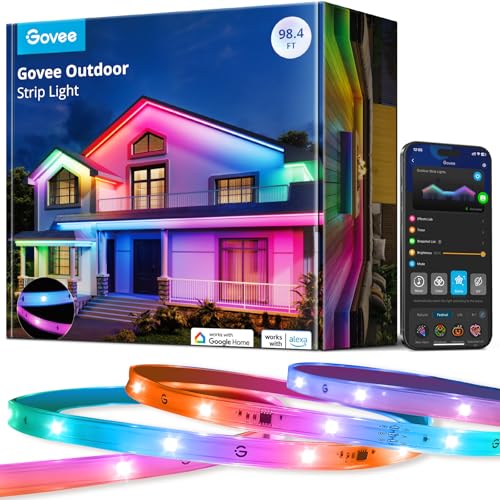
The Govee LED Strip Lights in their standard, remote-controlled form are the easiest version of this product to recommend to a first-time buyer, because the experience is balanced rather than extreme in any one direction. The colours are vivid without turning every wall into a fairground, the remote covers the everyday jobs of switching, dimming and stepping through colours without forcing you into a phone, and the strip itself flexes cleanly around the gentle corners that bedrooms and living rooms actually contain. Treat it as the sensible centre of the category: not the cheapest way to light a room, and not a programmable light show, but the version least likely to annoy you in month three.
Best for: readers of the badge above who want a mid-tier strip without smart-home complexity. Not suited for: anyone expecting voice control, automation or whole-house scenes from a basic strip.
Strengths
- Balanced colour and brightness for everyday rooms
- Remote handles daily control without a phone
- Even look along sensible single runs
Trade-offs
- Adhesive still needs a clean, smooth surface
- Basic remote control, not scene programming
- Long multi-room runs need planning, not one box

Nexillumi LED Strip Lights — Best for Bedrooms and TV Walls
The Nexillumi LED Strip Lights have built their reputation in bedrooms and behind televisions, and that focus shows in the details that matter for those two jobs. The glow is easy to dim down to the low levels a bedroom actually wants at night, the colours shift smoothly rather than in visible jumps when you are fading between evening shades, and the kit is commonly bought in the shorter lengths that fit a headboard or a screen without leaving a coil of spare strip to hide. If your plan starts and ends with one room’s mood, this is the pick shaped most closely to it.
Best for: readers of the badge above who want a mid-tier strip without smart-home complexity. Not suited for: anyone expecting voice control, automation or whole-house scenes from a basic strip.
Strengths
- Smooth dimming for low evening light
- Well suited to headboards and TV walls
- Composed colours for mood lighting
Trade-offs
- Not aimed at whole open-plan spaces
- Deliberately simple feature set
- Long runs need a different pick

DAYBETTER LED Strip Lights — Best for Long Runs on a Budget
The DAYBETTER LED Strip Lights are the value workhorse of the group, the sort of kit people buy when the plan involves a whole bedroom perimeter, a long hallway or a teenager’s room that needs transforming this weekend rather than eventually. The appeal is coverage: generous length in the box, a straightforward remote, and colours that read clearly at the modest brightness levels accent lighting actually uses. Nobody should mistake it for a premium build, and the materials feel built to a price, but the effect per room is exactly what most buyers are chasing, which is why this name comes up so often in this category.
Best for: readers of the badge above who want a entry-tier strip without smart-home complexity. Not suited for: anyone expecting voice control, automation or whole-house scenes from a basic strip.
Strengths
- Generous coverage for whole-room plans
- Simple remote that anyone in the house can use
- Forgiving way to learn where you want light
Trade-offs
- Lighter build feel than mid-tier strips
- Adhesive needs clips on tricky surfaces
- Remote is basic, with limited finesse
Outside the category, the alternatives are a good lamp for real light, or the smart strip for automation. Both are legitimate; neither does the strip’s specific trick of hiding light along the room’s edges.
How to Get the Most Value If You Buy
Install once, properly, following how to install a strip cleanly and safely: test first, clean the surface, clip the corners, keep the adapter reachable. Agree a household default setting and keep the remote in one home. Hide the strip and show the light. Resist moving it — every re-stick spends adhesive and backing you cannot buy back. And use it nightly at low, warm levels, because value in this category is measured in evenings, not in features.
The Decision Checklist
- My room already has adequate main light, and what it lacks is atmosphere.
- I have a dry, reachable route with a socket near its start.
- A remote in hand is control enough; I do not need schedules or voice.
- I am willing to spend an hour measuring, testing and installing carefully.
- I will mount on furniture or use clips where paint and landlords matter.
- I have one clear job in mind — calm, screen, worktop or play — not all of them at once.
Four or more honest yeses: buy, and buy the character that matches your job. Two or fewer: the money belongs elsewhere for now — most likely on a lamp, or on the smart product this one keeps being mistaken for. The balanced evidence sits in the honest pros and cons of strip lighting if you want the scales weighed once more.
Think of a strip as the room’s third layer of light. Most rooms already have an overhead layer and a lamp layer; the strip adds the low, indirect layer that makes the other two look deliberate. When a room feels flat, the answer is rarely more brightness — it is usually contrast, and contrast is precisely what a hidden line of light creates against ordinary walls and furniture.
The cheapest design upgrade in the whole category is concealment. A strip you cannot see, whose light you can, looks like architecture; a strip you can see looks like a product. Lips, pelmets, the undersides of things and the backs of things are your friends, and five minutes spent finding the hidden route is worth more than any feature on the remote.
Going Deeper: The Value Question in Everyday Life
Buyers sometimes ask whether a strip can be too long for a small room, and the answer is that glow obeys proportion. A short run behind a television transforms a bedsit; a full perimeter in the same room can feel like a shop display. Scale the installation to the room’s size and to the number of other light sources competing with it. In small spaces, one well-hidden run almost always beats two visible ones, and the money saved on the second run buys the clips and channel that make the first one look built-in.
The dotted look — individual diodes visible as a row of bright points — is the aesthetic fault most likely to bother a careful owner, and it has three cures. Distance helps: a strip far from the eye reads as a line. Angle helps: aimed at a wall or ceiling, the strip shows its light rather than itself. A diffuser channel helps most, spreading the points into a continuous bar, at the cost of a little brightness and a little money. Which cure suits you depends on the route, but knowing the fault has cures at all separates the informed buyer from the disappointed one.
Finally, a note on taste, because this product sits closer to decoration than to appliance. There is no correct colour for a living room, no correct brightness for a bedroom, and no authority whose settings you should copy. The strips that get loved are the ones whose owners iterated — a warmer default here, a dimmer film setting there — until the room felt like theirs. Treat every guide, including this one, as scaffolding for that iteration rather than as a verdict, and the product will do the rest.
Warmth, described without numbers, is the setting language that matters most. At the warm end a strip glows the colour of late afternoon and candlelight, flattering wood, skin and soft furnishings; at the cool end it turns crisp and blue-white, closer to an overcast morning. Neither is better in the abstract. Warm suits rest, cool suits alertness, and the everyday mistake is leaving a restful room on a working setting because nobody bothered to change it. When you test a strip, test the exact warmth your room will live on, at the brightness it will live at, after dark. A strip judged at noon on its brightest cool setting has not been judged at all.
Layering deserves a slower explanation, because it is the whole design case for this product. A ceiling light fills a room evenly and flattens it in the process. A lamp pools light where someone sits and leaves the edges vague. A strip draws the room’s outline — the line of a shelf, the edge of a ceiling, the silhouette of a headboard — and gives the eye a frame. Rooms that feel expensive after dark almost always have all three layers present and rarely have any of them at full power. The strip is the cheapest of the three to add and the only one that can be added without moving furniture or calling anyone.
Consider the route from the perspective of someone sitting down. Most strip mistakes are visible only from the chair, the bed or the sofa: a line of individual diodes reflected in a dark television screen, a bright run catching the eye above a bookcase, a cable crossing a skirting board at ankle height. Walk the route standing, then sit in every seat the room offers and look again. The installation that survives this double inspection is the one that disappears, and disappearance is the aesthetic goal — light with no visible source reads as architecture rather than equipment.
Renters develop the sharpest installation instincts in this category, because every decision has a removal cost attached. Their accumulated wisdom is worth borrowing even by owners: mount on furniture rather than walls wherever the effect allows, prefer clips to adhesive on any surface you would have to make good, keep a photographic record of the route, and store the remote somewhere the next occupant’s equivalent — a guest, a child, a future you — will actually find. A strip installed to renter standards can serve a decade of addresses; one installed carelessly may not survive a single move.
Children change the calculation in two directions at once. The appeal rises, because no other product turns a bedroom into a spaceship, a stage or a reading den at the press of a button. The care required rises with it: cables fully out of reach, receivers and adapters where small hands cannot investigate them, remotes treated as household objects rather than toys, and settings whose default is calm even if the repertoire is wild. Done by an adult with those rules in mind, a strip is among the most enjoyed objects in a family home; done casually, it is a cord in a child’s room, which no effect justifies.
There is a small ritual worth adopting on the first evening: the house tour. Once the strip is installed and the room is dark, stand at the doorway with the remote and step slowly through the settings, watching the room rather than the strip. Note which two or three settings genuinely change how the room feels and which are novelties. Set the best of them as the default, and let the rest wait for occasions. Households that perform this ritual settle into their lighting; households that skip it keep a demo running for months and slowly stop using the product altogether.
The remote deserves a home, and the home deserves to be chosen deliberately. A strip whose remote migrates — sofa arm, coffee table, under a cushion, inside a toy box — is a strip that gets used at whatever setting it was left on, which is how garish defaults are born. A small dish by the bed, a hook by the door, a consistent drawer: any fixed point works. This sounds beneath the dignity of a buying guide until you count how many smart-home automations exist mainly to compensate for controls that were never given a place to live.
Sound-reactive modes repay a moment’s thought about where they belong. In a room built for music and games they are the headline feature, turning the walls into part of the entertainment. In a room built for conversation they are an interruption with a power supply. The same strip can be both, in different rooms, which is why this cluster keeps returning to fit over features: the question is never whether an effect is good, but whether your evenings contain the moments it was made for. Buy for your actual calendar, not for the household in the advertisement.
When two strips share a room, matching them matters more than matching them to the catalogue. Two runs of the same settings from the same family of products will agree with each other; two unrelated bargains may render the same named colour visibly differently, and the eye notices disagreement across a single wall mercilessly. If a room will eventually hold two runs, buy them together, or accept the second as a separate zone with its own default. Zones are not a failure — a warm reading end and a cooler working end is a legitimate design — but they should be a decision, not a surprise.
Cable management is the unglamorous half of every good installation, and it is worth treating as a design task rather than an afterthought. The adapter lead should hug edges, disappear behind furniture legs and arrive at the socket without crossing a single walking line. Where it must be visible, it should run straight and deliberate; a cable that sags in curves announces itself as an accident. Ten minutes with clips at the end of the job is the difference between an installation visitors admire and one they politely describe as fun.
A word about testing colours against your own walls. Paint is not neutral: the same warm setting that looks golden against a cream wall turns muddy against grey-green and theatrical against deep blue. This is not a flaw in the strip or the paint; it is how coloured light and coloured surfaces have always negotiated. It is also why the rehearsal evening — strip loosely taped, room dark, household voting — outperforms any amount of specification reading. Your walls are the screen this product projects onto, and they get a vote.
Longevity in this category is mostly a story about being left alone. A strip that is installed once, dusted occasionally and neither re-stuck nor re-routed will commonly serve for years without drama. The ones that fail early usually share a biography: moved twice, stretched at a corner, powered from a borrowed adapter, or run at maximum in a hot enclosed channel. Gentleness is not a metaphor here; it is the maintenance schedule. Choose the route as a long-term decision and the product will repay the compliment.
If a strip will serve an older relative’s home, the priorities rearrange themselves kindly. Brightness for safe movement matters more than colour range; a remote with clear, honest buttons matters more than an app; a hallway or bathroom-adjacent route — dry, always dry — matters more than a party trick. Set a single sensible default, write nothing down because nothing needs writing down, and check the installation on your next visit. Simplicity, in that house, is not a compromise. It is the feature the whole category was quietly built around.
Seasonal use deserves more credit than it gets in most discussions of value. A strip installed for ordinary evenings becomes, without further spending, the household’s decoration engine: amber for autumn gatherings, deep colours for winter festivals, team colours on match days, pastels for birthdays. Decorations usually demand storage, assembly and tolerance; this one demands a button. Families who entertain often find the occasions, spread across a year, justify the purchase more thoroughly than the nightly glow that was the original reason for buying.
There is an honest environmental footnote, and it is mostly reassuring. A strip at evening levels draws very little, contains no consumables, and — installed once and kept — avoids the churn of novelty lamps bought and discarded. Its footprint is dominated by the simple fact of owning one more electronic object, which argues for buying the right one once rather than the wrong one twice. The greenest strip, like the cheapest, is the one whose route was measured before it was ordered.
The popular home format is the colour-changing strip, which can step through saturated colours as well as whites of different warmth. That flexibility is why one product ends up in so many different rooms: warm and dim behind a television on Friday, soft gold above kitchen cabinets on Sunday morning, and an unapologetic purple in a teenager’s bedroom in between. A single-colour strip can be the better tool when you know the exact job, such as a steady warm glow under cabinets, but most households value the ability to change their mind, and the colour-changing format is the default for good reason.
Control on a basic strip means a remote, and sometimes a simple companion app over a direct wireless connection, rather than a smart-home platform. That distinction matters more than any other in this category. A remote-controlled strip does what you tell it while you are in the room, and nothing when you are not. It cannot follow schedules on its own, join routines with other devices or answer to voice assistants unless the specific kit says so. Buyers who understand that boundary are almost always happy; buyers who blur it are the ones leaving disappointed comments about a product that never promised more.
Length is the first practical decision, and it is a measuring job, not a guessing job. Walk the route the strip will take with a tape measure, including the drops and turns, then choose the kit that covers that route with a little to spare. Spare strip can be trimmed at the manufacturer’s marked cutting points; missing strip cannot be stretched. Joining extra lengths is possible on some kits with connectors, but every join is a small compromise in neatness and reliability, so a single correctly sized run beats a patchwork almost every time.
Power deserves the same forethought. The adapter in the box is matched to the kit in the box, and it expects a reachable socket near the start of the run. Plan where that adapter will live before you peel any adhesive, because a strip that starts beautifully and ends with a cable dangling across a doorway will irritate you daily. Cable clips, a short extension lead kept tidy, or choosing a different starting corner solves nearly every power problem people blame on the strip itself.
Adhesive is the category’s weakest link, and honesty about it saves frustration. The backing on home strips sticks well to smooth, clean, dry surfaces — painted wood, laminate, glass, metal, the underside of cabinets — and poorly to dusty, textured, greasy or freshly painted ones. Wiping the route with a suitable cleaner and letting it dry fully transforms results. Even then, corners and ends benefit from small mounting clips, which hold the strip mechanically instead of asking glue to fight gravity and warmth forever.
Heat is modest but real. LEDs on a strip run far cooler than the bulbs they replace, yet a strip powered while still wound on its reel traps warmth in the coil, which is why every maker’s instructions warn against switching a new kit on before unrolling it. In normal use, mounted flat with air around it, a home strip warms gently and stays comfortable. Enclosed channels, insulation pressed against the strip and long runs at maximum brightness in hot rooms are the situations to avoid, and they are all avoidable with ordinary care.
Colour quality separates a pleasant glow from a garish one. Cheap diodes can render whites with a blue or green cast and make skin tones and food look odd, which is why a strip that delights as a purple party light can disappoint as an everyday warm white. If the strip will spend most of its life on white or warm settings — under cabinets, behind a headboard, above a desk — judge it on those settings first. Saturated colours forgive a lot; warm white forgives nothing, and it is the setting most adults actually live with.
Colour discipline separates homes that look styled from homes that look random. Pick two or three settings your household actually loves — typically a warm white for evenings, one soft colour for films or music, and one bold colour for occasions — and let the rest of the palette be a toy for the first week only. Rooms settle when their light settles.
If two people share the room, agree the default setting together. Strips generate a surprising number of small domestic negotiations because one person’s energising cool light is another person’s waiting-room. A warm, dim default that both of you can live with, changed deliberately for occasions, keeps the peace and the effect.
Photograph your installation before you tidy the cables away. If a section ever fails or you want to extend the route, a picture of where the control box sits, which direction the strip runs and where the cuts were made will save a archaeological dig behind the furniture. It takes ten seconds and future-you will be grateful.
Strips age gracefully when they are treated gently. Dust them with a dry cloth while switched off, avoid pressing hard on the diodes, and resist re-sticking them repeatedly, because adhesive and the strip’s backing both tire. A run installed once, carefully, commonly outlasts several redecorations of the room around it.
When a section of a long installation misbehaves, suspect the joins and the power before the strip itself. Connectors work loose, adapters get swapped during cleaning, and receivers get buried behind new furniture. A methodical check from the socket outward fixes most faults without replacing anything, and it is always cheaper than a new kit bought in frustration.
Guests notice light before they notice furniture. It is why a modest room with a warm glow behind the sofa feels welcoming and an expensive room under a bare ceiling bulb feels unfinished. If you entertain, the strip’s real return on investment is that first impression, repeated every time someone walks in after dark.
Children read strips as pure magic, which is a reason to install them thoughtfully in family homes: receivers and remotes at heights that suit your rules, cables fully out of reach and out of mouths’ way, and calm settings as the household default. The product is low-voltage and forgiving, but the installation should still be an adult’s work, checked once and then left alone.
A strip pairs naturally with lamps rather than replacing them. The lamp gives a pool of light where someone sits; the strip gives the room its outline. Together they let the overhead light stay off for entire evenings, which is both the aesthetic goal and, for most households, the point at which the purchase quietly justifies itself.
A strip along the top or front edge of shelving turns storage into display. Books, ceramics and plants pick up definition, and the room gains the layered look that designers achieve with far more expensive fittings. The trick is concealment: the strip itself should be invisible from normal standing and sitting positions, with only its light visible. If you can see the diodes, you will see dots; angle the strip, recess it behind a lip, or accept a diffuser channel for a smoother line.
Desks collect strips because they solve two problems at once: they outline a setup so it feels intentional, and they provide low background light for evening sessions that would otherwise be lit by the monitor alone. Route cables with the same care as the strip, because a beautiful glow above a nest of wires still looks unfinished. Music-reactive modes belong here if anywhere; in a workspace used for calls, keep a calm preset one button away.
A low strip along a skirting board or handrail line makes night-time trips safer and kinder, marking the route without flooding the house with light. This is a job for warm, dim settings and tidy routing, with particular care that no cable crosses a walking path. In hallways, a strip above picture rail height or beneath a console table gives guests the impression of a considered home for the price of a takeaway, which is the category’s whole charm in miniature.
Short offcuts find honest work inside storage, switching a dark wardrobe shelf or linen cupboard into something you can actually search. Battery and USB-powered short strips exist for exactly this, but a cut section of a main kit with the right connector can serve where a socket is near. Keep this use dry, gentle and infrequent: the strip lights the search, then goes off, and it should never be left running inside an enclosed, fabric-filled space.
The strip’s party trick is commitment-free theming: orange for an autumn evening, red and green at the winter holidays, team colours for a match, pastels for a birthday. Because the installation is already in place, changing the room’s mood costs one press of the remote, which is why households that install strips for everyday reasons end up using them most enthusiastically on occasions. It is decoration that stores itself, taking no cupboard space between uses.
Measure the route, count the corners, and decide whether the plan is one continuous run or several separate ones. One run is neater; several runs are brighter at the far ends and easier to power. L-shaped rooms, long hallways and full perimeters usually behave better as two moderate runs than as one heroic one, even when a single long kit exists. Write the measurements down before shopping, because kit descriptions assume you know your route, and returns for a strip that is simply the wrong size are the category’s most avoidable errand.
The Break-Even Question: When a Led strip lights Earns Its Space, and When It Honestly Does Not
Worth it is a personal verdict dressed as a product question. The same led strip lights can be money well spent for one household and an expensive ornament for another, and the difference is almost never quality — it is frequency of use, fit with the space, and what it replaces. This section gives you a break-even way of thinking about the led strip lights: a simple accounting of cost per use, space per benefit, and effort per result, plus the honest signs that your household should skip it, borrow it, or buy the simpler version instead. Run your own numbers through it before you decide.
The Arithmetic That Actually Matters
Start with cost per use. Take the full cost of owning the led strip lights — purchase, any consumables, any accessories you genuinely need, and the space it occupies valued honestly — and divide it by a realistic count of uses in its first two years. Realistic is the key word: count the uses your calendar supports, not the uses your intentions promise in January. Then compare that figure with the alternatives you would actually use — hiring, borrowing, a service, or the simpler item you already own. A led strip lights that wins that comparison on your real schedule is worth it almost regardless of its badge; one that only wins on an imagined schedule is not.
The Signs on Each Side of the Line
On the worth-it side: you already do the task or feel the gap weekly; you have measured the space and it fits with room to live around; someone besides the buyer will use it too; and you can name what it replaces or retires. On the skip-it side: the purchase is motivated by a rare event, a visitor, or a version of your routine you have never actually kept; the space only works if something else is moved into storage; or the honest plan is to change your habits first and buy later. Neither list is a judgement — households change, and a led strip lights that fails the test this year may pass it easily after a move, a new job or a new family member.
Consider the led strip lights from the perspective of the person who cleans around it, because designs that trap dust, block access or demand special products quietly tax every week of ownership.
The last question is the sharpest: immediate replacement means the led strip lights has become infrastructure in your home, and purchases like that are almost always worth it. Quiet relief means the opposite, however good the reviews were. Decide with your own arithmetic and your own answers, and whichever way the verdict falls you will have bought — or saved — with your eyes open, which is the only definition of value that survives contact with real life.
Frequently Asked Questions
Can led strip lights replace a room’s main light?
Not honestly, no. A strip is accent lighting: it washes walls, outlines furniture and glows from hidden edges, and even a bright one spreads its output so thinly along its length that a room lit by strips alone feels dim and shadowless in the wrong way. The households happiest with strips use them as the low, indirect layer alongside a ceiling light or lamps, and switch the main light off for evenings rather than forever. Treat the strip as atmosphere and the lamps as illumination, and both do their jobs properly.
Where should I never put an indoor led strip?
Keep a basic indoor strip out of wet and steamy places unless the kit is rated for that exposure: inside showers, directly above hobs, outdoors in weather, or anywhere splashes routinely reach it. Adapters and connectors should stay dry in every installation. Also avoid enclosed spaces where the strip would be pressed against insulation or fabric, and never run cable where it will be walked on, trapped by doors or chewed by pets. Dry, ventilated, reachable routes cover almost every good installation in a home.
Can I cut an led strip to fit my shelf?
Yes, but only at the manufacturer’s marked cutting points, with the power disconnected, and with the understanding that the trimmed piece beyond your run is a spare, not a promise. Cutting anywhere else damages the circuit and kills the section. Measure twice, plan the cut before peeling the adhesive, and if the remaining length would be genuinely useful elsewhere, look for the correct connector rather than improvising joints. Corners deserve the same respect: bend gently for wide turns or use corner connectors for sharp ones instead of folding the strip flat.
Why does the far end of my strip look dimmer?
Because power enters at one end and the strip itself resists it a little more with every section it passes, so over-long runs fed from one end fade as they go. The honest fixes are shorter runs, feeding a long route from the middle where the kit allows it, or splitting the plan into two kits with their own adapters, which is why multi-roll picks exist. Joining extra lengths onto an adapter that was sized for the original kit makes the problem worse, not better, and can overwork the supply.
Do led strip lights use much electricity?
Strips are among the lightest electrical loads in a home, sipping power compared with the lamps and appliances around them, especially at the dim levels accent lighting usually runs at. The practical cost question is not the running but the habit: a strip left glowing all night in an empty room is still waste, however small. A remote within reach and a household routine of switching off handle it. If energy matters to you, dimming is doubly kind, because a dimmed strip both looks better and draws less.
Related Guides and Ideas
Keep exploring the same corner of the house with these companion reads.


