Disclosure: As an Amazon Associate, dailyhomedecorating.com earns from qualifying purchases. Links on this page are affiliate links; they cost you nothing extra. Prices and availability change often, so check the current Amazon listing before you buy.
This freezer storage containers buying guide is for anyone who has opened a freezer door to an avalanche of frosted mystery tubs and decided there must be a better way. There is, and it starts with understanding that freezer storage containers are a system, not a shopping list: material, lid, size and labelling habits matter more than any single brand. This guide deliberately covers plastic, glass and silicone options together, because a freezer fleet that mixes materials intelligently outperforms a purist fleet almost every time. Work through the types, the criteria and the picks below and you will buy once, calmly, instead of repeatedly at random.
Key Takeaways
- Material follows the job: glass for reheat-in-dish meals, plastic for bulk liquids and portioning, silicone for small flexible jobs.
- Lids decide longevity: an even, gasketed seal prevents freezer burn better than any other feature.
- Right-sized portions freeze faster, thaw faster and waste less than one giant block.
- Headroom for expansion, a date on every label and fridge thawing are the three habits that make any set perform.
- Buy a lid family with shared sizes so the right top is always findable.
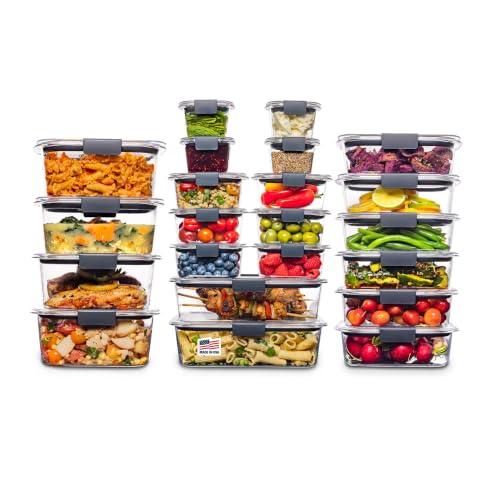
Freezer Storage Containers Buying Guide: What a Set Actually Does
A freezer container does three jobs at once. It shields food from the dry, circulating cold air that causes freezer burn, it organises a cold box into findable, stackable order, and it portions food at packing time so that thawing later is a decision rather than a project. A good set does all three quietly for years. A poor set fails the first job slowly, through seals that leak a little more each month, and fails the second immediately, through shapes that will not stack and lids that fit nothing else you own. Judge every candidate against those three jobs and marketing language falls away.
What a container cannot do is rescue tired food, stop time entirely, or forgive being overfilled with hot soup. The freezer pauses decline; it does not reverse it. That is why this guide pairs every product discussion with the habits, cooling before freezing, headroom, labelling, rotation, safe fridge thawing, that decide whether good containers get the chance to be good.
In this guide
The Main Types of Freezer Storage Containers
Rigid Plastic Containers
Rigid plastic is the default fleet for most households: light, inexpensive to expand, brilliant at stacking, and available in every portion size imaginable. Deli-style tubs excel at bulk liquids and portioning, while premium latched systems add gaskets that genuinely resist leaks. Plastic asks for gentle washing after tomato or turmeric loads and honest retirement when a body cracks or a lid warps.
Glass Containers With Locking Lids
Glass suits households that freeze meals they intend to reheat and serve in the same vessel. It never stains, never holds odours, and looks presentable at the table. The price of those virtues is weight, a need for expansion headroom, and respect for thermal shock: thaw in the refrigerator rather than sending a frozen dish into a hot oven.
Silicone Containers and Trays
Silicone is the flexible specialist: portion trays for sauces, stocks and purees, collapsible bodies that store flat, and freezer-to-microwave convenience. Bodies are softer, so stacking is less architectural, and lid quality varies widely. Use silicone where flexibility is the point and rigid containers where structure is the point.
Freezer Bags and Vacuum Options as Companions
Bags are not containers, but they complete many fleets: flat-frozen bags of stock or minced protein store like files in a drawer and thaw quickly under cold water in a pinch. Treat bags as the reserve corps alongside your rigid fleet, and see best vacuum storage bags for bulky extras if bulky overflow is your recurring problem.
Top Picks at a Glance
Six sets anchor this guide, spanning premium plastic, two glass systems, value plastic, deli-style bulk tubs and a second glass option with a presentation streak. Treat the table in words: Rubbermaid Brilliance is the premium plastic benchmark for liquids; PrepNaturals is the glass choice for freeze-and-reheat households; KOMUEE is the locking glass meal-prep system; Vtopmart is the value organiser with the widest size coverage; Freshware is the deli-style bulk portioner; Bayco is the glass set for cooks who care how the fleet looks in month twelve. Detailed notes on each follow later in this guide, after the criteria that explain why they earned their places.
How Strong Does the Seal Need to Be?
Strong enough for the food and the stay. A container of dry baked goods making a two-week visit needs only a competent press-on lid. A litre of stock staying three months needs an even, gasketed clamp, because slow air exchange is precisely what freezer burn is. Test a seal the low-tech way: close the container on a little water, tilt and gently squeeze; a lid that weeps under that kindness will not survive a crowded freezer. Remember too that seals age, so a set whose gaskets can be removed, washed and reseated will out-seal a sealed-forever design over the years.
How Much Capacity Do You Need?
Count portions, not litres. Walk through a normal fortnight of your cooking and list what actually enters the freezer: how many single servings, how many two-person meals, how many bulk bases. Most households discover they need many small and medium containers, a few larges, and almost no extra-larges, yet sets are often sold in exactly the opposite proportions. Buy the set whose size mix matches your list, even if it looks less impressive in the box, and expand later with the sizes you genuinely run out of.
Which Material Suits Your Freezer?
Return to the jobs. If your freezer is mostly soups, stocks and bulk proteins, plastic fleets, premium latched or deli-style, carry the load lightest. If it is mostly finished meals destined for the table, glass earns its weight. If it is a small fridge-freezer compartment, flat-stacking plastic and a few silicone trays use the scarce cubic space best. Mixed freezers deserve mixed fleets, and there is no prize for purity.
How to Prioritise by Use Case
The batch cook should prioritise portion sizes, shared lids and labelling speed, because packing day is a production line. The bulk buyer should prioritise sturdy mediums for portioned proteins and a freezer layout that keeps raw items low and dated. The small household should prioritise small containers and ruthless rotation, since two-person freezers fill with good intentions quickly. The gardener should prioritise volume coverage for the glut weeks, value sets and deli tubs, plus blanching discipline. Name your dominant use case honestly and the shortlist writes itself; our companion piece, how to choose freezer storage containers, walks the decision step by step.
The Sets in Detail

Rubbermaid Brilliance Food Storage Containers
The Rubbermaid Brilliance line is the plastic option most households reach for when leaks have ended friendships with lesser containers. The bodies are crystal clear, so a frozen block of soup announces itself at a glance instead of hiding behind frosted plastic, and the lids latch on all sides over a soft gasket that genuinely resists weeping when a container tips in a crowded freezer. In freezer duty the set earns its keep through discipline: the footprints stack in straight, stable columns, the lids sit flat, and the same lid family covers several sizes, which means fewer orphaned tops rattling in a drawer. Treat it as a premium-tier plastic system for soups, sauces, cooked grains and portioned proteins. It is not the set for oven reheating, and like all plastic it will eventually pick up colour from tomato-rich sauces, so dedicate one or two pieces to red sauces and keep the rest pristine. For households that freeze liquids weekly, this is the benchmark the rest of the cluster is judged against.
Best for: Choose the Rubbermaid Brilliance set if your freezer is mostly liquids and leftovers and you are tired of mystery leaks. Skip it if you want a single container that travels from freezer to oven without decanting.
PrepNaturals Glass Food Storage Containers
PrepNaturals builds its freezer case on glass: thick, clear vessels with snap-down lids that suit households who want to freeze, thaw and reheat in the same dish. Glass does not stain, does not hold the smell of last month’s curry, and shrugs off the freezer-to-fridge-to-table journey that makes plastic look tired within a year. The trade-offs are the honest ones for the material: glass is heavier, it asks for a little shelf Tetris because the shapes are less aggressively stackable than the best plastic systems, and it deserves basic respect around thermal shock, meaning a frozen dish should thaw in the refrigerator rather than meet a hot oven straight from the cold. As a mid-to-premium tier choice it suits batch cooks who freeze casseroles, baked pastas and family portions and then serve from the same vessel. Label the lid, not the glass, leave headroom for liquids, and this set will outlast several generations of plastic rivals.
Best for: Choose PrepNaturals if you freeze and reheat in the same dish and dislike stained plastic. Skip it if your freezer is a deep chest where heavy glass becomes awkward to excavate.

KOMUEE Glass Food Storage Containers
KOMUEE’s glass sets aim at the organised middle of the market: clear glass bodies, four-sided locking lids with silicone seals, and size ranges built around meal prep as much as bulk freezing. In the freezer the locking lids are the story, because a lid that clamps evenly resists the slow frost creep that dries out food at the edges, and the flat tops stack more confidently than rounded budget lids. Glass brings the usual virtues of no staining and no lingering odours, plus easy washing after greasy stews. The cautions are equally familiar: leave generous headroom because glass has no flex when liquids expand, avoid sudden temperature swings, and expect a heavier freezer basket than a plastic fleet would give you. Positioned as a mid-tier glass system, KOMUEE suits households portioning lunches, freezing cooked proteins and keeping a tidy upright freezer where every container can be seen, labelled and rotated without a dig.
Best for: Choose KOMUEE if you want locking glass for portioned freezing and meal prep. Skip it if you mostly freeze large volumes of stock, where lighter plastic handles bulk more kindly.
Vtopmart Food Storage Containers
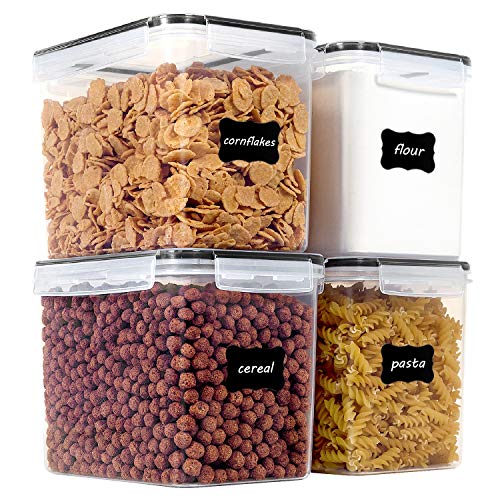
Vtopmart is the value-tier organiser of this cluster: assorted plastic sets in graduated sizes that bring order to a chaotic freezer without asking you to commit to a premium system. The appeal is coverage, enough shapes to give soups, vegetables, proteins and leftovers each a right-sized home, which matters because a half-empty large container freezes worse and thaws slower than a full small one. Lids across value sets vary more than in premium lines, so the freezer discipline in this guide matters doubly here: press lids down evenly, check the seal before stacking weight on top, and retire any lid that warps. Used that way, Vtopmart sets are excellent for the great seasonal freeze, the garden glut, the bulk-buy split, the soup marathon, where quantity of containers matters as much as refinement. They are a sensible entry point for a household building a freezer habit, with the option to upgrade the most-used sizes later.
Best for: Choose Vtopmart if you need many sizes at once for a big seasonal freeze. Skip it if you want one heirloom set and never think about containers again.
Freshware Plastic Food Storage Containers
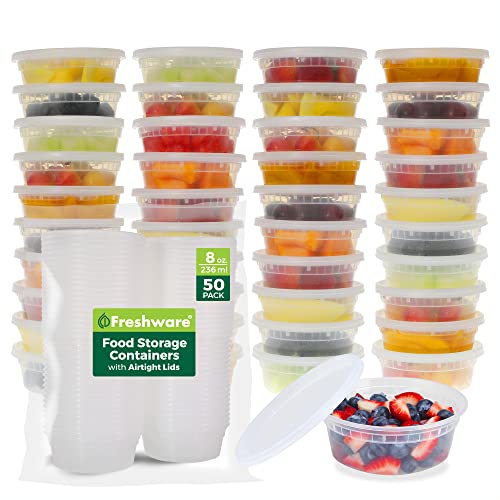
Freshware is the deli-style workhorse: simple, stackable plastic tubs in the tradition of the containers delis and caterers have trusted for decades. That heritage shows in freezer duty, because deli tubs are built around liquids, portioning and stacking in dense columns, and they freeze soups, stocks, sauces and blanched vegetables with minimal fuss. The lids are shared across sizes within a family, which simplifies life enormously when you are packing twenty portions on a Sunday afternoon. The honest limits are presentation and longevity: these are utility containers, not tableware, and thin plastic eventually cracks after many freeze cycles, so treat them as hardworking consumables and recycle casualties without regret. As an entry-to-mid tier bulk solution, Freshware is hard to beat for stock makers, hunters and anglers portioning a catch, and anyone who freezes in volume and labels everything. Pair them with a good marker and tape routine and your freezer starts to run like a small, well-kept warehouse.
Best for: Choose Freshware if you freeze in bulk and portion everything. Skip it if you want containers that double as serving dishes.

Bayco Glass Food Storage Containers
Bayco’s glass containers compete on the details households notice after month three: lids that still click shut crisply, glass that stays clear instead of clouding, and seals that keep frost from feathering across the surface of frozen meals. The sets are built for the freezer-to-fridge rhythm of real cooking, freezing a traybake on Sunday, thawing it in the refrigerator on Thursday, and serving from the same dish on Friday. Glass gives you stain resistance and easy cleaning after oily or spiced food, and the weight gives stacks a settled, non-sliding feel on the shelf. The limits mirror every glass system: expansion headroom is non-negotiable for liquids, drops on hard floors are unforgiving, and a chest freezer full of glass is a heavier lift than plastic. As a mid-tier glass option, Bayco suits cooks who value tidy presentation, honest seals and containers that look as good in month twelve as they did on day one.
Best for: Choose Bayco if you want glass that stays presentable and seals reliably. Skip it if your freezer routine involves rough handling by younger helpers.
Leave Headroom: How Expansion Works in the Freezer
Water expands as it freezes, and almost everything you freeze is mostly water, so the single most destructive habit in freezer storage is filling a container to the brim. A soup filled to the rim will lift its own lid as it sets, breaking the seal you were counting on, inviting frost inside and sometimes cracking a rigid container outright. The fix costs nothing: leave a clear gap between the surface of the food and the lid, roughly the depth of your thumb for liquids in family-size containers and a little less for small portions. Freeze liquids with the lid resting loosely until the surface firms, then press the lid down fully for the long stay. Foods that are mostly solid, cooked meats, blanched vegetables, baked goods, need far less room, but a small gap still helps the lid seat evenly. Headroom is also why flexible containers and bags sometimes beat rigid ones for stock: they forgive. Choose the container for the food, respect the expansion, and lids stop popping at midnight.
Label With a Date, Every Single Time
Every freezer veteran has held a frosted container up to the light and played the guessing game, and every freezer veteran eventually loses. Labelling is the cheapest upgrade in this entire category: a strip of freezer tape or a grease pencil note on the lid carrying three facts, what it is, when it froze, and how much is inside. The date matters most, because frozen food does not spoil on a schedule so much as it quietly declines, and a date turns rotation from guesswork into a simple first-in, first-out habit. Write the date you froze it, not the date you cooked it, if the two differ, and add a use-first note on anything with a shorter quality window such as fish or creamy sauces. Labels belong on the lid or the front face you see when the door opens, never on the bottom. Households that label everything stop throwing food away, because nothing becomes anonymous, and anonymous food is what actually fills landfill bags after a freezer clean-out.
Thaw Safely in the Refrigerator, Not on the Counter
The refrigerator is the only thawing station this guide endorses without qualification. Moving a frozen container to the fridge the night before you need it keeps food at a safe, steady cold temperature while it softens, and it costs nothing but a little planning. Counter thawing invites the outer layer of food to sit warm while the centre is still frozen, which is exactly the pattern food safety guidance warns against. Plan the rhythm instead: soups and stews move to the fridge a full day ahead, small portions overnight, and a container of frozen sauce can go straight into a pan on gentle heat if dinner cannot wait. Put the thawing container on a plate or tray, because condensation and the occasional weeping lid are normal, and use thawed food promptly rather than returning it to the counter of good intentions. Raw proteins deserve extra care: thaw them on the lowest shelf so nothing can drip onto ready-to-eat food below. Safe thawing is a habit, not a technique, and the fridge does the work while you sleep.
Freezer Burn: What It Is and How Containers Prevent It
Freezer burn is not a safety failure but a quality thief: it is the pale, dry, leathery patch that forms where the surface of frozen food has lost moisture to the cold air around it. The food beneath is safe to eat, but the texture and flavour of the affected surface are gone for good, which is why a badly burned stew tastes tired even after reheating. The causes are always the same trio: air inside the container, a seal that leaks slowly, and time. Good freezer storage containers attack all three. A right-sized container leaves little air above the food, a gasketed or well-clamped lid keeps the cold, dry freezer air from circulating across the surface, and portioning into smaller containers means each one is opened and finished sooner. Pressing a piece of parchment or wrap directly onto the surface of a sauce before lidding adds a final barrier for long storage. Freeze food cold and fresh, seal it tight, use it in sensible order, and freezer burn becomes the rare exception instead of the house style.
Plastic, Glass and Silicone: Choosing a Material
Material decides more of your freezer experience than brand does. Plastic is light, forgiving of drops, and usually the best stacker, but it can stain, hold odours and grow brittle after many deep-freeze cycles. Glass is heavier and demands headroom and gentle temperature changes, yet it never stains, washes beautifully, and can carry food from freezer to fridge to table with a dignity plastic rarely manages. Silicone sits between the two: flexible, space-saving when empty, excellent for portioned freezing of sauces and baby food, though softer bodies stack less crisply and lids vary in quality. Most well-run freezers end up mixed, glass for reheating meals, plastic for bulk liquids and portioning, silicone for small flexible jobs. The mistake is not choosing one material; it is forcing one material to do every job. Audit what you actually freeze, match material to the dominant job, and let a small minority fleet handle the exceptions.
Lids and Seals: Where Freezer Containers Succeed or Fail
Ask anyone who has owned containers for years what failed first and they will not name the body; they will name a lid. Lids warp, gaskets loosen, latches fatigue, and a lid that no longer seals evenly turns a good container into a frost farm. When you assess any set, spend your attention here: does the lid clamp or press with even force all the way around, does the gasket sit in a groove where it can be removed, washed and reseated, and does the closed container feel rigid rather than springy at the corners. Four-sided locking lids generally seal hardest, which suits liquids and long storage; simpler press-on lids are faster and fine for short stays and dry goods. Buy into a lid family rather than a jumble, because shared lids across sizes mean the right top is always findable. And treat lids kindly: no prising with knives, no forcing onto overfilled containers, and let them dry fully before stacking them away.
Right-Sizing: Portions Freeze Better Than Boulders
The most common sizing mistake is freezing family quantities in a single large block when life is actually eaten in portions of one, two or four. A giant frozen block thaws slowly and unevenly, tempts you to thaw more than you need, and the leftovers of the thaw often go to waste. Portioning at packing time, when the food is already out and you are already washing up, is nearly free; portioning at thawing time is a chore with a knife. Build your set around the portions your household truly eats: small containers for single servings and sauces, mediums for two-person meals, and a few larges reserved for batch bases like stock and tomato sauce that genuinely get used whole. Right-sized containers also freeze faster and more evenly because the cold reaches the centre sooner, which protects texture. When in doubt, freeze two mediums instead of one large; future you, cooking for one unexpected guest or one empty house, will be grateful.
Stacking, Footprints and the Geometry of a Tidy Freezer
A freezer rewards rectangles and punishes ovals. Straight-sided, flat-lidded containers tile a shelf with almost no wasted air between them, while round tubs leave crescent gaps that add up to a whole lost container’s worth of space per shelf. Uniform footprints matter even more than shape: containers that share a footprint stack into stable columns instead of teetering towers that avalanche when you reach for the peas. Freeze containers flat and level until solid before stacking weight on them, because a lid asked to bear weight while its contents are still liquid will bow and break its seal. Leave a little air space around stacks rather than packing the freezer into a solid block, since cold air needs paths to circulate and keep temperatures even. Finally, zone your freezer the way shops zone shelves: proteins low, vegetables mid, ready meals at eye level, and a small front basket for the use-first items your labels have flagged.
Rotation and the First-In, First-Out Habit
A freezer without rotation is a savings account you never spend: value goes in, and quietly evaporates. The first-in, first-out habit is borrowed from every professional kitchen and it is disarmingly simple: new containers go to the back or bottom, older ones migrate forward, and every cooking decision starts by asking what the freezer already offers. Dates on labels make this possible; without them, rotation is astrology. Once a month, spend five minutes with the door open as little as possible, pulling forward anything ageing, and plan a week of meals that spends the oldest stock first. Keep a simple running list on the door if your household freezes a lot; crossing items off is oddly satisfying and prevents the double-buying of things already frozen. Rotation is also your quality guarantee, because food eaten in sensible order never reaches the tired, frostbitten stage that gives home freezing a bad name.
Temperature, Placement and the Cold Spots
Your freezer should hold a steady zero degrees Fahrenheit or colder, and a cheap appliance thermometer is the only way to know it actually does, because dials lie and door seals age. Containers live differently depending on where they sit: the door is the warmest, most temperature-swinging zone and suits short-stay items, while the back of the freezer is the coldest, steadiest home for long-storage proteins and precious batch cooking. Avoid pressing containers flat against cooling vents, where the blast can dry surfaces through any imperfect seal, and avoid overpacking a brand-new load of warm containers into one corner, which raises the local temperature for everything already stored. Freeze in batches, spread new arrivals out to set, then consolidate them into their zones once solid. If the power fails, a full freezer of well-sealed containers holds its cold far longer than a half-empty one, which is one more argument for right-sized containers and against dead air space.
Soups, Stocks and Sauces: The Liquid Discipline
Liquids are where freezer containers earn or lose their reputation, because liquids expand, leak and stain, sometimes all in the same week. Cool soups and stocks fully in the refrigerator before freezing them; warm food raises the freezer temperature, sweats condensation onto neighbouring containers and freezes with a poorer texture. Leave clear headroom, freeze the container level until the surface is solid, and only then stack. Fat is a friend here: a thin cap of fat on a stock actually protects the surface beneath it, and it lifts away cleanly after thawing. Sauces with dairy or eggs freeze less gracefully than broth-based ones and deserve shorter stays and honest labels. Freeze some stock flat in bags or silicone trays as a space-saving reserve if your container fleet is small, and keep at least one large container free for the next batch, because stock waits for no one and improvising with the wrong vessel is how spills happen.
Freezing Raw Proteins Without Ruining Them
Raw meat and fish are the highest-stakes residents of any freezer, and containers serve them best when they are portioned, well wrapped and honestly dated. Divide bulk purchases into meal-sized portions the day they come home, because freezing a family pack whole guarantees a future evening of chiselling. A container’s job for raw protein is protection from air and from its neighbours: seal tightly, keep raw items on the lowest shelf or in a dedicated zone so nothing can drip, and label with the cut and the date rather than a hopeful question mark. Fish and seafood carry the shortest quality window and should be eaten first in any rotation; sturdy beef and lamb forgive longer stays; poultry sits between. Thaw raw proteins in the refrigerator on a tray, cook them promptly, and never return thawed raw protein to the freezer without cooking it first. Containers washed hot and dried fully between raw uses keep flavours, and households, healthy.
Vegetables, Fruit and the Blanching Question
Vegetables freeze brilliantly when they are prepared properly and disappoint when they are simply abandoned to the cold. Most vegetables benefit from a brief blanch, a short bath in boiling water followed by an ice bath, which stops the enzyme activity that dulls colour and flavour during storage. Dry blanched vegetables thoroughly before they meet a container, because surface water becomes the ice crystals that bruise texture. Fruit needs a different kindness: freeze berries and sliced fruit in a single layer first, then container them, so they stay loose and pourable instead of setting into a single fruity brick. Herbs freeze well in small containers or trays with a little oil or water. Containers protect all of this from the crushing and air exposure that bags alone sometimes allow, and clear bodies let you judge quantities at a glance. Label with the blanch date and you will rotate garden produce like a professional.
Washing and Care That Keeps Containers Honest
Containers ask little, but they ask it consistently. Wash lids and gaskets as attentively as bodies, because the gasket groove is where old sauce goes to perfume everything that follows; most gaskets lift out for a proper wash and a full dry. Plastic prefers gentle treatment after fatty or tomato-based loads: a paste of baking soda, or a soak, lifts stains and odours better than aggressive scrubbing that clouds the surface. Glass asks only for respect around sudden temperature changes and a check for chips at the rim, because a chipped rim is a seal waiting to fail. Let everything dry completely before lidding and storing, since a sealed damp container grows musty in the cupboard. Retire pieces honestly: a warped lid, a cracked corner, a gasket that no longer sits flat. A smaller fleet of sound containers outperforms a cupboard of casualties every single week.
Chest Freezers, Upright Freezers and Small Freezers
The right container fleet depends on the freezer it serves. Chest freezers are cold, efficient and cavernous, and they reward uniform, stackable containers with labels on top, because everything in a chest is viewed from above and excavated from above; baskets that lift out turn chaos into zones. Upright freezers behave like cupboards and suit clear, front-labelled containers in tidy rows, with door shelves reserved for small, short-stay items. The small freezer compartment of a fridge-freezer is the hardest master: space is scarce, temperatures swing with the fridge door, and only right-sized, flat-stacking containers earn their rent there. Measure your shelves and baskets before buying any set, height especially, because a container that fits the shelf but not the shelf-plus-lid geometry has ended many good intentions. Whatever the shape of your freezer, the winning fleet is the one whose sizes repeat, whose lids interchange, and whose labels can be read in the three seconds the door is open.
Mistakes That Quietly Ruin Frozen Food
Most freezer disappointment traces back to a short list of repeat offences. Freezing food that was already tired tops it: the freezer pauses decline, it does not reverse it, so freeze food at its best. Overfilling containers and popping lids comes next, followed by freezing large warm batches that raise the temperature for everything nearby. Anonymous containers are a slow-motion mistake, as are containers so large that thawing means wasting half. A subtler error is freezing everything in identical containers regardless of content, so liquids get dry-goods vessels and reheating meals get containers that cannot travel to the table. Finally, there is the set-and-forget freezer, loaded with enthusiasm in January and audited in December. Every one of these mistakes is a habit rather than a purchase, which is good news: the containers you already own will perform noticeably better the week you fix the habits.
The Honest Economics of a Container Fleet
Freezer containers repay their cost through food that gets eaten instead of binned, and the maths is kindest to households that cook in batches, buy proteins on offer, or garden. A modest fleet that rescues even a few meals a month from the waste bin covers its cost quickly, after which the savings compound quietly for years. Premium tiers buy specific things: seals that stay true longer, bodies that resist staining and cracking, and size systems that remain available when you want to expand the fleet. Value tiers buy coverage, many sizes now, with the understanding that lids may need replacing sooner. The poor-value purchase at any tier is the mismatched one: a vast fleet for a household that rarely freezes, or a tiny premium set for a household freezing a whole garden. Match the fleet to the freezer habit you actually have, not the one in the brochure, and the economics look after themselves.
The Monthly Freezer Audit: Five Minutes That Save Meals
Once a month, give your freezer five honest minutes. Open the door with a plan rather than curiosity: pull the oldest dated containers to the front, check lids for warping while your hands are already cold, and note anything approaching the end of its best-quality window. Build the coming week of meals around what the audit surfaces, because a freezer that is eaten from in order never accumulates the sad, frosted backlog that triggers a full clear-out. Close the audit by checking the seal of the freezer door itself with a sheet of paper: if it slides out easily from the closed door, warm air is leaking in and working against every container inside. Five minutes, monthly, is the entire management cost of a freezer that behaves like a pantry instead of a glacier.
Batch Day: Running a Freezing Session Like a System
The households that freeze best treat packing as a session with a beginning and an end, not as leftovers drifting into containers across the evening. Cook, then cool everything properly in the refrigerator while you eat the first serving. Set out containers, lids, tape and marker before the first portion is packed, portion assembly-line style, leave headroom on anything liquid, and freeze the batch spread out and level rather than stacked warm in a corner. Label as you go, never in a batch at the end from memory, because memory is exactly what fails by container nine. Wash up once, dry the lids fully, and consolidate the frozen batch into its zones the next day. A session run this way takes less total time than the improvised version and produces a freezer that reads like a menu.
Leftovers: The Gateway Habit
Most freezer systems begin not with batch cooking but with leftovers, and leftovers are where containers quietly prove themselves first. The half pan of lasagne, the extra rice, the soup that made too much: frozen promptly in a right-sized, dated container, each becomes a future lunch instead of a fridge resident that ages past saving. The rules are the same small ones: cool quickly in the refrigerator, portion to how the leftover will actually be eaten, leave headroom on anything saucy, and label with the date it froze. Households often discover that the leftover habit alone justifies the fleet, because it converts the most common waste stream in the kitchen, good food cooked and never finished, into the most convenient meals they own.
First Setup and Care Essentials
When a new set arrives, wash everything, dry it fully, and test each lid on its body before food is involved. Freeze a first batch of something forgiving, water for ice or a simple stock, to learn how the lids behave under expansion. Set up your labelling station at the same time: tape, marker and a spot in a drawer they will actually live in. Finally, measure your freezer shelves and decide each size’s home zone before the first big shop, so packing day ends with a system rather than a jigsaw. For the balanced view of what ownership involves, read freezer storage containers pros and cons.
Mistakes to Avoid
Do not buy on piece count alone, do not freeze hot food, do not skip headroom, do not let a single anonymous container start the mystery-tub tradition, and do not force one material to do every job. Each of those is covered in depth above because each is responsible for more disappointment than any brand choice. If you are weighing whether a dedicated fleet is justified at all, are freezer storage containers worth it makes the honest case both ways.
Before You Commit: A Hands-On Fit and Compatibility Check for Freezer Storage Containers
This section exists to treat this as the final check before money changes hands, the point where a shortlist stops being a list of features and becomes a decision about one specific home. It adds a layer that a feature list cannot give you, grounded in the food storage & organization context this freezer storage containers will actually live in. Where this guide names examples such as Rubbermaid Brilliance Food Storage Containers, PrepNaturals Glass Food Storage Containers, KOMUEE Glass Food Storage Containers, use them as test cases for the checks below rather than as shortcuts past them.
Use the listings as a checklist rather than as entertainment. For each freezer storage containers you shortlist, note the exact variant, the included parts, what is sold separately, and which photographs show the item in a setting like yours rather than in a studio. If a model named elsewhere in this guide catches your eye, treat it as a worked example for this process: run it through the same measurements, the same weekly rehearsal and the same friction list before letting familiarity turn into preference. Consistency is the whole trick. Shoppers go wrong not by choosing the objectively weaker freezer storage containers, but by judging one contender on features, the next on looks and the third on a single enthusiastic anecdote.
Think about who else has a vote. A freezer storage containers is usually shared, moved, cleaned or complained about by more than one person, and the second user’s priorities are often the ones that surface after the return window closes. Check height, weight, reach, noise, heat, sharp edges or sheer visual presence, whichever apply, against the smallest, oldest or least enthusiastic person who will live with it. If you are buying for a household that includes children, pets, elderly relatives or lodgers, run the clumsy scenario too: the spill, the knock, the curious tug, the door left open. A robust freezer storage containers choice survives other people; a fragile one only survives its buyer.
Consider the edge cases that sit just outside normal use, because a freezer storage containers will meet all of them eventually. The unusually large load, the unusually small task, the day you are in a hurry, the day something else in the room is broken and this has to cover for it. Versatility is not about a long feature list; it is about behaving predictably when conditions are imperfect. Where a design offers settings, modes, attachments or configurations, ask what each one is actually for in your home, and be suspicious of flexibility you cannot attach to a real occasion. One well-judged configuration used weekly beats five clever ones used once, and the honest freezer storage containers for your home is the one whose strengths line up with your most frequent edge case, not your rarest.
Build a simple decision checklist and score it in writing. Five lines are enough: fit in the space, fit with the routine, ease of cleaning or upkeep, quality of the parts that move or wear, and how the freezer storage containers will be stored or will look when it is not the centre of attention. Score each contender quickly, then look only at the lowest scores, because purchases are usually ruined by their weakest point rather than saved by their strongest. If two options tie, choose the one whose weakness is cheapest or easiest to live with. This sounds mechanical, and it is meant to: a written checklist is the best defence against the very human habit of falling for the last photograph you looked at.
Finally, plan the first fortnight. Decide where the freezer storage containers will live from day one, what it replaces, what accessory or companion it needs straight away and what small job you will use to learn its habits while returning it is still simple. Keep the packaging until that learning period is over, note anything that surprises you, and deal with a mismatch early rather than adapting yourself around a poor fit for years. The households that end up happiest with a freezer storage containers are rarely the ones that researched longest; they are the ones that checked fit honestly, bought for the ordinary week, and paid attention during the first days instead of assuming the decision ended at checkout.
Frequently Asked Questions
Can you put hot soup straight into a freezer container?
Let it cool first, ideally in the refrigerator, before it goes into the freezer. Hot food raises the temperature around neighbouring containers, creates condensation that turns to frost, and freezes with a poorer texture. Cooling first, leaving headroom for expansion, and freezing the container level until the surface sets gives you a clean seal, better flavour and a safer freezer for everything already stored.
How long does food keep well in freezer storage containers?
Frozen food remains safe for a long time when held at a steady zero degrees Fahrenheit or colder, but quality is the real clock. Soups, stews and cooked grains hold their best quality for a few months, raw sturdy meats longer, and fish and creamy sauces for the shortest window. This is why dating every label matters: rotation by date keeps you eating food at its best rather than its most apologetic.
Why did the lid pop off my container in the freezer?
Expansion is almost always the culprit. Liquids grow as they freeze, and a container filled to the brim has nowhere for that growth to go except through the lid. Leave a clear gap below the rim for soups, stocks and sauces, rest the lid loosely until the surface firms, then seal it fully. A warped lid or an overfilled container will repeat the trick until the habit changes.
What is the white patch on my frozen leftovers?
That pale, dry patch is freezer burn, caused by moisture leaving the surface of the food and meeting dry freezer air. It is a quality problem, not a safety one: the affected surface will taste tired and feel leathery, though the food beneath is fine. Prevent it with right-sized containers, tight seals, little trapped air, and sensible rotation so food is eaten before time does its slow work.
Should I thaw frozen food on the kitchen counter?
No. The refrigerator is the safe thawing station, because it keeps food at a steady cold temperature while it softens. Move containers to the fridge the night before, or a full day ahead for large portions, and set them on a tray to catch condensation. Thawed food should be cooked or eaten promptly, and raw proteins should thaw on the lowest shelf where they cannot drip onto other food.
Are glass containers better than plastic for the freezer?
Neither wins outright; they win different jobs. Glass never stains, sheds odours, washes beautifully and can carry a meal from freezer to table, but it is heavier and needs headroom and gentle temperature changes. Plastic is lighter, stacks brilliantly and forgives drops, but can stain and tire over time. Most experienced households run a mixed fleet and match the material to the meal.
Related Guides
- freezer storage containers pros and cons
- freezer storage containers review
- freezer storage containers reviews
- are freezer storage containers worth it
- how to choose freezer storage containers
- best vacuum storage bags for bulky extras
- best storage baskets for cupboard overflow
- best mini fridges for overflow cold storage


