Disclosure: As an Amazon Associate, dailyhomedecorating.com earns from qualifying purchases. Links on this page are affiliate links; they cost you nothing extra. Prices and availability change often, so check the current Amazon listing before you buy.
Working through the freezer storage containers pros and cons honestly is the fastest way to buy the right fleet, because this category rewards households that match containers to habits and quietly frustrates everyone else. Freezer storage containers, meaning the rigid plastic, glass and silicone vessels built for sub-zero duty, promise order, less waste and better-tasting thawed meals. They largely deliver, but not for free and not without friction: lids age, glass is heavy, and a freezer full of containers still demands labelling and rotation. This guide lays out the genuine advantages and the genuine drawbacks, then shows what the trade-offs mean for different kitchens.
Key Takeaways
- The core pro is protection: a tight seal is the difference between food that thaws well and food ruined by freezer burn.
- The core con is overhead: containers cost money, occupy space and demand labelling and rotation habits.
- Glass wins on staining, odour and reheating; plastic wins on weight, stacking and bulk portioning.
- Most cons shrink dramatically with three habits: headroom for liquids, dates on lids and fridge thawing.
- Households that batch cook or buy in bulk gain the most; rare freezers gain the least.
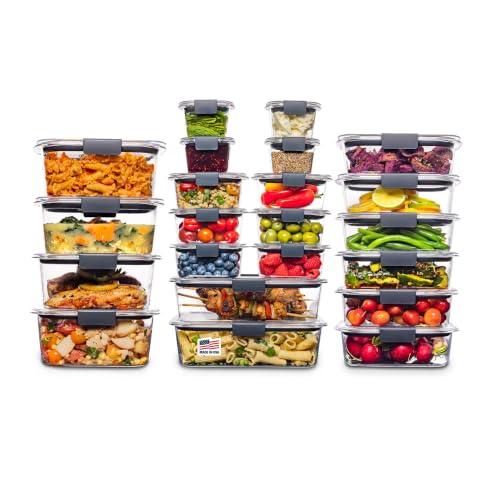
Freezer Storage Containers Pros and Cons: The Quick Verdict
Buy a dedicated freezer fleet if you freeze weekly, cook in batches, buy proteins in bulk or garden seriously; the protection and organisation repay the cost quickly. Think twice, or buy small, if your freezer mostly holds ice, a bag of peas and good intentions, because containers cannot create a freezing habit, only serve one. The sections below give the full ledger, and the detailed set notes in freezer storage containers buying guide show how the leading options handle each side of it.
In this guide
The Pros
Protection Against Freezer Burn
The headline advantage is moisture defence. A well-sealed container keeps dry freezer air off the surface of food, which is the entire mechanism of freezer burn. Right-sized containers with little trapped air, clamped evenly, keep soups bright, proteins supple and vegetables vivid for far longer than loose wrapping or tired tubs ever manage.
Portion Control at Packing Time
Containers force the portioning decision to the cheapest moment, when food is already out on the counter. Single servings, two-person meals and bulk bases each get a right-sized home, so thawing later means taking exactly what dinner needs. Households consistently report that this single habit, more than any recipe, is what turns a freezer from storage into a meal system.
Stacking and Visibility
Rectangular, flat-lidded containers tile a freezer shelf with minimal wasted space, and clear bodies turn inventory into a glance. You stop buying duplicates of food you already own, stop excavating avalanches, and start cooking from the freezer first. In a chest freezer, uniform containers with top labels convert a cavern into zones you can actually audit.
Less Waste, Real Savings
Food that is protected, portioned, labelled and visible gets eaten. That is the whole economic case, and it is a strong one: batch cooking becomes practical, bulk offers become usable, and garden gluts become winter meals instead of compost. The fleet pays for itself in rescued food, then keeps paying.
Safer, Calmer Thawing
A sealed container thaws in the refrigerator without dripping onto other food, without leaking across the shelf, and without the improvisation of bags in sinks. Raw proteins stay contained on the lowest shelf, soups arrive at the pan intact, and the whole thaw becomes a planned, hygienic non-event.
Reusability Over Single-Use Wrapping
A sound container works hundreds of times, displacing a steady stream of disposable wrap and flimsy tubs. Glass sets in particular can serve for many years, and even value plastic fleets outlast their cost many times over when lids are treated kindly and casualties retired promptly.
The Cons
Upfront Cost and the Lid Tax
A real fleet costs real money, and the expense does not end at purchase: lids warp, gaskets tire and replacement tops are the quiet ongoing tax of container ownership. Premium systems reduce the frequency; no system abolishes it. Budget for the fleet as equipment with consumable parts, not as a one-time trophy.
Space, in the Freezer and the Cupboard
Empty containers occupy cupboard space, full ones occupy freezer space, and rigid vessels can never compress the way bags do. A household with a small fridge-freezer compartment must be selective, favouring flat-stacking sizes it truly uses, or the fleet itself becomes the clutter it was bought to cure.
The Habits Are Not Optional
Containers do not label themselves, leave their own headroom or rotate themselves to the front. Skip the habits and the cons compound: lids pop on overfilled soup, anonymous tubs accumulate, and old stock quietly declines behind new stock. The system works exactly as well as the three minutes of discipline per packing session that it asks for.
Material Compromises Are Real
There is no perfect material. Plastic stains and can grow brittle; glass is heavy and unforgiving of drops and thermal shock; silicone stacks softly and varies in lid quality. Every fleet is a negotiated settlement, and households that expect one material to excel at everything end up disappointed with all of them.
Thermal and Handling Limits
Freezer-to-oven heroics are mostly marketing. Glass needs a fridge thaw before serious heat, plastic should not meet the oven at all, and any container filled with liquid needs expansion room or it will defeat its own lid. These limits are manageable, but they are limits, and ignoring them cracks bodies and breaks seals.
What the Trade-Offs Mean for You
For the batch cook, the pros dominate: portioning, stacking and protection are the entire game, and the lid tax is a fair price. For the bulk-buying family, protection and organisation win again, with raw-protein zoning as the deciding discipline. For the small household with a compact freezer, the calculus tightens: a small, flat-stacking fleet captures most pros while dodging the space con, a point explored in freezer storage containers review. For the occasional freezer, the honest answer may be a handful of versatile containers plus bags, which is why are freezer storage containers worth it exists as a separate, sterner test.
How the Alternatives Compare
Freezer bags freeze flat, store densely and thaw fast, but they protect less against crushing, puncture more easily and generate single-use waste. Vacuum sealing offers the strongest air removal and the longest quality window, at the price of equipment, consumables and a slower packing rhythm; see best vacuum storage bags for bulky extras for the bag side of that world. Foil and wrap cost little and protect least. Rigid containers sit in the pragmatic middle: reusable, stackable, protective and fast, which is why they remain the default fleet for most kitchens.
The Sets in Detail

Rubbermaid Brilliance Food Storage Containers
The Rubbermaid Brilliance line is the plastic option most households reach for when leaks have ended friendships with lesser containers. The bodies are crystal clear, so a frozen block of soup announces itself at a glance instead of hiding behind frosted plastic, and the lids latch on all sides over a soft gasket that genuinely resists weeping when a container tips in a crowded freezer. In freezer duty the set earns its keep through discipline: the footprints stack in straight, stable columns, the lids sit flat, and the same lid family covers several sizes, which means fewer orphaned tops rattling in a drawer. Treat it as a premium-tier plastic system for soups, sauces, cooked grains and portioned proteins. It is not the set for oven reheating, and like all plastic it will eventually pick up colour from tomato-rich sauces, so dedicate one or two pieces to red sauces and keep the rest pristine. For households that freeze liquids weekly, this is the benchmark the rest of the cluster is judged against.
Best for: Choose the Rubbermaid Brilliance set if your freezer is mostly liquids and leftovers and you are tired of mystery leaks. Skip it if you want a single container that travels from freezer to oven without decanting.
PrepNaturals Glass Food Storage Containers
PrepNaturals builds its freezer case on glass: thick, clear vessels with snap-down lids that suit households who want to freeze, thaw and reheat in the same dish. Glass does not stain, does not hold the smell of last month’s curry, and shrugs off the freezer-to-fridge-to-table journey that makes plastic look tired within a year. The trade-offs are the honest ones for the material: glass is heavier, it asks for a little shelf Tetris because the shapes are less aggressively stackable than the best plastic systems, and it deserves basic respect around thermal shock, meaning a frozen dish should thaw in the refrigerator rather than meet a hot oven straight from the cold. As a mid-to-premium tier choice it suits batch cooks who freeze casseroles, baked pastas and family portions and then serve from the same vessel. Label the lid, not the glass, leave headroom for liquids, and this set will outlast several generations of plastic rivals.
Best for: Choose PrepNaturals if you freeze and reheat in the same dish and dislike stained plastic. Skip it if your freezer is a deep chest where heavy glass becomes awkward to excavate.

KOMUEE Glass Food Storage Containers
KOMUEE’s glass sets aim at the organised middle of the market: clear glass bodies, four-sided locking lids with silicone seals, and size ranges built around meal prep as much as bulk freezing. In the freezer the locking lids are the story, because a lid that clamps evenly resists the slow frost creep that dries out food at the edges, and the flat tops stack more confidently than rounded budget lids. Glass brings the usual virtues of no staining and no lingering odours, plus easy washing after greasy stews. The cautions are equally familiar: leave generous headroom because glass has no flex when liquids expand, avoid sudden temperature swings, and expect a heavier freezer basket than a plastic fleet would give you. Positioned as a mid-tier glass system, KOMUEE suits households portioning lunches, freezing cooked proteins and keeping a tidy upright freezer where every container can be seen, labelled and rotated without a dig.
Best for: Choose KOMUEE if you want locking glass for portioned freezing and meal prep. Skip it if you mostly freeze large volumes of stock, where lighter plastic handles bulk more kindly.
Vtopmart Food Storage Containers
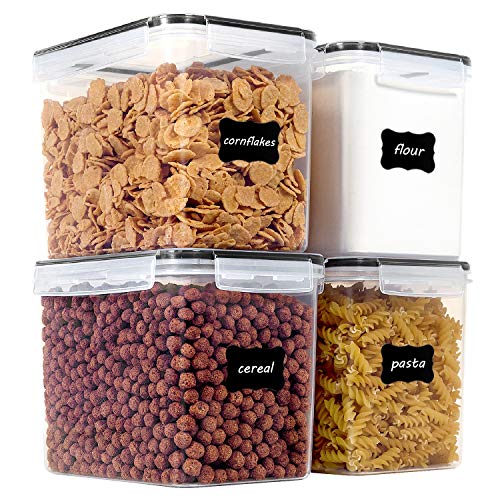
Vtopmart is the value-tier organiser of this cluster: assorted plastic sets in graduated sizes that bring order to a chaotic freezer without asking you to commit to a premium system. The appeal is coverage, enough shapes to give soups, vegetables, proteins and leftovers each a right-sized home, which matters because a half-empty large container freezes worse and thaws slower than a full small one. Lids across value sets vary more than in premium lines, so the freezer discipline in this guide matters doubly here: press lids down evenly, check the seal before stacking weight on top, and retire any lid that warps. Used that way, Vtopmart sets are excellent for the great seasonal freeze, the garden glut, the bulk-buy split, the soup marathon, where quantity of containers matters as much as refinement. They are a sensible entry point for a household building a freezer habit, with the option to upgrade the most-used sizes later.
Best for: Choose Vtopmart if you need many sizes at once for a big seasonal freeze. Skip it if you want one heirloom set and never think about containers again.
Freshware Plastic Food Storage Containers
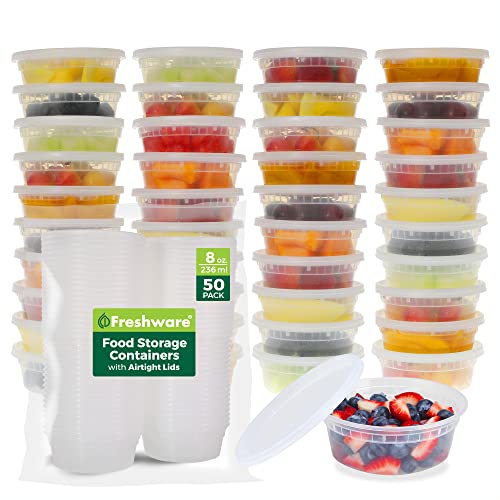
Freshware is the deli-style workhorse: simple, stackable plastic tubs in the tradition of the containers delis and caterers have trusted for decades. That heritage shows in freezer duty, because deli tubs are built around liquids, portioning and stacking in dense columns, and they freeze soups, stocks, sauces and blanched vegetables with minimal fuss. The lids are shared across sizes within a family, which simplifies life enormously when you are packing twenty portions on a Sunday afternoon. The honest limits are presentation and longevity: these are utility containers, not tableware, and thin plastic eventually cracks after many freeze cycles, so treat them as hardworking consumables and recycle casualties without regret. As an entry-to-mid tier bulk solution, Freshware is hard to beat for stock makers, hunters and anglers portioning a catch, and anyone who freezes in volume and labels everything. Pair them with a good marker and tape routine and your freezer starts to run like a small, well-kept warehouse.
Best for: Choose Freshware if you freeze in bulk and portion everything. Skip it if you want containers that double as serving dishes.

Bayco Glass Food Storage Containers
Bayco’s glass containers compete on the details households notice after month three: lids that still click shut crisply, glass that stays clear instead of clouding, and seals that keep frost from feathering across the surface of frozen meals. The sets are built for the freezer-to-fridge rhythm of real cooking, freezing a traybake on Sunday, thawing it in the refrigerator on Thursday, and serving from the same dish on Friday. Glass gives you stain resistance and easy cleaning after oily or spiced food, and the weight gives stacks a settled, non-sliding feel on the shelf. The limits mirror every glass system: expansion headroom is non-negotiable for liquids, drops on hard floors are unforgiving, and a chest freezer full of glass is a heavier lift than plastic. As a mid-tier glass option, Bayco suits cooks who value tidy presentation, honest seals and containers that look as good in month twelve as they did on day one.
Best for: Choose Bayco if you want glass that stays presentable and seals reliably. Skip it if your freezer routine involves rough handling by younger helpers.
How to Buy Smart
Start from your dominant use, not from a sale. Measure shelf height and depth, list your true portion sizes, choose material by job, and favour lid families that interchange. Buy the smallest fleet that covers a normal fortnight, live with it for a month, then expand the sizes you ran out of. The step-by-step version lives in how to choose freezer storage containers.
Setup and Care That Reduce the Cons
Most cons are habit-shaped, so habits are the cure. Cool food before freezing, leave headroom on liquids, label with name, quantity and date, freeze level until solid, thaw in the refrigerator on a tray, wash gaskets attentively and retire warped lids without sentimentality. Do those things and the ledger tilts decisively toward the pros within a single month of real use.
Leave Headroom: How Expansion Works in the Freezer
Water expands as it freezes, and almost everything you freeze is mostly water, so the single most destructive habit in freezer storage is filling a container to the brim. A soup filled to the rim will lift its own lid as it sets, breaking the seal you were counting on, inviting frost inside and sometimes cracking a rigid container outright. The fix costs nothing: leave a clear gap between the surface of the food and the lid, roughly the depth of your thumb for liquids in family-size containers and a little less for small portions. Freeze liquids with the lid resting loosely until the surface firms, then press the lid down fully for the long stay. Foods that are mostly solid, cooked meats, blanched vegetables, baked goods, need far less room, but a small gap still helps the lid seat evenly. Headroom is also why flexible containers and bags sometimes beat rigid ones for stock: they forgive. Choose the container for the food, respect the expansion, and lids stop popping at midnight.
Label With a Date, Every Single Time
Every freezer veteran has held a frosted container up to the light and played the guessing game, and every freezer veteran eventually loses. Labelling is the cheapest upgrade in this entire category: a strip of freezer tape or a grease pencil note on the lid carrying three facts, what it is, when it froze, and how much is inside. The date matters most, because frozen food does not spoil on a schedule so much as it quietly declines, and a date turns rotation from guesswork into a simple first-in, first-out habit. Write the date you froze it, not the date you cooked it, if the two differ, and add a use-first note on anything with a shorter quality window such as fish or creamy sauces. Labels belong on the lid or the front face you see when the door opens, never on the bottom. Households that label everything stop throwing food away, because nothing becomes anonymous, and anonymous food is what actually fills landfill bags after a freezer clean-out.
Thaw Safely in the Refrigerator, Not on the Counter
The refrigerator is the only thawing station this guide endorses without qualification. Moving a frozen container to the fridge the night before you need it keeps food at a safe, steady cold temperature while it softens, and it costs nothing but a little planning. Counter thawing invites the outer layer of food to sit warm while the centre is still frozen, which is exactly the pattern food safety guidance warns against. Plan the rhythm instead: soups and stews move to the fridge a full day ahead, small portions overnight, and a container of frozen sauce can go straight into a pan on gentle heat if dinner cannot wait. Put the thawing container on a plate or tray, because condensation and the occasional weeping lid are normal, and use thawed food promptly rather than returning it to the counter of good intentions. Raw proteins deserve extra care: thaw them on the lowest shelf so nothing can drip onto ready-to-eat food below. Safe thawing is a habit, not a technique, and the fridge does the work while you sleep.
Freezer Burn: What It Is and How Containers Prevent It
Freezer burn is not a safety failure but a quality thief: it is the pale, dry, leathery patch that forms where the surface of frozen food has lost moisture to the cold air around it. The food beneath is safe to eat, but the texture and flavour of the affected surface are gone for good, which is why a badly burned stew tastes tired even after reheating. The causes are always the same trio: air inside the container, a seal that leaks slowly, and time. Good freezer storage containers attack all three. A right-sized container leaves little air above the food, a gasketed or well-clamped lid keeps the cold, dry freezer air from circulating across the surface, and portioning into smaller containers means each one is opened and finished sooner. Pressing a piece of parchment or wrap directly onto the surface of a sauce before lidding adds a final barrier for long storage. Freeze food cold and fresh, seal it tight, use it in sensible order, and freezer burn becomes the rare exception instead of the house style.
Plastic, Glass and Silicone: Choosing a Material
Material decides more of your freezer experience than brand does. Plastic is light, forgiving of drops, and usually the best stacker, but it can stain, hold odours and grow brittle after many deep-freeze cycles. Glass is heavier and demands headroom and gentle temperature changes, yet it never stains, washes beautifully, and can carry food from freezer to fridge to table with a dignity plastic rarely manages. Silicone sits between the two: flexible, space-saving when empty, excellent for portioned freezing of sauces and baby food, though softer bodies stack less crisply and lids vary in quality. Most well-run freezers end up mixed, glass for reheating meals, plastic for bulk liquids and portioning, silicone for small flexible jobs. The mistake is not choosing one material; it is forcing one material to do every job. Audit what you actually freeze, match material to the dominant job, and let a small minority fleet handle the exceptions.
Lids and Seals: Where Freezer Containers Succeed or Fail
Ask anyone who has owned containers for years what failed first and they will not name the body; they will name a lid. Lids warp, gaskets loosen, latches fatigue, and a lid that no longer seals evenly turns a good container into a frost farm. When you assess any set, spend your attention here: does the lid clamp or press with even force all the way around, does the gasket sit in a groove where it can be removed, washed and reseated, and does the closed container feel rigid rather than springy at the corners. Four-sided locking lids generally seal hardest, which suits liquids and long storage; simpler press-on lids are faster and fine for short stays and dry goods. Buy into a lid family rather than a jumble, because shared lids across sizes mean the right top is always findable. And treat lids kindly: no prising with knives, no forcing onto overfilled containers, and let them dry fully before stacking them away.
Right-Sizing: Portions Freeze Better Than Boulders
The most common sizing mistake is freezing family quantities in a single large block when life is actually eaten in portions of one, two or four. A giant frozen block thaws slowly and unevenly, tempts you to thaw more than you need, and the leftovers of the thaw often go to waste. Portioning at packing time, when the food is already out and you are already washing up, is nearly free; portioning at thawing time is a chore with a knife. Build your set around the portions your household truly eats: small containers for single servings and sauces, mediums for two-person meals, and a few larges reserved for batch bases like stock and tomato sauce that genuinely get used whole. Right-sized containers also freeze faster and more evenly because the cold reaches the centre sooner, which protects texture. When in doubt, freeze two mediums instead of one large; future you, cooking for one unexpected guest or one empty house, will be grateful.
Stacking, Footprints and the Geometry of a Tidy Freezer
A freezer rewards rectangles and punishes ovals. Straight-sided, flat-lidded containers tile a shelf with almost no wasted air between them, while round tubs leave crescent gaps that add up to a whole lost container’s worth of space per shelf. Uniform footprints matter even more than shape: containers that share a footprint stack into stable columns instead of teetering towers that avalanche when you reach for the peas. Freeze containers flat and level until solid before stacking weight on them, because a lid asked to bear weight while its contents are still liquid will bow and break its seal. Leave a little air space around stacks rather than packing the freezer into a solid block, since cold air needs paths to circulate and keep temperatures even. Finally, zone your freezer the way shops zone shelves: proteins low, vegetables mid, ready meals at eye level, and a small front basket for the use-first items your labels have flagged.
Rotation and the First-In, First-Out Habit
A freezer without rotation is a savings account you never spend: value goes in, and quietly evaporates. The first-in, first-out habit is borrowed from every professional kitchen and it is disarmingly simple: new containers go to the back or bottom, older ones migrate forward, and every cooking decision starts by asking what the freezer already offers. Dates on labels make this possible; without them, rotation is astrology. Once a month, spend five minutes with the door open as little as possible, pulling forward anything ageing, and plan a week of meals that spends the oldest stock first. Keep a simple running list on the door if your household freezes a lot; crossing items off is oddly satisfying and prevents the double-buying of things already frozen. Rotation is also your quality guarantee, because food eaten in sensible order never reaches the tired, frostbitten stage that gives home freezing a bad name.
Soups, Stocks and Sauces: The Liquid Discipline
Liquids are where freezer containers earn or lose their reputation, because liquids expand, leak and stain, sometimes all in the same week. Cool soups and stocks fully in the refrigerator before freezing them; warm food raises the freezer temperature, sweats condensation onto neighbouring containers and freezes with a poorer texture. Leave clear headroom, freeze the container level until the surface is solid, and only then stack. Fat is a friend here: a thin cap of fat on a stock actually protects the surface beneath it, and it lifts away cleanly after thawing. Sauces with dairy or eggs freeze less gracefully than broth-based ones and deserve shorter stays and honest labels. Freeze some stock flat in bags or silicone trays as a space-saving reserve if your container fleet is small, and keep at least one large container free for the next batch, because stock waits for no one and improvising with the wrong vessel is how spills happen.
Freezing Raw Proteins Without Ruining Them
Raw meat and fish are the highest-stakes residents of any freezer, and containers serve them best when they are portioned, well wrapped and honestly dated. Divide bulk purchases into meal-sized portions the day they come home, because freezing a family pack whole guarantees a future evening of chiselling. A container’s job for raw protein is protection from air and from its neighbours: seal tightly, keep raw items on the lowest shelf or in a dedicated zone so nothing can drip, and label with the cut and the date rather than a hopeful question mark. Fish and seafood carry the shortest quality window and should be eaten first in any rotation; sturdy beef and lamb forgive longer stays; poultry sits between. Thaw raw proteins in the refrigerator on a tray, cook them promptly, and never return thawed raw protein to the freezer without cooking it first. Containers washed hot and dried fully between raw uses keep flavours, and households, healthy.
Washing and Care That Keeps Containers Honest
Containers ask little, but they ask it consistently. Wash lids and gaskets as attentively as bodies, because the gasket groove is where old sauce goes to perfume everything that follows; most gaskets lift out for a proper wash and a full dry. Plastic prefers gentle treatment after fatty or tomato-based loads: a paste of baking soda, or a soak, lifts stains and odours better than aggressive scrubbing that clouds the surface. Glass asks only for respect around sudden temperature changes and a check for chips at the rim, because a chipped rim is a seal waiting to fail. Let everything dry completely before lidding and storing, since a sealed damp container grows musty in the cupboard. Retire pieces honestly: a warped lid, a cracked corner, a gasket that no longer sits flat. A smaller fleet of sound containers outperforms a cupboard of casualties every single week.
Chest Freezers, Upright Freezers and Small Freezers
The right container fleet depends on the freezer it serves. Chest freezers are cold, efficient and cavernous, and they reward uniform, stackable containers with labels on top, because everything in a chest is viewed from above and excavated from above; baskets that lift out turn chaos into zones. Upright freezers behave like cupboards and suit clear, front-labelled containers in tidy rows, with door shelves reserved for small, short-stay items. The small freezer compartment of a fridge-freezer is the hardest master: space is scarce, temperatures swing with the fridge door, and only right-sized, flat-stacking containers earn their rent there. Measure your shelves and baskets before buying any set, height especially, because a container that fits the shelf but not the shelf-plus-lid geometry has ended many good intentions. Whatever the shape of your freezer, the winning fleet is the one whose sizes repeat, whose lids interchange, and whose labels can be read in the three seconds the door is open.
The Honest Economics of a Container Fleet
Freezer containers repay their cost through food that gets eaten instead of binned, and the maths is kindest to households that cook in batches, buy proteins on offer, or garden. A modest fleet that rescues even a few meals a month from the waste bin covers its cost quickly, after which the savings compound quietly for years. Premium tiers buy specific things: seals that stay true longer, bodies that resist staining and cracking, and size systems that remain available when you want to expand the fleet. Value tiers buy coverage, many sizes now, with the understanding that lids may need replacing sooner. The poor-value purchase at any tier is the mismatched one: a vast fleet for a household that rarely freezes, or a tiny premium set for a household freezing a whole garden. Match the fleet to the freezer habit you actually have, not the one in the brochure, and the economics look after themselves.
Temperature, Placement and the Cold Spots
Your freezer should hold a steady zero degrees Fahrenheit or colder, and a cheap appliance thermometer is the only way to know it actually does, because dials lie and door seals age. Containers live differently depending on where they sit: the door is the warmest, most temperature-swinging zone and suits short-stay items, while the back of the freezer is the coldest, steadiest home for long-storage proteins and precious batch cooking. Avoid pressing containers flat against cooling vents, where the blast can dry surfaces through any imperfect seal, and avoid overpacking a brand-new load of warm containers into one corner, which raises the local temperature for everything already stored. Freeze in batches, spread new arrivals out to set, then consolidate them into their zones once solid. If the power fails, a full freezer of well-sealed containers holds its cold far longer than a half-empty one, which is one more argument for right-sized containers and against dead air space.
The Monthly Freezer Audit: Five Minutes That Save Meals
Once a month, give your freezer five honest minutes. Open the door with a plan rather than curiosity: pull the oldest dated containers to the front, check lids for warping while your hands are already cold, and note anything approaching the end of its best-quality window. Build the coming week of meals around what the audit surfaces, because a freezer that is eaten from in order never accumulates the sad, frosted backlog that triggers a full clear-out. Close the audit by checking the seal of the freezer door itself with a sheet of paper: if it slides out easily from the closed door, warm air is leaking in and working against every container inside. Five minutes, monthly, is the entire management cost of a freezer that behaves like a pantry instead of a glacier.
Batch Day: Running a Freezing Session Like a System
The households that freeze best treat packing as a session with a beginning and an end, not as leftovers drifting into containers across the evening. Cook, then cool everything properly in the refrigerator while you eat the first serving. Set out containers, lids, tape and marker before the first portion is packed, portion assembly-line style, leave headroom on anything liquid, and freeze the batch spread out and level rather than stacked warm in a corner. Label as you go, never in a batch at the end from memory, because memory is exactly what fails by container nine. Wash up once, dry the lids fully, and consolidate the frozen batch into its zones the next day. A session run this way takes less total time than the improvised version and produces a freezer that reads like a menu.
Households With Children: Freezing for Real Family Life
Children change the freezer brief in three ways: portions shrink and multiply, speed matters more than elegance, and helpers with small hands will handle your containers. Favour sturdy plastic in small and medium sizes, lids that small fingers can manage or that adults can open one-handed, and a low, reachable zone of approved items that children can fetch without excavating near raw proteins. Freeze child portions of family meals at packing time rather than thawing a family block for one small appetite. Expect drops, and let that expectation choose materials honestly: glass belongs to the adult reheating shelf, not the school-night front line. Label with pictures or colours for younger children and the freezer becomes a small independence engine at breakfast and snack time.
Seasonal Freezing: Gluts, Holidays and Big Shops
Every freezer has a surge season: the garden glut, the holiday bake, the festive bulk shop, the January soup marathon. Surge seasons reward coverage, enough containers in the working sizes that nothing waits in a mixing bowl for a vessel, and they punish fleets bought for average weeks. Plan for the surge with a reserve of value-tier containers or deli tubs that live nested in a cupboard the rest of the year, and protect quality during the surge with the same rules as any week: cool first, portion honestly, label everything with the date. When the surge passes, consolidate, audit and rotate the oldest surge items to the front. A freezer that survives its surge season in order is a freezer that will never need a dramatic rescue.
Leftovers: The Gateway Habit
Most freezer systems begin not with batch cooking but with leftovers, and leftovers are where containers quietly prove themselves first. The half pan of lasagne, the extra rice, the soup that made too much: frozen promptly in a right-sized, dated container, each becomes a future lunch instead of a fridge resident that ages past saving. The rules are the same small ones: cool quickly in the refrigerator, portion to how the leftover will actually be eaten, leave headroom on anything saucy, and label with the date it froze. Households often discover that the leftover habit alone justifies the fleet, because it converts the most common waste stream in the kitchen, good food cooked and never finished, into the most convenient meals they own.
Small Kitchens and Rental Constraints
A small kitchen does not need a smaller freezer habit; it needs a more edited fleet. Choose one lid family, three sizes at most, and containers that nest or stack flat when empty so the cupboard cost stays near zero. Flat, rectangular shapes earn their rent in a fridge-freezer compartment where every shelf is shallow and the door swings all day. Renters should value portability: a fleet that moves house easily and fits unknown future freezers beats a vast system tuned to one kitchen. The discipline matters more, not less, at small scale, because a single anonymous tub can be a tenth of a small freezer. Date everything, rotate monthly, and let bags handle the rare bulky overflow rather than buying containers for the exception.
Bottom Line
Freezer storage containers are worth their shelf space for any household that freezes on purpose. The pros, protection, portioning, order and rescued food, are structural; the cons, cost, space and discipline, are manageable and mostly shrink with use. Buy a matched fleet, keep the three core habits, and the freezer becomes the most reliable shelf in your kitchen. The roundup in freezer storage containers reviews shows how the leading sets perform across different households.
Where the Trade-Offs Show Up in Daily Use: Freezer Storage Containers in Practice
This section exists to move past the tidy two-column summary and watch where each advantage and disadvantage actually appears during an ordinary week. It adds a layer that a feature list cannot give you, grounded in the food storage & organization context this freezer storage containers will actually live in. Where this guide names examples such as Rubbermaid Brilliance Food Storage Containers, PrepNaturals Glass Food Storage Containers, KOMUEE Glass Food Storage Containers, use them as test cases for the checks below rather than as shortcuts past them.
Start with the unglamorous measurements. For a freezer storage containers, the numbers that decide satisfaction are rarely the headline ones in a listing; they are shelf depth, door swing, stack height and the reach to the back row. Write the real dimensions of your space down, including the awkward constraints you normally work around without thinking, and hold every contender up against that sheet rather than against a showroom photograph. Then walk the route the freezer storage containers will take on delivery day and during normal use. A choice that fits on paper but fights you every time it is moved, opened, cleaned or stored will lose its shine quickly, however strong its other qualities look in a comparison table.
Next, rehearse the week, not the ideal day. Picture the freezer storage containers inside a full weekly shop, leftovers from two dinners, and the odd bulky item that never quite fits the neat plan. Most disappointment comes from buying for the best-case scenario: the tidy version of the household, the motivated version of yourself, the weather or the guest list you hope for rather than the one you usually get. If the freezer storage containers only makes sense when everything goes to plan, it is the wrong size, the wrong format or the wrong purchase for now. If it still looks useful on the tired, rushed, slightly chaotic version of the day, it has passed the most honest test there is, and the remaining questions are about detail rather than direction.
Pay close attention to the recurring friction points, because they compound. With a freezer storage containers, owners tend to run into lids, seals and containers drifting apart in a drawer until nothing matches anything else. None of these is dramatic on its own, and that is exactly why they get underestimated at buying time. Ask how the design you are considering handles each one: can the wearing part be replaced, can the awkward part be reached without tools, does the job take two minutes or twenty. A freezer storage containers that makes its own upkeep easy gets maintained; one that makes upkeep a project gets neglected, and neglected products perform badly in ways that then get blamed on the original purchase.
Use the listings as a checklist rather than as entertainment. For each freezer storage containers you shortlist, note the exact variant, the included parts, what is sold separately, and which photographs show the item in a setting like yours rather than in a studio. If a model named elsewhere in this guide catches your eye, treat it as a worked example for this process: run it through the same measurements, the same weekly rehearsal and the same friction list before letting familiarity turn into preference. Consistency is the whole trick. Shoppers go wrong not by choosing the objectively weaker freezer storage containers, but by judging one contender on features, the next on looks and the third on a single enthusiastic anecdote.
Frequently Asked Questions
How do I stop my freezer smelling of old meals?
Start with seals: odours travel where air travels, so containers with true seals keep curry in and freezer smell out. Wash gaskets and lid grooves attentively, dry everything fully before lidding, and dedicate one container to strongly spiced food if your fleet allows. A small open box of baking soda in the freezer absorbs ambient odour, and a monthly five-minute rotation audit catches the forgotten container before it becomes folklore.
Why did the lid pop off my container in the freezer?
Expansion is almost always the culprit. Liquids grow as they freeze, and a container filled to the brim has nowhere for that growth to go except through the lid. Leave a clear gap below the rim for soups, stocks and sauces, rest the lid loosely until the surface firms, then seal it fully. A warped lid or an overfilled container will repeat the trick until the habit changes.
What is the white patch on my frozen leftovers?
That pale, dry patch is freezer burn, caused by moisture leaving the surface of the food and meeting dry freezer air. It is a quality problem, not a safety one: the affected surface will taste tired and feel leathery, though the food beneath is fine. Prevent it with right-sized containers, tight seals, little trapped air, and sensible rotation so food is eaten before time does its slow work.
Are glass containers better than plastic for the freezer?
Neither wins outright; they win different jobs. Glass never stains, sheds odours, washes beautifully and can carry a meal from freezer to table, but it is heavier and needs headroom and gentle temperature changes. Plastic is lighter, stacks brilliantly and forgives drops, but can stain and tire over time. Most experienced households run a mixed fleet and match the material to the meal.
How long does food keep well in freezer storage containers?
Frozen food remains safe for a long time when held at a steady zero degrees Fahrenheit or colder, but quality is the real clock. Soups, stews and cooked grains hold their best quality for a few months, raw sturdy meats longer, and fish and creamy sauces for the shortest window. This is why dating every label matters: rotation by date keeps you eating food at its best rather than its most apologetic.
Should I thaw frozen food on the kitchen counter?
No. The refrigerator is the safe thawing station, because it keeps food at a steady cold temperature while it softens. Move containers to the fridge the night before, or a full day ahead for large portions, and set them on a tray to catch condensation. Thawed food should be cooked or eaten promptly, and raw proteins should thaw on the lowest shelf where they cannot drip onto other food.
Related Guides
- freezer storage containers buying guide
- freezer storage containers review
- freezer storage containers reviews
- are freezer storage containers worth it
- how to choose freezer storage containers
- best storage baskets for cupboard overflow
- best under bed storage for seasonal overflow
- home organisation deals worth watching


