Disclosure: As an Amazon Associate, dailyhomedecorating.com earns from qualifying purchases. Links on this page are affiliate links; they cost you nothing extra. Prices and availability change often, so check the current Amazon listing before you buy.
Are floating shelves worth it? The short answer: worth it if your walls are drillable, your storage problem is display and everyday overflow rather than weight, and you will spend one careful hour installing them properly — in that case they return more visible improvement per unit of money and effort than almost any other small home project. Not worth it if your walls are fragile or forbidden, your overflow is a heavy collection, or you know the dusting and the fixed layout will quietly irritate you every week. The question sounds simple, but the honest answer is a calculation with more currencies than money in it, and this article works through all of them: what you actually get, what it really costs, the households for whom the exchange is generous, the ones for whom it is a poor bargain, and a checklist that settles the question for your home specifically.
Key Takeaways
- Worth it, decisively, for small spaces and display-led storage: the floor space and calm they return cannot be bought cheaper any other way.
- The money cost is modest and staged; the real costs are an installation hour, a dusting rhythm and a pattern of holes.
- Value collapses when the specification is wrong — a living room board in a steamy bathroom, a display shelf under a book load.
- Value compounds when the specification is right, because the clutter discipline and the freed floor keep paying for years.
- The decision checklist at the end converts your answers about wall, load and temperament into a verdict.
How This Article Decides
Worth-it questions invite a shrug dressed as an answer — “it depends” — so it is worth stating the method before the verdicts. This article counts value in four currencies: money, space, time and temperament. Money is the easiest and, in this category, the least decisive, because the sums are modest and staged. Space is the currency small homes are rich and poor in, and it is where floating shelves post their most lopsided returns. Time runs in both directions — an hour spent once at installation, minutes saved daily in finding and reaching things, minutes spent weekly in dusting — and honest accounting nets it out rather than quoting only the savings. Temperament is the currency reviewers omit and owners never do: whether a household experiences open, edited, fixed storage as calm or as chore is a fact about the household, and it prices the standing costs correctly for that home and no other.
The method, then, is to run the exchange in all four currencies for each profile and report the balance without flinching in either direction. Where the balance is strongly positive — small homes, visibility problems, drillable walls — this article says worth it in plain words. Where it is negative — heavy archives, forbidden walls, imminent moves — it says not worth it in equally plain words and points at the better purchase. The large middle, where the balance turns on specification, gets the longest treatment, because that is where a reader’s decision is actually made: not in the verdict, but in the bathroom specification, the load honesty and the installation hour that decide which side of the line a given home lands on.
In this guide
Are Floating Shelves Worth It? What You Actually Get
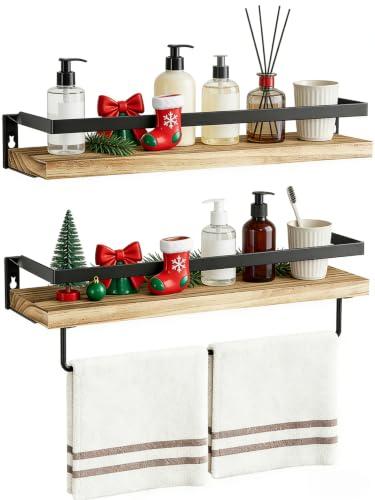
Start with the tangible return. A set of floating shelves converts dead wall volume into working storage and display: the bathroom gains the cabinet it never had room for, the small bedroom gains nightstands that consume no floor, the living room gains a composed surface for the objects that make it feel inhabited, the hallway gains a landing strip that ends the migration of keys and post across every surface in the home. Measured in storage alone, the return is respectable. Measured in space, it is exceptional — every board is capacity added at zero floor cost, in the rooms where floor is the binding constraint.
Then there is the return that does not appear on a specification sheet. Rooms with edited wall storage feel larger, calmer and more deliberate, and the feeling is not a styling trick: sightlines run under the shelves, the floor reads as one surface, and the objects on display read as chosen. Households consistently report that the room’s other furniture looks better after the shelves go up, because the shelves absorb the small clutter that was previously distributed across every horizontal surface, making each surface look neglected. One wall’s organisation raises the perceived standard of the whole room.
The third return is behavioural, and over years it may be the largest. Visible storage disciplines accumulation: what is on show gets edited, what gets edited gets used or released, and the household’s stock of forgotten duplicates — the third olive oil, the expired skincare, the unread duplicate paperback — quietly stops growing. Owners rarely buy floating shelves for this effect and frequently cite it, a year later, as the one they would not give back. Any honest answer to “are floating shelves worth it” has to price all three returns: the storage, the space and the discipline.
There is also a return in optionality. A wall of shelves is a platform: it hosts the nursery phase, the working-from-home phase, the displaying-the-collection phase and the spare-room phase in succession, without a single further purchase, because the platform is neutral and the cargo carries the meaning. Furniture rarely offers this — a changing table is a changing table forever — and the platform quality is why so many owners describe their shelves, years on, as part of the house rather than as possessions in it. When a purchase dissolves into the home’s infrastructure, its worth stops being a question anyone asks, which is the most complete answer the question can receive.
The Real Costs Beyond Money
The money cost is the smallest and the most flexible: sets exist at every tier, the project stages naturally across months, and no tradesperson is required. The real costs are paid in other currencies. The first is time and care at installation — an unhurried hour per wall, with a stud finder, a level and the right anchors — and it is non-negotiable: the category does not offer a cheaper installation that still works, and attempts to pay less are repaid in tilt, play and eventual refits. The second cost is maintenance rhythm: open shelves collect dust in living rooms and grease in kitchens, and the boards join the household’s cleaning round permanently. The tax is small — minutes a week — but it is forever, and households should sign for it knowingly.
The third cost is commitment. Each composition is a pattern of holes and a fixed point in the room’s geography: the sofa wall becomes the shelf wall, and rearranging the room thereafter means arranging around the shelves or filling and repainting. The fourth cost is cognitive: open storage asks to be styled, at least minimally, forever. An ignored floating shelf looks worse than an ignored cabinet, because its neglect is exhibited. The fifth cost, easy to overlook, is the specification risk itself — the possibility of buying the wrong board for a wet room or the wrong depth for the cargo and paying twice. Every one of these costs is manageable, and the sections below show how different households manage them; but a worth-it calculation that counts only the purchase price is not a calculation, it is a hope.
Two further costs deserve honest entry in the ledger. The first is the exit cost: when the shelves come down — at a move, a redecoration, a change of mind — the wall wants an hour of filling, sanding and painting, and a rented home wants it done well enough to return a deposit. It is a small cost and a certain one, and it belongs in the calculation from the start rather than as a surprise at the end. The second is the cost of the learning curve’s first mistake, which most households pay exactly once: the anchor that was wrong for the wall, the composition drilled before it was taped. The mistake is tuition — it teaches the skills every later wall benefits from — but tuition is still a cost, and it is minimised by starting the project on the most forgiving wall in the home rather than the most visible one.
The Friction Dividend: Small Daily Returns That Add Up
Between the storage return and the behavioural return sits a third category of value that owners describe most vividly and analysts capture least: the removal of small daily frictions. The keys that are always in the entryway bowl. The skincare that is always at the bathroom shelf rather than in a bag, a drawer and a windowsill simultaneously. The mug tree’s worth of cups that live one reach from the kettle. The book that is on the bedroom shelf rather than in a pile that migrates around the bed. None of these moments is worth money individually; multiplied by every day of a tenancy, they are the substance of a home that feels easy to live in, and they are the reason owners asked to justify the purchase so often answer in the language of mornings rather than of storage.
Friction has a shadow side that honest accounting must include: a badly placed shelf creates friction as reliably as a well-placed one removes it. The board at head height in the narrow hallway, the bathroom shelf that crowds the mirror’s swing, the kitchen run hung a fraction too high for the shortest cook — these tax their households daily in the same small currency, which is why the tape rehearsal and the reach checks in the installation guides are value decisions and not merely aesthetic ones. The friction dividend is real, but it is paid only on compositions planned from the user’s body and habits outward. A household that plans that way collects the dividend for years; a household that composes for the photograph collects the tax instead, and often concludes — wrongly, but understandably — that the shelves were not worth it.
There is one more daily return worth naming because it surprises people: the shelves change how a home receives guests and how it photographs for the ordinary purposes of life — the video call background, the listing photograph when the flat is let, the family picture at Christmas. A composed wall of shelves reads as intention, and intention is the quality that makes rooms feel cared for. Owners do not buy shelves for this, and it would be a flimsy reason to buy them; but as a by-product of storage that was worth buying anyway, it is a dividend in the truest sense — value nobody paid for, delivered anyway.
Who It Pays Off For
The small-home household. This is the profile for whom the exchange is most one-sided. Floor space is the scarcest asset they own, walls are comparatively abundant, and their storage needs run to the everyday and the beautiful rather than the archival. Floating shelves give this household storage it literally cannot obtain any other way — there is no floor for the bookcase that the wall replaces — and the composability lets the storage grow around windows, doors and radiators in the improvised geometry small homes demand. For this profile the question is rarely whether, only where first.
The renter who plans to stay. Counter-intuitive but well supported: a renter staying two or more years in a home with blank walls and thin storage gets years of daily return from an afternoon of installation and an hour of making good at the end. The arithmetic favours the shelves whenever the tenancy is long and the lease permits filling small holes, and the staged cost suits a household furnishing gradually. The profile’s discipline is to keep compositions few and large — the most storage per hole — and to keep the filler and paint from day one.
The household whose clutter is a visibility problem. Some homes are not short of storage; they are short of honest storage. Cupboards are full of the forgotten, surfaces are full of the homeless, and nothing is ever where it should be because nothing is ever seen. For this household, floating shelves are worth it as an intervention rather than as furniture: they force the edit, display the survivors and make the home’s stock legible at a glance. The payoff shows up as fewer duplicate purchases, faster mornings and rooms that stay tidy without campaigns — returns that dwarf the shelf’s modest storage contribution.
Who Should Skip It
The keeper of heavy collections. If the storage problem is weight — the serious library, the dinner service, the archive of a hobby — floating shelves are the wrong tool at any tier, and buying them for it converts a solvable problem into a recurring worry. This household’s money earns more in a bookcase, a cabinet or visibly bracketed shelving, where capacity is the design brief. Shelves can still serve the collection’s display minority, but as the main act they are not worth it, and no installation care changes that.
The household that cannot or will not drill. Fragile plaster, unknown hidden services, a lease that forbids holes, or a temperament that dreads the drill: any of these removes the foundation the value rests on, because the shelves’ worth is manufactured at installation. Furniture storage, leaning shelves and over-door systems serve this household better, and the honest advice is to spend there without regret. A floating shelf installed reluctantly and casually is the one genuinely bad bargain in this category.
The chronic rearranger and the dust-averse. Households that re-plan rooms seasonally will feel the fixed composition as a constraint within the year, and households for whom dust is a health matter rather than a chore should not sign for open surfaces at eye level throughout the home. Both profiles are better served by storage that moves or closes. Worth-it is a household-level verdict, and for these two it honestly lands on no.
The household about to move. Timing is a specification too. A household expecting to move within a few months will pay the installation and the making-good while collecting only a season of returns, and the same purchase made in the new home pays for years. The exception is the seller preparing a home for market, where a well-composed shelf wall in a bathroom or entryway can present storage the room lacks — but that is a staging decision with its own arithmetic, and it should be made as one, with inexpensive sets and no illusions about recovering the spend in the price.
The Strengths and Trade-Offs of Owning Them
Strengths of ownership
- Daily, visible return. Unlike most home purchases, the shelves pay their dividend every day in space, order and appearance.
- Staged, reversible spending. The project grows board by board as budget and confidence allow, and boards travel to the next home.
- A tidiness ratchet. Visible storage keeps itself edited and quietly raises the standard of the rooms around it.
Trade-offs of ownership
- A permanent light chore. Dusting and degreasing join the household round for as long as the shelves stay up.
- Fixed geography. Compositions anchor a room’s layout; rearranging means working around them or making good.
- Installer-made safety. The security of the system is manufactured by your hour with the drill, and must be audited as the household changes.
The Value Equation, Worked Through Three Homes
Abstract verdicts persuade nobody, so here is the calculation run on three concrete households. The studio flat. One room must sleep, work, host and store, and the floor plan is fully subscribed: bed, desk, sofa, and not one spare square foot. A pair of shelves beside the bed replaces the nightstand that never fitted; a run above the desk holds the work library and the printer’s supplies; a bathroom pair ends the reign of products on the bath rim. Total outlay: a few sets at the entry-to-mid tier and one long afternoon. Total return: the flat gains the function of a room it does not have. For this home the worth-it question answers itself so completely that the only real decision is sequencing — which wall first — and the answer is the bathroom, because that is where the daily friction lives.
The family house with the chaotic bathroom and the book problem. This home has two separate storage problems wearing one coat. The bathroom problem is a visibility-and-volume problem in a wet room: floating shelves, bathroom-specified, solve it outright and are worth it without reservation. The book problem is a weight problem distributed across three rooms: floating shelves solve only its display edge — the current reads, the children’s picture books at safe heights, the cookbooks in the kitchen — while the archive still needs the bookcase the household has been postponing. Run honestly, the calculation says buy both, in the order bathroom, bookcase, display shelves; run carelessly, with shelves bought for the whole problem, it produces the classic regret. The lesson generalises: worth-it is a per-problem verdict, and homes usually contain several problems.
The house-proud Victorian with lath-and-plaster walls. Here the wall itself votes. The plaster is old, its grip is uncertain, and the rooms are generous enough that floor space is not scarce. Floating shelves could be installed — with great care, into the studs behind the lath, by someone patient — but the value equation inverts: the installation cost in effort and risk rises while the space return falls, and furniture storage, which this house has room for, delivers the same capacity without touching the fabric. Verdict: not worth it in the main rooms, worth it in the modernised bathroom and kitchen where the walls are new. Even a sceptical case, examined honestly, usually contains one room where the answer is yes.
What Owners Say a Year Later
The most reliable worth-it evidence is retrospective, and it sorts into three voices. The first voice is the majority: owners who matched the specification to the room and report, with mild surprise at their own consistency, that they would repeat the purchase in the next home and recommend it without caveats beyond “install them properly.” Their shelves have become infrastructure — unremarked, daily, load-bearing in the household’s routines — and infrastructure is the highest compliment household purchases earn. Notably, this voice includes most of the renters and small-home households, the profiles with the most to gain.
The second voice is the conditional owners: satisfied with the shelves, rueful about a specification. The bathroom board that should have been bathroom-built. The composition drilled before it was taped, sitting forever two centimetres from right. The set bought one size too shallow for the cookbooks. This voice is the most instructive in the article, because its regrets are all located at the buying stage — none of these owners faults the category, and all of them would buy again, differently. Their testimony converts directly into this article’s method: the worth of floating shelves is decided less by which set than by how carefully the brief was stated before it.
The third voice is the minority who would not repeat the purchase, and it deserves a fair hearing rather than dismissal. Its members are concentrated exactly where the skip profiles predicted: heavy loads that never suited the mechanism, walls that fought the installation, households whose dust or rearrangement habits made the standing costs feel like standing irritations. Their verdict is not evidence that floating shelves are poor value; it is evidence that value is a match quality, and that the match failed in identifiable, avoidable ways. A reader who finds their own household in the third voice’s description should take the hint before purchase rather than after — that is what the checklist below is for.
When the Answer Changes
Worth-it is not a permanent verdict, and a household’s correct answer can move in both directions across the years. It moves toward yes when a home’s storage pressure rises — a child arrives and the spare room’s walls must work, a hobby colonises the dining table and begs for wall storage above a desk, a move trades a house for a flat and floor space becomes the scarce currency it never was. It moves toward no when the household’s centre of gravity shifts to the heavy and the archival, when a renovation reveals walls that should not be drilled, or when a cleaning reality — a new allergy in the family, a busier working life — reprices the dusting rhythm from trivial to burdensome.
The shelves themselves accommodate the movement gracefully, which is part of their value: compositions can be extended when the answer moves toward yes, and boards come down with an hour of making good when it moves toward no, leaving the household with portable storage that fits the next home’s walls. Compare the built-in or the large furniture piece, whose verdict is locked at purchase. A storage system whose commitment is measured in fillable holes is unusually forgiving of life’s revisions, and for households in transitional years — first flats, growing families, downsizing parents — that forgiveness is worth money all by itself.
Alternatives to Consider
Worth-it is always relative to the next best option, so price the alternatives honestly. A bookcase buys capacity, ready-made safety and zero holes at the cost of floor space and a furniture silhouette; for heavy or archival storage it is not merely an alternative but the correct purchase, and our notes on best bookcase for small spaces cover the small-home version of that choice. Bracketed wall shelves buy most of the wall-storage benefit with higher capacity and a visible-support look, at the cost of the floating effect itself — the right trade in utility rooms and workshops, the wrong one where the clean wall is the point. Closed wall cabinets buy dust protection and visual silence at the cost of depth, weight and a heavier installation. Leaning and ladder shelves buy the no-drill life at the cost of floor footprint and stability discipline. Against that field, floating shelves win exactly where this article has claimed: display-led, everyday storage in drillable rooms where floor space is precious. Where your brief sits outside that territory, the alternatives are not consolations — they are the better buy, and choosing them is the worth-it framework working as intended.
If You Buy, Buy Right: The Picks That Protect the Value
Most of the value in a floating shelf purchase is destroyed or protected at the specification stage, so the picks below are framed as value protection: each is the family whose design defends the investment in its brief. All are real, widely sold product families, positioned by tier; check price on Amazon for the current listing.
BAYKA Floating Shelves — the safe mainstream value
The set that protects value for the widest range of buyers: convincing finish at eye level, compositions that finish a wall in one purchase, brackets that fit snugly. Best for: living rooms and bedrooms. Not suited for: steamy bathrooms. Tier: mid.
QEEIG Bathroom Floating Shelves — the bathroom value
In wet rooms, value is lifespan, and the specialist’s sealed, purpose-built design is what survives to deliver it. Best for: bathrooms of every size. Not suited for: book storage or living room display. Tier: mid.

AMADA HOMEFURNISHING Floating Shelves — the working-room value
Plain, wipeable and forgiving: the pick whose low-maintenance ownership protects value in kitchens, bathrooms and laundry rooms. Best for: working storage. Not suited for: formal styled walls. Tier: entry to mid.

Wallniture Floating Shelves — the character value
Rustic system shelves whose under-shelf utility adds function no bare board offers, protecting value in kitchens and craft spaces that work daily. Best for: farmhouse kitchens, coffee stations, workspaces. Not suited for: minimalist rooms. Tier: mid.
Sorbus Floating Shelves — the styled-wall value
Decor-coordinated sets whose consistency across boards protects the value of grids and symmetrical compositions. Best for: styled living rooms and hallways. Not suited for: wet or working storage. Tier: entry to mid.

Greenco Floating Shelves — the first-home value
The honest minimum spend that still buys the floating effect for light display and corners — the right value when the brief is small and the tenancy may be short. Best for: rentals, corners, photographs and plants. Not suited for: loads that will grow. Tier: entry.
How to Get the Most Value If You Buy
Value in this category is extracted by a handful of habits, all cheap. First, install once and install properly: studs wherever the composition allows, anchors genuinely made for hollow walls where it does not, a bracket levelled without apology, and a press-test before anything is styled. A shelf installed to that standard pays for a decade; one installed casually taxes its owner with refits. The full method is in how to install floating shelves. Second, compose in tape before drilling, and live with the tape for a day — the cheapest value protection in the entire purchase, because it moves every layout mistake to the one stage where mistakes are free. Third, specify for the room’s reality: bathroom-built boards in the bathroom, depth matched to the largest object, reserve in the bracket for the load the household will actually apply by month six.
Fourth, keep the safety discipline that protects both the household and the investment: loads in the honest band, heaviest items against the wall, shelves in children’s rooms fixed with extra care, placed out of climbing reach, carrying only light and unbreakable things, and never hung above the pillow end of a bed. Fifth, run the seasonal audit — thirty seconds a shelf, a press, a glance for tilt or a shadow gap, an edit of whatever has crept on — because loads and households both change, and the audit is where the shelf’s value is renewed. Sixth, style with restraint and containers: a tray in the entryway, a basket on the bathroom board, groups in odd numbers, empty board left at the ends. The shelves that look expensive are rarely the expensive ones; they are the edited ones. The choosing framework behind these habits is in how to choose floating shelves, and the specification detail is in the floating shelves buying guide.
Finally, protect the value at the end of the story as carefully as at the start. When a composition comes down, fill and paint promptly while the colour match is findable, and keep the boards and brackets together, labelled by room — a shelf set that travels intact to the next home is value carried forward, while a box of orphaned boards is value leaked. When a room is redecorated, consider refinishing or replacing boards on sound brackets before pricing a whole new installation; the structure you already own is the expensive part in labour, and renewing the visible face is how owners stretch one purchase across two decades of decor. Worth-it, in the end, is not only a buying decision. It is a keeping decision, renewed cheaply by households that treat the shelves as infrastructure from the first day.
Room by Room: Where the Worth Is Won and Lost
The general verdict dissolves, on inspection, into room verdicts, and they are not all the same. The bathroom is where worth is won most completely: the storage need is universal, the floor alternative rarely exists, and the daily return is felt at the two most hurried moments of the day. It is also where worth is lost most completely by a single error — the unspecified board in the steamy room — which is why this article treats the bathroom specification as the purchase, not as a detail of it. Buy the bathroom board and the room returns the verdict yes for a decade; buy the pretty board and the same room returns no within two winters.
The kitchen’s verdict is won on honesty about rotation. Households that store the daily dozen — the mugs, the jars, the oil, the boards — collect the visibility dividend at full strength and find the shelves worth it emphatically. Households that store the archive — the occasion ware, the inherited sets, the appliances of good intentions — pay the grease tax on objects that never move and conclude, correctly for their usage, that the shelves were a mistake. The shelf did not change between those kitchens; the cargo did, and the verdict followed the cargo. The living room’s verdict is won on editing: the styled household collects the look, the space and the discipline together, while the accumulating household pays the exhibition cost of its own clutter and blames the medium. The bedroom verdict is the calmest — a nightstand alternative and a dressing composition rarely disappoint anyone — with the single hard condition that safety placement is non-negotiable above and beside the bed. Read your own rooms in that order — bathroom, kitchen, living room, bedroom — and the household verdict is simply the sum of the rooms you actually plan to shelve.
The Money Question, Handled Honestly
This article has deliberately kept money in qualitative tiers, because listings change constantly and a fixed figure would be stale before it was read — check price on Amazon for any set you are seriously considering. But the shape of the money decision can be stated precisely, and it has three features buyers should understand. The first is that the category’s value concentrates in the middle: the entry tier buys the effect for light duty honestly, the mid tier buys the bracket fit, sealing and finishes that ownership actually tests, and the premium tier buys materials and refinement that only permanent, eye-level installations fully repay. Most households, in most rooms, should be shopping the middle and feeling no anxiety about it.
The second feature is that the shelf is not the whole purchase. The honest basket includes the anchors your wall actually needs if the included plugs are not up to it, a stud finder if the household does not own one, a level worth trusting, and — for renters and the wise — the filler and touch-up paint bought at the start rather than hunted at the end. None of these is expensive; together they are the difference between the advertised cost and the real one, and a worth-it calculation should carry the real one. The third feature is staging: unlike a bookcase or a cabinet, the floating shelf project can be bought one wall at a time, which spreads the money across months and, just as valuably, spreads the risk — the first wall’s lessons are banked before the second wall’s money is spent.
Set against the alternatives, the money case is strong where the brief suits. The furniture that delivers equivalent visible storage — a bookcase, a cabinet, a sideboard — costs more per room in most comparisons, consumes the floor the shelves save, and commits the household in a single purchase. The shelves’ staged, portable, repairable economics are a genuine part of their worth, and for households furnishing gradually they may be the deciding part. Where the brief does not suit — the heavy archive, the undrillable wall — the same money buys more value in furniture, and this article’s verdict follows the money there without hesitation.
The Decision Checklist
Answer honestly, in your own home, with the wall in front of you:
- Can this wall be drilled, and can I find studs or fit proper anchors in it?
- Is my overflow mostly display and everyday items rather than dense, heavy storage?
- Am I willing to spend one careful, unhurried hour on installation?
- Will a light weekly dusting rhythm feel like a small price rather than a grievance?
- Can this room’s layout live with a fixed composition for a year or more?
- For a bathroom: am I willing to buy the bathroom-built specification rather than the prettiest board?
- For a child’s room: can the shelves go high, carry only light things, and stay out of climbing reach?
The rule: five or more yes answers, with the first two among them, means floating shelves are worth it for your home — buy with confidence and install with care. Three or four yes answers means worth it for one room or one wall, chosen where the answers are strongest; stage the project and let the first composition argue for the second. Two or fewer means the honest verdict is no for now, and the alternatives section above is your shopping list. For the balanced ledger behind the checklist, read floating shelves pros and cons; for owner reporting on the picks, floating shelves reviews.
The Earn-Its-Place Test: When a Floating Shelves Repays the Space It Takes
Worth-it questions about a floating shelves are really questions about frequency, so start by honestly counting how often the job it does actually arises in your household in a normal month, not in the motivated week when you decided to shop for one. Multiply that frequency by the friction it removes each time — minutes saved, mess avoided, a workaround retired, a room made usable for longer each day — and the value of a floating shelves stops being a feeling and becomes a rough but usable number. When something about the floating shelves disappoints, change one variable at a time — position, setting, timing, load, accessory or technique — and give the change a fair trial, because changing three things at once leaves you with a better or worse result and no idea why. Measure before anything else, and measure the floating shelves in its working state rather than its packed or folded state, because handles extend, lids open, cords trail, doors swing and users stand somewhere, and all of that belongs in the measurement.
Keep the packaging of a larger floating shelves until those first ordinary tests are done, flattened if space is tight, because re-boxing an awkward shape from scratch is the hidden difficulty inside many otherwise straightforward returns. Test the floating shelves in the first week under deliberately ordinary conditions rather than saving it for a special occasion, so that any problem surfaces while returning, exchanging or adjusting your setup is still simple. Finally, remember that the best floating shelves for your home is the one whose size, habits and upkeep disappear into your routine, leaving only the result behind — a cleaner surface, a better-lit seat, a tidier shelf, an easier job — week after ordinary week. Then subtract the standing costs honestly: the floor, shelf, cupboard or counter space a floating shelves occupies every day, the cleaning and upkeep it asks for, and the small accessories or consumables its ownership quietly requires.
Plan the storage home for the floating shelves before it arrives, naming the exact cupboard, corner, shelf, hook or stretch of floor, because a product without a home migrates around the house and slowly becomes the clutter it was bought to reduce. Seasonal thinking helps more than expected: a floating shelves bought in one season will meet different light, humidity, mud, heat, guests and routines in another, so judge its size, storage and upkeep against the hardest season it will face. The deciding experiment is to live one ordinary week noticing every moment the floating shelves would have been used, marking each one down, because a week of real tally marks settles the worth-it question better than another evening of comparison shopping. Borrowed enthusiasm is the trap here: a floating shelves can be excellent and still not be worth it for you, if your neighbours, your feed or your guests use theirs weekly while your own routine would reach for it a handful of times a year.
Watch for edge cases in your own home: the pet that investigates everything, the child who treats every new object as furniture, the guest who uses force where you use familiarity, and the weather, light or season that changes how a floating shelves behaves. If you want a concrete listing check, take a name already shortlisted in this guide, such as BAYKA Floating Shelves, QEEIG Bathroom Floating Shelves and AMADA HOMEFURNISHING Floating Shelves, and verify that exact floating shelves listing against the measurements and compatibility questions above, field by field, rather than trusting the headline description alone. Look at replacement parts and consumables for the floating shelves while you are still comparing, confirming that the pieces most likely to wear, clog, tear, fade or get lost can actually be obtained without replacing the whole product. Check the floor, wall, ground or surface the floating shelves will meet, since level, texture, moisture and finish decide more about everyday performance in home decor & lighting settings than most shoppers expect when they are comparing listings on a screen.
Consider the cleaning rhythm honestly: a floating shelves that needs attention after every use suits a household that enjoys small rituals, and frustrates a household that wants to finish a job and walk away, so match the upkeep to the temperament, not the intention. If a problem with the floating shelves repeats in the same spot or the same stage of the job, treat the pattern as the clue — patterns point to setup, surface or technique, while random problems point more often to the individual unit. Use a simple decision checklist at the end: the floating shelves fits the measured space, suits the real frequency of the job, matches the household’s cleaning temperament, has obtainable parts, and has a named storage home — five yeses make a confident order. Photograph your setup once the floating shelves is working well — the position, settings, arrangement or layout you settled on — so that after a move, a deep clean or a seasonal break you can recreate the arrangement that worked instead of rediscovering it.
Frequently Asked Questions
Are floating shelves worth it in a small apartment?
They are the single easiest yes in this article. Small apartments are floor-poor and wall-rich, and floating shelves are the only common storage that spends the abundant resource and saves the scarce one. A bathroom pair, a bedroom nightstand alternative and an entryway landing strip can transform how a small apartment functions without consuming a single square foot. The conditions are the usual ones — drillable walls, honest loads, careful installation — and the renter’s version of the calculation is covered in the profiles above.
Are floating shelves worth it for books?
For the books you are reading and the shelf-worthy minority you display, yes — a stud-fixed shelf in the book band is a pleasure and a space-saver. For a collection, no: the archive belongs in a bookcase, and forcing it onto floating shelves converts a storage solution into a standing anxiety. Most reading households land on the hybrid — shelves for the current and the beautiful, furniture for the many — and report that the division itself improves both.
Do floating shelves add value to a home?
They add the value of a room that works and photographs well, which is real but should not be overstated: buyers purchase houses, not shelving, and a composition that suits the room helps a viewing while a composition that suits only the seller does not. The reliable value is the owner’s, measured in years of daily use. Install for your own life in the home, keep the compositions classic, and treat any effect on resale as a pleasant side effect rather than the justification.
How long before floating shelves pay for themselves?
In the only currency that can be counted honestly — use — almost immediately: the first morning the bathroom counter is clear and the first evening the living room floor reads empty, the shelves have begun returning their cost. In staged money terms, the comparison is against the furniture they replace or postpone, and a wall of shelves that defers a bookcase purchase by years has paid for itself several times over. The purchases that never pay back are the mis-specified ones, which is why this article spends its length on specification. There is a subtler payback worth noticing as well: the shelves keep paying in rooms they were not bought for, because the skills and the confidence from the first installation make every later storage problem in the home cheaper to solve — the household that has shelved one wall well never again looks at a blank wall and sees nothing.
Are cheap floating shelves worth it?
Cheap and honest is worth it for light display: a simple entry-level set, installed properly, serves photographs and plants for years. Cheap and ambitious is not: the same set under books or in a steamy bathroom fails the specification test and becomes the category’s bad reputation. The dividing line is not the tier but the match — spend small where the brief is small, and let the working rooms and permanent installations carry the mid-tier spend. A useful test at the shelf edge, so to speak: if the set’s bracket and hardware look like the parts you would choose separately for the job, the price is honest; if the board is beautiful and the hardware is an afterthought, the cheapness is located exactly where it will be felt.
What is the most common reason people regret buying floating shelves?
Mis-specification, in three costumes: the living room board steamed in a bathroom, the display shelf loaded with a library, the good bracket betrayed by the wrong anchors. All three are buying-stage errors, which is quietly good news — the regret is preventable at the exact moment this article addresses. Households that match room, load and wall before purchase rarely join the regret statistics, whatever tier they buy at.
Related reading: floating shelves review, floating shelves vs wall shelves, best wall sconce picks, and best wall mirror ideas.