Disclosure: As an Amazon Associate, dailyhomedecorating.com earns from qualifying purchases. Links on this page are affiliate links; they cost you nothing extra. Prices and availability change often, so check the current Amazon listing before you buy.
This electric lawn mower review takes the category apart piece by piece: what the machines are, how they are built, how they actually perform across a season of real grass, and where the honest limits sit. The verdict up front is simple. A modern electric lawn mower is the right mower for most households — quieter, cleaner, easier to start, and cheaper to run than the petrol machines it replaces, with a finish on maintained lawns that gives nothing away. It suits regular gardeners with small to medium lawns best. It suits owners of very large, rough, or chronically neglected ground least, unless they buy the strongest class and run it as a system. Everything below exists to show the working behind that verdict, in enough detail that you can test it against your own lawn, your own shed, and your own habits before you believe a word of it.
Key Takeaways
Electric mowing has matured from compromise to default. Brushless motors, capable battery platforms, and decks designed around mulching mean the current generation cuts a normal lawn as well as petrol ever did, while asking almost nothing in maintenance. The differences that remain are structural: energy stored in a pack rather than a fuel can, torque that favours maintained grass over neglected grass, and a purchase decision that is really about joining a battery platform. Judge an electric lawn mower as a system — mower, batteries, charger, brand support — and the category makes complete sense. Judge it as a like-for-like engine swap and you will miss the point in both directions. This review therefore scores the system, the season, and the shed, as well as the cut itself, because that is how the machine will actually be lived with.
In this guide
Electric Lawn Mower Review: What an Electric Mower Is and Where It Fits
An electric mower is a rotary mower whose blade is driven by an electric motor instead of a petrol engine. Power arrives either down a cable from a household socket or from a rechargeable lithium-ion battery pack that clips into the machine. Around that simple change, the rest of the mower is familiar: a deck, a blade, four wheels, a height adjuster, and a bag, mulch plug, or discharge chute for the clippings. The familiarity is a strength. Nothing about the actual mowing — the passes, the overlap, the edging afterwards — changes, which is why switchers settle within a couple of cuts.
Where the category fits is the suburban and urban lawn spectrum: front gardens, family back lawns, and the medium plots that make up most of the mowing world. Within that spectrum, corded models anchor the small and simple end, mainstream battery models own the middle, and the strongest battery platforms reach into genuinely large lawns when paired with multiple packs. Beyond the spectrum sit the edge cases — paddocks, orchards, and rough ground — where the format can work but must be chosen deliberately rather than hopefully. This review concentrates on the spectrum’s heartland, because that is where most readers live, while flagging the edges honestly wherever they matter.
The market’s shape helps buyers. A handful of major platforms — EGO Power+, Greenworks, Ryobi, Toro, and Makita among them — account for most serious machines, each with its own battery family, deck designs, and character. Below them sits a long tail of budget and corded models, among which the Sun Joe MJ401E is a well-known reference for small lawns. The review that follows uses these established names as reference points for classes of machine, because classes are what a buyer actually chooses between; individual listings change, but the character of each class is stable enough to review meaningfully.
Design, Build and Setup
Build quality in this category divides along predictable lines. Decks are steel or moulded composite. Steel feels dense and traditional and shrugs off the knocks of shed life, at the price of weight and a need to keep the underside clean and dry so rust never starts. Composite decks cannot rust, often weigh less, and suit damp storage, and modern mouldings are far tougher than their reputation from decades ago. Handles fold on most mid-range and better models, some without tools, and several battery designs store upright, which transforms the shed arithmetic for small homes. Wheels range from basic plastic to larger, bearing-mounted designs that roll noticeably more easily over imperfect lawns; rear wheel size in particular changes how a push mower feels on bumpy ground.
Controls are a quiet triumph of the format. Starting is a key, a held bar, and a button — no choke, no priming, no pull. Height adjustment on better machines is a single lever moving the whole deck evenly, which encourages the seasonal height changes good lawn care wants. Self-propelled models add a drive lever or paddle, sometimes with variable speed, and the best implementations let you feather the drive in tight corners rather than lurching. Battery fit is tool-free everywhere: the pack clicks in and out in seconds, which matters because you will do it after every cut for charging.
Setup out of the box is measured in minutes. Unfold and lock the handle, set the height, fit the bag or mulch plug, charge the battery fully, and walk the lawn once to clear stones and forgotten toys. There is no oil to add, no fuel to fetch, and nothing to tune. The only setup step owners skip and regret is reading the safety pages: where the safety key lives, how the blade brake behaves, and what to do before working under the deck. That reading is part of the machine’s design, and this review counts a clear manual and obvious safety interlocks as genuine build quality, not paperwork.
Small design details separate the thoughtful machines from the adequate ones across a season of use. A bag with a visible fill indicator, or a shape you can judge at a glance, saves the trail of clippings that betrays a secretly full bag. A washout port or a deck shape that scrapes clean quickly turns the least-loved chore into a two-minute one. Cable clips on corded models, a battery gauge you can read in sunlight, a handle that folds without a wrestling match — none of these will headline a product page, and all of them will be noticed weekly. When two candidate machines are otherwise equal, this review’s advice is to choose by these details, because they are the design layer you actually live with.

The Premium Reference: EGO Power+ Select Cut LM2135SP
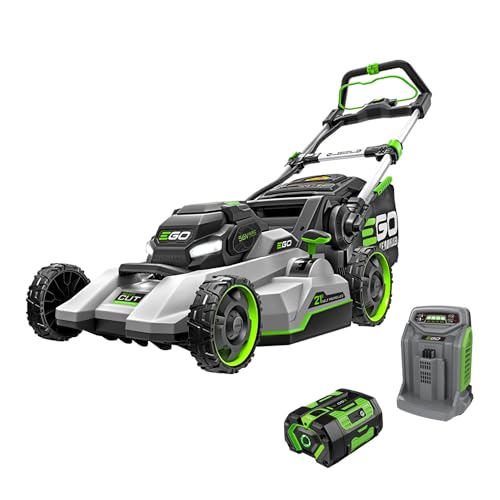
As a design statement, the EGO Power+ Select Cut LM2135SP shows where the top of the category has arrived: self-propelled drive, a multi-blade cutting arrangement aimed at fine mulching and a clean finish, folding storage, and a battery platform shared with a deep catalogue of garden tools. It feels engineered as a system rather than assembled as a product. Best for: owners who want the category’s current ceiling in one purchase. Not suited for: anyone whose lawn is small enough that this class is pure surplus.

The Simplicity Reference: Sun Joe MJ401E
At the opposite pole, the Sun Joe MJ401E shows how little a mower can be while still being a mower: a compact corded machine, light enough to carry one-handed by its handle, with a small bag and a simple height system, aimed squarely at small lawns near a socket. Its design honesty is its charm — nothing is pretending to be anything else. Best for: small flat lawns and minimal sheds. Not suited for: any garden where the cable becomes a route-planning exercise.
Performance in Real Use
On the Weekly Cut
The weekly cut is the test that matters, and here the modern electric mower is simply excellent. On grass that has grown for a week in season, a mainstream brushless battery model holds blade speed, mulches or bags cleanly, and leaves a finish indistinguishable from a good petrol machine’s. The experience around the cut is better than petrol’s in every direction: it starts instantly, runs quietly enough for conversation, produces no fumes, and stops the moment you release the bar. Owners mow more often because the friction is gone, and lawns mowed more often look better — the category’s most reliable performance upgrade is behavioural, and it is real.
On Long or Wet Grass
Stretch the interval, add rain, and the review must be honest: this is where electric mowers work hardest and where weaker models show it. Long grass asks for a raised deck and a two-stage cut, wet grass clogs decks and clumps clippings, and mulching in either condition disappoints. Stronger battery classes cope respectably with a staged approach; light corded models genuinely struggle and should not be asked to try often. The discipline the format asks — mow before it gets long, wait for grass to dry, never mow wet slippery lawns for your own footing’s sake either — is reasonable for most households, but it is a discipline, and this review scores the category down for owners whose lives cannot supply it.
On Slopes and Awkward Shapes
Slopes reward self-propulsion and punish dead weight, and electric offers both ends of that: light push models that are easy to guide across a bank, and driven models that pull themselves up one while you steer. Mowing across the slope rather than up and down keeps footing and finish better, and the absence of a fuel tank removes the old petrol worry about engine lubrication angles. Awkward shapes — trees, beds, play equipment — favour the cordless format entirely, because there is no cable to route and no engine to keep level; you simply walk the pattern the garden dictates. Keep children and bystanders well clear of slopes and obstacles while you work, and let a string trimmer take the banks that make you hesitate.
Across a Whole Season
Season-long performance is where the format quietly wins the review. Spring’s first cut needs no servicing ritual; the mower wakes and works. Summer’s frequent light cuts play to mulching and quiet evening mowing. Autumn adds leaves, which a bagging electric mower collects in the same pass, and winter asks only for a clean deck, a sharp blade, and batteries stored dry and cool indoors rather than in a freezing shed. Charge packs on a non-flammable surface, do not leave them charging unattended against the manufacturer’s advice, and never use a swollen or damaged pack — habits that take seconds and protect the one component that represents real value. No season asks for oil, filters, plugs, or stabiliser. That absence, compounded over years, is the category’s deepest performance advantage.
Strengths and Trade-Offs
Strengths
- Instant, effortless starting with no engine rituals, every single time.
- Maintenance reduced to blade, deck, vents, and battery care.
- Quiet, fume-free running that changes when and how you can mow.
Trade-offs
- Finite energy per charge on battery models; a cable’s tether on corded ones.
- Long, wet, or neglected grass demands staging and patience.
- A battery pack is an eventual replacement cost on cordless models.
Weighed together, the strengths are weekly and the trade-offs are occasional for most households, which is exactly the distribution you want from a machine you will use for years. The trade-offs concentrate where this review has repeatedly pointed: big lawns, rough ground, and irregular cutting. A buyer in those territories can still choose electric happily, but should do so in the strongest class with a multi-battery plan, treating the trade-offs as specifications rather than surprises.
There is a subtler strength worth recording, because owners mention it constantly and specification sheets never do: willingness. An electric mower gets used at the right moment — a dry evening, a spare half hour before guests, the morning before a hot afternoon — because using it costs no ritual. Lawns are living things on a weekly clock, and a mower that aligns with that clock improves the lawn itself, not merely the experience of cutting it. Conversely, the category’s subtlest trade-off is that it can make mowing feel so easy that owners expand the lawn, plant around more obstacles, and quietly raise the workload — a pleasant problem, but one that argues for buying a class with a little headroom when the garden’s ambitions are still growing.
How It Compares
Against petrol, the electric mower wins starting, noise, cleanliness, maintenance, storage, and running cost, and loses refuelling speed and brute tolerance for neglect. On a maintained domestic lawn the electric column is longer and more relevant; on rough acreage the petrol column strikes back. Against a manual reel mower, electric wins on power, speed, and any grass beyond the short and fine, while the reel keeps its crown for silence, simplicity, and tiny lawns cared for like bowling greens. Against a robotic mower, the walk-behind electric wins on control, on-demand finish, and coping with gardens that host life; the robot wins on time, mowing while you do something else entirely.

The Traditionalist’s Bridge: Toro 60V Max Recycler
Toro’s battery Recycler line matters to this comparison because it carries a petrol-era reputation for mulching into the electric age, giving hesitant switchers a familiar name executing a familiar idea with a battery. For gardeners whose loyalty is to a finish rather than a fuel, it is the easiest bridge across. Best for: mulching-focused switchers. Not suited for: buyers who mostly bag.
The Shed-Logic Choice: Makita LXT Cordless Mower
Makita’s LXT mower line makes a different comparative point: when the batteries already live in your workshop, the mower’s effective cost and convenience change completely, and comparisons against standalone machines mislead. Ecosystem logic is a legitimate performance category in the electric era. Best for: Makita tool owners. Not suited for: households starting with an empty shelf.
Who Should Buy It, and Who Should Skip It
Buy an electric mower if your lawn is small to medium, if you mow weekly or near it in season, if noise, fumes, or maintenance have ever made you postpone a cut, and if you have a sensible place to charge and store a battery. Buy with extra confidence if your shed already runs on a major battery platform. The detailed criteria live in the electric lawn mower buying guide, and the value case is argued in full in is an electric lawn mower worth it.
Skip or postpone if your ground is very large and rough, if the lawn routinely goes a month between cuts, or if no one in the household will observe the small disciplines of battery care. Also postpone if a good petrol mower already serves you well; replacing a working machine early is neither economical nor green, whatever this review’s enthusiasm. When you do buy, the step-by-step method in how to choose an electric lawn mower will land you on the right class, and the balance sheet in electric lawn mower pros and cons will confirm the decision from the other direction.
Setup, Care and Maintenance Essentials
Care is the shortest section of any honest electric mower review, and that is the point. Keep the blade sharp and balanced, because a dull blade tears grass, browns the tips, and makes the motor work for nothing. Scrape the deck underside clean after heavy or wet cuts so clippings do not build into a clogging crust. Keep cooling vents clear. Before any of that underside work, remove the battery or unplug the cord and take out the safety key, and wear gloves, because the blade is sharp even when still. Store the mower dry, batteries indoors in a cool dry place, and sharpen or replace the blade in the quiet season so spring starts clean. The full routine, step by step, is in how to use an electric lawn mower, and the supporting cast for a complete garden kit — grass edge trimmers for the finishing pass and a garden hose for washdown days — rewards the same light-touch care.
Final Verdict
The electric lawn mower, reviewed as a category, earns a clear recommendation for the majority of households. It cuts a maintained lawn as well as the machines it replaces, while removing the starting rituals, servicing burden, noise, and fumes that made mowing a chore to postpone. Its limits are known, narrow, and buyable-around with class and batteries. That combination — excellence in the ordinary, honesty at the edges — is what a mature product category looks like, and it is why the petrol mower, for most gardens, has become the alternative rather than the default.
Score it the way an owner would after a full year and the marks explain themselves. For starting and everyday ease, the category is close to flawless. For finish on maintained grass, it matches the best of the old world. For running cost and maintenance, it is in a class of its own. For endurance in neglect and rough ground, it remains the challenger rather than the champion, and probably always will be, because those virtues belong to fuel and brute force. A household whose year is made of ordinary Saturdays should not hesitate. A household whose acres laugh at ordinary Saturdays should buy the strongest electric system with open eyes, or keep its petrol champion with a clear conscience. Both decisions are respectable; this review’s job was to make sure they are also informed, and on the evidence of design, performance, comfort, reliability, and value laid out above, they now are. If a single line must carry the whole review, it is this: the electric mower has stopped asking gardeners to trade anything they love about mowing, and started simply removing everything they hated about it — and a category that can say that has earned its place at the centre of the garden shed, season after season, cut after quiet cut, year after satisfying year.
Cut Quality in Detail: Finish, Mulching, and Stripes
Finish is where sceptics expect electric mowers to fall down, so it deserves its own examination. A clean cut comes from blade sharpness, blade speed under load, and a deck that moves air and clippings predictably — none of which is a fuel property. The best current electric decks, including dual-blade arrangements designed to cut clippings twice, produce a finish on maintained grass that stands comparison with anything in the domestic class: even height, no torn tips, no mohawk ridges between passes when the operator overlaps sensibly. Where finish degrades, the cause is usually a dull blade or grass left too long, and both faults afflict petrol mowers identically. The format is innocent of most finish complaints laid against it; the maintenance calendar is usually guilty.
Mulching quality separates the classes more than the fuels. A mower designed around mulching — a deep deck, a blade shaped to keep clippings circulating, a plug that seals properly — returns clippings to the lawn invisibly on a weekly cut. A mower with mulching as an afterthought leaves a visible trail and clumps at the first hint of moisture. Toro built the Recycler name on this distinction, and EGO’s Select Cut concept attacks the same problem from the blade side. If mulching is your default mode, review the deck design, not the badge, and plan your cutting rhythm around little-and-often, because no mulching system of any fuel type digests a fortnight of wet growth gracefully.
Stripes, for gardeners who want them, come from a roller or from wheels and deck weight pressing grass in alternating directions, and most walk-behind electrics produce a gentle banding rather than a formal stripe. If stripes are a serious goal, that is a different product conversation — see roller lawn mowers and the striped finish — and it should be had honestly rather than expecting a standard rotary mower of any power source to perform like a cylinder machine on a croquet lawn.
Battery Systems Reviewed as Systems
Because the battery is the electric mower’s fuel tank, engine oil, and half its future costs in one object, this review judges platforms, not just packs. A good platform offers several pack sizes that all fit the mower, a rapid charger option, a deep tool catalogue, and a track record of keeping packs on sale for years. EGO, Greenworks, Ryobi, Toro, and Makita all pass that test in their different ways, which is why they anchor this review’s reference points. A weak platform — one mower, one pack size, no other tools, an obscure name — turns a decent machine into a risky purchase, because the day the pack fades, the mower’s story ends.
Within a good platform, ownership technique matters. Rotate two packs rather than running one to exhaustion in heavy grass. Let a hot pack cool before charging. Charge on a non-flammable surface and do not leave charging unattended against the manufacturer’s guidance. Store packs dry and cool, indoors over winter, and never use one that is swollen, cracked, or damaged — retire it through a recycling scheme. None of this is burdensome, and all of it is the difference between packs that serve for many seasons and packs that disappoint early. Reviewed as a system with these habits included, the battery stops being the format’s question mark and becomes its most convenient feature: fuel that arrives by wire, stores on a shelf, and powers the whole shed.
Noise, Vibration, and Comfort Over a Full Cut
Comfort is a performance metric on any cut longer than a few minutes, and here the electric format scores heavily. Noise is low enough that hearing protection becomes a preference rather than a necessity for most users, conversation remains possible, and the garden stays a garden while you work in it. Vibration through the handle is markedly lower than a petrol machine’s, so hands and arms finish fresher — a difference owners with any joint sensitivity notice immediately and value more with every season. Starting effort is zero, and on self-propelled models the drive control removes the pushing load as well, leaving steering and walking as the whole job.
The comfort ledger has small debits. Holding a bail bar for a long cut tires some hands, and designs differ in how kindly they treat the grip, so handle feel is worth testing in a store. The largest battery models, carrying two big packs, give back some of the weight advantage and can feel as hefty as the petrol machines they replace. And a corded mower’s cable, whatever its other virtues, is a constant low-level attention tax. None of these overturns the comfort verdict; they refine it, pointing lighter-lawn owners to lighter machines and reminding everyone that the mower you can handle happily at the end of a long cut is the right size, whatever the brochure class says.
Value Assessment
Value in this category is a whole-ownership calculation. The purchase price of a battery mower includes its fuel system, which flatters petrol in a showroom comparison and reverses across the years as fuel, oil, filters, and servicing accumulate on one side and almost nothing accumulates on the other. Corded models sidestep the question entirely, being inexpensive to buy and nearly free to run, at the price of the cable. Platform owners get the best of the arithmetic, because tool-only mower pricing lets the batteries they already own do double duty. The full argument, with decision checklists, is laid out in is an electric lawn mower worth it, and the criteria version is in the electric lawn mower buying guide; this review’s contribution is the verdict that, for the heartland lawn, the value case is not marginal. It is one of the clearer ones in garden machinery.
Reliability and What Actually Goes Wrong
Reliability is where a review earns trust, so here is the failure list, unvarnished. Electric mowers do not suffer engine failures, because there is no engine; the things that actually go wrong are humbler. Wheels and height adjusters wear or loosen. Bags tear at seams after seasons of wet clippings. Cables on corded models get nicked — occasionally by the mower itself in a moment of inattention, which is why cable awareness is a safety habit. Battery contacts collect debris. Switches and bail cables age. And packs, as established, fade gradually with years and treatment. Almost everything on that list is cheap, diagnosable at home, and fixable with a spare part from a supported brand — a reliability profile most machinery categories would envy.
The serious failures are usually stories of mismatch rather than defect: a light mower asked to clear rough ground until its deck or wheels give up, a single small battery deep-discharged in heavy grass every week until it fades early, a machine stored wet and dirty until corrosion and clogging do their slow work. Reviewed fairly, the category’s reliability is high precisely because its stresses are predictable and its care is simple. Buy the class for your ground, keep the deck clean and the blade sharp, treat the battery as the valuable component it is, and the mower’s most likely story is years of unremarkable service — the best story machinery can tell.
The Ownership Experience, Month by Month
Reviews usually stop at performance, but ownership is a calendar, so here is the year this machine asks of you. In spring, one full charge, a blade check, and you are cutting while petrol neighbours service engines. Through summer, a weekly rhythm: cut, empty or mulch, scrape the deck if the grass was heavy, put the battery on charge on its non-flammable surface, fold the handle, done — a routine measured in minutes at either end of the cut. Autumn adds leaf collection to the same pass and asks for the deck to be kept clear more often. Winter asks for a clean machine, a sharpened blade, and batteries resting indoors, dry and cool. That is the whole calendar. There is no month in it that a new owner cannot handle, no specialist knowledge, and no annual bill for the privilege of starting in spring. When a product category’s ownership year reads this short, the review’s recommendation writes itself — and the remaining sections of this article simply make sure it is written for the right lawns and the right expectations.
How This Review Judges: A Note on Method
A category review should say how it reaches its verdicts, so here is the method behind this one. Machines are judged against the lawns they will actually meet, not against ideal test strips: weekly growth in season, the occasional missed week, slopes and obstacles as gardens really have them, and storage in real sheds. Classes are compared on the experience of a full cut — starting, handling, finish, emptying, cleaning, storing — because that is the unit of ownership. Brand judgements rest on support and platform depth, which are observable facts, rather than on any single model’s launch claims. And throughout, a deliberate discipline: no invented specifications, no runtime promises for specific models, no prices and no ratings, because those numbers change and a review that depends on them expires. What remains — design, behaviour, trade-offs, ownership — is the durable truth of the category, and it is enough to choose by.
That method also explains this review’s structure of reference points instead of a single winner. A category this broad does not have one best machine; it has best matches. The premium self-propelled reference, the simplicity reference, the traditionalist’s bridge, and the shed-logic choice each win their own territory outright. A reader who locates their lawn and habits among those territories has effectively completed the review’s work, and the companion pieces in this series — the model-by-model electric lawn mower reviews and the balance sheet of electric lawn mower pros and cons — exist to confirm the match from two other angles before money moves.
Corded Models, Reviewed on Their Own Terms
Corded mowers are often reviewed as battery mowers’ poor relations, which is unfair and inaccurate. Judged on their own terms — small lawns, simple layouts, sockets within reach — they are arguably the most rational machines in this entire article. They never need charging, never fade, weigh little, cost little to buy and almost nothing to run, and contain so few wearing parts that a decade of service is unremarkable. The Sun Joe MJ401E represents the type faithfully: compact, honest, and entirely sufficient for the lawns it was designed for. The cable, reviewed fairly, is a routing habit rather than a hardship on the right lawn: start at the socket, mow away from it in planned passes, keep the lead behind you, and the pattern becomes automatic within two cuts.
Where corded models must be marked down is equally clear. Range is a hard boundary, complex gardens turn the cable into a genuine chore, and the cable itself is a hazard to respect — it must never meet the blade, which is why corded mowing demands the planned pattern rather than treating it as optional. Up a slope or around a pond, the tether stops being a quirk and becomes the story. The verdict is therefore territorial, not hierarchical: on a small flat lawn, a corded mower can be the best purchase in this review; on a large or complicated one, it should not be on the shortlist at all, and no amount of savings changes that geography.
Accessories and the Wider Kit, Briefly Reviewed
A mower does its best work as part of a small kit, and the accessories deserve a reviewer’s sentence each. A second battery is the highest-value accessory in the cordless world, converting run time from a constraint into a non-issue. A rapid charger is second, shrinking the turnaround on big lawns. A spare sharp blade, swapped in while the original is sharpened, keeps finish high with zero downtime. Beyond the mower itself, the finishing tools matter to the result: grass edge trimmers give the cut its frame, garden sprayers handle the lawn care that keeps grass worth cutting well, and a blower from the same battery family clears paths and the mower itself in seconds. None of this is upselling; it is the difference between owning a mower and owning a mowing system, and the system is what a full season actually rewards.
Ergonomics for Different Gardeners
A review that only considers the lawn misses half the machine’s job, which is fitting the gardener. For older gardeners and anyone managing joints or a bad back, the electric format’s gifts compound: no pull-start to strain a shoulder, lighter machines to move, self-propelled drive to remove the pushing load, and controls that ask for a held bar and a pressed button rather than strength. For smaller gardeners, compact battery and corded models with folding handles are genuinely one-person machines, from shed to lawn and back. For taller gardeners, handle height and shape decide whether a long cut ends in an aching back, and models differ enough that an in-store grip test is worth the trip.
Households where several people mow should weight this section heavily, because the mower that suits the strongest member and defeats the others will, in practice, be used by one person and resented by the rest. Electric’s breadth — from carry-light corded machines to driven platforms that walk themselves — means most households can find a model everyone can use willingly. That inclusiveness is an unglamorous, decisive advantage, and it is one more reason the category’s adoption keeps broadening beyond the early enthusiasts to entirely ordinary families.
Under the Surface: The Electric Lawn Mower Details That Decide Long-Term Satisfaction
Listings present a electric lawn mower at its best, so this section slows the assessment down and looks at the evidence an individual model offers: its construction, its finish, its listing detail and the checks you can run before and just after it arrives. The aim is a verdict based on inspection rather than impression.
Start With Your Space and Your Routine
Set the assembled electric lawn mower up fully before deciding it is wrong for the space, since partly built or badly positioned pieces often look worse than they will once finished and levelled. If you shop with someone else, agree the must-haves together before looking, so that the electric lawn mower you choose is a shared decision rather than one person’s compromise discovered later. If the electric lawn mower needs assembly, read the instruction preview if one is offered, count the steps honestly against the time you have, and check whether a second pair of hands is recommended. A return is easiest when you have kept the packaging until you are sure, so give the electric lawn mower a fair trial period in its real position before you break down boxes and dispose of padding.
A single electric lawn mower can be well made and still wrong for your home, so keep two verdicts separate as you assess it: the quality verdict and the fit-for-your-life verdict. Storage is part of ownership, so decide now where the electric lawn mower, its accessories and its seasonal extras will go when they are not in use, and measure that space too. Apply the same checks to each shortlisted example, whether that is the Toro 60V Max Recycler; the Sun Joe MJ401E; the EGO Power+ Select Cut LM2135SP, because consistent testing is what makes the differences between models visible. The best electric lawn mower for a rented home may differ from the best for an owned one, because fixings, marks and alterations carry different consequences in each case.
Compare how each option handles the in-between moments, such as being half full, partly open, moved aside or used in a hurry, because daily life happens mostly in those moments. If two options look nearly identical, compare the parts you will touch every day, since those contact points decide whether a electric lawn mower feels solid or flimsy after the novelty wears off. If the listing offers accessories for the electric lawn mower, decide which ones solve a problem you already have, and set aside the ones that only solve problems the listing itself invented. Decide in advance which single feature you would refuse to compromise on, and let that one priority settle ties between otherwise similar electric lawn mower choices.
When Small Problems Appear
Where the electric lawn mower meets the floor, the wall or another surface, check what protects both sides, because scuffs and marks in those contact zones are the most common early complaint. Pay attention to how the electric lawn mower is described for the parts you cannot see, and treat vague language there as a reason to ask questions rather than as reassurance. Read the listing for what it does not say as carefully as for what it does, because missing information about materials, assembly or care is itself a useful signal when you compare electric lawn mower options. A electric lawn mower that fits on paper can still fail in daily use if a doorway, a corner, a cupboard door or a walkway cuts into the space it needs, so trace the full path from delivery to final position.
Plan where the packaging and any old item being replaced will go on delivery day, a small step that prevents a rushed, careless first setup of the new electric lawn mower. Equally, list what your old electric lawn mower did well, because replacements sometimes quietly lose a virtue you relied on, such as a size, a shape or a simplicity the new model has redesigned away. Small problems are easiest to solve in order: check position first, then adjustment, then cleaning, and only then conclude that the electric lawn mower itself is at fault. Think about the season in which the electric lawn mower will work hardest, and judge it against that season rather than the mild week in which you happen to be shopping.
Guests notice different things than owners do, so if the electric lawn mower will be used by visitors, test it from a fresh user’s point of view, without the habits you have already built around it. Details that look minor in isolation, such as how a electric lawn mower is finished at the back or underneath, matter because they reveal whether shortcuts were taken where the camera rarely goes. Write down the three tasks you will do most often with the electric lawn mower and score each shortlisted option against those tasks alone, ignoring features you are unlikely to touch. Start by writing down the job the electric lawn mower has to do in your home, in one plain sentence, before you look at another listing, because a clear job statement turns a long shortlist into a short one.
A Short Decision Checklist
- Delivery path, from the door to the final position
- The main job the electric lawn mower must do, written in one sentence
- What your current arrangement does well that the electric lawn mower must not lose
- Assembly needs, tools required and whether help is needed
- What your current arrangement does badly that the electric lawn mower must fix
- The measured space, including clearance to use and clean around the electric lawn mower
- How the electric lawn mower will be cleaned in an ordinary week
- The material and finish, matched to light, moisture and wear in its spot
Taken together, these checks take only a little time, yet they answer the questions that decide whether the electric lawn mower suits your home, your household and your routine, and they do so before money changes hands rather than after.
Frequently Asked Questions
Is an electric lawn mower as good as a petrol one now?
For a maintained domestic lawn, yes in every way that shows: finish, mulching quality, and ease of completing the cut. The petrol machine retains advantages in refuelling speed and in bullying through long, wet, neglected grass, and those advantages matter to a minority of properties. For everyone else, the electric mower is not a compromise purchase but a better one, because its advantages — starting, quiet, cleanliness, maintenance — are experienced weekly while petrol’s advantages are experienced rarely. The category has crossed the line from alternative to default for suburban mowing.
Which type reviewed here suits a medium lawn best?
A mainstream battery mower, self-propelled if the lawn has slopes or long runs, push if it is flat and compact. That class covers the medium lawn’s whole year: weekly cuts with ease, spring growth with a second battery if needed, autumn leaves bagged in passing. Corded models can serve a medium lawn only when the layout is simple and sockets are kind. The premium self-propelled class represented by EGO’s Select Cut models is the comfortable ceiling; the mainstream classes from Greenworks, Ryobi, Toro, and Makita are the sensible heartland.
What most surprised you in this electric lawn mower review?
How much of the category’s advantage is behavioural rather than mechanical. The machines cut well, but the transformation owners report is that mowing stops being postponed: instant starting and trivial upkeep mean the lawn gets cut when it needs it, and a lawn cut on time looks better than a lawn cut heroically once a month by any machine. Reviews that only measure the hardware miss the largest real-world effect, which is why this one keeps returning to the gardener’s habits as part of the machine’s performance.
How long does an electric mower last?
The mower itself, from an established brand, should serve for many years with blade care and dry storage, because there is no engine to wear out in the usual ways. The battery is the component with a lifespan: packs fade gradually over years of use, faster under hot storage and hard treatment, and a replacement pack at some point is a fair expectation to hold. Choosing a major platform keeps that replacement available and useful across other tools, which is why brand support features so heavily in this review’s judgement of long-term value.
Are electric mowers safe to use around a family garden?
Yes, with the ordinary disciplines observed. Keep children and bystanders well away from the mowing area, mow dry grass for your own footing, and store the machine with the battery removed and safety key out so it cannot be started by curious hands. Remove the battery or unplug and remove the key before any work near the blade, and wear gloves for that work. Charge batteries on a non-flammable surface, not left unattended against the manufacturer’s advice, and never use a swollen or damaged pack. Observed, those habits make electric arguably the most family-friendly format.
Should I wait for next year’s models instead of buying now?
The category improves steadily, but incrementally; each year’s gains are refinements in efficiency, ergonomics, and battery value rather than reinventions. A mower bought now from a major platform will not be embarrassed by next year’s range, and its batteries will remain part of the family. Waiting makes sense only if your current machine serves you well and your lawn is happy. If you are postponing cuts because your mower is a burden, the best model is the good one available this season, because a year of easier mowing is worth more than a marginal specification gain.
Related Guides
Compare the individual models in electric lawn mower reviews, learn the working routine in how to use an electric lawn mower, and round out the electric shed with cordless hedge trimmers, leaf blower vacuums for the autumn shift, and roller lawn mowers for the striped finish.