Disclosure: As an Amazon Associate, dailyhomedecorating.com earns from qualifying purchases. Links on this page are affiliate links; they cost you nothing extra. Prices and availability change often, so check the current Amazon listing before you buy.
This electric lawn mower buying guide walks you through every decision that actually matters, in the order you should make them. An electric lawn mower replaces a petrol engine with either a cord, a rechargeable battery, or both, and that single change reshapes everything else: how much power you can expect, how far you can roam, how much maintenance you owe the machine, and how pleasant a Saturday morning cut feels. The good news is that modern electric mowers genuinely handle most suburban lawns. The trap is buying the wrong format for your yard, because a mower that is perfect for a small flat lawn can be a frustrating mismatch for a large sloped one, and the reverse is just as true.
Throughout this guide you will find plain-language explanations instead of spec-sheet jargon, honest trade-offs instead of hype, and a shortlist of well-known models from established brands used as reference points. Where a model is mentioned, treat it as an example of a type rather than a promise about a specific listing, and always confirm the current version, included batteries, and charger on the product page before you buy. By the end you will know which power source suits your property, which deck and drive type match your grass, which features are worth paying for, and which are decoration.
Key Takeaways
Start with your lawn, not the mower. Measure or pace out your grass area, note slopes, gates, trees, and flower beds, and be honest about how overgrown the lawn gets between cuts. Those facts narrow the field faster than any brand comparison. Corded models suit small, flat lawns near an outdoor socket. Battery models suit almost everything else, provided you plan for a second battery on bigger properties. Deck width decides how many passes you make. Drive type decides how tired you are afterwards. Everything else — mulching kits, headlights, folding handles — is secondary to getting power source, deck, and drive right.
In this guide
Electric Lawn Mower Buying Guide: What an Electric Mower Does and the Main Types
At its heart, an electric mower is a spinning blade inside a deck, pushed or driven across grass, with clippings collected in a bag, discharged out the side, or chopped finely and dropped back as mulch. The electric part changes how the blade gets its energy, and that choice splits the category into three families. Each family has a distinct personality, and understanding them is the foundation of this electric lawn mower buying guide.
Corded Electric Mowers
A corded mower draws power from a household socket through an extension lead, so it never runs out of energy mid-lawn and it tends to be the lightest and simplest format of all. There is no battery to charge, store, or eventually replace, and no fuel system at all. The compromise is the cord itself: your range is the length of your lead, you must plan a mowing pattern that keeps the cable behind you and away from the blade, and trees, beds, and garden furniture become obstacles to route around. For a small front garden or a compact back lawn with a socket nearby, a corded mower such as the Sun Joe MJ401E remains a sensible, low-maintenance answer that asks very little of its owner.
Battery Cordless Mowers
Battery mowers are now the mainstream choice, and for good reason. A lithium-ion pack snaps into the mower, you press a button or hold a bail bar, and you mow wherever the grass grows with no cord to manage and no petrol to store. Freedom is the headline benefit, but the format demands a little planning: batteries charge between sessions, run time depends on grass length and thickness, and the pack is a significant part of the machine’s value, so caring for it matters. Brands build whole garden tool families around one battery platform, so a mower from EGO Power+, Greenworks, Ryobi, Toro, or Makita can share packs with trimmers, blowers, and chainsaws from the same range, which spreads the cost of extra batteries across many tools.
Self-Propelled and Push Models
Drive type cuts across the power families. A push mower moves only when you push it, which keeps it lighter, simpler, and easier to manoeuvre in tight corners. A self-propelled model drives its wheels from the motor, so your job becomes steering rather than shoving; on slopes, long straight runs, or heavier machines, that assistance is the difference between a chore and a pleasant walk. Some self-propelled mowers let you vary the drive speed to match your stride. If your lawn is flat and modest, push is fine and saves money. If you have banks, a big lawn, or simply want to finish fresher than you started, self-propelled earns its place near the top of your shortlist.
Robotic and Specialty Electric Mowers
Robotic mowers are electric by definition and they mow little and often on their own schedule, keeping a lawn perpetually trimmed rather than cutting it weekly. They suit owners who value time over the ritual of mowing and who have a lawn layout the robot can learn. They are a different purchase from a walk-behind mower, with boundary setup and security to think about, so this guide mentions them only to complete the map. Likewise, hover and rotary variants exist in some markets. For the great majority of households, the real decision is corded versus battery, then push versus self-propelled, and the rest of this guide concentrates on exactly that.
Top Picks at a Glance
The models below are reference points for each buying tier, chosen because their makers are established, parts and batteries are widely available, and each one represents its type honestly. They are presented prose-only here so you can compare types first and listings second.

EGO Power+ Select Cut LM2135SP — Best Overall Reference Point
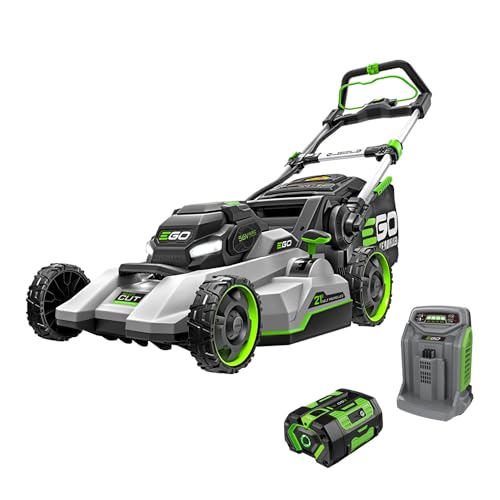
The EGO Power+ Select Cut LM2135SP represents the modern premium battery mower: self-propelled, built around a widely adopted battery platform, and designed with a dual-blade style cutting system aimed at a clean finish and fine mulch. It suits owners of medium to larger lawns who want one machine to feel like an upgrade in every direction from an old petrol mower. Best for: confident weekly mowing on varied lawns. Not suited for: buyers who want the lightest possible machine or the simplest possible purchase.

Greenworks Pro Brushless Cordless Mower — Best for Platform Value
Greenworks builds broad cordless ranges, and its Pro brushless mower line is the reference for buyers who want strong cutting performance while keeping the door open to a yard full of matching tools on the same batteries. Push and self-propelled variants exist across the range, so you can match drive type to your terrain. Best for: building a one-battery garden system over time. Not suited for: anyone already committed to a rival battery platform at home.
Ryobi 40V HP Brushless CrossCut Mower — Best for Existing Ryobi Owners
Ryobi’s HP brushless mower line, including the CrossCut multi-blade models, is the natural reference for households that already own Ryobi cordless tools and chargers. The appeal is ecosystem logic: shared batteries, familiar handling, and a mower that drops into an existing shelf of kit. Best for: Ryobi households adding a mower. Not suited for: buyers starting from zero who prefer a mower-first brand.

Toro 60V Max Recycler — Best for Mulching Traditionalists
Toro brings decades of walk-behind mower design to its battery Recycler line, and the reference point here is cut quality and mulching behaviour from a company that built its name on exactly that. The Recycler approach is aimed at returning fine clippings to the lawn cleanly. Best for: gardeners who mulch most cuts and value a tidy finish. Not suited for: buyers who mostly bag clippings for compost.
Makita LXT Cordless Mower — Best for Tool-Shed Compatibility
Makita’s LXT cordless mower line is the reference for owners whose sheds already run on Makita batteries from drills and saws. Using packs you already own changes the maths of going cordless, and Makita’s build reputation carries over from its professional tools. Best for: Makita tool owners. Not suited for: households with no existing battery investment who want the widest mower-specific accessory range.

Sun Joe MJ401E — Best Corded Simplicity
The Sun Joe MJ401E is the reference corded model: compact, straightforward, and aimed at small lawns where a socket is close and storage space is tight. It asks almost nothing in upkeep beyond blade care and a sensible cord routine. Best for: small flat lawns and first-time owners. Not suited for: large, sloped, or obstacle-heavy gardens where a cord becomes a daily annoyance.
How Much Cutting Power Do You Actually Need?
Electric mower power is best judged by behaviour, not by a single headline number. What you need to know is whether the mower holds blade speed when the grass is long, thick, or slightly damp after a missed week. Brushless motors are the current standard in better battery mowers because they deliver strong torque efficiently and have fewer wearing parts than older brushed designs. In practice, the honest test is matching the mower class to your grass: fine, regularly cut lawns forgive almost anything, while coarse, fast-growing, or weed-heavy grass exposes an underpowered machine within one pass. If your lawn regularly gets away from you, buy a class up rather than a class down.
Also consider how the mower manages its energy. Many battery models sense load and raise blade speed when the cutting gets heavy, then ease back on easy grass to stretch the charge. That behaviour matters more in real gardens than any laboratory figure. Avoid judging by platform voltage alone, and never trust a runtime promise made for a specific model without checking the conditions behind it; grass, temperature, and walking pace all change the result. The right question at the listing stage is whether owners with lawns like yours finish on one charge with the included battery, and whether a second pack is available if not.
Which Deck Size and Material Fit Your Lawn?
Deck width is a trade between speed and agility. A wider deck covers open lawn in fewer passes but needs wider gates, more storage room, and more care around beds and trees. A narrower deck threads through small gates, tucks into corners, and stores in a crowded shed, at the cost of more walking on a big lawn. Match the deck to your tightest constraint first — the side gate and the shed door decide more purchases than the lawn itself does. Then match it to your area: small lawns lose nothing with a compact deck, while large open lawns reward width every single week.
Deck material shapes weight and longevity. Steel decks feel solid and shrug off knocks, but they add weight and need their underside kept clean and dry so corrosion never gets a foothold. Composite and polymer decks cannot rust, are often lighter, and suit coastal or damp storage conditions, though they should still be treated with respect around stones and edging. Whichever you choose, the underside matters more than the brochure: a smooth, clean deck mulches and bags better, because clippings move through it instead of plastering themselves into a heavy green crust.
Bag, Mulch, or Side Discharge — Which Clipping Style Suits You?
Every mower handles clippings somehow, and your preference here should be settled before you shop. Bagging gives the cleanest finish and collects weed seeds and debris, but you stop to empty the bag and you must store or compost what you collect. Mulching chops clippings finely and drops them back to feed the lawn and hold moisture, which suits frequent mowers who cut little and often; it struggles when grass is long or wet, because the clippings clump instead of disappearing. Side discharge throws clippings out for fast cutting of rough or overgrown areas, leaving a visible trail that tidy gardeners dislike. Many mowers offer all three with a plug, a bag, and a chute, and that flexibility is genuinely useful across a season.
Think about your lawn’s rhythm. If you mow weekly in season, mulching will carry most of the year and bagging can handle the first spring cut and autumn leaves. If you mow fortnightly or the lawn is often long, bagging capacity and how full the bag gets before performance drops become real buying criteria. Check how the bag attaches, how you can tell it is full, and whether the mower keeps collecting when the bag is nearly loaded; a mower that leaves a trail of clippings behind a half-full bag will annoy you every single cut.
Battery Platform or Cord — Which Power Source Matches Your Property?
Return to the first decision with your lawn facts in hand. Choose corded if your lawn is small, flat, and close to a socket, if you dislike battery management of any kind, and if your mowing route can be planned so the lead trails behind you safely. Choose battery if you have obstacles, distance, slopes, or simply want mowing to feel uncomplicated. With battery models, the platform decision outlives the mower: chargers, spare packs, and future tools all follow from it. If you already own cordless garden or workshop tools, staying in that family is usually the smartest money decision you can make in this whole guide.
Plan your battery strategy before you buy, not after your first unfinished lawn. One included pack may be plenty for a modest lawn cut regularly. Larger or thicker lawns go better with two packs used in rotation, so one can charge while the other works, or a larger-capacity pack bought with the mower. Store and charge packs the way the manufacturer directs: lithium-ion batteries prefer a dry, cool place, they should be charged on a non-flammable surface, and you should not leave charging unattended against the maker’s guidance. Never use a pack that is swollen, cracked, or damaged; retire it through a proper recycling route instead.
How to Prioritise by Use Case
The Small Flat Lawn
Your priorities are simplicity, light weight, and easy storage. A compact corded mower or a small battery push model will do everything you ask, and money saved here is better spent on a decent trimmer for edges. Look for a folding handle, a modest bag, and a deck that fits your gate and shed. You do not need self-propulsion, a wide deck, or a second battery, and skipping them keeps the machine light enough to carry to a front garden without drama. This is the easiest lawn to buy for; resist over-buying.
The Family Lawn With Slopes and Play Space
Your priorities are drive assistance, reliable bagging, and a deck wide enough to finish before the weekend disappears. A self-propelled battery mower in the mainstream class is your reference point, with a second battery planned if the lawn is generous. You will mulch in high summer and bag in spring and autumn, so a genuine three-way clipping system matters. Wheels with decent grip and a drive speed you can adjust to a comfortable walking pace will matter more across five years than any cosmetic feature on the box.
The Large or Fast-Growing Lawn
Your priorities are cutting width, battery depth, and toughness when the grass gets ahead of you. Buy into the strongest mower class your chosen platform offers, plan on multiple packs from the start, and favour models known for holding blade speed in heavy grass. Self-propulsion is close to essential at this size, both for slopes and for your own stamina on long straight runs. Consider honestly whether a walk-behind format still fits your life; if the lawn keeps growing in your imagination, a riding or robotic solution may be the truer answer, and no walk mower purchase will fix a format problem.
The Tidy Gardener Who Mulches
Your priorities are mulching quality and finish. Look for decks and blade systems designed around fine chopping, a mower that handles frequent light cuts gracefully, and height adjustment fine enough to take a little off often. Battery push models in the mid class often suit you best, because your grass never gets heavy enough to need the biggest class, and a lighter machine encourages the frequent cuts your lawn style depends on. Toro’s Recycler approach and dual-blade systems like EGO’s Select Cut exist precisely for you.
First Setup and Care Essentials
Setup on an electric mower is mercifully short: unfold and lock the handle, set the cutting height, fit the bag or mulch plug, charge the battery fully before the first cut, and walk the lawn once to remove stones, toys, and hidden debris. Read the manual’s safety section properly, especially the parts about the safety key and the blade. Before any work under the deck — clearing a blockage, checking the blade, scraping the underside — remove the battery or unplug the cord and take out the safety key, every time, without exception. The blade is sharp even when it is not turning, so wear gloves whenever your hands go near it.
Routine care is light compared with a petrol mower: no oil, no fuel, no filters, no spark plugs. Keep the deck underside scraped clean after wet or heavy cuts, keep the blade sharp and balanced, wipe grass from cooling vents, and store the mower dry with the battery partly charged if the manual advises it for long storage. Never mow wet grass if you can avoid it: it is slippery underfoot, it clogs decks, and it tears rather than cuts. Keep children and passers-by well away from the mowing area, and never leave a mower with its battery fitted where a curious child can reach the controls.
Mistakes to Avoid
The commonest buying mistake is choosing by headline features instead of lawn facts: the mower with the longest feature list loses to the mower that fits the gate, the slope, and the battery shelf. The second mistake is buying a battery mower with no plan for a second pack on a lawn that plainly needs one. The third is ignoring storage; measure the shed corner before the deck. The fourth is forgetting the rest of the garden system — edging, blowing, and trimming still need doing, which is why guides like the best grass edge trimmers and leaf blower vacuums worth considering pair naturally with a mower purchase. Finally, do not skip the safety habits in the rush of a first cut; they are part of owning the machine.
When you are ready to compare the ownership experience in more depth, read electric lawn mower pros and cons alongside this guide, and if you are still deciding whether to switch at all, is an electric lawn mower worth it weighs the value question directly. Owners comparing cut finish across formats may also find roller lawn mowers explained useful context, and anyone planning the wider kit list should keep garden hoses for the post-mow washdown in mind for cleanup day.
Cutting Height, Lawn Health, and Why Adjustment Range Matters
A mower’s height adjustment looks like a minor detail until you understand what cutting height does to a lawn. Grass grows from its crown, and cutting too short weakens the plant, invites weeds, and exposes soil to drying sun, while cutting a little longer shades the roots, holds moisture, and produces the dense, forgiving lawn most people actually want. The practical rule is to never remove more than about a third of the blade’s length in one cut, which means a mower needs enough height range at the top end to rescue an overgrown lawn in stages rather than scalping it in one traumatic pass. Check that the adjustment is easy to change, because a system you dread using is a system you will leave in one position all year.
Single-lever height adjustment, where one control raises or lowers the whole deck evenly, is the convenience standard on better mowers, while individual wheel adjusters cost less and work fine if you set them carefully to the same notch. What matters is that all four corners end up level; a deck that sits unevenly cuts unevenly and can scalp high spots. Through the season you will typically start spring slightly lower, raise the deck through hot dry spells to protect the roots, and lower it again for the final autumn cuts. A mower that makes those changes in seconds encourages good lawn care; a mower that fights you quietly trains bad habits, and the lawn shows it by midsummer.
Wheels, Handles, and the Details You Touch Every Week
Some specifications never appear in headlines yet decide daily satisfaction. Larger rear wheels roll more easily over bumpy lawns, ruts, and the transition from path to grass, and they make a push mower feel noticeably lighter than its weight suggests. Ball-bearing wheels keep that easy roll for years rather than a season. Handle comfort matters more than buyers expect: you grip it for the whole cut, often with the bail bar held against it, so padding, shape, and a drive control that does not demand constant force all reduce hand and wrist fatigue. If anyone in the household has grip difficulties, try the controls in a store before committing.
Storage details deserve the same scrutiny. Folding handles that collapse without tools turn a mower from a shed-filling obstacle into a tidy vertical or flat package, and some battery models are designed to store upright, which suits garages where floor space is precious. Check the folded size against your actual storage corner, and check the mower’s weight against the person who will lift it over a shed step or into a car. A mower that is awkward to store gets left out in the weather, and a mower left in the weather ages fast whatever its deck is made from. These unglamorous details are where five-year satisfaction is actually decided.
Noise, Neighbours, and the Freedom to Mow Early
One of the quiet revolutions of electric mowing is literal quiet. An electric mower makes a fraction of the noise of a petrol machine, closer to a loud conversation than to machinery, and that changes when and how you can mow. Early weekend cuts stop being an act of neighbourhood aggression. You can hear a child call from the house, hold a conversation across the garden, and mow without hearing protection being a serious consideration, though many owners still wear it out of habit in enclosed spaces. For households with babies, shift workers, or close neighbours, this alone justifies the switch for many buyers.
Low noise pairs with zero exhaust at the point of use. There is no petrol smell on your clothes, no fumes in the shed, and no warm-engine ticking as the machine cools. Garden wildlife is harder to quantify, but a quieter, fume-free cut is plainly a gentler event for everything living in the garden, including the person pushing. None of this requires giving up capability on a typical lawn, which is why noise and cleanliness have moved from nice extras to primary reasons people give for going electric when you ask them a year after purchase.
Warranty, Parts, and Thinking in Five-Year Terms
A mower is a five-to-ten-year purchase, so buy the support system as much as the machine. Established brands publish parts lists, sell replacement blades and bags through normal channels, and honour warranties through dealer or service networks. Before buying, check that a replacement blade for your exact model is easy to order, that bags and wheels are listed as spares, and what the warranty covers for the battery specifically, since pack coverage sometimes differs from the machine’s. Keep your receipt and register the product if the maker offers it; warranty claims are painless with paperwork and miserable without it.
Battery longevity is part of the same calculation. Lithium-ion packs gradually lose capacity over years of use, faster if they are stored fully charged in hot sheds or run to exhaustion in heavy grass every week. Sensible habits extend pack life: store them cool and dry, avoid leaving them on the charger indefinitely, and do not force a hot pack straight back into hard work. A platform with a deep catalogue of tools gives an ageing pack a second life in lighter tools even after it no longer suits the mower. Thinking this way turns the battery from a worry into a managed asset, and it is the mindset that separates satisfied long-term electric owners from disappointed ones.
Seasonal Thinking: One Mower, Four Different Lawns
Your lawn is not one lawn; it is four, and a good buying decision accounts for all of them. Spring grass is lush, wet, and fast, and it tests bagging capacity and deck clearance more than any other season. A mower that clogs in April will make you dread the best gardening month of the year. Summer grass is slower and drier, and this is mulching season, when a mower that chops finely and a deck set a notch higher will keep the lawn green with less watering. Autumn adds leaves to the workload, and a mower that can bag leaves as it cuts, or mulch them into the lawn in moderation, saves you a separate clearing job most weeks.
Winter is the season of storage, and it quietly decides how long the mower lasts. Clean the deck before you put the machine away, because a winter spent crusted in damp clippings corrodes steel and stains composite. Store batteries indoors in a cool dry place rather than in a freezing or sweltering shed, following the maker’s guidance on storage charge. Sharpen or replace the blade during the quiet months so spring starts with a clean cut instead of a torn one. Buyers who think seasonally choose slightly more capability than the easiest month demands, and they are rewarded every April when the grass surges and the mower simply copes.
Reading a Listing Like an Owner, Not a Shopper
Product pages are written to sell, so read them for the facts an owner needs. Confirm exactly what is in the box: tool-only listings for battery mowers exclude the battery and charger, which is excellent value if you own the platform and a nasty surprise if you do not. Confirm the deck size, the drive type, and whether the bag and mulch plug are included or accessories. Look for the weight with the battery fitted, not without it, because that is the machine you will push and lift. Check the height adjustment range and method, the wheel sizes, and whether the handle folds for storage.
Then read owner feedback with a filter. Complaints about run time on enormous or neglected lawns tell you about expectations, not defects, while repeated reports of the same failure — a wheel, a switch, a bag fitting — tell you about the machine. Praise for cut quality from owners with lawns like yours is worth more than any feature list. Cross-check the model’s blade and battery availability while you are there, because a mower you can maintain is a mower you can keep. This owner-minded reading takes ten extra minutes and prevents the two classic regrets: the surprise extra purchase and the machine that almost fits your garden.
Running Costs and Environmental Considerations, Honestly Stated
Electric mowers cost little to run. A battery charge uses a modest amount of household electricity, a corded mower even less in losses, and there is no petrol to buy, store, or watch go stale between seasons. Maintenance spending shrinks to blades, the occasional bag or wheel, and eventually a battery pack. Against that, be honest about the battery’s place in the ledger: a replacement pack years from now is the one significant future cost of cordless ownership, and it is fair to count it when comparing against a corded mower that has no such item. Spread across the years and the other tools the pack serves, most owners find the arithmetic comfortable, but it should be arithmetic you have actually done.
Environmentally, the case rests on use rather than slogans. There are no exhaust emissions in your garden, no oil changes to dispose of, and no fuel spills in the shed. The battery carries an environmental cost in its manufacture and must be recycled properly at the end of its life through the maker’s or a municipal scheme, never in household waste. A mower kept in service for many years is the greenest mower of all, which loops back to buying a supported brand, maintaining the blade and deck, and choosing a machine that fits your lawn so well that you never feel the need to replace it early. Longevity, not novelty, is the real sustainability feature in this category.
Second-Hand, Older Models, and Knowing When New Wins
The used market for electric mowers is active, and corded models in particular can be excellent second-hand buys because there is so little to wear out beyond the blade and cable. Battery models need more care in assessment: the pack’s age and health are the whole question, and a mower sold cheaply with a tired battery may cost more in the end than a new machine with a fresh pack and warranty. If you buy used, test the mower on real grass, inspect the deck underside and cable or battery contacts, and confirm that replacement blades still exist for that model before money changes hands.
New wins when you want the warranty, the current battery platform, and the latest brushless efficiency, and when the price gap to a good used machine is small once a fresh battery is costed in. Older wins when the machine is corded, lightly used, and from a supported brand. Either way, apply the same lawn-first logic from this guide: the right type in good condition beats the wrong type at any price. A bargain that does not fit your gate, slope, or storage is not a bargain at all, merely a cheaper mistake.
A Short Decision Summary Before You Spend Anything
If the volume of advice in this guide feels large, compress it to five questions. Is my lawn small and near a socket, or does it demand cordless freedom? Is it flat enough to push, or does it deserve self-propulsion? Which clipping style will I use most weeks, mulch or bag? Which battery platform, if any, already lives in my shed? And where exactly will this machine sleep for the next several winters? Answer those five honestly and the market narrows to a handful of machines, among which you can choose by support, weight, and feel with confidence. Everything else in this guide exists to help you answer those five questions well — and a mower chosen that way tends to be the mower still earning its place in the shed many seasons from now, which is the only verdict that really counts.
One last piece of buying discipline: decide your total system budget, not just the mower price. For a battery purchase that may mean the mower, a second pack, and perhaps a faster charger; for a corded purchase it may mean a quality outdoor extension lead and a cable tidy. Add the edging tool if your garden has formal edges, because a beautifully cut lawn with ragged edges still looks unfinished. None of these extras is waste — they are the difference between a mower that arrives and a mowing system that works from the first weekend. Buyers who plan the system once rarely shop twice, while buyers who plan only the headline machine often spend the same money in annoyed instalments across the first season.
And keep a sense of proportion about the whole decision. Any mower from an established maker, matched to your lawn’s size, terrain, and your own strength, will give you years of good service. The differences between the best few candidates for your garden are smaller than the difference between a considered purchase and a rushed one. Take an evening with this guide, measure the gate, walk the slope, check the shed, and then buy with confidence and get on with enjoying the garden the mower exists to serve.
Before You Order: A Practical Fit and Listing Check for the Electric Lawn Mower
Most of the groundwork for choosing a electric lawn mower is covered above, so this section turns to the stage where orders are actually placed: verifying fit, reading listings critically and checking the practical details that photographs tend to hide. Work through it with your measurements and your shortlist in front of you.
Start With Your Space and Your Routine
Keep a short note of the questions each listing leaves unanswered, and treat a seller who answers them clearly as a better prospect than one who repeats general claims. Read the listing for what it does not say as carefully as for what it does, because missing information about materials, assembly or care is itself a useful signal when you compare electric lawn mower options. When you compare delivery options for a electric lawn mower, factor in where the item will be left and who will move it to its final spot, since the last few metres are where damage and strained backs happen. Take a break between shortlisting and ordering if you can, and return to the listings with fresh eyes, because fatigue makes almost any electric lawn mower look acceptable late in a long search.
Treat every claim in a electric lawn mower listing as a prompt for a check you can perform, whether that check is a measurement, a zoomed photograph, a question to the seller or a look at the care instructions. Storage is part of ownership, so decide now where the electric lawn mower, its accessories and its seasonal extras will go when they are not in use, and measure that space too. Apply the same checks to each shortlisted example, whether that is the EGO Power+ Select Cut LM2135SP; the Toro 60V Max Recycler; the Makita LXT Cordless Mower XML11, because consistent testing is what makes the differences between models visible. Where the electric lawn mower meets the floor, the wall or another surface, check what protects both sides, because scuffs and marks in those contact zones are the most common early complaint.
When Small Problems Appear
Measure the space where the electric lawn mower will live, including the clearance needed to use it, move around it and clean behind or beneath it, and keep those numbers beside you while you compare options. Look for the detail photographs in the listing, not just the wide shots, and zoom in on edges, joints, fasteners, controls and finishes, which is where build quality usually shows itself first. Compare how each option handles the in-between moments, such as being half full, partly open, moved aside or used in a hurry, because daily life happens mostly in those moments. Keep the care routine simple enough to repeat: a electric lawn mower that needs ten minutes of attention weekly will usually get it, while one that needs an hour monthly often gets none.
If the electric lawn mower needs assembly, read the instruction preview if one is offered, count the steps honestly against the time you have, and check whether a second pair of hands is recommended. When specifications are given for the electric lawn mower, compare like with like across listings, since sellers measure and describe the same things differently and headline numbers are rarely the whole story. Keep the fittings, spare parts and instructions that come with the electric lawn mower together in one labelled place, because the part you need in a year is always the one that was put somewhere safe. Where the electric lawn mower has a surface you will set things on, lean on, or load, consider the heaviest realistic load in your household rather than the lightest display load in the photos.
A Short Decision Checklist
- How the electric lawn mower will be cleaned in an ordinary week
- Where the electric lawn mower and its accessories will be stored when not in use
- Delivery path, from the door to the final position
- The one feature you will not compromise on
- Who will use the electric lawn mower most, and any limits they have
- The material and finish, matched to light, moisture and wear in its spot
- Assembly needs, tools required and whether help is needed
- The measured space, including clearance to use and clean around the electric lawn mower
Taken together, these checks take only a little time, yet they answer the questions that decide whether the electric lawn mower suits your home, your household and your routine, and they do so before money changes hands rather than after.
Frequently Asked Questions
Are electric mowers powerful enough for a normal lawn?
Yes, for the great majority of domestic lawns. Modern brushless battery mowers hold their own against small petrol machines on regularly maintained grass, and corded models are stronger than their modest size suggests because the supply never fades. Power only becomes a genuine question on large, coarse, or frequently overgrown lawns, and there the answer is to buy a stronger class within the electric ranges rather than assume electric cannot cope. Match the machine to the worst week of your mowing year, not the easiest one, and electric power will not be the thing that limits you.
How long will a battery mower run before it needs charging?
It depends on the battery size, the mower’s efficiency, the length and thickness of your grass, and how fast you walk, so any single figure should be treated as a best case rather than a promise. The practical approach is to size the battery to your lawn with headroom, or hold a second pack for bigger properties, so finishing the lawn never depends on ideal conditions. Charging habits matter too: keep packs in rotation, store them dry and cool, and replace the planning problem with a system and the question mostly disappears.
Is a corded mower a bad choice now that batteries exist?
Not at all. For a small, flat lawn near a socket, a corded mower is light, simple, always ready, and free of battery costs forever. Its limits are range and cable management, and on the right lawn neither matters much. Many long-term corded owners are perfectly satisfied, and the format’s simplicity means there is very little to wear out or maintain. Choose corded with your eyes open about the mowing pattern it requires, and it can be the most rational purchase in this entire guide.
Should I mulch or bag my clippings?
Mulch when you mow often and the grass is dry and short; the fine clippings return nutrients and moisture to the lawn and save you emptying trips. Bag when the grass is long, wet, full of weed seed, or when you are collecting autumn leaves, and when you want the crispest finish for a garden event. Most owners end up doing both across a season, which is why a mower that converts easily between modes is worth prioritising. If you must pick one strength, pick the one that matches your most common cut, not your ideal one.
What maintenance does an electric mower really need?
Far less than a petrol mower. Keep the blade sharp, keep the deck underside clean, keep vents clear, and store the machine dry. Battery packs want sensible charging and storage: on a non-flammable surface, not left charging unattended against the manufacturer’s advice, kept dry and cool, and retired if swollen or damaged. Before any deck work, remove the battery or unplug, remove the safety key, and wear gloves around the blade. That short list, done consistently, is most of electric mower ownership.
Can an electric mower handle slopes safely?
Yes, with the right model and technique. Self-propelled drive helps enormously because the wheels pull the machine while you steer, and mowing across a slope rather than up and down it keeps your footing and the cut more even. Avoid wet grass on slopes entirely, because the slip risk is real for you and the mower alike. Wear firm footwear, keep children and bystanders clear of the slope area, and if a bank is steep enough to make you hesitate, trim it with a string trimmer instead of forcing a mower onto it.
Finally, remember that the best mower is the one that gets used. A machine light enough to carry without complaint, simple enough to start without a ritual, and sized so the job finishes before it becomes a burden will be used weekly and gladly — and a lawn mowed weekly and gladly is the entire point. Choose for the life you actually live in your garden, and the technology will take care of itself. If you finish this guide with a shortlist of two or three machines and a clear sense of why each is on it, you have done the buying work properly, and whichever of them you choose will very likely serve you well for years.
Related Guides
Continue with our full electric lawn mower review for a deep look at the category, electric lawn mower reviews compared for the model-by-model picture, and how to choose an electric lawn mower step by step when you want the decision as a checklist. New owners should also read how to use an electric lawn mower safely before the first cut, and for the surrounding garden kit, cordless hedge trimmers for the full electric shed completes the picture.