Disclosure: As an Amazon Associate, dailyhomedecorating.com earns from qualifying purchases. Links on this page are affiliate links; they cost you nothing extra. Prices and availability change often, so check the current Amazon listing before you buy.
Of all the comparisons in this corner of the mattress market, winkbed vs purple is the one where the two beds share almost nothing except a box and a trial. WinkBed is a coil-and-foam hybrid sold only through its maker’s website, tuned like a traditional supportive bed and offered in a choice of firmness builds. Purple is built around a hyper-elastic polymer grid that buckles under pressure points and stands firm everywhere else, a material with no real equivalent in any other brand’s lineup, and its core mattress is sold through Amazon with a verified listing. Choosing between them is therefore less about specifications than about which physical sensation you want underneath you for the next decade, and this comparison is organized around that sensation from the first round onward.
The Short Answer First
Pick Purple if you are a side sleeper or a hot sleeper whose main enemies are pressure at the shoulder and hip and a bed that traps heat; the grid’s buckling columns relieve points while air moves freely through the open lattice. Pick WinkBed if you are a back or stomach sleeper, a heavier sleeper, or anyone who wants a flatter, more conventional, more supportive surface with a firmness choice at ordering and a perimeter you can sit on. Couples split between those profiles should read the couples section carefully, because this pairing produces stronger disagreement than most: people tend to love the grid or to find it strange, with little middle ground, and the trial on each side is what turns that gamble into a fair test.
In this guide
Winkbed Vs Purple: What Each Bed Actually Is
| Dimension | WinkBed flagship hybrid | Purple Mattress (original grid bed) |
|---|---|---|
| Signature material | Foam comfort layers over zoned wrapped coils | GelFlex Grid — hyper-elastic polymer lattice over foam |
| Feel in one line | Supportive, level, familiar | Buoyant, adaptive, unlike foam or springs |
| Firmness choice | Buyer selects a build at checkout | Fixed feel per model; range climbs by model instead |
| Airflow | Good through the coil core | Exceptional through the open grid |
| Where sold | Maker’s website only; no Amazon listing found 23 Nov 2026 | Amazon listing verified for the queen original |
| Best home crowd | Back and stomach sleepers, heavier bodies | Side sleepers, hot sleepers, pressure-point complaints |
Two clarifications before the rounds begin. First, “Purple” in this comparison means the brand’s original grid mattress, the 9.25-inch queen whose listing was verified, with the Purple Plus discussed as the step-up; the brand’s premium hybrid lines exist but would change the contest into a hybrid-versus-hybrid tuning debate, which is a different article. Second, “WinkBed” means the flagship hybrid, since the brand’s all-foam GravityLux would surrender the coil advantages that define its side of this matchup. With those boundaries set, the rounds can be honest.
Round One: The Grid Versus the Coil, Felt From the Inside
Purple’s grid works by buckling. The polymer lattice is molded into columns that stand upright under light load and fold sideways under concentrated pressure, so a shoulder or hip sinks into a pocket of collapsed columns while the surrounding grid keeps holding the rest of the body up. The sensation is genuinely difficult to describe to someone who has only slept on foam and springs: there is a floating quality, a sense of being cradled without being swallowed, and almost no slow sinking, because the material answers instantly rather than softening with heat over minutes. Sleepers who toss and turn often report that the grid never makes them climb out of a body-shaped hollow, because it never forms one.
WinkBed’s coil-and-foam build answers with familiarity executed well. Foam comfort layers give a modest cushion at the surface, then the zoned coil unit takes over with the pushback springs have always provided, firmer through the middle where the maker’s lumbar emphasis lives. You lie more on top of this bed than in it, the surface feels level and predictable, and changing position is the easy, spring-assisted movement most adults have known since childhood. Nobody gasps at the novelty, and for many shoppers that is precisely the recommendation: a mattress is a decade-long appliance, and a feel you already understand carries no learning curve.
Verdict: the grid is the more interesting material and the better pressure-relief instrument; the coil build is the more universally legible one. Novelty is a risk as well as a thrill, and only your own nights can price it.
Round Two: Pressure Relief and the Side Sleeper Question
Side sleepers are Purple’s founding audience, and the physics explains why. A side sleeper’s weight arrives through two small areas, and most materials respond by either resisting both points (leaving the shoulder jammed and the spine kinked) or yielding to both (letting the hip drop the spine into a curve). The grid’s trick is local response: columns buckle exactly where pressure concentrates and nowhere else, so the shoulder gets depth while the waist keeps support. Foam approximates this with softness, coils approximate it with zoning, but the grid performs it mechanically, point by point, which is why side sleepers with shoulder complaints so often end their search here.
WinkBed’s answer for side sleepers is its softer firmness build, which lets the foam-and-coil stack give more at the surface. It is a respectable answer, especially for side sleepers of average or heavier build whose weight can engage the softer build properly. The difficulty is the lighter side sleeper, who may not compress even the soft build enough and ends up perched. That reader is the grid’s easiest convert, because the grid responds to pressure rather than to total body weight in the same blunt way.
Verdict: Purple, for side sleepers generally and light side sleepers emphatically. WinkBed’s soft build serves heavier side sleepers well, but it is working harder to reach the same place.
Round Three: Back and Stomach Sleepers, Where the Contest Reverses
Turn onto your back and the grid’s virtues quiet down while its questions grow. A back sleeper needs the pelvis held level and the lumbar curve filled without being pushed; the grid supports broadly and many back sleepers are perfectly content on it, yet the collapsing-column feel under the hips can read as less anchored than a coil unit’s flat resistance, particularly for heavier bodies whose load buckles more of the lattice. WinkBed was designed for this reader. Zoned coils, a level surface, and firmer builds on offer make the back-sleeping case straightforwardly, and stomach sleepers — the group every soft technology fails — get their only real candidate in this pairing, since a firm WinkBed build keeps hips from sinking into the extension curve that ruins prone sleep on yielding surfaces.
Combination sleepers inherit both rounds. The grid’s instant response flatters frequent turning, because there is no foam lag and no hollow to escape; the coil bed’s spring assistance flatters it too, in a more familiar dialect. What combination sleepers should actually weigh is which position they fall asleep in and which they wake in, since the bed must serve the starting position long enough to matter and the ending position without penalty. Verdict: WinkBed for back and stomach sleepers, with the margin growing as body weight rises; a genuine tie for combination sleepers, settled by temperature and taste.
Round Four: Temperature, the Grid’s Home Turf
Heat leaves a Purple bed through architecture rather than through additives. The grid is mostly air — an open lattice with channels running through it — so warmth and moisture from the body have somewhere to go, and the polymer itself does not hold heat the way a solid foam slab does. Under the grid sits foam, which tempers the advantage, but the sleeping surface itself is as close to temperature-neutral as the category offers. WinkBed’s hybrid design is no slouch: air moves through its coil core, and its foam layers are thinner than an all-foam bed’s, so it sleeps cooler than foam purists expect. Still, in a warm room the grid’s open structure is the stronger instrument, and hot sleepers who have failed on foam and hybrid beds alike often treat Purple as the last stop before latex. Verdict: Purple, clearly, while noting that room temperature and bedding still outrank any mattress in a genuinely hot bedroom.
Round Five: Motion, Edges, and Sharing the Bed
Couples should think carefully here, because the two beds divide the sharing virtues. The grid isolates motion in an unusual way: because columns respond locally, a partner’s movement disturbs a small neighborhood rather than rippling across a shared foam or coil field, and many couples find the Purple strikingly still. WinkBed’s wrapped coils isolate motion respectably for a spring bed, though a restless partner’s larger movements travel more than they would across a lattice. Edges reverse the result. WinkBed’s coil perimeter supports sitting and sleeping near the border in the way adults expect; Purple’s grid, in the original model, gives at the perimeter more noticeably, and couples who use every inch of a queen — or a parent who reads bedtime stories perched on the edge — will feel that difference nightly. Verdict: Purple for motion, WinkBed for edges, and a shared queen tips toward WinkBed’s usable width while a king tips toward Purple, because width forgives the edge.
The Purple Side as an Actual Purchase

Purple Mattress, Queen — the Original Grid Bed
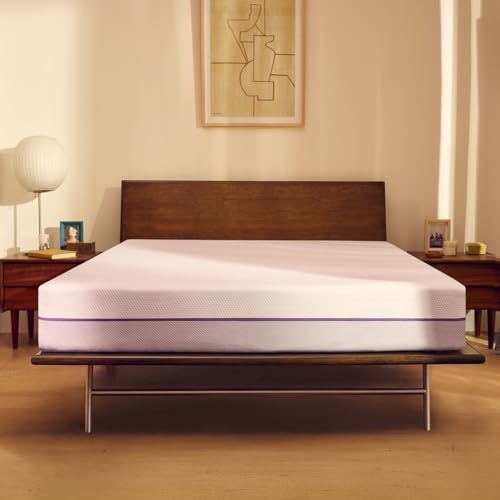
Badge: The grid in its purest, most affordable form. The verified listing describes a 9.25-inch queen with a 2-inch GelFlex Grid over foam, pitched on pressure relief, temperature neutrality, responsiveness, and breathability. As a purchase it is the cleanest way to test whether you are a grid person, because the premium Purple lines add coils and height that blur the experiment. Buy the original, sleep the trial, and you will know your material allegiance with certainty.
Spec box (from the verified listing title):
- Profile: 9.25 inches
- Grid layer: 2 inches of GelFlex Grid
- Construction: polymer grid over foam base
- Traits named in listing: cooling, pressure relief, responsive, breathable
- Size referenced: queen
Strengths
- Point-by-point pressure relief that side sleepers feel immediately at the shoulder.
- Open lattice airflow makes it the coolest-feeling surface in this comparison.
- Instant response: no foam lag when turning, no hollow to climb out of.
Trade-offs
- The feel is polarizing; some sleepers never stop noticing the lattice.
- A 9.25-inch profile is thinner than most rivals, which heavier sleepers should weigh.
- Perimeter support is softer than a coil bed’s, shrinking usable width on a queen.
Best for: side sleepers, hot sleepers, and the foam-fatigued. Not suited for: committed stomach sleepers or anyone who wants a bed to feel like a bed has always felt.

Purple Plus Mattress, Queen — the Grid With More Under It
Badge: For grid converts who want more bed. The Plus keeps the same 2-inch grid and builds an 11-inch profile beneath it with additional foam support, per its verified listing. The extra depth answers the original’s two fair criticisms — thinness and support for heavier bodies — without changing the surface sensation that defines the brand. In this comparison it is the Purple to shortlist if the WinkBed side tempts you mainly on substance and support rather than on feel.
Spec box (from the verified listing title):
- Profile: 11 inches
- Grid layer: 2 inches of GelFlex Grid
- Construction: grid over a deeper foam support system
- Traits named in listing: cooling, pressure relief, temperature neutral
- Size referenced: queen
Strengths
- Deeper support stack suits average and heavier side sleepers better than the original.
- Same cool, responsive grid surface in a more substantial bed.
- Taller profile pairs more naturally with standard bedding and adult bed frames.
Trade-offs
- Still a fixed feel; back and stomach sleepers get no firmer calibration.
- Edge character remains grid-like rather than coil-like.
- Climbs a tier above the original, narrowing its value gap against hybrids.
Best for: side and combination sleepers who loved the grid idea but need more mattress under it. Not suited for: shoppers seeking a firm, flat, traditional surface.
The WinkBed Side, Fairly Stated
WinkBed cannot be linked here, because the Amazon catalog check on 23 November 2026 found no listing for the brand, but its case deserves the same specificity. You are buying a hybrid whose maker emphasizes a zoned coil unit with extra lumbar support, foam comfort layers tuned across several firmness builds, and a direct relationship that includes a long home trial by the brand’s current terms. The bed’s virtues are the traditional ones executed with intent: a level and supportive surface, edges that behave, airflow through springs, and calibration for bodies at the firmer end of the market. Its costs are the direct channel’s costs — no marketplace checkout, no showroom, delivery on the maker’s schedule — plus a feel that will never give a side sleeper the grid’s point-by-point relief. Readers who want the fuller WinkBed picture can browse WinkBed’s foam model reviewed and WinkBed against Casper within this same wave, while grid-curious readers should compare the wider purple mattress range before settling.
Decision Guide: Five Questions That Settle It
First, where do you hurt, if anywhere? Shoulder and hip pressure points point to Purple; a back that stiffens on soft beds points to WinkBed; neither product treats a condition, and persistent pain belongs in a clinician’s office, not a checkout flow. Second, how do you sleep in the small hours — still, or in constant rotation? Rotation flatters both, stillness flatters the grid’s isolation. Third, how warm is your room in August, honestly? The warmer the truth, the stronger Purple’s case. Fourth, how much of the bed’s width do you actually use? Edge sleepers and story-reading parents should weight WinkBed’s perimeter heavily. Fifth, which purchase process suits your household: Amazon’s machinery and a listing you can re-read any time, or a maker’s website with a firmness consultation built into the ordering? Answer in order and the comparison usually resolves itself before the fifth question.
Shoppers furnishing around the decision may also find mattresses suited to apartment living useful for sizing, firm queen options across brands if the WinkBed direction wins, and pillows for hot sleepers if Purple’s cooling argument is what brought them here, since a hot pillow can undo a cool mattress by morning.
Durability: Polymer Lattice Versus Steel and Foam
Long-term questions divide along material lines. A polymer grid does not take a body impression the way foam does, because its columns buckle elastically and spring back; owners’ long-run complaints about Purple tend to concern the foam beneath the grid or the cover, rather than the lattice itself. WinkBed’s aging is the familiar hybrid story: coils endure, comfort foams soften gradually, and the firmer builds and zoned middle resist the center sag that ends most mattresses’ useful lives. In both cases a protector is doing quiet, essential work, and in both cases the honest lifespan expectation is “many good years, gradually diminishing,” with the trial — not the warranty’s fine print about measurable impressions — remaining the protection you can actually use.
One durability-adjacent point deserves plain speech: the grid is a single-brand material. If you fall in love with it, your replacement market in a decade is Purple and only Purple, whereas a sleeper who loves zoned coils can buy that feel from a dozen makers. Some shoppers count that as a reason to choose the conventional bed; others count it as irrelevant, since a decade is long enough for the whole industry to change anyway. Both readings are defensible, but the fact belongs in the decision.
Common Mistakes When Comparing These Two
The commonest error is comparing firmness numbers across the brands, as if a grid’s behavior could be expressed on the same scale as a coil bed’s builds; the grid feels different in kind, and sleepers routinely describe it as both soft and firm in the same sentence, which is the buckling columns working as designed. The second error is judging Purple in a showroom minute or a first night, because the lattice sensation is unfamiliar enough that many sleepers need a week to stop noticing it and start sleeping on it. The third is buying WinkBed’s middle build for a light side sleeper because a partner prefers it, then blaming the brand for a shoulder the soft build was invented to serve. The fourth is forgetting foundations: a grid bed and a hybrid both want even, supportive bases, and a failing slat system will make either one feel broken in the same misleading way.
Night by Night: What the First Month Feels Like on Each Bed
Expectation-setting is where comparisons earn their keep, so here is the honest first month on each side. On the Purple, night one is an event: the lattice announces itself every time you move, and most sleepers lie awake a while cataloguing the sensation — the slight give under a hip, the odd buoyancy when rolling, the coolness of a surface that never seems to warm up. Nights three through ten are the negotiation, when the body stops treating the grid as news and starts treating it as furniture; side sleepers usually convert during this stretch, reporting that the shoulder they used to wake up protecting simply stops being a topic. By the end of the month the grid has either become invisible, which is the success state, or remained a presence, which is the signal to use the trial without guilt. Back sleepers’ conversion, when it happens, is quieter: they notice a week of unremarkable mornings rather than a single revelation.
On the WinkBed, night one is a non-event, and that is its own kind of pleasure: the bed feels like a good version of what a bed has always felt like, and the sleeper’s attention goes to the firmness calibration rather than to any novelty. The first month is then a calibration audit. Back sleepers check their mornings, stomach sleepers check their hips, and anyone who chose the wrong build discovers it honestly and early, which is what the brand’s exchange-friendly posture exists for. Couples report the month’s main event as the absence of events — fewer negotiations about temperature, fewer wake-ups blamed on the other side of the bed. If the Purple month is a conversion story, the WinkBed month is a confirmation story, and shoppers should choose the story that matches their appetite for change.
The Room Around the Bed: Height, Bedding, and Furniture Fit
Because this site’s readers furnish whole rooms, the physical consequences of each bed deserve their own section. The original Purple, at 9.25 inches, is a low-profile mattress by modern standards; on a platform frame it produces a low, contemporary sleep height that suits minimalist rooms and makes life easy for shorter sleepers, children, and anyone who dislikes climbing into bed. On an older, taller foundation the same thinness can look under-scaled beneath a grand headboard, a decorating mismatch worth picturing before purchase. The Purple Plus, at 11 inches, lands in the conventional modern band. WinkBed’s hybrid profile sits in that band as well, and both hybrids and the Plus pair naturally with standard deep-pocket sheets, while the original Purple may swim slightly in sheets cut for very tall mattresses unless the pockets are adjustable.
Weight matters to the room as well as to the sleeper. Hybrids are heavy objects; a king WinkBed is a two-person job on delivery day and a serious consideration for anyone who rearranges furniture seasonally or expects to move house with the bed. The grid beds are lighter for their size, and the original Purple is the most movable mattress in this comparison, a genuine if unglamorous virtue for renters. Adjustable-base households should confirm flex compatibility per model, and everyone should measure the staircase turn before the box arrives, because the most common delivery-day disaster in this category is geometric rather than mechanical.
What Each Brand Is Really Selling
Step back far enough and the two companies are selling different forms of reassurance. Purple sells the reassurance of a material: one proprietary lattice, endlessly explained, whose behavior you can verify with your own hand in ten seconds by pressing it and watching the columns fold exactly where your fingers are and nowhere else. The pitch is that a smarter material makes firmness menus unnecessary, because the bed adapts locally to whatever body arrives. WinkBed sells the reassurance of a tradition, properly updated: springs where springs belong, foam where foam belongs, support you can specify, and a maker who answers the phone. The pitch is that a well-understood design, calibrated to you, beats a clever one-size material.
Neither pitch is dishonest, and the shopper’s job is to decide which uncertainty they would rather live with. The grid asks you to trust that a sensation you have never slept on will suit you for years; the trial exists to retire that risk. The hybrid asks you to trust your own firmness judgment at a checkout screen; the exchange policy exists to retire that one. Shoppers who enjoy new technology in every other category of their homes usually find the first risk easy. Shoppers who buy the same shoes for a decade usually find the second one easier. There is no shame in either temperament, and a decade of sleep is a perfectly reasonable thing to buy in your own temperament’s image.
Four Households, Four Outcomes
Concrete cases settle what abstractions cannot. Consider a thirty-something software worker, a committed side sleeper with a shoulder that has complained through two foam mattresses and one hybrid. Her problem is point pressure, and no firmness menu fixes it because even soft foam resists a shoulder as a continuous surface. The grid’s local buckling is the first mechanism that addresses her actual physics, and the original Purple — bought through Amazon, trialed without mercy — is her rational first move; if the profile feels thin under her partner, the Plus is the follow-up, not a different brand.
Consider next a couple in their fifties, both back sleepers, replacing a fifteen-year-old innerspring they loved until its middle surrendered. They do not want a material experiment; they want their old bed’s virtues without its failure. WinkBed’s firmer hybrid build, zoned through the middle that failed them last time, is the direct descendant of what they are replacing, and the direct channel’s exchange policy covers the one real risk, which is calibration. Purple would ask them to learn a new sensation for benefits — pressure relief, coolness — that their sleeping style never requested.
Consider a hot-sleeping renter in a top-floor apartment with weak air conditioning, who has already returned one foam mattress for heat. For her, the comparison is nearly one-dimensional: the open lattice is the coolest surface either brand offers, the original Purple is light enough to move at the next lease, and the platform purchase keeps the whole transaction inside an account she already trusts. WinkBed’s hybrid would sleep cooler than the foam bed she returned, but “cooler than foam” is not the promise she needs in August.
Finally, consider a heavy stomach sleeper, the reader both brands find hardest to serve. He needs the flattest, firmest, most anchored surface in the comparison, and only one contestant offers a build chosen with him in mind: WinkBed’s firmer calibration over coils. The grid, however cleverly it buckles, was not designed to hold a prone pelvis level, and honesty requires saying that his trial money is better spent on the hybrid — with a latex bed, outside this comparison entirely, as the other serious candidate for his money.
Accessories and Add-Ons: What Each Bed Wants From You
Each design has opinions about what goes on and under it, and respecting them protects the purchase. The grid works by collapsing locally, so a thick, stiff mattress protector or a heavily padded topper placed over it can bridge across the columns and blunt the very mechanism you paid for; Purple owners should choose thin, stretchy protectors that move with the lattice, and should think of a topper as a contradiction rather than an upgrade. WinkBed’s hybrid is more forgiving of accessories, though a thick topper there quietly converts the calibration you chose into a softer bed you did not. Underneath, both want even support: platform or closely spaced slats, no tired sprung base, and in the Purple’s case particular attention to slat spacing, because a lattice-topped foam base over wide gaps can press through unevenly over time.
Pillows deserve a sentence in this section because grid converts often misdiagnose a pillow problem as a mattress problem in week one. The Purple’s surface holds a side sleeper’s shoulder higher than deep foam does, which changes the loft the neck needs; a sleeper who keeps the pillow that suited a sinking foam bed may wake with a cricked neck and blame the lattice. Adjust the pillow during the trial before judging the bed, on either side of this comparison, because pillow loft is the cheapest variable in the entire sleep system and the one most often mistaken for a mattress verdict.
How the Two Beds Handle the Seasons
A mattress is bought on one day and slept on through every season, and the two designs age through a calendar differently. In winter, foam comfort layers stiffen slightly in a cold bedroom, so the WinkBed’s surface can feel a touch firmer on January mornings until the room and the bed warm; its coils do not care about temperature at all. The grid’s polymer is far less temperature-sensitive in feel, which is part of its consistency story, though the same openness that cools in summer can feel almost too airy to sleepers who like a bed to hold warmth in a drafty house — a complaint solved with bedding rather than with a different mattress. In summer the ledger reverses: foam’s warmth compounds, coil airflow earns its keep, and the lattice’s channels make the Purple the bed owners in hot climates describe with genuine gratitude. Households in strongly seasonal climates should weight the season they sleep worst in, because that is the season a mattress earns or loses its place.
The Resale, Guest-Room, and Hand-Me-Down Afterlife
Premium mattresses rarely die in the room they were bought for; they migrate to guest rooms, first apartments, and spare beds, and the two designs migrate differently. A WinkBed hybrid, heavy and conventional, makes a superb guest bed for the broad middle of visitors and a reassuring hand-me-down for a young adult whose tastes are unknown. The Purple’s polarizing feel makes it a riskier guest bed — some visitors will sleep wonderfully and some will spend the night aware of the lattice — but a delightful one for the known grid convert in the family. Weight matters practically here too: whoever inherits the bed must move it, and the original Purple’s lightness is a genuine inheritance advantage. None of this should drive a primary-bedroom decision, but households that keep mattresses in circulation for fifteen years across rooms are entitled to count it.
What to Do If You Cannot Decide
Indecision between these two is usually information, not weakness: it means your needs sit near the border the brands divide. Three tiebreakers help. First, order the decision by your worst night, not your average one — the bed that rescues your worst nights (the hot ones, the sore-shoulder ones, the stiff-back ones) is the bed you will still be grateful for in year three. Second, exploit the asymmetry of information: the grid is the unknown quantity, so if curiosity about it survives a week of reading, that curiosity is itself data, and the Amazon-listed original is the cheapest honest experiment in the comparison. Third, remember that both trials run concurrently with your life, not with a showroom clock, so the real cost of a wrong first choice is a few weeks and a return pickup, not a decade. Buyers who internalize that stop trying to make the perfect decision on paper and start making a good decision with a safety net, which is the only kind this category honestly offers.
A Skeptic’s Pass Over Both Brands’ Claims
Healthy skepticism improves this comparison, so apply it evenly. When Purple speaks of pressure relief, the mechanism is real and demonstrable — press the grid and watch it fold locally — but relief at a point is not the same as support for a whole body, and the brand’s language sometimes lets the first imply the second. When WinkBed speaks of lumbar support and hotel luxury, the zoning is real and the lineage is real, but no coil arrangement suspends the laws of body weight, and a shopper far outside the average range should expect calibration to matter more than any zone map. When either brand speaks of sleeping cool, translate the claim into architecture — how much air is in this bed, and where does body heat physically go? — and you will find the grid’s answer concrete, the hybrid’s answer adequate, and every foam claim in the wider market suddenly easier to grade. When either speaks of durability in decades, remember that warranties measure impressions with a ruler while owners measure mornings with their backs, and the two metrics part company early. Skepticism of this kind does not sour a purchase; it converts marketing into a checklist, and both of these brands survive the conversion better than most of their category.
The Environmental and Materials Footnote
Some readers weigh what a bed is made of alongside how it sleeps, and the two designs present different footnotes. Purple’s grid is a polymer product, durable and long-lived in service, made in the USA according to its listing, and not meaningfully recyclable through household channels at end of life — its environmental argument is longevity rather than circularity. WinkBed’s hybrid mixes steel, which is genuinely recyclable where facilities take mattresses, with foams, which mostly are not. Both brands’ foams in this market commonly carry emissions certifications such as the CertiPUR-US mark that appears across verified listings in this category, and both beds will eventually meet the same mattress-recycling question every modern bed meets. Readers for whom this dimension is decisive should say so early, because it can reorder the comparison before feel is ever discussed, and should look at the latex segment of the market as well, where natural-materials stories are strongest.
Testing Each Bed’s Story With Your Own Hands
Readers who live near any store that stocks Purple can perform the single most informative ten seconds in this comparison: press the grid sample with the side of a fist, slowly, and watch how the collapse stays local while the surrounding lattice holds its shape, then press a foam sample the same way and watch the whole neighborhood sink together. That contrast, felt in your own hand, predicts the shoulder experience of the two beds more reliably than any firmness chart. For the WinkBed side there is no equivalent sample in most towns, so substitute a different experiment: lie, in your mind, through your last three mattresses and name the one you slept best on and what it was made of. Most adults already own the data this comparison needs; they have simply never been asked to consult it as evidence rather than as nostalgia.
One more experiment belongs to couples. Each partner should privately rank the five decision questions from the guide above, then compare rankings before discussing beds at all. Where the rankings agree, the purchase is easy and either brand’s trial will confirm it. Where they clash — one partner ranking temperature first, the other ranking support — the clash itself is the finding, and the honest solutions are structural: a king for width, the stronger complaint choosing the mattress, bedding and pillows compensating the other partner. Couples who skip this exercise tend to conduct it anyway, at higher volume, during the trial’s second week.
What About Purple’s Hybrid Lines and WinkBed’s Other Beds?
Attentive readers will notice both brands trying to invade each other’s territory, and the invasion is worth mapping because it can rescue a shopper who loves one brand’s channel but the other brand’s feel. Purple’s premium lines put the grid over coils, gaining edge support, height, and a more anchored back-sleeping feel while keeping the lattice surface — in effect, Purple’s answer to WinkBed’s entire existence. WinkBed’s GravityLux removes coils for the foam buyer, and its EcoCloud puts latex over coils for the responsiveness buyer. A shopper who wants Amazon’s channel and a coil-supported grid experience will find it in Purple’s own hybrid direction; a shopper who wants WinkBed’s firmness menu on a foam bed will find it in the GravityLux. The comparison’s clean lines blur at the top of both ranges, which is healthy: it means the brands compete on execution there rather than on philosophy, and execution is what trials judge best.
Budget gravity also deserves a mention. The original Purple is the entry point to its brand and sits in a mainstream tier; the WinkBed flagship starts higher and its range climbs from there. A household for whom the original Purple’s tier is the ceiling is not really choosing between these brands at all, and should let the grid’s merits decide without guilt. A household shopping the premium tier should compare the flagship WinkBed against Purple’s hybrid lines rather than against the original, because cross-tier comparisons flatter whichever bed costs more in ways that have nothing to do with sleep.
A Closing Note on Confidence
Every comparison article, this one included, is written by someone who does not have your shoulders, your hips, your bedroom’s August temperature, or your partner’s turning radius. The most this page can honestly do is sort the questions in the right order, translate two genuinely different technologies into felt experience, and point at the listings and trial terms that let you verify the rest with your own body. Readers who finish here knowing which of their complaints is loudest, which material answers it, and which trial protects the experiment have gotten everything a comparison can give. The rest is a month of mornings, and no writer can sleep those for you.
Delivery Day and the First Night, Planned Properly
Because the two beds arrive through different channels, delivery day itself differs and rewards different preparation. The Amazon-listed Purple arrives inside the platform’s tracking and returns machinery, in a box one determined adult can usually manage and two can manage easily; clear the path, unbox it on the foundation, and expect the grid to look startlingly unlike a mattress for the first minutes, which is normal and brief. The direct-ordered WinkBed arrives on the maker’s schedule with the maker’s communications, in a heavier hybrid box that justifies a second pair of hands and a pre-measured route through the house. In both cases, keep the packaging until the bed has fully expanded and you have confirmed the size and model, photograph the label for your records, and give the room a day of ventilation before judging smell, since boxed beds of every material carry a new-product odor that fades on its own schedule rather than yours. Sleep the first night on your familiar pillows and bedding, not on a cartful of new accessories, so that whatever you feel in the morning belongs to the mattress alone and the trial’s evidence stays clean.
The One-Paragraph Version for the Impatient
If this entire comparison had to collapse into a paragraph, it would read like this. Purple is a material invention that relieves pressure point by point and sleeps genuinely cool, sold conveniently through Amazon in an original and a deeper Plus version, and it belongs to side sleepers, hot sleepers, and the curious; its risks are a polarizing feel, a softer edge, and a fixed firmness. WinkBed is a traditional hybrid perfected rather than reinvented, sold only by its maker in a choice of firmness builds, and it belongs to back and stomach sleepers, heavier bodies, and anyone who wants a bed to feel like a very good version of what beds have always felt like; its risks are a firmer learning curve for light side sleepers and a purchase channel with more steps in it. Everything above this paragraph exists to help you discover which of those two risk profiles is yours, and the trials on both sides exist so that discovering it costs you nothing but time.
Why This Comparison Keeps Getting Searched
It is worth ending the analysis by noting why this particular pairing draws so many shoppers, because the reason validates the effort. These are the two beds a certain kind of buyer narrows down to after eliminating the forgettable middle of the market: one represents the best version of the familiar, the other the most credible version of the new. A shopper standing between them is not confused; they are choosing between two coherent philosophies of how a body should be held at night, each with a decade of engineering behind it. Comparisons exist for exactly that moment, and the worst outcome available is not choosing the “wrong” bed — the trials insure against that — but choosing without understanding what was actually being decided. You now know what is being decided. The rest is a month of mornings, honestly judged.
Final Recommendation
This is the rare comparison where the products genuinely do different things, so the recommendation is a sorting rule rather than a winner. Pressure relief and cool sleep, especially for side sleepers: Purple, starting with the original and stepping up to the Plus if you need more bed under the grid. Level support, firmness calibration, edges, and the back-and-stomach constituency: WinkBed, bought direct with its trial terms read carefully. Couples divided between the profiles should let the partner with the stronger physical complaint choose, protect the purchase with whichever trial applies, and consider a king before considering a compromise neither body wants. And every reader should hold the meta-lesson: when two beds share nothing but a box, your own material allegiance — discovered across a trial, not declared from a description — is the whole decision.
Frequently Asked Questions
Does the Purple grid feel weird?
It feels different, which some sleepers experience as wonderful and others as strange. The lattice buckles under pressure points and stays firm elsewhere, producing a floating, cradled sensation unlike foam or springs. Most sleepers stop noticing the novelty within a week or two of nightly use, which is what the home trial is for.
Which bed is better for back pain?
Neither bed treats back pain or any other condition. In comfort terms, back sleepers generally prefer WinkBed’s level, zoned support, while side sleepers with pressure discomfort often prefer the grid. Persistent or worsening pain should be assessed by a professional, and any purchase should rest on trial terms.
Is WinkBed sold on Amazon?
No listing for WinkBed appeared when the Amazon catalog was checked on 23 November 2026; the brand sells through its own website. Purple’s original and Plus mattresses, by contrast, have verified Amazon listings and are linked in this article.
Which sleeps cooler, WinkBed or Purple?
Purple, for most sleepers. The open grid is largely air and does not hold heat like foam, while WinkBed’s coil core ventilates well for a hybrid but still places foam layers between the sleeper and that airflow. Room temperature and bedding remain larger factors than either design in a hot climate.
Which is better for heavy sleepers?
WinkBed, on the strength of its coil support and firmer builds, including a plus-oriented calibration in its range. Heavier side sleepers who love the grid should look at the Purple Plus rather than the thinner original, and should judge support across the full trial.
Can couples with different preferences share either bed?
They can, with compromises. The grid isolates motion beautifully but has a polarizing feel, while the WinkBed offers one firmness for both partners. A king size, a trial used decisively, and letting the partner with the stronger complaint choose are the strategies that most often end in both partners sleeping well.