Finding the best cleaner for patio furniture cushions starts with identifying the cushion fabric and its care instructions. A gentle soap solution and soft brush are a sensible first choice for many removable outdoor covers, but not every textile tolerates bleach, solvents, pressure washing, or soaking. Acrylic performance fabric, polyester, olefin, solution-dyed fabrics, coated textiles, and inexpensive printed covers can react differently to the same product. Read the sewn-in label, check the maker’s cleaning guide, and test an inconspicuous spot before treating the whole cushion.
This guide explains how to choose an outdoor cushion cleaner, remove common stains, address mildew without damaging fabric, and dry cushions fully before putting them back into service. It also compares concentrated fabric cleaners, ready-to-use sprays, soap-and-water methods, soft brushes, and upholstery extractors. The goal is practical: clean the fabric you own, avoid preventable color or finish damage, and store the cushion so it stays fresher between cleanings.
Affiliate disclosure: DailyHomeDecorating.com may earn a commission from qualifying purchases through links in this article. The price you pay does not change.
Amazon cleaners to compare for outdoor cushions
The following product titles, ASINs, and images were retrieved through Amazon Creators API. They are examples to compare against your fabric maker’s care instructions, not a guarantee of compatibility with every cushion. Check current ingredients, label directions, intended surfaces, and availability before use.
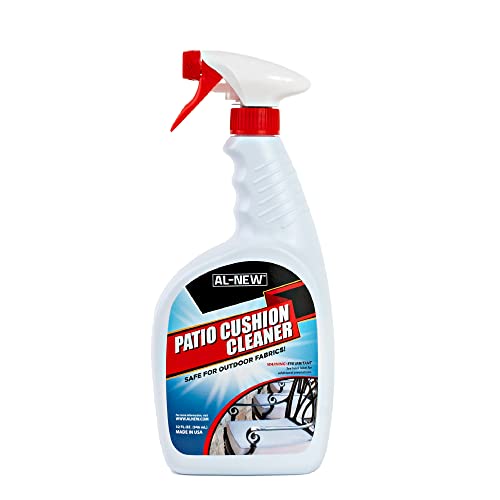


Certain content that appears on this site comes from Amazon. This content is provided “as is” and is subject to change or removal at any time.
Quick answer: what cleaner should you try first?
For an unknown outdoor cushion fabric, begin with cool or lukewarm water, a small amount of mild dish soap, a clean white cloth, and a soft-bristle brush. Blot spills rather than rubbing them deeper into the weave. If the cover is removable, confirm whether the label permits machine washing and follow its temperature and drying instructions. If you have a known performance fabric, use the fabric maker’s own guide because approved methods vary. Sunbrella’s general upholstery instructions recommend brushing off loose dirt, applying mild soapy water, gently brushing, rinsing thoroughly, and air drying; Crypton’s care directions likewise emphasize prompt blotting and removing cleaner residue, while warning against bleach for its upholstery fabric. These examples show why one universal recipe is not suitable for every cushion.
Start with the least aggressive method that can reasonably work. A stronger cleaner is not automatically better: concentrated chemicals, rough scrubbing, excess heat, or prolonged soaking can alter color, water repellency, backing, thread, or foam. If a stain remains after the first careful pass, identify the stain and fabric before escalating. Follow the label on the cleaning product and the furniture maker’s instructions, and never mix cleaning chemicals.
For a related buying guide, see our guide to choosing four-inch outdoor furniture cushions. If you need to protect cleaned cushions between uses, read our patio cushion storage box guide.
Why the cushion’s fabric matters more than the cleaner label
“Outdoor fabric” describes a use, not a single material. A cushion cover may use acrylic, polyester, olefin, vinyl-coated fabric, or a blend. It might also be printed or solution-dyed, treated with a water-repellent finish, backed with a coating, or sewn with thread that reacts differently than the face fabric. The fill can be foam, polyester batting, recycled fiber, or a combination. A cleaner that is acceptable for one surface may fade another, leave residue, loosen a coating, or saturate a fill that is difficult to dry.
Look first for the manufacturer’s sewn-in tag, product page, warranty document, or care booklet. Search the brand and exact cushion collection name if the tag is missing. Instructions may specify a water-based cleaner, a removable-cover wash cycle, a maximum water temperature, or professional cleaning only. Those directions take precedence over a generic “safe for outdoor cushions” label on a cleaner.
Color and print are also relevant. Dark saturated colors may show fading or detergent residue; pale covers reveal dirt and water rings. A printed pattern can be more vulnerable to aggressive scrubbing than a solid, solution-dyed fabric. A laminated or coated underside may require a different method from the face. When the fabric type is uncertain, stay with a mild solution and spot test before cleaning any large panel.
Sunbrella’s cleaning guide describes a mild soap-and-water routine for its fabrics and gives separate procedures for more difficult stains. Crypton’s upholstery guidance uses its own cleaning instructions and specifically cautions against bleach on its performance fabric. Do not transfer one company’s bleach instructions to a cushion made by another brand. Check the actual brand’s directions at Sunbrella’s cleaning guide or the relevant Crypton care instructions when those fabrics are identified.
Types of patio cushion cleaners
1. Mild soap and water
A mild soap solution is a practical starting point for routine dust, light food residue, and general grime when the fabric’s instructions allow it. It is inexpensive and does not require a specialized product. Use only a small amount of soap; too much can leave a sticky film that attracts more dirt or is difficult to rinse from thick fabric. Apply with a spray bottle or sponge, work gently, then rinse until the fabric no longer feels slick.
Browse mild fabric-safe cleaners for outdoor cushions on Amazon.
2. Outdoor fabric cleaner
Purpose-made outdoor fabric cleaners may be convenient for larger surfaces or recurring patio stains. Read the label for compatible fabric types and dilution ratios. Some formulas are intended for synthetic upholstery, while others are designed for awnings, marine canvas, or outdoor carpets. Do not assume “outdoor” means safe for every cover, dye, coating, or foam insert. Check whether the product is meant to be rinsed off, whether it can be used on removable covers, and whether it is compatible with any existing water-repellent treatment.
Search Amazon for outdoor upholstery and patio cushion cleaners.
3. Enzyme upholstery cleaner
Enzyme cleaners are often marketed for organic messes such as food, body oils, and pet accidents. They can be useful when the product is explicitly approved for the cushion fabric, but the word “enzyme” does not guarantee compatibility. Some covers have coatings or finishes that need a different approach. Follow the label’s contact time and rinse instructions, and test the cleaner on a hidden area first. Avoid applying a pet-odor product broadly unless the cushion manufacturer allows it.
Browse enzyme upholstery cleaners suitable for fabric cushions on Amazon.
4. Fabric protectant and water-repellent treatment
A protectant is not a cleaner. It may help restore a finish after cleaning if the fabric manufacturer recommends retreatment, but it will not remove existing soil. Use it only on clean, fully dry fabric and follow the treatment maker’s instructions for ventilation, application distance, and cure time. Some protectants are intended for particular fibers or coatings and can leave a noticeable feel or change the fabric’s appearance. Test an inconspicuous section before applying it across a whole cushion.
Compare outdoor fabric protectants on Amazon.
5. Upholstery extractor or wet vacuum
An extractor can help rinse out cleaner residue from a removable cushion cover or a cushion that the manufacturer permits to be wet-cleaned. It should not be treated as a shortcut around the care label. Too much water can remain in a dense cushion core, leading to slow drying and odor. Use a low-moisture setting where applicable, make slow passes, and remove as much water as possible. If the manufacturer says not to saturate the cushion or recommends professional cleaning, follow that direction instead.
Browse portable upholstery extractors on Amazon.
Cleaning tools that help protect the cover
Use a soft-bristle brush for woven fabric and a clean white microfiber cloth for blotting. White cloth reduces the chance that dye transfers from a colored rag onto a damp cushion. A vacuum with an upholstery attachment can remove loose crumbs and dust before wet cleaning. A spray bottle helps distribute a small amount of solution evenly without pouring cleaner into the cushion. Keep a bucket of clean rinse water and a second cloth nearby so you do not keep spreading dirt from one area to another.
Avoid wire brushes, abrasive pads, stiff deck brushes, and rough scouring sponges on fabric. They can abrade yarns, raise fuzz, damage a print, or distort a nap. Do not use a pressure washer on cushion covers unless the specific manufacturer explicitly approves it and supplies pressure and distance limits. High-pressure water can force dirt and moisture deeper into seams and fill, and it may damage the textile or stitching.
Search Amazon for a soft upholstery brush for cushion cleaning.
How to clean patio furniture cushions step by step
Step 1: Read the care label and identify the material
Find the fabric name and cover instructions. Check whether the cover zips off, whether the foam can be removed, and whether the manufacturer allows machine washing or only spot cleaning. Look for restrictions on bleach, solvents, heat, steam, or soaking. If there is no label, check the original product listing, furniture maker’s customer support, or care page before applying a strong product.
Step 2: Move the cushion to a suitable cleaning area
Choose a shaded, ventilated space with a surface that can drain. Protect nearby plants and household finishes from runoff. If the cleaner has safety directions, follow them and keep children and pets away while the cushion is wet. Avoid cleaning in direct hot sun, which can cause a solution to dry before it is rinsed and may leave visible rings.
Step 3: Remove loose debris first
Brush off leaves, soil, pollen, and dried crumbs. Vacuum seams and creases using an upholstery attachment. Cleaning a cushion while it is coated with loose grit can grind particles into the textile when you scrub. Turn the cushion and check both sides, piping, zipper flaps, and the area where the cover meets the seat frame.
Step 4: Blot fresh stains rather than rubbing
For a new spill, use a clean absorbent towel and press gently to lift liquid. Work from the outside edge toward the center so the stain does not spread outward. For thicker food, lift solids with a spoon or dull edge before blotting. Scrubbing immediately can push pigment or oil deeper into the yarns and enlarge the mark.
Step 5: Test cleaner in a hidden spot
Apply a small amount to a concealed area such as the underside or a hidden seam allowance. Follow the intended contact time and rinse method. Let the test patch dry completely before judging color, texture, stiffness, or water repellency. A wet patch may appear darker temporarily. If the fabric changes color, feels tacky, or develops a ring, stop and contact the maker before continuing.
Step 6: Apply a small amount of cleaner
Use only enough solution to dampen the affected area. Lightly mist or apply with a clean sponge, following the cleaner’s dilution instructions. Work gently with a soft brush, usually in short strokes. Avoid saturating the seams, zippers, foam, or backing unless the label allows it. If the entire cover needs cleaning, move in manageable sections so the product does not dry on the fabric.
Step 7: Rinse thoroughly
Rinse with clean water as directed by the fabric and cleaner labels. Soap and cleaner residue can attract soil, leave a crunchy feel, or create tide marks. Press with a clean cloth or use an approved extractor to draw out water; do not twist or wring the cushion in a way that stresses seams. Continue until rinse water is clear and the surface no longer feels slippery.
Step 8: Dry completely before use or storage
Stand cushions on edge or place them on a clean rack so air can circulate around both sides. Keep them out of rain and away from direct high heat. Open a removable cover only if the product’s instructions allow it. Do not put a damp cushion into a deck box or plastic bag. The cushion core and seams need to dry, not just the top surface. If a cover or foam remains damp, continue drying before reassembly.
How to treat common patio cushion stains
Pollen, dust, and general outdoor grime
Let loose dust fall away with a vacuum or soft brush before wet cleaning. For a washable cover, follow the maker’s instructions. For an installed cover, a light soap solution and gentle brushing may be sufficient if approved. Rinse well and dry fully. During pollen season, brushing or vacuuming more frequently can prevent yellow dust from collecting in seams and becoming a paste when wet.
Food, coffee, or juice
Blot promptly. Lift thick food rather than scraping it across the fabric. Use the cleaner recommended for the fabric, often beginning with mild soap and water. Work from the outer edge inward and rinse thoroughly. For coffee or juice that leaves pigment, do not use bleach unless the exact fabric instructions permit it. Repeat a gentle treatment rather than starting with a concentrated chemical.
Grease, sunscreen, and body oils
Oil-based marks may need a cleaner suited to grease, but solvents can harm some fabrics and finishes. Remove excess gently with a clean towel, then check the manufacturer’s stain chart. Use only an approved product and test it in a hidden location. Avoid rubbing oil outward, which can make the stain larger. Rinse as required and repeat only within the product’s instructions.
Mildew or musty odor
First determine whether the dark mark is mildew, embedded dirt, dye transfer, or weathering. Clean visible soil and dry the cushion completely. Never assume bleach is safe because the cushion is outdoors: some brands allow a specific diluted bleach recipe for certain fabric lines, while others warn against it. Do not mix bleach with ammonia, vinegar, acids, or other cleaners. If using any bleach-based method, follow only the exact fabric maker’s approved ratio, application time, ventilation, protective equipment, and rinse directions. If you cannot confirm that the cover tolerates the treatment, contact its manufacturer or a professional cleaner.
Odor may come from a wet foam core rather than the cover. If the cover is removable and washable, separate it from the core only as directed. Do not mask persistent odor with fragrance. Allow the core to dry fully; if it remains musty or shows visible growth that cannot be safely cleaned, replacing the insert or seeking professional advice may be more practical than repeatedly wetting it.
Tree sap, ink, or paint
These stains can require specialized treatment. Solvents that remove ink or sap may also dissolve a coating, affect dye, or damage synthetic fibers. Do not improvise with acetone, paint thinner, nail-polish remover, or alcohol. Consult the cushion maker’s stain chart for the exact fabric and stain. If the instructions are missing, take a photo of the label and ask the brand or a professional upholstery cleaner before proceeding.
What to avoid when cleaning outdoor cushions
- Do not use bleach unless the exact fabric manufacturer permits it and provides the method.
- Do not mix cleaning products, especially bleach with ammonia, vinegar, acids, or other chemicals.
- Do not use a pressure washer or high-heat steam unless the fabric maker explicitly approves that method.
- Do not scrub with wire, abrasive pads, or stiff brushes that can break fibers or damage a coating.
- Do not saturate thick foam and then store it before the core dries.
- Do not tumble-dry, iron, or expose the cushion to a hot dryer unless the care label allows it.
- Do not apply a protectant over dirt or cleaner residue; it can trap soil or create uneven patches.
- Do not assume that all outdoor fabrics are colorfast or mildew-proof.
How to compare products before buying
Read the label for the exact surface it is designed to clean: outdoor upholstery, awning fabric, carpet, vinyl, or general household surfaces are not interchangeable categories. Check dilution instructions, rinse requirements, fragrance, material compatibility, and whether the cleaner is intended for spot treatment or whole-cover washing. A concentrate may be economical for several cushions, while a ready-to-use spray is convenient for a small spot. Either can be a poor choice if it is incompatible with the fabric.
Look for clear manufacturer instructions and a complete ingredient or safety information page. If the listing makes broad claims such as “safe for all fabrics,” verify the technical directions and still perform a hidden test. Confirm container size, whether the product is a cleaner or protectant, and whether it must be rinsed. Reviews can help identify usability issues such as a strong fragrance or difficult sprayer, but they cannot determine whether the product is safe for your exact cushion.
Amazon listings and offers change over time. The tagged links in this article open searches by the full product type, not a specific verified ASIN. Confirm the current product name, formula, intended materials, and seller on the listing before ordering. Do not infer that a search result is endorsed by the cushion manufacturer merely because it appears near the top.
How often should you clean patio cushions?
There is no single calendar schedule for every climate and patio. A covered cushion used occasionally may need only a quick brush and spot treatment. Cushions under trees, near a pool, in a dusty location, or exposed to pollen and food spills may need more frequent attention. Remove loose debris regularly and address spills promptly. Deep-clean only when visible soil or the manufacturer’s maintenance interval calls for it; vigorous washing too often can wear the cover or its finish.
At the start of each season, inspect the fabric, seams, zipper, ties, and underside. Check for trapped leaves, damp foam, mold-like spots, or a water-repellent finish that may be wearing away. At the end of the season, clean the cushion if needed and dry it thoroughly before covered storage. Use a ventilated, dry location and avoid crushing foam under heavy items for long periods.
Keep cushions cleaner between washes
Brush off leaves and pollen before they become damp. Wipe small spills promptly. When cushions are not in use, store them in a ventilated box or dry indoor location rather than leaving them under a tight cover that traps moisture. If you use a protective cover, follow its ventilation and fit instructions so condensation can escape. Do not place a wet cushion in a sealed deck box, even if the box is marketed as weather-resistant.
Rotate loose cushions occasionally so the same side is not exposed to sun, traffic, and spills every time. Put a serving tray on a table rather than balancing drinks over a pale seat. Keep sunscreen and tanning oils from contacting fabric until dry. For storage ideas and size considerations, see our guide to deck boxes for patio cushions. For choosing covers and fill, visit our four-inch cushion buying guide.
When to call a professional cleaner
Consider a professional upholstery cleaner if the cover cannot be removed, the care tag is missing, the stain is large or set, the fabric is valuable, or prior cleaning attempts left a ring. A professional can assess the material and choose a method that controls moisture. Ask whether the cleaner has experience with outdoor fabrics and coatings, and provide the brand and model if known. Do not rely on a generic promise of “steam cleaning” without confirming that the textile maker permits steam.
Some cushions are less expensive to replace than to restore, particularly when foam has broken down, seams have opened, or mildew odor remains after thorough drying. For custom or high-end furniture, a replacement cover may be available. Compare the cost of professional cleaning, cover replacement, and a new insert before discarding an otherwise sound cushion.
Frequently asked questions
What is the best cleaner for patio furniture cushions?
The best choice is the mildest cleaner approved for the fabric you own. For many covers, mild soap and water is a good first method. For branded performance fabrics, follow their own cleaning guide. Test an inconspicuous area and rinse thoroughly.
Can I use bleach on outdoor cushions?
Only when the manufacturer of that exact fabric permits it and gives a dilution and procedure. Some outdoor fabric lines allow a specific bleach solution for difficult stains; other performance upholstery fabrics do not recommend bleach. Never generalize one brand’s directions to another cover.
Can I put patio cushion covers in the washing machine?
Check the sewn-in label or manufacturer’s instructions first. Some covers are removable and machine washable; others can shrink, lose shape, or suffer damage to a coating or zipper. If machine washing is allowed, use the recommended cycle, temperature, detergent, and drying method.
How can I clean mildew from cushion fabric?
Remove loose dirt, identify the fabric, and follow its specific care instructions. Drying the cushion fully is essential. Use bleach only if the fabric manufacturer specifically approves it; never mix cleaners. If odor or visible growth persists in the foam core, consult the maker or a professional cleaner.
Is vinegar safe for patio cushion fabric?
It depends on the textile, dye, backing, and the manufacturer’s directions. Some brands publish specific vinegar-based stain recipes for select fabrics, but that does not make vinegar universally safe. Do not mix vinegar with bleach or other cleaners. Test only a method approved for your fabric.
Should I use a pressure washer?
Usually not unless the cushion manufacturer provides explicit pressure-washing instructions. High-pressure water can damage fibers and seams or force moisture into the fill. Use a gentle hand method first.
How do I stop cushions smelling musty after cleaning?
Rinse away all cleaner residue and let both the cover and inner fill dry fully in a well-ventilated place. Do not store cushions while damp. If a musty odor remains, inspect the foam and contact the manufacturer or a professional rather than adding fragrance.
Final recommendation
Choose the best cleaner for patio furniture cushions by starting with the care tag, fabric name, and manufacturer’s instructions. Remove loose soil, blot spills, test a hidden area, use a mild approved solution, rinse away residue, and give the entire cushion time to dry. Use a specialty cleaner only when its label matches the textile and stain, and reserve bleach, solvents, steam, or extractors for cases where the cushion maker explicitly allows them.
Cleaning can extend the life of a good cushion, but the method matters. Gentle routine maintenance, quick spill response, and dry ventilated storage are more reliable than an aggressive chemical or pressure wash. Use the Amazon searches above to compare products, verify every current listing, and check the cleaner against your cushion’s care guide before buying.