Where to buy
These picks are chosen for actual home security work: identifying people at entrances, keeping a perimeter record and verifying alarms indoors, each as a single camera or one-camera system within the under $150 budget. Check current price and kit contents on Amazon, and read the subscription note in each review before choosing a brand.
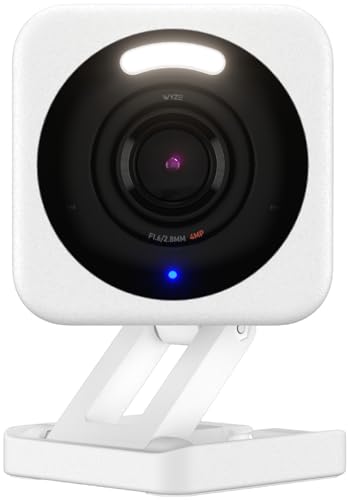
- Best for identification at the door: Wyze Cam v4 — 2.5K QHD, IP65, wired, microSD local storage
- Best perimeter awareness: Blink Outdoor 4 (1-Camera System) — 1080p HD, wire-free, maker-claimed up to two-year battery, sync module system
- Best fee-free door coverage: Tapo C120 — 2K QHD, IP66, wired, free AI detection, microSD local storage
- Best fee-free perimeter pick: eufy SoloCam S220 — 2K, integrated solar panel, built-in 8GB local storage, no monthly fee
- Best interior verification: eufy Indoor Cam E220 — 2K, pan 360 and tilt 96 degrees, motion tracking, microSD local storage
- Best budget interior check-in: Blink Mini 2 — 1080p HD, 143-degree view, plug-in, built-in spotlight
Read the full guide ↓
Disclosure: As an Amazon Associate, dailyhomedecorating.com earns from qualifying purchases. Links to Amazon on this page are affiliate links; they cost you nothing extra. Listing details such as price and availability change often, so check the current Amazon listing before you buy.
Shopping for the best security camera for home security under $150 demands a plainer conversation than most camera marketing allows, so let us have it in the first paragraph. A camera is a witness. It can deter the opportunist who sees it, record the one who ignores it, and alert you while events are still unfolding, and those are real and valuable powers. What it cannot do is stop a determined intruder, summon the police by itself, or substitute for locks, lighting and, where the risk justifies it, a monitored alarm system. This guide is written for readers who want the witness to be as good as under $150 per position can make it: sharp where identification matters, tireless where recording must not gap, honest about what its brand charges to remember anything, and arranged as a system that covers a home’s approaches rather than a gadget that watches one doorstep in isolation.
Read through that lens, the pool divides by security job rather than by brand. Entrances are identification positions: they want wired power, continuous recording and the highest resolution available, which is why the Wyze Cam v4 and the Tapo C120 lead this article, one for sheer detail, one for detail with detection that stays free. The perimeter is an awareness problem: fences, side paths and garage corners where no outlet exists, owned here by the wire-free Blink Outdoor 4 and the solar eufy SoloCam S220, whose event clips establish that something happened and roughly who was involved. Interiors are verification positions: the eufy E220 and Blink Mini 2 exist to answer the only indoor question that matters at 3 a.m., which is whether the alert from the door was a person, a pet or a curtain, before anyone decides what to do about it. If your budget stretches further, the companion guide Best Security Camera For Home Security Under $200 applies the same system thinking at the next tier.
The integrity rules of this series matter most exactly here, where fear sells. Subscription facts are stated per brand without softening: Blink’s recordings and person detection live behind its paid plan, Wyze and Tapo keep local recording free and sell cloud intelligence as an option, and eufy records locally with no required fee, because a security decision made on a hidden running cost is a bad decision. Battery, solar and weather figures are maker claims under maker test conditions, quoted as claims. And the guide repeats, in its mistakes and its FAQ, the boundary that honest sellers should state themselves: cameras strengthen a home’s security; they do not constitute it, and households with serious risk should pair them with the locks, lights and monitored response that cameras can support but never replace.
In this guide
Quick Picks
Short on time? This table matches each camera to the job it does best in this guide. Every pick is then reviewed in full below, with its storage and subscription position stated plainly.
| Best for | Pick | Key spec | Link |
|---|---|---|---|
| Best for identification at the door | Wyze Cam v4 | 2.5K QHD, IP65, wired, microSD local storage | Check on Amazon |
| Best perimeter awareness | Blink Outdoor 4 (1-Camera System) | 1080p HD, wire-free, maker-claimed up to two-year battery, sync module system | Check on Amazon |
| Best fee-free door coverage | Tapo C120 | 2K QHD, IP66, wired, free AI detection, microSD local storage | Check on Amazon |
| Best fee-free perimeter pick | eufy SoloCam S220 | 2K, integrated solar panel, built-in 8GB local storage, no monthly fee | Check on Amazon |
| Best interior verification | eufy Indoor Cam E220 | 2K, pan 360 and tilt 96 degrees, motion tracking, microSD local storage | Check on Amazon |
| Best budget interior check-in | Blink Mini 2 | 1080p HD, 143-degree view, plug-in, built-in spotlight | Check on Amazon |
How we chose
For this lens we ranked evidentiary value first: could this camera, at its realistic mounting position, produce footage that identifies a person rather than merely confirming an event? That standard pushed wired, higher-resolution cameras to the front for entrances, because continuous power means no wake-up delay at the critical first seconds and no battery anxiety in the month something finally happens. Maker resolution, night vision design and spotlight provision were weighed heavily, along with whether recordings persist locally even if the household Wi-Fi or a subscription lapses at the wrong moment.
The second filter was failure behaviour, the question security buyers forget to ask. What does the camera do when the internet drops: the local-recording models in this pool keep writing to their cards or built-in storage, while cloud-dependent recording pauses. What does it do when a plan lapses: on Blink, cloud recording and person detection stop, which is stated openly in its review; on the Tapo, Wyze and eufy models, local recording continues. What does it do in the cold, the dark and the far corner of the garden: maker battery and weather claims were recorded as claims, and wire-free picks were assigned to awareness roles where their limits cost least.
System coherence closed the judging, because security coverage fails at its gaps. Each brand here fields both an entrance-grade and a perimeter or interior option in one app, so alerts arrive in one place with one logic, and a household can build outward from the door without changing platforms mid-plan. We also credited practical deterrents that makers build in, spotlights that announce a watched doorway, sirens and two-way talk that let an owner challenge a stranger in real time, while treating those features as supplements to recording quality rather than substitutes for it.
We weighted one further property that brochures underplay: how a system behaves under deliberate interference. A camera whose recordings live only in the cloud stops evidencing the moment its Wi-Fi is jammed or its cable, where it has one, is cut; a camera writing to its own card or built-in storage keeps the record of its own destruction, which investigators value precisely because the last seconds are often the informative ones. That reasoning is built into this guide’s rankings, with local-recording models at the identification positions. It also argues for mounting entrance cameras where they are visible enough to deter yet not reachable enough to grab, a balance struck around head height with a tamper-resistant fixed mount rather than a magnetic one at the public-facing door.
Detailed reviews
Each review states where the camera belongs, indoors, outdoors or either, what it records without payment, and the one limitation we would want to know before buying. Battery, solar and weather figures are maker claims from the manufacturer’s own specifications.
Wyze Cam v4 — Best for identification at the door
Where it belongs: Indoor or outdoor (wired). Recording position: Local microSD recording free; optional Cam Plus adds cloud events and smart labels.
The Wyze Cam v4 is the wired all-rounder in this pool: a small plug-in camera the maker rates for indoor or outdoor use, with an IP65 weather-resistance rating on the housing, 2.5K QHD video, enhanced colour night vision, a motion-activated spotlight and a built-in siren. Because it runs on continuous USB power rather than a battery, it never sleeps through the start of an event to save charge, and it can record around the clock to a microSD card instead of only waking for motion clips. Wyze lists local recording support for cards up to 512GB, sold separately, which is the largest local capacity in this group and the reason this camera suits buyers who want long on-camera history without paying for cloud space.
Storage and subscriptions need stating plainly, because Wyze splits them clearly. Local microSD recording works without any plan: motion events and continuous recording stay on the card, and you review them in the app. The optional Cam Plus subscription is what adds cloud-stored event video and the smarter person, pet, package and vehicle classifications, along with longer cloud history. Without the plan you still get motion alerts and local playback, but the camera is less clever about telling a person from a swaying branch, and there is no cloud copy if the camera itself is stolen or damaged. Treat the subscription as an intelligence upgrade, not a requirement, and budget the microSD card as part of the real purchase.
Power is the honest trade-off. The v4 needs an outlet within cable reach of the mounting point, and outdoor runs need the maker’s outdoor-rated power arrangement rather than a random indoor adapter left in the rain. In exchange you get the sharpest video in this pool, a spotlight that makes night footage usable for identifying faces and clothing, and two-way talk for speaking to a delivery driver or telling a dog to get off the sofa. It works with Alexa and Google Assistant for voice viewing on smart displays, which makes it an easy single-ecosystem anchor: buy one for the front door, and its indoor twin is the same camera, same app, same settings.
This is the identification camera: mount it to see faces at the main entrance at conversational range, let it record continuously to a large card, and its footage is the clip you would actually hand to police or an insurer. If only one position in the house gets the best camera, home security logic gives it to this door and this model.
Honest limitation: it is wired only, so a mounting point with no outlet nearby is a non-starter, and the smartest detection labels sit behind the optional Cam Plus plan even though local recording does not.
Blink Outdoor 4 (1-Camera System) — Best perimeter awareness
Where it belongs: Outdoor (wire-free battery). Recording position: Cloud recording and person detection need Blink Subscription Plan; local via sync module USB.
The Blink Outdoor 4 is the wire-free outdoor anchor of this pool: a battery camera that mounts with screws in minutes, needs no outlet and no cable run, and talks back to a sync module inside the house. Video is 1080p HD with infrared night vision and two-way talk. The maker’s headline claim is battery life of up to two years from the included AA lithium batteries under default settings and typical use, and that figure must be read as a maker claim, not a promise: heavy motion traffic, long live-view sessions, cold weather and weak Wi-Fi all shorten real intervals between battery swaps, sometimes dramatically.
Blink is also the pool’s clearest example of subscription gravity, so here is the honest split. Without a Blink Subscription Plan you get live view and motion notifications, and that is close to the whole story: saving and reviewing recorded clips in the cloud, extended history and person detection are subscription features. Local storage exists as an escape hatch through a sync module with a USB drive attached, which keeps clips in the house instead of the cloud, but it is a more manual arrangement than a microSD card inside the camera and the exact module in the box varies by kit, so check the listing for the system you are buying. Many owners happily pay the plan for the polish; just price it into the system before comparing sticker prices.
Choose the Outdoor 4 for the places wiring cannot go: a gate, a side fence, a detached garage corner, a tree line at the end of the drive. Its enhanced motion detection and adjustable zones help it ignore the street while watching the path, and because cameras are added one sync module at a time, a single outdoor camera today can become the perimeter of a larger Blink system later. What it will not do is match the wired cameras here for sheer detail: 1080p across a wide yard view identifies that someone is there more readily than exactly who, so pair it with a sharper wired camera at the door itself if identification matters most.
Perimeter awareness is a volume game, and the Outdoor 4 plays it best: several wire-free units around a property’s approaches create a tripwire of event clips that establishes timelines, direction of travel and vehicle presence, evidence that supports the door cameras rather than competing with them.
Honest limitation: the features most people picture when they buy a camera, recorded cloud clips and person detection, require the paid Blink plan or a local-storage workaround, and the two-year battery figure is a best-case maker claim that busy locations will not see.
Tapo C120 — Best fee-free door coverage
Where it belongs: Indoor or outdoor (wired). Recording position: Local microSD recording and AI detection free; optional Tapo Care adds cloud storage.
The Tapo C120 is TP-Link’s wired indoor/outdoor camera, and its headline is what it refuses to charge extra for: person, pet and vehicle detection are handled on the camera and included without a subscription, which is rare in this pool. Video is 2K QHD with colour night vision helped by dual spotlights, the housing carries an IP66 weather-resistance rating from the maker, and a magnetic base with a metal plate in the box makes indoor placement unusually flexible for a camera that can also live outside on a wall or under an eave. Like the Wyze it is plug-in powered, so it watches continuously rather than napping between motion events.
On storage, the C120 records to a microSD card locally with no plan required, and TP-Link’s optional Tapo Care subscription adds cloud storage and richer notification content on top. That ordering matters: the free tier here is genuinely functional, because the AI detection that decides whether an alert is a person or a passing cat is not paywalled. The subscription is therefore a convenience for off-site backup, not the toll gate it is on some rivals. If your house rule is one app and no monthly fees, a matched pair of C120s inside and out is the most straightforward way to honour it at this budget.
The compromises are physical rather than digital. The camera is wired, so placement follows your outlets, and the body is a fixed-view design: no pan or tilt, so one camera covers one composed view and wide rooms may need two. The Tapo app is capable but separate from the Kasa ecosystem some households already run, so check which app your other TP-Link gear uses before building a whole system around it. Within those limits, the C120 is the pool’s best answer to subscription fatigue: sharp video, weather sealing a step above the Wyze on paper, and detection intelligence that stays free after purchase.
The C120 is the door camera for households that refuse to rent their own security memory: free person detection deciding what deserves an alert, local recording that no lapsed plan can switch off, and 2K detail at the one position where detail decides outcomes.
Honest limitation: fixed view with no pan or tilt, and wired power only, so it cannot follow action across a room or sit somewhere an extension lead cannot reasonably reach.
eufy SoloCam S220 — Best fee-free perimeter pick
Where it belongs: Outdoor (wire-free, solar-assisted). Recording position: Built-in 8GB local storage, no subscription required; optional cloud available.
The eufy SoloCam S220 is the outdoor camera for people who dislike both cables and battery chores: wire-free like the Blink, but with an integrated solar panel on its top surface that the maker says keeps the internal battery topped up with a few hours of direct sunlight a day under typical conditions. That sunlight figure is a maker claim with an obvious condition attached: a camera mounted under a deep porch roof or on a shaded north wall may harvest too little light and still need occasional USB recharging, so mounting position is part of the product. Video is 2K, a clear step above the Blink’s 1080p, with on-device person detection and two-way talk.
Storage is where the S220 makes its stand. It carries built-in 8GB local storage inside the camera, no card to buy and no hub required for basic use, and eufy sells it explicitly as a no-monthly-fee camera: recording, detection and playback work without a subscription, with an optional cloud plan and HomeBase 3 compatibility available for buyers who want more. Eight gigabytes is finite, so the camera overwrites its oldest clips as it fills, and busy driveways cycle history faster than quiet side gates; that is the honest cost of built-in storage, and it is still a fundamentally different deal from a camera whose recordings stop entirely when a plan lapses.
As the outdoor half of an eufy mixed system it mirrors the E220’s philosophy in weather-sealed form, and as a standalone it is the pool’s lowest-maintenance perimeter camera: no ladder trips with a battery pack every season, no cable through the wall, no plan renewal. What it asks in return is sun and a sensible view: mount it where the panel sees sky, aim it so the detection zone covers the approach rather than the street, and accept that a wire-free camera records events rather than continuous footage. For a front path, a garden gate or a driveway corner, that trade is usually the right one.
As a perimeter pick, the S220’s value is persistence: solar assistance keeps it on post through the seasons when battery cameras quietly die, and its fee-free local recording means the perimeter record exists whether or not anyone remembered to renew anything.
Honest limitation: the solar claim depends entirely on mounting sunlight, and the fixed built-in 8GB storage cannot be expanded in the camera itself, so high-traffic spots keep a shorter rolling history than card-based rivals.
eufy Indoor Cam E220 — Best interior verification
Where it belongs: Indoor (plug-in, pan and tilt). Recording position: Local microSD recording, no subscription required; optional cloud available.
The eufy Indoor Cam E220 solves the fixed-camera problem by moving: it pans a full 360 degrees and tilts 96 degrees on the maker’s specification, tracks motion across a room automatically, and records 2K video while doing it. One E220 in the middle of an open-plan space does the coverage work of two fixed cameras, following a toddler, a dog or an unexpected visitor from the door to the kitchen without you touching the app. On-device AI distinguishes people and pets for alerts, and it works with Alexa, Google Assistant and HomeKit ecosystems, which makes it the most platform-flexible indoor pick in this pool.
eufy’s storage position is the mirror image of Blink’s. The E220 records to a microSD card in the camera, card sold separately, with no subscription required for recording, playback or its core detection features, and it can also pair with a HomeBase 3 for centralised local storage if you grow into the wider eufy system. An optional cloud plan exists for buyers who want off-site copies, but nothing about normal daily use is locked behind it. For a mixed indoor and outdoor system built on local storage, the E220 inside and its solar sibling the SoloCam S220 outside are the only pair in this guide that share one app and one no-fee philosophy.
The limits are about physics and placement. It is indoor-only and plug-in powered, so it needs an outlet and a surface or bracket with a commanding view; pan and tilt cannot see through a badly chosen corner, and the tracking motor, while quiet, is not silent in a bedroom at night. It also cannot watch the yard: the moment a camera must survive rain, this is the wrong tool and the outdoor picks take over. Judged as an indoor camera, though, it offers the most coverage per camera in the pool, and for pet owners its tracking clips are the ones people actually end up watching.
Indoors, the E220 is the verification tool: when an entrance camera alerts at night, one pan across the living space settles whether the house itself has been entered. Its tracking also produces the clearest indoor record of an intruder’s path, which is precisely what investigators ask for first.
Honest limitation: strictly indoor and outlet-dependent, and its moving lens covers one room brilliantly but cannot be in two places at once, so multi-room homes still need a camera per key room.
Blink Mini 2 — Best budget interior check-in
Where it belongs: Indoor (plug-in; outdoor only with separate weather-resistant adapter). Recording position: Cloud recording and person detection need Blink Subscription Plan; no on-camera card slot.
The Blink Mini 2 is the indoor half of a Blink household: a compact plug-in camera with 1080p HD video, a wide 143-degree diagonal field of view from the maker’s specification, colour night view from a built-in spotlight, two-way audio and a stand that doubles as a wall mount. One Mini 2 composed from a corner shelf covers a typical living room wall to wall, which is why it pairs so naturally with the Outdoor 4 in a mixed system: same app, same alert style, same subscription decision, one camera language inside and out. It is also the natural second or third camera in this pool, the one you add for the nursery, the home office or the hallway once the entrances are covered.
The subscription story is the same Blink story, and it applies indoors exactly as it does outside. Person detection and saved video history in the cloud are Blink Subscription Plan features; without the plan the Mini 2 is a live-view and motion-alert camera, with local clip storage possible only through a compatible sync module setup elsewhere in the system. That is a reasonable trade at this size and price class, but it must be a conscious one: if you want an indoor camera that records locally to its own card with no plan at all, the eufy E220 and the wired Tapo and Wyze picks in this guide do that and the Mini 2 does not.
One placement warning matters more than any spec: the Mini 2 is an indoor camera. Blink offers outdoor use only with a separate weather-resistant power adapter, and even then it belongs under cover, not screwed to a fence in the rain. Used as intended, on a shelf or screwed high in a corner with its cable tidied to the skirting, it is discreet, silent and quick to install, and its spotlight makes night checks of a sleeping child or a restless pet a colour picture instead of a grey infrared guess. For renters it has a further quiet virtue: the stand needs no screws at all, so it can watch a room for a year and leave no trace when the lease ends.
The Mini 2’s security role is modest and honest: a live window into one key room, a nursery, a home office with equipment, an elderly relative’s hallway, valuable as a check-in and as a second angle, provided its owner understands that its recorded memory depends on the Blink plan or a system module.
Honest limitation: no on-camera local storage of its own and person detection locked behind the Blink subscription, plus it is indoor-first, so it cannot substitute for a true outdoor camera at an exposed mounting point.
Comparison table
| Pick | Where it belongs | Key spec | Recording and subscription position |
|---|---|---|---|
| Wyze Cam v4 | Indoor or outdoor (wired) | 2.5K QHD, IP65, wired, microSD local storage | Local microSD recording free; optional Cam Plus adds cloud events and smart labels |
| Blink Outdoor 4 (1-Camera System) | Outdoor (wire-free battery) | 1080p HD, wire-free, maker-claimed up to two-year battery, sync module system | Cloud recording and person detection need Blink Subscription Plan; local via sync module USB |
| Tapo C120 | Indoor or outdoor (wired) | 2K QHD, IP66, wired, free AI detection, microSD local storage | Local microSD recording and AI detection free; optional Tapo Care adds cloud storage |
| eufy SoloCam S220 | Outdoor (wire-free, solar-assisted) | 2K, integrated solar panel, built-in 8GB local storage, no monthly fee | Built-in 8GB local storage, no subscription required; optional cloud available |
| eufy Indoor Cam E220 | Indoor (plug-in, pan and tilt) | 2K, pan 360 and tilt 96 degrees, motion tracking, microSD local storage | Local microSD recording, no subscription required; optional cloud available |
| Blink Mini 2 | Indoor (plug-in; outdoor only with separate weather-resistant adapter) | 1080p HD, 143-degree view, plug-in, built-in spotlight | Cloud recording and person detection need Blink Subscription Plan; no on-camera card slot |
The comparison table’s most important column for a security buyer is the last one, because it describes what still exists after something goes wrong. Read each row and ask where the evidence lives at the worst moment: on a card inside the camera at the door, in built-in storage on a solar unit above the gate, or in a cloud account whose recording depends on a live connection and a live subscription. Layered homes mix those answers deliberately, local memory at the identification positions where the stakes are highest, cloud convenience where awareness is enough, so that no single failure, a cut cable, a lapsed card payment, a dead router, can silence the whole record. That is also why this guide resists the idea of a single winning row. Security is a property of the arrangement, not of any device in it, and a table of individually excellent cameras becomes a system only when their storage, power and alerting behaviours are composed so their weaknesses never coincide. Compose yours that way and the under $150 tier stops looking like a compromise at all: it becomes the price at which a household can afford redundancy, which is the closest thing to a guarantee this category honestly sells.
How to choose the best security camera for home security under $150
Build in rings. The outer ring is awareness: wire-free cameras at the approaches, gates, side paths and driveway, accepting event clips and 1080p or 2K awareness quality in exchange for placement freedom. The middle ring is identification: wired, high-resolution cameras at the doors themselves, mounted near head height and angled across the approach so faces are lit and large in frame. The inner ring is verification: one indoor camera covering the main living space and the foot of the stairs, able to confirm or dismiss whatever the outer rings report. Under $150 per position, most homes can afford the middle ring done properly plus one camera in each other ring, and that arrangement outperforms any single expensive camera at any one point.
Then remove the easy failures. Light the entrances, because no night vision flatters a face like an ordinary porch light, and the spotlight models in this pool add exactly that when motion trips them. Lock the account down: unique password, two-factor sign-in where offered, and shared access reviewed like a set of house keys, because a camera system with a weak password is a vulnerability wearing a security costume. Keep local recordings local and backed by routine: check monthly that cards are recording, that wire-free batteries are healthy, and that each camera’s view has not been quietly ruined by a grown hedge, a new trampoline or a shifted mount.
Finally, rehearse the bad night before it happens. Decide now what an alert triggers in your household: who looks, what counts as a real event, when the police get called, and how a clip gets saved and exported before the card overwrites it or the cloud window closes. Save one test clip from each camera so the export path is familiar under stress. And take the honest step this guide keeps recommending: if your home’s risk profile includes targeted burglary, valuable contents or a vulnerable occupant, treat these cameras as the visible layer of a wider plan that includes proper locks, lighting and a monitored alarm, arranged with a professional where the stakes justify it.
Insurance and evidence standards quietly shaped the pool too. Insurers assessing a claim and officers assessing footage both ask the same questions: is the time stamp trustworthy, can a face be resolved at the distance covered, does the recording predate the event rather than starting after it? Continuous wired recording answers the third question best, which is another reason the entrance positions here are wired, while event-only wire-free cameras are assigned to perimeter roles where establishing presence and direction is the realistic evidentiary contribution. None of this requires professional equipment at this budget; it requires the right type of camera at the right ring of the home, which is a purchasing decision, not a spending increase.
The human layer was scored as deliberately as the hardware. A security system that only one household member understands is a system with a single point of failure, so we favoured apps whose sharing is granular and comprehensible: a partner with full access, a house-sitter with temporary access, an older child with view-only rights. Every ecosystem in this pool supports some version of that ladder. Set it up while life is calm, revoke it when circumstances change, and treat the camera account’s password with the same seriousness as the front door key it has effectively become, because an intruder who reaches your cameras reaches a map of your habits, and that account deserves two-factor protection wherever the brand offers it.
Evidence has a chain of small practicalities that decide whether footage helps. Time stamps must be right, so let cameras sync time from the network and check after power cuts. Faces must be lit, so test the night view with a volunteer walking the approach at the hour burglars actually keep. Clips must survive, so export anything relevant immediately rather than trusting a rolling card or a cloud window. And the story must be tellable: perimeter clips that establish arrival and departure turn a door camera’s identification into a sequence an insurer or officer can use. None of this costs money. It is the difference between owning cameras and running a system.
Common mistakes
Expecting a camera to prevent what it can only record. Footage of a burglary is evidence, not protection. Pair cameras with the unglamorous basics, solid locks, lit approaches, trimmed sightlines, and for higher-risk homes a monitored alarm, or you have bought a documentary of your own loss.
Mounting so high that faces vanish. The single commonest security error in this category. A camera near the eaves records hats. Identification needs the lens near head height at entrances, angled across the path so a face turns toward it.
Letting the subscription lapse silently. On plan-dependent systems, a missed renewal can mean the month of the incident is the month nothing was recorded. Know which of your cameras keep recording locally without payment, the Tapo, Wyze and eufy models here, and set renewal reminders for any that do not.
Covering the doorstep but not the approach. A camera that only sees the door mat misses the arrival, the vehicle and the retreat. Compose entrance views to include the path and some context, and let perimeter cameras own the wider story.
Sharing access and forgetting it. Ex-partners, former cleaners and old housemates sometimes remain on camera accounts for years. Audit shared users whenever life changes, exactly as you would change the locks, because in this category that is literally what it is.
A final word on proportionality, because security spending follows fear unless someone insists on arithmetic. For most homes, the realistic threats are parcel theft, opportunistic entry through an unlocked door, vehicle interference and the unsettled feeling of not knowing. The layered setup in this guide addresses all four at under $150 a position, and beyond that point extra spending buys marginal coverage of ever less likely events. Spend the remainder of the security budget where statistics point: on the lock that resists, the light that exposes and the habits, doors locked, deliveries secured, that make the cameras’ job mostly uneventful. The best security footage is the boring kind, month after month of nothing happening, recorded perfectly.
Final recommendation
For home security money, spend first on identification: the Wyze Cam v4 at the main entrance, recording continuously to local storage, with the Tapo C120 as the equal choice when a completely fee-free system matters more than the last increment of resolution. Add perimeter awareness with the Blink Outdoor 4 where you accept its plan, or the solar eufy SoloCam S220 where you do not, and verify it all from indoors with the eufy E220 or a Blink Mini 2 matched to your chosen ecosystem. That is a layered, honest system for under $150 a position. Then say the quiet part in your own household plan: these cameras watch, record and warn, and they do it well, but the home is secured by locks, light and, where risk demands, monitored response, with the cameras as its eyes.
One last piece of advice applies whichever rings you build first: photograph your finished entrance views, day and night, and keep them with your household documents. If a camera is ever stolen, damaged or simply replaced, those references restore the proven composition in minutes, and if footage is ever handed to an insurer or an officer, the reference views explain the geometry of the scene without argument. Security systems fail quietly through small drifts and disturbances; a household that can restore its system to a known-good state owns something measurably stronger than the same cameras unrecorded.
Our shortlist to check first:
- Wyze Cam v4 — best for identification at the door
- Blink Outdoor 4 (1-Camera System) — best perimeter awareness
- Tapo C120 — best fee-free door coverage
Frequently asked questions
Can a camera system replace a burglar alarm?
No. Cameras record and alert; they do not detect forced entry at every opening, sound an on-site deterrent by default or summon a monitored response. Insurers and police treat them as different categories. Many well-protected homes run both, cameras providing identification and verification for the alarm’s alerts.
Which matters more, resolution or placement?
Placement, then resolution. A 2.5K camera mounted too high produces beautifully sharp footage of a hat, while a well-placed 2K camera at head height identifies the face. Get entrances composed correctly first, then let the Wyze and Tapo’s resolution do its work inside that composition.
Do cameras actually deter burglars?
Visible cameras deter opportunistic offenders, who prefer unwatched homes, and spotlights and two-way talk strengthen that effect. Determined or disguised offenders may ignore them, which is why deterrence is treated in this guide as a welcome side effect of a recording system, never as the system’s promise.
What happens to recordings if the internet goes down?
Local-recording cameras in this pool, the Tapo, Wyze and both eufy models, keep writing to their cards or built-in storage during an outage and sync or simply wait for your return. Cloud-dependent recording, including Blink’s plan-based clips, cannot upload while the connection is down, another reason entrances favour local storage.
Should I tell people my home has cameras?
At the perimeter, visibility is the deterrent, so concealment defeats the purpose. Indoors, tell household members and regular visitors plainly, never place cameras in bathrooms or guest bedrooms, and check your local rules on audio recording, which is regulated more strictly than video in many places.
How long should recordings be kept?
Long enough to discover a problem. Delays in noticing theft or damage are normal, so favour systems whose local capacity or plan window covers several weeks: large microSD cards in the wired picks, and awareness of the eufy S220’s finite built-in storage cycling faster on busy driveways.


