Where to buy
Check the latest price, availability and delivery on Amazon for every pick below. Each camera was shortlisted for this guide to the best outdoor security camera for home security under $200 at the time of research; street prices move, so confirm the current listing still sits under $200 before you buy. Orders are placed on Amazon. We may earn a commission from qualifying purchases.
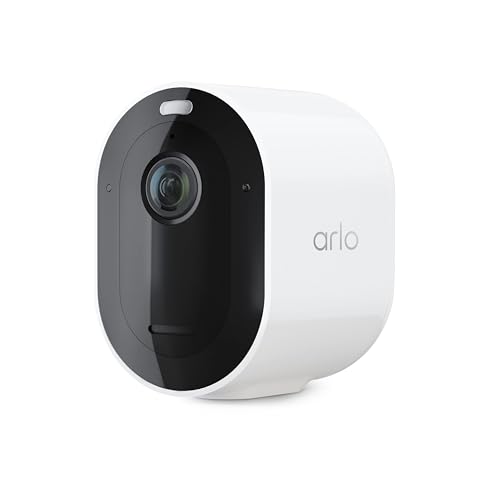
- Best overall for home security: Arlo Pro 5S 2K Spotlight Camera — Check on Amazon
- Ring Spotlight Cam Plus, Battery — Check on Amazon
- Reolink Argus 4 Pro with Solar Panel — Check on Amazon
- eufy SoloCam S340 — Check on Amazon
- Wyze Battery Cam Pro — Check on Amazon
- TP-Link Tapo C425 Wire-Free MagCam — Check on Amazon
Read the full guide ↓
Disclosure: As an Amazon Associate, dailyhomedecorating.com earns from qualifying purchases. Links to Amazon on this page are affiliate links; they cost you nothing extra. Listing details such as price and availability change often, so check the current Amazon listing before you buy.
Shopping for the best outdoor security camera for home security under $200 is a different exercise from buying a camera to watch the dog. The security lens changes what ‘good’ means: footage must be clear enough to identify a person, alerts must arrive fast and be labelled accurately enough that you act on them, deterrence should happen before damage rather than documentation after it, and the recording must still exist — accessible and intact — on the morning you actually need it. Cameras that are delightful for casual watching can fail every one of those tests.
This guide therefore ranks six under-$200 outdoor cameras as security equipment. We weigh night identification, spotlight and siren deterrence, detection intelligence, and the integrity of the recording chain, and we are forensic about the two structural questions that decide whether evidence exists at all. Storage: local recording cannot be switched off by a lapsed payment, while cloud recording survives a stolen camera but stops when the subscription does — for Arlo and Ring in this guide, no plan means no recorded video, full stop. Power: a security camera with a flat battery is a decoration, so solar support and swappable batteries are treated as security features, not conveniences.
Honesty about limits belongs in a security guide. No camera here is a monitored alarm, none summons help by itself unless you add a separate monitored service, and none guarantees identification — angle, light and distance decide that, which is why placement advice runs through every review. Specifications are the makers’ published figures: resolutions, fields of view, IP weather ratings and battery endurance claims under their test conditions. A camera is one layer; locks, lighting and habits remain the others.
In this guide
Quick Picks
| Camera | Best for | Key spec |
|---|---|---|
| Arlo Pro 5S 2K Spotlight Camera | Best overall for home security | 2K HDR video, 160-degree field of view, dual-band Wi-Fi, integrated spotlight and siren, removable rechargeable battery |
| Ring Spotlight Cam Plus, Battery | Best active deterrence | 1080p HD video with HDR, LED spotlights, colour night vision, security siren, Quick Release battery pack |
| Reolink Argus 4 Pro with Solar Panel | Best evidence-grade wide coverage | 4K dual-lens 180-degree panoramic view, ColorX colour night vision, battery plus 6W solar panel, microSD local storage |
| eufy SoloCam S340 | Best fee-free security coverage | 3K wide + 2K telephoto dual lenses, pan and tilt, removable solar panel, 8GB built-in local storage |
| Wyze Battery Cam Pro | Best affordable second and third camera | 2.5K HDR video, radar plus PIR motion detection, removable rechargeable battery, integrated spotlight and siren, microSD local recording |
| TP-Link Tapo C425 Wire-Free MagCam | Best quiet guardian for doors and gates | 2K QHD video, magnetic mount, rechargeable battery, microSD local storage, free on-device person, pet and vehicle detection |
How we chose
We admitted only true outdoor cameras, maker-rated for weather exposure, in single-camera configurations under $200, then scored them as security devices. Identification quality came first: usable detail on faces and vehicles at realistic distances, in daylight and after dark, which favours HDR, higher resolutions and colour night vision. Detection intelligence came second — the ability to label a person rather than merely report motion — because a security alert you have learned to ignore is worse than none. Deterrence hardware, storage integrity and power resilience completed the scoring.
Subscription dependence was scored as a security variable, not a lifestyle one. Two cameras here record only while a plan is paid; that is a perfectly workable arrangement with a standing payment, and a genuine vulnerability in any month it lapses, and both truths are stated in their reviews. Cameras that record locally with no required fee score for continuity; cameras with cloud archives score for surviving theft of the device itself. We also credited ecosystems that extend into monitored response and rich smart-home routines, while noting that those extensions are separate purchases beyond this guide’s ceiling.
The 6 best picks in detail
Arlo Pro 5S 2K Spotlight Camera
The Arlo Pro 5S is the polished all-rounder of this tier: 2K video with HDR for scenes that mix bright driveways and shaded porches, a wide 160-degree field of view, colour night vision helped by an integrated spotlight, a siren, and two-way talk. Its dual-band Wi-Fi is a genuine practical advantage — it can use a 5GHz network where many battery cameras are stuck on crowded 2.4GHz bands — and the removable battery pack swaps in seconds if you keep a spare charged.
Now the honest part, because Arlo’s running costs are the highest in this group. Cloud recording, the searchable video history, rich notifications with thumbnails and the smart object detection that tells a person from a parcel are Arlo Secure subscription features. Without a plan, after any included trial ends, you get live view and basic motion alerts, but the camera does not save the library of clips most people buy it for, and this model has no memory card slot of its own; local recording only enters the picture with a separate Arlo SmartHub setup. Budget the plan into the real price of owning this camera.
Weather resistance, mounting and the app experience are all mature: the camera is built for exposed outdoor mounting as a maker-rated weather-resistant housing, the magnetic and screw mounts are well sorted, and the app is one of the most refined here. If you accept the subscription as part of the deal — the way you would with Ring — the Pro 5S delivers the most complete mainstream package under the ceiling. If you refuse monthly fees on principle, look at the eufy, Reolink or Tapo picks instead.
For pure security duty, the Pro 5S’s package is the most complete here: HDR that holds detail when a figure crosses from bright driveway into porch shadow, person-aware alerts through its plan, a spotlight and siren for active response, and dual-band Wi-Fi that keeps the feed alive on networks where 2.4GHz-only cameras falter. Its security weakness is structural, and we repeat it deliberately: the evidence lives in Arlo’s cloud on a paid plan, so the standing payment is part of the security system. Kept current, this is the strongest mainstream security camera under the ceiling; lapsed, it is a live-view camera only.
- Excellent 2K HDR image with a very wide view
- Dual-band Wi-Fi copes better with busy home networks
- Spotlight, siren and polished app in one package
- Removable battery makes swaps quick
Honest limitation: Cloud recording and smart detection require an Arlo Secure subscription after the trial; without a plan the camera does not keep a recorded video history.
Choose it if you want the strongest all-round security package and will keep its plan active as a utility. Skip it if any chance of a lapsed plan is unacceptable — recording stops with it.
Arlo Pro 5S 2K Spotlight Camera — Check on Amazon
Ring Spotlight Cam Plus, Battery
Ring’s Spotlight Cam Plus is built around deterrence you can see. Two LED spotlights switch on with motion, the camera records 1080p HD video with colour night vision, and a remote-activated siren, two-way talk and motion warnings let you speak to whoever is at the gate from the app. For households already using a Ring doorbell or Alexa displays, it slots into the same app, the same routines and the same voice controls with almost no learning curve.
The subscription disclosure matters more here than anywhere else in this guide. Ring cameras do not record to local storage at all — there is no memory card and no hub recording — and saving, reviewing and sharing video requires a Ring Protect subscription (now sold under Ring’s home plan naming). Without a plan you still get live view and real-time motion alerts, but no recorded history: the moment passes and it is gone. With a plan, you get the recorded library and richer features. Neither is a trick, but you should choose with your eyes open, because the plan is effectively part of this camera’s price for as long as you own it.
Power comes from a Quick Release Battery Pack — one is included and the housing holds two, so adding a second pack roughly doubles the time between charges as a maker-described configuration; an optional solar panel exists too. Battery endurance is a maker claim that depends heavily on how often the spotlights fire. Resolution is the trade-off against the sharper 2K, 3K and 4K cameras here: you are paying for the ecosystem, the lights and the siren rather than pixel count.
The Spotlight Cam Plus is deterrence-forward security: the spotlights announce that the property is watched, the siren and two-way talk let you intervene in the moment, and motion warnings can announce recording aloud. In security terms it aims to prevent the incident rather than merely film it, and for front doors and gates that philosophy is sound. Its evidence chain is the mirror of its deterrence — entirely cloud-based and entirely plan-dependent, at 1080p, the softest identification image in this group. Buy it to stop things happening, in a household that keeps its Ring plan as reliably as its locks.
- Bright motion-activated spotlights plus a siren deter actively
- Seamless fit for homes already using Ring or Alexa
- Battery housing holds a second pack to stretch time between charges
- Simple, well-supported app and accessories
Honest limitation: No local storage option at all, and recorded video requires a Ring subscription; without one you only get live view and alerts. Video is 1080p in a tier where rivals offer 2K and above.
Choose it if active deterrence at a door or gate is the priority and your household already runs Ring. Skip it if you need locally held evidence or the sharpest identification image.
Ring Spotlight Cam Plus, Battery — Check on Amazon
Reolink Argus 4 Pro with Solar Panel
The Argus 4 Pro solves the oldest outdoor-camera problem — the blind spot at the edge of the frame — by stitching two lenses into a single 180-degree panoramic image. One camera watches an entire side of a house, a full garden width or both directions of a corner at once, in 4K resolution as the maker specifies it. Its ColorX night vision uses a very fast lens and a large sensor to keep night footage in colour without leaning on a spotlight, which matters if you want to describe a jacket or a car colour after dark.
This listing bundles the camera with Reolink’s solar panel, so the rechargeable battery is topped up by daylight and manual charging becomes an occasional event rather than a routine; as with every battery camera here, endurance figures are maker claims that depend on how much motion the camera sees and how cold the winter gets. The housing is rated IP66 by the maker, a notch above most rivals here for driving rain. Dual-band Wi-Fi, including Wi-Fi 6 support as specified by Reolink, helps on congested home networks.
Recording is local-first: clips save to a microSD card in the camera (budget for a card, since one is not the point of this bundle), and Reolink does not require a subscription for recording, playback or its person, vehicle and animal detection. An optional Reolink Cloud plan and the optional Home Hub exist for people who want off-camera backup, and FTP support suits tinkerers, but nothing essential is locked behind a plan. That combination — panoramic 4K, colour night vision and no required fee — is why it anchors the top of this tier.
The Argus 4 Pro is the evidence collector of the group. Its 180-degree 4K view means an intruder crossing your property is on camera continuously rather than appearing and vanishing between two narrower views, and ColorX night vision preserves the colour details — jacket, vehicle, trim — that incident reports actually ask for. Recording to its own card with no plan means the archive cannot lapse, though it can theoretically leave with a stolen camera, so mount it high and out of reach. For a wide, exposed property, it is the security purist’s pick.
- One camera covers a full 180-degree width with no side blind spots
- Colour night vision without depending on a bright spotlight
- No subscription required; local microSD recording included by design
- Solar panel bundled in this listing
Honest limitation: The stitched panoramic image can look stretched at the far edges, and the camera sits near the top of this budget, so check the current listing price before assuming it fits under the ceiling on a given day.
Choose it if one wide, colour-detailed, always-recording view must cover an exposed property. Skip it if your Wi-Fi at the mount is weak, or the camera must sit within stealing reach.
Reolink Argus 4 Pro with Solar Panel — Check on Amazon
eufy SoloCam S340
The SoloCam S340 is the camera that makes the under $200 tier feel like a step up rather than a compromise. It carries two lenses on one motorised head: a 3K wide-angle lens that watches the whole scene and a 2K telephoto lens that zooms toward faces and number plates at the same time, with hybrid zoom and detail at distance that eufy rates to about 40 feet as a maker specification. The head pans a full circle and tilts, and on-device detection for people and vehicles lets it follow movement across a driveway or garden instead of staring at one fixed patch of wall.
Power is the second half of the pitch. A removable solar panel tops up the built-in rechargeable battery, and eufy rates standalone battery life at around three months as a maker claim under typical conditions, with the panel extending that indefinitely in a sunny mounting spot. Because the panel detaches, you can put the camera in shade and the panel in sun a short cable run away. Weather resistance is rated IP65 by the maker, which covers rain jets and dust for ordinary exposed mounting.
On money after purchase, this is the cleanest story in the group. Recording goes to 8GB of built-in local storage on the camera itself and eufy sells this model with no monthly fee required for recording, playback or its on-device person and vehicle detection. An optional HomeBase S380 can add much larger central storage and extra recognition features, but it is an upgrade, not a ransom: the camera works on its own out of the box. There is no memory card slot to budget for, though the fixed built-in capacity means heavy-traffic spots cycle through older clips sooner.
The S340 contributes a capability no fixed camera here matches: it follows. Pan-and-tilt tracking keeps a moving person in frame across a driveway instead of losing them at the edge, and the telephoto lens captures the closer view that identification needs, simultaneously. Solar power removes the flat-battery failure mode on sunny mounts, and local recording with no fees removes the lapsed-plan failure mode entirely. Its fixed internal storage cycles sooner than a big card on very busy sites — the one continuity caveat in an otherwise resilient security package.
- Dual lenses record a wide view and a zoomed view at once
- Solar panel removes most battery-charging chores in sunny spots
- No subscription required for recording or smart detection
- Pan and tilt covers a corner or driveway from one mount
Honest limitation: The built-in 8GB of storage is fixed and not expandable on the camera itself, so a very busy street-facing mount recycles footage quickly unless you add a HomeBase.
Choose it if tracking a moving subject across a driveway matters and you want zero fee risk. Skip it if the site is extremely busy — fixed built-in storage recycles fastest here.
eufy SoloCam S340 — Check on Amazon
Wyze Battery Cam Pro
The Wyze Battery Cam Pro is the value pick that refuses to feel cheap. It records 2.5K HDR video with colour night vision, carries an integrated spotlight and siren, and detects motion with a radar-plus-PIR pairing that Wyze uses to cut the false alerts that plague purely heat-based sensors — the passing-car and waving-branch alerts that train people to ignore their cameras. The battery is removable and rechargeable, so a spare pack turns a charging gap into a ten-second swap.
Wyze’s fee structure needs the same honesty as Arlo’s and Ring’s, in miniature. Local recording to a microSD card works without any plan, and basic motion alerts are free. But Wyze’s Cam Plus subscription is what unlocks person, pet and package detection, full-length cloud event recording and the smart notification labels; without it, cloud event clips and detection intelligence are limited and the camera is noticeably dumber. The plan is inexpensive by category standards, yet it is still a plan — count it if you want the smart features in the brochure.
The housing is maker-rated IP65 for outdoor use, no hub is required, and an optional solar panel can keep the battery topped up on a sunny wall. What you give up versus the top of this tier is refinement: the app and firmware experience is more utilitarian than Arlo’s or Ring’s, and the brand’s cloud-first history means privacy-minded buyers should read the current policy and lean on local recording. For the money under this ceiling, though, the hardware-per-dollar is hard to beat.
Security systems fail on coverage economics: the side gate and the back path go unwatched because the premium camera budget bought one excellent view. The Battery Cam Pro is how this tier fixes that — inexpensive enough to deploy in pairs, with a spotlight, siren and radar-calmed detection that keeps its alerts believable. Its smart labelling rents rather than owns, so budget the plan for cameras on critical approaches and run secondary views on local recording. As the second and third eyes of a home system, nothing here competes on value.
- Radar-assisted detection reduces nuisance alerts
- Removable battery and optional solar panel keep power flexible
- Local microSD recording works without a subscription
- Spotlight, siren and 2.5K video at a value-tier position
Honest limitation: Person and package detection and full cloud recording sit behind the Cam Plus subscription; without it the smart features are limited even though local recording still works.
Choose it if you need several angles covered affordably, with local recording as the base layer. Skip it if you want the smartest detection with no plan on your main camera.
Wyze Battery Cam Pro — Check on Amazon
TP-Link Tapo C425 Wire-Free MagCam
The Tapo C425 is the friendliest camera in this tier to actually live with. Its party trick is the magnetic base: the camera snaps onto a small mounted plate and can be pulled down by hand for charging or repositioning, then clicked back at a slightly different angle in seconds. Behind the trick is a serious spec sheet — 2K QHD video, colour night vision with a starlight sensor and built-in spotlights, and a wide view that suits porches, balconies and garden gates.
The running-cost story is one of the best here. Person, pet and vehicle detection runs on the device and is free, and recording goes to a microSD card in the camera with no subscription required; TP-Link’s optional Tapo Care plan adds cloud storage and richer notifications for people who want them, but it is genuinely optional. That local-plus-free-detection combination is rare at any price and almost unheard of in the value half of this tier.
TP-Link rates the large built-in battery for very long standby-style endurance as a maker claim — up to around 300 days under the maker’s lab conditions with light triggering — and real life with daily motion, cold weather and frequent live view will be shorter, as with every battery camera. An optional solar panel can be added later. The housing carries a maker-rated IP66 weather resistance. The magnetic mount’s one caveat is reach: mount it high or out of easy grabbing range, because what you can pull down in two seconds, someone else theoretically could too.
The C425 plays a specific security role superbly: the door and gate guardian. Free person detection means its alerts distinguish a caller from a curtain shadow without any plan, local recording keeps the evidence chain unbroken, and the magnetic mount’s adjustability lets you tune the exact choke point — the step, the latch, the parcel shelf — where identification is easiest. It lacks a siren and the deterrent theatre of the Ring, so pair it with lighting. As the quiet, always-recording witness at an entry point, it outperforms its price class.
- Magnetic mount makes charging and re-aiming genuinely effortless
- Free on-device person, pet and vehicle detection
- Local microSD recording with no required subscription
- Strong 2K image with colour night vision
Honest limitation: The magnetic mount should be placed out of easy reach, and the very long battery figures are maker lab claims that busy, cold or frequently viewed installations will not match.
Choose it if you want a fee-free, person-aware witness fixed on an entry point. Skip it if you need a siren or floodlight-style deterrence from the same device.
TP-Link Tapo C425 Wire-Free MagCam — Check on Amazon
Comparison table
| Camera | Video | Power | Storage | Subscription |
|---|---|---|---|---|
| Arlo Pro 5S 2K Spotlight Camera | 2K HDR, 160 degrees | Removable rechargeable battery | Cloud via plan; no card slot | Arlo Secure required for recording |
| Ring Spotlight Cam Plus, Battery | 1080p HD with spotlights | Quick Release battery (holds two) | No local storage | Ring plan required for recording |
| Reolink Argus 4 Pro with Solar Panel | 4K panoramic, 180 degrees | Battery + bundled solar panel | microSD local (card separate) | None required |
| eufy SoloCam S340 | 3K wide + 2K telephoto | Battery + removable solar panel | Built-in 8GB local | None required |
| Wyze Battery Cam Pro | 2.5K HDR | Removable rechargeable battery | microSD local (card separate) | Cam Plus for smart detection |
| TP-Link Tapo C425 Wire-Free MagCam | 2K QHD | Built-in rechargeable battery | microSD local (card separate) | None required |
In security terms, a subscription is a single point of failure you choose knowingly. Arlo and Ring concentrate recording in their clouds: the archive survives a stolen or smashed camera and is searchable from anywhere, and it exists only while the plan is paid. Local-recording cameras invert the risk: the eufy, Reolink and Tapo cannot be switched off by a missed payment, and the Wyze keeps its local layer regardless of its smart tier, but their archives live within reach of the scene itself. Serious setups often layer both philosophies — cloud on the front door, local on the sides — and this tier is cheap enough to do exactly that.
Whatever you choose, audit the chain twice a year like you would a smoke alarm: confirm recordings from last week actually play, confirm the plan you depend on is active and paid by a card that has not expired, confirm the battery or solar arrangement has survived the season. Security failures are usually boring — a full card, a dead battery, a lapsed trial nobody converted. Every camera in this guide can be part of a dependable system; the dependability is a maintenance habit, not a purchase.
Installing for security: placement that produces evidence
Security placement starts from the intruder’s route, not the homeowner’s convenience. Walk your property as a stranger would: the front approach, the side path, the rear gate, the window behind the hedge. Cameras belong where that route narrows and slows — the gate latch, the path bend, the door itself — mounted high enough to resist a casual reach or a swung object, angled down enough to capture faces rather than the tops of heads. A camera at face-plus height on a choke point will identify more people in a month than a 4K camera surveying a lawn from the eaves.
Install in evidence order. Fit the choke-point camera first and test it as an investigator would: walk the approach at night, then review the clip and ask whether you could describe the person — build, clothing colours, direction of travel — and whether a face is readable at the moment they reach the door. Adjust the angle and the lighting before adding a second camera. Wide and tracking cameras go up second, to hold the subject between choke points, and every camera’s clock, name and location label gets set correctly in the app, because footage labelled with the wrong place and time is footage a report cannot use.
Complete the installation by testing failure, not just success. Confirm the camera records when the internet drops if it claims local resilience, confirm a clip from three days ago still plays, and confirm every plan the system depends on shows active in its app. Write down, somewhere dull and findable, which cameras record where and what each subscription renews on. Security systems are audited in calm moments so they can be trusted in bad ones.
How to choose the best outdoor security camera for home security under $200
Plan coverage like a security problem, in layers. Identify the approaches — front door, driveway, side gate, back garden — and assign the strongest identification camera to the choke point where a person must slow down: a door, a gate latch, a path bend. Wide and tracking cameras cover the open ground where movement happens. One superb camera on the front and an affordable one on the forgotten side gate beats two superb cameras watching the same driveway, which is why the Wyze’s economics matter to a security buyer and not just a bargain hunter.
Then harden the two chains every camera depends on. The evidence chain: decide per camera whether recording is local or cloud, confirm what happens if a plan lapses or a card fills, and set retention expectations accordingly. The power chain: solar where the sun allows, swappable batteries where hands can reach, and a calendar habit of checking charge levels seasonally. Finally, rehearse retrieval once — find and play a clip from three nights ago — because the first time you operate the app under stress should not be the morning after an incident. A security camera you have rehearsed with is a system; one you have not is a hope.
Keeping a security camera dependable through the seasons
A security camera’s enemies are mundane: the flat battery, the full card, the lapsed card payment, the spider that builds across the lens in September and turns every night clip into a glowing web. Dependability is a rota, not a feature. Quarterly, walk the system: battery levels or solar output, a played-back clip from the oldest date each camera retains, lens and housing condition, mount tightness, and the status of any plan. Ten minutes, four times a year, is the entire maintenance budget of a trustworthy system.
Seasonal change is the stress test maker claims quietly assume away. Winter shortens battery claims through cold and through longer nights of infrared and spotlight work; autumn traffic in leaves and wind raises false motion; summer sun moves shadows across zones you drew in spring. Solar models need their panels checked for the shading that did not exist when the tree was bare. Revisit zones and sensitivity when the clocks change and the system will track the year instead of fighting it.
Finally, treat the footage itself as part of the system. Know how long each camera retains clips before overwriting, because that number is your deadline for saving anything that matters. Know how to export a clip to your phone in under a minute. And keep the apps signed in on the phone you actually carry — a security alert delivered to a tablet in a drawer is a security system performing for an empty room.
Building a layered setup inside this budget
Layering is how professionals think, and this tier’s pricing finally lets households do it. The pattern that works: one identification camera at the main choke point, chosen for image quality and alert intelligence; one coverage camera — panning or panoramic — holding the open ground; and affordable eyes on the secondary approaches everyone forgets. In this guide’s terms that might be the Arlo or the Tapo at the door, the eufy or Reolink over the drive and garden, and a Wyze on the side gate — three brands is fine, because each layer’s job is different and the apps stay manageable at this count.
Diversify the failure modes as deliberately as the viewpoints. If the door camera records to a cloud plan, let the coverage camera record locally; if one position depends on a battery you must remember, let another run on solar. A system where every camera shares the same subscription, the same power weakness or the same storage is a system with a single off-switch, and intruders are not the only things that find off-switches — expired cards and flat batteries find them too.
Complete the layers with the unglamorous ones: a door that locks properly, lighting that works, a house number an emergency vehicle can read. Cameras document and deter; they do not physically delay anyone. The honest promise of this entire guide is narrower and real — the right cameras, layered and maintained, make your home watched, make incidents evidenced, and make opportunists choose an easier target. Inside $200 a layer, that is a promise this tier can finally keep.
Common mistakes
Letting the recording plan lapse unnoticed. On Arlo and Ring cameras in this guide, a lapsed plan means no recorded video at all. Pay by a method that will not silently fail, and check monthly that clips are still being saved.
Mounting for the view, not the identification. A beautiful wide shot of your whole garden identifies nobody. Angle at least one camera at face height on a choke point — door, gate, path — where a person must pass close and slow.
Trusting a battery camera in a high, busy spot with no solar. Constant motion plus an unreachable mount equals a camera that is flat when it matters. Busy, high positions demand solar support or a wired alternative.
Recording only to a card in a reachable camera. Local storage’s one weakness is theft of the device itself. Mount local-recording cameras high and out of casual reach, or put the most exposed position on a cloud-backed camera.
Never testing playback until an incident. Apps update, cards fill, plans change. Play back an old clip and download it once, calmly, so the process is familiar before it is urgent.
Final recommendation
As security equipment, the Arlo Pro 5S leads this tier on image, intelligence and deterrence combined — provided its plan is treated as a standing utility, because its recording depends on it. The Ring is the deterrent specialist for Ring households, the Reolink the evidence-grade wide view with no fee risk, and the eufy the tracking, solar-powered all-rounder that cannot lapse. The Tapo guards doors for free, and the Wyze makes full-perimeter coverage affordable. Choose per approach, harden the power and recording chains, and under $200 buys a genuinely layered home security setup.
A closing note on proportion. It is easy, in a security frame of mind, to keep adding — another camera, another plan tier, another sensor — until the system costs more attention than the risk it guards against. The discipline this guide recommends is the opposite: cover the approaches, harden the recording and power chains, rehearse retrieval once, and then stop, and live in the house the system protects. Every camera ranked here can anchor that kind of proportionate setup. The best security purchase is the one that fades into the background of a well-kept home — present, recording, and almost never thought about, until the one day it is needed and it is simply there.
If you are buying today, sequence the purchases the way the guide ranks the risks: the choke-point camera first, its recording chain verified the same weekend, then the coverage camera, then the forgotten approach. Security bought in that order is working for you from the first installation, and each later addition strengthens a system you already understand instead of complicating one you do not. That order, more than any single model choice, is what separates a protected home from a merely equipped one.
Start with the Arlo Pro 5S 2K Spotlight Camera if you want the safest single buy, and keep the Ring Spotlight Cam Plus, Battery on your shortlist as the strongest alternative for the situations described above.
Frequently asked questions
Which camera here is best for identifying faces at night?
The Reolink Argus 4 Pro’s 4K resolution and colour night vision, and the eufy S340’s telephoto lens, are the strongest identification tools in this group. In practice, mounting any camera close to a choke point at near face height matters as much as the model you choose.
What happens to my recordings if I stop paying for Arlo or Ring?
Recording stops. Both brands save video only in their cloud under an active plan; without one you keep live view and basic alerts but build no video history. The eufy, Reolink and Tapo cameras in this guide record locally and are unaffected by any payment.
Can these cameras call the police or an alarm company?
Not by themselves. They alert you, and you decide. Some ecosystems sell separate monitored services that can dispatch help, but those are add-on services beyond the cameras and this guide’s budget, not built-in features.
Is local or cloud storage safer for evidence?
Each defeats a different threat. Cloud archives survive the camera being stolen or destroyed but depend on an active plan and your account security. Local archives cannot lapse but can leave with the camera. Layering both across different positions is the robust answer.
Do spotlight cameras really deter intruders?
Visible light, a camera that is obviously present and the possibility of a voice challenge all change behaviour at the margin — opportunistic intrusion is sensitive to exactly these signals. Determined intruders are a job for layered security: locks, lighting, alarms and cameras together.
How many cameras does a typical house need?
Most homes are well served by two to three: the front approach, the driveway or parking spot, and the side or rear gate everyone forgets. This tier’s value picks exist precisely so the third view does not break the budget.
Should my security camera be visible or hidden?
Visible, for most homes. A camera that is seen deters opportunistic intrusion and records the rest; a hidden camera only records. Combine a conspicuous camera at the front with thorough coverage of the quieter approaches, where discretion matters less than the view.
How long should my camera keep recordings?
Long enough to cover a holiday plus the time it takes you to notice a problem — for most households, a few weeks of retention is the practical target. Local capacity, traffic levels and cloud plan tiers all set that number, so verify it in the app rather than assuming it.


