Where to buy
Check the latest price, availability and delivery on Amazon. Orders are placed on Amazon. We may earn a commission from qualifying purchases. Small-home shoppers should treat this tier as headroom, not homework: under $500 is a ceiling, not a target, and a compact home needs less camera hardware than any other kind of home — often one pan-and-tilt camera covers the whole living space honestly. Every pick below sits well inside the ceiling at its normal category position, including the hub bundle for homes that want centralised local storage. Spend first on the right single camera and its memory card, add a hub or second viewpoint only if your layout truly asks, and check the live listing before you buy.
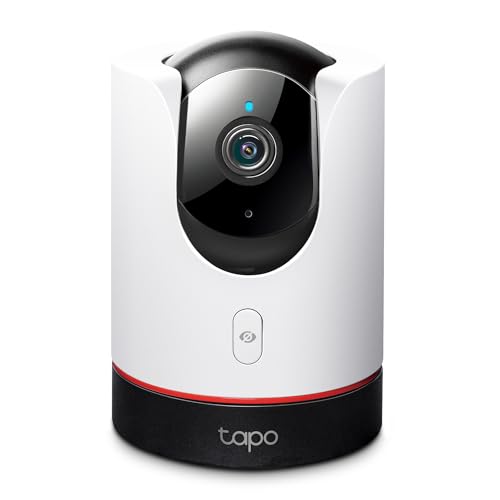
- Best overall for small homes: TP-Link Tapo C225 — Check on Amazon
- Best compact value camera: Wyze Cam v4 — Check on Amazon
- Best hub system for a compact house: eufy Security Indoor Cam S350 with HomeBase 3 — Check on Amazon
- Best tiny second viewpoint: Blink Mini 2 — Check on Amazon
- Best for Ring households: Ring Indoor Cam (2nd Gen) — Check on Amazon
- Best automatic privacy for close quarters: Arlo Essential Indoor Camera 2K (2nd Gen) — Check on Amazon
Read the full guide ↓
Disclosure: As an Amazon Associate, dailyhomedecorating.com earns from qualifying purchases. Links to Amazon on this page are affiliate links; they cost you nothing extra. Listing details such as price and availability change often, so check the current Amazon listing before you buy.
The best indoor security camera for small homes under $500 begins with the most liberating fact in this whole category: a small home is the easiest home to cover, and the one where this generous ceiling is most obviously a ceiling rather than a target. In a compact house or a large apartment-style home, the living space is one connected volume, the entry is a few steps from everywhere, and a single pan-and-tilt camera in the right corner can honestly see the door, the main room and the hallway mouth in one sweep. No single camera here needs the full budget, the complete hub bundle uses only part of it, and the correct small-home system often costs less than half the ceiling — leaving money that a small household will find better uses for than a fourth viewpoint it does not have a room for.
So this guide is ordered by fit rather than by flagship status. It leads with the Tapo C225, whose pan-and-tilt range was practically designed for connected small-home layouts and whose lens rotates physically away when the family is home — a feature that matters more, not less, when the camera is always a few metres from the sofa. The Wyze Cam v4 follows as the compact value pick for the one extra viewpoint some small homes need. The eufy bundle appears as the considered step-up for owners who want recordings centralised on a hub, and the ecosystem minis from Blink, Ring and Arlo serve households whose other devices have already chosen their app.
Small homes sharpen two questions that bigger homes can dodge. The first is privacy at close range: an indoor camera in a compact home is never in a distant wing, it is in the room where life happens, visible from the sofa and audible from the bedroom door. Physical privacy states — a rotated lens, a closing shield, a swivelled cover — are therefore scored as headline features here, and software-only privacy is described as exactly what it is. The second is proportionality: cables, hubs and camera bodies all occupy real estate that a small home feels. A system that sprawls across a compact shelf layout has failed its brief even if its video is excellent.
One boundary, stated once: these are general indoor room cameras for living spaces and entries. Dedicated baby security cameras form a separate product group with nursery-specific design, and outdoor cameras for porches and yards are a different shelf again. A small home may well need those things too, but it needs them as themselves, not as afterthoughts of a room-camera purchase. Within the indoor job, the six picks below scale from one perfect camera to a tidy hub system, and every one of them leaves the ceiling with room to spare.
In this guide
Quick picks
| Camera | Best for | Key spec |
|---|---|---|
| TP-Link Tapo C225 | Best overall for small homes | 2K QHD (4MP) video, 360-degree pan and 149-degree tilt, starlight colour night vision, physical Privacy Mode, Apple HomeKit support |
| Wyze Cam v4 | Best compact value camera | 2.5K QHD video, enhanced colour night vision, built-in spotlight and siren, Wi-Fi 6, IP65 weather resistance |
| eufy Security Indoor Cam S350 with HomeBase 3 | Best hub system for a compact house | Bundle: dual cameras (4K wide-angle + 2K telephoto), 8x hybrid zoom, 360-degree pan and tilt, HomeBase 3 hub included for local storage |
| Blink Mini 2 | Best tiny second viewpoint | 1080p HD video, colour night view, built-in spotlight, plug-in power, works with Alexa |
| Ring Indoor Cam (2nd Gen) | Best for Ring households | 1080p HD video, colour night vision, two-way talk, manual audio and video privacy cover |
| Arlo Essential Indoor Camera 2K (2nd Gen) | Best automatic privacy for close quarters | 2K video (2560 x 1440), 130-degree field of view, automated privacy shield, integrated siren, night vision |
How we chose
Coverage per camera was the first small-home criterion, because the winning system here is the one with the fewest devices. Pan-and-tilt range, field of view and tracking were weighted heavily: a camera that sweeps a connected living space replaces two fixed cameras, two outlets, two cables and two entries in the app. Fixed cameras had to justify themselves differently — by tiny size, by ecosystem fit, or by serving as the single extra viewpoint a layout genuinely needs.
Close-quarters privacy came second, and it was judged physically. In a small home the camera is a roommate, so we favoured designs whose off state can be seen from the sofa: the Tapo’s lens rotating into its body, the Arlo’s shield closing on its own schedule, the Ring’s cover closed by hand. Software-only models are labelled as such without apology, and their reviews suggest the rooms and routines that make that acceptable — arming when out, schedules at night — rather than pretending a settings toggle is a shutter.
Storage honesty and physical footprint shared third place. Local-recording picks — Tapo, Wyze and the eufy hub — suit small homes that do not want another monthly bill arriving at a compact household budget, and their reviews state card and hub needs plainly. Cloud-first picks are labelled with the subscription their history depends on. And every pick was checked for the small-home basics: plug-in power with a cable length that suits real shelves, a body that sits discreetly on furniture, and a feed viewable on the displays a compact home actually owns.
The 6 best indoor security cameras for small homes under $500
TP-Link Tapo C225
Who it suits: Small homes with one connected living space, where a single pan-and-tilt camera should cover entry, living room and hallway — and visibly stop watching when everyone is home.
The Tapo C225 is the privacy-and-value pick that keeps embarrassing the expensive cameras. Its 2K QHD sensor uses a large-aperture starlight design for colour night vision, the head pans a full circle and tilts widely, and TP-Link builds person, pet and vehicle detection into the camera itself rather than reserving it for subscribers. It is also the rare indoor camera that speaks to Apple HomeKit alongside Alexa and Google displays, which makes it the natural bridge pick for mixed-platform homes.
Storage and subscriptions, honestly: Local: a microSD card up to 512GB by maker spec sits in the camera, so event clips and continuous recording can live in your home with no plan at all. Tapo Care cloud storage is offered as an optional extra for off-site backup; the detection features and local playback do not depend on it. Buy the card with the camera, because the slot is empty in the box.
Privacy: This is the strongest privacy design in the guide alongside the Arlo shield: Privacy Mode physically rotates the lens down into the camera body, so the lens is visibly covered and you can confirm it with your eyes from across the room. For a camera that may sit in a living room all day and a bedroom corridor all night, that mechanical gesture matters more than any settings page.
- Physical Privacy Mode that visibly rotates the lens into the body
- Local microSD recording and on-device detection with no required plan
- 2K QHD starlight colour night vision and wide pan and tilt range
- Works with HomeKit, Alexa and Google displays, per maker specs
Honest limitation: The Tapo app is less polished than the Ring or Google apps, the card is sold separately, and HomeKit video has its own recording rules set by Apple rather than by TP-Link.
Choose / skip: Choose the C225 if visible privacy and subscription-free local recording top your list. Skip it if you want a hub-based system, a fully cloud-managed history, or the simplest possible app.
Wyze Cam v4
Who it suits: Small homes needing one extra compact viewpoint — a back door, a pet room, a study — with sharp video and card recording at a budget-tier position.
The Wyze Cam v4 is the value engine of this guide: a small wired camera with 2.5K QHD resolution, enhanced colour night vision, a motion-activated spotlight and two-way audio, positioned at the budget end of the category. In a guide defined by a generous ceiling, its role is specific and important: it is the camera you buy in multiples, covering the rooms a single flagship cannot, while the money it saves pays for memory cards and the cameras themselves stay genuinely capable rather than cut-down.
Storage and subscriptions, honestly: Local storage is a genuine strength. The v4 records to a microSD card, up to 512GB by maker spec, with continuous or event recording and no plan required. Wyze’s Cam Plus subscription adds cloud event videos and richer person detection, but unlike the cloud-only brands here, the camera’s core recording does not stop without it. Keep the usual caveat in mind: footage on a card inside the camera leaves with the camera if the camera is taken.
Privacy: There is no lens cover or privacy shutter. You can turn the camera off in the app, set schedules and disable the microphone, but nothing physically blocks the lens. In shared or sensitive rooms, treat placement and scheduling as your privacy tools, or choose the shielded Arlo or the rotating Tapo from this guide.
- 2.5K QHD video and colour night vision at a budget-tier position
- microSD local recording works without any subscription
- Spotlight and siren features that are unusual at this level
- Low unit cost makes genuine multi-room coverage realistic
Honest limitation: No physical privacy shutter, the richest smart detection sits behind the optional Cam Plus plan, and the fixed lens cannot pan across a wide room.
Choose / skip: Choose the Wyze Cam v4 if you want the most rooms covered with card recording included. Skip it if you want a physical privacy shutter, pan and tilt movement, or a premium app experience.
eufy Security Indoor Cam S350 with HomeBase 3
Who it suits: Owner-occupied small homes planning to stay, where a hub on a shelf centralises recordings and a flagship camera covers the main space in maximum detail.
This bundle is the closest thing in the guide to a complete indoor system in one box. The S350 camera pairs a 4K wide-angle lens that watches the whole room with a 2K telephoto lens that zooms in on a face, a doorway or a pet, and the two views can be shown together so you never choose between context and detail. The HomeBase 3 hub in the box is what turns a good camera into a system: recordings can live on the hub inside your home, on expandable local storage, instead of depending on a cloud account, and the hub becomes the base you add further compatible eufy cameras to later.
Storage and subscriptions, honestly: Local first, and this is the honest headline: recording, playback and the on-device human and pet detection work with no subscription, because footage is stored on the HomeBase 3 or a microSD card in the camera. eufy sells an optional cloud backup plan, but nothing in the core recording path is locked behind it. The one limit to state plainly is that local footage is only as safe as the hub itself, so place the hub somewhere discreet rather than beside the front door.
Privacy: There is no physical shutter on the S350. Privacy is handled in the app: you can switch the camera off, schedule it, and set privacy zones that mask parts of the view. That is a software promise rather than a cover you can see, so in a bedroom or a dressing area, judge this camera by whether your household is comfortable trusting an app state and a status light.
- Dual 4K wide and 2K telephoto lenses with hybrid zoom for faces and detail
- HomeBase 3 hub in the box for local, subscription-free recording
- Full pan and tilt coverage with person and pet tracking, per maker specs
- A genuine expansion base: extra compatible cameras join the same hub
Honest limitation: The camera body is larger than the fixed mini cameras here, there is no physical privacy shutter, and the bundle only makes financial sense if you actually value local hub storage.
Choose / skip: Choose the bundle if you want one purchase that behaves like a system and you prefer footage stored at home. Skip it if a single small camera is all you need, or if your household is already committed to the Ring, Blink or Google app.
Blink Mini 2
Who it suits: Very compact homes and Alexa households wanting the tiniest possible camera for a corner shelf, with simplicity valued above resolution.
The Blink Mini 2 is the smallest, simplest camera in the guide: a tiny plug-in unit with 1080p HD video, colour night view from a built-in spotlight, two-way audio and a wide view that suits corners and shelves. It is the camera people buy in multiples for an Alexa home: one for the front room, one for the hallway, one watching a pet’s favourite corner, all managed in one app with Echo Show viewing a voice command away.
Storage and subscriptions, honestly: Blink’s storage story has two halves and both deserve honesty. Cloud recording, saved clip history and person detection sit behind the Blink Subscription Plan; a trial is typically included, after which those features stop if you do not subscribe. The local alternative is real but conditional: a separate Blink Sync Module with USB or card storage can hold clips locally, which is an extra purchase. Without either a plan or the right module, you have live view and motion alerts rather than a reviewable history.
Privacy: There is no privacy shutter or lens cover on the Mini 2. The app lets you arm and disarm the camera and set privacy zones, so privacy is a settings choice rather than a physical one. That is adequate for entryways and pet corners, and a weaker answer than the Arlo shield or Ring cover for bedrooms.
- Tiny plug-in design with a wide field of view for corners and shelves
- Budget-tier position makes multi-room coverage realistic
- Local clip storage possible via a separate Sync Module
- Straightforward Alexa and Echo Show integration
Honest limitation: Person detection and cloud history need a subscription, local storage depends on owning the correct Sync Module hardware, and there is no physical privacy cover.
Choose / skip: Choose the Blink Mini 2 for simple, affordable coverage of several rooms inside an Alexa home. Skip it if you want card-in-camera local recording, a privacy shutter, or resolution above 1080p.
Ring Indoor Cam (2nd Gen)
Who it suits: Small homes already running a Ring doorbell, where one app and one plan should cover the door and the interior without a second ecosystem in a small space.
The Ring Indoor Cam is the ecosystem pick: a compact plug-in camera that drops straight into homes already running a Ring doorbell or Alexa displays. Video is 1080p HD with colour night vision, two-way talk is built in, and the camera is small enough to sit on a shelf or mount on a wall without dominating the room. Bought in multiples, it is how a Ring household covers several rooms while keeping every camera in one familiar app.
Storage and subscriptions, honestly: Cloud only, and this is the honest catch: there is no microSD slot and no local recording option. Without a Ring Protect subscription you get live view and motion alerts, but you cannot watch recorded video back; the subscription is what unlocks video history and richer notifications. If you already pay for a Ring plan at your address, extra cameras usually slot into that same household coverage, which softens the cost; if you do not, budget for the plan as part of the purchase.
Privacy: The manual privacy cover is excellent: swivel it over the lens and it physically blocks the camera and switches off the microphone. It is simple, visible and needs no app. The discipline it asks for is human rather than technical: someone has to remember to open it again before the house empties.
- Manual privacy cover that blocks the lens and mutes the microphone
- Deep Ring doorbell and Alexa ecosystem integration
- Compact plug-in design that suits shelves and multi-room setups
- Colour night vision and two-way talk, per maker specs
Honest limitation: No local storage at all and no recorded history without a subscription; resolution is 1080p where rivals here offer 2K or more, and the cover is manual rather than automatic.
Choose / skip: Choose the Ring Indoor Cam if your home already runs on Ring and Alexa. Skip it if subscription-free recording is a hard requirement or you want the sharpest possible picture.
Arlo Essential Indoor Camera 2K (2nd Gen)
Who it suits: Privacy-sensitive small homes where the camera sits close to daily life and an automatically closing shield keeps the household comfortable around it.
The Arlo Essential Indoor 2K earns its place on one feature almost nobody else offers: an automated privacy shield that physically closes over the lens when the camera is disarmed, and opens when you arm it. Behind the shield sits a sharp 2K fixed camera with night vision, two-way talk and an integrated siren, aimed squarely at living rooms, hallways and entry-adjacent spaces where a household wants real security behaviour without a camera that stares at family life all day.
Storage and subscriptions, honestly: Arlo is cloud-first and you should buy it with open eyes. Live view and basic motion alerts work without a plan, but after the included trial an Arlo Secure subscription is required to store and review recordings and to use the person, package and animal recognition that makes its alerts genuinely useful. There is no memory-card slot on this camera, so treat the subscription as part of the real cost of the system, not an optional extra.
Privacy: The automated privacy shield is the headline: a physical cover closes over the lens when the system is disarmed, you can hear and see it move, and arming can follow a schedule or your phone’s location. It is the most household-friendly privacy answer here for shared spaces, because nobody has to remember a manual cover.
- Automated physical privacy shield that closes when disarmed
- 2K video with night vision, two-way talk and a built-in siren
- Smart person, package and animal detection on a plan
- Fits the wider Arlo camera and doorbell ecosystem
Honest limitation: Cloud recording and smart detection are subscription features after the trial, there is no local card slot, and the fixed lens cannot pan to follow action across a large room.
Choose / skip: Choose the Arlo if an automatic physical shield matters more to you than avoiding a subscription. Skip it if you want local card recording, pan and tilt coverage, or full history with no monthly fee.
Comparison table
| Camera | Video | Movement | Local storage | Plan needed for playback | Link |
|---|---|---|---|---|---|
| TP-Link Tapo C225 | 2K QHD (4MP) | Pan and tilt | microSD up to 512GB | No | Check on Amazon |
| Wyze Cam v4 | 2.5K QHD | Fixed | microSD up to 512GB | Only for smart detection / cloud | Check on Amazon |
| eufy Security Indoor Cam S350 with HomeBase 3 | 4K wide + 2K telephoto | Pan and tilt | HomeBase 3 hub / microSD | No | Check on Amazon |
| Blink Mini 2 | 1080p HD | Fixed | Via separate Sync Module | Yes, Blink plan for clips | Check on Amazon |
| Ring Indoor Cam (2nd Gen) | 1080p HD | Fixed | None | Yes, Ring Protect for history | Check on Amazon |
| Arlo Essential Indoor Camera 2K (2nd Gen) | 2K | Fixed | None on camera | Yes, Arlo Secure after trial | Check on Amazon |
Small home, small system: the leftover budget under $500
The small-home budget plan is mostly a list of things not to buy. Do not buy a multi-camera pack sized for a large house; your rooms will run out before the pack does. Do not buy the flagship bundle purely because the ceiling allows it; buy it if centralised hub storage genuinely suits a home you will stay in. Do not buy a year of cloud subscription for a camera whose local recording you have not tried first, if your pick offers both. The ceiling’s size is an argument for restraint, because in a small home every unnecessary device is physically present in your limited space, reminding you of its own redundancy.
What the leftover budget should buy, in order, is completeness for the small system you actually chose: the memory card for each card-based camera, bought in the same basket and sized generously so retention stretches across a holiday; a second viewpoint only when a real blind spot has been identified by living with the first camera, not imagined in advance; and, for the cloud ecosystems, the first plan year counted honestly as system cost. Beyond that, the correct destination for unspent ceiling in a small home is nowhere at all. A one-camera system that cost a fifth of the budget and covers the home completely has beaten the brief, not underused it.
How to choose the best indoor security camera for small homes under $500
Find the one corner first. In a small home there is usually a single position — a bookcase top, a kitchen-adjacent shelf, the corner where living room meets hallway — from which the entry, the main seating area and the bedroom route are all visible. Stand there with your phone’s camera at the height the real camera would sit and take the picture; that photograph is your system’s honest specification sheet. A pan-and-tilt camera in that corner, sweeping and tracking, is the small-home ideal, and every other purchase should have to argue its way past it.
Match the camera’s movement to the layout, not the marketing. Open, connected spaces reward pan and tilt, because the room is one volume and the lens can tour it. Small homes divided into genuinely separate rooms — a closed study, a detached-feeling back bedroom — reward a second fixed viewpoint instead, because no lens sees through a wall. Walk the home at night, note which doors stay closed, and let that floor-plan truth decide between one sweeping camera and two still ones.
Treat privacy as a roommate negotiation, because in a small home it is one. The camera will be in the room for film nights, video calls and quiet Sundays, so agree its states in advance: armed when the home is empty, privacy mode when occupied, perhaps a night schedule for the hallway only. Choose hardware whose state everyone can read at a glance — rotated lens, closed shield, covered lens — and be suspicious of any arrangement whose privacy depends on one person’s phone settings that nobody else can verify from the sofa.
Mind the physical details that small spaces magnify. Cable runs are short but visible, so measure to the nearest outlet and prefer placements where the cable drops behind furniture. Check that the camera’s night vision suits your darkness: infrared for a hallway, colour night vision where a small home’s ambient light — streetlight through blinds, a night light — gives starlight or spotlight models something to work with. And confirm the feed appears on the display your home actually uses, because in a compact home the kitchen display is the control centre, and a camera that cannot appear on it will be checked half as often.
One camera or two? The small-home decision, worked through honestly
The honest way to decide is to stand in your home and perform the camera’s job yourself. From the best corner — the one this guide keeps pointing at, where living space, entry and hallway meet — turn slowly through a full sweep. Everything you can see in that sweep, a pan-and-tilt camera can cover, including, with tracking, anything that moves across it. In most compact homes that sweep includes the front door’s inner side, the whole main room and the mouth of the bedroom hallway, which is the entire security and check-in story of the home in a single viewpoint. When the sweep tells that story completely, the answer is one camera, and buying a second is buying redundancy your floor plan cannot use.
The sweep also reveals the legitimate exceptions, and they are worth naming so the one-camera rule does not become a superstition. A door that opens around a corner the sweep cannot reach — an entry hidden behind a hallway bend — is a real blind spot, and a compact fixed camera exists precisely for it. A room whose door stays closed all day, like a study with equipment or a pet’s dedicated room, is invisible to any lens outside it and needs its own viewpoint or none. And a small home arranged on two levels, however compact each level is, is really two small homes stacked, and should be planned as one viewpoint per level. These are layout facts, not upsells, and each one is discoverable in a two-minute walk before any money moves.
Notice what is not an exception: anxiety. The feeling that more cameras must mean more safety is understandable and, in a small home, usually wrong, because every added camera adds its view of the family’s own life along with its view of the door. The discipline this guide recommends — one camera, lived with for a month, then a second only if a named blind spot has earned it — protects the budget and the household’s comfort at the same time. Small homes reward precision. A system sized exactly to the floor plan is not a compromise version of a big system; it is the correct system, and its leftover budget is the proof.
Small-home privacy: living at close range with a lens
Privacy in a small home is not a feature comparison; it is a daily negotiation with a device that shares your rooms. The camera sees the sofa from three metres, hears the kitchen from the same room, and sits in the sightline of every video call and quiet evening. Households that thrive with an indoor camera treat its states as part of the home’s furniture behaviour: armed when the house is empty, visibly off when it is full, scheduled at night for the hallway route only. The hardware in this guide supports that negotiation to different degrees, and at close range the degrees matter more than any resolution figure — a lens rotated into its body ends arguments that a settings page starts.
Guests deserve a specific protocol, because a small home gives them no distance from the camera either. The graceful version takes ten seconds: when people arrive, set the camera’s privacy state in front of them, casually, the way you would close a door. A rotated Tapo lens or a closed Arlo shield makes that gesture legible without a speech about security. What guests actually object to is rarely the camera’s existence; it is ambiguity about whether it is watching now. Remove the ambiguity physically and the camera becomes what it should be in a small home — a piece of household equipment with an obvious off switch, no more socially complicated than a television.
Children and partners deserve the same clarity as guests, permanently. Everyone who lives in the home should be able to read every camera’s state at a glance and know the household rule that governs it, and the rule should be revisited as the home changes — a baby becomes a toddler becomes a teenager, and a camera arrangement that was sensible for one stage can be wrong for the next. The small home’s advantage is that its system is tiny: one or two devices, one rule, one conversation. Keep the conversation current and the tiny system stays welcome, which, at close range, is the whole game.
Fitting the system to compact furniture, shelves and sightlines
Small homes make furniture decisions into camera decisions, so it is worth walking the actual surfaces. The bookcase top is the classic small-home camera shelf: high enough for a face-level view across the room, deep enough for a compact body, and usually near the corner where the sweep is widest. The kitchen’s open shelving runs a close second in connected layouts, with the bonus of a nearby outlet and the discipline of keeping the lens clear of steam and cooking clutter by placing it at the shelf’s living-room end. The television unit tempts with its central position and ready power, but a camera beside the screen inherits the screen’s glow at night and the room’s eyes during the day; it works best for the hub, which needs power and discretion rather than a view, and poorly for the camera itself.
Sightlines in a compact home have one more subtlety: mirrors and glass-fronted cabinets multiply a camera’s apparent coverage and ruin its night footage in the same gesture, bouncing infrared back into the lens until the frame whites out. Test the night view from the exact shelf before declaring a placement finished, and angle the camera a few degrees away from reflective surfaces rather than rebuilding the plan. Curtains deserve the same test in reverse — a camera that watches a sunlit curtain all afternoon will report motion every time the heating cycles, and its owner will learn to ignore it, which is the one outcome a small, close system cannot afford.
The finished small-home system should pass what might be called the visitor test: a guest, told nothing, should be able to spot the camera if they look, read its state if they glance, and forget it entirely within the hour. Compact bodies, tidy cables dropped behind furniture, a hub that looks like any other small box, and a privacy state that is visibly kept — those are the aesthetics of a system a small home can live inside. Get them right and the technology recedes, leaving only the quiet fact of coverage, which is all a small home ever asked this ceiling to buy.
Common mistakes
Buying coverage for rooms you do not have
Packs and bundles sized for large houses leave small homes with spare cameras in drawers — or worse, cameras deployed in rooms that never needed watching, watching the family instead. Buy for your floor plan, and let the pack sizes of other people’s homes stay their problem.
Overlooking privacy at close range
A camera three metres from the sofa is a different social object from one in a distant hallway. Skipping physical privacy hardware in a small home leads to covered lenses, unplugged cameras and household friction. Choose the visible off state first; specifications second.
Placing the camera where it watches a window
Small homes have fewer placement choices, and the tempting corner often faces the main window, where daylight blinds the lens and night reflections do the same. Test the actual view morning and night before settling, and favour the corner that watches the room, not the glass.
Forgetting the card, again
It is the eternal small-system mistake: a local-recording camera, proudly subscription-free, recording nothing because its slot is empty. The card is part of the camera. Same basket, generous size, formatted on day one.
Subscribing before trying local
Where a pick offers both card recording and an optional cloud plan, the small-home default should be to live with local first. Many compact households discover event clips on a card answer their whole need, and the plan stays unpurchased inside the unspent ceiling.
Letting the system sprawl
A hub on one shelf, cameras on two more, cables across a third: in a small home the system’s physical presence is part of its cost. Prefer the fewest devices that honestly cover the plan, keep cables behind furniture, and remember the home has to be lived in around the security.
Final recommendation
For most small homes, the Tapo C225 is the whole answer: one camera, correctly cornered, sweeping the connected living space, recording to its own card with no subscription, and rotating its lens away when the home fills with the people it exists to protect. Add the Wyze Cam v4 only if a month of living reveals a genuine blind spot, and the system is complete — usually at a small fraction of this ceiling, which is precisely what a well-matched small-home system should cost.
Step up to the eufy bundle when the home is yours for the long term and centralised hub storage earns its shelf space; choose the Arlo when automatic privacy is the household’s condition for having a camera at all. But resist, throughout, the idea that a generous ceiling obliges a generous spend. In a small home, the best system is the smallest one that covers everything — and then stops.
Start with the TP-Link Tapo C225 if you want one decision and no second-guessing. If its one real limitation is the thing you care about most, the Wyze Cam v4 is the alternative we would buy instead.
FAQ
Can one camera really cover a whole small home?
Often, yes — if the living space is connected and the camera pans and tilts from the right corner. The Tapo C225 in this guide is built for exactly that job. Closed-off rooms still need their own viewpoint or none at all, but most small homes are honestly covered by one sweeping camera plus, at most, one fixed extra.
Is the hub bundle overkill for a small home?
It depends on how long you will stay and how much you value centralised storage. The bundle’s hub keeps recordings off the camera and fee-free, and its flagship detail suits a main room you care about. For renters or the very compact, a single Tapo or Wyze usually answers the whole brief at a fraction of the ceiling.
Which pick respects privacy best in close quarters?
The Tapo, whose lens physically rotates into its body, and the Arlo, whose shield closes automatically when disarmed, give the clearest visible off states. In a small home, that visibility is what keeps a camera welcome rather than resented.
Do I need a subscription in a small home?
No. The Tapo, Wyze and eufy bundle all record locally with no monthly fee, which suits a compact household budget well. Ring, Blink and Arlo picks need their plan for recorded history, so choose them for their ecosystem, not by accident.
Where should the single camera go?
On the highest practical shelf in the corner where living space, entry and hallway meet, plugged into an outlet that no wall switch controls. Photograph the view from that spot with your phone before you buy; if the phone can see the door and the room, the camera will cover the home.
What should I do with the money I do not spend?
Nothing, proudly. Buy the card, cover the real blind spot if one appears after a month of living with the system, and keep the rest. A small home fully covered for a fraction of the ceiling is this guide’s definition of success.


