Where to buy
This guide to the best baby security camera under $300 — what it buys, what it costs to own, and which model fits which home — starts with the shortlist. Check the latest price, availability and delivery options on Amazon for each pick below. Prices and stock change often, so confirm the current listing before you buy — every pick in this guide was chosen to sit at or under the $300 ceiling in its standard single-camera form, and where a popular bundle runs over that ceiling we say so in the review rather than hide it. Orders are placed on Amazon. We may earn a commission from qualifying purchases.
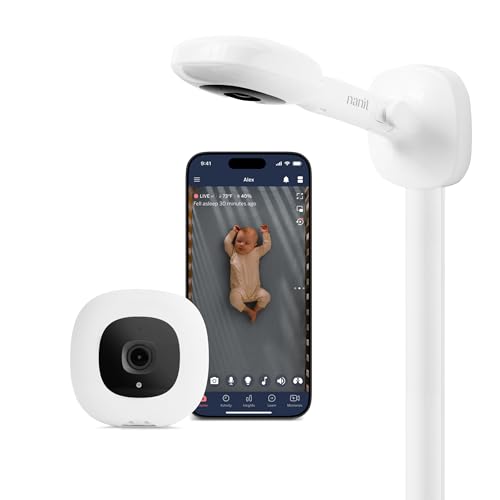
- Best overall for sleep tracking: Nanit Pro Smart Baby Monitor — Camera & Wall Mount — Check on Amazon
- Best for proactive crib alerts: CuboAi Smart Baby Monitor 3 — Floor Stand Set — Check on Amazon
- Best picture, no subscription: eufy Baby Monitor E21 — 4K Camera with 5-Inch Display — Check on Amazon
- Best offline value pick: Infant Optics DXR-8 PRO — Check on Amazon
- Best simple app camera: Owlet Cam 2 (Gen 2) — Check on Amazon
- Best flexible mounting: Lollipop Baby Monitor (Cotton Candy) — Check on Amazon
Read the full guide ↓
Disclosure: As an Amazon Associate, dailyhomedecorating.com earns from qualifying purchases. Links to Amazon on this page are affiliate links; they cost you nothing extra. Listing details such as price and availability change often, so check the current Amazon listing before you buy.
Shopping for the best baby security camera under $300 puts you in the flagship tier of nursery monitoring, and the first thing to understand is that the money buys three completely different philosophies, not one obvious winner. At this level you will find cloud cameras that watch the crib from directly overhead and turn the night into sleep data, cameras that promise to tap you on the shoulder before a problem develops, and deliberately offline monitors that refuse to touch your Wi-Fi at all. All three approaches are represented in this guide, because the honest answer to “which is best” depends on whether you want information, alerts or independence — and on whether you are willing to keep paying after the box is paid for.
That last point is the one most roundups bury, so we will put it up front: at this tier, the purchase price is only part of the cost. Some of these cameras unlock their headline features only with an annually billed subscription, some sell optional in-app extras, and some cost nothing beyond electricity for as long as you own them. We state each model’s arrangement plainly in its review, including which features sit behind which plan, because a camera that looks mid-priced on the shelf can become the most expensive option in this guide by a child’s second birthday. Storage follows the same split — cloud history you rent, local recording you own, or no recording at all — and we flag which is which for every pick.
Our short answer: the Nanit Pro is the most complete system here if sleep tracking matters and the subscription is acceptable; the CuboAi Monitor 3 is the alert-first alternative with an included floor stand; the eufy E21 gives you the sharpest picture and a real parent screen with no ongoing fees; the Infant Optics DXR-8 PRO is the offline value pick that will out-simple everything; and the Owlet Cam 2 and Lollipop cover the straightforward-app and impossible-room cases. Every pick below is a real, current model, and where a famous name sits above this ceiling in its popular bundle form, we say so rather than pretending the bundle fits the budget.
One more framing note before the picks. This tier also tempts people toward bundles — two cameras, a camera plus a wearable, a camera plus a year of everything — and bundles are where budgets quietly break. Every pick below is judged in its standard single-camera form, the form that fits the ceiling; where a maker’s popular bundle version costs more, the review says so and you can decide whether the extras earn the step up. Judge the camera first and the bundle second, because the camera is what you will live with for years after the bundle’s novelty wears off.
In this guide
Quick Picks
In a hurry? This table matches each camera to the job it does best in this guide. Every model is reviewed in full below, including its subscription and storage arrangements.
| Best for | Pick | Why it stands out | Link |
|---|---|---|---|
| Best overall for sleep tracking | Nanit Pro Smart Baby Monitor — Camera & Wall Mount | 1080p Wi-Fi camera, overhead wall mount, app viewing, two-way audio, temperature and humidity sensing | Check on Amazon |
| Best for proactive crib alerts | CuboAi Smart Baby Monitor 3 — Floor Stand Set | 2.5K QHD Wi-Fi camera, floor stand included, covered-face and rollover alerts (maker AI), cry detection, humidity sensor | Check on Amazon |
| Best picture, no subscription | eufy Baby Monitor E21 — 4K Camera with 5-Inch Display | 4K UHD camera, 5-inch 720p parent display, hybrid Wi-Fi and no-Wi-Fi modes, pan-tilt, 8x zoom, local recording, built-in camera battery | Check on Amazon |
| Best offline value pick | Infant Optics DXR-8 PRO | 720p camera with dedicated 5-inch display, no Wi-Fi, Active Noise Reduction, pan-tilt-zoom, interchangeable lenses | Check on Amazon |
| Best simple app camera | Owlet Cam 2 (Gen 2) | 1080p Wi-Fi camera, 4x zoom, wide-angle view, two-way talk, sound/motion/cry notifications, temperature and humidity sensor | Check on Amazon |
| Best flexible mounting | Lollipop Baby Monitor (Cotton Candy) | 1080p Wi-Fi camera, flexible wrap-around mount, true crying detection (maker), two-way audio, infrared night vision, in-app plan extras | Check on Amazon |
How we chose
We built this pool by starting with what an under-$300 budget should buy in a baby camera in 2026: at least 1080p video (four of our six exceed or match it in useful ways), reliable night vision, two-way audio, and alerts that arrive fast enough to be useful. We then deliberately diversified the architecture — two overhead smart systems, one hybrid local-plus-app flagship, one fully offline monitor, and two app cameras with distinct mounting and simplicity stories — because a guide that lists six near-identical cloud cameras serves nobody. Each model had to be a current, verifiable product from an established nursery or security brand, sold through mainstream US retail, with specifications we could confirm from the maker or the listing.
Running cost was a scored criterion, not a footnote. For every pick we established whether core monitoring works without a plan, which named features require payment, and how recordings are stored. We weighted honest limitation-spotting heavily: a camera whose sleep features need a specific mount, a display that is lower resolution than its sensor, an alert that is a maker claim rather than a tested guarantee — those details are in the reviews because they are what owners discover in week two. Finally, we applied a safety screen that has nothing to do with electronics: every camera here must be installable with its cable completely out of the crib and out of reach, and we call out the mounts that make that easy or tempting to get wrong.
A note on language, because it matters in this category: where a maker describes a detection or monitoring capability — crying detection, covered-face alerts, breathing-motion monitoring — we describe it as a maker claim. None of the cameras in this guide is a medical device, none of them can guarantee an outcome, and none replaces safe-sleep practice or a parent checking in person. We also verified every model, specification and ASIN in this guide against the maker’s materials or the live retail listing before including it; the companion sources file for this article records what we checked for each pick.
Nanit Pro Smart Baby Monitor — Camera & Wall Mount
The Nanit Pro is the camera this price tier is really about. It mounts on the wall directly above the crib and looks straight down, so instead of the angled, half-obscured view you get from a camera parked on a dresser, you see the entire mattress in one frame. The feed is 1080p over Wi-Fi to the Nanit app, with two-way audio, background audio so you can listen while your phone does other things, a built-in nightlight and white-noise sounds, plus temperature and humidity readouts for the nursery. There is no dedicated parent screen in the box; your phone or tablet is the monitor, which is either the Nanit’s biggest convenience or its biggest drawback depending on how you feel about handing your phone a full-time job overnight.
What separates the Nanit from cheaper Wi-Fi cameras is the layer of software sold as Nanit Insights, and this is where you must read the fine print before you buy. Live video, sound and motion alerts, two-way talk and the maker’s breathing-motion monitoring (which works with Nanit’s Breathing Wear garments, sold separately) run without a paid plan. But sleep analytics, saved video history and clips, milestone tracking and smart alerts such as cry detection sit behind the Insights subscription, which is billed annually; a short trial of the entry plan is included with a new camera and then renews automatically unless you cancel. In plain terms: the hardware price buys an excellent camera, and the ongoing plan buys the diary. Budget for both, or be honest with yourself that you will use it as a live monitor only. Nanit also states plainly that the camera is not a medical device; its breathing-motion feature is a maker-described convenience for awareness, not a health or life-safety guarantee, and it never replaces safe-sleep practices or checking on your baby in person.
Practical notes matter with an overhead mount. The wall mount needs a wall you are allowed to drill into and an outlet within cord reach, and the cord must be routed completely out of the crib and out of reach, secured flat to the wall — a dangling cable near a crib is a genuine strangulation hazard, and Nanit’s own mounting guidance treats cord management as part of the install, not an afterthought. Sleep features also require that overhead view, so a Nanit perched on a shelf at an angle will not deliver the analytics you paid for. Video is cloud-assisted through the app rather than stored on a local card, so your home Wi-Fi quality and your comfort with a cloud account are part of the purchase.
In an all-round ranking the Nanit takes first place on depth, not on any single spec: no rival here matches the combination of overhead view, mature app and sleep record-keeping. Judge it as a system — camera plus plan — and it is the benchmark the others are measured against.
What we like:
- True overhead view of the whole crib from the included wall mount
- Deepest sleep-tracking ecosystem in this roundup when paired with an Insights plan
- Background audio, nightlight and white noise built in
- Temperature and humidity sensing in the app
Honest limitation: The features most people buy it for — sleep analytics and video history — require the paid Insights plan after the trial; live viewing alone does not.
Choose it if: Choose the Nanit if you want the data: nightly sleep summaries, a growth-and-moments record, and the clearest overhead picture of the crib, and you accept an annual plan as part of the real cost.
Skip it if: Skip it if you refuse subscriptions on principle, if you cannot drill into the nursery wall, or if you want a screen that is not your phone.
CuboAi Smart Baby Monitor 3 — Floor Stand Set
The CuboAi Smart Baby Monitor 3 is the challenger built around one idea: proactive alerts. Its 2.5K QHD camera watches the crib and, per the maker, uses on-device AI to flag a covered face or a rollover onto the stomach, to distinguish a true cry from background noise, and to warn you if the baby enters a danger zone you draw in the app once they start standing and roaming. This floor-stand set puts the camera on a tall stand behind the crib for the overhead angle those alerts are designed around, with no drilling. Two-way audio, lullabies, night vision and a room humidity sensor round out the nursery basics, and the bird-shaped camera is deliberately the least clinical-looking device in this guide.
The honest framing for those headline alerts: they are manufacturer-described detection features, not medical monitoring. A covered-face alert is a prompt to go and look — it is not a guarantee of detection in every bedding arrangement, lighting condition or network state, and CuboAi does not sell this as a medical device. Treat the AI as an extra set of eyes that sometimes blinks, keep the crib bare per safe-sleep guidance, and never let an app notification substitute for your own checks. Where CuboAi scores well on ownership cost is that its core alerts and a rolling window of playback have historically been usable without a mandatory paid tier, with an optional premium plan adding longer history and extras; check the current plan page before buying, because app feature packaging in this category changes often. Video runs through CuboAi’s cloud app — there is no local memory-card recording and no dedicated parent unit — so, like the Nanit, it lives or dies by your Wi-Fi and your feelings about cloud accounts for nursery footage.
Setup is genuinely renter- and grandparent-friendly: assemble the stand, place it so its base cannot be pulled into the crib, route the cable down the stand and away from small hands, and keep the whole assembly far enough back that a standing toddler cannot grab the camera or the cord. The floor stand also makes the CuboAi easy to move between rooms or take to a caregiver’s house, though the overhead alerts are calibrated for the stand’s crib view and will not perform the same way aimed across a playroom. Picture quality from the QHD sensor is a real step up from 1080p when you pinch-zoom on a phone screen, which is how most parents actually check whether eyes are open or closed.
For the general buyer, the CuboAi’s appeal is that its smartest features are about tonight, not about charts: a covered-face or rollover alert is useful the first week home, long before sleep trends mean anything. It is the thinking parent’s alternative to the Nanit rather than a cheaper copy of it.
What we like:
- Covered-face and rollover alerts are the headline act (maker AI claims)
- Floor stand included — overhead view with no drilling
- 2.5K QHD picture is visibly sharper when zooming on a phone
- Core alerts usable without a mandatory subscription (verify current plan terms)
Honest limitation: No local storage and no parent screen: if your Wi-Fi or CuboAi’s cloud stumbles, so does your monitor.
Choose it if: Choose the CuboAi 3 if proactive crib-safety alerts matter more to you than sleep diaries, and you want the overhead view without touching a wall.
Skip it if: Skip it if you want recordings kept inside your home, or a screen that works when the internet does not.
eufy Baby Monitor E21 — 4K Camera with 5-Inch Display
The eufy E21 is the pick for parents who want flagship picture quality without handing the nursery to a subscription. The camera shoots 4K UHD and pans and tilts under remote control with up to 8x zoom, while the box includes a proper 5-inch parent display — so the monitor keeps working on its own screen even if you never connect it to Wi-Fi at all. That hybrid design is the E21’s signature: run it as a closed local system on the included display, or link it to the eufy app for phone viewing and 24/7 recording in the app when you want remote access. Active noise reduction keeps nursery sound from turning into a hiss of white noise on the parent unit, and the camera itself carries a built-in battery, so it can ride out a short outage or work for naps in a room with an awkward outlet.
On the money question, the E21 is refreshingly plain: no subscription is required for its core monitoring, and recording is handled locally rather than sold back to you as a cloud plan. That changes the real cost of ownership across two or three years of use more than any single feature on this page. The trade-offs are equally plain. The parent display is 720p, so the 4K detail is best appreciated in the app feed and in zoomed views rather than on the handheld screen, and families who want sleep analytics, cry diaries or milestone tracking will find none of that here — eufy sells you an excellent camera and screen, not a data service. App features also depend on eufy’s ecosystem and account, so read the current privacy and app terms the way you would for any connected camera, and keep firmware updated.
In daily use the E21 behaves like the grown-up security-camera brand it comes from: motion and sound alerts, two-way talk, temperature awareness and straightforward pan-tilt controls. The camera needs a stable perch or mount with its power cable dressed safely away from the crib — the battery is a bridge, not a lifestyle, and a camera within grabbing range of a standing baby will eventually be grabbed. For twins or a nursery-plus-playroom setup, confirm how many cameras the display and app support before building a multi-room plan around it. If your shortlist question is “which of these will still be fully mine in three years with no monthly bill,” the E21 is the answer in this tier.
Ranked on hardware alone, the E21 would win this guide: the best sensor, a real screen, local recording and no fees. It places third overall only because this tier’s shoppers often come specifically for sleep data, which is the one thing it does not attempt.
What we like:
- Best-in-guide camera resolution with pan, tilt and 8x zoom
- Included 5-inch display works with Wi-Fi switched off entirely
- No subscription needed for core monitoring or local recording
- Built-in camera battery bridges outages and awkward outlets
Honest limitation: No sleep analytics or smart diary features, and the parent screen is 720p despite the 4K sensor.
Choose it if: Choose the E21 if you want premium hardware, a real parent screen and zero ongoing fees, and you do not care about sleep data.
Skip it if: Skip it if nightly sleep reports are the whole point of spending at this tier.
Infant Optics DXR-8 PRO
The DXR-8 PRO is the veteran of this roundup and the value pick at this tier: a deliberately offline monitor in a lineup of cloud cameras. There is no Wi-Fi, no app, no account and no subscription — the camera talks directly to its dedicated 5-inch parent display over a closed wireless link, and that is the entire system. Resolution is 720p, which sounds modest next to 4K badges, but the PRO’s party trick is Active Noise Reduction, which filters the hiss, hum and static that make most audio monitors fatiguing to listen to all night. Interchangeable lenses (a standard lens in the box, with optical zoom and wide-angle lenses available from the maker) let you tune the view to a small nursery or a wide toddler room, and the camera pans, tilts and zooms from the parent unit.
Why does a 720p offline monitor belong in an under-$300 guide at all? Because for a large group of parents it removes every recurring complaint about the smart cameras: nothing to hack through the home network, nothing that stops working when the internet drops, no plan quietly renewing, no firmware update changing the app the week the baby arrives, and a screen that is always a screen — never a phone you also need for everything else. Grandparents and babysitters can use it with zero instruction, which is a feature no app has ever matched. The honest limitations are the mirror image of those strengths: you cannot check in from work or the driveway, there are no cry-detection smarts, no sleep data, no recordings to review, and the picture will not reward pinch-zooming the way the eufy or CuboAi will. Range is also a physical fact — thick walls and distance between nursery and parent unit matter in a way they do not for Wi-Fi systems.
Setup is the simplest here: place the camera where it sees the crib, keep it and its cord well out of reach (the same cord discipline applies — out of the crib, secured, at least a full arm’s length plus growth margin from small hands), pair nothing, create no account, and you are monitoring in minutes. Battery life on the parent unit, the availability of a second camera for siblings, and the lens options are the three things to verify on the listing for your household’s layout. As the second monitor in a house that already owns a smart camera — the travel unit, the grandparents’ house unit, the just-works backup — it has no real rival in this guide.
Every flagship roundup needs its reality check, and the DXR-8 PRO is ours: it costs less than the flagships, does less, and will still be working unchanged when app cameras have been redesigned twice. For many families that trade is not a compromise at all.
What we like:
- Completely offline: no Wi-Fi, no app, no account, no subscription, ever
- Active Noise Reduction makes overnight audio far less fatiguing
- Instant, babysitter-proof setup on a dedicated screen
- Interchangeable lenses adapt it from crib close-up to whole-room view
Honest limitation: 720p picture, no remote viewing, no recordings and no smart alerts of any kind.
Choose it if: Choose the DXR-8 PRO if privacy, simplicity and zero running costs outrank apps and analytics in your house.
Skip it if: Skip it if you need to see the nursery from outside the home or want any form of sleep tracking.
Owlet Cam 2 (Gen 2)
The Owlet Cam 2 is the compact, good-looking Wi-Fi camera in this tier — a small 1080p unit with a wide-angle lens, 4x digital zoom, night vision, two-way talk and sound, motion and cry notifications through the Owlet app, with temperature and humidity sensing built in. It is the camera-only member of a family whose famous sibling is a wearable sock (sold separately and not part of this pick); judged purely as a camera, its appeal is a clean picture, a tidy magnetic-base design that sits neatly on a shelf or wall mount, and an app experience built for exhausted one-handed use at 3 a.m. Video is encrypted in transit per the maker, and the app is where everything lives: there is no parent screen and no local memory-card slot, so the Cam 2 is a cloud-app monitor through and through.
Cost honesty for the Owlet: the camera itself has historically worked without a mandatory subscription for live viewing and basic alerts, and Owlet has been adding optional in-app extras over time — so check the current app plan page before you buy and confirm which features are free today, because packaging in this category shifts. Also be clear-eyed about what a camera can and cannot tell you: cry and motion notifications are convenience alerts, and any breathing or wellness language around the wider Owlet ecosystem refers to separate wearable products with their own instructions and limitations — the Cam 2 on its own is a video monitor, not a health device, and nothing it shows replaces safe-sleep practice or your own checks. The wide-angle lens is a genuine practical plus in small nurseries, where a camera often sits closer to the crib than the textbooks assume and narrower lenses crop the mattress edges.
Living with the Cam 2 is easy in the ways that matter nightly: background audio options, quick talk-back, and a picture that holds up well in a dark room. Its weaknesses are the category’s usual ones — total dependence on your Wi-Fi and phone, no offline fallback screen for a sitter who does not have the app, and no sleep analytics depth to rival the Nanit if data is your thing. Mount it or place it with the cable routed down and away from the crib, never draped where a standing child can reach it. As a first smart camera for parents who want the nursery on their phones and nothing more complicated, it earns its place here on simplicity.
The Owlet is the pick we recommend to friends who ask for “just a good one that works on my phone”: it does the camera job cleanly without asking them to care about analytics tiers or stand geometry.
What we like:
- Clean 1080p picture with a genuinely useful wide-angle lens
- Temperature and humidity sensing plus cry notifications in one tidy unit
- Small, neat design that disappears on a shelf
- Simple app that is easy to operate one-handed overnight
Honest limitation: App-only viewing: no parent screen, no local recording, and feature packaging can change with app updates.
Choose it if: Choose the Cam 2 if you want a straightforward phone-based monitor from an established nursery brand and do not need sleep analytics.
Skip it if: Skip it if you want recordings stored at home or a screen a babysitter can use without your phone.
Lollipop Baby Monitor (Cotton Candy)
The Lollipop is the design object of the group: a 1080p Wi-Fi camera on a flexible, bendable stem that wraps around a crib rail, a shelf edge or a floor lamp, or stands on a surface with its tail as a tripod. That mount is not a gimmick — it solves the most common nursery problem, which is that the perfect camera position is rarely where a shelf happens to be. The maker’s headline software feature is true crying detection, designed to distinguish an actual cry from a barking dog or a door slam before it pings your phone, alongside two-way audio, infrared night vision, lullabies and white-noise playback, and event clips in the app. There is no parent unit; like the Nanit and Owlet, your phone is the screen.
Two honesty notes belong with the Lollipop. First, the app sells an optional paid plan that unlocks extras such as the maker’s breathing-monitoring and sleep-tracking features (maker-described, camera-based estimates — not medical measurements, and no substitute for safe sleep or in-person checks); the camera’s core live view and crying detection are the free foundation, but confirm the current plan split on the maker’s page before purchase, because the line between free and paid has moved before. Second, the wrap mount tempts people to attach the camera directly to the crib rail with its cable nearby — resist sloppy versions of this. The camera body may grip the rail, but the power cable must still be routed away from the crib interior and out of reach, and once your baby can stand and grab, a rail-mounted camera is within range of determined hands; move it further back and re-check the view. Cloud dependence applies here too: no local card recording, so the app and your Wi-Fi are the whole system.
Where the Lollipop shines is flexibility across the first two years: crib-side now, playroom shelf later, wrapped around a travel crib at a relative’s house in between. Its picture and night vision are solid rather than class-leading, and data people will find its sleep features thinner than Nanit’s. But as the one camera in this guide that can perch almost anywhere without a stand, a shelf or a drill, it solves real rooms that defeat fixed-mount rivals — which is why it closes out this pool.
The Lollipop earns the final slot on problem-solving rather than specs: it is the camera we would hand to anyone whose nursery defeats shelves and stands, and that situation is far more common than product photos admit.
What we like:
- Flexible stem mounts almost anywhere — no shelf, stand or drilling needed
- True crying detection aims to cut false alerts (maker feature)
- Doubles as a travel and playroom camera as your child grows
- Lullabies and white noise built in
Honest limitation: Best extras sit in a paid in-app plan, and there is no local recording or parent screen.
Choose it if: Choose the Lollipop if your nursery has no good shelf or wall for a camera and you need the mount itself to be the solution.
Skip it if: Skip it if you want deep sleep analytics or an offline fallback screen.
Side-by-side comparison
The table below compresses the differences that actually decide this purchase: how you watch, how recordings are kept, and whether a plan is part of the deal. Read it alongside the reviews — the right choice is the row whose compromises you mind least.
| Pick | How you watch | Recording / storage | Plan needed? |
|---|---|---|---|
| Nanit Pro Smart Baby Monitor — Camera & Wall Mount | Phone app (Wi-Fi) | Cloud history with Insights plan | Yes, for sleep analytics & history |
| CuboAi Smart Baby Monitor 3 — Floor Stand Set | Phone app (Wi-Fi) | Cloud app playback | No for core alerts (optional premium) |
| eufy Baby Monitor E21 — 4K Camera with 5-Inch Display | Included 5-inch screen + app | Local recording | No |
| Infant Optics DXR-8 PRO | Dedicated 5-inch screen only | None — live only | No, never |
| Owlet Cam 2 (Gen 2) | Phone app (Wi-Fi) | App-based, no local card | No for core use (check app extras) |
| Lollipop Baby Monitor (Cotton Candy) | Phone app (Wi-Fi) | App event clips | No for core use; extras are paid |
How to choose the best baby security camera under $300
Start by choosing your architecture, because it decides everything downstream. If you want sleep information, you are choosing between the overhead systems (Nanit, CuboAi) and accepting an app-centred life, possibly with a subscription. If you want independence from fees and networks, you are choosing local recording or a closed offline link (eufy, Infant Optics) and giving up analytics. Neither direction is wrong; buying an analytics camera and refusing its plan, or an offline monitor and missing remote check-ins, is the only genuinely wrong outcome, and it happens when shoppers pick by picture quality alone.
Next, plan the physical install before you fall in love with features. Overhead analytics need a true top-down view: a wall you may drill, or a floor stand with floor space behind the crib. Shelf cameras need a stable perch at the right distance with a cable path that never crosses the crib. In every case the rule is identical — camera and cord out of reach, cord secured, and re-checked the day your baby first pulls to stand, because reach grows faster than habits. Then check your network honestly: Wi-Fi cameras need a strong signal in the nursery specifically, not in the hallway outside it, and app monitors need a phone you are willing to dedicate overnight or a tablet that can take the job.
Finally, price the whole first two years, not the box. Add any subscription you will actually keep, any extra camera for a second child or room, and any mount or lens accessories your room requires. Compare that total across your shortlist and the ranking often flips — which is exactly why this guide names the fee structure of every pick in plain language.
Living with it: the first month
The first month with any of these cameras teaches the same three lessons. First, placement beats features: a week of small adjustments — a few centimetres higher, a slight angle change, a curtain moved — does more for your picture than any setting in the app, and overhead owners learn that the analytics only wake up when the view is truly top-down. Second, alert tuning is a real task: out of the box, most cameras notify too often, and ten minutes spent adjusting sensitivity and zones in week one saves a month of ignored notifications. Set them so that when your phone does buzz at 2 a.m., you still believe it.
Third, decide your household’s screen habit and stick to it. Families who leave a dedicated screen or an old tablet on the kitchen counter use their camera ten times more than families who rely on opening an app, and they argue about it less at night. Whichever pattern you choose, run one deliberate drill in the first week: retrieve a saved clip or test the talk-back from another room, so the first real use is not the first ever use. The camera that survives month one as an unremarkable, trusted appliance — rather than a gadget still being configured — is the one that was bought well.
Common mistakes to avoid
- Paying flagship money and refusing the plan. Buying an analytics camera and then declining its subscription leaves you with an expensive live-view camera. Decide about the plan before you buy the hardware, not after the trial expires.
- Mounting for the photo, not the baby. A camera angled from a dresser gives a pretty room view and a useless crib view. Overhead systems in particular only earn their price from directly above the mattress.
- Leaving a cable within reach. Cords draped behind or inside the crib are a strangulation hazard. Route every cable out of the crib, flat and secured, and re-check after every furniture move.
- Believing alert features are supervision. Covered-face, rollover and breathing-motion features are maker-described aids. They never replace a bare crib, back-sleeping and in-person checks.
- Testing Wi-Fi in the wrong room. A strong signal at the router means nothing. Test the actual nursery, at night, with doors closed, before the return window closes.
Final recommendation
If we had to hand one box to a first-time parent with this budget, it would be the Nanit Pro — bought with open eyes about its Insights plan, because the plan is where the sleep tracking lives. If the subscription is a deal-breaker, the decision splits cleanly: the CuboAi Monitor 3 for proactive crib alerts with an included stand, or the eufy E21 for the best hardware and a screen with no fees at all. The Infant Optics remains the recommendation we give privacy-first families and grandparents, and it is the best second monitor in the guide.
One name you may have expected is missing from the linked picks: the Miku Pro, another overhead smart camera, is sold as a step-up above this guide’s ceiling in its usual form, so we list it as a prose-only mention rather than pretend it fits under $300 — if your budget stretches, it is the subscription-free analytics alternative to research next. Whichever camera you choose, install it with the cord discipline described above, test it in the real nursery for a week, and remember that every feature in this guide is an aid to your attention, never a replacement for it.
Our shortlist, in order: Nanit Pro Smart Baby Monitor — Camera & Wall Mount; CuboAi Smart Baby Monitor 3 — Floor Stand Set; eufy Baby Monitor E21 — 4K Camera with 5-Inch Display. Check the current listing for each before you decide, and re-read the subscription and storage notes in their reviews above — at this tier, those two lines matter as much as the camera.
Frequently asked questions
Do I need a subscription for a baby camera at this price?
Not always — it depends on the model. In this guide the eufy E21 and Infant Optics DXR-8 PRO need no plan at all, the CuboAi’s core alerts work without a mandatory tier, while the Nanit’s sleep analytics and video history require its Insights plan, and the Lollipop sells extra features in its app. Each review states the arrangement for its model.
Is a Wi-Fi camera or a dedicated parent unit better?
Wi-Fi cameras add phone viewing from anywhere, smarter alerts and (on some models) sleep data, but depend on your network and an account. A dedicated parent unit works offline, is simpler for sitters, and keeps working when the internet does not — at the cost of no remote viewing and fewer features.
Can these cameras really monitor breathing?
Some makers describe camera-based breathing-motion monitoring. Treat it strictly as a manufacturer-described awareness feature: it is not a medical measurement, it does not diagnose or prevent anything, and it never replaces safe-sleep practice or checking your baby in person.
Where should the camera go, and what about the cord?
Overhead systems want a true top-down view of the mattress; other cameras want a clear, stable view of the whole crib. In all cases the camera and its power cord must stay completely out of the crib and out of your child’s reach, with the cord secured along the wall or stand — and re-checked as your baby grows and starts standing.
What happens to recordings — cloud or local?
It varies by model in this guide: app cameras typically store history in the maker’s cloud (sometimes only with a plan), the eufy records locally, and the Infant Optics does not record at all. Decide which model you are comfortable with before buying, and read the maker’s current privacy terms.
Is it worth spending up to $300 instead of buying a cheaper camera?
It is worth it if you will use what the tier adds: overhead sleep tracking, proactive crib alerts, a 4K sensor with a real screen, or premium build and support. If you only need to see and hear the nursery from the next room, cheaper cameras — and one pick in this very guide — do that job well for less.
Related guides
Still deciding on budget or fit? These companion guides in the same series cover the neighbouring tiers and lenses:


