Disclosure: As an Amazon Associate, reviewstook.com earns from qualifying purchases. Links to Amazon on this page are affiliate links; they cost you nothing extra. Listing details such as price and availability change often, so check the current Amazon listing before you buy.
A sudden beep in a dark room is a rough way to begin the day. A wake up light alarm clock takes the opposite approach: it raises a lamp slowly over a set period, so the room is already glowing when the sound finally arrives. The best wake up light alarm clocks pair that gradual glow with soft tones, a radio or an app, and they can double as a bedside lamp in the evening.
This guide is for people who dislike harsh alarms, for light sleepers who share a bed with someone on a different schedule, and for anyone curious about sunrise simulators in dark winter bedrooms. It compares six clocks from Philips, Hatch, Loftie and Lumie, explains the features that differ, and points out where each one asks you to make a compromise. We describe what the makers list and make no promises about sleep or health.
Quick Comparison
| Product | Best for | Main point | Link |
|---|---|---|---|
| Philips SmartSleep HF3520/60 | A well-known, straightforward sunrise lamp | Adjustable sunrise length, wake-up sounds and FM radio | Check on Amazon |
| Philips SmartSleep HF3650/60 | People who want more control | Customizable sunrise and sunset features | Check on Amazon |
| Philips SmartSleep HF3500/60 | A simpler, entry-level Philips | Fewer brightness steps than the HF3520 | Check on Amazon |
| Hatch Restore 2 | App fans and families | Light, sound and routines in one lamp | Check on Amazon |
| Loftie Clock | A screen-free bedroom | Two-stage alarm with a gentle first call | Check on Amazon |
| Lumie Bodyclock Active 250 | A dedicated sunrise device | Light focus without a lot of extras | Check on Amazon |
In this guide
How These Options Were Chosen
We built this list from manufacturer pages and published specifications and compared the way each clock manages its light, its sounds and its controls. We have not used these clocks ourselves, so nothing here describes how a particular unit feels at six in the morning in your bedroom.
We included three Philips models because they show how one maker scales features, plus three alternatives with a different style. Before buying, check the current listing for the power adapter, the number of brightness levels and any app requirement.
The Best Wake Up Light Alarm Clocks
Philips SmartSleep Wake-Up Light HF3520/60
Philips is the brand most people think of first, and the HF3520/60 is the model many shoppers treat as the sensible middle. According to Philips, it offers 20 brightness settings, a sunrise that you can adjust between 20 and 40 minutes, five wake-up sounds and an FM radio.
The appeal is that it works like a traditional bedside lamp with a clock face. You do not need a phone to set it up, and the buttons are physical. The light builds toward your chosen alarm time, then the sound plays if you want one.
The compromise is that it is not a smart device. There is no app, and the display and the controls feel more conventional than newer products. If you travel often, it is also a full-size lamp, not something you tuck into a suitcase.
Choose it if you want a proven, easy design with a radio. Skip it if you want remote control from a phone.
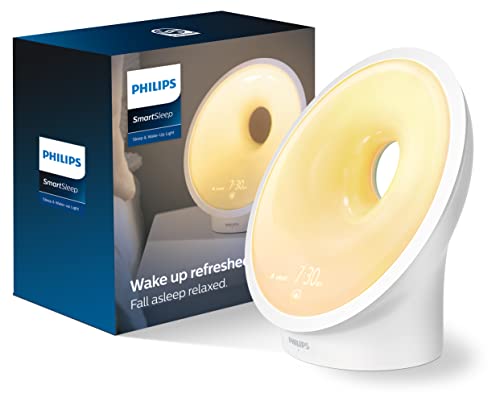
Philips SmartSleep Sleep and Wake-Up Light HF3650/60
The HF3650/60 sits at the top of the Philips range in the United States. Its listing describes customizable sunrise and sunset simulations, several sound profiles and an FM radio. The sunset side is a bedtime feature: the lamp dims slowly while you get ready to sleep, then switches off by itself.
This model suits someone who wants the wake up and wind down parts of the evening handled by one device. It gives more settings to adjust, so it rewards a patient person who likes tuning the glow and the sound until it feels right.
The trade-off is complexity. More settings mean a longer manual and more steps when you travel or change time zones. It is also the largest and most feature-heavy Philips choice, so it takes up more room on a small nightstand.
Pick it if you will use both the sunrise and sunset functions. Skip it if you only need a light that comes on in the morning.
Philips SmartSleep Wake-Up Light HF3500/60
The HF3500/60 is the simpler Philips for people who just want the sunrise idea. Listings describe it with fewer brightness levels than the HF3520/60 and a gentler feature list. Check the current listing for exactly which sounds and which extras it includes, because Philips has changed its lineup over the years.
It makes sense for a spare room, a student or a first-time buyer who wants to see whether a sunrise alarm suits them before committing to a bigger model. The design is plain and the learning curve is short.
The drawback is the smaller range of adjustments. If the light is too strong or too weak at the lowest step, you cannot fine-tune it as easily. It also may lack the radio, so read the listing if you like to wake to music or news.
Choose it if you want a basic sunrise lamp. Skip it if you want the widest choice of brightness steps.

Hatch Restore 2 Sunrise Alarm Clock
Hatch has built its name on a lamp that is as much a sound machine and a routine planner as an alarm. The Restore 2 is controlled mainly through a phone app, where you build wake-up and bedtime routines that combine light colors, sounds and reminders. It is a good match for people who enjoy customizing every detail.
Its look is soft and rounded, and it fits easily on a nightstand beside the bed. Some content and extra programs may require a paid membership, so read the listing carefully for what the lamp does on its own.
The trade-off is dependence on the app and the wireless connection. If you prefer buttons and a quick glance at the clock, it may feel like too much. It is also a poor match for someone who wants a plain dial or a simple radio.
Pick it if you want light, sound and routines in one lamp. Skip it if you do not want another app.
Loftie Clock Bedside Alarm Clock
The Loftie Clock treats the alarm as two steps. According to the maker, it opens with a gentle first sound and then moves to a second stage if you are still asleep, with a warm light on the clock. It is designed to keep the phone out of the bedroom, so setup and alarms are handled through an app while the clock itself looks quiet and uncluttered.
It appeals to buyers who want a screen-free nightstand and a calm look more than a strong, bright sunrise. The light is part of the experience, but it is not the sort of full lamp that Philips and Lumie are known for.
The trade-off is effort: you need the app to set it up, and the clock is not the right choice if you want a big beam of light. Check what sound options are included before ordering.
Choose it if your priority is a peaceful, phone-free bedroom. Skip it if you want a bright lamp for dark mornings.
Lumie Bodyclock Active 250 Wake-up Light Alarm Clock
Lumie is a British company known for light products, and the Bodyclock range focuses on sunrise simulation. The Active 250 is aimed at people who want a dedicated sunrise device without a large collection of extras. Lumie describes the light as rising gradually before your alarm time, with a sound alarm available as a backup.
It suits a person who mainly wants a brighter, more natural beginning to a dark morning and who does not care about apps or radios. The simple interface also helps if you share a bedroom and only want to set one time.
The compromise is availability and support: check whether the listing is sold through a US seller, what plug type it comes with and how warranty service works. It is also less rich in features than Hatch or the higher Philips models.
Pick it if you want a focused sunrise lamp. Skip it if you want a radio or app control.
Best for Light Sleepers and Partners
A sunrise lamp helps when one person rises earlier, because the glow builds slowly and the sound can be kept low. The Philips HF3520/60 lets you pick a sound level and a sunrise length, which makes it easy to avoid disturbing a partner.
Best for Gradual Light with Minimal Fuss
The Lumie Bodyclock Active 250 is the focused answer. It spends its effort on the light and leaves out most of the extras, which keeps the experience simple.
Best for Families and Routine Fans
The Hatch Restore 2 stands out for households that like to plan wake up and bedtime routines. The light colors and the sounds can be changed from a phone, so each person in the home can have a different routine.
Best for a Phone-Free Nightstand
The Loftie Clock is designed to replace the phone as a bedside alarm. It keeps the mornings gentle and the room visually calm.
How to Choose
Begin with the room and the people in it. A sunrise lamp is useful only if the light can reach your face. If you sleep with a pillow over your head or with the lamp on the far side of the room, the effect is smaller. Place it within arm’s reach, pointing toward the bed.
Light output and sunrise length
Look for adjustable brightness and the option to extend the sunrise period. Makers list a range, and a longer period is gentler, while a shorter one suits people who dislike a long build up. A low-light setting matters if you also use the lamp at night, because a night light that is too bright defeats its purpose.
Sound and radio
Many shoppers want natural sounds or a radio at the end of the light cycle, so check whether the model includes them. If you want an ascending tone that grows louder, read the listing for how it behaves. Remember that a gentle sound may not be enough if you are a deep sleeper, so keep a backup alarm at first.
Controls and apps
Physical buttons are quick when you are half asleep. Apps offer more flexibility but need a phone, a wireless connection and updates. Decide which kind of person you are before buying. Travelers should also think about the lamp size and voltage, since many sunrise clocks are too big to pack comfortably.
Light therapy is a different category
Wake-up lights are alarm clocks that imitate dawn. They are not the same as bright light boxes sold for other purposes. If you are considering light for a health reason, speak with a doctor, and do not assume a sunrise lamp serves that role.
Common mistakes
People often buy on looks alone, then discover that the lamp is too dim to notice. Others forget to set a backup alarm. Read the manual to learn how to switch off the display light, and look at how big the lamp is relative to your nightstand.
Installation, Safety and Legal Notes
Follow the maker’s instructions for setup, the power adapter and placement. Keep the lamp on a stable surface away from water and out of reach of small children. Do not cover it with fabric while it is on, and use only the supplied adapter or one that the maker recommends.
If you plan to mount a lamp, extend a cable or change any fixed wiring, hire a licensed professional. Be careful with a bright light in the first minutes of the morning if you have an eye condition or take medication that affects light sensitivity, and ask a doctor if you are unsure.
Care and Troubleshooting
| Problem | What to check |
|---|---|
| Light does not rise | Confirm the alarm is on and the time zone and clock are correct |
| Light seems too weak | Move the lamp closer to the pillow and check the brightness setting |
| App will not connect | Check the wireless network and the app version |
| Display too bright | Lower the display level or turn it off in the settings |
Dust the diffuser with a soft dry cloth and unplug the unit before cleaning.
Why Gradual Light Changes How Waking Feels
A conventional alarm pulls you out of sleep at a fixed moment, whatever stage you happen to be in. A sunrise-style clock works from a different idea. Over the final stretch before your wake time, light rises slowly from a dim glow to a bright level. Your eyelids let some of that light through even while you are asleep, and the brain reads rising light as a cue that morning is near. Sleep tends to lighten, and for many people the eventual wake-up feels less like an ambush.
This is a gentle nudge, not a guarantee. Some people still sleep through the full ramp, especially if they went to bed very late or are carrying a sleep debt. That is why most of these clocks pair the light with a sound that arrives at the end. Think of the light as the first stage and the sound as the safety net.
What the Light Cannot Do
- It will not fix a sleep schedule that is too short. If you are in bed for five hours, no clock makes that feel like eight.
- It will not replace a medical diagnosis if you have persistent daytime exhaustion or suspect a sleep disorder.
- It will not work well if the room is already flooded with streetlight, because the contrast between dark and rising light is what carries the signal.
Placing the Clock in Your Bedroom
Position matters more than most buyers expect. The light needs to reach your closed eyes, so a spot that faces the bed at roughly head height works best. A nightstand on the side where your head rests is the usual choice. A clock tucked behind a lamp or hidden at the back of a shelf wastes most of its output.
Distance is the other variable. A lamp that feels pleasant at an arm's length can look weak from six or seven feet away. If your bed is large or the nightstand sits far from your pillow, favor a model with a brighter ceiling and consider a small shelf or wall position closer to you.
Dealing With Existing Light
- Blackout curtains: These give the clock a clean dark background, which makes the early part of the ramp easier for your eyes to register. They also help in summer, when real daylight arrives before your alarm.
- Standby glow: Check whether the display and indicator lights can be dimmed or switched off. A bright clock face competes with the sleep environment you are trying to build.
- Reflective surfaces: A white wall behind the clock bounces light back toward the bed. A dark wall absorbs it.
Matching the Clock to Seasons and Schedules
The appeal of a sunrise alarm is strongest when your wake time falls before natural daylight. In the darker months, many people get up in the dark and feel the difference between a harsh buzzer and a slow brightening. In summer, the sun may already be up, and the clock's main job shifts to the sound and routine features.
Early Risers and Shift Workers
If you wake at 4:30 or 5:00 a.m. for a commute or training, a longer ramp lets the light begin while you are still deep in the night. If you work rotating shifts, look for easy schedule changes, since you may be resetting the alarm several times a week. Fiddly menus become a real annoyance when your wake time moves around.
Teens and Heavy Sleepers
A household member who sleeps deeply usually needs a louder fallback sound, not a brighter light. Treat the light as an aid and test the sound level before you rely on it for something important like an exam or a flight.
Travel
A compact, plug-in model is easy to pack and can make a hotel room feel more familiar. Check the voltage and plug type if you cross borders, since many models are built for one region.
A Two-Week Trial Routine
Judging a wake-up light after one night rarely tells you much. Your body needs a little time to respond, and the first mornings are colored by novelty. A simple plan keeps the test honest.
- Pick a wake time you can keep within about 30 minutes every day, weekends included.
- Set the ramp to its longest comfortable setting and the backup sound a few minutes after full brightness.
- Keep your phone out of reach so you are not tempted to check it during the ramp.
- After a week, note whether you wake before the sound. If so, you can shorten the ramp or lower the volume.
- After two weeks, decide whether the mornings feel better and whether the clock earns its spot.
Most return windows are long enough to cover this, so check the policy before you start. A consistent schedule is a large part of why these clocks seem to work, and the light simply makes that consistency easier to live with.
Comparing Cost Against What You Use
Basic models handle the light ramp and a few sounds. Higher tiers add app control, multiple alarms, sleep sounds, a night-light function and sometimes a screen. It is easy to pay for features you never open. If your needs are a gentle ramp and one wake time, a simpler unit covers it. If you share a room, want an evening wind-down routine, or like adjusting everything from a phone, the extra cost may be justified. Write down the three features you would use every day and ignore the rest.
Tuning the Sunrise to Your Room, Not Just to the Clock
A sunrise simulation only works if the light it produces suits the room it lands in. The settings that matter most are the sunrise length, the final brightness and where the clock sits relative to your pillow. Start with a longer sunrise and a moderate final brightness, then adjust one variable at a time over the first week. Many people quit on wake-up lights because the first try was a short, bright blast that felt like a torch rather than dawn. The models in this guide, from the Philips HF3520/60 through to the Hatch Restore 2 and the Loftie, all reward a slower experiment.
Room colour changes the result more than most buyers expect. Pale walls bounce the light around and make a modest lamp feel stronger, while dark paint and heavy curtains swallow it. If your bedroom is dark-toned, place the clock where its light has a clear path to the ceiling or the wall behind the bed, because reflected light reads as ambient dawn rather than a point source. Blackout curtains are not the enemy here; the clock works inside the room, so curtains simply stop street light from competing with your chosen wake time in summer.
Pairing Light With Sound Deliberately
Decide what job each sense is doing. A common pattern that works well is light as the primary cue and sound as the backstop: the sunrise begins, and a gentle sound starts only near the end, at low volume, for the days when light alone is not enough. Nature sounds suit this role because they can start almost inaudibly. Radio, offered on some picks in this guide, is better treated as a morning companion after you are awake rather than as the alarm itself, since a voice or an advert can land badly at low volume in a half-asleep brain.
If a partner keeps a different schedule, aim the light. A clock on your side of the bed, turned slightly toward your pillow and away from theirs, plus a lower final brightness, wakes one sleeper far more politely than a ceiling light. It will not be perfect — light spills — but combined with a vibrating phone alarm as the final nudge it is the kindest setup most couples find.
Using a Wake-Up Light Through the Whole Year
The value of these clocks changes with the seasons, and adjusting your expectations keeps them useful. In winter, when your alarm goes off in full darkness, the sunrise does real work: it gives your body the dawn signal the sky is withholding, and many owners say this is when the clock earns its place. In summer, when daylight arrives before the alarm, the clock’s role shifts. It becomes a consistency tool, waking you at the same point each day regardless of a bright June morning or a grey one, and its sunset or wind-down features come to the front instead.
Shift workers get a different benefit again. Sleeping through the day behind curtains, you can set the sunrise for late afternoon and treat it as a private dawn, which helps separate sleep time from wake time when the real sky is doing the opposite. The same applies to teenagers during school holidays and to anyone recovering from jet lag: set the clock for the time you want to become normal, move it in small steps across several days, and let the light anchor the new pattern while you adjust meals and screens around it.
The Wind-Down Half of the Bargain
Several picks in this guide, notably the HF3650/60, the Hatch Restore 2 and the Loftie, put as much thought into falling asleep as into waking. A sunset simulation that fades over half an hour gives you a reason to put the phone in another room, because the clock is handling the last part of the evening. Reading under a slowly dimming warm light is a genuinely pleasant way to end the day, and it removes the abrupt lights-out moment that leaves many people lying awake. If you only ever use the sunrise, you are using half the product; try the sunset for a week before deciding it is a gimmick.
Deciding Between the Picks by How You Actually Wake
Match the clock to your failure mode. If you sleep through sound but light bothers you even through closed eyelids, a strong sunrise model with a long, bright ramp, such as the Philips HF3650/60 or the Lumie Bodyclock Active 250, is the natural shortlist. If you wake easily but feel groggy and reach for your phone, the Hatch Restore 2 and the Loftie aim at the routine around waking — guided content, a calmer interface and fewer reasons to touch a screen. The HF3500/60 strips the idea back to light and a beep for people who want the sunrise and nothing else, and the HF3520/60 sits between, adding nature sounds and radio without the full app-driven experience.
Budget thinking helps here too, in tiers rather than numbers. The extra money in this category buys three things: a more gradual and better-tuned light, more sound options, and app or content features. The first of those is worth paying for if waking is genuinely hard for you. The second matters if you share a room or dislike beeps. The third is worth it only if you will use the routines; a clock with a rich app that you open twice is not better than a simple one you use every day. Whichever you choose, give it a fair trial of at least a week of consistent settings before judging, because the first two mornings mostly measure novelty, not the light.
The Science-Flavoured Bit: Why Dawn Cues Work on a Body Clock
You do not need a laboratory to understand why these clocks help; you need one idea. Your body runs on a roughly daily rhythm, and light is the strongest signal that sets it. Bright light soon after waking tells the system that the day has started, which shifts sleepiness earlier the following evening and makes the next wake-up easier — a virtuous circle that a consistent alarm time starts and a sunrise clock reinforces. This is also why the clocks disappoint people who use them erratically. A sunrise at six on weekdays and ten on weekends sends the body two different messages, and the grogginess that follows is the sound of those messages arguing. The clock works best as an anchor for a regular schedule, not as a rescue device for a chaotic one.
Evening light pulls the other way, which is why the wind-down features in this guide deserve the attention given to them earlier. Bright overhead light and screens late at night tell the body the day is still young. A lamp that fades like a sunset is a small, nightly counter-signal, and pairing it with dimming the rest of the room’s lights multiplies the effect for free. None of this requires believing anything exotic; it is the same reason a camping trip, with dawn and dusk unmediated by curtains and bulbs, resets most people’s sleep within two days. A wake-up light is an attempt to import a little of that campsite honesty into a bedroom with blackout curtains and a phone charger.
Realistic Timelines: What Changes in Week One, and What Takes Longer
Set expectations by the calendar. In the first few mornings, the main change is qualitative: waking feels less violent, and you may notice you surface during the light phase before any sound begins. Across the first fortnight of consistent use, the subtler shift arrives — falling asleep gets easier at the matching end of the day, because the anchored wake time pulls bedtime with it. Deeper changes, like a stubborn night owl becoming a plausible morning person, are matters of months and of the whole routine, not the clock alone. Judging the purchase at day three is like judging a fitness plan at the second workout. The Philips and Lumie models in this guide have been refined over many product generations precisely because the effect they chase is gradual and cumulative; give the method the month it asks for.
Wake-Up Lights Beyond the Main Bedroom
Once a household trusts the idea, these clocks migrate. A child’s bedroom is the most requested second location, and the priorities there are a gentle, predictable routine and controls a child cannot turn into a midnight light show. The sunset side often matters more than the sunrise for children: a fading lamp that ends in darkness is a sleep cue a parent does not have to negotiate nightly. Set the clock where the child cannot reach the buttons, run the same sequence every night including weekends where life allows, and expect the benefit to be calm rather than instant sleep. For teenagers, sell the clock honestly as a phone-removal device — charge the phone in the kitchen, let the clock own the morning — and the sunrise becomes the acceptable face of a house rule.
Guest rooms and home offices with sofa beds are the other natural homes. A guest faced with an unfamiliar room sleeps better with a lamp that behaves predictably, and a wake-up light set by the host removes the guest’s 5 a.m. phone-alarm anxiety entirely. In a spare room that doubles as a study, the clock’s lamp earns its desk space during the day and its keep at night. The simpler, sound-light models in this guide, such as the HF3500/60, are often the right migrants: the flagship stays in the main bedroom where its routines run daily, and the straightforward sunrise serves rooms used a few nights a month perfectly well.
Travel, Time Zones and Borrowing the Habit
You cannot pack most of these clocks sensibly, but you can pack the habit. When travelling across time zones, the principle travels: get bright light soon after your target wake time, dim your world before your target bedtime, and keep the schedule boringly consistent for the first days. A bright bathroom light and a morning walk do the sunrise’s job on the road. Frequent travellers who love their wake-up light at home sometimes buy the most compact model in this guide a second time for a partner’s flat or a regularly visited family home — an extravagance that makes sense when you realise the purchase is not the lamp, it is the mornings.
When the Sunrise Is Not Waking You: A Calm Troubleshooting Path
If a fortnight of honest use leaves you sleeping through the light, work through the variables before blaming the clock. First, timing: a sunrise that peaks after your deepest sleep cycle has passed may arrive too late in your personal night, so try setting the whole sequence earlier by the length of the ramp, so the brightest phase lands where the alarm used to be. Second, competition: a street light, a hallway light or a partner’s phone can flatten the contrast your body reads, so darken the room’s other sources for a week. Third, the sound backstop: if light alone is not your sense, that is information, not failure — set the gentle sound the earlier sections describe and let the pair work together. Fourth, consistency: five regular days teach the body more than ten scattered ones. Work those four levers in order, one week apart, and most non-responders turn out to be one lever away from a working setup.
A Note for Households Where Mornings Are a Team Sport
In many homes the wake-up light’s real job is choreography: one partner up for the early shift, children to be surfaced for school, a household that must be in motion by an hour nobody chose. Used as the household’s shared dawn, the clock in the main bedroom starts the sequence — the first adult rises with the light, and the rest of the morning’s alarms, radios and kettles cascade from that one gentle beginning instead of from a shrieking start. Families report that the light changes the emotional register of the whole routine, because a house that begins in gradual light argues less at breakfast. It is a soft claim, and this guide makes it softly — but anyone who has run a school morning both ways knows exactly which version they would buy again.
Frequently Asked Questions
How does a wake up light alarm clock work?
It raises a lamp slowly over a period you choose, ending at your alarm time. Many add a sound at the end of the cycle.
Will it wake me without a sound?
For some people it will, for others it will not. Keep a sound alarm turned on until you know how you respond.
Is it a good alarm if my partner wakes at a different time?
A gradual glow and a low sound are usually less intrusive than a loud alarm. Place the lamp so the light faces you.
Can I use it as a bedside lamp?
Many models do work as a reading light or night light. Check the listing for the lowest brightness step.
Do I need an app?
Not for the Philips and Lumie models, which use physical controls. Hatch and Loftie rely on an app for setup.
Are sunrise alarm clocks the same as light therapy lamps?
No. They are designed as alarms, and you should not treat one as a medical device.
How long should a sunrise alarm ramp last?
Most people settle between 20 and 40 minutes. Shorter ramps can feel abrupt, while very long ones may start brightening before you are ready. Begin near 30 minutes, then adjust after a week based on whether you wake before the sound or still need the backup alarm.
Where should I put a wake up light in the bedroom?
Place it on a nightstand facing your pillow, ideally at about head height and within a few feet. The light has to reach your closed eyes to help. Avoid hiding it behind other objects, and keep other bright sources like streetlight or screens out of the room.
Do sunrise alarm clocks help with dark winter mornings?
They can make getting up in the dark feel gentler, since rising light replaces a sudden noise. They are not a treatment for seasonal low mood, though. If winter symptoms are heavy or lasting, talk with a doctor about options rather than relying on an alarm clock.
Can I use a wake up light if I work night shifts?
Yes, as long as the clock lets you set any wake time and change it easily. You will need heavy blackout curtains so daylight does not confuse the room, and it helps to keep the schedule steady across your working days.
How long should I try a wake-up light before deciding it does not work for me?
Give it at least a week with the same settings, then a second week with one change, such as a longer sunrise or higher final brightness. Your body adjusts gradually, and judging after two mornings mostly measures the surprise of a new gadget rather than the effect of the light.
Can a wake-up light help in a room with no windows?
Yes, and windowless rooms are one of its best uses. The clock becomes the only dawn signal, so place it where its light spreads across the ceiling or wall, and keep the sunrise length generous so the change feels natural rather than sudden.
Is the light from these clocks the same as light therapy?
No. As the earlier sections explain, light therapy lamps are a separate category built to deliver much stronger light at close range for set periods. A wake-up light is a gentler alarm tool. If you think you need therapy-level light, look at dedicated devices and consider medical advice.
Will a sunrise clock wake my baby or toddler in the same room?
It can, because young children are often light-sensitive sleepers. Aim the clock toward your side of the bed, keep the final brightness modest and let a quiet sound finish the job. Many parents find the wind-down sunset more useful than the sunrise while children are small.
What if I work nights and sleep during the day?
Set the sunrise for your personal morning, whatever the clock on the wall says, and black out the room for sleep. The clock gives you a consistent dawn cue that the real sky cannot, which helps hold a shifted schedule together across the week.
Does a wake-up light help with winter tiredness?
It helps with the waking part of winter: a consistent dawn cue in a dark season makes mornings feel less abrupt, and many owners value the clock most from November to February. It is not a treatment for medical conditions, and persistent winter low mood deserves a conversation with a doctor, not just a lamp.
Can I use a wake-up light with an eye mask?
An eye mask blocks the very signal the clock sends, so the pairing defeats itself. If light through the room bothers you early, use the sunrise as the mask’s replacement: most people find a gradual light less intrusive than the sudden daylight a partner’s curtain-opening produces.
What brightness setting should a beginner start with?
Start in the middle of the clock’s range with a longer sunrise, and adjust by small steps every few days. Too dim and you sleep through the light phase; too bright and it feels like a lamp being switched on. Your right setting is the lowest one that reliably has you surfacing before the sound.
My partner wakes earlier than me — can one clock serve us both?
Yes, with the clock on the early riser’s side, aimed at their pillow, and the lowest final brightness that works for them. The later sleeper will notice some light but usually sleeps through a gradual ramp far more easily than through an alarm’s sound.
Bottom Line
The Philips HF3520/60 is the easy recommendation for most bedrooms, the HF3650/60 adds more control, and the HF3500/60 keeps things basic. Hatch Restore 2 suits app lovers, the Loftie Clock suits a phone-free nightstand, and the Lumie Active 250 keeps the focus on light. Check the listing for the power adapter and features before you order.