Disclosure: As an Amazon Associate, Reviews Took earns from qualifying purchases. Links to Amazon on this page are affiliate links; they cost you nothing extra.
Check pocket size and hook strength.
This guide is built from Amazon product listings and maker specs, not our own testing, so confirm size, contents and current price on each product page. Health products are for general information and are not medical advice.
Check the current price on Amazon.com for each pick.
Last updated: November 2, 2026.
In this guide
Quick Picks
| Product | Type | Best for |
|---|---|---|
| 24-Pair Over Door Shoe Organizer for Family & Kids Double Sided | Over-door organizer | shoe storage |
| Over the Door Shoe Organizer 30-40 Pairs | Over-door organizer | shoe storage |
| Simple Houseware 24 Pockets Clear Over the Door Shoe Organizer | Over-door organizer | shoe storage |
| Lifewit 6 Tier Over the Door Shoe Organizer Cabinets 11 Large | Over-door organizer | shoe storage |
| GORILLA GRIP Over the Door Shoe Organizer 24 Large Pockets Grey | Over-door organizer | shoe storage |
| GORILLA GRIP Over the Door Shoe Organizer 24 Large Pockets Linen | Over-door organizer | shoe storage |
| GORILLA GRIP Over the Door Shoe Organizer 24 Large Pockets Black | Over-door organizer | shoe storage |
| Amazon Basics 24 Medium Mesh Pocket Over-the-Door Hanging Shoe | Over-door organizer | shoe storage |
Our Picks

1. 24-Pair Over Door Shoe Organizer for Family & Kids Double Sided
A 24-Pair Over Door Shoe Organizer for Family & Kids Double Sided (over-door organizer), per the listing. Check price on Amazon.
Good for: shoe storage. Watch out: Check door thickness.

2. Over the Door Shoe Organizer 30-40 Pairs
An Over the Door Shoe Organizer 30-40 Pairs (over-door organizer), per the listing. Check price on Amazon.
Good for: shoe storage. Watch out: Check door thickness.
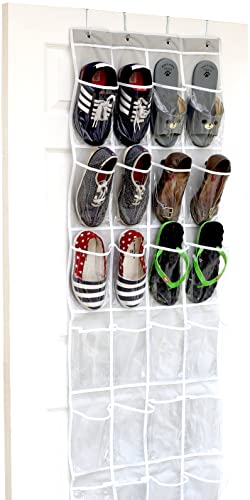
3. Simple Houseware 24 Pockets Clear Over the Door Shoe Organizer
A Simple Houseware 24 Pockets Clear Over the Door Shoe Organizer (over-door organizer), per the listing. Check price on Amazon.
Good for: shoe storage. Watch out: Check door thickness.

4. Lifewit 6 Tier Over the Door Shoe Organizer Cabinets 11 Large
A Lifewit 6 Tier Over the Door Shoe Organizer Cabinets 11 Large (over-door organizer), per the listing. Check price on Amazon.
Good for: shoe storage. Watch out: Check door thickness.
5. GORILLA GRIP Over the Door Shoe Organizer 24 Large Pockets Grey
A GORILLA GRIP Over the Door Shoe Organizer 24 Large Pockets Grey (over-door organizer), per the listing. Check price on Amazon.
Good for: shoe storage. Watch out: Check door thickness.
6. GORILLA GRIP Over the Door Shoe Organizer 24 Large Pockets Linen
A GORILLA GRIP Over the Door Shoe Organizer 24 Large Pockets Linen (over-door organizer), per the listing. Check price on Amazon.
Good for: shoe storage. Watch out: Check door thickness.
7. GORILLA GRIP Over the Door Shoe Organizer 24 Large Pockets Black
A GORILLA GRIP Over the Door Shoe Organizer 24 Large Pockets Black (over-door organizer), per the listing. Check price on Amazon.
Good for: shoe storage. Watch out: Check door thickness.

8. Amazon Basics 24 Medium Mesh Pocket Over-the-Door Hanging Shoe
An Amazon Basics 24 Medium Mesh Pocket Over-the-Door Hanging Shoe (over-door organizer), per the listing. Check price on Amazon.
Good for: shoe storage. Watch out: Check door thickness.
How to Choose
Size and fit
Check dimensions for your space or vehicle.
Build and materials
Durable materials last longer.
Ease of use
Simple setup and cleaning help.
Pocket Materials and Airflow
The pocket material decides how the organizer looks, how long it lasts and how it deals with moisture. Fabric pockets, such as non-woven polyester or canvas, are soft and quiet, and they allow some air movement. They can sag over time and may show stains from dirty soles. Clear plastic or vinyl pockets let you see every pair at a glance, but they hold moisture and odors more than fabric does. Mesh pockets let air through and suit shoes that are damp or sweaty, but may snag on heels and cleats.
Think about what goes inside. Clean dry shoes suit any material. Sports shoes, sandals worn without socks, and shoes that come in from the rain benefit from breathable pockets. If you want to keep shoes out of sight, solid fabric hides clutter. If you want quick selection, clear pockets are easier. Some designs mix materials, with mesh at the back or bottom to promote airflow.
Check reinforcement. The edges of each pocket take the most stress, and stitching or binding there prevents tearing. Thin plastic may crack with cold or age. Look at the listing to see how pockets are attached to the body, and whether the stitching or seams are described. A frame or panel at the back can keep the organizer from swinging against the door. Also check that any plastic components are free from strong odors on arrival, and air the product out if needed.
Hooks, Hangers and Door Gaps
The hanging system is the part that fails if you choose carelessly. Most organizers have metal or plastic hooks that fit over the top edge of the door. The hooks must clear the door’s thickness and sit snugly, so the organizer does not slide. Hooks that are too tight can leave dents in the door edge, while hooks that are too loose let the organizer shift. Look at the hook shape and how much adjustment is possible.
Door seals and frames deserve a thought. Hooks sit in the gap between the door and the frame, and a thick pocket organizer can prevent a door from closing properly, especially on snug frames. Closet doors with weather stripping may be compressed. Look for slim hook designs and measure the clearance before ordering. Padding on the hooks reduces scratches on painted or wood doors.
Some organizers hang from a rail or over a hanging bar in a closet, and others attach with adhesive strips or screws. Check which method your door and space will allow. Sliding doors, glass doors and bifold doors have different needs. If you rent, avoid screws and look for options that do not mark surfaces. For stability, some people add a second set of hooks or small pieces of foam at the bottom to stop the organizer from banging on the door.
Pocket Size, Capacity and Weight Distribution
Capacity is stated as a number of pockets, but how many pairs you actually fit depends on shoe size and type. Pockets built for sneakers and flats may not fit chunky boots, high-tops or large men’s shoes. Check the pocket dimensions in the listing against your biggest shoes, and see whether the pockets are deep enough for the heels. Narrow pockets can cramp shoes and deform them over time.
Think about how you wear shoes. Daily pairs fit easily in top and middle rows, within reach. Seldom-used pairs can go lower. Children’s shoes are small enough for the lower rows, where little ones can reach them. High heels with narrow heels can poke through thin material, so check how pockets deal with sharp points. Slippers and flip-flops take less room, and one pocket might hold two pairs.
Weight matters for the door and the organizer. A full organizer can be heavy, particularly with boots and large shoes. Spread heavy pairs through the middle and lower rows, and avoid overloading the top, which puts stress on the hooks. Hollow interior doors can flex under load. Check any weight rating in the listing, and keep in mind that it is the maker’s number. If the door swings often, the movement adds stress, so keep loads moderate.
Using the Organizer for More Than Shoes
The same pocket layout works for many household items, which is helpful if your shoe collection is small. In a bathroom or laundry area, pockets hold cleaning products, spray bottles, sponges and gloves. In a craft room they hold paints, brushes, yarn and tools. In a child’s room they hold toys, dolls and art supplies. In a hall closet they hold scarves, hats, gloves and umbrellas.
Clear pockets make small items easy to find, but materials matter. Cleaning products with fumes should not be kept in unventilated spaces, and spills can stain fabric. Do not store anything heavy or sharp in thin pockets. Keep chemicals out of reach of children and pets, and follow the labels on the products.
Think about how the organizer fits with the rest of the space. A narrow one fits in a small bedroom, while a wide one suits a closet door. If you plan to use it in a pantry, check food safety, and prefer materials that can be wiped clean. In an entryway, pockets can sort family members’ items. Label rows with tape or tags so that everyone knows where things belong. Review the contents seasonally and clear out what you do not use.
Hygiene, Odor Control and Signs of Wear
Shoes carry dirt, moisture and bacteria, so an organizer can pick up odors. Let shoes dry before putting them away, and wipe off mud. Leave the door open or the closet ventilated on a regular basis. Place a cedar block, a sachet or a moisture absorber in a pocket if you want extra help, and check that the product is safe for fabric.
Clean the organizer periodically. Fabric models may be machine washable on a gentle cycle, but check the label or listing. Hand wash and air dry if in doubt. Wipe plastic pockets with a damp cloth and mild soap, then dry. Vacuum or brush dust from the inside. Do not fold or crush the organizer while it is wet.
Replace it when stitching splits, pockets tear, hooks bend or crack, or the organizer droops and no longer holds shoes in place. Persistent odor or mold is another reason to retire it. Before buying a new one, think about what failed, such as too many heavy shoes or poor hooks, and choose a more suitable design. Check the return and warranty terms in the listing and keep the receipt.
Measuring Your Door Before You Buy
An over-the-door organizer only works if it hangs properly, and that depends on the door itself. A few minutes with a tape measure prevents returns and frustration.
Door thickness
Most interior doors in the United States are about 1 3/8 inches thick, and many exterior doors are around 1 3/4 inches, but older homes and custom doors vary. Hooks are designed for a range of thicknesses, so compare your measurement with the product’s listed limits. A hook that is too tight can scratch the door edge, while one that is too loose lets the organizer slide and swing.
Height and width
- Measure the door from the top edge to the floor, and leave clearance so the bottom pocket does not drag.
- Check the width, since some organizers are wider than narrow closet or pantry doors.
- Note whether the door has decorative panels, glass or a thick trim that interferes with the hooks.
Door types that complicate things
Hollow-core doors can bend under heavy loads, so keep the weight reasonable. Bifold and sliding doors usually do not suit standard hooks because they lack a stable top edge. For these, look for a hanging organizer that attaches to the closet rod or wall instead.
Arranging a Shared Household System
In a home with several people, the organizer works best when everyone can easily find their own shoes. A little planning at the start keeps it from turning into a pile.
Assign rows by person or by use
One approach is to give each family member a row or column. Another is to sort by use: everyday shoes at the top, special occasion or seasonal shoes lower down. Children should get the lower rows they can reach without help, which also encourages them to put their shoes away themselves.
Think about frequency
- Keep the most worn pairs at chest height, where they are easiest to grab.
- Store out-of-season shoes at the top or bottom.
- Use one or two pockets for socks, laces, insoles or shoe polish.
A shared organizer also needs a rule about maintenance. Shoes that are wet, muddy or very dirty should be wiped off before they go in, which protects the other pockets and the fabric.
Over-the-Door Versus Other Shoe Storage
An over-the-door organizer is not the only option, and it helps to compare it with the alternatives to see whether it suits your space.
- Floor racks: hold shoes at ground level, which suits bulky footwear, but they take up floor space.
- Shoe benches and cabinets: look tidier and offer a seat, though they cost more and need room.
- Wall-mounted shelves: save floor space but require drilling and are less friendly to renters.
- Over-the-door pockets: use dead space behind a door, need no tools and can be moved easily.
The door option wins when floor space is limited and when shoes are mostly flats, sneakers and sandals. It is a weaker choice for heavy boots or very large collections, where a rack or cabinet may be better.
Renters, Dorms and Small Spaces
Tenants and students often benefit most from this type of storage, since it adds capacity without permanent changes.
Protecting the door
- Add a few self-adhesive felt pads or foam strips to the hook contact points to prevent scratches.
- Do not overload the pockets, because excess weight can damage a lightweight door.
- Check the lease if you are unsure about any modifications, though non-adhesive hooks usually leave no trace.
Using space wisely
In a dorm room, a closet door or bathroom door may be the only choice. In a small apartment, the back of an entry closet door can work as a quick landing spot for the family’s shoes. If the door must remain fully usable, test that it still opens and closes smoothly with the organizer loaded.
Before deciding, consider how many pairs you need to store, add a few extra pockets for growth, and choose a size accordingly. An organizer that is slightly bigger than needed is easier to live with than one that is already full on day one.
Common Mistakes When Buying and Hanging
- Ordering by pocket count without checking the dimensions of your shoes.
- Ignoring door thickness and trim, then finding the hooks do not fit.
- Loading heavy boots into the lowest pockets so the organizer swings and bangs.
- Filling every pocket on day one with no space for new pairs.
- Hanging it on a door that needs to stay fully open, such as one that swings against a wall.
A short plan, a tape measure and a realistic count of pairs avoid nearly all of these problems.
Capacity Reality: Pairs, Sizes and the Shape of Your Collection
Shoe organisers are sold by pair counts that assume a world of identical slim shoes. Real collections include chunky trainers, boots with opinions, children’s shoes that take half a pocket each, and heels that occupy space diagonally. Before choosing, line up the shoes you actually intend to store and look at their bulk honestly: a pocket organiser rated generously may hold two-thirds of its headline count in a trainer-heavy household, while a tiered rack’s count holds up better for mixed footwear. The picks in this guide span both families, clear-pocket over-door designs from Simple Houseware, Gorilla Grip and Amazon Basics, and tiered hanging systems like the Lifewit, and the right choice begins with your collection’s shape, not its size.
Decide what the organiser is for. Daily rotation storage wants speed and visibility: the shoes you wear this week, reachable in seconds. Archive storage wants density and protection: occasion shoes, out-of-season pairs, children’s next sizes. Over-door pockets excel at the daily and children’s roles; tiered racks and larger-capacity units suit archive density. Trying to make one organiser do both jobs usually makes it mediocre at each.
Count doors and walls as assets. A household short on floor space often has three or four usable doors, and distributing shoes across them, daily pairs on the bedroom door, children’s on theirs, sports shoes near the entrance, beats one heroic organiser straining on a single door.
Boots, heels and other awkward citizens
Boots defeat most pockets and many tiers; plan them a separate home, a boot tray, a tall shelf section, or clips on a dedicated rack, rather than distorting your whole system around two pairs. Heels sit best in pockets or on rails that catch the heel; on flat tiers they slide and scuff. Trainers with wide soles need the larger-pocket designs; measure your widest pair against pocket dimensions before ordering, since trainer bulk is the number one cause of disappointed reviews for this entire product family.
Over-Door Installation: Hooks, Clearance and Door Health
An over-door organiser hangs from hooks, and the door pays for any carelessness. Check the gap between door top and frame first: slim hooks need only a small clearance, and doors that already rub the frame will not tolerate hooks at all. If the clearance is tight, look for the thinnest hook profile or choose a wall-mounted or freestanding alternative rather than forcing a fit that damages the door’s edge over months of opening and closing.
Load changes the door’s behaviour. A fully loaded organiser adds real weight, and doors on weak hinges can drop slightly and start catching. Distribute weight evenly across the organiser rather than loading one side, keep the heaviest pairs low where they stabilise rather than swing, and check hinge screws are tight before blaming the organiser for a door that suddenly scrapes. On hollow-core doors, spread the load and avoid slamming; the door feels every enthusiasm.
Swing and rattle are the daily annoyances to design out. An organiser that swings against the door with every opening will be removed within a month. Lower hooks, adhesive stabilisers where provided, and loading heavier pairs at the bottom all calm the motion. If the door is a high-traffic one, children charging through, consider the inside of a cupboard door instead, where the organiser lives a quieter life.
Renters and doors you cannot mark
Over-door systems are naturally renter-friendly since they need no screws, but protect the door’s top edge and inner face with the pads or tape some kits include, and inspect periodically. Where doors are unsuitable, a tension or freestanding rack inside a wardrobe gives similar density without touching the building at all.
Hygiene and Care: Keeping Stored Shoes Fresh
Shoes bring the street home with them. Let pairs dry and air before they go into pockets or tiers, especially sports shoes, because sealing warm, damp footwear into a fabric pocket manufactures odour at industrial scale. A small rotation discipline, today’s pair airs by the door, yesterday’s goes into storage, keeps the whole collection fresher than any spray.
Clean the organiser itself on a rhythm. Clear pockets collect grit at their bottoms that transfers to clean shoes; shake out or vacuum pockets monthly, and wipe plastic and mesh clean. Fabric organisers benefit from an occasional airing in daylight. If one pair develops a serious odour problem, quarantine it from the organiser until treated, since pockets share air generously.
Sole dirt is the other slow issue. A quick brush or wipe of soles before storage keeps both organiser and stored shoes cleaner, and it matters most for the tiered racks where pairs stack above each other and grit falls downward onto the shoes below.
Seasonal rotation and protection
At season change, wash or wipe the organiser while it is empty, move out-of-season pairs to the higher or deeper positions, and check stored leather for dryness before its long rest. Shoes stored for months appreciate being stuffed to hold shape and kept away from direct heat, whatever organiser they live in.
Household Systems: Entrances, Bedrooms and Children’s Chaos
The entrance system and the bedroom system should be different. At the entrance, a small, ruthless selection: the pairs in current rotation only, with a house rule that overflow migrates to bedroom storage the same day. This keeps hallways passable and mornings fast. Bedroom organisers hold the archive and the occasion shoes, where density matters more than split-second access.
Children’s shoes multiply in small sizes and vanish individually. Clear pockets at child height on their own door turn shoe-finding into a visual game they can do themselves, and pairs stay paired because each pocket is a home. Size turnover is rapid, so review the door monthly and pass outgrown pairs onward before they colonise the system.
For shared houses and partners with different tidiness thresholds, visibility is diplomacy: clear pockets and open tiers show exactly what is stored and where it goes back, removing the ambiguity that leads to shoe piles. The organiser’s real product is not space; it is an agreement everyone can see.
More Questions Worth Asking Before You Buy
Will an over-door organiser damage my door?
Fitted correctly on a door with adequate clearance and sound hinges, it should not. Damage comes from forced fits, overloaded one-sided loading and swinging hardware. Check clearance first, load evenly, stabilise the bottom, and inspect the top edge occasionally.
How do I stop shoes falling out of pockets?
Usually the pocket is too large for the shoe or the organiser hangs at an angle. Load pairs fully heel-to-toe as designed, keep the organiser hanging straight with its stabilisers, and give small shoes, children’s pairs, the smaller pockets rather than letting them swim in full-size ones.
Can I use a shoe organiser for other things?
Brilliantly, yes: cleaning supplies, craft materials, toys, accessories and pantry overflow all live well in clear pockets. Many households buy a second organiser purely for household clutter once the shoe door proves the concept.
Scenario Guide: Hallways, Wardrobes and Children’s Doors
The hallway household needs speed and a hard capacity limit: the organiser by the door should hold only the current rotation, and its fullness is the signal to migrate pairs to archive storage, not to start a floor pile beside it. Clear pockets on a hallway cupboard door are the connoisseur’s choice here, invisible when the door is closed, instantly visible when opened, and immune to the visual clutter that open racks bring to a small entrance.
The wardrobe-door household is storing the archive: occasion shoes, seasonal pairs, the good leather that comes out monthly. Tiered hanging systems and the larger-capacity organisers suit this, since access is deliberate and density is the prize. Protect the best pairs within the system, shoe trees or stuffing for shape, a breathable cover for the finest, because density without protection trades space for condition.
Children’s doors should be organised for the child’s eye level and the parent’s sanity: current sizes low, next sizes high, outgrown sizes gone. The clear-pocket designs turn the morning shoe hunt into a picture search a four-year-old can win, and the monthly size audit takes two minutes at the door rather than an excavation of the whole house’s shoe geology.
When the collection outgrows the doors
Every household has a pair count beyond which doors are not the answer, and the honest escalation is a dedicated rack in a cupboard, garage or under-stair space for the archive, with doors keeping only their daily and weekly roles. Recognising that threshold early prevents the sad sight of every door in the house upholstered in footwear, and keeps the system a pleasure rather than a symptom.
Ownership Notes: Hardware, Hinges and Refresh Cycles
Inspect the hooks and the door’s top edge monthly in the first season: paint rub, hook wear and hinge behaviour all announce themselves early and are all cheap to address, with pads, hook adjustment or a hinge screw tightened. An organiser that is checked stays invisible; one that is ignored announces itself eventually at 2 a.m. by sliding off a door whose clearance was always marginal.
Refresh the system at season changes: empty it fully, clean the pockets or tiers, audit sizes and conditions, and reload in the new season’s order. This is also the moment to retire the pairs that are worn beyond comfort, because an organiser full of dead shoes is a museum charging rent. The refresh takes twenty minutes and returns the system to the state that made mornings easy, which is the entire reason it exists.
The Entryway Effect: Why This Small System Matters
The entrance of a home sets its emotional temperature, and shoes are the entrance’s largest source of visual noise. A household that solves shoe storage at the door has not merely tidied; it has changed what arriving home feels like, for the family every day and for guests in the first ten seconds. That is an outsized return on an organiser, a door and an honest audit of pairs, and it explains why this humble product category inspires such loyalty among people who have made it work.
The system also protects the shoes themselves. Pairs stored in pockets and tiers are not kicked across hallways, buried under newer arrivals, or scuffed by the vacuum cleaner’s weekly diplomacy. Leather dries properly between wears instead of fermenting in a pile, heels stop gouging other shoes’ uppers, and the collection you paid for lasts visibly longer. Storage is care, in footwear as in everything else this guide covers.
Start tonight if the hallway is calling: count the pairs by the door, choose the door or cupboard that will host them, and order for that count plus a modest margin. The transformation takes an hour to install and pays out twice a day, every day, which is a rate of return few home purchases can match.
Sports, Work Boots and the Muddy Fringe of the Collection
Every collection has a muddy fringe: football boots, running shoes after a wet parkrun, work boots that carry a building site home. These pairs should not live in the same organiser as clean daily shoes, both for hygiene and for the organiser’s survival. Give the fringe its own station, a tray or a dedicated low organiser by the door where pairs dry fully before any promotion to the main system. The two-stage arrangement, drying station then storage, keeps mud where it can be swept and odour where it can escape.
Sports shoes also rotate by activity rather than by day, and a pocket each for the current pairs of each sport, labelled if the household is large, ends the pre-match excavation. Children’s sports kits benefit most: the Saturday-morning search for one boot is a genre of family stress that a labelled pocket quietly abolishes. Work boots, heavy and wide, usually belong on a floor tray rather than in any hanging system, and accepting that exception keeps the door organisers honest about what they are for.
Pockets versus tiers: the thirty-second decision
If you are still torn between the pocket organisers and the tiered racks in this guide, decide by retrieval style. Pockets answer the question where are my shoes with a picture; tiers answer it with a shelf. Visual searchers, children, and anyone whose mornings are hurried belong with pockets. People who think in stacks and categories, and collections heavy in boots-adjacent shapes that pockets dislike, belong with tiers. Neither is the advanced option; they are different cognitive tools, and choosing the one your brain prefers is the whole decision.
Do not underestimate the effect on children of a system they can operate. A child who can find both shoes, choose between them and return them to their pockets has been given a small daily experience of competence, repeated until it becomes character. The organiser on the door is, in that sense, not furniture at all; it is a lesson that runs itself, twice a day, without a word being said by anyone.
Whatever you choose, install it this week rather than admiring it in its packaging. Shoe clutter compounds daily, and a system in place by the weekend will already have paid its first dividends by Monday morning: a clear floor, a faster exit, and the small, repeatable satisfaction of every pair having somewhere to be.
Measure the door, count the pairs, weigh the heaviest shoes in your hand for a second, and then choose with confidence. The organiser that fits your door, your collection and your mornings is in this guide, and once it is hanging, the hallway will explain to every visitor why you bought it.
And when the organiser has been in place a month, notice what has happened to the pairs themselves: heels less scuffed, leather less crushed, the good shoes worn more often because they can be found. Storage that increases use is the rarest kind, and it is the surest sign the system was worth its door.
Frequently Asked Questions
Is it easy to install?
Check the manual.
Is it worth the price?
Budget options cover basics.
How do I care for it?
Clean as directed.
Will an over-the-door organizer damage my door?
Hooks can dent or scratch edges, and heavy loads can strain thin doors. Look for padded hooks and keep loads moderate. Check that the door still closes properly.
Are clear pockets better than fabric ones?
Clear pockets make pairs easy to see, but they hold moisture and odors more. Fabric is softer and breathes more. Pick based on how you use it.
Can I hang one on a door that does not close fully with hooks?
Possibly, with slim hooks or a different hanging method such as a closet rod or wall mount. Measure the gap first. A snug door frame may not allow thick hooks.
Will boots fit in these pockets?
Often not. Many pockets are sized for shoes. Check the pocket dimensions, or store boots separately.
How do I stop the organizer from banging on the door?
Use hooks that fit snugly, add a small foam pad at the bottom, or use a stabilizer if provided. Reduce the load in lower rows if it swings.
How should I clean a fabric shoe organizer?
Follow the care label. Many can be hand washed or put on a gentle cycle, then air dried. Always dry fully before use.
Can I use it for things other than shoes?
Yes. Pockets hold accessories, toys, craft supplies and cleaning items. Keep chemicals out of the reach of children, and avoid heavy or sharp items in thin pockets.
How thick can a door be for an over-the-door shoe organizer?
It depends on the hooks. Many interior doors are about 1 3/8 inches thick and exterior doors about 1 3/4 inches, but you should check the product’s stated range. If the hooks are too tight they can mark the door edge, and if too loose the organizer will slide.
Will an over-the-door organizer work on bifold or sliding doors?
Usually not. Bifold and sliding doors lack a stable top edge for standard hooks and can move or come off the track when loaded. Look for an organizer that hangs from a closet rod or attaches to the wall, or use a different storage method for those doors.
How many pairs of shoes can I realistically store on one door?
Most organizers hold a stated number of pairs, but real capacity depends on shoe size and type. Flats, sandals and sneakers fit easily, while bulky shoes may take two pockets or not fit at all. Plan on fewer pairs than the label suggests if your shoes are large.
Do high heels fit in over-the-door shoe pockets?
Often they do, though the fit depends on pocket depth and heel height. Place heels toe-first or sideways to prevent heel tips from poking through fabric. Very tall or platform styles may be too bulky, so measure a representative pair against the pocket dimensions before buying.
Questions to Ask Before You Buy
- How thick is the top edge of the door I plan to use?
- Does the door still need to close fully without rubbing the frame?
- What types of footwear will I store: sneakers, boots, heels or children’s shoes?
- Do I want clear pockets to spot a pair quickly, or solid pockets that hide clutter?
- Will hooks, rails or a hanging bar suit the door I own?
- Does the maker’s listing state the weight limit of each pocket?
Compatibility Checks
Doors vary a great deal. Hollow interior doors, solid wood doors, and doors with a decorative top edge can all behave differently with hooks. Measure the door’s thickness and height before ordering, and compare these with the dimensions given in the maker’s listing. Check whether a neighboring door, a cupboard or a closet shelf could be blocked when the organizer hangs in place. If the door swings against a wall, consider whether bulky shoes would bump it. Some people prefer to use the organizer on a wall hook instead.
Storage and Care Notes
Clean shoes before storing them to reduce dust and dirt in the pockets. Avoid loading the heaviest items into the top rows, as uneven weight can make a door organizer swing or pull on its hooks. Wipe fabric or plastic with a damp cloth when needed, and allow it to dry completely before refilling. Leave a little air between pairs, and check the hooks and seams now and then. Follow the maker’s instructions for cleaning rather than assuming every material can be washed.
Bottom Line
Check door thickness and pocket size.
More Home & Garden Guides
- Best Jewelry Boxes and Bracelet Stands
- Best Rotating Makeup Organizers
- Best Cotton Hand Towels for Bathrooms
- Best Shower Filters and Filtered Heads
- Best Touchless Foaming Soap Dispensers
- Best Smart Body Scales
- Best Adhesive and Corner Shower Organizers
- Best Bathroom Towel Bars and Racks