Disclosure: As an Amazon Associate, Reviews Took earns from qualifying purchases. Links to Amazon on this page are affiliate links; they cost you nothing extra.
Check thickness and size.
This guide is built from Amazon product listings and maker specs, not our own testing, so confirm size, contents and current price on each product page. Health products are for general information and are not medical advice.
Check the current price on Amazon before ordering.
Last updated: November 2, 2026.
In this guide
Quick Picks
| Product | Type | Best for |
|---|---|---|
| Under Grill Mats for Outdoor Grill (60 x 40 inch) Double-Sided | Grill mat | protecting decks |
| 79×39 inches Large Under Grill Mats for Blackstone Outdoor Deck | Grill mat | protecting decks |
| Linda’s Essentials BBQ Grill Mats for Outdoor Grill Mat (5 Pack) | Grill mat | protecting decks |
| Under Grill Mats for Outdoor Grill – 65 x 39 Inch BBQ Deck | Grill mat | protecting decks |
| Grill Mats for Outdoor Grill Copper 7pcs Grill Mat | Grill mat | protecting decks |
| Cuisinart Premium 65 x 36 In. Deck and Patio Grill Mat CGMT-300 | Grill mat | protecting decks |
| Grill Mat Set of 6 Non-Stick 15.75 x 13 Inch Black | Grill mat | protecting decks |
| Under Grill Mats for Outdoor Grill (48 x 30 inch) Double-Sided | Grill mat | protecting decks |
Our Picks

1. Under Grill Mats for Outdoor Grill (60 x 40 inch) Double-Sided
An Under Grill Mats for Outdoor Grill (60 x 40 inch) Double-Sided (grill mat), per the listing. Check price on Amazon.
Good for: protecting decks. Watch out: Check size and heat rating.
2. 79×39 inches Large Under Grill Mats for Blackstone Outdoor Deck
A 79×39 inches Large Under Grill Mats for Blackstone Outdoor Deck (grill mat), per the listing. Check price on Amazon.
Good for: protecting decks. Watch out: Check size and heat rating.

3. Linda’s Essentials BBQ Grill Mats for Outdoor Grill Mat (5 Pack)
A Linda’s Essentials BBQ Grill Mats for Outdoor Grill Mat (5 Pack) (grill mat), per the listing. Check price on Amazon.
Good for: protecting decks. Watch out: Check size and heat rating.
4. Under Grill Mats for Outdoor Grill – 65 x 39 Inch BBQ Deck
An Under Grill Mats for Outdoor Grill – 65 x 39 Inch BBQ Deck (grill mat), per the listing. Check price on Amazon.
Good for: protecting decks. Watch out: Check size and heat rating.

5. Grill Mats for Outdoor Grill Copper 7pcs Grill Mat
A Grill Mats for Outdoor Grill Copper 7pcs Grill Mat (grill mat), per the listing. Check price on Amazon.
Good for: protecting decks. Watch out: Check size and heat rating.

6. Cuisinart Premium 65 x 36 In. Deck and Patio Grill Mat CGMT-300
A Cuisinart Premium 65 x 36 In. Deck and Patio Grill Mat CGMT-300 (grill mat), per the listing. Check price on Amazon.
Good for: protecting decks. Watch out: Check size and heat rating.
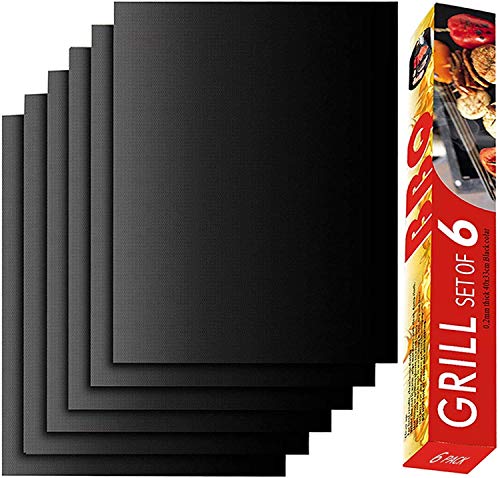
7. Grill Mat Set of 6 Non-Stick 15.75 x 13 Inch Black
A Grill Mat Set of 6 Non-Stick 15.75 x 13 Inch Black (grill mat), per the listing. Check price on Amazon.
Good for: protecting decks. Watch out: Check size and heat rating.

8. Under Grill Mats for Outdoor Grill (48 x 30 inch) Double-Sided
An Under Grill Mats for Outdoor Grill (48 x 30 inch) Double-Sided (grill mat), per the listing. Check price on Amazon.
Good for: protecting decks. Watch out: Check size and heat rating.
How to Choose
Size and capacity
Pick a size that fits your household.
Power and speed
Check wattage and settings.
Cleaning
Removable, dishwasher-safe parts help.
What an Under-Grill Mat Protects
A grill mat sits beneath your grill or smoker to catch grease, ash and embers and to shield the surface under it. On a wooden deck, it reduces the chance of grease stains and helps guard against stray sparks. On a concrete patio or pavers, it catches drips that would otherwise leave dark marks that are hard to remove. On any surface it makes cleanup easier, since you can lift or sweep off the mat rather than scrub the ground.
Understand the limits. A mat does not make a grill safe to use on any surface or in any location, and it is not a substitute for proper clearance. The grill manual specifies minimum distances from walls, railings and overhead structures, and local rules or building codes may apply, especially on balconies and in multifamily housing. Some places restrict charcoal or gas grills on balconies altogether. Always check these before you place a grill, mat or no mat.
Fireproof is a marketing term that deserves a closer look. Listings may describe heat or fire resistance, but they should state what the mat is made of and what temperature it can tolerate. Treat such statements as the maker’s claims and read the product page for the specifics, including any limitations. If the details are vague, choose a product that is more transparent about its materials and ratings.
Mat Materials and Heat Tolerance
Mats are made from a range of materials, with different strengths. Fiberglass-based fabrics with a coating resist heat and are flexible, so they roll up for storage, but the edges can fray and the surface may stain. Silicone-coated mats are easy to wipe, while rubber-backed mats provide more grip and cushioning. Some mats are layered, with a heat-resistant core and a grease-resistant surface. Metal or stone-like mats are heavy and durable, but are harder to move and store.
Thickness matters. A thicker mat usually offers more insulation against the heat and absorbs more grease, but it is also harder to roll and can create a trip hazard at the edges. A thin mat is easier to store but may be less protective under a hot smoker or a grill that is used for long periods. Consider the heat of your equipment, and compare it with what the listing says about temperature limits.
- Coated fiberglass fabric: flexible, light and easy to roll; check the edges.
- Rubber or silicone: grips the ground and wipes clean; check heat limits.
- Layered mats: combine insulation and grease resistance; heavier.
Sizing the Mat to Your Grill
Size is where many people go wrong. Measure the footprint of your grill including wheels, side tables and any fold-out shelves, then add extra on each side, as grease and embers can fall or blow beyond the grill itself. A mat that only covers the base leaves the front, where you stand and where food drops, unprotected. Many people choose a mat that extends some distance on each side and in front.
Check the shape. Rectangular mats suit most gas grills and smokers, round mats suit kettle grills and fire pits, and some come in special shapes for larger setups. If your grill sits next to a wall or a railing, make sure the mat does not rise up against the wall or create an overlap with the structure. Check also that the mat is large enough for an outdoor kitchen or a griddle if you use more than one cooking appliance.
Make sure the mat sits flat, and that its edges do not curl, since a curled edge can catch wheels or feet. If a mat comes rolled, flatten it in the sun or place a weight on it before use. Do not stack the grill on top of the mat’s edge in a way that raises or tilts the grill. Check the grill’s stability on the mat before lighting it, and use wheel locks if it has them.
Placement, Clearance and Safe Grilling Habits
Place the grill on a level, stable, non-flammable area where possible, with the mat extending beneath and in front. Keep it clear of walls, railings, trees, awnings and anything that can burn, and observe the minimum distance the grill’s manual requires. Never use a grill in a garage, under a covered patio with poor ventilation or inside any enclosed space, because of carbon monoxide and fire risk.
Use the mat as one layer in a sensible safety routine. Keep a bucket of water, sand or a suitable extinguisher nearby, keep children and pets away from the grill, and never leave it unattended while hot. Let the grill and mat cool before moving anything, and handle hot ashes with caution. Do not dump hot coals on the mat or leave embers where they can blow around.
Check also what the manufacturer says about placing a hot grill directly on the mat, and whether the mat should be used under a gas grill, a charcoal grill, a smoker or a fire pit. Different appliances produce different heat and ash, and the product’s guidance may vary. If the guidance is not clear, contact the seller before purchase.
Cleaning, Storage and When to Replace a Mat
Clean the mat regularly, since built-up grease is a fire risk in itself. Brush or shake off ash and debris once the mat is cool, then wipe the surface with warm soapy water and a soft brush. Rinse and let it dry fully before rolling or folding it. Avoid harsh solvents and abrasive scrubbing, which can damage coatings. If the maker allows it, a hose-down is a quick option for light soil.
For storage, roll the mat loosely or lay it flat, in a dry place away from sunlight when the grill is out of season. Folding creases can weaken some materials, so follow the maker’s advice. If the mat is stored outside, keep it covered so it does not collect moisture, leaves or pests.
Replace the mat if you see burns, holes, thin spots, deep stains that soak through, crumbling edges or a smell that remains after cleaning. A mat that is saturated with grease should be replaced, since it can ignite. Dispose of the old mat according to local waste rules, and never leave a damaged or greasy mat under a hot grill.
Under-Grill Mats Versus Cooking Mats
Two very different products share the name grill mat, and mixing them up is one of the easier ways to waste money. An under-grill mat is a large, flat protective layer that sits on the ground beneath the whole grill. Its job is to catch drips, ash and stray embers and to keep fat from soaking into a deck or patio. A cooking mat, by contrast, is a thin non-stick sheet that goes on top of the cooking grate so small foods do not fall through. They are not interchangeable.
This guide mostly covers the first kind, but the list includes the Grill Mat Set of 6 at 15.75 x 13 inches, which falls into the second group by its size and description. A sheet that small cannot protect a deck, and a large floor mat should never be placed on a grate. If you want both functions, buy one of each, and read the use instructions for the cooking mats separately, since their temperature limits and cleaning rules differ from those of floor protection.
- Floor protection: large, sold by overall dimensions such as 48 x 30 or 65 x 36 inches.
- Cooking sheets: small, usually sold in sets, and meant for grate use only.
- Check the listing for whether a mat is described as food-safe. Floor mats generally are not.
Understanding Flare-Ups, Grease and Where Mats Fit
A mat is a second line of defense, not a replacement for good grill habits. Most of the mess under a grill comes from grease. Fat drips through the grate, runs into the tray and sometimes overflows or spills during cleaning. Flare-ups happen when that fat reaches hot surfaces or burners and ignites. A mat below does not stop that process, but it does keep the burning material from reaching your decking or wooden railing.
A few habits reduce the load on the mat in the first place:
- Empty and clean the drip tray on a regular schedule rather than waiting until it is full.
- Trim visible fat from meats before cooking, and keep the lid in reach to cut off air during a flare-up.
- Move food off direct heat when flames climb, rather than spraying water on a grease fire.
- Keep a fire extinguisher rated for grease within reach of the cooking area.
A mat that catches grease also becomes something that needs to be cleaned. Fat left on a mat attracts pests and can smoke on the next hot cook. Wipe spills while the mat is still warm to the touch but not hot, and avoid letting layers of old grease build up in the corners, where they are easiest to ignore.
Protecting Different Surfaces
The surface under the grill changes what you should look for. Wood and composite decks are the most vulnerable, because fat soaks into the grain and embers can scorch the boards. Composite decking in particular often comes with manufacturer guidance on grill placement and heat, so it is worth reading that guidance before relying on a mat. Concrete and stone are less likely to burn but stain easily, and grease on porous concrete is difficult to remove once it has set.
Decks and wood railings
Choose a mat large enough to extend well beyond the front and sides of the grill, since that is where grease spatters when you open the lid. Extending the mat toward the walking path also protects bare feet and pet paws from hot drips. Keep the grill itself at the distance from railings and siding that the grill manual calls for. A mat does not change that clearance rule.
Patios and pavers
On hard surfaces, the main risk is staining. A mat with a thick, absorbent or liquid-catching surface is useful here, but so is a mat with a raised edge or a backing that stops grease from creeping underneath. Pavers have gaps, and grease that runs into the joints is a nuisance to clean.
Windy locations
Light mats can curl or shift in a gust. If your grill sits in an exposed spot, set a heavy corner object on the edges, or choose a thicker mat, and make sure the grill legs do not catch the edge when you move the unit.
Buying Checklist Before You Order
Because the listings in this guide differ mainly by dimensions, pack count and surface texture, a short checklist helps narrow the choice:
- Measure the grill with its side tables folded out, then add several inches on each side and more in front.
- Look for a stated temperature tolerance, and keep in mind that a mat describing itself as fire resistant is not a license to place it under an unattended burner.
- Note the thickness and the backing. A mat that grips the floor is less likely to slide when you roll the grill.
- Check whether the edge is bound or cut. Cut edges can fray after repeated washing.
- Decide whether you want a double-sided mat, which gives you a second face when one side is stained.
Cutting a mat to size is sometimes possible, but it can compromise any edge sealing or coating, so read the listing before reaching for scissors. A good return policy is more useful than a dozen features, because the real test is whether the mat lies flat and covers the space you need once it is unrolled.
Measuring and Layout: Getting Coverage Where Grease Actually Lands
Most grill mats fail their owners not through poor material but through poor placement. Grease does not fall in a neat rectangle directly under the firebox. It drips from the front edge when food is turned, it spatters sideways when fatty items hit hot grates, it runs down the legs of side burners, and it gets tracked outward on shoes. Before ordering, stand at your grill in your normal cooking position and look at the floor area your feet and tools actually occupy during a cook. The mat needs to cover the drip line in front of the grill, extend beyond both sides of the firebox, and reach far enough back that the grease tray zone and rear legs sit on it too.
A useful method is to lay down painter’s tape or old cardboard in the size you are considering and run one real cook over it. Cardboard shows every drip and scuff, and after the cook you can see exactly where the coverage was generous and where it was missing. This five-minute test prevents the most common sizing mistake, which is buying a mat that matches the grill’s width on paper but leaves the front corners, where most spills happen, exposed.
Think about the mat’s relationship to doors, steps and walkways as well. A mat that ends exactly at a step edge will curl and become a trip point; a mat that slides under a door swing will get pushed around daily. On sloped patios, position the mat so its edges do not channel rainwater toward the house. These layout details decide whether a mat feels like permanent infrastructure or a daily annoyance you eventually roll up and abandon.
Mats for grills with side burners, smokers and carts
Side burners create a second drip zone that standard rectangles sometimes miss, so measure from the outer edge of the side shelf rather than the firebox alone. Offset smokers throw their drip pattern forward of the firebox door, where ash and grease both land during loading. Grill carts on wheels need enough mat underneath that the wheels stay on the surface when the cart is pulled out for cleaning, otherwise the mat bunches and tears at the edge. The double-sided picks in this guide, in the larger sizes, suit these wider layouts best, while the compact options work for simple two-burner setups on small patios.
Surface-by-Surface Guide: Wood, Composite, Concrete and Stone
Wooden decks are the most vulnerable surface and the main reason these mats exist. Hot grease soaks into deck boards, darkens them permanently, and in dry conditions a stray ember can scorch or worse. On wood, choose the largest mat that fits the space, keep it flat with no curled edges that trap embers, and lift it periodically through the season to check for trapped moisture, because a mat left over damp wood for months can encourage mildew in the shaded, wet layer underneath.
Composite decking resists soaking but shows grease as a sheen that is hard to shift once it bakes in the sun, and some composite boards soften or discolour under sustained heat. A mat with genuine heat tolerance matters more here than raw size, and you should confirm the space between the grill base and the deck stays within the mat maker’s guidance. Concrete seems indestructible but is porous: grease stains sink in and telegraph through sealers. A mat prevents the stain rather than you scrubbing at it later with degreasers that lighten the concrete unevenly.
Natural stone and pavers sit between the two: the stone itself shrugs off heat, but the joints and sand beds trap grease and grow slippery. A mat that covers the joint lines in the main drip zone keeps the footing safe. On all surfaces, the same end-of-season habit applies: clean the mat, clean the surface beneath it, let both dry fully, and store the mat flat or loosely rolled so it lies flat again in spring.
Balconies, rentals and shared spaces
Renters have an extra reason to use a mat: deposit deductions for stained balcony concrete or scorched deck boards cost far more than any mat in this guide. Check your building rules first, since some properties restrict grill type or require a mat as a condition of grilling at all. A mat also contains the mess when you move out, and it protects you if a grease spill happens the week before an inspection. Choose a size that covers generously, because you cannot easily repair a landlord’s surface the way you might patch your own.
Seasonal Care Calendar for Under-Grill Mats
In spring, unroll the mat a day before the first cook and let it relax flat; mats stored rolled all winter hold a curl that needs warmth and weight at the corners to settle. Wash both sides, since the underside picks up grit that can grind into deck finishes underfoot. Inspect for cracks along fold lines and for any spot where last year’s grease never fully came out, and position the mat before the grill goes back so you are not dragging a heavy grill across it later.
Through the summer, a quick routine keeps the mat effective: shake or sweep off ash and debris weekly so grit does not get ground in, wipe fresh grease while it is still soft rather than after it polymerises in the sun, and hose the mat down monthly. After any cook involving a flare-up, check the surface under the grill for scorch marks or melted spots and rotate the mat end for end if one zone is taking all the abuse, which spreads wear across the whole surface.
In autumn, deep-clean before storage: degrease, rinse, and dry completely, because a mat stored with grease on it attracts pests and smells that greet you in spring. Store it flat under a workbench or rolled loosely around a wide tube rather than folded, since sharp folds become permanent creases and crack lines. If your grill stays out under a cover all winter, decide deliberately whether the mat stays under it; in wet climates lifting it for winter prevents the trapped-moisture problem described above.
When cleaning is no longer enough
Retire a mat when the surface becomes tacky even after washing, when edges crumble, when burn-through spots appear, or when grease starts soaking through to the deck despite the mat being in place. A mat is a sacrificial layer; replacing it on time is the entire point of owning one, and the deck it protects costs many times more to repair or restain.
Under-Grill Mats Versus Cooking Mats and Sheets
This guide mixes two product families that beginners often confuse, so it is worth being precise. Under-grill mats, the large floor mats that make up most of the picks, protect the surface beneath and around the grill. Cooking mats and sheets, like the copper set and the small black set listed here, sit on the grates and keep small food from falling through while adding a non-stick layer. They solve different problems, and many cooks reasonably own both.
Cooking sheets shine with vegetables, shrimp, fish fillets and anything that would crumble or slip through grate bars. They need their own care routine: wash after each use, avoid metal utensils that cut the surface, keep them within their stated temperature limits, and never let them overhang into direct flame. When a cooking sheet starts to flake, warp or hold odours after washing, replace it, since the surface is the product.
If you are choosing where to spend first, protect the floor. A stained deck is a permanent, expensive problem; food falling through grates is an annoyance solved with a basket or foil in the meantime. Once the floor is covered, add cooking sheets if your menu leans toward delicate items, and size them to leave part of the grate open so you still get direct-heat searing where you want it.
More Questions Worth Asking Before You Buy
Can I leave an under-grill mat out in the rain?
Most floor mats tolerate rain, but standing water trapped between mat and deck is the real issue, not the rain itself. After heavy rain, lift a corner and let the underside dry when you can, especially on wood. If your patio floods or holds puddles, store the mat during the wettest weeks rather than letting it sit in water.
Will a mat make my patio slippery?
A clean mat has reasonable grip, but a greasy mat is slippery on any surface, which is another reason for the monthly wash. In wet weather, textured mats shed water better than perfectly smooth ones. If footing feels slick, that is the mat telling you it needs degreasing, not replacing.
Do I need a mat under a small electric grill on a table?
Tabletop grills drip too, and a small mat or tray under them protects tabletops and railings from grease and heat marks. Size down rather than skipping protection, and keep the same clearance habits you would use on the ground.
Buying Scenarios: Which Mat for Which Household
For the apartment balcony cook, space and rules dominate. A compact double-sided mat that covers the grill’s footprint plus a front margin, rolls away for inspections, and keeps the landlord’s concrete spotless is the entire brief; the smaller picks in this guide were designed by exactly this life. Measure the balcony’s usable rectangle, not the grill, and let that measurement choose the size, because a mat that overhangs a balcony edge or blocks the door swing will be resented daily.
For the family deck, durability and coverage dominate. Children, dogs and chair legs cross the mat constantly, cookouts involve more than one cook moving around the grill, and the drip zone spreads accordingly. Choose the largest mat the deck furniture layout allows, favour the tougher double-sided constructions, and position it before the season’s first cook so the grill, side table and traffic pattern settle around it. The Cuisinart premium pick and the larger double-sided options suit this household best.
For the griddle cook, the Blackstone pattern, grease management is the headline: a rear grease trap means drips travel, and the mat must extend behind and beside the unit, not just in front. The extra-large griddle-oriented pick in this guide exists because standard grill footprints fail griddle owners. For the smoker household, add ash and loading mess in front of the firebox door to the pattern and size up again; smokers are loaded and unloaded in the dark more often than their owners admit.
RVs, tailgates and portable setups
Portable grilling needs a mat that travels: lighter, rollable, and quick to shake clean on grass or gravel at a site. A mid-size double-sided mat earns its luggage space by protecting rental decks, campsite patios and your own vehicle’s loading area during transport of a greasy grill. If you grill away from home more than at home, buy for the road first and let the home setup borrow it.
Long-Term Ownership: Seasons Two and Beyond
A mat’s second season reveals its quality. Edges that survived winter storage flat, surfaces that still release grease after a year of sun, and material that has not gone tacky or brittle are the marks of a mat worth keeping. Help it along: store it clean, keep it out of the worst winter weather if your climate freezes hard, and avoid dragging heavy grills across it during spring repositioning, since that shear force tears more mats than heat ever does.
Expect to develop a two-mat rhythm in time. Many households end up with a large permanent mat under the main grill and a smaller travelling or secondary mat for the smoker, the griddle or the portable setup. Buying the second mat in the same material family as the first simplifies care, since both follow the same washing and storage rules, and the household learns one set of habits.
When the main mat finally retires, its replacement decision is easier than the first purchase: you know your true drip pattern, your true size, and how your household actually treats floor protection. Measure the old mat’s wear map before discarding it; the shiny, thin, grease-darkened zones are a diagram of where your next mat needs its strength.
Environmental Notes: Heat, Rain and Responsible Disposal
A mat lives outdoors, so think about its whole life in the weather. Prolonged fierce sun ages every material; if your patio is a sun trap, a mat in a lighter colour or one that can be rolled away between weekend cooks will age more slowly than one left baking daily. Standing water is the other slow enemy, mostly for the surface beneath rather than the mat itself, so the lift-and-dry habit after wet weeks protects the deck you bought the mat to protect, a pleasing circularity worth respecting.
When a mat finally reaches the end, through cracks, crumbling or permanent grease saturation, dispose of it thoughtfully. Cut it down if it must go in household waste, and consider whether a worn mat still has a second career under a mower in a shed, beneath a compost bin, or as a kneeling pad for garden work, where its remaining life can be useful without needing to be beautiful. Many mats end exactly this way, demoted gracefully rather than discarded outright.
Finally, remember what the mat is quietly doing for the wider space: grease kept off a deck is grease kept out of the soil and the drains when the deck is washed. A mat is a small piece of environmental housekeeping as much as a cosmetic one, catching in one washable place what would otherwise spread invisibly across a garden. That is a respectable job for an unglamorous rectangle, and it is worth the monthly wash that keeps it doing the job well.
Mats, Neighbours and the Social Side of Grilling
A mat also plays a quiet social role. Grease that stays on your mat does not track onto shared paths, does not stain a neighbour’s borrowed patio during a party hosted across two gardens, and does not leave the tell-tale dark halo that marks a rental property’s inspection photographs. Hosts who grill for crowds will find the mat working hardest exactly when the audience is largest, catching the drips of a dozen burgers flipped in haste and the spill from the tray carried through the crowd. It is crowd insurance as much as floor protection.
There is a tidiness signal too. A clean mat under a grill reads, to any guest who has ever owned a deck, as the mark of a cook who has their operation together, in the same way a sharp knife and a clean board do in a kitchen. The opposite signal, a grill standing in its own grease halo, quietly lowers every expectation the food then has to climb back over. Since the mat costs little and asks only a monthly wash, it is one of the cheapest reputation upgrades in outdoor cooking.
Finally, think of the mat as the boundary of your cooking station. Everything inside it is the work zone, hot, greasy, adult; everything outside is the party. Children and dogs learn the boundary faster than any verbal rule, especially when the mat’s edge is visible and consistent. A defined zone makes the cook’s life calmer and the guests’ evening safer, and it turns an appliance on a patio into a small, well-run outdoor kitchen with a floor of its own.
A note on measuring twice
It bears repeating because it is the cheapest sentence in this guide: measure your grill, your space and your drip pattern before you order, and let the tape measure overrule the product photograph. Photographs make every mat look generous; patios are unimpressed by photographs. Five minutes with a tape and a piece of chalk, marking the true outline on the ground, will choose the right size more reliably than an evening of comparison shopping, and it is the difference between a mat that disappears into the routine and one that is forever almost right.
One last habit ties the whole system together: when you wash the mat, glance at the deck beneath it with fresh eyes. That square of protected wood or stone is the control sample showing what the rest of the surface would look like without years of grease, and it is the most persuasive argument for keeping the mat exactly where it is, doing its unglamorous work season after season.
Frequently Asked Questions
Is it easy to use?
Most have simple controls.
What do I need extra?
Check included accessories.
Is it safe?
Follow the manual.
Do I need a grill mat on a concrete patio?
It is not required for safety, but it catches grease and ash and makes cleanup easier. Check your grill's manual for placement rules.
Is a fireproof grill mat really fireproof?
Check what the listing says about the material and temperature limits. Treat claims as the maker's statement, and never treat a mat as a substitute for clearance and safe habits.
How big should an under-grill mat be?
Measure the grill's footprint, including wheels and side tables, and add extra on each side and in front to catch drips and embers.
Can I use a grill mat under a smoker or fire pit?
Only if the manufacturer says so. Smokers and fire pits can run hotter or produce more embers, so check the heat limit and guidance.
How do I clean a grill mat?
Brush off ash when cool, wipe with warm soapy water and a soft brush, then rinse and dry fully. Avoid harsh solvents.
Can I grill on a balcony with a mat?
Rules differ by building and area, and some places ban grills on balconies. Check local regulations and your grill's manual first.
When should I replace a grill mat?
Replace it if it has burns, holes, crumbling edges or heavy grease saturation that cleaning does not remove.
Can I cut an under-grill mat to fit my space?
Sometimes. Many mats are made from layered fabrics that can be trimmed with sharp scissors, but cutting may expose fibers or damage a coating. Check the product description and any care notes first. If you need an unusual size, order the next size up and trim a little at a time rather than starting with a large cut.
What is the difference between a grill mat and a grill cooking sheet?
An under-grill mat lies on the ground to protect a deck or patio from grease and embers. A cooking sheet is a thin non-stick liner that sits on the grate to keep small foods from falling through. They are made for different jobs, so do not use a floor mat on a hot grate or expect a cooking sheet to protect your deck.
Will a grill mat stop grease stains on concrete?
A mat can catch most drips and spatter, which prevents the worst stains, but only where it actually covers. Grease that travels past the edges or runs under a loose mat can still mark the surface. Choose a mat that extends well past the grill, and clean it regularly so old grease does not seep through.
Should I put the mat under a grill cover or a grill stored for winter?
If the grill is stored outside, lift the mat and clean it first, since leftover grease can attract pests and degrade the material. Many people roll the mat loosely and store it dry. If the grill remains in place, keep the mat flat and dry beneath the cover and check for trapped moisture.
Bottom Line
Size the mat to your grill.
More Outdoor Cooking Guides
- Best BBQ Utensil Sets with Case
- Best Waterproof BBQ Grill Covers
- Best Charcoal Starters
- Best Bristle-Free BBQ Grill Cleaners
- Best Wood Chips for Smoking Meat
- Best Blackstone Griddle Accessory Sets
- Best Heat Resistant Grill Gloves