Disclosure: As an Amazon Associate, Reviews Took earns from qualifying purchases. Links to Amazon on this page are affiliate links; they cost you nothing extra.
Use heat-safe gloves and surfaces.
This guide is built from Amazon product listings and maker specs, not our own testing, so confirm size, contents and current price on each product page. Health products are for general information and are not medical advice.
Check the current price on Amazon.com for each pick.
Last updated: November 2, 2026.
In this guide
Quick Picks
| Product | Type | Best for |
|---|---|---|
| 6.5″X14.5″ Double enameled Charcoal Chimney Starter | Chimney starter | lighting charcoal |
| The Bincho Grill Stainless Steel Charcoal Chimney Starter Perfect | Chimney starter | lighting charcoal |
| Char-Griller Charcoal Grill Chimney Starter with Quick Release | Chimney starter | lighting charcoal |
| Oklahoma Joe’s Halftime XL Charcoal Starter – 9848125R04 | Chimney starter | lighting charcoal |
| Large Charcoal Chimney Starter with 60Pcs Charcoal Starter | Chimney starter | lighting charcoal |
| Kingsford Charcoal Chimney Starter Compact Quick Start 1 Count | Chimney starter | lighting charcoal |
| Weber Rapidfire Chimney Starter Standard Silver | Chimney starter | lighting charcoal |
| Weber Rapidfire Compact Chimney Starter Silver | Chimney starter | lighting charcoal |
Our Picks

1. 6.5″X14.5″ Double enameled Charcoal Chimney Starter
A 6.5″X14.5″ Double enameled Charcoal Chimney Starter (chimney starter), per the listing. Check price on Amazon.
Good for: lighting charcoal. Watch out: Handle is hot.

2. The Bincho Grill Stainless Steel Charcoal Chimney Starter Perfect
A The Bincho Grill Stainless Steel Charcoal Chimney Starter Perfect (chimney starter), per the listing. Check price on Amazon.
Good for: lighting charcoal. Watch out: Handle is hot.
3. Char-Griller Charcoal Grill Chimney Starter with Quick Release
A Char-Griller Charcoal Grill Chimney Starter with Quick Release (chimney starter), per the listing. Check price on Amazon.
Good for: lighting charcoal. Watch out: Handle is hot.
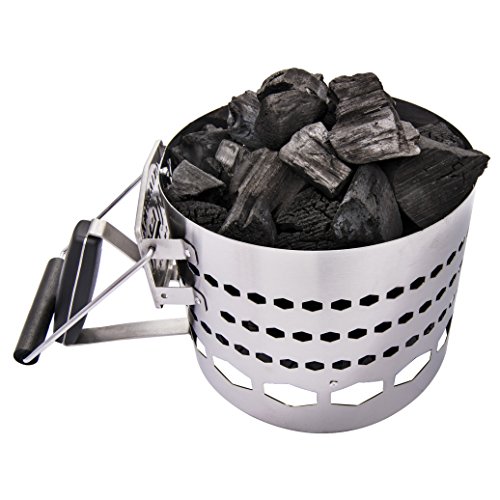
4. Oklahoma Joe’s Halftime XL Charcoal Starter – 9848125R04
An Oklahoma Joe’s Halftime XL Charcoal Starter – 9848125R04 (chimney starter), per the listing. Check price on Amazon.
Good for: lighting charcoal. Watch out: Handle is hot.
5. Large Charcoal Chimney Starter with 60Pcs Charcoal Starter
A Large Charcoal Chimney Starter with 60Pcs Charcoal Starter (chimney starter), per the listing. Check price on Amazon.
Good for: lighting charcoal. Watch out: Handle is hot.
6. Kingsford Charcoal Chimney Starter Compact Quick Start 1 Count
A Kingsford Charcoal Chimney Starter Compact Quick Start 1 Count (chimney starter), per the listing. Check price on Amazon.
Good for: lighting charcoal. Watch out: Handle is hot.

7. Weber Rapidfire Chimney Starter Standard Silver
A Weber Rapidfire Chimney Starter Standard Silver (chimney starter), per the listing. Check price on Amazon.
Good for: lighting charcoal. Watch out: Handle is hot.
8. Weber Rapidfire Compact Chimney Starter Silver
A Weber Rapidfire Compact Chimney Starter Silver (chimney starter), per the listing. Check price on Amazon.
Good for: lighting charcoal. Watch out: Handle is hot.
How to Choose
Size and capacity
Pick a size that fits your household.
Power and speed
Check wattage and settings.
Cleaning
Removable, dishwasher-safe parts help.
How a Chimney Starter Lights Charcoal
A chimney starter is a metal cylinder with air holes near the bottom and a grate or plate that holds the charcoal. You place a fire starter underneath, fill the chimney with charcoal and light the starter. Heat rises up through the cylinder, pulling air in at the bottom, and the tube effect lights the coals from the bottom up without any lighter fluid. This is why the design is popular with people who dislike the smell and taste that fluid can leave behind.
Understanding the airflow explains the features worth caring about. Ventilation holes, the gap beneath the grate and the height of the cylinder all influence how quickly coals catch. A taller, narrower chimney concentrates heat, while a wider one holds more charcoal but may light unevenly.
The picks in this roundup include full-size and compact versions, so read the listing to see which one you are looking at. A compact model is easier to store and suits small grills, while a larger one lights enough coals for a bigger cooking surface or for longer sessions.
Matching Capacity to Your Grill
Capacity is the main way chimney starters differ. Too small and you will need to light two batches for a large grill, too large and it can be awkward to handle, particularly when full. Think about the kind of cooking you do. A quick burger session on a small kettle grill needs fewer coals than a long smoke or a slow roast.
The size of your grill also affects the choice. Small portable grills may not have room to pour out a large batch of hot coals safely, and the chimney itself needs a stable surface during lighting. Check the diameter and height in the listing, and compare it to the space available.
Think about how much charcoal you normally use, and remember that you can light only part of the chimney if you want fewer coals. Many cooks light a full chimney and add coals gradually, to keep the heat steady during longer cooks. If you are unsure, a mid-size chimney is the most flexible choice, because it can handle both short and long cooks. Check each product description for capacity information rather than assuming.
Handles, Heat Shields and Safe Handling
Chimneys get extremely hot, and the most important safety feature is the handle. Look for one that is well attached, spaced away from the hot metal and, ideally, equipped with a heat shield. A second helper handle can make pouring much safer, particularly with a full chimney. Some designs have a trigger or a quick-release bottom, which can control how the coals are released, so read how they work before using them.
Always use heat-resistant gloves, as the note at the top of this guide says, and never rely on a handle being cool. Place the chimney on a non-flammable surface like the grill’s charcoal grate, a metal plate or bare ground away from grass, wood decks and dry leaves. Keep children and pets well away, and never leave a lit chimney unattended.
When pouring coals, do so slowly and close to the grate to avoid sparks. Use long tongs for adjusting, and be careful that the chimney remains hot long after it is emptied. Let it cool in a safe place, and do not put it in water, which can warp the metal and produce scalding steam.
Materials and Build: What Lasts
Chimney starters are exposed to extreme heat, ash and moisture, so material and construction matter for durability. Plain steel is common and works well, but it can rust if left damp. Some are coated or enameled to resist rust, while stainless steel types are valued for corrosion resistance. Each option has tradeoffs, and coatings can eventually discolor or wear in high heat.
Look closely at the build in photos and descriptions. Welded or well-riveted seams hold up better than loose fastenings. A solid grate and sturdy handle bracket are key points where cheaper units can fail. Thicker metal usually lasts longer, but also adds weight.
Care is simple. Empty the ash when cool, brush off residue and store the chimney in a dry place. If you leave it outside, cover it so rain does not cause rust. Light surface rust is usually cosmetic, but cracks, deep corrosion or a loose handle are signs it is time for a replacement. A damaged chimney can fail at the worst moment, when it is full of burning coals.
Lighting Tips, Fuel Choices and Common Mistakes
Good habits make a bigger difference than the chimney itself. Use a proper fire starter, such as paraffin cubes or crumpled paper with a little cooking oil, under the chimney instead of lighter fluid. Make sure the air holes at the bottom are not blocked by ash or the starter. When the top coals are covered with gray ash and the flame is visible at the top, they are usually ready, though timing varies with the charcoal and weather.
Charcoal choice matters. Briquettes and lump charcoal burn differently, and your preference depends on whether you want steady heat or a hotter, faster burn. Whichever you pick, keep it dry, because damp charcoal lights slowly and smokes more.
Common mistakes include overfilling, pouring coals before they are ready, lighting the chimney on a wooden table and failing to allow for wind. Light it in a spot with some shelter but good airflow, and never use it in a closed garage or other enclosed space, as burning charcoal produces carbon monoxide. Dispose of ash only once it is completely cold, in a metal container.
How do you light a charcoal chimney starter step by step?
You light a charcoal chimney starter by placing a fire starter under the grate, filling the cylinder with charcoal and lighting the starter from the side. The tube effect then does the work without lighter fluid.
Here is a simple routine that works for most designs. Always follow the manual that comes with your model.
- Set the chimney on a non-flammable surface, such as the charcoal grate of your grill, with the air holes clear.
- Put one or two paraffin cubes or a loose twist of lightly oiled paper in the space under the charcoal basket.
- Fill the cylinder with the amount of charcoal you need, then light the starter in two places if you can.
- Leave it alone. Moving or shaking the chimney while it lights can scatter embers and slow the process.
- Wait until flame shows at the top and the upper coals are covered in gray ash, then pour carefully with gloves on.
Light time depends on the charcoal, the weather and how full the chimney is, so check the maker’s guidance instead of watching a clock. Wind, damp charcoal and blocked vent holes are the usual reasons a chimney lights slowly.
If the coals look patchy, give the chimney a few more minutes before pouring. Pouring half-lit coals makes the grill heat unevenly and is a common reason new users think the chimney is not working.
What should you do with the hot coals once the chimney is ready?
Pour the coals onto the grill’s charcoal grate in the pattern that suits your cook, then replace the cooking grate and let the heat settle for a few minutes. How you arrange them matters as much as how you lit them.
For direct grilling, spread the coals in an even layer. This suits burgers, sausages and thin cuts that cook quickly. For a two-zone fire, pile the coals on one side and leave the other side empty. The hot side sears, while the cool side lets food finish gently or stay warm without burning.
For longer cooks, many people light only part of a chimney and add fresh unlit charcoal on top, so heat stays steady. Others keep a second, partly filled chimney ready to refill the grill. Both approaches depend on a chimney you can handle safely when it is full, which is why handle design deserves attention.
- Pour slowly and close to the grate to reduce sparks.
- Use long tongs to nudge coals, never your gloves alone.
- Set the empty chimney on a safe, open spot to cool, away from anything that burns.
Adjust the grill’s vents after the coals are in. More air raises the heat and less air lowers it, so small changes go a long way.
Chimney starter vs lighter fluid vs electric starter: which is better?
A chimney starter is the most common choice for lighting charcoal because it needs only a small fire starter and no liquid fuel. Each method has trade-offs, so it helps to compare them honestly.
- Chimney starter: No fluid smell, even lighting and reusable for years. It takes up storage space and the metal gets very hot.
- Lighter fluid: Cheap and quick to buy, but it can leave an odor if the coals are not fully ashed over, and it carries a flare-up risk if used carelessly.
- Electric starter: Avoids liquid fuel, but it needs a power outlet nearby and stays hot after use.
The chimney also lights the charcoal in a contained space, which means you see clear signs of readiness. That helps beginners judge timing more reliably than guessing with a loose pile in the grill.
If you grill only a few times a year and have no storage room, a compact chimney may be enough. If you cook often, a full-size model saves time and gives you more control over the fire. Neither choice requires chemical help.
Is a cheaper chimney starter enough, or is it worth paying more?
A basic chimney starter is enough for many home cooks, because the design is simple and the job is the same at every level. Paying more makes sense when you want longer-lasting material or handling features you will use every time.
What a higher budget tier may add, depending on the listing:
- Stainless steel or enameled finishes that resist rust better than plain steel.
- Heat shields, a second helper handle or a quick-release bottom for safer pouring.
- Larger capacity for bigger grills or long cooks.
What you may give up at a lower tier: the build can feel lighter, the handle bracket may be less sturdy and a coating can wear sooner. None of that makes a lower-cost chimney unsafe if you handle it with care, but inspect it more often.
The honest downsides apply to every chimney. The metal stays hot long after use, it needs dry storage, and a large one can be awkward to carry when full. If you grill rarely, or already light your fire another way and are happy with it, you can reasonably skip this purchase.
What to check before you buy a charcoal chimney starter
Before you click, run through a short checklist on the listing. A few minutes here prevents most returns and disappointments.
- Capacity: Confirm the amount of charcoal it holds and compare it with the size of your grill.
- Dimensions: Check height and diameter, and make sure it fits where you plan to store it.
- Material: Note whether it is plain steel, enameled or stainless steel, and how that fits your storage conditions.
- Handle: Look for a well-attached handle with a heat shield, and a helper handle if the chimney is large.
- Release features: If it has a trigger or quick-release bottom, read how it works.
- What is included: Some listings add fire starters or accessories, so check what is actually in the box.
- Returns and warranty: Confirm the terms on the listing, since they vary.
- Care: Plan for dry storage and heat-safe gloves.
If a detail is missing from the listing, check the maker’s page or the product manual before ordering. Be wary of assuming that two chimneys with similar names share the same size, because the listing is the only reliable source.
Which charcoal chimney starter should you buy?
The right charcoal chimney starter depends on your grill size, how often you cook and how much you value handling features. Use these matches as a starting point, then confirm the details on each listing.
- If you want a familiar, widely recognized design, choose the Weber Rapidfire Chimney Starter Standard Silver.
- If storage space or a small grill is the concern, look at the Weber Rapidfire Compact Chimney Starter Silver or the Kingsford Charcoal Chimney Starter Compact Quick Start 1 Count.
- If you cook for a crowd or run long sessions, consider the Oklahoma Joe’s Halftime XL Charcoal Starter – 9848125R04 for its larger size.
- If you care about corrosion resistance, the Bincho Grill Stainless Steel Charcoal Chimney Starter Perfect uses stainless steel, and the 6.5″X14.5″ Double enameled Charcoal Chimney Starter uses an enameled finish.
- If controlled pouring matters to you, look at the Char-Griller Charcoal Grill Chimney Starter with Quick Release.
- If you want fire starters in the same purchase, the Large Charcoal Chimney Starter with 60Pcs Charcoal Starter is listed with them, so confirm the contents.
Whichever you choose, every model gets hot, so gloves and a safe surface are not optional. Compare the picks above, check the current listing for size and what is included, then choose the one that fits how you will use it.
Arranging Coals After the Chimney: Patterns for Different Cooking
What you do in the thirty seconds after dumping the chimney decides the cook. For a single-zone fire, spread the coals in an even layer one or two briquettes deep, and let the grate heat fully before food goes on. For the classic two-zone setup, bank the coals to one side, giving you a searing zone and a safe zone; this arrangement handles most mixed grills, from chicken pieces that flare to vegetables that need gentler heat, and it is the first pattern every charcoal cook should master.
The ring and snake arrangements serve long, low cooking. A ring of unlit coals around the edge with a few lit coals at one point burns slowly around the kettle, while a snake of briquettes two wide and two deep, lit at one end, gives hours of steady low heat for ribs and shoulders on a kettle grill. Chimneys like the Weber Rapidfire and the Kingsford compact in this guide light the starter coals for these patterns just as well as they light a full load; you simply light fewer coals and place them deliberately.
For very high heat, such as steaks and pizza, mound the coals in a concentrated pile under the cooking zone or use a full chimney spread in a tight double layer. Lump charcoal changes the picture slightly, burning hotter and less evenly than briquettes, so spread and settle it with tongs rather than trusting the pour. Match the pattern to the food before you light, not after, because rearranging lit coals mid-cook costs heat and patience.
Using a Chimney With Lump Charcoal and Natural Fuels
Lump charcoal lights readily in a chimney but behaves differently from briquettes: pieces vary in size, small fragments fall through wide grates, and the load settles as it burns. Fill the chimney loosely rather than packing it, and give it a gentle shake once lit to settle the pieces. Chimneys with smaller grate openings or an added cross of wire handle lump better; the double-enameled and stainless designs in this guide differ here, so check the grate style if lump is your main fuel.
Timing changes too. Lump often reaches cooking readiness faster than dense briquettes but also burns down sooner, so plan a second small chimney for long cooks rather than overfilling the first. Watch for sparks: lump, especially from lighter woods, throws more sparks while lighting, which argues for extra clearance from dry grass, wooden decks and low branches during the lighting stage.
Natural fire starters, cubes, tumbleweeds or a small wad of oiled paper towel, suit lump well because its open structure catches quickly. Avoid over-starting: a chimney of lump lit to a full roaring ash is already spending its best heat before it meets the grill. Many experienced cooks dump lump when the top pieces are glowing at the edges rather than fully ashed, preserving fuel for the cook itself.
Wind, Cold and Altitude: Adjusting Your Lighting Routine
Wind is the chimney user’s frenemy: a light breeze feeds the fire and shortens lighting time, while strong gusts blow heat sideways, scatter ash and can push flames toward anything nearby. Position the chimney sheltered by the grill body or a windbreak, and turn the grill’s vents to manage rather than fight the airflow. On very windy days, light the chimney inside the empty grill with the lid ajar, which shields the young fire while still feeding it air.
Cold weather slows everything: charcoal absorbs moisture from damp winter air, metal starts colder, and the fire needs more time and often more fuel to reach the same cooking temperature. Store charcoal indoors or in a sealed bin through winter, add a few extra briquettes to each load, and start earlier than your summer instincts suggest. The Char-Griller quick-release and Oklahoma Joe’s XL starters in this guide earn their size in winter, when a compact chimney’s load may not carry a long cold-weather cook.
At altitude, thinner air means fires burn less vigorously and water boils at lower temperatures, which subtly changes cooking times even though the coals eventually reach working heat. Give the chimney extra minutes, keep vents more open, and rely on food temperature rather than the clock. These adjustments are small, but they explain why a routine perfected in one place feels mysteriously off in another.
Chimney Safety Around Kids, Pets and Wooden Decks
A lit chimney is one of the hottest objects in home cooking, and it deserves a defined safe zone. Set it on the grill’s charcoal grate or a non-combustible surface, never on a wooden deck, plastic table or dry grass, and keep the area around it clear while it burns. The heat-shield handles on models like the Weber designs in this guide reduce hand risk, but the body of every chimney radiates enough heat to burn a curious hand or a pet’s nose at a distance of inches.
Announce the lighting stage to the household, the way you would announce a hot pan in a kitchen. Children and dogs move unpredictably, and a chimney’s hazard is silent and invisible compared with a flame. Keep the chimney’s path from lighting spot to grill short and practiced, carry it with two hands when the design invites it, and never carry it over areas where people sit or walk barefoot, such as pool decks and lawns at a party.
After dumping, the empty chimney stays dangerously hot for a long while. Give it a designated cooling spot, on the grill’s lower rack, a concrete pad or bare soil, and treat it as hot until proven otherwise. More chimney burns happen from the forgotten empty starter than from the lit one, because attention moves to the food the moment the coals land.
Comparing the Picks Head to Head for Common Buyers
The starters in this guide sort by size and by detail quality. The Weber Rapidfire standard is the reference point most charcoal cooks measure against, with the compact version serving small kettles and small households honestly rather than as a lesser product. The Kingsford compact competes on simplicity and availability, while the Char-Griller’s quick-release trap door answers the specific annoyance of dumping coals without lifting the whole chimney over the grill.
The Oklahoma Joe’s Halftime XL serves the big-grill and smoker crowd, whose cooks genuinely need a larger coal load lit at once. The double-enameled and Bincho stainless designs appeal to buyers tired of rust, since the chimney lives outdoors and rust is its usual cause of death. The large starter bundled with fire starters suits beginners who want the first cook to succeed without a separate shopping list.
Choose by your grill’s coal appetite first, then by the detail that matches your pet peeve: rust, dumping, storage size or handle comfort. A chimney is a ten-year tool when chosen well, and the differences that matter are the ones you will touch at every single cook.
Lighting Charcoal for Beginners: A Calm First Session
The first chimney session should be unhurried and small. Choose a mild day, a modest load of briquettes, and a forgiving food, sausages or chicken thighs, so the lesson is about the fire rather than the dinner. Set the chimney in the grill, light the starter, and watch the stages this guide describes: smoke, then flame at the top, then the grey ash creeping over the top coals. Watching once, without time pressure, teaches the visual cues better than any description.
Resist rearranging the chimney mid-light. Beginners poke, shake and lift to peek, each of which slows the draw and spills partially lit coals. The chimney is a set-and-wait tool; the correct activity during lighting is preparing the food and the work area, not supervising the fire. When the top coals are ashed at the edges, pour with gloves on, spread, and let the grate heat while you take the chimney to its cooling spot.
After the cook, note two things: how long lighting took, and whether the coal amount matched the food. Those two notes calibrate your second session, and by the third you will light the right amount at the right time without thinking, which is the entire skill. Every expert charcoal cook is simply a beginner who kept those notes a dozen times.
More Questions Answered
Can I light a chimney on a balcony?
Check your building and local rules first, since many prohibit charcoal entirely on balconies. Where allowed, use a small chimney, keep it inside the grill while lighting, maintain clearance from railings and walls, and never leave it unattended in the wind.
How do I light a chimney without newspaper?
Use paraffin cubes, natural tumbleweed starters, or a paper towel lightly soaked in cooking oil placed under the chimney. All work reliably; cubes are the most weather-resistant, while oiled paper is the classic zero-cost option every charcoal cook should know.
Why does my chimney take so long to light?
Usually damp charcoal, too little airflow beneath, or a starter that went out early. Store charcoal dry, set the chimney where air can enter from below, and confirm the starter is still burning after the first minutes rather than assuming it caught.
Can I use a chimney to light coals for a fire pit or stove?
Yes, the same method works for any charcoal-burning appliance, and it avoids lighter fluid taste and flare-ups. Size the load to the appliance, and transfer coals with the same care and heat protection you would use at a grill.
What should I do with ash left in the chimney and grill?
Let it cool completely, at least a day, then seal it in a metal container before disposal, because ash insulates embers that can stay live far longer than they look. Never put ash, however cool it seems, into plastic bins or cardboard.
Is a larger chimney always faster?
Not necessarily. A large chimney lights a large load, but a small load in a big chimney can struggle to draw. Match the chimney size to your typical cook; households with two grill sizes often own a compact and a standard, like the two Weber sizes in this guide.
How do I stop the handle getting too hot to hold?
Keep the heat shield positioned correctly, wear a grill glove for the pour regardless, and avoid letting flames lick up the side where the handle mounts by not overfilling. If a handle consistently overheats, that is a design limitation to respect, not to fight barehanded.
Can I relight partially burned coals?
Yes, leftover briquettes that are sound can be reused: shake off ash, mix them with fresh coals in the chimney, and light as usual. Discard pieces that crumble to powder, and expect reused coals to burn slightly shorter than fresh ones.
Can I light charcoal in a chimney during rain?
Light rain is workable if the chimney sits inside the grill with the lid protecting the top, though everything takes longer and starters may struggle. Heavy rain defeats the process and the cook; move the grill under cover if its maker allows, or choose a different cooking day.
How do I light just a few coals for a small cook?
Use a compact chimney or place a small pile of briquettes in one corner of a standard chimney over the starter. Small loads light faster and waste less fuel, and for a couple of burgers they are the difference between charcoal feeling easy and feeling like an event.
Why do sparks fly from my chimney?
Some fuels, especially lump charcoal and certain briquettes, spark as pockets of moisture and gases ignite. Keep the area around the chimney clear of dry material, wear closed shoes, and give lump extra clearance from wooden surfaces while it lights.
Can I put the chimney on my lawn to light?
No. The heat scorches and can ignite dry grass, and the chimney can tip on uneven ground. Light it inside the grill or on a non-combustible, level surface such as concrete or a dedicated pad, and keep that rule absolute.
What gloves are best for handling a lit chimney?
Long, heat-resistant grill gloves that cover the forearm give the best protection for the pour. Ordinary oven mitts are a distant second and should be dry, since wet fabric conducts heat quickly. Whatever you use, rehearse the grip before the chimney is lit.
How long does a chimney starter last?
Years of regular use for a well-made one, with rust and handle wear the usual limits. Rinsing ash out, storing it dry and choosing coated or stainless construction, as in several picks here, stretches that life considerably.
Frequently Asked Questions
Is it easy to use?
Most have simple controls.
What do I need extra?
Check included accessories.
Is it safe?
Follow the manual.
Do I still need lighter fluid with a chimney starter?
No. The chimney design uses airflow and a small fire starter to light the coals, which is the main reason people choose it.
How do I know when the coals are ready?
Look for the top coals to be covered with gray ash and the whole pile glowing, though timing varies. Follow the maker's guidance for your charcoal.
Can I light a chimney starter on a wooden deck?
It is not safe. Use a non-flammable surface such as the grill's charcoal grate or bare ground away from anything that can burn.
What can I use as a fire starter under the chimney?
Paraffin starter cubes or lightly oiled paper are common choices. Check the starter's packaging for use with charcoal.
Is it okay to put water on a hot chimney to cool it?
No. Water can warp the metal and create dangerous steam, so let it cool naturally in a safe, open place.
Does the chimney work with both briquettes and lump charcoal?
In general yes, though they burn and light differently. Check the listing for any specific recommendation.
How should I store my chimney starter?
Keep it dry and covered after it has fully cooled and the ash is cleaned out, to prevent rust.
How full should I fill a chimney starter?
Fill it to the amount your cook needs, up to the top of the cylinder. A full chimney gives the most coals, but a partly filled one lights faster and is easier to pour. Check the maker's guidance for your model.
How long does a chimney starter take to light charcoal?
It varies with the charcoal, weather and how full the chimney is. Rather than relying on a set time, watch for flame at the top and gray ash on the upper coals. Damp charcoal or blocked vents will slow it down.
Can I use a chimney starter on a gas grill?
A chimney starter is meant for charcoal, so it has no role on a gas grill. Gas models light with their own burners. If you own both types, the chimney is only for the charcoal grill.
Can I reuse the charcoal left in the chimney?
Unburned charcoal can often be reused once it is completely cool. Keep it dry and store it away from moisture, since damp charcoal lights slowly and smokes more.
Why won't my chimney starter light?
The usual causes are blocked air holes, damp charcoal, too little fire starter or strong wind. Clear the vents, use a fresh starter and shelter the chimney from gusts without enclosing it.
Is a larger chimney starter always better?
No. A larger chimney holds more charcoal, but it is heavier to pour and may be more than a small grill needs. Match capacity to your grill and your usual cook.
How do I clean a chimney starter?
Let it cool fully, tip out the ash and brush off residue. Avoid water on a hot chimney, and store it dry. Check the manual for any finish-specific care.
Bottom Line
Chimneys light coals without lighter fluid.
More Outdoor Cooking Guides
- Best Bristle-Free BBQ Grill Cleaners
- Best Wood Chips for Smoking Meat
- Best Blackstone Griddle Accessory Sets
- Best Heat Resistant Grill Gloves
- Best Fireproof Grill Mats
- Best BBQ Utensil Sets with Case
- Best Waterproof BBQ Grill Covers