Where to buy
Check the latest price, availability and delivery on Amazon. Orders are placed on Amazon. We may earn a commission from qualifying purchases.
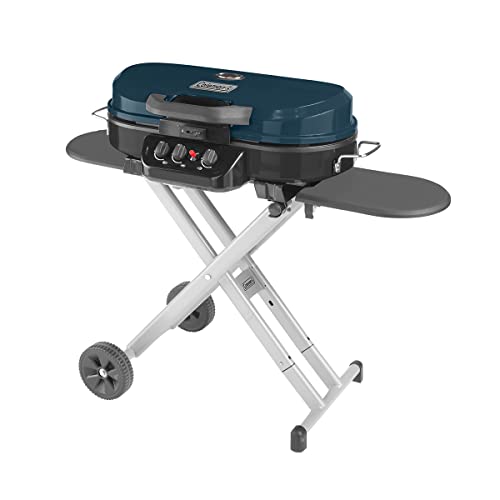
- Best overall for entertaining: Coleman RoadTrip 285 Portable Stand-Up Propane Grill — Check on Amazon
- Cuisinart Chef’s Style Portable Propane Tabletop Gas Grill, CGG-306 — Check on Amazon
- Masterbuilt Portable Propane Gas Grill, MB20030819 — Check on Amazon
- Weber Q 1200N Portable Propane Gas Grill — Check on Amazon
- Royal Gourmet GT1001 Stainless Portable Propane Gas Grill — Check on Amazon
- Ninja Woodfire Outdoor Grill & Smoker, OG701 — the appetizer-and-smoke station; listed without a buying link, see the review for why
Read the full guide ↓
Disclosure: As an Amazon Associate, dailyhomedecorating.com earns from qualifying purchases. Links to Amazon on this page are affiliate links; they cost you nothing extra. Listing details such as price and availability change often, so check the current Amazon listing before you buy.
Finding the best portable grill for outdoor entertaining under $300 is really a search for a workflow, not a grill. Entertaining fails in predictable places: the first batch is done before the second is started, the chicken needs ten more minutes while the burgers dry out waiting, the cook is trapped at a hot box across the yard while the party happens somewhere else, and everything reaches the table in the wrong order at the wrong temperature. A grill that entertains well is the one that solves those logistics — multiple heat zones so different foods finish together, a holding area so finished food stays hot without overcooking, enough surface to cook in generous batches, and a setup that keeps the cook inside the conversation instead of exiled from it. Portable grills earn their place at parties precisely because they can be positioned where the party is, run as a pair without permanent installation, and stored away when the yard returns to everyday life. The six products below were chosen as an entertaining system: one anchor grill, one technique grill, one capacity bargain, one quality compact, one budget overflow unit, and one electric wildcard that runs the appetizer course by itself.
The two-grill insight sits at the center of this guide, because it is how experienced hosts actually cook for twelve with portable equipment. One grill runs hot and fast — burgers, dogs, sausages, the high-turnover items. The second runs the slow and special work: chicken finishing over indirect heat, vegetables charring, the vegetarian mains that should never share a grate rush with the burgers. Splitting the menu across two modest grills beats forcing one large grill to be two temperatures at once, and under $300 you can own the anchor below and still have budget thinking left for the second station — which is exactly how the picks are priced and ordered. Portability multiplies the effect: stations can stand back to back in the middle of the action, flank a serving table, or split between sun and shade as the afternoon moves.
Ground rules, as in every guide in this series: no product prices are printed here, because party-season prices move constantly; every linked pick was confirmed inside the under-$300 band when researched, and the instruction throughout is to check price on Amazon before ordering. The one prose-only pick, the Ninja Woodfire, is presented without a link because its current price could not be verified against the budget at research time — its role in the entertaining system is explained in full so you can judge it with the live price in front of you. Safety at a party gets its own section below, because guests, children, drinks and fire change the risk picture in ways a Tuesday dinner does not. If the guest list is smaller or the budget is, Best Portable Grill For Outdoor Entertaining Under $200 covers the tier below, and Best Portable Grill For Outdoor Entertaining Under $500 maps what the next band adds for hosts who entertain constantly.
In this guide
Quick Picks
Think in stations. The table assigns each pick the job it would hold at a real party.
| Party job | Pick | Why it holds that job | Link |
|---|---|---|---|
| Best overall — the anchor grill | Coleman RoadTrip 285 | Three burners, 285 sq in, own stand: sear zone, cook zone and holding zone in one folding unit | Check on Amazon |
| Best for mixed menus | Cuisinart CGG-306 Chef’s Style | True two-zone cooking for the steak-and-chicken, surf-and-turf end of the menu | Check on Amazon |
| Best budget crowd capacity | Masterbuilt Portable Propane MB20030819 | 288 sq in plus a warming rack — the holding capacity parties actually run on | Check on Amazon |
| Best appetizer and smoke station | Ninja Woodfire OG701 | Electric smoker-grill and air fryer: wings, smoked dips’ ingredients, small bites on autopilot | Prose-only — see review |
| Best premium quality station | Weber Q 1200N | The special-diet and VIP grill: enameled cast iron, precise heat, impeccable results for smaller batches | Check on Amazon |
| Best budget second grill | Royal Gourmet GT1001 | 285 sq in of overflow capacity at the friendliest price in this guide — the dedicated dog-and-veggie grill | Check on Amazon |
How These Picks Were Chosen
Entertaining criteria reorder the usual grill virtues, so this shortlist was built differently from a camping or weeknight guide. First came simultaneous capacity — not headline square inches, but usable zones: a pick had to either offer multiple burners, a warming or holding area, or a distinct station role. Second came throughput manners: ignition that never embarrasses you in front of guests, heat recovery when the lid opens for the tenth photo, and grease management that does not flare at the worst moment. Third came party practicality — a stand or a sensible table footprint, storage that returns the yard to normal by Monday, and construction that tolerates being the hardest-worked appliance of the summer. Every linked pick was cross-checked against Amazon’s own catalog data for this site by exact model and listing title, with its current position confirmed against the under-$300 line; the Ninja Woodfire’s listing showed no verifiable in-band price, so it stands as an honestly labeled prose-only recommendation instead of a forced link.
Recall screening preceded all of it, by exact model, against the US Consumer Product Safety Commission record — a non-negotiable step in a year when a widely sold Cuisinart three-in-one grill line was recalled over a shattering glass hazard. The Cuisinart pick below is the brand’s simple two-burner CGG-306 tabletop, a different model with no glass components, verified individually; the recalled line is not recommended or named anywhere in this guide. A note on method: we did not hands-on test these grills at a test party; the assessments rest on manufacturer specifications, verified listing data, and the consistent pattern of owner experience with these long-running models. Prices are not printed in the body for the standing reason — they move — and the budget discipline was applied at research time, where it can actually be enforced.
Best Portable Grill for Outdoor Entertaining Under $300: The 6 Picks, Reviewed in Detail
Coleman RoadTrip 285 Portable Stand-Up Propane Grill
Who it suits: Hosts who cook for eight to fifteen and want one grill to run the party’s main line — burgers, dogs, chicken and corn in overlapping waves — at standing height, in the middle of the gathering.
The RoadTrip 285 is the anchor because it is the only pick that thinks in three zones. Three adjustable burners totaling 20,000 BTU under 285 square inches let a host run the classic party layout: a ripping-hot sear zone where burgers and steaks start, a medium zone where chicken and sausages cook through, and a low zone where finished food holds warm without drying — the holding function being the difference between a cook who serves in waves and a cook who panics in batches. Push-button Instastart ignition means the grill relights between waves without ceremony, and Coleman’s swappable cooktops (sold separately) let the same stand run a griddle for a brunch party or a stove grate for the corn pot. Its own folding legs and wheels matter socially as much as mechanically: the grill stands where the party is, at a height guests can gather around, then folds flat against the garage wall when the yard goes back to being a yard. For the host, that combination — capacity, zones, presence, disappearance — is the whole job description.
Party-specific ownership notes: the water-filled grease pan beneath the grates is the unsung hero of flare-up control during fatty burger waves, and it must be emptied after the event, not before the next one. Stock the fuel plan for a long afternoon — an adapter hose to the household tank is the anchor grill’s right home configuration, with one-pound cylinders as travel backup. And site it with guests in mind: level ground, the cook’s back to the breeze so smoke drifts away from the circle, several feet of clearance from seating, fences, the drinks table and anything combustible, and a clear lane between grill and kitchen that children and dogs are taught to treat as the cook’s road. It sits comfortably inside this budget — check price on Amazon — and it is the first purchase this guide recommends to anyone whose entertaining is the main event.
- Three burners, three zones: sear, cook and hold simultaneously — the party layout in one unit.
- Stands at social height on its own folding, wheeled frame; stores flat after the event.
- Swappable cooktops extend it to griddle brunches and pot duty.
Honest limitation: The grease water pan needs emptying after every event, and folded it still claims real garage wall — plan its home before the first party.
Choose it if you host double-digit guest lists and want one grill to carry the main line. Skip it if your parties are six people and a bottle of wine — the CGG-306’s finesse will serve you better as a single grill.
Cuisinart Chef’s Style Portable Propane Tabletop Gas Grill, CGG-306
Who it suits: Hosts whose parties are dinners — eight people, a real menu, food that deserves technique — and who want two-zone control at a serving station on the patio table or outdoor counter.
Where the RoadTrip is a production line, the CGG-306 is a chef’s station. Two stainless burners at 10,000 BTU each across 275 square inches of stainless grate give the host the one capability dinner parties actually test: two temperatures at once. Steaks sear over the hot side and rest over the cool side while asparagus chars; salmon holds gently on the indirect side while shrimp flash over direct heat; chicken finishes without burning while its sauce’s vegetables blister. Set on a sturdy, heat-resistant outdoor table at the edge of the seating — never glass, never resin — it puts the cook at the table’s social altitude, plating to order in front of guests, which is a style of entertaining no stand-off cart grill in the corner can match. The all-stainless body presents like professional equipment, wipes down between courses, and folds its legs for storage or travel when the season turns.
The model note bears repeating in a recall year: this pick is the CGG-306 Chef’s Style tabletop, a mechanically simple two-burner grill with no glass components, verified by exact model against the CPSC record — not part of the recalled Cuisinart three-in-one line, which this guide does not recommend. In party service its disciplines are table discipline (a stable surface, open clearance behind the raised lid, nothing combustible within reach) and menu discipline: 275 square inches rewards a sequenced menu — courses and waves — over a single grand dump of food. It sits mid-band in this budget — check price on Amazon — and for the dinner-party host it is the most capable single grill here. Hosts building the full stage around it usually settle seating and serving with Best Patio Dining Set Under $300 and keep drinks cold within arm’s reach via Best Outdoor Cooler Under $300.
- True two-zone cooking — the dinner party’s essential technique — in a tabletop body.
- 275 sq in of stainless grate; presents and cleans like professional equipment.
- Cooks at the table, in the conversation, plating to order.
Honest limitation: It needs the right table to work on, and its capacity suits sequenced menus rather than one giant simultaneous load.
Choose it if your entertaining is dinner-first, eight-ish guests, menu-driven. Skip it if your parties are fifteen burgers deep — the RoadTrip or the Masterbuilt’s capacity is your shape.
Masterbuilt Portable Propane Gas Grill, MB20030819
Who it suits: High-headcount hosts on a careful budget — the graduation, reunion and team-party cooks — and anyone building a two-grill system who needs the capacity half at a friendly price.
The Masterbuilt’s entertaining superpower is the combination other guides underrate: 288 square inches of primary cooking area — the most in this guide — plus a chrome-coated warming rack above it. Parties do not run on cooking area; they run on holding area, the warm zone where the first forty burgers wait while the next twenty cook, where buns toast in the final minutes, where the corn stays at temperature while the cook finally sits down. The warming rack is that zone, built in, and it turns this modestly priced tabletop into a genuine throughput machine for the events where the guest list outgrew the kitchen. Folding legs, a locking lid and push-button ignition keep setup unfussy, and its price position — the friendliest among the full-size picks — is itself an entertaining feature: it leaves budget for the second grill, the cooler, the extra chairs, the string lights that make the yard read as a venue (Best Outdoor String Lights Under $300 is where that project starts).
The trade-offs are the known ones, stated plainly: lighter-gauge construction than the premium picks, a hotter center zone to learn before the big day (run a test cook for family first — every host should, on any grill), and parts support that is real but shallower than Weber’s. None of these bite during an event if the host has done one practice run; all of them are priced into its position at the friendly end of the band — check price on Amazon. In a two-grill system it is the natural volume partner to the Weber Q below: Masterbuilt runs the crowd’s burgers and dogs, the Weber runs the steaks and the special requests, and the host looks like a professional.
- 288 sq in plus warming rack — the holding capacity parties actually run on.
- Friendly price position funds the rest of the party system.
- The natural volume half of a two-grill entertaining setup.
Honest limitation: Lighter build and a center-hot heat map that rewards one practice cook before its first big event.
Choose it if headcount is your recurring problem. Skip it if you entertain small and refined — its capacity is wasted on six-person dinners.
Ninja Woodfire Outdoor Grill & Smoker, OG701
Who it suits: Hosts who want a second station that runs itself — an appetizer and smoke course proceeding on autopilot while the main grill gets the host’s full attention.
Every great grilling party has a course the guests remember that did not come off the main grill, and the Woodfire is built to be that course’s author. It is an electric grill and smoker — flameless, plugged into an outdoor outlet — that burns real wood pellets for genuine smoke flavor, and adds an air-fryer mode with a crisper basket. Parked at the edge of the party as station two, it smokes wings low and slow while the anchor grill is still cold, air-fries frozen appetizers and crispy potatoes without occupying a burner, and produces smoked queso, smoked nuts and burnt-end-style bites that make a backyard feel like a restaurant patio. Because it is electric, it can sit on the covered patio near the seating — where a charcoal smoker could never responsibly live — and because it is thermostat-controlled, it asks the host for minutes of attention per hour rather than the main grill’s constant presence. For hosts, that division of labor is the entire value: the Woodfire minds the appetizers; you mind the guests and the steaks.
Two honest constraints frame the pick. First, smoke is a guest experience too: the pellet system makes real smoke, so position the unit downwind of the seating and think about the neighbors on a still evening. Second, the buying status: this guide could not verify a current in-band price for the OG701 from the listing data available at research time — the model has historically lived at the very top of this band — so it is presented prose-only, without a buying link, for you to price-check directly. If it lands within budget when you look, it is the most party-transforming second appliance in this guide; if it sits above the line, the two-grill gas system above covers the same guest list by other means. Keep its grease tray scrupulously clean — accumulated grease is the one fire risk an electric carries — clean its surfaces with a bristle-free brush once cool, and store it under cover between events.
- Runs the appetizer course on autopilot: smoked wings, air-fried bites, smoked dips’ components.
- Electric and flameless — can station on a covered patio near the party.
- Real wood-pellet smoke flavor no gas grill in this guide can imitate.
Honest limitation: Its grate suits appetizers and small batches, not main-course volume — and its current price could not be verified inside this budget at research time.
Choose it if you already own a main grill and want the station that makes parties memorable. Skip it if it would be your only grill for a crowd, or smoke near seating will bother your guests.
Weber Q 1200N Portable Propane Gas Grill
Who it suits: Hosts who entertain smaller and better — the six-person dinner where the steaks are thick and the standards are high — and two-grill builders who want a quality station for the special items.
In party service the Q 1200N plays the role of the precision instrument. Its cast-aluminum firebox and porcelain-enameled cast-iron grates over 189 square inches deliver the most even heat and the best sear of any pick in this guide, which is why experienced hosts assign it the menu’s high-value items: the dry-aged steaks, the tuna, the vegetarian’s portobellos and halloumi that deserve their own uncontaminated grate, the children’s plain burgers cooked exactly right while the adults’ production runs elsewhere. Electronic ignition, a lid thermometer and fold-out side tables make it a self-contained station that one helper can run — and staffing is an entertaining feature: a second grill a guest can confidently operate doubles the host’s freedom. Between events it returns to its other life as the household’s weeknight grill, which is how a party purchase justifies itself across fifty ordinary Tuesdays.
Its limits are capacity and zoning, both already familiar: one burner, one temperature, 189 square inches — a batch tool at a big party, a star at a small one. The entertaining pattern that flatters it is sequencing: appetizers and sides first while guests arrive, proteins in two calm waves, the grill’s even heat forgiving the host’s divided attention in a way thin-grate grills do not. Placement follows the party rules in this guide’s safety section — level, heat-resistant, clear of traffic and combustibles, grease pan emptied on schedule, grates cleaned with a bristle-free coil brush once cool. It sits at the premium end of this budget — check price on Amazon — and earns the position in entertaining service the same way it does everywhere: by being the grill whose results the host never has to apologize for.
- Best sear and most even heat here — the special-items station.
- Self-contained and helper-friendly: ignition, thermometer, side tables.
- Doubles as the household’s premium weeknight grill between parties.
Honest limitation: One zone and 189 sq in cap its party role at quality station or small-gathering anchor — it is not a crowd machine.
Choose it if your parties are small, your standards are high, or you are building a two-grill system and want its quality half. Skip it if you need one grill to feed fifteen — that is the RoadTrip’s job.
Royal Gourmet GT1001 Stainless Portable Propane Gas Grill
Who it suits: Hosts building a two-grill system on the tightest total budget — the GT1001 is the overflow grill that turns one-grill parties into two-station operations without breaking the band.
The GT1001’s entertaining case is pure logistics at a friendly price. It offers a genuinely large 285 square inches of cooking area over a 10,000 BTU stainless burner, in a stainless tabletop body with folding legs, a locking lid and a built-in thermometer — the specification of a real grill, at the most accessible price position among this guide’s full-size picks (check price on Amazon). As a second station it absorbs the party’s high-volume, low-drama work: the hot dogs and sausages that cook in waves for kids, the corn and vegetable skewers, the bun-toasting and holding duty that frees the anchor grill for proteins. Two grills also solve the menu-segregation problems that single grills fudge — vegetarian items on their own grate, allergen-aware cooking without cross-contact, kosher or halal separation when the guest list asks for it. At this price, that capability is not a luxury; it is the cheapest production upgrade a host can buy.
Expectations should be set to its tier, as this guide sets them for every value pick: a single burner means one zone, heat distribution takes a practice cook to map, and the construction is lighter than the premium names — it is a seasonal workhorse, not a decade grill, and it should be stored dry and covered to reach its potential. None of that matters at the moment it is designed for: the third hour of a big party, when the anchor grill is full and twenty more items need heat. Hosts who entertain a few times a summer will find it pays for its place in the system immediately; hosts who entertain weekly should put the same money toward the RoadTrip’s zoning instead.
- 285 sq in of real cooking area at this guide’s friendliest full-size price position.
- The overflow station: dogs, corn, buns, and segregated-menu cooking.
- Folding legs and locking lid store it with the party gear, not the everyday kitchen.
Honest limitation: Single-zone heat and lighter construction — a seasonal second grill, not a buy-for-a-decade anchor.
Choose it if you are adding a second station for big events on a budget. Skip it if it would be your only grill and you entertain often — save toward the RoadTrip or CGG-306 instead.
Comparison Table
| Product | Type | Area | Party role | Link |
|---|---|---|---|---|
| Coleman RoadTrip 285 | Propane stand-up, 3 burners | 285 sq in | Anchor grill: sear / cook / hold zones | Check on Amazon |
| Cuisinart CGG-306 Chef’s Style | Propane tabletop, 2 burners | 275 sq in | Dinner-party technique station | Check on Amazon |
| Masterbuilt Portable Propane MB20030819 | Propane tabletop | 288 sq in + warming rack | Budget crowd capacity and holding | Check on Amazon |
| Ninja Woodfire OG701 | Electric grill / smoker / air fryer | Compact | Appetizer and smoke station | Prose-only — see review |
| Weber Q 1200N | Propane tabletop, 1 burner | 189 sq in | Premium quality station | Check on Amazon |
| Royal Gourmet GT1001 | Propane tabletop, 1 burner | 285 sq in | Budget overflow / second grill | Check on Amazon |
How to Choose a Portable Grill for Entertaining
- Plan the menu’s timing before the grill’s specs. List what must be hot simultaneously at serving time. That list — not the guest count alone — decides whether you need zones, a warming rack, or a second grill.
- Buy holding capacity, not just cooking capacity. Parties fail at the gap between done and served. Warming racks, low zones and a second grill’s idle heat are holding capacity; prioritize them over headline BTU figures.
- Assign stations, not just a grill. Anchor (volume proteins), technique (two-zone items), appetizer (electric/smoker), overflow (budget second). Most hosts need two of the four; the picks above are ordered to combine.
- Keep the cook in the party. Standing height, a station near — not inside — the seating circle, and a clear kitchen lane decide whether hosting feels like performing or like exile. Position is a feature; choose equipment that supports yours.
- Run a practice cook. Every grill has a heat map and a temperament. One family dinner before the event teaches both, and converts party-day surprises into party-day routine.
- Stock the unglamorous system. Fuel for twice the planned cook time, a second set of tongs for raw and cooked, an instant-read thermometer, foil pans for holding and transport, and a bristle-free brush for the mid-party grate scrape. Entertaining is logistics wearing an apron.
- Verify the exact model against the recall record. Party season is when old and new grills both come out; model-level checking — the standard every pick here met — is the host’s first safety task.
- Think about the morning after. Entertaining equipment earns its place across a season, not a night. Favor the picks whose storage fits your garage or closet, whose grease systems empty without a project, and whose grates clean with a bristle-free brush in minutes — because the host who dreads cleanup entertains less, and the whole point of this guide is a yard that hosts more.
Party-Day Grill Safety
Entertaining multiplies the standard risks: more people near the fire, children in motion, drinks in hands, and a cook whose attention is happily divided. Manage it with placement first. Set every grill on a level, heat-resistant surface with several feet of clearance from seating, fences, siding, decorations and the drinks station, and establish the grill zone as a no-loitering space — guests gather near the cook socially, but the working triangle between grill, prep surface and serving table stays clear, and children get a named adult and a named boundary, not a general warning. Keep a lidded metal container for hot coals and a grease-rated extinguisher within reach of the station. Fuel discipline holds under party conditions: cylinders swap only outdoors on a cold grill, spares store upright away from the gathering, and no fuel-burning grill ever moves into a garage or enclosed porch when weather turns — carbon monoxide is indifferent to celebrations, and the party moves indoors without the grill, always. Charcoal ash from a party cook gets the full protocol the next day: dampers closed, a complete cool-down of a day or more, then cold ash sealed in foil or a metal can before disposal. Finally, the cleaning rule that protects guests most directly: grates are scraped with a bristle-free coil brush or wooden scraper only. Wire-bristle brushes shed strands that lodge in food — a documented injury mechanism behind repeated federal warnings and a wide 2026 recall wave — and no guest should ever meet one at your table.
A Party Timeline: Running the Stations Without Stress
Equipment only becomes a system when the clock is planned, so here is the working timeline this guide’s picks were chosen to execute, for a twelve-guest afternoon with a two-station setup. Two hours out, the appetizer station starts: the Woodfire — or the anchor grill on its lowest, steadiest setting — takes the smoked items that improve with time, wings or queso components, while the host preps proteins, salts steaks, and loads the cooler station within reach of the serving table. Ninety minutes out, both grills are cleaned, leak-checked or cord-checked, and staged: fuel confirmed at twice the planned need, tools laid out in pairs, foil pans stacked at the holding position. One hour out, the long-cook items go on — chicken pieces over the CGG-306’s indirect side or the RoadTrip’s medium zone — because chicken is the menu’s metronome: when it is right, everything else can be sequenced around it. Thirty minutes out, guests arrive to a working appetizer station and a grill that smells like a plan; vegetables and sausages fill the gaps in the anchor’s zones. Fifteen minutes out, the fast proteins fire in waves — burgers and dogs on the hot zone, finished items climbing to the warming rack or the holding zone in the order they will be eaten.
Serving is where the system’s design pays out. The host plates from the holding zone, not from the fire, so nothing waits on a last-minute cook and nothing rushes. The second wave — seconds, latecomers, the vegetarian items kept pristine on their own station — cooks during the first seating’s conversation, which is the deepest luxury a second grill buys: the party never watches the host work, because the work was front-loaded into the timeline. Dessert, if it grills — peaches, pineapple, pound cake — takes three minutes on the still-warm anchor while the appetizer station, now free, becomes the coffee-and-s’mores-adjacent cleanup-free zone (with open flame rules unchanged: the grill stays outdoors, attended or fully out, never relocated while hot). Then the unglamorous finale that protects next month’s party: grease pans emptied once cool, grates scraped with the bristle-free brush while guests are still telling stories, fuel valves closed and cylinders stored upright, ash — if charcoal joined the day — left sealed in its grill with dampers shut for tomorrow’s full cool-down and metal-can disposal. Hosts who run this timeline twice find the third run feels less like production and more like a habit, which is precisely the transformation the right equipment is supposed to buy.
Common Buying Mistakes
- Buying one giant-capacity grill when the menu actually needed two temperatures — and discovering zoning cannot be improvised at serving time.
- Ignoring holding capacity and serving in anxious batches while finished food goes cold or dries out.
- Placing the grill where the yard’s traffic pattern crosses it, then spending the party guarding the station instead of hosting.
- Skipping the practice cook and learning your grill’s hot spots in front of fifteen guests.
- Running out of fuel in hour three because the plan assumed the optimistic burn rate. Carry double; leftovers keep.
- Moving a lit or hot grill when the wind shifts or rain starts. Let placement be decided before ignition, and let weather move the party — not the fire.
- Cleaning the grate mid-party with a wire-bristle brush for speed. Bristle-free tools exist precisely for this moment.
- Trusting a brand name in a recall year instead of verifying the exact model — the host’s name is on the event, so the host does the check.
- Spending the entire budget on the anchor grill and nothing on the cooler, seating and lighting that guests actually experience as the party.
Final Recommendation
- Most hosts, most parties: Coleman RoadTrip 285.
- Dinner-party menus and technique: Cuisinart CGG-306 Chef’s Style.
- Big headcounts on a budget: Masterbuilt Portable Propane MB20030819.
- The memorable second station: Ninja Woodfire OG701 (prose-only — verify the live price).
- Small parties, high standards: Weber Q 1200N.
- The budget second grill: Royal Gourmet GT1001.
Forced to name one, this guide names the Coleman RoadTrip 285, because entertaining is a zones-and-holding problem and it is the only single purchase under $300 that brings three zones, crowd area and a stand to the party in one folding package. The moment your guest list regularly passes a dozen, the honest upgrade is not a bigger grill but a system: the RoadTrip or Masterbuilt running volume, the Weber or the Woodfire running the special work, and the host — this is the point of all of it — standing in the middle of the party instead of at its edge. Buy the station your parties actually need, practice once, stock the fuel and the foil pans like a professional, keep the grill zone clear and the holding zone warm, and let the equipment disappear into a good evening that your guests remember for the food and the company — never for the logistics.
Frequently Asked Questions
How much grill do I need for a party of twelve?
Plan on roughly 250–300 square inches of active cooking area plus a holding solution — a warming rack, a low zone, or a second grill. Twelve guests eating burgers in two waves is comfortable on the RoadTrip or Masterbuilt; twelve guests eating mixed proteins simultaneously is a two-grill menu. The binding constraint is rarely area — it is how much food must be hot at the same moment.
Is a two-grill setup really better than one larger grill?
For entertaining, usually yes. Two grills give you two temperatures, menu segregation for vegetarian or allergen-aware cooking, redundancy if one unit falters, and stations that keep the cook inside the gathering. The total cost of the anchor-plus-overflow combinations in this guide sits inside the same budget thinking as one premium unit.
How do I keep food warm without overcooking it during a party?
Use the holding hierarchy: a warming rack first, a low or off burner zone second, and foil pans in a low oven indoors third. Cook in waves timed backward from serving, rest proteins tented rather than stacked, and let the appetizer station — the Woodfire’s specialty — cover the early hour so the main grill never has to rush.
Where should the grill station go at an outdoor party?
At the edge of the gathering, not its center and not its exile: level, heat-resistant ground with several feet of clearance from seating, fences and decorations; the cook’s back to the breeze so smoke leaves the party; a clear lane to the kitchen; and a boundary children understand. Drinks and seating stay outside the working triangle.
What is the safest way to scrape a grate mid-party?
With a bristle-free coil brush or a wooden scraper on the hot grate — never a wire-bristle brush, whose shed bristles can stick to the grate and end up in a guest’s food. Wire-bristle brushes are the subject of repeated federal safety warnings and a broad 2026 recall wave; retire any you own before the season starts.
What drinks-and-sides setup pairs best with a portable grill station?
Keep the cold chain out of the cook’s lane: a cooler station beside the serving table — not beside the grill — stocked before the first item fires, with raw proteins traveling from indoor refrigeration to the grate in small batches rather than sitting out in party heat. Shade the cooler, open it with intent, and let the holding zone on the grill handle everything already cooked; food safety at an outdoor party is mostly a story of minutes and shade, and the two-station layout in this guide is designed around exactly that discipline.
How far ahead should I set up and light the grills before guests arrive?
Earlier than feels necessary, because every party task expands. Have stations placed, fuel- or cord-checked and grates cleaned two hours out; long-cook and smoked items should already be running an hour before the first guest, so arrivals walk into appetizers and aroma rather than setup. Gas portables light in minutes, but the timeline is not about the grill’s speed — it is about the host never performing logistics in front of an audience. The full station timeline is laid out in the section above.
What should the second person — my co-host or a willing guest — run?
The station with the least judgment and the most rhythm: the overflow grill’s dogs and corn, the appetizer station’s timer-based items, or the holding-and-plating post at the anchor. Give them the instant-read thermometer and one clear rule — nothing leaves their station under temperature — and the two-cook system doubles the main host’s freedom to actually attend the party.
Why does the Ninja Woodfire have no buying link in this guide?
Because its current price could not be verified inside the under-$300 band from the listing data available when this guide was researched — it has historically lived at the top of the band and moves with promotions. It is recommended on its merits as an appetizer and smoke station, with the instruction to check the live price yourself; every linked pick, by contrast, was confirmed in-band at research time.


